The neon of Dotonbori screams, the trains in Umeda rush with a relentless pulse, and the city works hard, plays hard, and lives loud. From the outside, Osaka can feel like a city perpetually in fifth gear, a chaotic symphony of commerce and concrete. But if you want to find its real rhythm, its true heartbeat, you have to look for it after the sun goes down, tucked away in the quiet residential streets, behind a simple noren curtain billowing in the evening breeze. You have to follow the locals as they head, not to a bar or a restaurant, but to a place that might seem like a relic from a bygone era: the neighborhood sento, the public bath.
Now, your first thought might be, “Why?” Most apartments in Osaka, even the shoebox-sized ones, have a unit bath. Why would anyone pay a few hundred yen to go bathe with a bunch of strangers? This isn’t a question about hygiene; it’s a question about community. It’s a misunderstanding that frames the sento as a purely functional space. For many in Osaka, the sento isn’t just a place to get clean. It’s the city’s shared living room, its unofficial community center, its steam-filled confessional. It’s where the day’s armor comes off, literally and figuratively, and where the famously direct, pragmatic, and warm spirit of this city is at its most pure. This isn’t about a nostalgic dip into the past; it’s a living, breathing part of the daily routine that defines the social fabric of Osaka, a ritual that sets it miles apart from the more reserved, polished vibe of Tokyo. To understand the sento is to understand the soul of this city.
For a different kind of evening ritual that also captures the city’s unique rhythm, consider the social tapestry woven in Osaka’s traditional shotengai shopping streets.
More Than Water: The Sento as a Social Stage
To someone unfamiliar, a sento might seem like just a large public bath. You notice the iconic paintings of Mount Fuji on the walls, hear about the various temperature pools, and regard it as a kind of affordable spa. This is the first and most essential misconception. In Osaka, the sento serves primarily as a social institution, with bathing coming second. It’s a place where the idea of hadaka no tsukiai—literally “naked communication”—is uniquely embraced with local character.
The Unspoken Agreement of the Bath
Throughout most of Japan, hadaka no tsukiai suggests a form of vulnerability, a breaking down of social walls to foster a deeper, more genuine connection. In a Tokyo sento, this might take the form of a quiet, shared moment of relaxation—a silent understanding between colleagues washing away the office stress. It’s polite, reserved, and subtle.
But this is Osaka. Things are done differently here. “Naked communication” isn’t about quiet reflection but rather lively, unfiltered conversation. The sento is noisy. You might hear an old man grumbling about the latest Hanshin Tigers game, two shopkeepers gossiping about a new restaurant nearby, or a father testing his son’s multiplication tables while scrubbing his back. The atmosphere isn’t just steamy; it’s thick with the candid, raw dialogue of everyday life. There’s no pretension. Your job title, your designer suit, your carefully curated public image—all of that gets left in the locker alongside your clothes. In the bath, you become just another body, another neighbor, another voice in the community chorus.
The Cast of Characters
Every neighborhood sento has its regulars, a familiar cast of characters that form the community’s foundation. There’s the old-timer permanently settled in the hottest bath, his skin a boiled, lobster-red hue, acting as the unofficial mayor of the place. There’s the group of middle-aged women, the obachan, who hold court in the changing room, sharing news and advice like a tidal wave. There are young fathers teaching their children the simple etiquette of the bath—wash here, rinse there, don’t splash. And there are students and single workers for whom the sento offers a welcome break from cramped apartments and a moment of shared warmth.
I recall one evening at a sento in Tennoji. It was a classic spot—slightly worn, with a grand, temple-style roof hinting at a more prosperous past. A spirited argument erupted between two men in the jacuzzi. It wasn’t angry but a passionate debate over the best way to make takoyaki. One insisted on adding a bit of beer to the batter; the other declared it heresy. Soon, half the men in the bath joined in, sharing their own family recipes. It was chaotic, amusing, and utterly trivial—but it perfectly captured Osaka’s spirit. Strangers, stripped of social status, connecting effortlessly over a shared passion. That scene wouldn’t unfold the same way in Tokyo. There, the fear of breaking the harmony, the wa, would be overwhelming. In Osaka, lively debate is the harmony.
The Evening Rhythm: A Step-by-Step Ritual
The decision to visit the sento isn’t made on a whim; it’s an ingrained part of the daily routine, a conscious shift from the realm of work to that of self-care. It’s a ritual composed of distinct stages, each bearing its own significance and meaning.
The Preparation and The Walk
It generally begins around dusk. In residential neighborhoods, you’ll see people purposefully walking, carrying small plastic baskets or waterproof bags. This is the sento kit. Inside, there’s a small towel for washing, a larger one for drying, a bar of soap in a plastic case, and small bottles of shampoo and conditioner. While most sento now provide these items free of charge, bringing your own signals that you are a seasoned regular. This small preparation marks the start of the wind-down.
The walk itself is part of the ritual. It serves as both a physical and mental buffer zone. With each step, you leave behind the stress of the office or factory floor. You pass by the local butcher shop closing up and see the izakaya lights flickering on. You shed your public persona and begin to embrace the private self. The sento isn’t a destination reached by car; it’s an extension of your home, just a few blocks away.
Inside the Walls: An Osaka-Style Guide
Passing through the noren curtain feels like entering another world. The air becomes humid and scented with soap and cedar. First, you slide off your shoes and place them in a small wooden locker, taking the wooden key with you. Then you approach the bandai, the raised platform where the attendant oversees both the men’s and women’s sides. In older sento, this area showcases classic Japanese architecture. In Osaka, the attendant is often a friendly obachan who knows everyone’s name, asks about your children, and might be watching a comedy show on an old, crackling TV.
You pay the fee—a legally fixed price, around 500 yen, making it an incredibly democratic form of leisure—and enter the changing room, the datsuijo. This is the social center, where people chat as they undress, weigh themselves on the big, old-fashioned scales, and catch up on the day. The lockers are spacious, the ceiling high, and the atmosphere pleasantly cluttered yet orderly.
Once undressed, you take your small towel and washing supplies into the bathing area. The first and most sacred rule is to wash thoroughly before entering the tubs. You grab a small stool and bucket, then find a spot along the rows of faucets. Washing is not a quick rinse but a careful, meticulous scrub. This act is about more than hygiene; it’s about respect—washing away the dirt of the outside world so you enter the communal bath clean, showing consideration for others sharing the water. In Osaka, people often take their time, embracing a practical, no-nonsense approach to cleanliness.
Then comes the main event: the tubs. A typical Osaka sento features several. There’s the main tub, hot but not scalding. Almost certainly, there’s a jacuzzi-style bath, or jetto basu, popular among the older crowd for soothing sore muscles. There might be a denki buro, an “electric bath,” with a low-level current running between two plates. It creates a strange, tingling sensation that people either love or hate, and Osakans, always curious about new experiences, seem to enjoy it. Crucially, there’s the mizuburo, the cold plunge pool. The true art of the sento lies in rotating between hot and cold baths, a process that invigorates the body, stimulates circulation, and leaves you feeling refreshingly renewed.
After soaking, you rinse off one last time and return to the changing room. This is where another vital part of the ritual begins: the post-bath drink. The refrigerator here is a revered fixture. Classic options include fruit milk or coffee milk in old-fashioned glass bottles. Drinking one, hand on hip, while your body still glows from the heat, is one of life’s simple, perfect pleasures. It evokes childhood memories for many, a sweet reward that completes the experience. For others, it’s a cold beer. There’s nothing quite like that first sip of lager fresh out of the bath—it’s the official signal that the day has truly ended.
The Soul of the City in a Bathhouse
Why has this culture remained so vibrant in Osaka, perhaps even more than in any other major Japanese city? The answer lies in the city’s history and its intrinsic character. The sento perfectly embodies the Osaka mindset: pragmatic, community-oriented, and refreshingly unpretentious.
A Legacy of Pragmatism
Osaka has always been a city of merchants, artisans, and workers. It’s a place grounded in practicality rather than ceremony. After World War II, much of the city was destroyed. In the rush to rebuild, homes were constructed quickly and often lacked private baths. The sento was not a luxury; it was a necessity. This ingrained the public bath into the very fabric of daily life for generations. Even after homes were modernized, the custom persisted. Why spend a lot of money heating your own small tub when you can, for a few coins, soak in a large bath, save on your gas bill, and catch up with your neighbors all at once? This exemplifies classic Osaka logic: efficient, economical, and social.
This differs from Tokyo’s development. As the political and imperial capital, Tokyo has always had a more formal, hierarchical social structure. While it also has a rich sento history, the focus on privacy and the rapid rise of modern apartment complexes may have accelerated the decline of the sento’s role as a central community hub. In Osaka, the neighborhood, the shotengai (shopping street), and the sento form a sacred trinity of local life that has proven remarkably enduring.
The Democracy of the Tub
There’s a raw democracy in the Osaka sento that lies at the heart of the city’s identity. Osaka culture is famously less hierarchical than Tokyo’s. People value straightforwardness and a good sense of humor over titles and formal deference. The sento is the ultimate equalizer. A company president and a construction worker share the same water, complain about the same humidity, and laugh at the same TV show. This setting nurtures a unique form of social cohesion.
It’s a place where information is shared openly. You might discover a part-time job, get a plumber recommendation, or hear the real story behind a local political issue, all while soaking in the bath. It’s a social network that functions offline, based on face-to-face trust and shared experiences. In an increasingly digital and isolated world, the sento offers a vital, tangible connection to those around you. It reinforces the notion that you are part of a community, not just an anonymous resident in a vast city.
For the Foreign Resident: Sento Etiquette and Beyond
For someone unfamiliar with Japanese customs, entering a sento for the first time can feel daunting. However, it is one of the most fulfilling ways to immerse yourself in local culture. Grasping the unspoken etiquette, particularly the specific nuances of Osaka, is essential.
Key Rules (And Subtle Details)
The basics apply throughout Japan: always wash before entering the baths, and never place your small wash towel in the bath water. You can rest it on your head (which actually helps keep you cool) or set it on the edge of the tub, but it must not come into contact with the communal water.
Yet, there are finer points to note. In Osaka, space is a matter of mutual understanding. If the washing area is busy, don’t just stand around waiting. A simple nod accompanied by a quiet “sumimasen” (excuse me) usually signals your desire for the next available spot. After using your stool and bucket, rinse them quickly for the next person—a gesture of courtesy everyone observes.
Regarding conversation, feel free to join in, but allow others to initiate. An Osakan might easily start chatting, often with a casual remark like “Atsui desu ne?” (It’s hot, isn’t it?). They may also ask where you’re from. Be open and friendly—Osakans value straightforwardness. A simple, honest reply is preferred over overly formal politeness. And if you can share even a small, imperfect joke, you might just make a friend for the evening.
The Tattoo Issue
This is a common source of concern for many foreigners. It’s important to be upfront: many traditional, family-run sento still enforce a strict “No Tattoos” policy. This is not a personal judgement but stems from a longstanding cultural association of tattoos with the yakuza, or organized crime. Owners aim to ensure their regular, often elderly clientele feel comfortable.
That said, things are evolving. Osaka, known for being practical and international, now has more tattoo-friendly establishments. Many large “super sento” (big complexes with restaurants and massage chairs) permit tattoos, sometimes on the condition that you cover them with a patch if they are small. There are also online resources and apps that can help you find tattoo-friendly sento. The best approach is to check in advance. Look for signs at the entrance (which are usually clear) or visit their website. A little research can prevent an awkward situation. Avoid attempting to enter covertly; it’s disrespectful to both the establishment and other guests.
The Sento’s Future: Steam and Reinvention
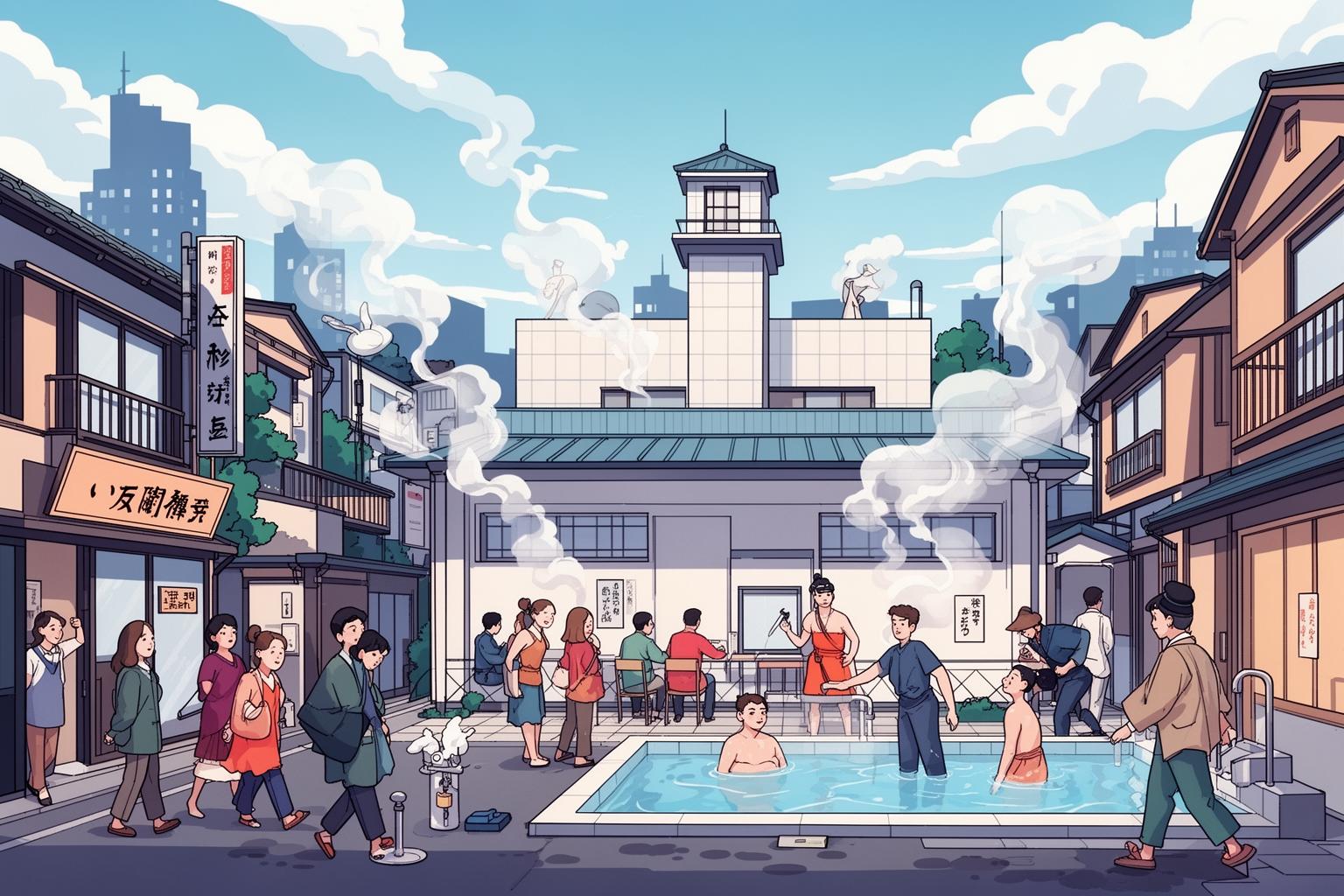
It would be misleading to depict a world without challenges. As in other parts of Japan, the number of sento in Osaka is decreasing. Owners are aging, the cost of fuel to heat the large boilers is rising, and younger generations, raised with private baths, don’t always have the same ingrained habit. Many iconic bathhouses have permanently closed, their grand-roofed structures replaced by parking lots or apartment buildings. Each closure represents a small tear in the social fabric of the neighborhood.
However, there is also a revival underway—a renewed appreciation for what the sento signifies. A younger generation of owners is taking over family businesses, renovating the facilities to be brighter and more modern while maintaining the traditional atmosphere. They are hosting events such as live music, art exhibitions, and collaborations with local breweries. You might encounter a “running station” sento, where runners can leave their belongings, go for a jog around the neighborhood, and return for a soak.
A growing wellness movement views the sento not just as a place to get clean but as a form of self-care—a way to disconnect from screens and reconnect with one’s body and community. Foreign residents and tourists are also discovering the sento, not as a quirky museum piece, but as an authentic and affordable cultural experience.
In many ways, the challenges of modern life—the loneliness, digital overload, and loss of community spaces—make the sento more relevant than ever. It stands as a resilient, beautiful monument to a slower, more connected way of living. It reminds us that some of the most meaningful human connections are formed in the simplest settings.
The next time you walk through a quiet Osaka neighborhood in the evening, look for the tall chimney—the telltale sign of a sento. Listen for the laughter and conversation spilling from behind the curtain. That is the true sound of the city. It’s not the roar of trains or the jingling of pachinko parlors. It’s the sound of Osaka washing off the day, letting its guard down, and preparing for tomorrow, together, in its warm, steam-filled living room.