Welcome to Osaka, a city that thrums with a rhythm all its own. It’s a place of dazzling neon, incredible food, and a pragmatic, down-to-earth spirit that captures the hearts of those who choose to call it home. When you’re setting up a life here, weaving your own story into the city’s vibrant tapestry, the conversation inevitably turns to budgeting. Rent, groceries, transportation—these are the universal pillars of financial planning. But in Osaka, a key to a truly sustainable, affordable, and deeply enriching lifestyle isn’t found in a spreadsheet or a banking app. It’s found behind a simple cloth curtain, known as a noren, billowing gently in a quiet neighborhood side street. It’s found in the rising steam and the warm embrace of the local sentō, the Japanese public bathhouse. For centuries, these institutions have been more than just a place to get clean. They are community living rooms, wellness centers, and, crucially, a brilliant strategy for managing your daily expenses. The sentō is where practicality and poetry converge, offering a warm soak that eases both tired muscles and a strained wallet. It’s an invitation to participate in a living tradition, to connect with your neighbors, and to discover a side of Osaka that is as authentic as it is economical. This isn’t just about saving a few yen on your gas bill; it’s about investing in a richer, more connected life in the heart of Kansai.
This warm, community-focused approach to daily life extends beyond the sentō, as you can also discover the unique rhythm of Osaka’s neighborhood supermarkets after dark.
The Economics of Steam: How a Daily Soak Rewrites Your Budget
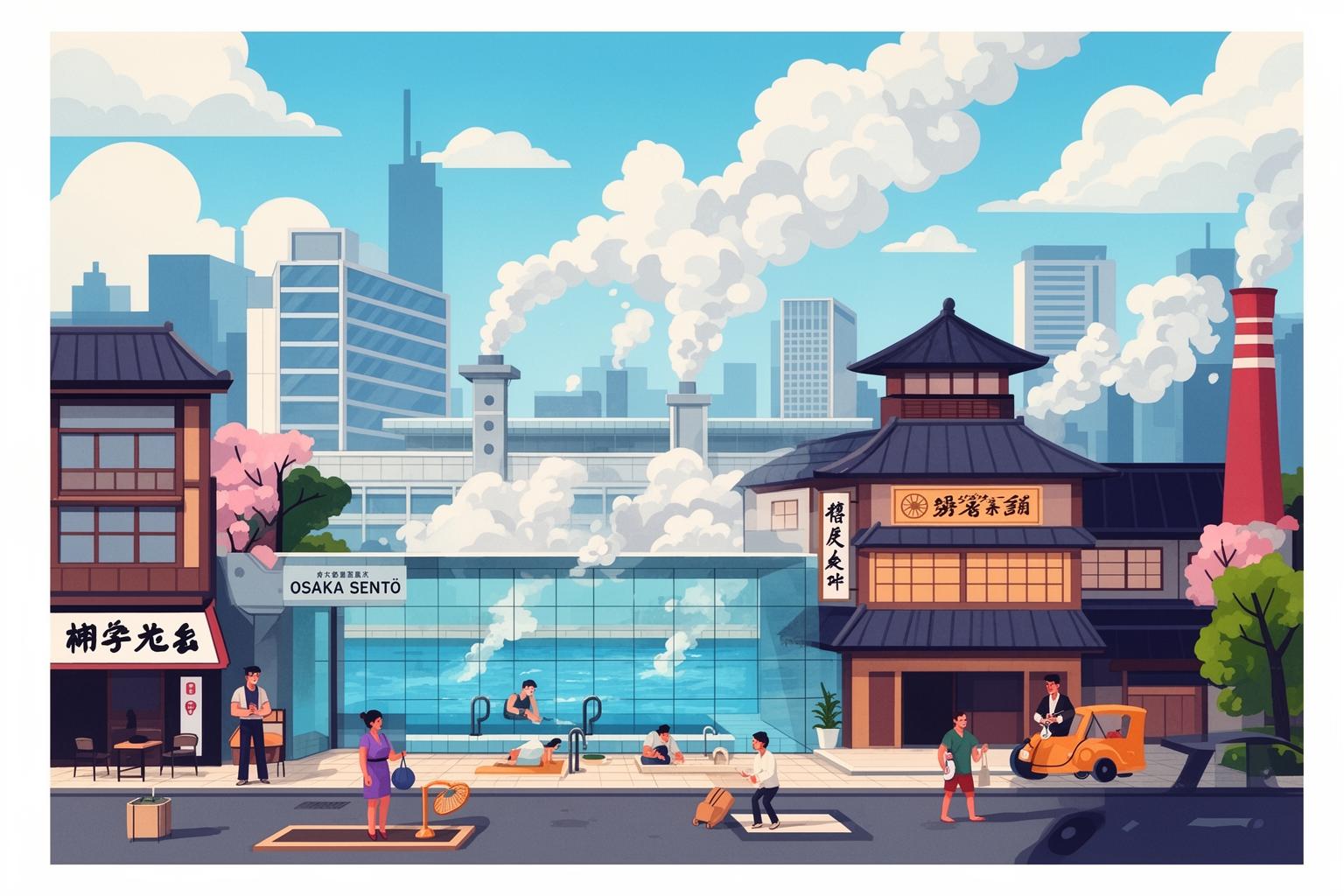
Let’s get practical, the Osaka way. At first glance, paying around 500 yen every day or two for a bath might seem counterproductive for someone mindful of their budget. However, the brilliance of the sentō lies in the cost calculations happening behind the scenes, back in your own apartment. Utility expenses in Japan, especially city gas and water, can be a significant and often unpredictable part of your monthly budget. Heating a full bathtub at home, particularly during the colder months from October to April, places a heavy demand on your gas-powered water heater. Each soak causes your gas meter to spin and your bill to climb.
Consider a simple comparison. A single bath at home can consume a considerable amount of both hot water and the gas needed to heat it. Depending on your apartment’s insulation and your heater’s efficiency, this could add anywhere from 100 to 200 yen to your daily utility costs. For those who enjoy a daily, relaxing soak—a key aspect of Japanese bathing culture—these costs add up fast. Twenty baths a month could easily add 3,000 to 4,000 yen to your gas bill alone, excluding water usage. Now, compare this with the local sentō. The standard adult fee, regulated by the prefectural government, is fairly consistent across traditional bathhouses in Osaka. In recent years, this fee stays just below 500 yen. Immediately, the cost is comparable, but the experience is far superior. Instead of just a simple tub, you gain access to multiple pools at different temperatures, powerful jets, and often a sauna—luxuries that would be nearly impossible to replicate at home.
The real savings, however, come from consistency and smart usage. Many local sentō provide kaisuken, or coupon books. Usually, you can buy a pack of ten tickets for the price of nine, effectively offering a 10% discount on every visit. By making the sentō your main bathing spot, you significantly reduce your home gas consumption. Your water heater is only used for quick showers or washing dishes, leading to a visible reduction in your monthly bill. Over a year, these savings can add up to tens of thousands of yen—funds that can be redirected toward hobbies, travel, or simply boosting your savings. Moreover, this lifestyle choice can impact your housing decisions. In a competitive rental market like Osaka’s, apartments with older, less efficient bathrooms or even those without a dedicated bathtub (known as ‘shower only’ units) often have much lower rent. For those who frequent sentō, such units aren’t a compromise; they’re a wise financial decision. You outsource your bathing to a superior, more cost-effective facility, saving both on rent and utilities at the same time.
Beyond the Balance Sheet: The Sentō as a Social Sanctuary
While the financial advantages are persuasive, seeing the sentō purely through an economic perspective overlooks its true essence. These are far more than simple bathing facilities; they stand as community pillars, the warm, vibrant hearts of their neighborhoods. As a researcher of Japan’s urban development, I have observed how the sentō has functioned as a social anchor for centuries, a role that feels increasingly crucial in our progressively isolated digital era. The history of Japan’s public baths is extensive, but their growth in cities like Osaka surged during the Edo period. As merchants and artisans crowded into the bustling city, housing was often dense and compact, lacking private bathing options. The sentō arose as an essential public service and, more importantly, a democratic social space.
This is the home of hadaka no tsukiai, or ‘naked communion,’ a uniquely Japanese notion that reveals much about the culture. Upon entering the bathing area, free of clothing, you shed the usual indicators of status and occupation. The company president and the construction worker, the student and the retiree—all stand equal in the steam. This setting encourages a rare and beautiful form of open communication. Conversations flow naturally, social barriers fade, and a genuine spirit of camaraderie emerges. For a foreigner living in Osaka, the sentō provides an unmatched chance to step outside the expatriate bubble and engage with locals on their own ground. It’s where you’ll hear the authentic, unfiltered Osaka-ben dialect, get recommendations for the best local takoyaki stalls, or share a laugh about the latest Hanshin Tigers game. You become a familiar presence, woven into the neighborhood’s rhythm. The simple act of nodding hello to the same group of elderly gentlemen weekly creates a thread of connection, integrating you into the local fabric in ways that language lessons or international meetups seldom achieve.
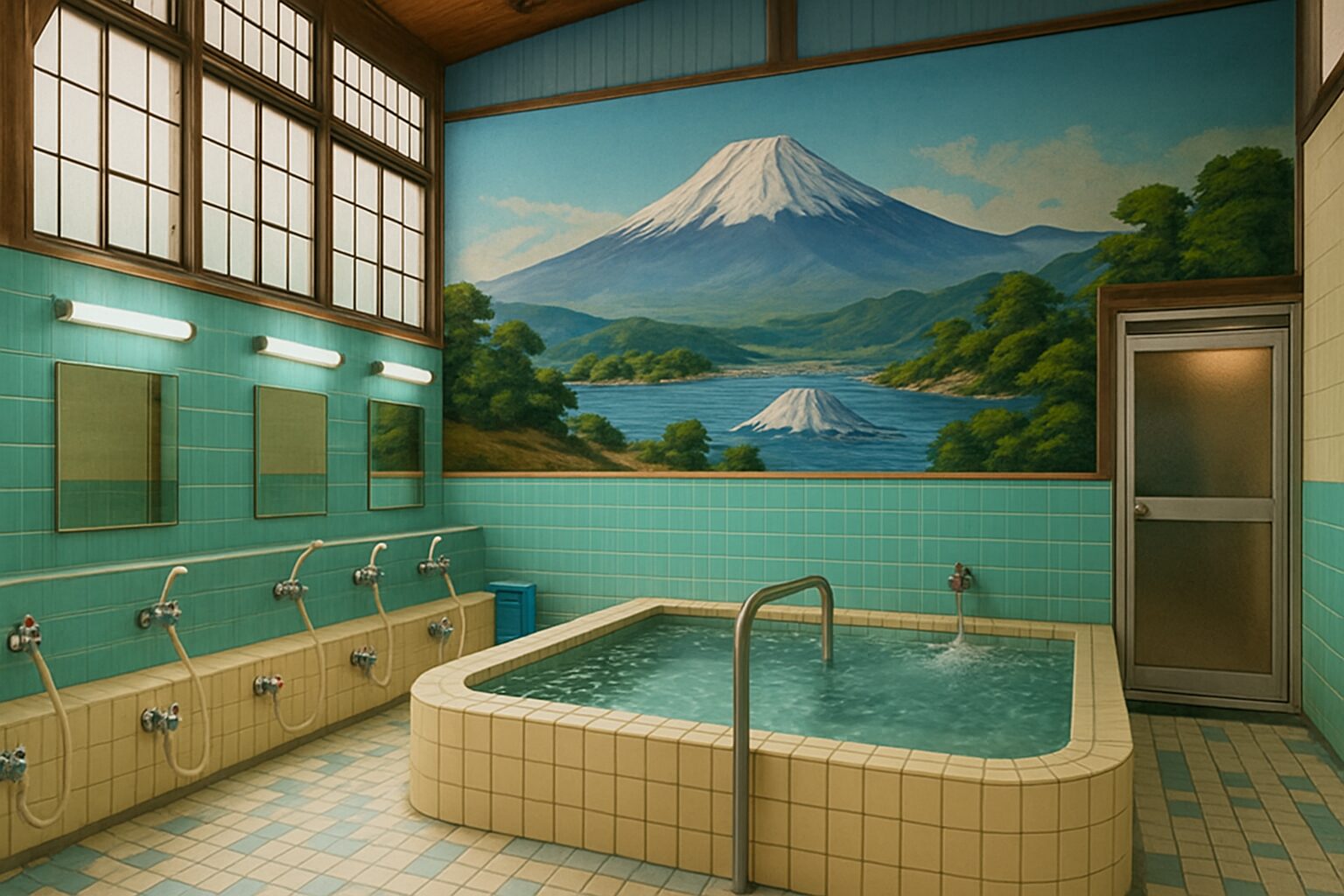
The ambiance inside is a symphony of sensory experiences that anchor you in the moment. The sound of water is constant—the rhythmic clatter of small plastic stools on tile, the splash of wooden buckets, the gentle lapping from the main bath, and the powerful rush of massage jets. The air is thick with steam, carrying scents of soap, minerals, and occasionally the faint, pleasant aroma of cypress wood or herbal infusions from medicinal baths. Visually, many classic sentō offer a feast for the eyes. The centerpiece is often a grand mural of Mount Fuji, a tradition believed to have begun in Tokyo to give bathers a sense of expansive nature. Tilework can be intricate, showcasing colorful koi fish, blooming irises, or geometric patterns. You’ll find vintage wooden lockers with keys on elastic bands, antique scales for weighing yourself, and classic glass-doored refrigerators stocked with milk and fruit juice—the quintessential post-bath refreshment. This environment forms a living museum, a tribute to a Showa-era aesthetic that is both nostalgic and deeply comforting. It offers a refuge from the relentless modernity outside, a place to disconnect from screens and reconnect with yourself and your community.
Navigating the Waters: A First-Timer’s Guide to Sentō Etiquette
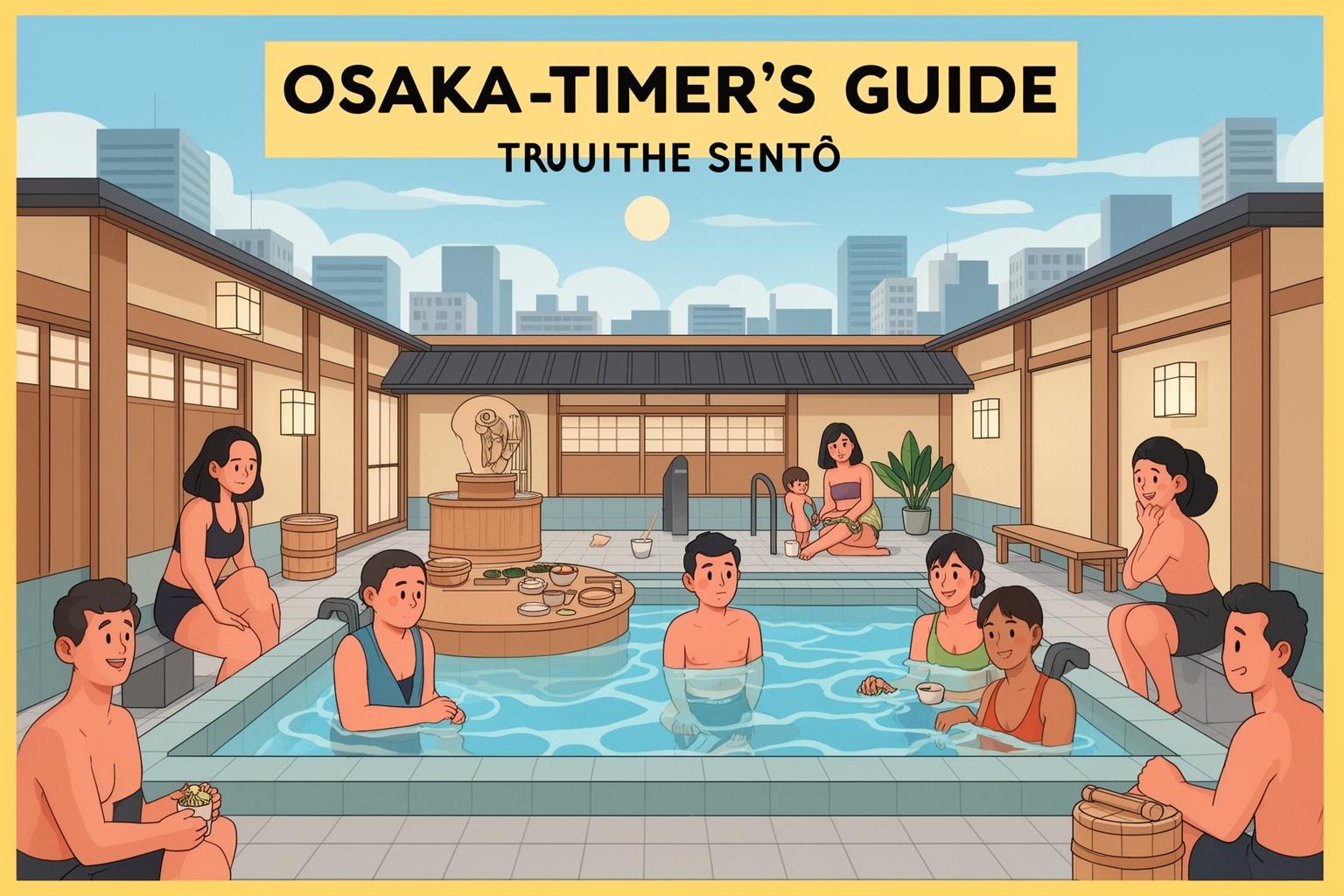
Entering a sentō for the first time can feel a bit intimidating, but the rules are straightforward, grounded in common sense and respect for others. Following them will not only make your visit smooth but also demonstrate your appreciation for the culture. Let’s go through the process together.
Your journey starts at the entrance. Slide open the door and you’ll be welcomed by either a traditional raised platform called a bandai, where the owner sits, or a more modern reception desk. Here, you pay your fee. If you didn’t bring your own toiletries, you can usually purchase small packets of shampoo, conditioner, and soap, as well as rent both small and large towels. However, it’s more cost-effective over time to prepare your own ‘sentō kit’—a small basket or waterproof bag containing your preferred toiletries and towel. After paying, you’ll be directed to the appropriate changing room (datsuijo), marked by curtains or signs—typically blue for men (男) and red for women (女).
Inside the changing room, find an empty locker or basket to store all your belongings, including your clothes. The key is usually attached to a wristband, which you can wear while bathing. Now, it’s time to undress completely. Although it may feel unusual at first, nudity is normal here and not sexualized. Everyone is there purely to bathe, and no one is paying attention. You will be given a small towel, about the size of a facecloth. This serves as your ‘modesty towel.’ You can use it to cover yourself while walking from the changing room to the bathing area. But remember the most important rule about it comes next.
Before you even consider entering the main baths, you must wash your body thoroughly. Locate an open washing station equipped with a stool, faucet, and showerhead. Sit on the stool—it’s considered impolite to shower while standing, as it might splash others. Use soap and shampoo to clean yourself completely from head to toe. This is the most important sentō etiquette rule: the large baths are for soaking and relaxing, not for washing. You enter the communal water already clean. Once fully washed and rinsed, it’s time to enjoy the baths. Enter the bath slowly to adjust to the temperature, which can be quite hot (often 40-43°C). Your small modesty towel must never go into the bathwater. You can place it on the side of the tub or, as many Japanese do, fold it and rest it on top of your head, keeping it clean and out of the way.
Now, relax—this moment is yours. You may find several types of baths. The main tub (shuhai) is usually the largest. There might be a cold plunge pool (mizuburo), very refreshing after a hot soak or sauna session. You could encounter a denki-buro, or electric bath, where a low-voltage current flows between two plates in the water, producing a tingling, massaging effect—proceed with caution if it’s your first time! Other options include jet baths (jetto-buro) that massage your back and shoulders, and herbal or medicinal baths (yakuyu) infused with ingredients like lavender, yomogi, or citrus for their therapeutic benefits.
After soaking as long as you like, return to the washing area for a final rinse if you want. Before heading back to the changing room, use your small towel to squeeze out excess water from your body and hair, helping to keep the changing area dry. Back at your locker, dry off thoroughly with your larger bath towel before dressing. To complete the experience perfectly, consider enjoying the post-bath ritual: grab a bottle of cold coffee milk or fruit milk from the vintage refrigerator—a simple pleasure that wonderfully caps off a relaxing visit.
The Spectrum of Soaking: Osaka’s Diverse Bathhouse Scene
Osaka’s sentō scene is far from uniform. It presents a rich and varied landscape that mirrors the city’s lively character, offering everything from modest, historic bathhouses to expansive spa complexes. Exploring this range is part of the enjoyment and allows you to customize your bathing experience according to your mood and budget.
First, there are the classic neighborhood sentō. These are often family-run establishments that have served their communities for generations. You can recognize them by their traditional architecture, perhaps a temple-style roof (karahafu) and a tall chimney (entotsu), though many now operate out of more modern, unassuming buildings. Inside, the layout is traditional and the atmosphere cozy. These are the spots where you’ll find the iconic Fuji-san murals, beautiful Kutani-yaki tile art, and a dedicated group of elderly regulars who have been coming for decades. Visiting one, perhaps in a historic area like Shinsekai or a quiet residential neighborhood in Higashinari Ward, feels like stepping back in time. The water is typically simple—a hot bath, a warm bath, and a cold plunge—but perfectly heated and impeccably clean. The appeal here lies not in luxurious amenities, but in authenticity and a strong sense of community. It’s the best way to experience the sentō as the social institution it has always been.
At the other extreme are the ‘Super Sentō’ and large-scale spa facilities. Venues like Spa World in Shinsekai or Tennen Onsen Naniwa no Yu in the northern part of the city resemble aquatic theme parks more than traditional bathhouses. The entrance fee is higher, generally between 800 and over 2,000 yen, but the variety on offer is vast. These complexes feature dozens of bath types, often with international themes. Spa World, for example, has European and Asian zones with baths styled after a Roman colosseum or a Balinese resort. They include multiple saunas (Finnish, salt, steam), relaxation lounges with reclining chairs and manga libraries, on-site restaurants, and massage services. Visiting a Super Sentō is not a quick daily routine; it’s a half-day or full-day leisure experience. While not suitable for everyday budgeting, these offer tremendous value as a weekend treat or a way to unwind after a demanding week, delivering a resort-like experience at a fraction of a vacation’s cost.
Between these two extremes, a new wave of ‘designer’ or ‘modern’ sentō is emerging. As some older bathhouses have closed, a younger generation of owners is renovating and reimagining public bathing for the 21st century. These venues might showcase minimalist concrete designs, modern art installations, craft beer on tap in the lobby, or attached cafés. They aim to attract a younger clientele while preserving the core traditions of public bathing. These modernized sentō are crucial for the culture’s survival, demonstrating its ability to adapt and evolve with the times. They often become trendy local hangouts, bridging old and new, and offering a somewhat different, more contemporary social atmosphere. Seeking out these various types of bathhouses across Osaka’s 24 wards is a delightful way to explore the city, with each visit uncovering another layer of its personality. You might discover a modest gem in Taisho, a modern marvel in Umeda, and a vast paradise in Tennoji, each adding to your understanding of this multifaceted metropolis.