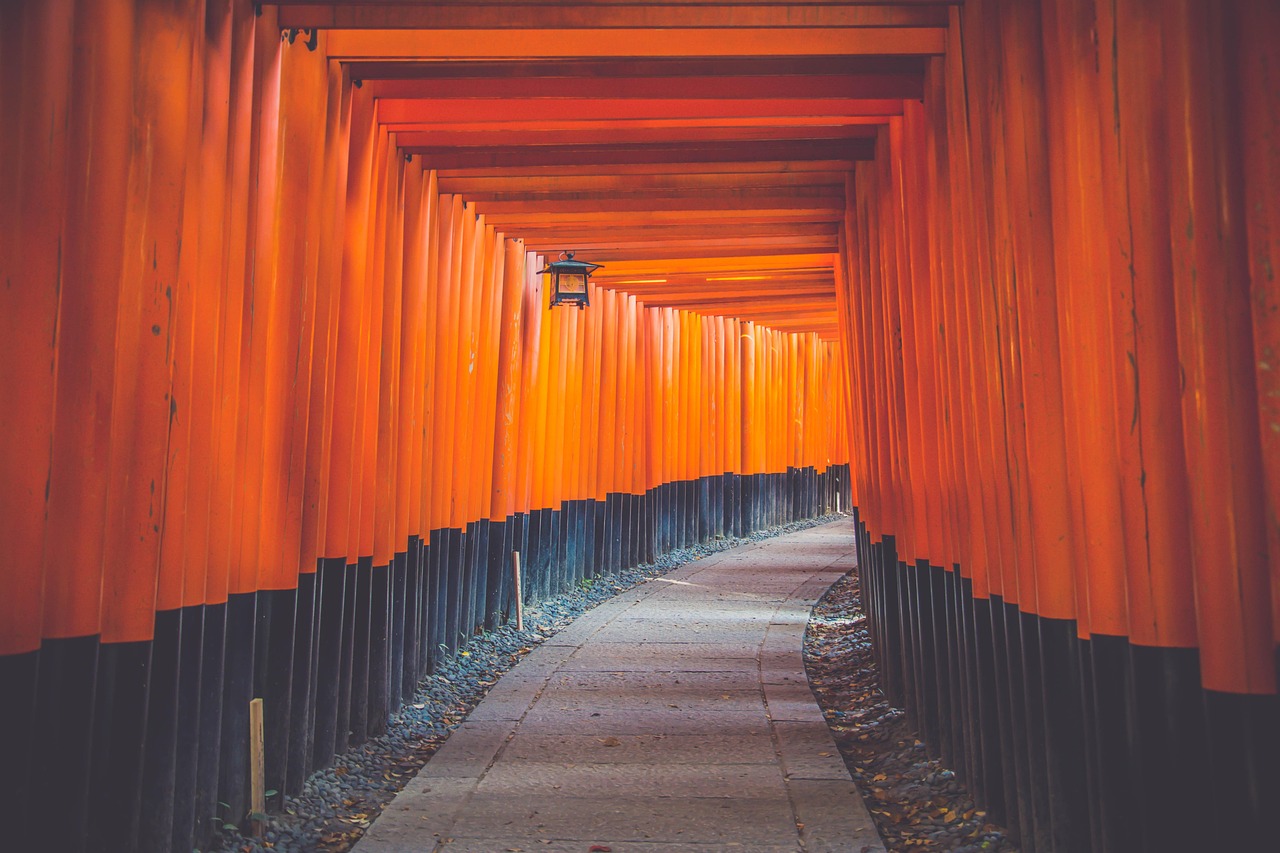
Step off the gently swaying tram and onto the storied grounds of Sumiyoshi Taisha, and you’ll feel an immediate shift in the currents of time. Here, in the southern reaches of bustling, modern Osaka, lies a sanctuary that feels as if it were carved from the very bedrock of Japan’s spirit. This is more than just a shrine; it is an anchor, a spiritual lighthouse that has guided the nation through millennia. Sumiyoshi Taisha, one of Japan’s oldest and most revered Shinto shrines, stands as a breathtaking monument to an era before Buddhism arrived and reshaped the archipelago’s architectural and spiritual landscape. Its stark, powerful beauty speaks a language of pure, indigenous Japanese aesthetics, a dialect of wood, stone, and unwavering faith. This is a place fundamentally tied to the sea, a sacred port where the three gods of the ocean, the Sumiyoshi Ōkami, have been venerated for nearly two thousand years. Their story is inextricably woven into the fabric of Osaka’s identity as a great port city and into the grand narrative of Japan itself. To walk these grounds is to trace the footsteps of emperors, shoguns, poets, and countless sailors who came to pray for safety upon the vast, unpredictable waters. It is a pilgrimage into the heart of a faith that sees divinity in the raw power of nature and finds purity in the ocean’s eternal rhythm. Before you cross the threshold into their divine realm, take a moment to ground yourself in this place where the prayers of a nation’s seafarers still seem to whisper on the wind.
After immersing yourself in this ancient spiritual world, you can explore another facet of Osaka’s cultural heritage by experiencing the city’s renowned Bunraku puppet theatre.
The Crimson Gateway: Crossing the Sorihashi Bridge
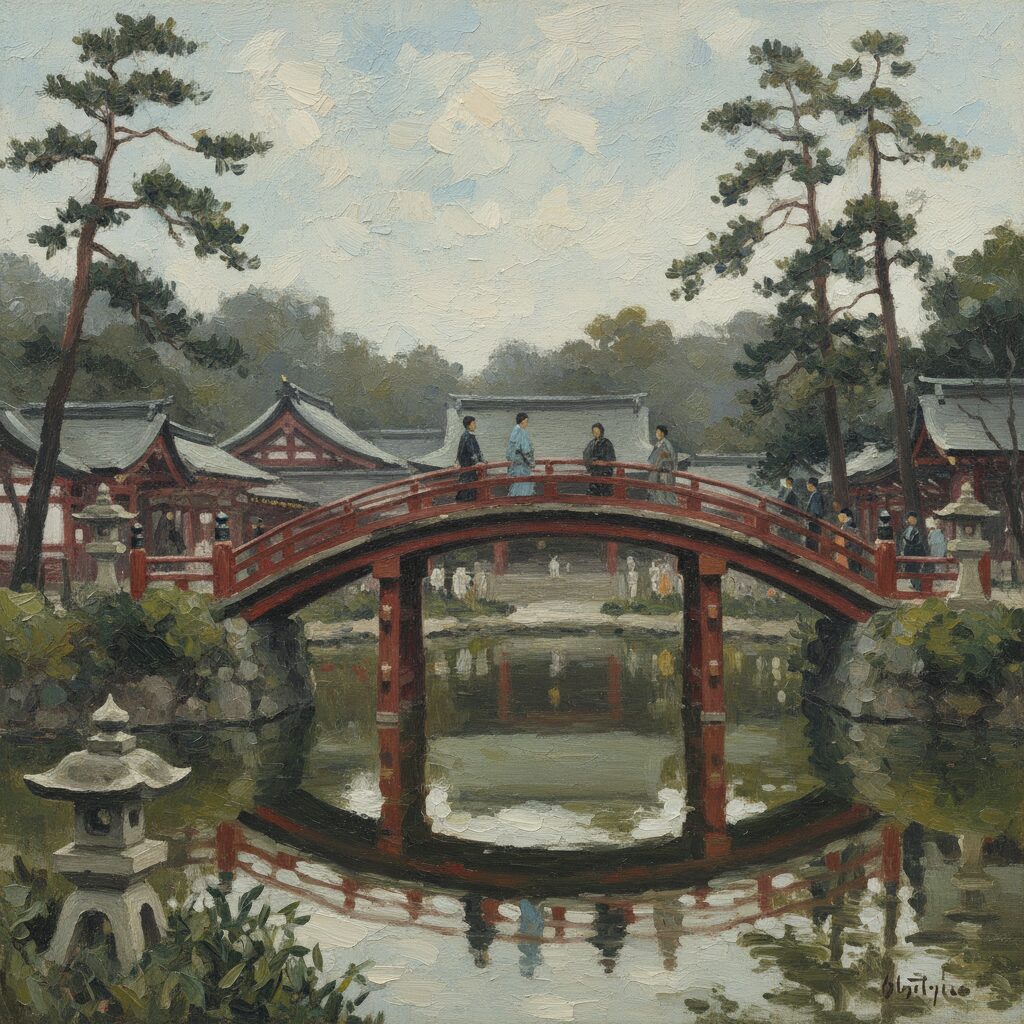
Your journey into the sacred heart of Sumiyoshi Taisha begins not at a gate, but with a crossing. Before you stands the iconic Sorihashi Bridge, also known as Taiko-bashi, or the Drum Bridge. Its vibrant vermilion arch rises dramatically from the tranquil waters of the pond below, creating a striking spectacle of color and form that has inspired artists and pilgrims for centuries. This is no ordinary bridge. Its steep, semi-circular ascent is a purposeful, symbolic passage meant to cleanse you, elevating you from the mundane world and preparing you for an encounter with the divine. As you set your foot on the first wooden step, the incline is immediately felt. The climb demands your full attention, compelling you to slow down, focus on your balance, and leave behind the distractions of the outside world. With each upward step, the view of the surrounding city fades, replaced by the expanding vista of the shrine’s ancient trees and sacred buildings. At the apex, you pause, suspended between earth and sky. It is said the bridge represents the rainbow, a celestial pathway linking the human realm to the realm of the gods. On a still day, the reflection of the crimson arch in the water below forms a perfect circle, a powerful symbol of harmony, wholeness, and the cyclical nature of life. The experience is deeply meditative. Descending the equally steep other side, you feel as though you are returning to the world, but a different one— a sacred space imbued with centuries of devotion. The journey over the Sorihashi Bridge is a physical act of purification, a rite of passage that washes away the dust of everyday life and opens your heart to the serene power that permeates Sumiyoshi Taisha.
An Echo of Antiquity: The Pure Form of Sumiyoshi-zukuri
The essence of Sumiyoshi Taisha’s distinctive identity is most vividly expressed through its architecture. The four principal sanctuaries, or Honden, are recognized as National Treasures, yet their significance does not rest on elaborate ornamentation or luxurious materials. Rather, their true value lies in their age and purity. They represent the pinnacle of Sumiyoshi-zukuri, the oldest existing style of Shinto shrine architecture—a design that predates any major continental influences. This offers a glimpse into Japan’s past before Buddhist temples, with their graceful curved roofs and intricate bracket systems, became widespread. Sumiyoshi-zukuri embodies profound, almost primal simplicity, evoking a deep, direct connection to nature and the earliest expressions of Japanese spirituality. It serves as an architectural time capsule, preserving a sacred space that is uniquely and fundamentally Japanese.
A Design Rooted in the Earth
As you walk among the four Honden, their strong, unembellished forms immediately impress. Constructed primarily from wood and painted a vivid vermilion—symbolizing life and protection against evil—they stand in striking contrast to the pure white of the gabled walls. The roof is the most defining feature. Unlike the elegant, sweeping curves typical of later Buddhist-influenced architecture, Sumiyoshi-zukuri roofs are straight, linear, and gabled. This style, known as kirizuma-zukuri, likely evolved from ancient Japanese granaries or chieftains’ palaces—structures essential to the survival and leadership of early communities. The shrine’s entrance is on the gabled side, a style called tsumairi-iri, giving the building a tall, commanding presence from the front. There are no sweeping verandas or external corridors. The sacred inner sanctum is enclosed by a simple plank wall, surrounded by a straightforward fence, creating a sense of focus and directness. This feels like a space built for function rather than display—a strong, sincere vessel designed to hold the immense power of the kami within. The air around the sanctuaries is tinged with the scent of aged cypress and fresh earth, a testament to the natural materials and enduring legacy of this ancient construction method.
Interpreting the Sacred Symbols: Chigi and Katsuogi
Look up at the rooftops, and you will see the most distinctive features of Shinto architecture, presented here in their most potent form. Piercing the sky at each end of the roof ridge are forked finials called chigi. These are more than decorative elements; they are powerful symbols of sacred authority, resembling horns reaching heavenward. At Sumiyoshi Taisha, the chigi are sharp and assertive, enhancing the building’s formidable silhouette. Lying horizontally across the ridge, like weights holding down thatch, are billets of wood known as katsuogi. Here, they appear as thick, round logs, bold and rhythmic in presence. Together, the chigi and katsuogi create a distinctive silhouette deeply connected to Shinto cosmology. They originate from ancient building techniques and have evolved over centuries into potent religious symbols crowning the sanctuary and proclaiming its sacred status to the heavens. Their robust, unrefined look at Sumiyoshi links the shrine to an era when faith was rugged, elemental, and inseparable from the very architecture that housed it.
A Fleet of Sanctuaries Facing West
The layout of the four Honden is as unique as their architectural design. Rather than being arranged around a central courtyard, as seen in many other shrines and temples, the first three sanctuaries at Sumiyoshi are aligned in a straight row. They stand like a fleet of great wooden ships, their bows all pointing westward toward the sea. This is intentional. In ancient times, Osaka Bay extended far inland, placing the shrine at the very water’s edge. The westward orientation creates a direct spiritual dialogue with the ocean—the source of the enshrined gods’ power. The Fourth Main Sanctuary stands next to and slightly behind the Third, like a flagship accompanying the fleet. This thoughtful, linear arrangement physically embodies the shrine’s identity as the home of the sea gods, forever gazing toward the horizon, ready to protect those who venture across the waves. Understanding this layout reveals the very purpose behind the shrine’s existence. The four sanctuaries are dedicated to:
- The First Main Sanctuary (Dai-ichi Hongu), enshrining Sokotsutsu no O no Mikoto, the kami of the seabed—the deep, foundational power of the ocean.
- The Second Main Sanctuary (Dai-ni Hongu), dedicated to Nakatsutsu no O no Mikoto, the kami of the middle waters, ruler of the currents and tides.
- The Third Main Sanctuary (Dai-san Hongu), home to Uwatsutsu no O no Mikoto, the kami of the sea’s surface, protector of sailors from storms and guide over the waves.
- The Fourth Main Sanctuary (Dai-yon Hongu), which enshrines Okinagatarashihime no Mikoto, better known as the legendary Empress Jingū. Her inclusion honors her famed military campaign to the Korean peninsula, said to have been made possible solely by the divine protection of the three sea gods. Upon her victorious return, she decreed that the Sumiyoshi Ōkami be enshrined here, forever cementing the profound bond between the imperial family and these powerful maritime deities.
The Pulse of the Ocean: A History Steeped in Sea Voyages
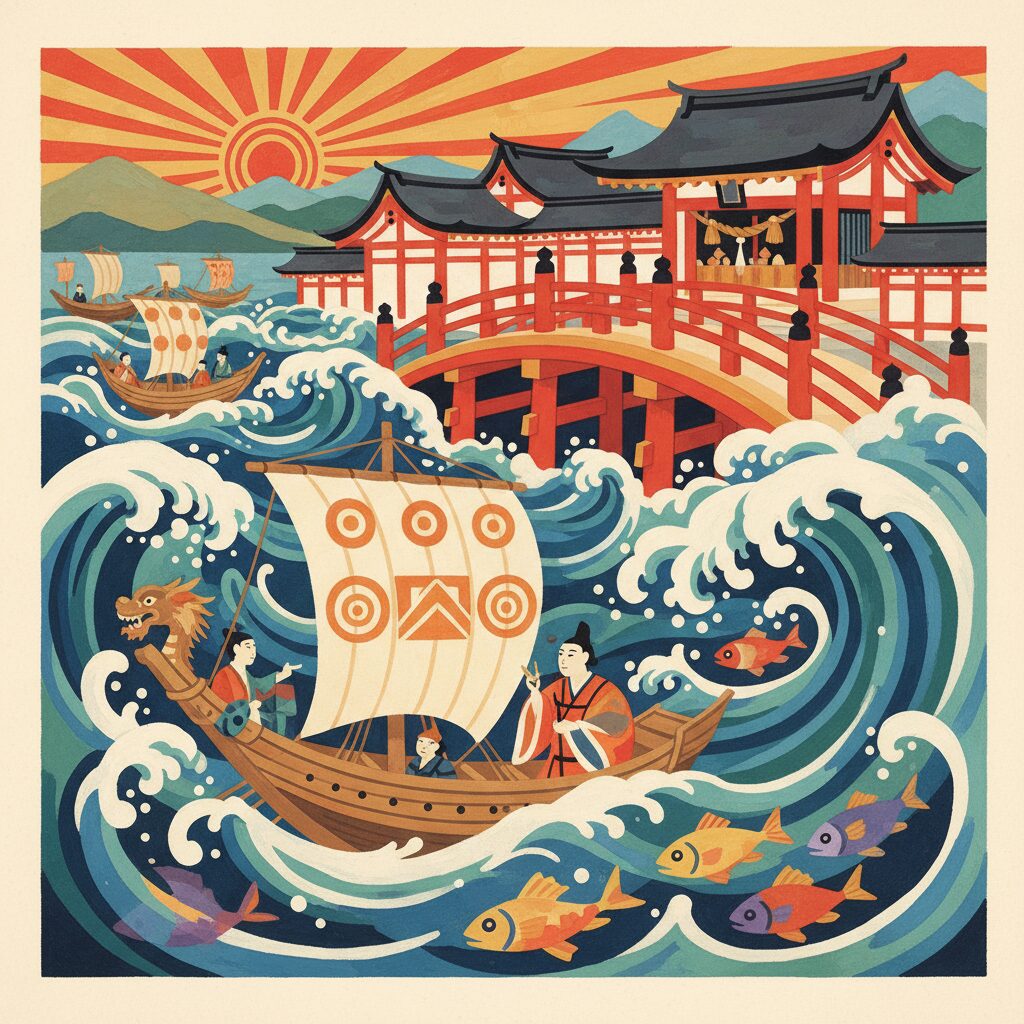
The story of Sumiyoshi Taisha is essentially the story of Japan’s connection with the sea. For an island nation, the ocean has always been both a vital source of life and a formidable obstacle—a route for trade as well as a stage for conflict. This shrine emerged from that fundamental truth, established as a spiritual center to mediate between humanity and the vast, awe-inspiring power of the waters. Its history extends beyond its sacred grounds; it is a saga of mythic origins, imperial patronage, and perilous international voyages that helped shape the nation’s destiny.
Where Gods Are Born from Water
The origin of the Sumiyoshi Ōkami lies in the creation myths at the heart of Shintoism, documented in the ancient texts of the Kojiki and Nihon Shoki. The narrative begins with the primordial deity Izanagi no Mikoto, who descends into Yomi-no-kuni, the underworld, in a futile attempt to retrieve his deceased wife, Izanami. Contaminated by the impurities of death, he returns to the living world and seeks purification. He journeys to the sea at a place called Tachibana no Odo in Hyuga, where he performs a cleansing ritual known as misogi. As he washes away the defilement in the saltwater, a host of new deities are born. From the purification of his final pollutions in the depths, the middle waters, and the surface emerge the three Sumiyoshi sea gods. This origin is profound: the Sumiyoshi Ōkami are not merely gods who dwell in the sea; they are born from the very act of purification by water. This makes them ultimate symbols of cleansing, protection, and renewal—deities whose power is as fundamental and life-giving as the ocean itself.
A Beacon for Imperial Quests and Trade Routes
Since its legendary founding in the 3rd century by Empress Jingū, Sumiyoshi Taisha has maintained a special bond with the seat of power in Japan. It was not just a local shrine but a national institution of great strategic and spiritual significance. During the Yamato period, Japan looked outward across the sea for trade, technology, and diplomatic connections. Osaka, then called Naniwa, was its primary international port. Every voyage posed a dangerous gamble against typhoons and treacherous currents. Sumiyoshi Taisha became an essential spiritual port of call. Most notably, the official Japanese embassies to Tang China, known as the Kentōshi, would make a pilgrimage here before setting sail. These missions, which took place intermittently between the 7th and 9th centuries, were extremely hazardous yet vital for importing advanced culture, religion, and governance systems that would deeply influence Japan. Envoys, scholars, monks, and sailors offered solemn prayers at Sumiyoshi, entrusting their lives and the success of their national missions to the sea gods. Thus, the shrine became a patron of Japan’s international relations, a divine guarantor for the voyages that brought Buddhism, Chinese characters, and continental philosophy to Japanese shores. The shrine was also revered as a deity of waka poetry, with countless poems in imperial anthologies like the Man’yōshū describing travelers stopping at Sumiyoshi, its famous pines and shoreline becoming powerful poetic symbols of journeys and homesickness.
Finding Your Fortune: The Living Rituals of Sumiyoshi
Visiting Sumiyoshi Taisha is not a passive, museum-like experience. It is a vibrant, living center of faith where ancient rituals are practiced daily by ordinary people seeking guidance, blessings, and good fortune. Participating in these simple traditions allows you to connect with the shrine on a deeper, more personal level, turning your visit from mere sightseeing into a memorable spiritual journey.
The Weight of Your Wish: The Omokaru Ishi
Within the shrine grounds, you will find a small, atmospheric building housing several stone lanterns. One of these is surrounded by a collection of round, smooth stones. This is the site of the Omokaru Ishi, or the “Heavy-Light Stone.” This simple yet profound form of divination is one of the most popular activities for visitors. The ritual is straightforward: first, you bow and offer a quiet prayer. Then, you choose one of the three main stones and lift it to feel its initial weight. After placing it back, you close your eyes, make a specific wish, and lift the same stone again. If the stone feels lighter the second time, your wish is likely to come true. If it feels heavier, it may require more effort and time to achieve. The moment of the second lift is filled with a tangible sense of anticipation and hope. Whether or not you believe in its power, the act itself focuses your intentions and links you to the centuries of wishes made in this very place. It’s a beautiful, interactive part of living culture.
A Treasure Hunt for Blessings: The Godairiki Stones
For a more engaging and personal quest, head to the Goshogozen, a sacred, enclosed plot of earth behind the First Main Sanctuary. This spot is believed to be where the Sumiyoshi Ōkami first descended to earth, and the soil here is thought to be imbued with their power. The fence surrounding the plot has small openings, through which you can reach in and search among the pebbles on the ground. You are looking for three specific stones: one inscribed with the character 五 (Go – five), one with 大 (Dai – big), and one with 力 (Riki – power). Finding all three is said to grant the finder the five great blessings: physical strength, wisdom, wealth, happiness, and longevity. The hunt demands patience and a keen eye as you sift through countless ordinary pebbles. The act of searching becomes a meditation itself, and the thrill of discovering one of the marked stones is a genuine delight. Many people purchase a special amulet bag from the shrine office to keep their treasured stones safe. It’s a wonderful way to bring home a tangible piece of the shrine’s power and blessings.
A Calendar of Celebration: Experiencing Sumiyoshi Through the Seasons
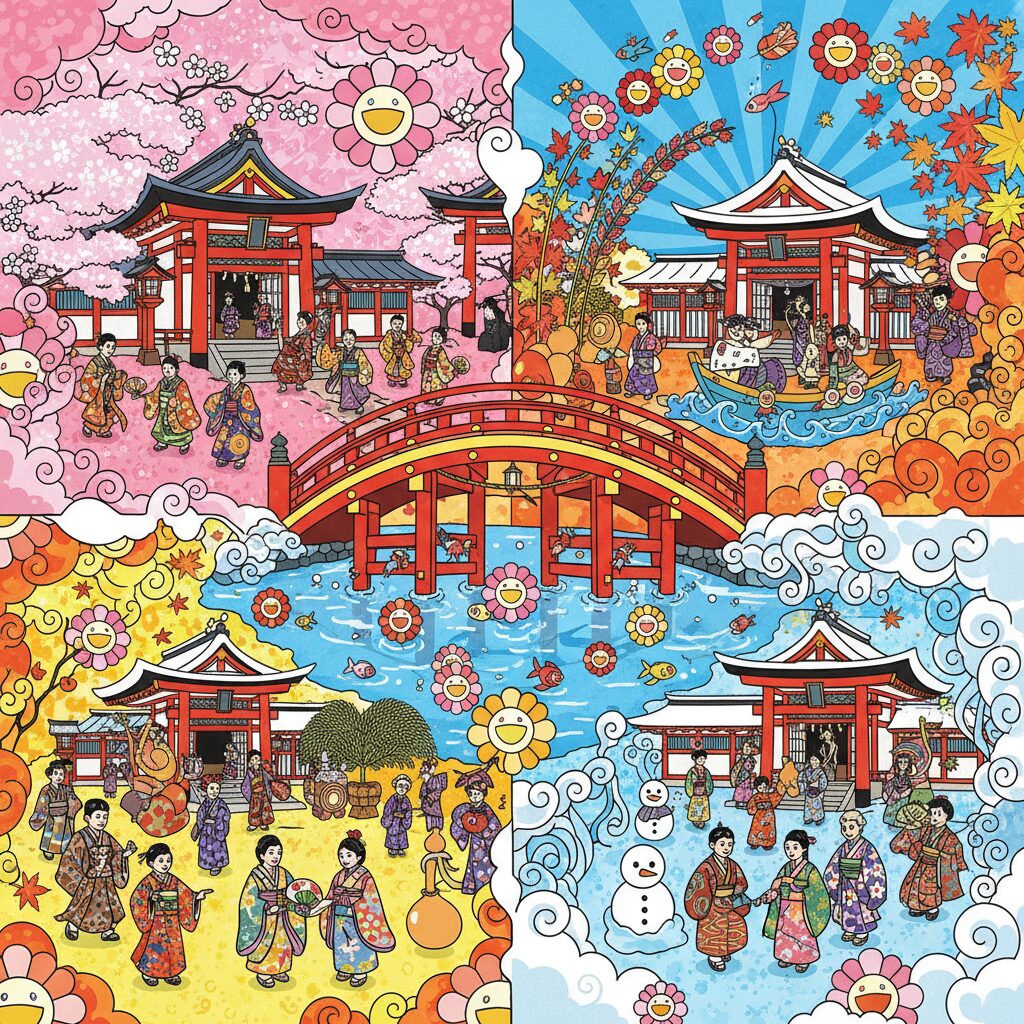
Sumiyoshi Taisha is not a static monument; its spiritual vitality shifts with the seasons, punctuated by a lively calendar of festivals that attract vast crowds and honor ancient traditions. Visiting during one of these celebrations reveals the shrine at its most vibrant and dynamic, a true expression of community and faith.
The Roar of the New Year
At the stroke of midnight on New Year’s Eve, Sumiyoshi Taisha undergoes a transformation. For the first few days of January, it becomes one of the Kansai region’s top destinations for Hatsumōde, the initial shrine visit of the year. Over two million visitors gather here to pray for health, happiness, and success in the year ahead. The atmosphere is electric. The long pathway to the shrine turns into a lively market filled with food stalls offering everything from takoyaki and yakisoba to sweet amazake. The sounds of temple bells, rhythmic clapping in prayer, and cheerful family conversations create a joyous symphony. The Sorihashi Bridge becomes a slow-moving river of people, all united by a shared sense of hope and renewal. This powerful scene underscores the shrine’s lasting significance in the lives of modern Osakans.
Planting for Prosperity: The Otaue Rice Planting Festival
In the lush warmth of mid-June, Sumiyoshi Taisha hosts one of Japan’s most renowned and culturally important festivals: the Otaue Shinji. Recognized as an Important Intangible Folk Cultural Property, this rice planting festival is a stunning ritual performance praying for a bountiful harvest. A special paddy within the shrine grounds serves as an open-air stage. The ceremony opens with a dignified procession of participants dressed in magnificent historical costumes. Sacred bulls, adorned with colorful bridles, plow the field, followed by rows of women in traditional attire carefully planting young rice seedlings. All is accompanied by enchanting performances of courtly music (gagaku) and traditional dances, including the Sumiyoshi Odori performed by local girls. This spectacle, rich in beauty and historical significance, forges a direct link to Japan’s agrarian heritage and embodies prayers for the nation’s nourishment and prosperity.
Summer Purification: The Grandeur of Sumiyoshi Matsuri
From July 30th to August 1st, the shrine hosts its grand summer festival, the Sumiyoshi Matsuri, a spectacular conclusion to Osaka’s summer festival season. The highlight for many is the Nagoshi-no-Harai Shinji, a major purification ritual. A large ring woven from cogon grass is erected on the shrine grounds, and walking through it is believed to cleanse participants of impurities and bad luck accumulated during the year’s first half, promoting health and vitality for the remainder. The festival culminates in a powerful procession where the spirit of the kami is transferred to an ornate portable shrine, or mikoshi. The mikoshi is then energetically paraded through the streets by bearers in traditional dress before being carried to the sea in Sakai for a final purification ritual, reaffirming the shrine’s enduring connection to the ocean.
Your Journey to the Sea Gods’ Realm: Practical Guidance
Reaching this ancient sanctuary is surprisingly easy, and the journey itself can add to the unique experience. Situated in Sumiyoshi Ward in southern Osaka City, the shrine is conveniently accessible and provides a peaceful escape from the urban hustle of neighborhoods like Namba or Umeda.
Traveling by Train and Vintage Tram
The quickest route to Sumiyoshi Taisha is via the Nankai Main Line from Namba Station, with a brief ten-minute ride to Sumiyoshi Taisha Station, followed by a short walk to the shrine. For a truly memorable trip, however, consider riding the Hankai Tramway, Osaka’s last remaining streetcar line. Boarding this vintage tram feels like entering another time, as the single-car vehicle clanks its way through quiet residential areas and local shopping streets at a relaxed pace. You can catch it from Tennoji Station and disembark at Sumiyoshi Torii-mae Station, conveniently located right in front of the shrine’s main stone torii gate. This nostalgically charming ride offers a perfect way to slow down and ready yourself for the timeless ambiance of the shrine.
A Guide for Visitors
A bit of planning can greatly enhance your visit. The shrine grounds are extensive and open 24 hours, although the main buildings and office typically open around 6:00 AM and close by 5:00 PM. It’s best to arrive early in the morning when the grounds are serene and spiritually rich, free from the bustle of crowds. Wear comfortable shoes since you’ll be walking over varied terrain, including stone paths and the steep steps of the Sorihashi Bridge. Remember that this is an active site of worship; be respectful when photographing, especially near those in prayer. Upon passing through the main torii gate, it is customary to bow once. Before approaching the main halls, stop at the chozuya, the water pavilion, to perform a simple purification by washing your hands and rinsing your mouth. When praying at the main hall, the traditional ritual is “two bows, two claps, and one bow.” These small gestures of respect will deepen your connection to the shrine and are appreciated by all.
Sumiyoshi Taisha: More Than a Shrine, A Voyage Itself
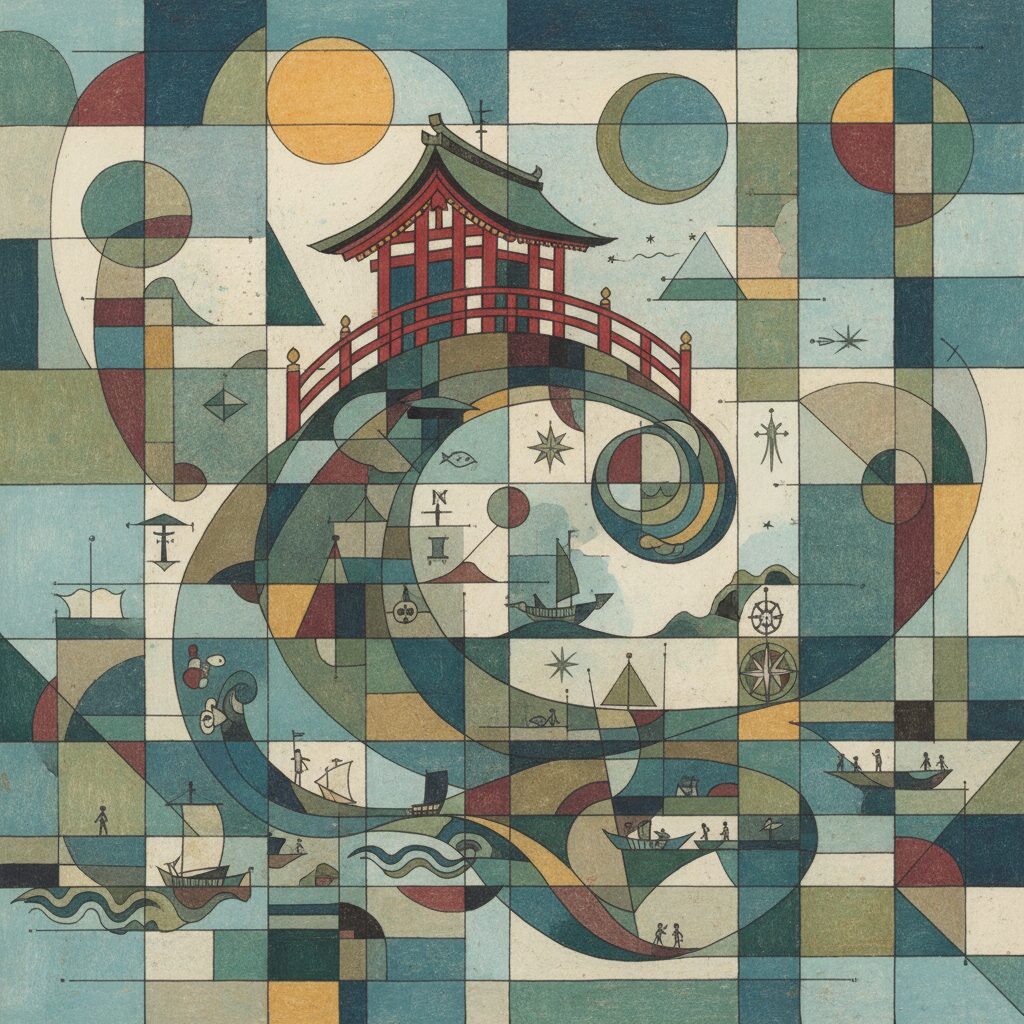
Leaving Sumiyoshi Taisha, as you cross back over the Sorihashi Bridge and return to the modern world, the atmosphere of the place lingers with you. It remains like the faint scent of ancient cypress wood and the ghostly coolness of the sea breeze. This is because a visit here is more than a simple tour of historic buildings; it is a journey. It is an exploration into a purely Japanese aesthetic, where straight lines and unadorned wood convey more meaning than elaborate carvings. It is a step back in time, to an era when a nation’s fate depended on the bravery of its sailors and the kindness of its ocean gods. The west-facing halls still seem to look out toward an ancient shoreline, keeping a silent, eternal watch over all who travel by sea. Sumiyoshi Taisha stands as a testament to the lasting power of place and faith—a sanctuary that not only shelters the gods of the sea but also embodies their spirit: timeless, powerful, and deeply cleansing. It is a part of Osaka, and of Japan, that offers not just a glimpse of the past but a profound connection to the elemental forces that have shaped its soul.