
In the sprawling, energetic cityscape of Osaka, where culinary traditions run as deep as the canals crisscrossing Naniwa, there exists a universe of flavor that hums with a different kind of energy. It’s not found in the hushed, minimalist temples of kaiseki or the boisterous, lantern-lit alleys of Dotonbori. Instead, it thrives under the relentless flicker of pachinko-parlor neon, soundtracked by a looping, high-energy jingle that drills its way into your memory. This is the world of Super Tamade, a supermarket chain that is less a place to buy groceries and more an immersion into the vibrant, unpretentious, and fiercely budget-conscious heart of Osaka. For the uninitiated, the visual assault can be overwhelming: blazing yellow storefronts, chaotic aisles crammed with goods, and handwritten signs screaming deals in thick, red ink. But for those of us who call this city home, Tamade is a lifeline, a daily ritual, and a treasure trove of some of the most satisfying and affordable prepared foods, or sozai, you’ll ever encounter. This isn’t just about saving a few yen; it’s about participating in a daily pageant of Osakan life, a place where the simple, comforting flavors of home-style cooking are made accessible to everyone. It’s a testament to the city’s spirit—loud, proud, a little bit gaudy, and absolutely delicious. Before we dive into the golden-fried wonders and savory-simmered delights, let’s pinpoint where this adventure often begins.
To truly understand the soul of Osaka’s home-style cooking, one must also explore the comforting world of kayaku gohan.
The Symphony of the Senses: Stepping into Tamade

To truly appreciate the food of Super Tamade, you first need to grasp the environment from which it emerges. Stepping through the automatic doors is like moving from the relative tranquility of an Osaka side street into the center of a nonstop festival. The first thing that hits you isn’t a sight, but a sound: the store’s theme song, a persistently cheerful jingle playing on an endless loop. It sets the rhythm of your shopping, a hypnotic beat guiding you through the chaos. Then comes the light. It’s not the soft, carefully arranged lighting of a high-end department store. Instead, it’s a full-frontal blast of fluorescent and neon—yellows, pinks, and blues bouncing off every surface, making even a simple pile of daikon radishes resemble a piece of vibrant art. The air itself is thick with a distinctive aroma, a blend of scents that narrates the story of the store. You’ll notice the sweet, oily fragrance of freshly fried tempura from the sozai section, the sharp, briny scent of the fish counter, the earthy smell of root vegetables, and the faint, sugary hint from the bakery. It’s a sensory overload, but an authentic one. It feels alive, pulsing with the energy of countless daily errands, of mothers planning dinner, students grabbing inexpensive bentos, and elderly couples selecting their favorite pickles. The aisles are narrow, the shelves piled high, and hand-drawn signs are everywhere, each one a testament to the store’s core philosophy: value. Prices aren’t merely displayed; they’re declared, often circled in red or followed by a flood of exclamation points. This is no place for quiet reflection. It’s a place of action, of quick choices, of finding that unbelievable deal on eggs or milk before it’s gone. At the heart of this vibrant, pulsating world lies the sozai section, the true soul of Super Tamade.
The Golden Kingdom: A Deep Dive into Agemono (Fried Foods)
The Tamade sozai corner’s siren call almost always begins with agemono, or fried foods. Glowing under heat lamps, this golden-brown array showcases the Japanese passion for all things crispy and savory. This isn’t delicate, lacy tempura—it’s hearty, satisfying, everyday fare crafted to be the centerpiece of a simple meal. For newcomers, the sheer variety can be overwhelming, so let’s break down the key players in this kingdom of crunch.
The Unassuming Star: Korokke
Leading the charge is the beloved korokke, the Japanese version of the croquette. Tamade’s korokke are renowned, not only for their flavor but also for their budget-friendly price, often costing just pocket change. The classic is the beef and potato korokke. The outside is a flawless shell of panko breadcrumbs, fried to a deep, inviting golden-brown that cracks crisply with each bite. Inside, rather than the creamy béchamel of a French croquette, you’ll find a fluffy, slightly sweet mashed potato blended with savory minced beef and sweet, translucent onions. It’s deeply comforting—a flavor that calls to mind home-cooked meals, even if it’s your first time tasting it. They’re substantial enough to enjoy as a snack, but the true way to savor one is to take it home, serve it atop steaming white rice, and drizzle with a bit of tonkatsu sauce. The sweet, tangy sauce cuts through the richness of the fried potato, creating a perfect balance of flavors. Tamade also offers variations like the creamy, sweet kabocha (Japanese pumpkin) korokke or a curry-flavored version that lends a gentle, aromatic spice. For just pennies, you get a bite of pure, unfiltered comfort.
The Juicy Powerhouse: Menchi Katsu
Beside the korokke is its meatier, more indulgent relative: the menchi katsu. This breaded, deep-fried patty is made from minced meat—usually a combination of beef and pork—mixed with finely chopped onions. A good menchi katsu is a lesson in contrasts. Its panko crust crunches just like the korokke’s, but inside is a completely different experience. It’s incredibly juicy, bursting with savory, meaty flavor. The onions melt into the patty, providing a subtle sweetness that balances the meat’s richness. When biting into a freshly made menchi katsu, you should hear the crunch first, then feel warm, savory juices flood your mouth. It’s a powerful, satisfying sensation. Like the korokke, it pairs wonderfully with tonkatsu sauce and rice. It also makes an outstanding sandwich. Slice a menchi katsu in half, nestle it between two slices of fluffy Japanese shokupan (milk bread), add a smear of sauce and some shredded cabbage, and you have a katsu sando rivaling those from specialty shops but at a fraction of the cost. Tamade’s menchi katsu are generously sized and incredibly affordable, making them a go-to choice for anyone seeking a quick, protein-rich meal.
Japan’s Popcorn Chicken: Tori Karaage
No conversation about Japanese fried food is complete without tori karaage, and Tamade’s version is a reliable favorite. These boneless, bite-sized chicken thigh pieces are marinated in a blend of soy sauce, ginger, and garlic before being coated in potato starch and deep-fried to crispy perfection. The result is chicken with a craggy, crunchy exterior that gives way to an amazingly moist and flavorful interior. The magic of karaage lies in its marinade; the soy sauce provides a deep umami base, the ginger adds a fresh, zesty kick, and the garlic brings aromatic pungency. Tamade sells karaage by weight or in pre-portioned packs. They’re the ultimate versatile sozai: enjoy them hot and fresh on their own, pack them in a bento box for lunch the next day (they’re famously delicious even cold), or serve alongside salad and rice for a simple dinner. A squeeze of lemon or a dip in Japanese mayonnaise can elevate them even further. For anyone craving a taste of fried chicken, Tamade’s karaage offers a distinctly Japanese and deeply satisfying alternative.
The Art of the Packed Meal: Bento Boxes and Rice Creations
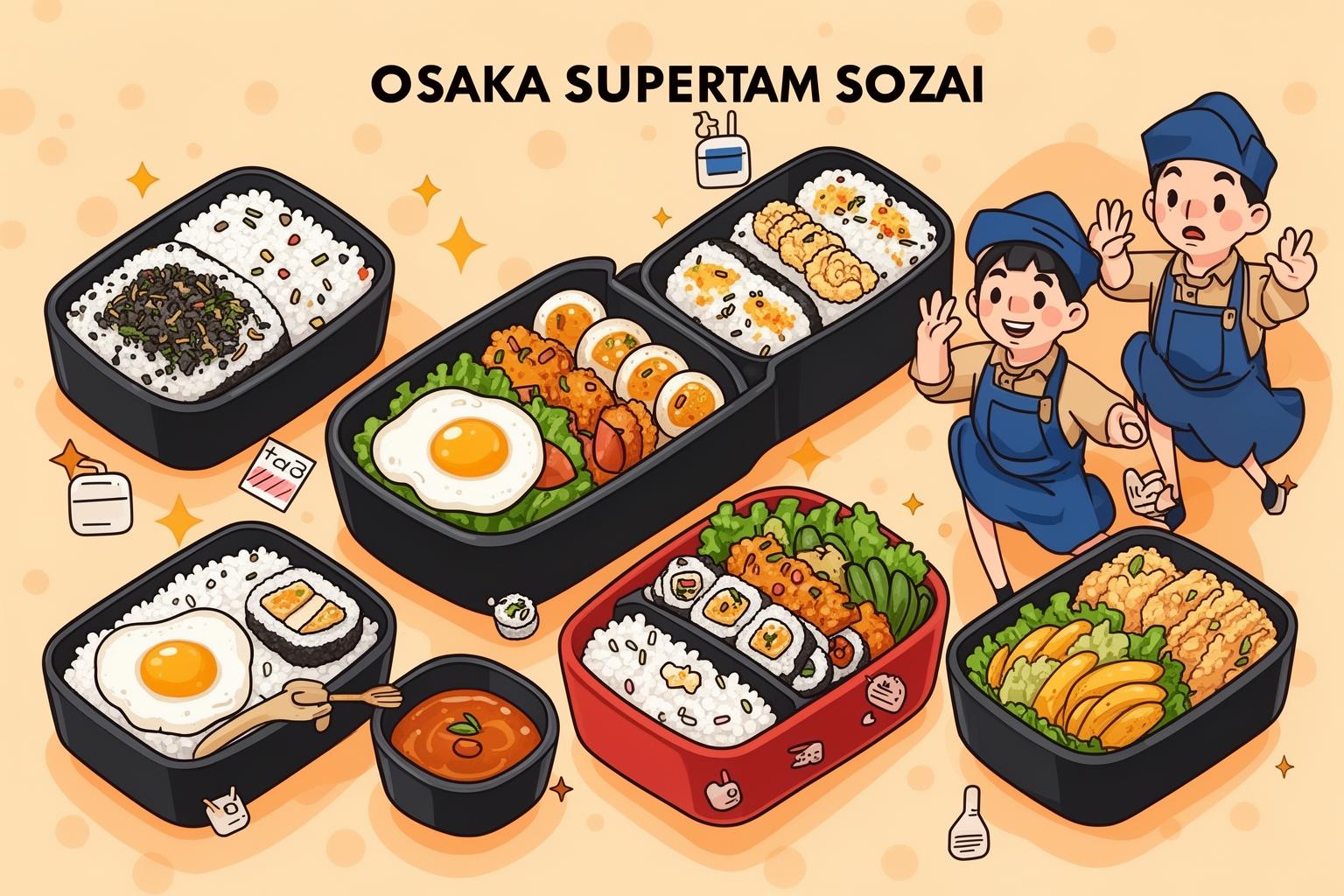
Beyond the gleaming piles of fried foods, Tamade’s sozai section reveals a vibrant mosaic of complete meals and rice-based delights. This is where the supermarket’s dedication to delivering incredible value really stands out, providing balanced, flavorful meals at prices that seem almost unbelievable.
The Legendary One-Coin Wonder: Tamade’s Bento
Tamade is renowned throughout Osaka for its bento boxes. The variety is astounding and changes daily, reflecting what’s fresh and in season. You’ll find classic combinations that form the foundation of Japanese home cooking. A typical bento may include a main protein such as a piece of salt-grilled mackerel (saba no shioyaki), a couple of karaage pieces, or a small pork cutlet (tonkatsu). This is paired with a generous serving of perfectly cooked white rice, often topped with a single bright red pickled plum (umeboshi) or a sprinkle of black sesame seeds. The rest of the box contains a colorful assortment of side dishes. You might see a small portion of tamagoyaki (a rolled, slightly sweet omelet), a heap of kinpira gobo (braised burdock root and carrot), a spoonful of potato salad, and some bright green pickled cucumbers. Each element is distinct, offering unique flavors and textures that create a meal both balanced and exciting to eat. The true wonder is the price. While many bentos cost around 300-400 yen, Tamade often has specials, including the nearly legendary 250-yen bento. It’s a full, satisfying meal for the price of a cup of coffee. As evening approaches, these bento boxes become even more affordable, with staff applying discount stickers that can reduce the price by 20%, 30%, or even 50%. The evening bento rush is a spectacle to witness — a lively yet friendly frenzy of shoppers hunting for the best dinner deals.
Handheld Perfection: Onigiri and Maki Sushi
For a lighter meal or quick snack, the rice ball, or onigiri, reigns supreme. Tamade offers a wide variety of these simple triangles of salted rice, each wrapped in a crisp sheet of nori seaweed and filled with a delicious surprise. The fillings are classic and comforting. There’s shake (salted salmon), a flaky, savory favorite. Umeboshi delivers a sharp, salty-sour burst that’s incredibly refreshing. Kombu (simmered kelp) offers a sweet and savory umami hit. Tuna mayo, a more modern but adored filling, is creamy, rich, and deeply satisfying. These onigiri are not the pristine, machine-made versions from convenience stores. Tamade’s onigiri often feel handmade, slightly rustic, and generously stuffed. They are perfect portable food, easy to eat on the go while exploring the city. Alongside the onigiri, you’ll find packs of maki sushi, or sushi rolls. These are generally simpler, thicker rolls known as futomaki, unlike the elaborate varieties at sushi restaurants. A cross-section reveals a colorful mix of ingredients like sweet tamagoyaki, crunchy cucumber, pink-dyed fish floss (denbu), and simmered shiitake mushrooms, all wrapped together in vinegared rice and nori. They offer a full spectrum of flavors and textures in a single bite. You’ll also find inari-zushi, small pillows of seasoned, deep-fried tofu skin filled with vinegared rice. They are sweet, savory, and juicy — a cherished treat enjoyed by children and adults alike.
The Soul of Home Cooking: Simmered Dishes and Salads
What truly sets Tamade’s sozai selection apart from ordinary convenience food is its variety of obanzai-style side dishes. These are the slow-simmered, delicately seasoned dishes that form the foundation of Japanese home cooking. They evoke the flavors of a Japanese grandmother’s kitchen, offered in small, affordable portions. Purchasing a few of these can quickly elevate a simple bowl of rice into a multi-course, nutritionally balanced meal.
The Earthy and Savory: Nimono
Nimono, or simmered dishes, lie at the heart of this section. These dishes are gently cooked in a broth usually made from dashi, soy sauce, mirin, and sake. One of the most popular and tasty dishes is hijiki no nimono. This features black, thread-like hijiki seaweed simmered with thin slices of carrot, fried tofu (aburaage), and soybeans. It offers a wonderful, slightly sweet yet deeply savory flavor, accompanied by a complex texture from the diverse ingredients. Rich in minerals and fiber, it exemplifies healthy, everyday Japanese cuisine. Another favorite is kinpira gobo, composed of julienned burdock root and carrot sautéed and then simmered in a sweet-savory soy-based sauce, often with a touch of chili for a mild heat. The burdock root provides a distinctive earthy flavor and a pleasantly crunchy texture. You might also find chikuzenni, a hearty simmered stew featuring chicken and root vegetables such as lotus root, taro, and bamboo shoots. These dishes offer a depth of flavor achievable only through slow cooking, and having them readily available is a tremendous time-saver.
The Creamy and Tangy: Japanese Salads
No sozai selection is complete without Japanese interpretations of Western-style salads. Tamade’s potato salad is truly exceptional. It consists of fluffy, slightly mashed potatoes, crisp cucumber slices, thin carrot strips, and often pieces of ham or hard-boiled egg, all combined with a creamy, tangy Japanese mayonnaise. Richer and somewhat sweeter than its Western counterpart, it is a cherished comfort food. Similarly, macaroni salad is a staple, featuring tender elbow macaroni mixed with the same creamy dressing, often including corn and other vegetables. These salads are designed not as light side dishes but as hearty, substantial components that add a creamy contrast to the savory flavors of other sozai. They are ideal for completing a bento or accompanying a piece of fried fish.
Navigating Tamade Like a Pro: Tips for the Sozai Hunter

To fully enjoy your Super Tamade experience, having a strategy is beneficial. This isn’t merely shopping; it’s like an urban safari where timing, keen observation, and a touch of boldness can bring remarkable rewards.
The Rhythm of the Discounts
The most crucial aspect to grasp is the discount cycle. Tamade, like many Japanese supermarkets, is dedicated to minimizing food waste. This results in a predictable pattern of price cuts on perishable items such as sozai and bento. The initial small discounts may appear in the late afternoon, but the real excitement occurs in the evening, usually a few hours before closing. That’s when the coveted hangaku (half-price) stickers are applied. An employee strolls through the sozai section with a pricing gun, attracting a small, respectful crowd trailing behind like followers. Once a half-price sticker is placed on a pack of karaage or a tonkatsu bento, it’s quickly and politely grabbed. The secret is to be present and attentive without being pushy. It’s a fast-moving yet orderly event. Shopping around 7 or 8 PM could mean leaving with a feast for just a few coins.
The Legendary 1-Yen Sales
In addition to the daily discounts, Tamade is famous for its 1-yen sales. These are not just rumors. On select days, often promoted via flyers or large signs outside the store, if you spend a certain amount (usually 1,000 yen), you qualify to purchase a specific item for only one yen. This item might be anything from a carton of eggs to a loaf of bread or a pack of instant noodles. It’s a marketing strategy, of course, but it reflects the store’s commitment to incredible value. If you notice a long line winding through the store, it’s often for the 1-yen sale item. Taking part is a rite of passage for devoted Tamade shoppers.
Creating Your Perfect Meal
The real delight of Tamade’s sozai section is the chance to mix and match and become the creator of your own ideal, simple meal. Don’t just pick up a single bento; think of the section as a buffet. Choose a main dish that appeals to you, perhaps a piece of grilled salmon. Then, visit the obanzai section to select two or three small vegetable dishes—some hijiki no nimono for its savory richness, and maybe some pickled daikon for a crisp, refreshing contrast. Grab a pack of plain white rice (which is also sold hot and ready) or, even better, prepare your own at home. In minutes, you’ll have assembled a meal that is not only incredibly affordable but also balanced, varied, and filled with authentic, home-style flavors. This is how many people in Osaka eat daily—not with elaborate cooking, but by smartly combining high-quality, affordable prepared foods. It’s an efficient, tasty, and savvy way to live.
Beyond the Plate: Tamade as a Cultural Snapshot
Super Tamade is more than merely a place to purchase inexpensive food; it serves as a living museum of Osakan culture. Its loud, bold, and no-frills style directly reflects the city’s character. Osaka has always been a city of merchants, where practicality, value, and a good bargain are highly prized. There is no pretense at Tamade; it is unapologetically itself: a place for the people, offering good, honest food at the lowest possible prices. The store’s existence reveals a deep understanding of the local community’s needs. It serves the single person in a small apartment with a tiny kitchen, the busy family with two working parents, and the elderly pensioner living on a fixed income. It provides a vital service, ensuring everyone has access to a hot, satisfying meal. In a way, shopping at Tamade is an act of engaging with this community. You become part of the neighborhood’s daily rhythm, sharing in the collective pursuit of a good dinner. It is a profoundly grounding experience, a reminder that beneath the futuristic skylines and ancient temples, the heart of Japan beats in everyday rituals—like selecting the perfect korokke under the glow of a fluorescent light.
As a photographer, I’m drawn to places that tell a story, where the veneer of politeness is stripped away to reveal something raw and real. Tamade is exactly one of those places. Every handwritten sign, every overflowing bargain bin, every shopper intently hunting for a half-price bento is a photograph waiting to be captured. It’s a visual feast that perfectly matches the culinary one. The colors are vivid, the energy electric, and the characters genuine. So, when you visit, take a moment to look beyond the shelves. Observe the interactions, listen to the sounds, and soak in the atmosphere. You’ll find that a trip to Super Tamade is not just about satisfying your hunger; it’s about filling your senses and gaining a deeper, richer understanding of this remarkable city. It’s a taste of Osaka in every sense. And as you leave, bags heavy with golden-fried treasures and the store’s jingle still echoing in your ears, you’ll feel as if you’ve been let in on a wonderful, delicious secret.