Close your eyes for a moment and picture takoyaki. What do you see? You’re likely imagining a fleet of golden-brown spheres, nestled in a paper boat, slathered in a sweet and tangy dark sauce, crisscrossed with creamy Japanese mayonnaise. A blizzard of green aonori flakes and a flurry of dancing pink bonito shavings complete the picture. It’s a flavor explosion, a symphony of textures and tastes that screams “Osaka!” from every delicious bite. It’s the street food icon that has conquered the world, a symbol of the city’s vibrant, fun-loving, and unapologetically bold culinary spirit. But what if I told you that this image, as iconic as it is, is a modern evolution? What if I told you that to taste takoyaki in its original, purest form, you have to strip away every single one of those toppings? To understand the soul of this dish, you have to travel back in time, away from the glittering neon canals of Dotonbori, and into a quiet, unassuming neighborhood where the story began. Welcome to Aizuya Honten in Tamade, the certified birthplace of takoyaki, a place where the batter is the star, the history is the seasoning, and the sauce is conspicuously, wonderfully absent. This isn’t just a meal; it’s a pilgrimage to the very source of one of Japan’s most beloved culinary creations. It’s a chance to taste history, to understand the philosophy of a creator, and to discover the subtle, profound flavors that sparked a global phenomenon. Here, in this humble shop, the legend of takoyaki is not just told; it’s served hot, fresh, and unadorned, exactly as it was meant to be.
While you’re exploring Osaka’s rich culinary history, you’ll also want to experience the city’s vibrant kushi-katsu culture in Juso.
A Journey Back in Time: The Aizuya Story

The story of Aizuya is intertwined with the very origins of takoyaki, a narrative shaped by innovation, keen observation, and the distinctive culinary environment of pre-war Japan. Our central figure is the founder, Tomekichi Endo, a visionary who opened his stall, Aizuya, in 1933. Initially, he wasn’t selling the takoyaki we recognize today; instead, he offered a snack called rajioyaki, or “radio-yaki.” This playful name referred to a modest treat. In the 1930s, the radio was a symbol of cutting-edge technology, an exciting luxury that captivated the public imagination. Naming his simple street food after it was a savvy marketing strategy, linking the snack to notions of modernity and sophistication. These original spheres were made from a savory flour batter but were filled with seasoned beef tendon (suji) and konjac jelly rather than octopus. They quickly became popular, offering a warm and fulfilling snack for Osaka’s working class.
The true moment of culinary brilliance, however, came two years later, in 1935. According to the story, a customer from Akashi, a city in neighboring Hyogo Prefecture, sampled Endo’s rajioyaki and remarked, “In Akashi, they put octopus in theirs!” This wasn’t a criticism, just an observation that sparked a revolutionary idea in Japanese food history. Akashi is famous for akashiyaki (also known locally as tamagoyaki), a similar-looking yet distinct dish. Akashiyaki consists of soft, egg-rich dumplings with octopus, served on a wooden board and dipped into a clear, delicate dashi broth. They are light and ethereal, quite different from the hearty rajioyaki.
Inspired by this, Tomekichi Endo began experimenting. He sourced fresh octopus from the nearby Seto Inland Sea, swapping it for the beef tendon. But he didn’t merely replicate akashiyaki; he preserved his own unique vision. Understanding that his customers ate the snack on the move without time to dip, he crafted a flavor that was complete in every bite. He carefully developed a special batter infused with a secret blend of dashi broth and seasonings. This batter was so rich in umami and perfectly balanced that it needed no dipping sauce whatsoever. It was designed to enhance the octopus’s subtle sweetness and stand entirely on its own. He named this new creation “takoyaki.” That humble Osaka stall became the birthplace of a legend. The principle set forth that day—that the batter is the soul of the dish—remains the steadfast philosophy of Aizuya Honten to this very day.
The Tamade Experience: Stepping into a Living Legend
Your journey to Aizuya Honten is as integral to the experience as the food itself. You won’t find it amid the sensory overload of Shinsaibashi or the towering skyscrapers of Umeda. Instead, you’ll take the subway—perhaps the Yotsubashi Line to Tamade Station—and step into a different side of Osaka. This is Nishinari Ward, a deeply local, residential area of the city that moves at a slower, gentler pace. The atmosphere here feels distinct—quieter, more attuned to the rhythms of everyday life. The walk from the station leads you past modest apartment buildings with laundry fluttering on balconies, neighborhood parks where children play, and small, family-run shops likely passed down through generations.
As you near Aizuya, you’ll notice it’s not an extravagant establishment. It’s a simple, clean storefront with a blue noren curtain hanging over the entrance, showcasing the shop’s name in proud, white calligraphy. There’s no flashy signage, no long line of tourists—though it’s often busy with a steady flow of locals who know they’re getting the genuine article. The vibe is one of authenticity and quiet confidence. This place doesn’t need to shout; its legacy speaks volumes.
Stepping inside feels like entering a sanctuary of konamon culture. The space is often small and functional, focused entirely on the craft. The first thing that greets you is the aroma: the warm, savory, slightly sweet scent of dashi-infused batter cooking on custom-made copper grills. Then, the sound: the rhythmic, percussive click-clack-click of the takoyaki masters turning the dough balls with their sharp metal picks. It’s a mesmerizing dance of precision and speed honed over decades. You watch as they pour the liquid batter into rows of hemispherical molds, drop a single piece of octopus into each one, and then, with fluid, practiced motions, expertly flip and shape them into perfect spheres. There’s no wasted movement. It’s a culinary ballet, a testament to the devotion required to uphold an 80-year-old tradition. The atmosphere is warm and inviting, yet serious in purpose. This is a workshop, a studio where artists create their signature piece repeatedly for an appreciative audience.
Savoring the Original: A Guide to the Aizuya Menu
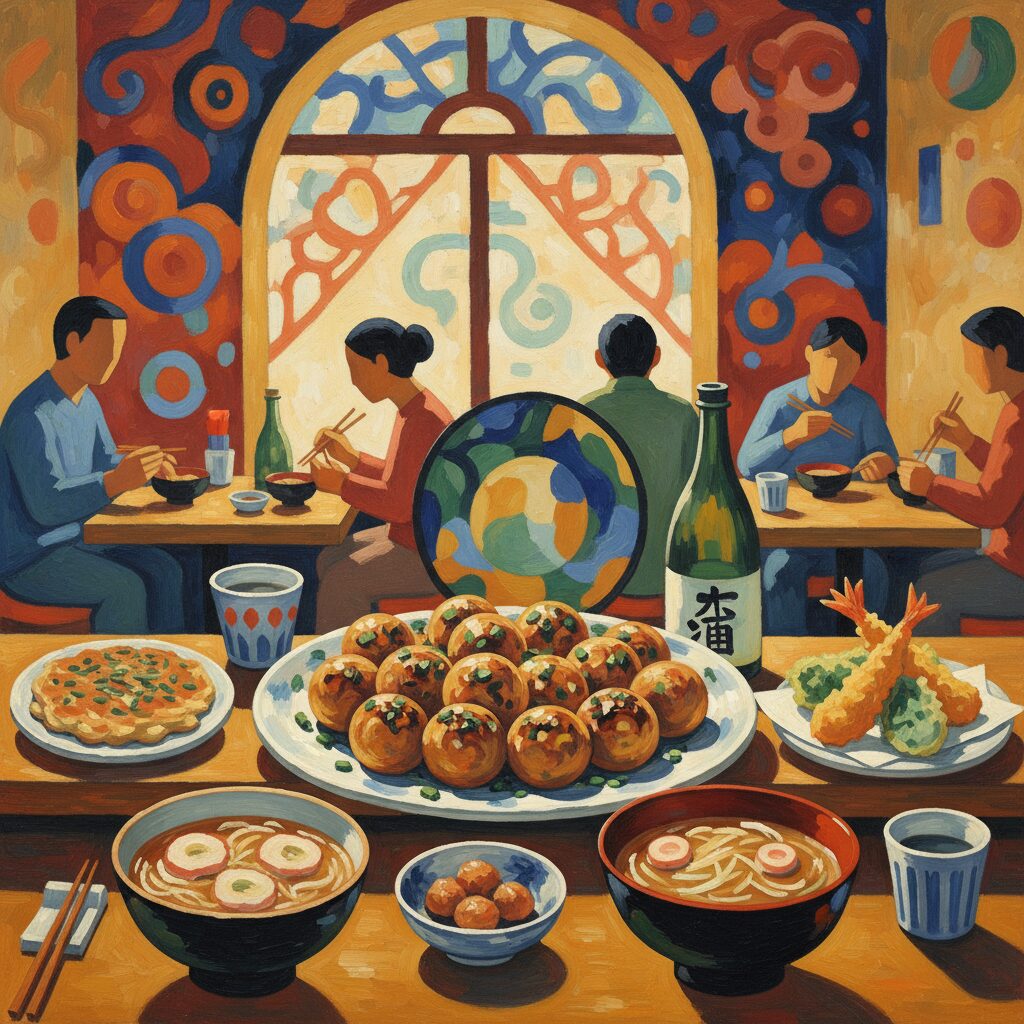
When you approach the counter at Aizuya, you might feel a slight disorientation if you’re accustomed to the extensive menus of modern takoyaki chains. The options here are simple, focused, and deeply rooted in the shop’s history. For first-time visitors, there’s one obvious and essential choice: the Sanshumori, or Three-Variety Set. This serves as an edible history lesson, a platter that lets you sample the full evolutionary journey of Tomekichi Endo’s creation. It usually includes the Original Takoyaki, the ancestral Rajioyaki, and a third variety often featuring green onions or other straightforward ingredients. Ordering this set is the best way to grasp Aizuya’s philosophy from the ground up.
Begin with the Original Takoyaki. They arrive unadorned—a dozen golden spheres resting simply in their container. Pick one up with the provided toothpick. The exterior is delightfully crisp, giving way to a light, satisfying crunch. But the interior is the real revelation. It’s neither doughy nor heavy; instead, it’s rich, molten, and almost creamy, with a texture that melts in your mouth. This is where the magic of the dashi-infused batter shines. The flavor is subtle yet profound—a deep, savory umami from the bonito and kelp broth, a gentle sweetness, and a hint of soy. The taste unfolds beautifully on your palate. Then you discover the prize inside: a small, tender piece of octopus, offering a pleasant chew and a mild, oceanic sweetness that perfectly complements the savory batter. The experience is delicate, nuanced, and utterly delicious. It makes you realize that the sauces and toppings you’ve always known somewhat mask the true artistry of the batter itself.
Next, try the Rajioyaki. Visually, it looks nearly identical, but the first bite transports you back to 1933. The filling is a savory blend of simmered beef tendon (suji) and chewy konjac. The beef delivers a deeper, richer, and meatier flavor than the octopus, robust and savory, with the tender, gelatinous texture of the tendon blending into the creamy batter. The konjac provides a delightful, bouncy textural contrast. Sampling the rajioyaki immediately after the takoyaki is a fascinating experience. You can clearly grasp the founder’s intent and appreciate the shift from hearty, earthy flavors of the land to the lighter, more delicate tastes of the sea. It’s like hearing an early demo of a famous song—you recognize the foundational melody that would later evolve into a classic.
The third variety often includes finely chopped green onions mixed into the batter, adding a fresh, slightly sharp aromatic note that brightens the overall flavor. Regardless of which one you’re eating, the key is to savor them as they come. While you can ask for toppings like ponzu vinegar or sauce, it almost feels sacrilegious. Coming to the birthplace of takoyaki and smothering it in sauce is like visiting the Louvre and drawing a mustache on the Mona Lisa. The essence of this pilgrimage is to experience the masterpiece as it was originally intended.
Beyond the Takoyaki: Exploring Nishinari and Tamade
A visit to Aizuya Honten provides the perfect opportunity to explore a part of Osaka that many tourists often overlook. The Tamade neighborhood gives a charming and genuine glimpse into the city’s everyday life. After enjoying the historic takoyaki, take some time to stroll through the nearby shotengai, or covered shopping arcade. These arcades are the heartbeat of Japanese communities, and the one in Tamade is an excellent example. Here, you won’t find souvenir shops or fashionable boutiques. Instead, you’ll encounter vendors offering fresh tofu, shiny fish, local vegetables, and household goods. You’ll hear warm conversations between shopkeepers and their regular customers. It’s a world away from the commercial bustle of the city center, offering a rich and immersive cultural experience.
For practical tips, reaching Aizuya is quite simple. The nearest station is Tamade on the Osaka Metro Yotsubashi Line, just a few minutes’ walk away. Alternatively, Kishinosato-Tamade Station on the Nankai Main Line is also very close. The shop is small and mainly serves takeout, although some branches have limited seating. It’s best to plan for a quick meal or bring your takoyaki to a nearby park to enjoy. The ideal time to visit is often during off-peak hours, such as mid-afternoon on a weekday, to avoid waiting, although the line usually moves fast. Be sure to carry cash, as many smaller, traditional shops in Japan might not accept credit cards.
If you’re interested in spending a day exploring southern Osaka, Aizuya is a fantastic starting place. A short train ride on the Nankai Line will take you to Sumiyoshi Taisha, one of Japan’s oldest and most significant Shinto shrines. With its iconic steep-arched Sorihashi Bridge and peaceful, wooded grounds, it provides a striking contrast to the city’s urban energy. Combining a culinary visit to Aizuya with a spiritual trip to Sumiyoshi Taisha creates a truly memorable and uniquely Osakan day, connecting you to the city’s deep history on multiple levels.
A Taste That Defined a City
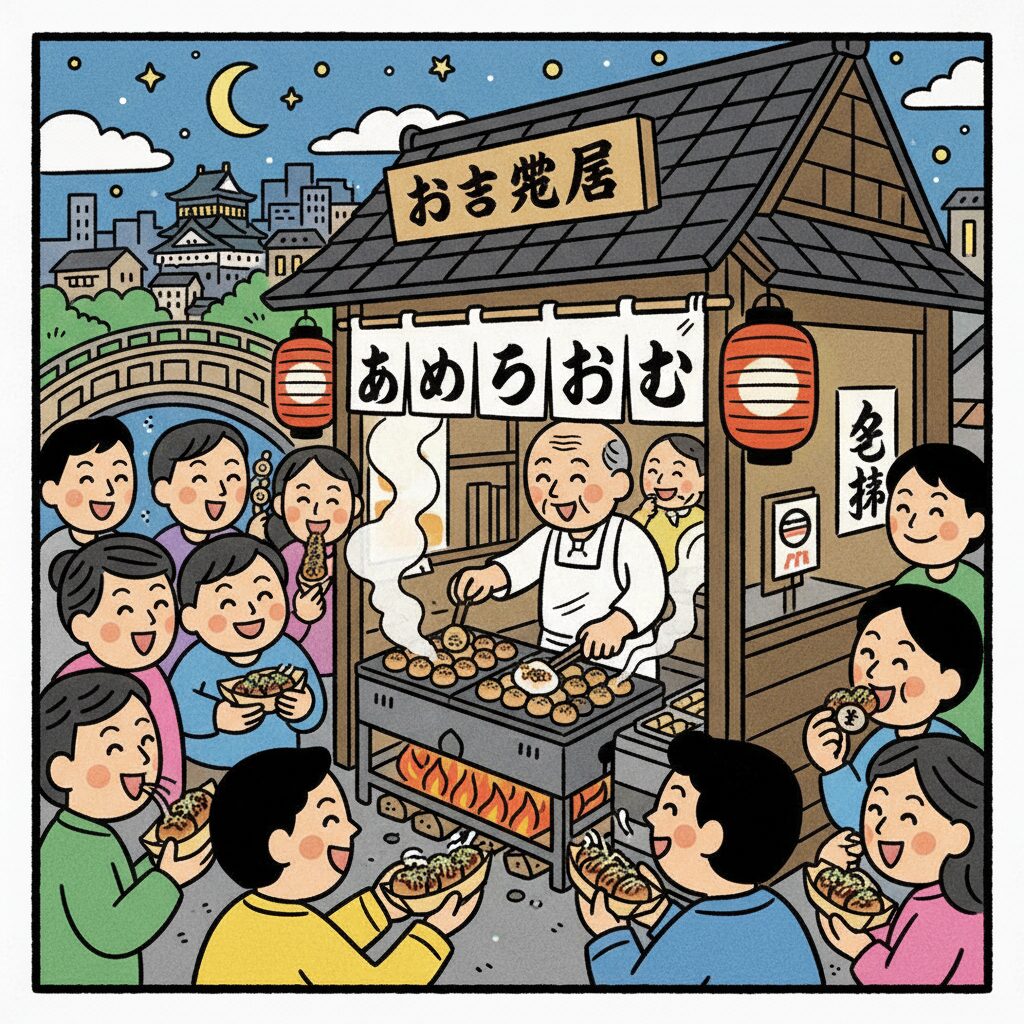
The significance of Tomekichi Endo’s simple innovation cannot be overstated. From a single stall in 1935, takoyaki quickly spread, becoming an inseparable part of Osaka’s identity. It grew into a cornerstone of konamon culture—a term literally meaning “flour things”—which forms the heart and soul of Osakan cuisine. The city thrives on these affordable, delicious, and satisfying flour-based dishes, ranging from takoyaki and okonomiyaki to udon noodles. Aizuya stands as the founding pillar of this entire culinary tradition. Although numerous variations have appeared over the decades—with cheese, tempura bits, and an array of exotic fillings and sauces—they all trace back to the original concept perfected at Aizuya.
The shop’s steadfast commitment to its original recipe and philosophy has not gone unnoticed. In an era of constant change and fleeting food trends, Aizuya’s consistency stands as a testament to its greatness. This dedication earned it a prestigious place in the Michelin Guide’s Bib Gourmand category, an honor awarded to establishments that deliver exceptional food at reasonable prices. For a modest street food vendor to achieve such recognition speaks volumes about the quality and historical significance of their craft. It confirms what locals have long known: true deliciousness doesn’t always require embellishment. Sometimes, it’s most powerful when left in its simplest form.
Visiting Aizuya provides a fascinating insight into the evolution of food. You get to witness the origin and then compare it with the modern interpretations found on every street corner in Dotonbori. Doing so deepens your appreciation for both. You realize that the sauce-soaked, topping-heavy versions cater to a craving for bolder, more intense flavors, whereas the Aizuya original is a reflection on balance, subtlety, and the quality of foundational ingredients. One is a vibrant, joyous celebration; the other, a quiet, perfectly crafted poem.
A Final Morsel of Thought
In a world always chasing the next big trend, there is something deeply comforting and inspiring about a place like Aizuya Honten. It stands as a quiet anchor amid the ever-shifting sea of culinary fads, a living tribute to a moment of simple, brilliant inspiration. Visiting this small shop in Tamade is far more than a search for a snack. It is a connection—to a city, its history, and the spirit of a single innovator who, with one simple idea, created a dish that would delight millions worldwide. Eating takoyaki at Aizuya means stripping away the noise to savor the essence. It’s an understanding that before becoming a global sensation, it was a perfectly crafted, self-contained bite meant to be enjoyed, not overloaded. So, on your next trip to Osaka, venture beyond the bright lights. Find the little blue curtain in Nishinari Ward. Order the three-variety set, and as you take your first bite of plain, unadorned takoyaki, listen closely. You just might hear the faint crackling of a 1930s radio, broadcasting a delicious piece of history straight to your palate.