Let me tell you about the moment I truly understood Osaka. It wasn’t at the top of a skyscraper or in the hallowed halls of a castle. It was on the third-floor landing of a very average apartment building in a neighborhood you won’t find in any travel guide. I was a week into my new life here, a transplant from the polished, predictable social landscape of Tokyo. My neighbor, a woman with a perm that seemed to defy gravity and a smile that crinkled her entire face, knocked on my door. Not a tentative rap, but a confident, rhythmic tap-tap-tap. I opened the door, and she thrust a clear plastic grocery bag into my hands. Inside were two lumpy potatoes, a single, rather large onion, and a clutch of green beans held together by a rubber band. She said something fast in a thick Kansai dialect that roughly translated to, “Got too many from my brother’s garden. You eat ’em before they go bad.” And then, with a little wave, she was gone. I stood there, holding this bag of dirt-dusted vegetables, completely bewildered. In Tokyo, a gift to a new neighbor is a pristine, machine-wrapped towel set or a box of expensive cookies from a department store basement. It’s an exchange of pleasantries that reinforces a comfortable distance. This was… an intrusion. It was personal. It was a bag of vegetables. And it was the most Osaka thing that had ever happened to me. This city doesn’t communicate in formal greetings and carefully curated presents. It speaks a language of casual offerings, of shared surplus, of a constant, low-humming exchange that binds people together. This is the world of ‘temiyage,’ but ripped from its formal context and repurposed for the everyday. It’s a system of communication that can seem baffling to outsiders, especially those accustomed to the more reserved customs of Tokyo or Western cultures. But if you want to understand what living in Osaka is really like, if you want to grasp the mindset of its people, you need to learn the grammar of the gifted onion. It’s a dialect spoken through food and small favors, and it’s the key to unlocking the true, vibrant, and deeply human heart of this city.
To truly grasp the city’s unique social fabric, one must also understand other local customs, such as the unwritten rules for navigating Osaka by bicycle.
Beyond the Gift Box: Deconstructing Osaka’s Practical Generosity
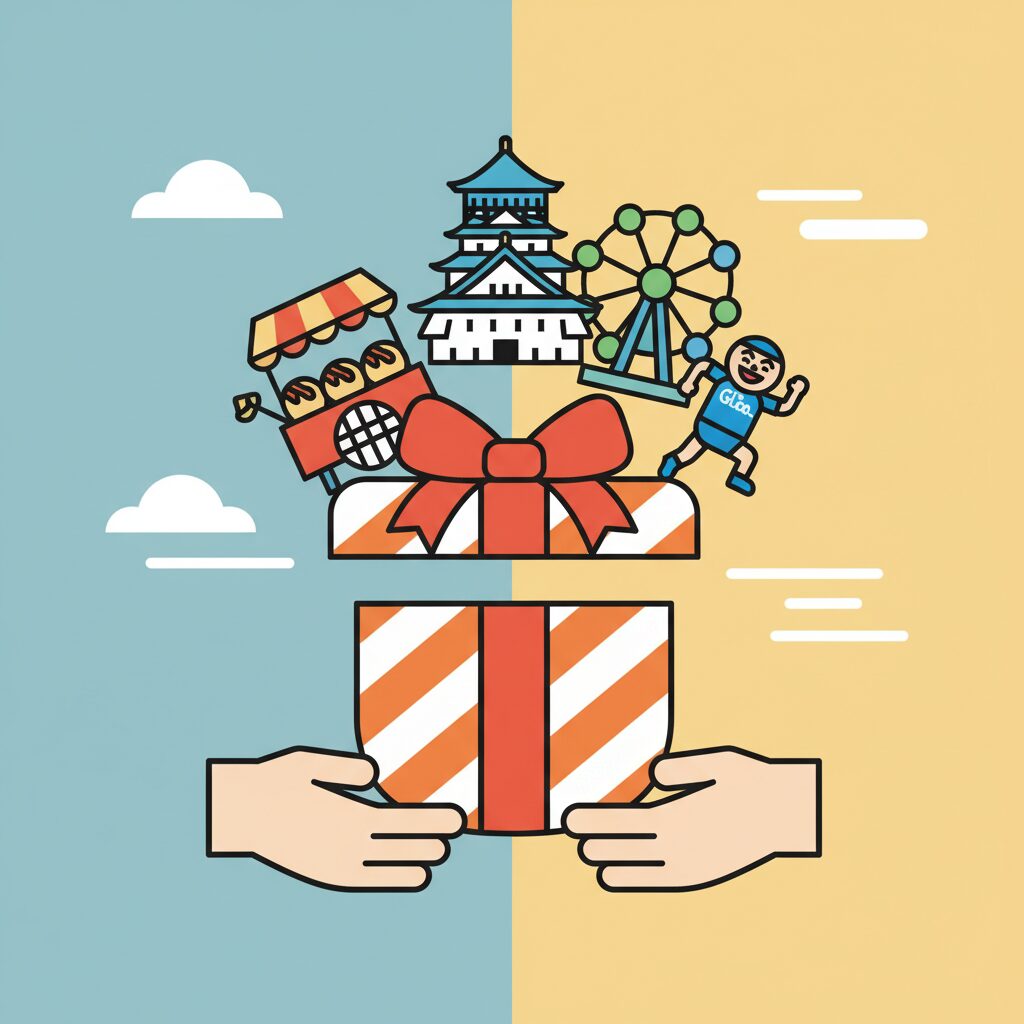
To truly understand what’s going on in Osaka, you need to fundamentally rethink your definition of a “gift.” Across most of Japan, especially in Tokyo, a gift is a symbol. It stands for respect, gratitude, or apology. Its value lies in its branding, presentation, and the social context in which it’s offered. The wrapping paper is as significant as what’s inside, and the bag it comes in carries its own meaning. In Osaka, however, a gift is often simply… an item. Something useful, edible, or sometimes just an extra. The symbolism is stripped away and replaced with straightforward utility and the genuine, unembellished act of connection.
It’s Not What You Give, but That You Give
This is the primary and most important rule. The act of giving itself is what truly matters. A Tokyo colleague might agonize over whether to buy the 1,500-yen senbei crackers or the 2,000-yen yokan jelly from a famous Ginza shop as a department-wide souvenir. An Osaka colleague, on the other hand, is more likely to pick up a multipack of a quirky local snack they found amusing. The gesture isn’t about impressing anyone with taste or generosity; it’s about sharing an experience. This mindset filters down into every facet of daily life. That neighbor giving you vegetables wasn’t trying to showcase her brother’s gardening skills. She was saying, “I see you. You’re part of my immediate world. I had a surplus, and I included you in the circle of people to share it with.”
This approach results in a delightful, sometimes puzzling, variety of informal gifts. A coworker might hand you a single can of coffee from a vending machine saying, “They had a two-for-one deal.” Or a friend could arrive at your apartment with a bag of ‘karaage’ (fried chicken) from a local butcher, announcing, “I bought too much for dinner.” These aren’t gifts given out of pity or leftovers in the Western sense. They’re spontaneous acts of inclusion. The message underneath is one of casual community, a ‘we’re-in-this-together’ spirit that feels worlds apart from Tokyo’s polite yet tangible social distance. The value isn’t monetary; it’s relational. The coffee can signifies a five-minute break to chat. The fried chicken offers a reason to catch up. The gift is the key that unlocks interaction.
The Economics of Sharing: ‘Mottainai’ and Mutual Support
Japan has a deeply rooted cultural concept called ‘mottainai,’ expressing regret over waste. It goes beyond “waste not, want not”; it is a quasi-spiritual reluctance to let anything useful—whether food, time, or opportunity—go to waste. In Osaka, a city shaped by merchants where pragmatism is prized, ‘mottainai’ is elevated to an art form. Combined with a strong sense of community, it forms the foundation of the local gift-giving culture.
Sharing surplus isn’t simply a kind gesture; it’s the most logical course of action. If you have a case of beer from a work event that you can’t possibly finish, you don’t let it sit idle. You share it with your neighbors. When your tomato plants produce abundantly in summer, you become the go-to tomato distributor for your entire apartment floor. This isn’t charity—it’s a distributed system of resource management and a practical expression of community. A small bakery owner might give you day-old bread not because they think you’re needy, but because throwing it away would be ‘mottainai,’ and giving it to you strengthens a social bond. It’s a win-win: waste is reduced and connections are reinforced. Understanding this helps shift the perspective on these gifts. They don’t reflect on your resources but on the giver’s resourcefulness and their view of you as part of their social network. To refuse such a gift is not just declining bread; it’s subtly rejecting that connection and the practical, waste-conscious logic that shapes Osaka’s society.
The Office Ecosystem: Temiyage as Team Glue
The Japanese workplace follows its own complex set of social rules, with gift-giving being a key part of this cultural code. Here, the tradition is more formalized and centers around ‘omiyage’—souvenirs brought back from business trips or vacations. While this custom is observed nationwide, how it’s practiced in Osaka reflects the city’s distinctive character. It emphasizes participation over obligation.
The ‘Vacation Tax’ You’ll Grow to Appreciate
Throughout Japan, it’s an unspoken rule that when someone goes on a trip, they return with a box of individually wrapped snacks for their colleagues. This gesture thanks them for covering during the absence and shares a piece of the journey. In a typical Tokyo office, this is a quiet ritual. The box is left in a communal spot with a polite note. People take one, eat it at their desk, and that’s the extent of it. The obligation is met.
Conversely, in an Osaka office, the traveler’s return becomes an event. The box of ‘omiyage’ takes center stage in a social ritual. Rather than just placing it on a table, the traveler often theatrically opens it, announcing, “I’m back! And I brought treats!” This invites colleagues to gather around. The interaction is lively, not a formal “Thank you for the gift.” It becomes an animated conversation: “Where did you get these? Was the train crowded? Did you try the famous ramen place we mentioned? This one’s delicious! You have to try this one!” The snacks themselves matter less than the stories and camaraderie they spark. It’s a way to pause the workday, reconnect personally with coworkers, and boost office morale. For foreigners, this may feel a bit intense, but embracing it is important. Don’t just leave the box unattended—present it, participate, and answer questions. It’s your entry point to the team’s social circle.
Understanding the Snack Hierarchy
While the vibe is more relaxed, etiquette is still in play. Osaka’s practical nature reveals itself here. The ideal ‘omiyage’ is something easy and fair to distribute. Individually wrapped snacks are preferred. A single whole cake, no matter how tasty, presents challenges: who cuts it? Are the slices even? It creates extra work and potential discomfort. A box of 30 individually wrapped cookies, on the other hand, works perfectly. Everyone can grab one hassle-free.
There is also a subtle hierarchy involved. The large communal box is meant for the entire department. However, it’s customary and appreciated to buy a smaller, somewhat nicer gift for your direct boss or for the colleagues who covered your work while you were away. This shows personal gratitude and an awareness of office dynamics. It doesn’t need to be costly—a small bag of specialty coffee or a unique local sweet will suffice—but it recognizes their individual support. Selecting the right kind of snack—something easy to share and thoughtfully chosen—is a way to display social savvy, or ‘kuuki wo yomu’ (reading the atmosphere), even in Osaka’s more casual environment.
Navigating Neighborly Nuances: The Apartment Building Micro-Community
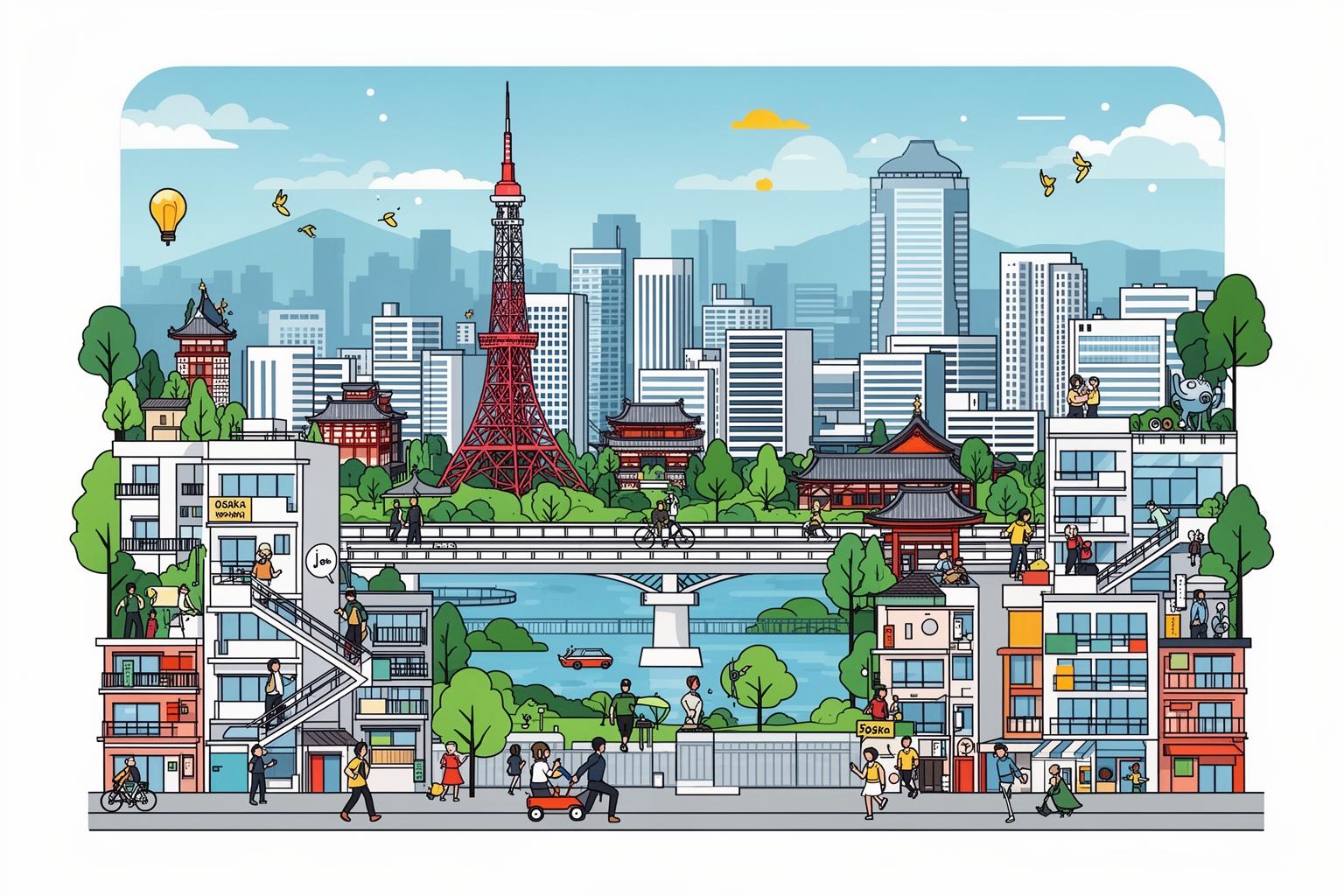
Nowhere is the Osaka style of social interaction more concentrated and vital than within your own apartment building. In the vertical villages of urban Japan, your relationship with immediate neighbors can greatly influence your daily quality of life. This relationship is built almost entirely on a foundation of small talk and even smaller gifts.
The Essential First Meeting: The ‘Hikkoshi no Aisatsu’
When moving into a new apartment in Japan, it is customary to introduce yourself to your immediate neighbors—those next door and often those directly above and below you. This is called ‘hikkoshi no aisatsu’ (moving-in greeting), and it involves presenting a small gift. The gift is generally the same nationwide: a simple towel, a box of dish soap, or a package of plastic wrap, typically worth between 500 and 1,000 yen.
However, the way this ritual is carried out sharply contrasts between Osaka and Tokyo. In Tokyo, the exchange is usually a brief, formal handover at the doorway. You pass the gift, state your name and apartment number, bow, and step back. The intention is to acknowledge your shared presence while maintaining mutual privacy. It conveys the message, “I am here. I will be quiet. Please extend me the same consideration.”
In Osaka, the greeting is more like an interview or an audition. When you knock on the door, expect a conversation. The gift merely grants you entry. You’ll likely be asked where you’re from, what you do, if you’re married, and why you chose Osaka. To a Westerner or someone from Tokyo, this might feel intrusive. But it’s not an interrogation; it is a social orientation process. Neighbors are determining who you are and how you fit into the building’s ecosystem. Are you a student who might throw late-night parties? A family with young children who might cause morning noise? A foreigner unfamiliar with the complex garbage sorting rules? They’re gathering information to ensure smooth communal living. The best approach is to be open, friendly, and patient. Answer with a smile. This single interaction sets the tone for your entire stay. In Osaka, a successful ‘hikkoshi no aisatsu’ is less about the towel’s quality and more about the quality of connection forged in those few minutes at the door.
The Ongoing Exchange of Hand-Me-Downs and Shared Food
Following the initial greeting, the relationship continues through a steady flow of casual gifts. This dynamic forms the living heart of neighborhood life in Osaka, and mastering its rhythm is crucial.
Reading the Signs: What Does a Bag of Onions Signify?
That bag of vegetables from my neighbor wasn’t just a random kindness. It was both a message and a test. The message: “I acknowledge you as my neighbor. You’re on my radar.” The test: how I would respond. Would I be confused, annoyed, or grateful? Would I grasp the unspoken rule of reciprocity? Such gifts are opening moves in a slow, strategic social game. They’re an investment in ‘kinjo-zukiai,’ or neighborhood rapport. In a country prone to natural disasters, knowing and trusting neighbors isn’t just polite; it’s essential. These small exchanges weave a safety net. So, what does a bag of onions mean? It means you belong to the community, and now the ball is in your court.
The Art of Receiving: Gratitude and Avoiding the ‘Okaeshi’ Pitfall
How you receive gifts is as important as how you offer them. The ideal response is enthusiastic, slightly surprised gratitude. A simple “Arigatou gozaimasu” is acceptable, but a more lively, “Eh, honto desu ka? Ureshii! Itadakimasu!” (“Oh, really? I’m so happy! I’ll gladly accept it!”) is better. Your reaction should match the casual warmth of the gesture.
It’s crucial to avoid the ‘okaeshi’ trap. ‘Okaeshi’ is the formal Japanese custom of returning a gift usually valued at half the original’s price. This applies to formal events like weddings or funerals. Applying that logic to, say, a neighbor’s bag of home-grown tomatoes is a social mistake. If you immediately knock on their door with an elegantly wrapped box of expensive sweets, you don’t appear thankful—you appear tone-deaf. You’ve transformed a casual, friendly gesture into a formal, transactional one, disrupting the rhythm and making them feel awkward. Reciprocity should not be immediate or formal. Instead, wait. A week later, when you see them in the hallway, say, “The tomatoes you gave me were absolutely delicious!” Then, perhaps a month later, bring back a small snack from a trip or share some homemade cookies. The return gift should feel as spontaneous and casual as the original.
When You’re the Giver: Your Gift Arsenal
As a foreigner, you possess a secret advantage in the neighborhood gift game: your culture. Sharing small, non-perishable snacks from your home country is a guaranteed hit. It’s unique, intriguing, and sparks conversation, offering neighbors a glimpse into your world. A bag of pretzels, a bar of specialty chocolate, or a small box of tea from your homeland can be very well received. Don’t worry about taste preferences; novelty and thoughtfulness are what count. Beyond that, the principles are straightforward. Did you buy a 24-pack of croissants at Costco? Bag a few up to share next door. Tried a new recipe and ended up with too much? Portion some out to offer. Authenticity is key. The gift should feel like a natural part of your daily life rather than a calculated social maneuver. The more it seems like a genuine gesture, the more appreciated it will be.
The Osaka vs. Tokyo Divide: A Tale of Two Gift-Giving Cultures
Understanding Osaka’s approach to ‘temiyage’ becomes even clearer when directly compared with Tokyo’s. These two cities embody contrasting poles of Japanese social dynamics, and their gift-giving customs perfectly illustrate this fundamental difference in mindset. It’s not about one being superior to the other; rather, it reflects differing priorities and distinct definitions of what defines a good social relationship.
Tokyo: The Aesthetics of Distance
In Tokyo, social interactions, especially among neighbors and casual acquaintances, are often structured to maintain a smooth, frictionless, and respectful distance. Harmony is upheld by avoiding imposition. In this setting, gift-giving serves as a display of social propriety. Gifts to a Tokyo neighbor are carefully selected, sourced from reputable department stores, impeccably wrapped, and presented with formal, rehearsed expressions. The gift conveys, “I acknowledge our social contract. I will not impose, and trust you will do the same.” It functions as a tool for polite separation. The interaction is efficient and predictable, with few personal inquiries. The aim is to execute the ritual perfectly, reinforcing the unspoken boundaries that enable millions to cohabit closely without conflict. It is elegant, refined, and considerate in its own way, but it is not intended to foster closeness.
Osaka: The Pragmatics of Proximity
In Osaka, the goal is quite the opposite. Social interactions aim to reduce distances between people. Harmony is achieved through engagement rather than avoidance. An Osaka gift serves as a means to break down walls of privacy, spark conversation, and transform strangers into acquaintances. The presentation matters less than personality and practicality. A crumpled plastic bag is perfectly acceptable if what’s inside is given warmly. Exchanges are often messy, unscripted, and personal. The gift says, “We live close. Let’s get to know each other. Here’s something; now let’s talk.” It is an invitation. While it may seem blunt or even rude to those accustomed to Tokyo’s polish, it stems from a different social philosophy: community is built through active, sometimes straightforward, participation. The belief is that it’s better to know your neighbors intimately, even if that process is a bit noisy.
What Foreigners Misunderstand
This cultural divide leads to common misunderstandings among non-Japanese residents in Osaka. One is misjudging the value of a gift. Receiving a ‘cheap’ or unwrapped item may feel like an insult, as if the giver doesn’t care enough to make an effort. This is a fundamental misinterpretation. In Osaka, the effort lies not in the wrapping but in the thoughtfulness and act of visiting your door to share something. The value is entirely in the connection.
Another misunderstanding involves seeing neighborly curiosity as ‘nosy’ or intrusive. Questions about your job, family, and habits are not gossip; they are part of a community-based risk assessment. People want to know who shares their space. For example, knowing that the person in 3B works nights helps explain why their lights are on at 2 AM. Knowing you’re a foreigner who might feel lonely during New Year’s might encourage them to share traditional ‘osechi’ dishes with you. It’s about creating a social map of the building.
Finally, the pressure to reciprocate immediately and equally is a frequent mistake. It imposes a transactional, formal logic on a system meant to be relational and long-term. Resisting the urge to ‘repay’ a gift right away and allowing the relationship to develop naturally is a challenging but essential skill. Your opportunity to contribute will come, and it will be all the more meaningful by being spontaneous.
Mastering the Flow: Your Practical Guide to Osaka’s Gift Economy
So, how do you put all of this into practice? How do you navigate this world of casual exchanges without feeling awkward or making a social blunder? It’s about shifting your mindset from transaction to interaction and embracing the lively, warm-hearted spirit of the city. Here’s a simple guide to help you find your flow.
The Giver’s Checklist
When you feel the urge to give, or when the situation calls for it, keep these points in mind:
- Keep it Simple: Don’t overthink it. The gift should naturally flow from your life. Too much effort can make it seem formal and out of place. That extra bag of apples is just right.
- Focus on Shareable or Useful Items: Food is the universal currency. Snacks, produce, baked goods—these are always winners. Practical household items work well too, following the ‘mottainai’ principle.
- Skip the Formal Language: While the formal phrase “Tsumaranai mono desu ga…” (“It’s a boring thing, but…”) is standard gift-giving etiquette in Japan, it can feel stiff in casual Osaka settings. A more natural “Chotto ookatta kara, yokattara dozo!” (“I had a bit extra, so please take this if you’d like!”) better fits the vibe.
- Use the Gift as a Conversation Starter: Don’t just hand over the item and walk away. Stay a moment. Ask how they’re doing. Comment on the weather. The gift’s purpose is to create a connection. Use it.
The Receiver’s Playbook
When you’re on the receiving end, your reaction matters most:
- Accept with Genuine Enthusiasm: A bright smile and a heartfelt thank you are crucial. Showing happiness makes the giver feel good and strengthens the bond. Even if you dislike onions, accept them graciously.
- Rarely Refuse: Declining a casual gift can be seen as rejecting both the person and the relationship they’re trying to build. Unless you have a severe allergy, it’s best to accept. You can always pass it on later if you truly can’t use it.
- Don’t Rush to Reciprocate: This is the key rule. Thank them sincerely, then let it go. Store the information away. When a natural chance arises for you to share something, act on it. The cycle will continue effortlessly.
- Follow Up with Words: A week later, mentioning how you enjoyed the gift (“I put those potatoes in a curry, and they were amazing!”) is a form of reciprocation itself. It shows the gift was received, used, and appreciated, closing that interaction.
The Bottom Line: It’s Communication, Not a Transaction
Ultimately, every casual gift, every shared snack, every bag of surplus vegetables is a sentence in a long, ongoing conversation. In a city that values directness and human connection over formality and reserve, ‘temiyage’ is a vital dialect. It’s how community is built—one small, thoughtful, and often unwrapped gesture at a time. Learning to speak this language—to both give and receive with the right spirit—is one of the most important steps toward feeling less like a visitor and more like a true Osaka resident. It’s about understanding that the city’s famous friendliness isn’t just an abstract attitude; it’s something actively practiced and communicated every day, often through something as simple and meaningful as a gifted onion.