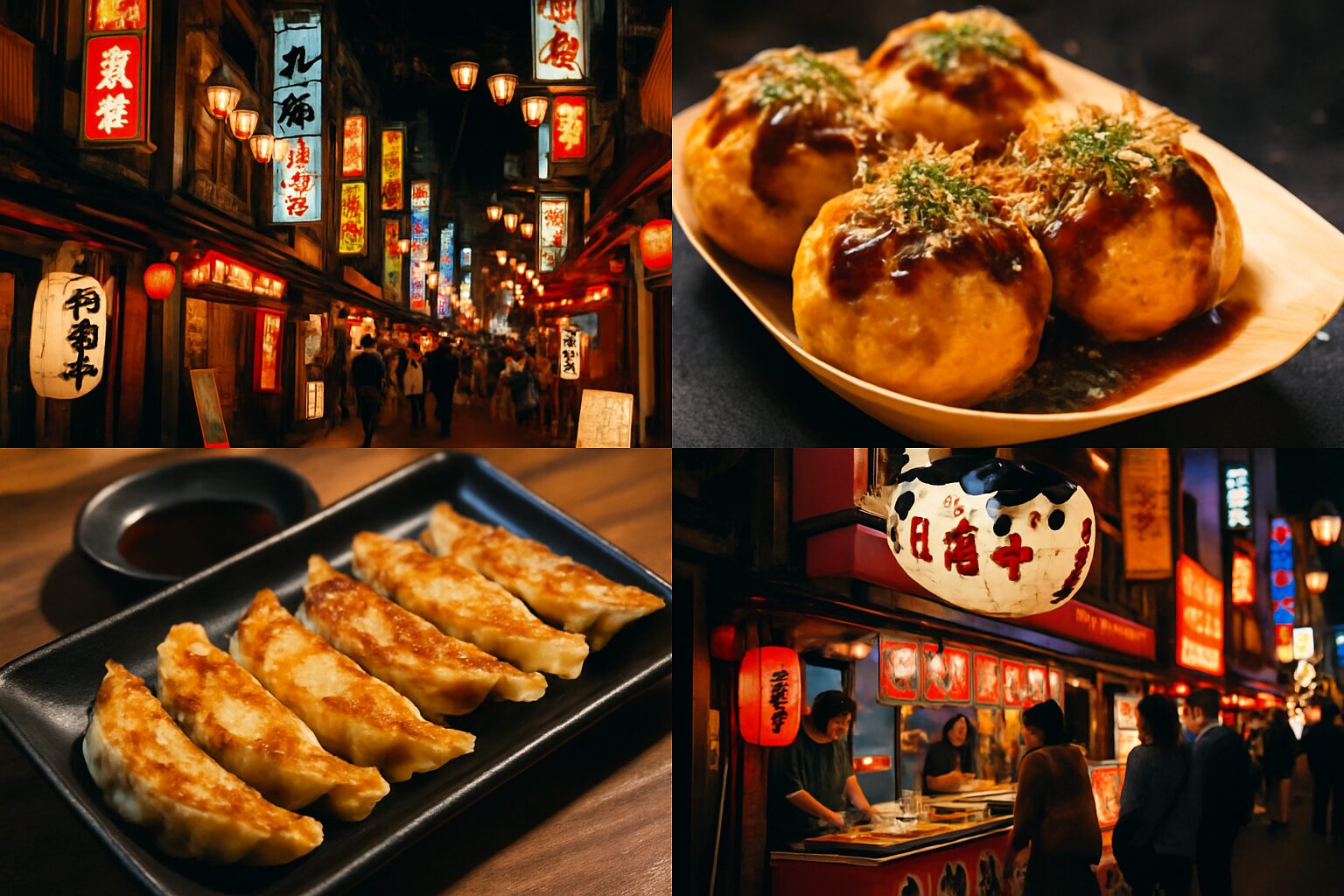
Step off the train at JR Tenma Station, and you don’t just arrive in a new neighborhood; you plunge headfirst into a sensory symphony that is unapologetically, viscerally Osaka. The air itself is thick with a delicious, chaotic perfume—the smoky char of yakitori grilling over binchotan charcoal, the sweet and savory scent of okonomiyaki batter hitting a hot griddle, the faint, briny aroma of fresh sashimi being sliced in a hundred hidden kitchens. This is Tenma, a district that doesn’t just welcome you, it grabs you by the collar, pulls you into its labyrinthine embrace, and offers you a drink. It’s a place of exhilarating dualities, a living, breathing paradox where ancient tradition and modern-day hustle don’t just coexist; they dance a frenetic, beautiful tango under the warm glow of countless paper lanterns. For the foreigner looking to not just visit Osaka but to live it, to feel its pulse day in and day out, Tenma presents itself as the ultimate proposition. It’s a neighborhood that promises an unfiltered, authentic Japanese experience, a life saturated with flavor, convenience, and culture. But like any intense relationship, living here comes with its own set of challenges, its own hidden headaches tucked away in the shadows of its undeniable charm. This is the real story of Tenma, a deep dive into the intoxicating pros and the sobering cons of calling this vibrant corner of Kita Ward your home.
To truly master the art of navigating this vibrant district after dark, a guide to bar-hopping in Tenma is essential.
The Soul of the City: Unpacking the Alluring Pros of Tenma Life

Before diving into the gritty realities, let’s first discuss the magic. Why do people fall head over heels for Tenma? The reasons are as numerous and diverse as the tiny eateries tucked into its back alleys. This neighborhood offers an incredible return on both emotional and financial investment, rewarding residents with a rich, convenient lifestyle deeply connected to the core of Osakan culture. It’s not just a place to sleep; it’s a place that makes you feel alive, stimulating both your curiosity and your appetite equally.
A Culinary Universe at Your Doorstep
Let’s be absolutely clear: the top reason to live in Tenma is the food. Calling it a foodie paradise doesn’t do it justice. It’s a vast, ever-changing, all-you-can-explore culinary theme park where your ticket in is simply a willingness to wander. The sheer number and variety of dining choices are astonishing. This isn’t about a few standout restaurants; it’s a constellation of hundreds of tiny, specialized, often family-run spots. The main streets and hidden alleys are packed with izakayas, the classic Japanese gastropubs. There are lively tachinomi (standing bars), where local salarymen and young couples squeeze in shoulder-to-shoulder, sharing plates of grilled skewers and clinking glasses of ice-cold beer. The atmosphere hums with laughter, sizzling grills, and shouted orders. You can enjoy a fantastic meal and a couple of drinks for less than the cost of a movie ticket, making it an everyday pleasure rather than a rare treat.
Beyond standing bars, cozy, lantern-lit corners specialize in virtually every cuisine imaginable. Some sushi bars are so small they seat just six, where the master greets you personally and serves fresh cuts of fish sourced that very morning. Yakitori joints expertly skewer and grill every part of the chicken, filling the air with smoky aromas. Rustic robatayaki restaurants flame-grill fresh vegetables and seafood over open hearths, serving them on long wooden paddles. But the food scene isn’t limited to Japanese classics. Recently, Tenma has flourished with international flavors: authentic Italian pizzerias with wood-fired ovens, hole-in-the-wall Thai kitchens serving fiery curries, and craft beer pubs rotating local and global brews. The spontaneity of living here is a joy. A simple walk home can turn into a culinary adventure. You might follow a new, tempting aroma down an unseen alley and discover a new favorite spot. The problem here is never “What should I eat tonight?” but rather being overwhelmed by too many enticing choices.
The Endless Arcade: Life Along Tenjinbashisuji Shotengai
Stretching like a central spine through the entire district is the magnificent Tenjinbashisuji Shotengai. At 2.6 kilometers, it’s the longest covered shopping arcade in Japan, and far more than just a shopping destination. It serves as the community’s living room, pantry, and main thoroughfare. Living nearby fundamentally shapes your daily routine. Need groceries? Choose from bustling produce stands with unbelievably cheap vegetables, local butchers, and fishmongers who know their customers by name. Need to run errands? Banks, post offices, pharmacies with tax-free sections, and a multitude of 100-yen shops cover all your basics. It’s convenience at its finest.
But to reduce it to mere utility overlooks its soul. Walking the length of the arcade is a journey through Osaka’s layered personality. Near the southern end, close to Osaka Tenmangu Shrine, the ambiance is more traditional, with shops offering elegant kimono fabrics, handcrafted tea whisks, and delicate wagashi (Japanese sweets). Heading north, the vibe shifts: lively croquette stands selling fried snacks for a few yen, pachinko parlors flashing hypnotic lights, quirky secondhand bookstores, and old-fashioned kissaten where elderly locals sip morning coffee while reading the newspaper. The sounds form a constant hum: shopkeepers’ cheerful calls (“Irasshaimase!”), clattering bicycles, and friends chattering. In this shotengai, you can buy a 50-yen croquette, fill a prescription, find vintage manga, and have knives professionally sharpened—all within a few blocks. It’s a weatherproof haven, a blessing in rainy weather or the sweltering summer heat. This arcade is the vibrant, chaotic heart of Tenma’s community.
Connectivity and Convenience: The Unbeatable Urban Hub
Though Tenma often feels like a self-contained village, its greatest practical asset is its outstanding connectivity. At its core is JR Tenma Station, a key stop on the Osaka Loop Line. This is your golden ticket to the rest of the city. One stop leads to Umeda, a commercial powerhouse with soaring skyscrapers, department stores, and major transit hubs. The other direction opens access to Osaka Castle Park, the lively Koreatown of Tsuruhashi, and Tennoji, known for its zoo and temple. The Loop Line effectively places the entire city within a 30-minute reach, making commutes or weekend explorations effortless. Need the Shinkansen bullet train? Shin-Osaka Station is only a few stops away.
But transit options don’t stop there. The neighborhood lies amid a web of rail lines. A short walk south brings you to Minami-morimachi Station, served by both Tanimachi and Sakaisuji subway lines. The Sakaisuji Line connects directly to Shinsaibashi and Namba’s shopping and nightlife districts, plus the electronics haven Nipponbashi. The Tanimachi Line goes straight to hipster Nakazakicho cafes and the historic Shitennoji Temple. Nearby Ogimachi Station also links to the Sakaisuji Line. This dense network ensures you’re never more than ten minutes from a station taking you almost anywhere in the Kansai region. It’s not just convenient; it fundamentally widens your living space, making all of Osaka and neighboring cities—Kyoto, Kobe, Nara—feel like extensions of your own neighborhood.
A Tapestry of Culture and Community
Despite its modern energy, Tenma is a neighborhood rich in history and culture, anchored by the grand Osaka Tenmangu Shrine. Founded in the 10th century, this shrine honors Sugawara no Michizane, the Shinto deity of scholarship and learning. It’s a serene oasis amid urban bustle. On any day, you’ll see students praying for exam success, families celebrating traditional milestones, and locals enjoying brief moments of calm. The shrine imparts a sense of historical continuity and solemnity to the area.
This cultural importance reaches its peak each July during the Tenjin Matsuri, one of Japan’s top three festivals. Living in Tenma means a front-row seat to the excitement. For days, the neighborhood buzzes with energy. Grand processions feature people in period costumes, mikoshi (portable shrines) parade through the streets with spirited enthusiasm, and the finale dazzles with illuminated boats on the Okawa River, culminating in a spectacular fireworks display. Experiencing this as a local, who can simply walk from home to the festivities rather than jam onto overcrowded tourist spots, is a rare and special privilege.
Beyond the festival, there’s a strong sense of community here. Ogimachi Park, on Tenma’s western edge, acts as its green lung. This expansive park features a large playground, sports fields, and cherry trees that burst into a pink canopy each spring. It’s where families picnic, schoolchildren hold sports days, and locals jog. This blend of a major cultural landmark, an iconic annual festival, and a beloved community park fosters a sense of belonging often missing in more anonymous, transient urban neighborhoods.
Affordability in the Heart of the Action
Given its prime central location, incredible food scene, and excellent transportation links, you might expect Tenma to be prohibitively expensive. Yet one of its most appealing qualities is its relative affordability. While it’s not the cheapest area in Osaka, rents here are considerably more reasonable than the sleek high-rises of Umeda or the trendy, expat-heavy districts of Nishi-ku. Singles or couples can find clean, functional apartments (classic 1K or 1LDK layouts) at prices that won’t consume their entire paycheck. This value is a major attraction.
Moreover, everyday living costs remain manageable thanks to the neighborhood’s character. The vast array of cheap, delicious dining options allows frequent meals out without overspending. A hearty meal at an izakaya often costs between 1,000 and 2,000 yen. Groceries from Tenjinbashisuji Shotengai are usually cheaper than those at large supermarket chains. The entire Tenma ecosystem is designed to provide value for locals, and as a resident, you benefit from this. This affordability enables you to embrace the full lifestyle the area offers, freeing up your budget for exploring, socializing, and soaking in the vibrant culture that surrounds you.
The Other Side of the Coin: Navigating the Cons of the Tenma Hustle
Now, for a dose of reality. The very qualities that make Tenma so vibrantly captivating can also make it a difficult place to live. The neighborhood demands a specific type of personality: a tolerance for chaos and an acceptance of its rough-and-tumble nature. To provide a full picture, it’s essential to consider the potential drawbacks—the aspects of life in Tenma that may wear you down over time and could be deal-breakers for those seeking a calmer urban experience.
The Never-Ending Buzz: When Atmosphere Turns into Noise
The biggest and most unavoidable downside to living in Tenma is the noise. The energy that draws people in comes from a constant, around-the-clock hum of activity that rarely quiets down. The main source is the thousands of people who flock to the area’s restaurants and bars every night. On Friday or Saturday evenings, the streets become a river of humanity. Boisterous laughter, lively conversations, and celebratory toasts spill from every open doorway. This isn’t a soft background murmur; it’s a loud roar that echoes through the narrow streets until the early morning hours.
Then there’s the train. The elevated tracks of the JR Osaka Loop Line cut right through the heart of the neighborhood. Trains run frequently from early morning until after midnight. The rhythmic clatter and rumble become a constant part of the soundscape. If your apartment is close to the tracks, you’ll hear and feel every train that passes. Some people learn to tune it out over time, but for light sleepers or noise-sensitive individuals, it can be a persistent irritation. Choosing your apartment is crucial in Tenma. A unit on a high floor, in a reinforced concrete building, facing away from busy streets or the train line, may offer a reasonable level of quiet. On the other hand, an older, wooden building on a low floor overlooking a street full of izakayas will feel like trying to sleep in the middle of a party. You are exchanging tranquility for vibrancy, and it’s important to be honest with yourself about whether that trade-off is sustainable over the long term.
A Maze of Lanes: The Crowds and the Commotion
The charm of Tenma’s narrow, winding alleys and the bustling Tenjinbashisuji Shotengai can quickly lose its appeal when you’re simply trying to get home with groceries. The crowds aren’t just a weekend phenomenon. The shotengai, especially, turns into a slow-moving sea of people during peak shopping hours. Navigating it requires patience and a willingness to adopt the “Osaka shuffle” as you weave between slow shoppers, delivery carts, and swarms of bicycles.
Bicycles are the favored mode of local transport, but they also add to the chaos. The narrow streets often lack dedicated bike lanes, meaning cyclists and pedestrians share limited space. It becomes a stressful dance of dodging and weaving. For those who value personal space and orderly surroundings, the constant close-quarters proximity to thousands of people can feel claustrophobic and draining. The sensory input is relentless—the flashing lights, the cacophony of sounds, the sheer volume of people. This is a neighborhood that’s always “on,” with few places to escape for quiet reflection outside your apartment or the relative calm of Ogimachi Park. Such constant stimulation can be exhilarating for some, but for others, it may cause a perpetual feeling of overwhelm.
The Gritty Reality: A Lack of Polish and Modernity
Tenma embodies the Japanese concept of wabi-sabi—finding beauty in imperfection and impermanence. Yet, for those used to the sleek, modern aesthetics of other global cities or even other parts of Osaka, Tenma can feel gritty and unrefined. This is not a neighborhood of pristine sidewalks, gleaming glass towers, or manicured green spaces. Instead, it’s characterized by tangled overhead electrical wires, aging buildings with weathered facades, and a lived-in messiness. Many find this aesthetic authentically charming—a genuine slice of old-school, working-class Osaka.
This lack of polish extends to the housing stock, too. While new apartment buildings (mansions) are being built, a significant portion of rentals are in older structures. These units come with their own challenges: smaller rooms, outdated kitchens and bathrooms, less effective insulation against noise and temperature, and sometimes a lack of modern conveniences like built-in air conditioning or high-speed internet. Finding a spacious, brand-new apartment with all the latest comforts is possible but much more difficult and expensive here than in neighborhoods with recent redevelopment. Living in the heart of the action means embracing a certain vintage character—or compromising on space and modernity.
The Foreigner Bubble? Not Quite.
Tenma is very welcoming, but it remains at its core a deeply local Japanese neighborhood. Unlike areas in Tokyo like Roppongi or Azabu-Juban, or parts of central Osaka that attract many tourists, Tenma is not an expat enclave. This can be either a great advantage or a significant challenge, depending on your goals and comfort level. If you want full immersion in Japanese language and culture, Tenma is an ideal environment. You’ll be required to use Japanese daily, from ordering at tiny izakayas to communicating with your local grocer.
However, if you’re new to Japan with limited or no Japanese skills, this can be a steep learning curve. English is rarely spoken in the small, independent shops and restaurants that give Tenma its character. Menus are often only in Japanese, and daily errands can become communication puzzles. The neighborhood lacks services tailored specifically to foreigners. You won’t find large international supermarkets stocked with imported goods, nor the same concentration of English-speaking clinics, banks, or real estate agents present in other areas. To thrive in Tenma, you need self-sufficiency and a proactive approach to navigating a Japanese-speaking environment. It’s a place to live with locals, not just beside them, and that requires effort.
Finding Your Place: Practical Tips for the Aspiring Tenma Resident

So, you’ve considered the pros and cons, yet you remain drawn to Tenma’s vibrant energy. The key to thriving and being happy here lies in making well-informed decisions. It involves understanding the neighborhood’s subtleties and positioning yourself strategically to maximize the positives while minimizing the negatives.
Choosing Your Corner: A Guide to Tenma’s Micro-Neighborhoods
Saying you live in “Tenma” is too general. Your experience can differ greatly depending on which specific street you call home. Before signing a lease, spend ample time simply walking around the area. Visit on a Tuesday morning, a Wednesday afternoon, and a Friday night to get a sense of the pace and noise levels on various blocks. Typically, the blocks closest to JR Tenma Station and the main east-west street are the loudest and busiest. As you move farther from the station and entertainment zones, it becomes quieter.
Look at the areas south, near Minami-morimachi Station. These streets tend to be more residential and slightly removed from nightlife hotspots, offering a nice mix of convenience and relative calm. The western side, next to Ogimachi Park, is ideal if you appreciate access to green space. Streets east of the Tenjinbashisuji Shotengai provide more tranquility, yet keep you just minutes from the action. Your aim is to find the perfect balance: close enough to enjoy amenities easily, but far enough to shut your door and escape the noise when needed.
The Apartment Hunt: What to Look For and What to Ask
When apartment hunting in Tenma, think of yourself as a sound detective. The most crucial factor affecting your quality of life is how well your apartment shields you from neighborhood noise. Pay attention to the building materials. Listings mentioning Reinforced Concrete (RC) or Steel Reinforced Concrete (SRC) are much preferable to wooden or lightweight steel-frame buildings, as these materials offer far better sound insulation.
Don’t hesitate during viewings. Open the windows and listen carefully. If possible, visit during busier times. Consider the floor level; higher floors generally offer more quiet than those on the ground or second floor. Check which way the main windows and balcony face—are they overlooking a quiet residential alley or a 24-hour restaurant and train tracks? Ask direct questions about the neighbors and noise regulations. Buildings that are well-managed make a significant difference. Be realistic about what your budget can secure and be prepared to prioritize: you may need to choose between a newer, quieter, smaller apartment or a larger, older unit with more background noise.
Embracing the Local Flow: How to Thrive in Tenma
Living in Tenma is an active adventure. To truly enjoy it, you need to get involved. Learn some basic Japanese phrases. Simple greetings, ordering food and drinks, and asking for the bill will open many doors and earn warm smiles and appreciation from local shopkeepers. Find your favorite spots and become a regular. Whether it’s a cozy coffee shop, a welcoming neighborhood bar, or a particular takoyaki stand, building those local ties turns a neighborhood from just where you live into where you belong.
Get a bicycle—it’s undoubtedly the best way to explore the intricate network of side streets and uncover hidden gems you’d miss on the train or on foot. But cycle considerately: pedestrians have the right of way, and a friendly bell ring goes a long way. Don’t stick only to main streets—the true charm of Tenma often lies a street or two off the beaten path, in a tiny eatery you wouldn’t find in any guidebook. Stay curious, adventurous, and open to the neighborhood’s lively, welcoming, and delicious spirit.
The Final Verdict: Is Tenma the Right Osaka Home for You?
Ultimately, choosing to live in Tenma is a profoundly personal decision. It is a neighborhood of contrasts, offering both great rewards and considerable demands, with no middle ground. Tenma represents a trade-off—a deliberate choice to exchange tranquility for excitement, personal space for community ties, and sleek modernity for historic character. It calls on you to embrace its disorder, discover music in its clamor, and appreciate the beauty in its raw, unpolished authenticity.
If you thrive on energy, feel your heart quicken amidst bustling crowds, and measure happiness through new culinary adventures and spontaneous meetings, Tenma might be the best neighborhood in Osaka for you. It will nourish you, entertain you, and connect you to the city’s vibrant core as few other places can. It’s a home for the social, the curious, the foodie, and the urban explorer eager to live right in the heart of the action.
On the other hand, if you are a light sleeper, require quiet and solitude to recharge, or value modern conveniences, spacious living, and a calm, orderly atmosphere, Tenma may soon become a source of stress rather than joy. You might find a better fit in the quieter residential areas of Fukushima, the trendy yet more laid-back café culture of Nakazakicho, or the larger, family-friendly neighborhoods farther from the city center. Tenma doesn’t change for anyone; it invites you to adapt to it. For those willing to accept this invitation, it offers an extraordinary life—a noisy, crowded, flavorful, and unforgettable immersion into the essence of Osaka.