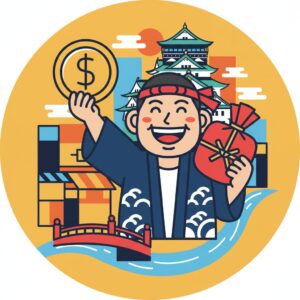
Step into any shotengai, one of Osaka’s sprawling covered shopping arcades, and the first thing you notice isn’t the goods. It’s the noise. Not the chaotic, anonymous roar of a Tokyo intersection, but a symphony of human interaction. It’s the gravelly call of a fishmonger hawking the day’s catch, the high-pitched laughter of shopkeepers trading jokes, and the rhythmic back-and-forth of a conversation that sounds suspiciously like a friendly argument. To the uninitiated, especially someone coming from the quiet, reserved corridors of Tokyo, it can feel like stepping into a different country. This isn’t just commerce; it’s a performance, a relationship, a game. And at its heart is a philosophy that defines this city: the spirit of the ‘Akindo’ (商人), the merchant.
This isn’t a history lesson about feudal-era traders. The Akindo spirit is the living, breathing software that runs Osaka’s daily life. It dictates how people talk, how they think about value, and, most importantly for anyone planning to live here, how they negotiate. You might think bargaining is reserved for tourist traps or flea markets, a relic of a bygone era. In Osaka, it’s woven into the fabric of communication, a subtle dance that can take place anywhere from an electronics superstore to a conversation with your future landlord. Understanding this spirit is the key to unlocking the city. It’s the difference between being a temporary visitor and truly living in Osaka, between feeling like an outsider and feeling the warm, if sometimes boisterous, embrace of its community. Forget the formal scripts and unspoken rules of hierarchy you might have learned about Japan; Osaka plays by a different, more practical, and infinitely more engaging rulebook. This is a guide to that rulebook—how to read it, how to use it, and how to appreciate the uniquely human-centric way this city does business, which is to say, the way it does life.
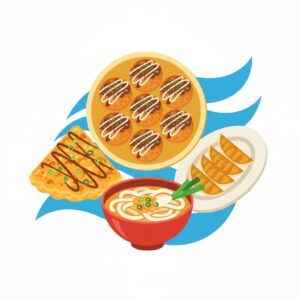
This uniquely human-centric way of doing business even extends to the city’s culinary culture, where the spirit of the Akindo can be felt in the communal joy of sharing Osaka’s beloved ‘konamon’ flour-based dishes.
The Soul of the Akindo: More Than Just Money
Before you even consider asking for a discount, you must first grasp the philosophy that underlies the transaction. In Osaka, business, or ‘shobai’ (商売), is not simply a cold exchange of goods for money. It is a human interaction first and a financial transaction second. This principle is so deeply embedded that it influences the very language of the city. It reflects a mindset that values relationships, mutual benefit, and shared satisfaction over mere efficiency.
“Mou kari makka?” – The Greeting That’s Not About Profit
Stroll through a local neighborhood in Osaka, and you’ll inevitably hear a distinctive greeting exchanged between neighbors and shopkeepers: “Mou kari makka?” (儲かりまっか?). Literally, it means “Are you making a profit?” or “Is business booming?” To outsiders, this can feel startling—almost intrusive—like asking a stranger about their bank account. In much of Japan, and certainly in the West, this question would be met with silence or a sharp reply. But in Osaka, it’s as common as saying “Hello.”
The typical response is just as puzzling: “Bochi bochi denna” (ぼちぼちでんな), roughly translating to “So-so, can’t complain.” This exchange is a ritual, a linguistic shorthand carrying centuries of merchant tradition. The question isn’t really about money—no one expects an itemized financial report. It’s a conversation starter, a way of connecting and acknowledging a shared identity. The underlying message is: “We’re both in this game of life, this business of survival. How are things on your end?” It reflects a time when a community’s prosperity was linked. If your neighbor’s shop thrived, the entire street thrived. The greeting fosters camaraderie rather than competition. It offers the first hint that in Osaka, commerce and community are deeply intertwined. The city was shaped by people who recognized that long-term success rested on relationships, not just squeezing every last yen from a sale.
The Philosophy of ‘Shobai’: A Relationship, Not a Transaction
The idea of ‘shobai’ goes beyond the English word “business.” While business might suggest a corporate, impersonal entity, ‘shobai’ feels intimate. It’s the craft of commerce, the art of the deal. Central to it is the belief that a successful transaction is one where both buyer and seller feel they have gained. It’s fundamentally about creating a win-win situation. An Akindo doesn’t want to cheat a customer because a cheated customer won’t return. They aim to build loyal regulars who come back not only for the goods but for the experience.
This is evident in the culture of ‘omake’ (おまけ), the small, unexpected bonus. Buy three apples from a fruit stand, and the owner might add a fourth, saying, “Here, this one’s a service.” This is not a calculated marketing tactic; it’s a gesture of goodwill. It’s the seller saying, “I value your business and want you to return.” This simple act transforms the transaction into a positive social encounter. It creates a bond. You remember the friendly fruit vendor and choose their stall over the anonymous supermarket chain next time. This philosophy is everywhere. The chef at your local eatery might offer extra pickles. The owner of a clothing boutique might pour you a cup of tea while you browse. These aren’t just polite gestures; they are the mechanisms of the ‘shobai’ tradition, continually working to forge relationships that form the true wealth of Osaka’s merchants.
The Art of the Deal: Bargaining in Modern Osaka
How does this philosophy of human-centered commerce translate into the practical act of bargaining? It’s not the aggressive, high-pressure haggling you might encounter in a bazaar. Negotiation in Osaka is a delicate dance—a conversation designed to find a price agreeable to both parties. It’s a game with unwritten rules, where success hinges more on your attitude and relationship-building skills than on stubbornness.
Where to Haggle (and Where Not To)
This is vital practical knowledge for any resident. Misreading the situation can cause embarrassment or, worse, offend someone. The key is to know who you’re dealing with: an employee without authority or an owner who can make decisions?
Here’s a general guideline:
Prime Bargaining Spots: Electronics stores are classic examples, especially in Den Den Town, Osaka’s counterpart to Akihabara. The competitive atmosphere and knowledgeable staff foster an expectation of negotiation. Other good places include smaller, independently owned furniture and appliance shops, camera stores, flea markets (like the one at Shitennoji Temple), and numerous stalls within sprawling ‘shotengai’ shopping arcades. If the person you’re talking to is the owner or a long-term manager, chances are negotiation is possible.
No-Go Zones: Avoid bargaining at convenience stores (‘conbini’), supermarkets, department stores (such as Daimaru or Takashimaya), or major chain stores (like Uniqlo or Muji). The price on the tag is fixed. Cashiers are usually part-time workers following strict policies; asking for a discount is as futile as requesting a vending machine to lower its prices. It’s not only pointless but also puts the cashier in an uncomfortable position. Similarly, restaurant bills are non-negotiable.
The principle is clear: negotiation is only possible with someone who can alter the price. A small camera shop owner holds that power; a teenager working the register at McDonald’s does not. Recognizing this distinction is the first step to successful bargaining in Osaka.
The Language of Negotiation: It’s a Dance, Not a Fight
The approach is everything. You’re not demanding a discount but exploring the possibility of one. The tone should be light, friendly, and respectful, with humor as your greatest ally. An Osaka negotiation should feel like a playful chat, not a confrontation.
It often begins with genuine interest. Ask questions. Compliment the product. Engage the owner in conversation to build rapport. Once you’ve established a connection, you can subtly bring up the price. The classic phrase is, “Mou chotto makete kuremasen ka?” (もうちょっと負けてくれませんか?), meaning, “Could you please discount it a little more?” This phrasing is polite and indirect.
A more direct Osaka-ben version might be, “Chotto makete!” (“Knock a bit off!”), but use this only if the atmosphere is friendly and relaxed. Smiling is essential—a smile signals that this is a good-natured game. Keep your body language open and at ease.
Another effective tactic is bundling. If you plan to buy multiple items—such as a camera, lens, and memory card—you hold a stronger bargaining position. Treat each item’s price as fixed and then ask for a ‘setto waribiki’ (セット割引), or set discount. “If I buy all three together, can you give me a better price?” This is a reasonable request and often successful. It lets the seller increase their sale while giving you the satisfaction of a deal.
Case Study: Buying a Camera in Den Den Town
Consider a realistic example in a multi-story electronics shop in Nipponbashi, also known as Den Den Town. You’ve been eyeing a new mirrorless camera priced at 150,000 yen.
Step 1: The Approach. Instead of pointing at the camera and asking the price, find an experienced staff member and ask for their advice. “I’m considering this model, but I’m also looking at another one. What’s your opinion on the sensor’s performance in low light?” This shows you’re a serious buyer and opens dialogue.
Step 2: Building Rapport. Listen attentively and share your needs. “I mainly shoot street photography, so autofocus speed is crucial for me.” Spend five to ten minutes in this exchange. Let them invest time in you. You might joke about how heavy your old DSLR was.
Step 3: The Pivot to Price. Once you’ve chosen the model, indicate your intent to buy without lowballing. “Okay, I think I’ll go with this one. By the way, is this the absolute best price you can offer?” This is a gentle opener.
Step 4: The Back-and-Forth. The salesperson may reply that it’s already on sale. This is expected. Then you introduce a subtle lever: “I see. It’s just that I saw it online at another shop for 145,000 yen. I’d much rather buy it from you today, though.” You’re not aggressive but offering a reason and preference to buy there. The salesperson might say, “Let me check with my manager,” a good sign. They’ll disappear briefly and return with an offer—perhaps not matching the price but reducing it to 147,000 yen, or holding firm on price but including a free high-speed memory card valued at 5,000 yen.
Step 5: The Close. This is a win. You haven’t cut a massive amount from the price but have engaged in the ‘shobai’—the trade. You’ve negotiated and received something in return. Both sides leave satisfied; you got good value, and the seller made a sale and built a positive relationship. You’ll remember that shop. That’s the Akindo spirit in action.
Beyond the Marketplace: Akindo Spirit in Everyday Life
The merchant mindset extends far beyond retail. It influences social interactions, professional negotiations, and even how individuals handle their everyday matters. This pragmatic, adaptable, and human-centered approach to problem-solving appears in the most unexpected places.
Negotiating Your Rent: An Osaka Perspective
Tokyo’s real estate market is famously inflexible. The rent, key money (‘reikin’), and deposit (‘shikikin’) are typically fixed, and trying to negotiate may be considered impolite. Osaka, on the other hand, often takes a different tack. While negotiating a lower rent on a brand-new apartment owned by a large corporation is unlikely, there is considerable room for negotiation with older buildings owned by individuals or small family businesses.
The Akindo mindset fits perfectly here. The landlord is not a faceless entity but a person involved in ‘shobai’. Their main priority is to have a dependable tenant who pays on time and causes no issues. You can use this to your advantage. When viewing an apartment, you might politely ask the agent, “Is there any flexibility on the key money?” or “Would the owner consider lowering the rent if I commit to a two-year lease upfront?” You are offering stability in return for a concession. This isn’t just a request for a discount; it’s proposing a mutually beneficial arrangement. This transforms the interaction from a simple plea into a negotiation between two parties. It may not always succeed, but the chances are much greater in Osaka, where the spirit of the deal is alive.
“This is a Service”: The Influence of ‘Omake’ Culture
As noted, ‘omake’ is a fundamental part of Osaka’s commercial culture, but its reach goes well beyond business. It embodies a mindset of generosity and building relationships. If you become a regular at a local ‘izakaya’ (Japanese pub), you’ll begin to witness this. The chef might send over a complimentary appetizer. “Itsumo arigatou,” they’ll say—”Thanks for always coming.” This is not on the menu, nor a promotional tactic. It’s a sincere gesture of gratitude.
This culture cultivates a strong sense of community and loyalty. People in Osaka are deeply loyal to their favorite spots—their preferred takoyaki stand, trusted butcher, regular coffee shop. That loyalty is founded on a series of small, repeated acts of kindness. It makes daily life feel less impersonal and transactional. You’re not just Customer #47; you’re Ogawa-san, the guy who drinks his coffee black. This sharply contrasts with Tokyo’s efficiency-focused service culture, where service is flawless yet often detached. In Tokyo, you receive perfect politeness. In Osaka, you develop a relationship, often accompanied by a free side of edamame.
Communication as a Commodity
The merchant’s demand for clarity and efficiency has shaped Osaka’s style of communication. In business, ambiguity leads to errors, and errors cost money. This has created a culture of directness that can surprise those more familiar with the subtle, indirect communication common in other parts of Japan, especially Tokyo.
This does not mean Osaka residents are rude. Their directness almost always comes wrapped in humor and warmth. They express their thoughts plainly but with a laugh. This can be mistaken for loudness or talkativeness, but if you listen carefully, you’ll see it’s an extremely efficient way to communicate. They get straight to the point, clarify the details, share a laugh, and move forward. This preference for clarity over polite ambiguity is a clear legacy of the Akindo spirit. In a busy market, there’s no time for layers of ‘tatemae’ (public facade) and ‘honne’ (true feelings). You need to know if the deal is done or not. This mindset permeates all areas of life, making interactions in Osaka refreshingly straightforward and honest.
What Foreigners Often Misunderstand
Osaka’s distinct culture, shaped by its merchant heritage, can cause several points of confusion for newcomers. The city’s values and social signals differ, and interpreting them through a Tokyo-centric or Western perspective can result in fundamental misunderstandings.
“Are They Being Cheap?” – The ‘Kechinan’ Myth
One of the most enduring stereotypes about Osaka residents is that they are ‘kechi’—stingy or cheap. This is a significant misinterpretation of the culture. People from Osaka are not cheap; they are highly value-conscious. An Akindo recognizes the true worth of a product or service and detests waste. They dislike feeling as if they’ve overpaid or been fooled.
This ties into the concept of “cost performance.” An Osakan might spend an entire afternoon visiting three different electronics stores to save 2,000 yen on a rice cooker. To an outsider, this might seem like a waste of time over a small amount. But for the Osaka resident, it’s about principle. They secured the best possible value for their money. They won the game. That same person, however, will have no hesitation spending 20,000 yen on an extravagant meal with friends or buying front-row tickets to a Hanshin Tigers baseball game. They are not afraid to spend money; they are afraid to waste it. They spend generously on things that bring joy and value—good food, entertainment, and time with loved ones. They are frugal with necessities so they can be more generous with life’s pleasures. It’s not about hoarding money; it’s about using it wisely. This distinction is crucial and key to understanding the local economic mindset.
Is It Aggressive? Reading the Social Cues
The speed of conversation, the directness of questions, and the frequent use of humor and teasing may feel overwhelming, even aggressive, to those unaccustomed to it. A friendly debate in the Osaka dialect can sound like a heated argument to an untrained ear. The key is to look for non-verbal cues. Is there laughter? Are people smiling? Is the energy light, even if the volume is high? If so, you’re witnessing classic Osaka communication, not conflict.
In Tokyo, social harmony is often preserved through emotional restraint and polite distance. In Osaka, it’s maintained through involvement, humor, and a shared understanding that teasing is a form of affection. A shopkeeper might joke about the shirt you’re wearing. A stranger on the train might comment on the book you’re reading. This isn’t an invasion of privacy; it’s an invitation to connect. Learning not to take this directness personally and to respond with some humor is essential for integrating here. It’s a culture that values quick wit and thick skin.
The Tokyo Comparison: Efficiency vs. Engagement
The Osaka-Tokyo rivalry is legendary and clearly evident in everyday interactions. In Tokyo, you are an ‘o-kyaku-sama’—an honored guest. Service is flawless, polite, and deeply respectful. However, it is also highly scripted and anonymous. The convenience store clerk will complete the transaction with robotic precision and a series of honorifics. You are a valued customer, but one among millions.
In Osaka, you are a potential partner in ‘shobai.’ The interaction is less formal, less reverent, but often more personal. The clerk might comment on your purchase, ask where you’re from, or crack a joke. The aim isn’t merely to complete the transaction efficiently; it’s to create a shared experience. This can be jarring if you expect Tokyo-style service. You might find the service less polished. But what you receive in return is personality and a sense of place. Tokyo emphasizes smooth, frictionless systems. Osaka values memorable, human interactions. Neither approach is inherently better, but they represent two distinctly different ways of engaging with public life, and understanding this difference is key to appreciating what makes living in Osaka so unique.
Living the Akindo Life: Practical Tips for Residents
To truly thrive in Osaka, you can’t simply observe the Akindo spirit—you need to actively participate in it. This doesn’t mean becoming an expert at haggling overnight; rather, it means embracing the local lifestyle, connecting with people, and appreciating the importance of relationships.
Embrace the Shotengai
While supermarkets offer convenience, make an effort to shop at a local ‘shotengai’. These covered arcades, such as the marathon-length Tenjinbashisuji or the lively Kuromon Ichiba Market, serve as living museums of Akindo culture. Don’t just hurry through. Take your time. Choose a vegetable stand, fishmonger, or tofu shop and become a regular customer. At first, you might be just another face in the crowd, but after several visits, the owner will begin to recognize you. Ask for recommendations on what’s in season or how to cook a particular fish. Engage with them. Before long, you might find an extra onion in your bag or receive a discount without even asking. You’ll have built a relationship, becoming more than a customer—you’ll become part of the neighborhood’s fabric.
Learn a Few Key Phrases in Osaka-ben
You don’t have to become fluent in the local dialect, but mastering a few key phrases can make a big difference. It shows you’re not just a passing foreigner but someone genuinely trying to connect with the culture. Simple phrases like “Okini” (おおきに) instead of “Arigatou” for “Thank you” often bring an immediate smile. Complimenting a shop owner with “Ee mon, oitemasuna!” (ええもん、おいてますな!), meaning “You’ve got some great stuff here!”, is an excellent way to start a friendly conversation. Using these expressions demonstrates respect for the local identity and opens the door to more meaningful interactions. People will appreciate your effort and be more inclined to engage with you on a personal level.
Don’t Be Afraid to Engage
This is the most crucial lesson. In many cultures, including much of Japan, public behavior tends to be reserved and quiet. In Osaka, however, such reserve can be taken as disinterest or aloofness. Here, communication is key. Talk to people. Ask the person next to you at the ramen counter if their dish is good. Comment on the weather to the shopkeeper. Share a laugh with someone on the subway. Break the bubble of anonymity. This engagement fuels the city’s energy. It’s how you transform a simple, transactional existence into a vibrant, community-focused life. The Akindo spirit goes beyond buying and selling; it embodies the lively, ongoing, and deeply human exchange of energy, humor, and goodwill. To live in Osaka is to take part in that exchange—to find value in every interaction, where profit is measured not in yen, but in authentic human connection.