Walk through Tokyo and you feel the immense, gravitational pull of order. It’s a city of perfected systems, of quiet efficiency, where interactions are governed by layers of unspoken rules and elegant, practiced formality. It’s a place that runs on the principle of the nail that gets hammered down. Then you get on the Shinkansen, shoot west for a couple of hours, and step out into Osaka. The air itself feels different. It’s louder, smells of grilled takoyaki and kushikatsu, and the energy hums with a chaotic, commercial vibrancy. The unspoken rules you just learned? They don’t apply here. Not in the same way. Here, the nail that sticks up doesn’t get hammered down; it gets asked, “So, what are you selling?”
This isn’t just a surface-level difference in friendliness or volume. It’s a fundamental divergence in the operating system of the people. To truly understand Osaka, to live here and not just visit, you have to grasp the concept of ‘shōbai’ (商売). On the surface, it simply means ‘business’ or ‘trade’. But in Osaka, ‘shōbai’ is not just an activity; it’s a worldview. It’s a pragmatic, profit-oriented, and deeply human spirit that has been baked into the city’s DNA for centuries. It dictates everything from how you negotiate your rent to how you buy your groceries, from how business deals are struck to how friendships are formed. It’s the reason why conversations about money aren’t taboo, why a good-natured haggle is a form of communication, and why customer service feels less like worship and more like a partnership. For a foreigner, especially one coming from the buttoned-up world of Tokyo or the equally formal cultures of the West, navigating this ‘shōbai’ mindset can be confusing, sometimes jarring, but ultimately, incredibly liberating. It’s the key that unlocks the real, raw, and wonderfully rational heart of Japan’s second city.
This vibrant, pragmatic spirit is a key reason why major global brands, like Marriott, are launching new luxury hotel brands in Osaka to tap into the city’s unique energy.
Unpacking Shōbai: Beyond Business as Usual

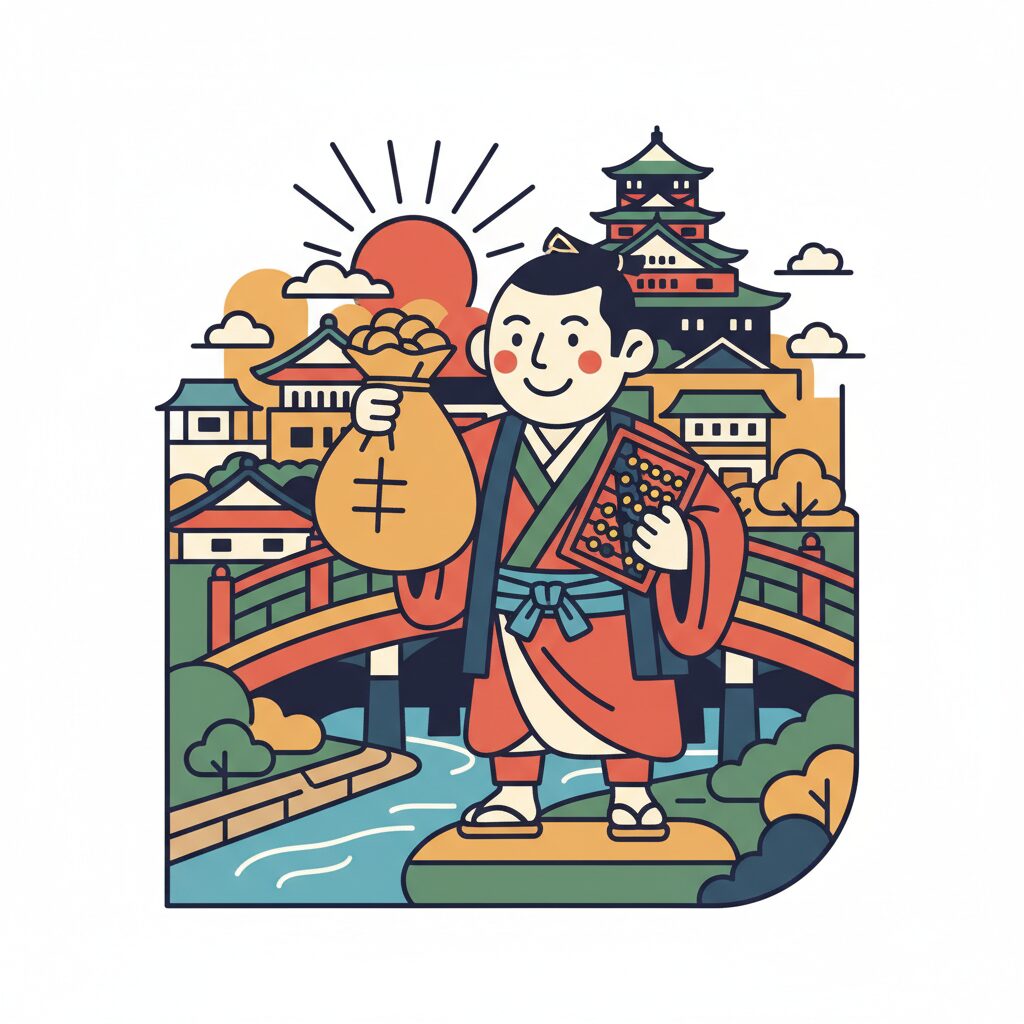
To start, let’s clarify the dictionary definition. Shōbai (商売) consists of two kanji: ‘shō’ (商), meaning trade or commerce, and ‘bai’ (売), meaning to sell. So, literally, it means ‘selling and trading.’ However, in Osaka, this term carries historical and cultural significance that goes beyond a mere transaction. It’s a philosophy shaped during the Edo period when Osaka was known as the ‘tenka no daidokoro’—the Nation’s Kitchen. While Edo (now Tokyo) was the political center, home to the samurai and the shogun, Osaka was the commercial hub. It was where the country’s rice, sake, and goods were collected, stored, and traded. Power in Edo was wielded by the sword; power in Osaka was wielded by the abacus.
This led to a society governed not by strict warrior hierarchies but by a vibrant and influential merchant class, the ‘chōnin.’ These merchants cultivated a culture that prized wit, practicality, financial savvy, and the ability to foster lasting relationships. They could not depend on inherited status; their success relied solely on their skill in shōbai. This history is not just an entry in a textbook; it remains a living ethos palpable on the streets today. The descendants of these merchants, in spirit if not by blood, now operate takoyaki stands, small factories in Higashi-Osaka, electronics shops in Den Den Town, and powerful trading companies in Umeda.
So, what does this philosophy involve? It’s a complex mindset, but its core principles are pragmatism, value, and relationships.
First, pragmatism. The shōbai mentality is relentlessly focused on what works, what is efficient, and what makes sense from a cost-benefit standpoint. Formality for its own sake is viewed as a waste of time and resources. Why hold a three-hour meeting to settle something that could be resolved in a ten-minute, straightforward phone call? This leads to a communication style that can seem remarkably direct compared to the rest of Japan. It’s not about rudeness; it’s about efficiency.
Second, value. This is often mistaken for being ‘cheap.’ An Osakan’s focus is not on the lowest price but on the best ‘kospa’ (cost performance). They excel at evaluating value. They are willing to pay a premium if they believe the quality, durability, or benefit warrants the expense. Conversely, they have a near-allergic reaction to overpaying for things they see as overpriced, whether it’s a cup of coffee or a multi-million yen business deal. The goal is always ‘iimono o yasuku’—getting good quality at a reasonable price. This pursuit of value lies at the heart of every negotiation.
Third, relationships. This may seem at odds with a profit-driven mindset, but in Osaka, they are two sides of the same coin. A one-off profitable but dishonest deal is regarded as poor shōbai. Real success stems from building a network of trust and reciprocity. A good businessperson nurtures loyal customers who return repeatedly and dependable suppliers who will support them when needed. These relationships are not founded on bowing or excessive politeness but on mutual benefit, honesty, and a shared understanding that both parties should leave the deal feeling satisfied. It’s a long-term strategy, not a short-term gain.
In summary, while business interactions in Tokyo might emphasize process, formality, and consensus-building, those in Osaka are a dance of pragmatism, value judgment, and relationship management, all aimed at a mutually advantageous result. It’s less about following a script and more about improvising to close the deal.
The Sound of Business: “Mokkari Makka?” and the Language of Profit
There’s a well-known, almost clichéd greeting you’ll hear in Osaka: “Mokkari makka?” It means “Are you making a profit?” The typical response is a wry smile and “Bochi bochi denna,” which translates roughly to “So-so” or “Bit by bit.” To outsiders, this can come across as quite intrusive. In many cultures, directly asking about someone’s financial success is a major social taboo. In Tokyo, it would be unthinkable. But in Osaka, it’s as common as chatting about the weather. It’s the business equivalent of asking “How are you?”
This simple exchange offers a deep insight into the shōbai mindset. It shows a culture where commerce is not a detached, sterile part of life conducted behind closed doors. Instead, it’s woven into social interaction itself. Talking about business, profit, and money isn’t just acceptable—it’s a way to connect. It’s an acknowledgment of a shared struggle and ambition: to do well, to provide, to succeed. The “bochi bochi” response is crucial too. It’s a humble, non-committal answer that avoids boasting while recognizing the daily effort. It’s a display of realism—things could be better, could be worse, but we’re getting by.
This ease with discussing money permeates daily life and work negotiations, fostering an environment that is refreshingly transparent and, at times, brutally honest.
The Art of the Haggle: A Conversation About Value
To be clear: Osaka is not a city-wide bazaar where haggling is expected for every purchase. You don’t dispute the price of a train ticket or your meal at a chain restaurant. However, in certain settings—independent electronics shops, local markets, flea markets, or when dealing with small business owners for a service—negotiation is not only possible but sometimes anticipated. The key to remember is that haggling in Osaka isn’t an aggressive confrontation. It’s a subtle conversation about value.
When you ask, “Sukoshi makete kuremasen ka?” (“Can you give me a little discount?”), you’re not offending the seller or implying their product is cheap. You’re opening a dialogue. You’re indicating you’re a serious, value-conscious buyer. The seller’s response reveals everything. They might laugh and decline but then add a freebie (‘omake’). They might meet you halfway. Or they may stand firm but spend time explaining exactly why the product is worth every yen, giving you an expert run-through of its features and benefits. The entire interaction is a performance, a test of cleverness and charm. A successful haggle ends with both sides smiling. The buyer feels victorious, having gotten a good deal; the seller makes a sale, moves inventory, and most importantly, builds rapport with a customer likely to return with a story to share.
This stands in sharp contrast to Tokyo, where the price on the tag is final. Questioning it suggests the seller misjudged the value, which can be seen as disrespectful. The system is the system; the price is the price. In Osaka, the price often marks just the beginning of a conversation.
Getting to the Point: “So, How Much?”
This straightforwardness runs deep into the professional realm. In a typical Tokyo business meeting, budget matters are approached with great delicacy. Often reserved for the end, they’re wrapped in indirect language and hinted at rather than plainly stated. This is part of ‘nemawashi’, the process of laying groundwork and building consensus before decisions. It’s designed to maintain harmony and avoid conflict.
By contrast, in an Osaka business meeting, the budget question may be one of the first things asked: “De, yosan wa ikura desu ka?” (“So, what’s the budget?”). This isn’t considered rude or blunt—instead, it’s seen as the most sensible starting point. Why spend time hashing out an elaborate plan if the budget only covers something simple? This pragmatism clears away corporate politeness and forces everyone to be realistic from the start.
For foreigners working in Osaka, this can be a double-edged sword. On one side, it’s refreshing: less ambiguity, less guessing about hidden meanings. You know exactly where you stand. On the other, it can feel like being put on the spot. You must have your figures ready and be prepared to explain them. There’s no room for vague platitudes. The shōbai mindset demands clear answers to direct questions. What is the cost? What is the benefit? What is the return on investment? Demonstrating that you grasp and respect this bottom-line focus is the quickest way to earn the respect of your Osaka colleagues.
The Customer is a Partner, Not a God
The phrase “okyakusama wa kamisama desu” (“the customer is a god”) is a well-known Japanese saying that captures the nation’s commitment to flawless service. Throughout much of Japan, this is taken quite literally: the customer is always right, their demands must be met with bows and apologies, and the service staff must maintain an attitude of complete deference. This philosophy underpins the famously high standards of Japanese customer service. But then, there’s Osaka.
In Osaka, the dynamic is different. Rather than a relationship of deity and worshipper, it’s one of partnership and mutual respect. Of course, good service is expected, and Osaka businesses strive to satisfy their customers. Yet, this is a two-way street. Customers are expected to be reasonable, and business owners reserve the right to be human. This creates a relationship that is far more personal, authentic, and sometimes even confrontational compared to anywhere else in Japan.
The Recalibration of ‘Service’
While a Tokyo department store might provide service that is impeccably polite but often impersonal, service in Osaka emphasizes the personal touch. A shopkeeper at a local ‘sakaya’ (liquor store) won’t just sell you a bottle of sake; they’ll ask what you’re having for dinner and suggest the perfect pairing. They’ll remember your name and what you purchased previously. This isn’t just skilled salesmanship; it’s the shōbai principle of fostering a long-term relationship. They invest their time and knowledge in you, hoping you become a ‘jōren-san’—a regular customer.
This partnership also means the business owner takes pride and ownership, allowing them to push back when necessary. I once witnessed an unforgettable scene in a small, crowded kushikatsu restaurant in Shinsekai. A loud and demanding tourist was treating the elderly owner like a servant. After a few minutes, the owner set down his tongs, looked the customer straight in the eye, and bluntly told him that if he didn’t like how the restaurant was run, the door was right there. The other customers, all locals, murmured their agreement. There was a stunned silence before the humbled tourist quieted immediately. In Tokyo, this would spark a corporate scandal. In Osaka, it was the community policing itself. The unspoken rule was clear: we are partners here. You respect the owner, and he’ll respect you and serve you the best kushikatsu you’ve ever had.
The Currency of Goodwill: Omake and a Personal Touch
One of the most endearing expressions of the shōbai spirit is the culture of ‘omake’ (a little extra) and ‘sābisu’ (service, as in ‘on the house’). When you buy a bag of oranges from a fruit stand in Kuromon Market, the vendor might toss in an extra one with a grin and a “Kore, omake!” This isn’t a calculated discount scheme like those in corporate marketing plans. It’s a spontaneous, human gesture. A way of saying, “Thanks for your business. I appreciate you. Let’s keep this relationship going.”
This small act of generosity builds a bond that loyalty cards or point systems could never achieve. It turns a simple transaction into a memorable, warm human interaction. You leave feeling not just that you got a good deal, but that you were treated with kindness and appreciation. The ‘omake’ is the currency of goodwill. It costs the vendor little but yields immense customer loyalty. This is the shōbai mindset in its purest form: a small, practical investment in a long-term relationship beneficial to both parties. It recognizes that the most valuable asset in business isn’t the products on the shelves, but the trust and loyalty of the customer in front of you.
The Urban Landscape of Commerce: Where Shōbai Lives
The shōbai mindset is not just an abstract concept; it is physically embedded in the very fabric of Osaka. The city’s layout, the kinds of businesses that flourish, and the daily pulse of its neighborhoods are all shaped by this commercial spirit. To truly grasp shōbai, you need to experience its streets firsthand.
Shōtengai: The Lifeblood of the City
While Tokyo boasts sleek, high-fashion streets like Omotesando and vast, sterile train station complexes, the real heart of Osaka’s retail world lies in its ‘shōtengai’—covered shopping arcades. These are far from modern shopping malls. They are sprawling, lively, and intensely personal ecosystems of independent shops. The most famous among them is Tenjinbashisuji, which, at 2.6 kilometers, proudly holds the title of Japan’s longest shopping street. Walking its entire length offers a vivid snapshot of life in Osaka.
You will find third-generation knife sharpeners standing beside trendy new coffee shops. Old ladies haggle loudly over the price of mackerel at fishmongers, their voices thick with the boisterous Kansai dialect. Tiny stalls sell croquettes for 80 yen, their golden-brown crispness embodying the philosophy of ‘iimono o yasuku’. Shopkeepers are not faceless employees; they are the owners themselves, greeting regular customers by name, calling out to passersby, and engaging in lively banter. The shōtengai is a stage for shōbai—loud, a little chaotic, and fueled by countless daily interactions, negotiations, and relationships. It stands in stark contrast to the quiet, curated shopping experience of a Tokyo department store. It is a vibrant, breathing marketplace.
These arcades incubate the shōbai spirit. Here, success or failure depends on a business’s ability to offer genuine value and build connections with the community. Big brand names or fancy interiors won’t suffice. If your product isn’t good value or you don’t treat customers well, you won’t survive. The shōtengai acts as a daily test of the principles behind good shōbai.
The Workplace: A Culture Focused on Practical Results
The shōbai mindset stretches from market stalls to the corporate offices in Umeda. While the surface politeness of Japanese office culture is present, the underlying priorities here differ noticeably from Tokyo. There is often a stronger focus on tangible results rather than performative hard work. The key question is not “How many hours did you work?” but “What did you accomplish?”
Meetings in Osaka can be a shock for those used to Tokyo’s consensus-driven harmony. They tend to be louder, more direct, and more argumentative. People openly challenge ideas they see as impractical or a waste of money. The aim is not a smooth, conflict-free discussion, but to rigorously test ideas and find the most logical, profitable, and efficient solution. Though it can feel intimidating, it’s rarely personal. The collective focus remains on the bottom line. Ideas are judged not by who proposed them or how eloquently, but by their practical merits: Can it be done? Will it generate profit? Is there a cheaper, faster alternative?
This pragmatic approach can be empowering for foreign workers. There is usually less emphasis on seniority and more on individual contribution. If a junior employee brings a practical, cost-saving idea, it’s more likely to be heard and seriously considered in an Osaka office than in the more hierarchical Tokyo setting. Respect is earned by the ability to directly impact the company’s success—its shōbai. This creates a more meritocratic environment, driven by logic rather than tradition.
Navigating Shōbai: A Foreigner’s Field Guide
Grasping the shōbai mindset is one thing; living and working within it is quite another. For non-Japanese residents, it brings a distinct set of challenges and opportunities. Misunderstandings are common, but once you decode it, life in Osaka becomes much easier and more fulfilling.
Misunderstanding 1: Cheapness vs. Value Consciousness
The most frequent error is mistaking Osaka’s focus on price for mere ‘cheapness.’ This is a basic misunderstanding. The shōbai mindset isn’t about always choosing the cheapest option; it’s about obtaining the absolute best value for every yen spent. An Osakan will readily invest a significant amount in a high-quality set of kitchen knives built to last a lifetime or in well-crafted shoes that can be repaired repeatedly. They view this not as a cost, but as an investment—purchasing durability, quality, and lasting satisfaction.
Where they hesitate to spend is on things deemed poor value. This includes paying for brand names without an increase in quality, paying for unnecessary extras, or paying prices that feel like rip-offs. They have a keen sense of ‘kospa’ (cost performance). For foreigners, this means that when selling anything—be it professional services, a used car, or an item at a flea market—you must justify your price through value. Avoid discussing prestige; emphasize features, benefits, and long-term savings. Show that what you’re offering is a wise use of their money.
Misunderstanding 2: Rudeness vs. Directness
Osaka’s direct, straightforward communication style can be startling. In a culture like Japan’s, known for its indirectness and subtlety, the Osakan habit of getting straight to the point may seem blunt or even rude. It is vital to reframe this perception. Within the shōbai context, directness is a sign of respect. It honors the other person’s time and intelligence. The mindset is, “We’re both busy people with goals. Let’s not waste time with vague language. Here’s my position. What’s yours?”
This honesty lays the groundwork for trust. You quickly learn that when an Osaka business partner says “yes,” they truly mean it. When they say “no,” they also mean it. There’s less need to interpret hidden meanings or worry about ‘tatemae’ (public face) versus ‘honne’ (true feelings). This transparency can streamline negotiations and foster stronger, more sincere business relationships. The key is not to take it personally. The directness targets the problem or the deal, not you as an individual. It’s a tool to carve the quickest path to a solution.
Misunderstanding 3: Constant Joking vs. Social Lubricant
Humor plays a vital role in the shōbai toolbox. Osaka is, after all, Japan’s comedy capital and home to the Yoshimoto Kogyo entertainment empire. This love of laughter permeates business. Negotiations are often sprinkled with jokes, self-deprecating humor, and playful banter. To outsiders, it may seem as if they’re not taking the matter seriously.
This is a serious misjudgment. Humor serves an essential function. It acts as social lubrication, easing tension, building rapport, and creating a positive atmosphere. A shared laugh can defuse a tense situation and make both parties more willing to compromise. Making the other person laugh helps build a connection, turning a sterile negotiation into a human interaction. It’s a tactic to lower defenses and encourage seeing each other as partners rather than opponents. The most successful businesspeople in Osaka are often the funniest—they know that a deal sealed with laughter is stronger than one finalized in silence.
Embracing the Shōbai Lifestyle
So, how do you, as a foreign resident, adapt to and thrive in this distinctive culture? It involves adjusting your mindset and learning to navigate the local way.
In your everyday life, interact with local shopkeepers. Don’t just remain a quiet, anonymous customer. Ask the butcher for their recommendation. Chat with the woman who runs the corner tofu shop. Become a regular. Not only will your Japanese improve, but you will also begin to enjoy the benefits of the shōbai relationship: a little ‘omake’ here, a tip about a fresh delivery there. You become part of the neighborhood’s commercial fabric.
At work, be prepared and straightforward. Have your data on hand. Support your proposals with clear explanations of costs and benefits. Don’t hesitate to share your opinion, especially if you have a practical idea that could save time or money. Demonstrate that you are focused on results, not just procedures. Frame your input in terms of how it benefits the company’s bottom line. This pragmatic, results-driven approach will be recognized and valued.
Most importantly, realize that in Osaka, business and life are intertwined. The principles of shōbai—pragmatism, sharp value perception, direct communication, and nurturing long-term, mutually beneficial relationships—apply universally. It’s a philosophy that may seem challenging at first but is ultimately a deeply rational and humane way of navigating life. It removes pretense and gets to the core of things. This mindset has made Osaka a resilient, innovative, and endlessly captivating city. To live here is to live at the heart of shōbai, and once you learn its rhythms, you’ll find it’s a very rewarding dance to join.