You think you know Osaka. You’ve seen the pictures, right? The Glico Running Man, a perpetual sprinter over a river of neon. The steam rising from takoyaki stalls, a scent that clings to the air like a promise. The sheer, overwhelming energy of Namba and Shinsaibashi, a human tide that pulls you along whether you want it to or not. This is the Osaka of postcards, the city as a dazzling, delicious spectacle. And it’s real. But it’s only one chapter of a much older, much deeper story. To truly understand the soul of the modern Osakan—the fast-talking, deal-making, no-nonsense character that so often baffles and charms foreigners—you can’t just look at the bright lights. You have to go south. You have to find a place where the rhythm slows, where the streets narrow, and where the white-washed walls of Edo-period houses still hold the secrets of how this city, and its people, came to be. This weekend, we’re not just taking a trip. We’re peeling back the layers of time in Tondabayashi Jinaimachi, a perfectly preserved merchant town that serves as the living blueprint for the Osakan psyche. Forget the tourist trail for a moment. This is a journey into the source code of a culture. This is where you learn why an Osakan’s greeting isn’t about your health, but your finances, and why their directness isn’t rude, but a profound form of respect.
To truly understand the modern Osakan character forged in places like Tondabayashi, consider how locals build community today, such as by making friends in Osaka through local sports.
The Soul of the Merchant: Deconstructing the Osakan Mindset

Before you even step off the train in Tondabayashi, you need to adjust your perception of Japan. Much of what the world recognizes as “Japanese culture”—the politeness, the indirectness, the strict hierarchies—has been shaped primarily by Tokyo. That culture stems from the samurai, bureaucrats, and imperial court. It is a culture defined by top-down authority, rules, and formality. Osaka is different. Its identity was shaped not by warriors, but by merchants; not in castles, but in marketplaces. This isn’t merely a historical detail; it is the core framework that shapes everyday life here, and Tondabayashi Jinaimachi stands as its most pristine, living example.
Beyond the “Akindo” Cliché
Everyone will tell you that people of Osaka are akindo, or merchants. It’s a phrase often used with a knowing smile, as if it explains everything. But what does it truly mean? It’s not just about being good at business or loving money, although those elements are part of it. Being an akindo is a mindset. It’s a philosophy rooted in rationality, pragmatism, and a relentless focus on real value. In the merchant’s world, ideas are worthless until executed. Promises hold no weight until a deal is sealed. Status means little without the prosperity to support it.
This attitude permeates every aspect of Osakan life. Take the concept of kosupa, or cost performance. In Tokyo, people might pay extra for brand names, experiences, or aesthetics. In Osaka, the question is always: “Is it worth the price?” This isn’t about being cheap. It reflects an intellectual appreciation of value. An Osakan will proudly tell you about the amazing ramen they found for 600 yen in a tucked-away alley, rather than the 2,000 yen bowl they had in a stylish Ginza restaurant. The joy lies in discovering value and feeling you’ve made a smart, rational choice. This is the merchant’s thrill applied to everyday spending.
This pragmatism also influences communication. Tokyo’s indirect, layered speech can feel like a maze. In Osaka, the approach is straightforward. Time is money, and ambiguity is the enemy of a good deal. This directness is often misunderstood by foreigners, and even other Japanese. It isn’t aggression or rudeness—it’s efficiency shaped by centuries of trade, where clarity meant the difference between profit and loss. The merchants of Tondabayashi didn’t have time for courtly language; they had goods to move and contracts to finalize. This legacy of plain speaking remains one of Osaka’s most defining and refreshing traits.
The Jinaimachi Blueprint: Self-Governance and Distrust of Authority
Tondabayashi isn’t just a cluster of old houses; it is a Jinaimachi, a temple town. This is an important distinction. During the turmoil of the Warring States and Edo periods, some powerful Buddhist temples carved out autonomous zones. They built towns around themselves, drawing merchants, artisans, and farmers. These towns, protected by moats and earthen walls, were largely self-governing. They paid their dues to feudal lords but managed their affairs independently.
Tondabayashi was established around the Koshoji Betsuin temple and governed by a council of eight influential founding families, the Hassho-ke. They oversaw the town’s commerce, infrastructure, and defense. They were rulers of their own domain. This tradition of self-reliance and autonomy is embedded in Osaka’s DNA. It’s the root of the city’s long-standing rivalry with Tokyo and its inherent skepticism toward the central government.
The historic sentiment was simple: “The Shogun is far away in Edo. We are here, making money and building our community. We will manage ourselves.” This attitude still resonates in modern Osaka. It’s evident in the strong pride in local governance, the vigorous—and often boisterous—political debates, and the preference for local solutions over orders from Tokyo. An Osakan is more likely to trust their neighborhood shopkeeper’s word than a government ministry’s decree. This isn’t rebellion for its own sake; it’s a deeply held belief that true power and wisdom lie within the community, not a remote capital. The planned streets and independent spirit of Tondabayashi physically embody a time when Osakans literally built their world on their own terms.
“Moukarimakka?”: The Philosophy Behind the Greeting
Perhaps nothing captures the Osakan merchant mindset more than the traditional greeting: “Moukarimakka?” literally meaning “Are you making a profit?” to which the typical reply is “Bochi bochi denna,” meaning “So-so, bit by bit.” To outsiders, especially Westerners, this can sound surprisingly direct, even intrusive. In Tokyo, the usual greeting is a gentle “Ogenki desu ka?” (“How are you?” or literally, “Are you well/healthy?”), making Osaka’s greeting seem blunt and materialistic.
However, taking it literally misses the deeper meaning. “Moukarimakka?” is not a financial audit. It’s a profound expression of a community-oriented worldview. In a merchant town like Tondabayashi, everyone’s success was interconnected. If the sake brewer prospered, he’d buy more rice from the rice merchant. If the cotton wholesaler thrived, she’d commission more work from local artisans. One person’s profit signaled the health of the entire economic ecosystem. Asking “Are you making a profit?” was equivalent to asking “Is our community thriving? Is life good?”
This greeting is rooted in practical realities. While Tokyo’s greeting focuses on an internal state (genki), Osaka’s centers on external, measurable success. It reflects a culture that values action, results, and visible prosperity. It’s a check on the pulse of the community’s lifeblood: commerce. Even today, though often used more casually and with humor, it reveals a fundamental truth about Osaka—well-being isn’t abstract. It is tied to the work, the hustle, and tangible success in making a living and supporting the community. It is, in fact, the most honest greeting in Japan.
A Weekend Walk Through Time: Experiencing Jinaimachi
Grasping the theory is one thing. To genuinely experience the merchant spirit, you must walk the same streets, enter the same buildings, and breathe the same air. A weekend in Tondabayashi isn’t about ticking off sights on a checklist. It’s about immersion. It’s about allowing the town’s quiet rhythms to teach you what the neon glow of Namba cannot.
Day 1, Morning: Arrival and Immersion in Edo Aesthetics
The journey itself forms part of the experience. Boarding the Kintetsu Line at Abenobashi Station in Tennoji, you leave behind the heart of modern, chaotic Osaka. As the train moves southward, the dense cityscape of towers and elevated highways gradually gives way to shorter buildings, then residential neighborhoods, and finally, a sense of open space. Once you step off at Tondabayashi Station and walk towards the Jinaimachi district, the transformation is complete. The city’s noise fades, replaced by birdsong and the distant hum of local life.
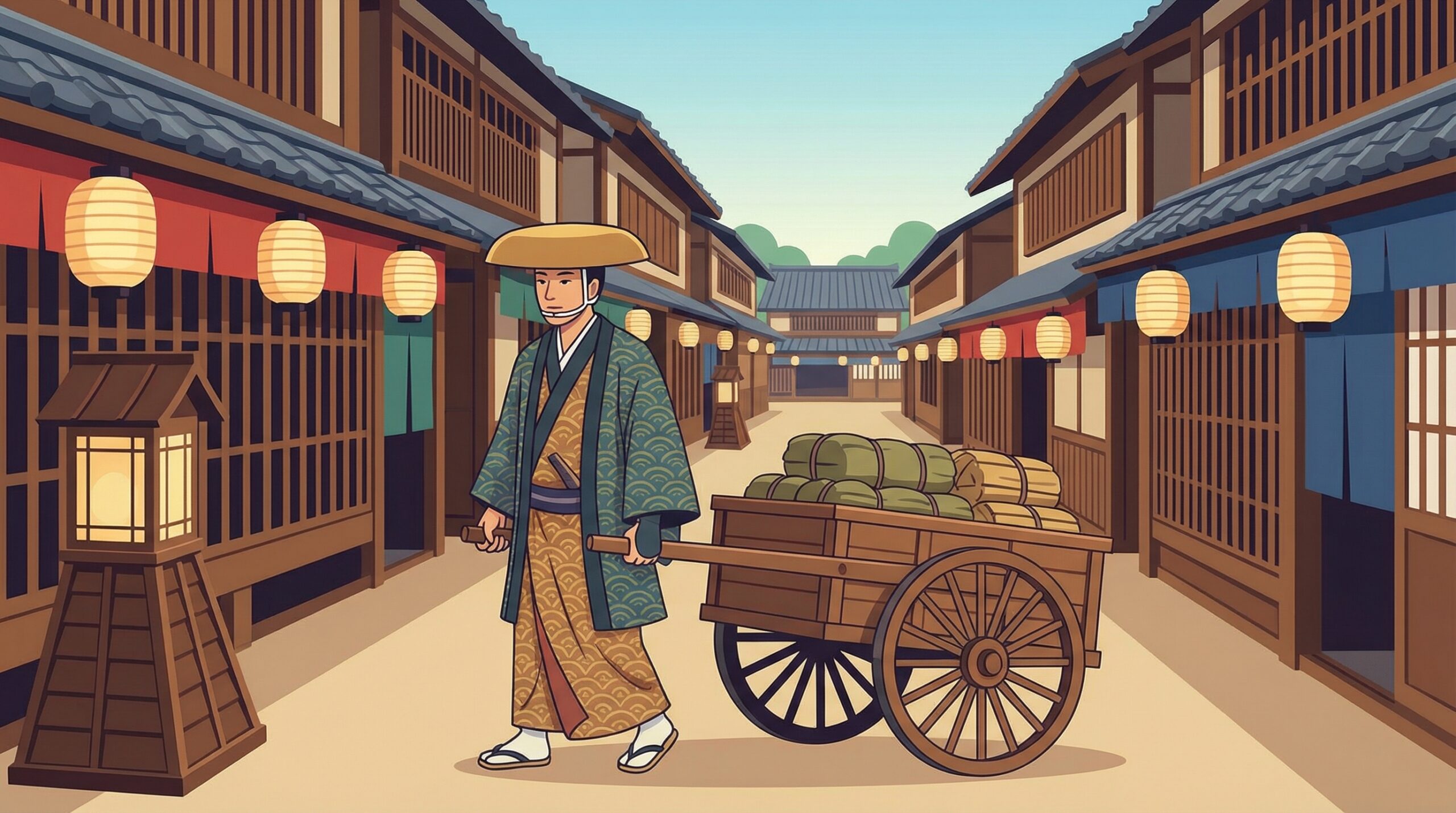
Your first impression will be the architecture. The streets are narrow, a purposeful design for defense during troubled times. The buildings are a harmonious blend of wood, plaster, and tile. Look closely at the details. The brilliant white walls are made of shikkui, a Japanese plaster that is both fire-resistant and aesthetically pleasing—a perfect fusion of form and function. Notice the wooden lattices, or koshi, covering the fronts of the houses. They are not all identical. The lattice design subtly signaled the family’s profession. A rice merchant’s pattern might differ from that of a lumber dealer. It acted as branding, a way to convey one’s identity within the community without resorting to boastful signs. It’s understated, clever, and deeply practical—the Osakan way.
This aesthetic reveals much about the merchant class. Unlike samurai, who erected imposing castles to project power, the merchants expressed their wealth more subtly. Their houses are impressive but built on a human scale. They form part of a cohesive streetscape rather than isolated fortresses. This reflects a culture where status was determined not by birth or military might but by reputation, craftsmanship, and contribution to the town’s prosperity. As you wander these streets, you’re walking through a masterclass in pragmatic beauty.
Day 1, Afternoon: The Weight of Heritage at the Sugiyama Residence
To truly understand the life of an Edo-period merchant, you must step inside their world. Several historic homes in Tondabayashi are open to visitors, but none is more notable than the Former Sugiyama Family Residence. The Sugiyamas were one of the eight founding families and highly successful sake brewers. Their home is a designated National Important Cultural Property, and rightfully so. It is not a museum; it is a time capsule.
As you remove your shoes and step onto the cool, dark wood floors inside, the first thing you’ll notice is the layout. The front area, the mise no ma, served as the shop space, with a wide earthen floor where customers came and went. Directly behind it are the business and reception rooms. Only after passing through these commercial spaces do you reach the private living quarters, the oku. This architectural division physically embodies the merchant’s life. Business was not a separate affair conducted in a distant office; it was at the heart of the home, seamlessly intertwined with family life.
Notice the details. The massive, smoke-darkened beams above the kitchen, or daidokoro, speak of centuries of meals prepared and family life lived. The imposing kura, the thick-walled storehouse at the back, was the family vault, safeguarding their goods and wealth from fire and theft. This was their bank, their lifeline. Standing within these walls, you can almost hear echoes of the past: the clink of coins, the bargaining over prices, the daily rhythm of work and family life unfolding under one roof. This model of a family-run business, where home and work are one, remains the cornerstone of Osaka’s economy. From tiny noodle shops to small local factories, the spirit of the Sugiyama residence endures.
Day 1, Evening: Local Flavors and Community Conversations
As dusk falls over Tondabayashi, the town takes on a magical quality. Lanterns cast a warm glow on the latticed windows, and the quiet deepens. This is the time to seek out a local restaurant or izakaya. Avoid places that seem too polished or tourist-oriented. You want a small spot, perhaps run by an elderly couple, where the menu is handwritten and the other guests are unmistakably locals.
Here you’ll experience the living legacy of the Jinaimachi’s community spirit. In a big city like Tokyo, dining out can feel anonymous. You order, eat, pay, and leave. In a place like this, you are more than a customer; you are a guest. Don’t be surprised if the owner or the person sitting next to you strikes up a conversation. They’ll be curious. “Where are you from? What brings you to Tondabayashi?”
Engage with them. This is your chance to witness the Osakan character in its natural habitat. The conversation will be honest, laced with humor, and refreshingly sincere. This is the essence of community lost in so many modern cities. In the Jinaimachi, your reputation mattered above all, and relationships were the true currency of life. That feeling still remains here. People look out for one another. They share news, gossip, and support each other’s businesses. By sharing a meal here, you participate, however briefly, in a social fabric woven over centuries. You’ll leave not only with a full stomach but a deeper understanding of the bonds that hold an Osaka neighborhood together.
The Fabric of Daily Life: What Jinaimachi Teaches Us About Modern Osaka
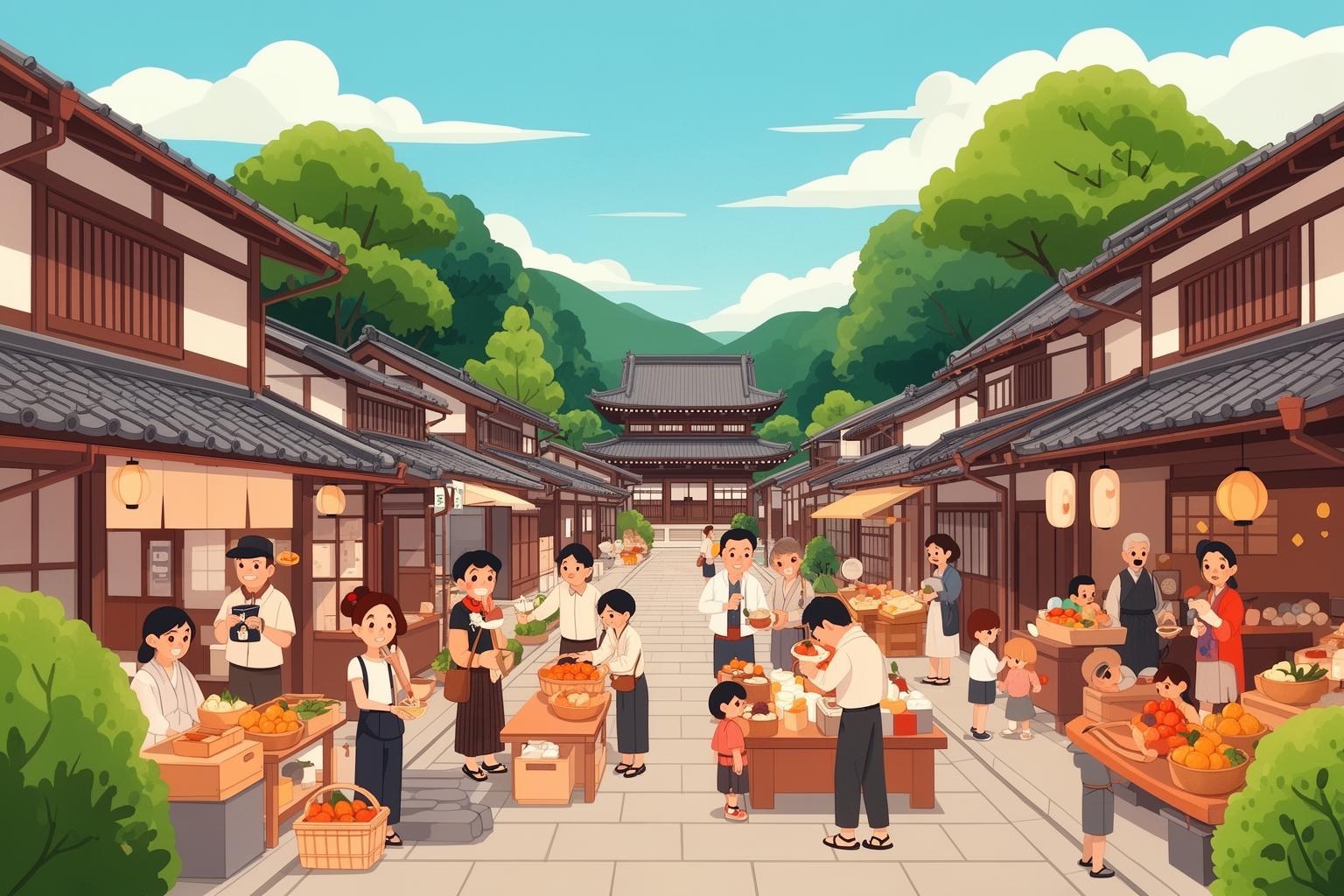
A trip to Tondabayashi offers more than just a history lesson. It serves as a key to understanding the often puzzling behaviors and attitudes of modern Osakans. The values essential for survival and prosperity in this self-governing merchant town are precisely the same values that shape Osaka culture today. These values are evident in the way people shop, speak, and interact with one another on a daily basis.
The Art of “Keningen”: Pragmatism and Frugality
The Osaka dialect includes a word, keningen, that is challenging to translate directly. It embodies a nuanced mix of frugality, cleverness, and practical down-to-earthness. People from other regions of Japan, especially Tokyo, sometimes mistake this for kechi, or mere stinginess. This is a fundamental misconception. Stinginess is about hoarding money, whereas keningen is about maximizing its value. It is not a vice but rather a prized skill.
The merchants of Tondabayashi had to be experts in keningen. They worked with thin profit margins, where every coin was crucial. Wasting resources was not only unwise but also threatened the family’s survival. This mindset has been handed down across generations and remains a core part of Osakan identity. It can be seen everywhere—from the intense competition between supermarkets advertised with loud, colorful flyers to the widespread culture of point cards and loyalty programs treated as seriously as stock portfolios. It’s also apparent in the pride an Osaka obachan (middle-aged woman) takes in detailing exactly how much she saved on her groceries that day, complete with a thorough breakdown of the discounts.
This is not a reflection of poverty. Osaka is a prosperous city. Rather, it reflects a cultural belief that being savvy with money is a virtue. It’s an intellectual challenge to obtain the best possible quality at the lowest possible price. Spending wastefully on frivolous or overpriced items is considered foolish. This explains why Osakans have a deep appreciation for things that are yasui-umai (cheap and delicious). The highest compliment for a restaurant is not that it’s fancy or exclusive, but that it serves amazing food at an incredibly affordable price. This is the keningen philosophy in practice, a direct inheritance from the shrewd merchants who understood the true value of everything.
A Different Kind of Politeness: Directness as Respect
One of the biggest cultural shocks for foreigners and visitors from other parts of Japan in Osaka is the style of communication. The Japanese language is known for its politeness, subtlety, and layers of formality, largely based on the concepts of tatemae (public face or official stance) and honne (true feelings or thoughts). In Tokyo business meetings, people often speak indirectly, using vague language to avoid offense, with the real meaning lying in what is left unsaid.
In Osaka, however, that convention is tossed aside. Directness here is not considered rude but rather a form of respect. The reasoning comes straight from the merchant’s playbook: in trade and negotiation, ambiguity is risky. It results in misunderstandings, broken deals, and financial loss. Clear and honest communication is essential. Therefore, it is more respectful to give someone the unvarnished truth than to waste their time with polite falsehoods.
If an Osakan believes your business idea is flawed, they will tell you plainly, “Akan, sore wa moukarehen wa” (“No way, you can’t make a profit with that.”). A Tokyoite might respond with, “That is a very interesting perspective; perhaps we should consider some alternative approaches.” The Tokyo response aims to preserve harmony, while the Osaka response seeks to solve the problem and prevent you from making a mistake. It’s a deeply practical form of kindness. The merchants of Tondabayashi had to build a community based on trust, where one’s word was a bond. This legacy means that in Osaka, people generally say what they mean and mean what they say. It may be startling at first, but once understood, the underlying philosophy is both highly efficient and freeing.
Community Over Corporation: The Lasting Strength of the Local Network
In today’s age of global brands and online shopping, one might assume local commerce is fading away. But not in Osaka. Here, the shotengai, or local covered shopping arcade, remains a vibrant hub of community life. Its spiritual predecessor is the self-contained economic world of the Jinaimachi.
In Tondabayashi, you purchased sake from the Sugiyama family, lumber from the local merchant, and rice from your neighbor. Your business depended on the health of your neighbors’ businesses. Your reputation was built through daily face-to-face interactions. This fostered a remarkably strong and resilient local economy along with a powerful sense of community identity.
This spirit persists in Osaka’s neighborhoods today. While people do shop at large supermarkets and online retailers, there is still a profound loyalty to local, family-run shops. It’s more than mere convenience—it’s about relationship. The butcher at the local shop knows exactly how you like your meat cut. The woman at the fruit stand will reserve the best persimmons for you because you are a regular. These exchanges are not purely transactional; they are community ties.
This warmth is evident in the playful banter between shopkeepers and customers, a familiarity that would be unthinkable in a sterile Tokyo department store. An elderly woman might scold a young fishmonger for his prices, and he’ll laugh and toss in an extra shrimp. This is the living legacy of the Jinaimachi—a world where commerce is not cold and impersonal, but warm, human, and deeply woven into the community’s fabric.
Weekend Itinerary Continued: Deeper Dives and Quiet Reflections
Your journey into the heart of Osakan culture is far from complete. The second day in Tondabayashi invites you to explore the deeper forces that fueled the town’s prosperity: the intersection of faith, craft, and the lasting legacy these streets impress upon your view of the modern city.
Day 2, Morning: Spirituality and Commerce at Koshoji Betsuin Temple
It’s impossible to grasp the essence of the Jinaimachi without understanding the temple at its center. Koshoji Betsuin is the very reason Tondabayashi came into being. Begin your second day here—not merely as a tourist visiting a temple, but as an investigator seeking to comprehend a system. Pass through the grand gates and absorb the atmosphere. This is a place of quiet reflection, yet it once served as the administrative and spiritual hub of a thriving, autonomous town.
In the West, the sacred and the secular are often seen as separate realms. In the Jinaimachi world, they were fully intertwined. The temple offered spiritual authority and physical space around which commerce could thrive during times of war and uncertainty. Merchants, in turn, supported the temple with donations. This was a symbiotic relationship. Praying for prosperity was not regarded as greedy or worldly; it was a fundamental part of a healthy spiritual and economic life. The gods and buddhas were partners in the business venture.
This fusion remains evident throughout Osaka. Consider the famous Hozenji Yokocho in Namba, where a small, moss-covered temple is nestled among bustling restaurants. Or the Toka Ebisu festival at Imamiya Ebisu Shrine, where thousands of business owners gather to pray to the god of commerce and receive a lucky bamboo branch to secure a prosperous year. In Osaka, faith and finance have always been close companions. The merchants of Tondabayashi knew that building a prosperous town required both a solid business plan and a place to pray for good fortune. That pragmatic spirituality is a key element of the Osakan identity.
Day 2, Afternoon: The Craftsmanship Legacy
After visiting the temple, spend your afternoon delving into the legacy of monozukuri—the art of craftsmanship. Tondabayashi was not just a hub for trade; it was a center for production. The town was renowned for its high-quality sake and its production of cotton and rapeseed oil. This tradition of craftsmanship remains a vital part of Osaka’s identity.
While Osakans are often stereotyped as traders, the city and its surrounding region have long been a manufacturing powerhouse. This is the pride of the artisan, engineer, and creator. It’s a pride less obsessed with abstract brand prestige—a concern more typical of Tokyo—and far more focused on the tangible quality, durability, and practicality of the products themselves. Does it work well? Is it built to last? Is it worth the price? These are the questions an Osakan maker asks.
Visit local shops selling traditional goods. Even if you don’t purchase anything, simply observing is an education. Notice the care that goes into each product. This spirit spans from the smallest workshops to the largest corporations. Global giants like Panasonic and Sharp grew from this same Osakan monozukuri ethos. They began as small ventures driven by a desire to create useful, high-quality products for everyday people. The merchants of Tondabayashi didn’t just sell sake; they sold their own sake, with their family’s name and reputation on every bottle. This deep, personal pride in workmanship remains a potent force in Osaka today.
Day 2, Late Afternoon: Leaving the Past, Seeing the Present
As you board the train back to Tennoji, the quiet streets of the Jinaimachi will feel worlds away. The shift back to the noise and scale of central Osaka can be startling. But this time, you will see the city with fresh eyes. The chaos will appear as a different kind of order.
View the sprawling areas of Tennoji and Namba not as a random jumble of buildings and people, but as a magnified, intensified version of the Jinaimachi. The covered Shinsaibashi-suji shopping street is a modern shotengai on a grand scale. The tiny, specialized shops in Nipponbashi’s backstreets are run by contemporary artisans, fiercely proud of their craft. The loud, direct, and witty barker trying to entice you into his restaurant is a direct descendant of the Edo-period merchant, using personality and humor to make the sale.
Tondabayashi Jinaimachi is not a relic frozen in time. It is the living, breathing soul of Osaka, preserved in its architecture. The principles that shaped life in that small, self-sufficient town—pragmatism, community, directness, and a healthy skepticism of authority—are precisely the principles that animate the sprawling metropolis today. Understanding Tondabayashi is key to grasping why Osaka feels so unlike any other city in Japan. It’s not merely a place of history; it’s a guide for interpreting the city’s present.
Your weekend journey may be over, but your true exploration of Osaka has just begun. The city’s identity isn’t inscribed on monuments or preserved in museums. It is performed daily on its streets, in its markets, and through the lively, pragmatic, and deeply human interactions of its people. A trip to Tondabayashi reveals not just how Osakans once lived, but who they still are. It’s a city that doesn’t demand your reverence for its past but rewards your effort to understand its roots. To live in Osaka, to truly connect with its rhythm, is to appreciate the unbroken line that runs from a quiet merchant house in Tondabayashi to the brightest neon sign in Dotonbori. It’s all part of the same extraordinary story.