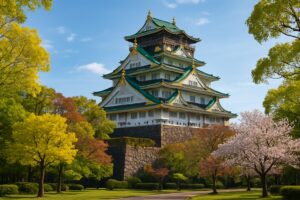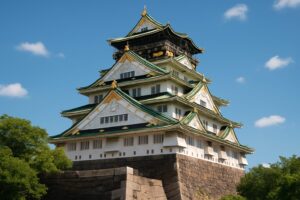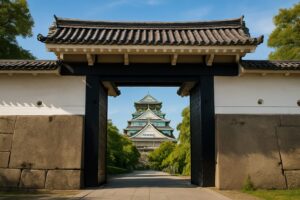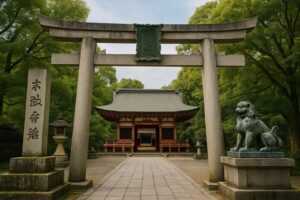
Hey there, fellow explorers! Megumi here, your guide to the pulse-pounding, soul-stirring events and hidden histories that make Japan tick. Today, we’re stepping away from the neon glow of Dotonbori and the towering silhouette of Osaka’s famous castle to uncover a story whispered on the wind, a tale of power, prayer, and tragedy held within the quiet grounds of a shrine that predates them all. We’re heading to Tamatsukuri Inari Shrine, a place that feels less like a tourist spot and more like a time capsule. This isn’t just another beautiful shrine; it’s a sacred library where the unwritten chapters of Osaka’s most powerful family, the Toyotomi clan, are etched into every stone lantern and gnarled camphor tree. While the magnificent Osaka Castle we see today is a concrete reconstruction, a monument to a triumphant history, Tamatsukuri Inari Shrine is the real deal—an authentic witness to the hopes and fears of the very people who first raised that fortress to the sky. It saw the clan’s meteoric rise and its devastating fall, and it has kept their secrets safe for over four hundred years. This is where a desperate mother prayed for an heir, where the fate of a dynasty was tied to the earth, and where the echoes of a fiery siege still resonate if you listen closely. Forget the glossy brochures for a moment. Let’s peel back the layers of the city and find the raw, beating heart of its history. Welcome to Tamatsukuri Inari, the true guardian of the Toyotomi legacy.
To further explore the history of the clan’s iconic stronghold, read our article about the rebirth of Osaka Castle.
A Foundation Deeper Than a Castle’s Moat
To truly grasp the shrine’s connection to the Toyotomi, we must rewind the clock far, far back. Long before warlords dreamed of unifying Japan and before samurai fought on the fields that would become Osaka, this land was sacred. The name “Tamatsukuri” itself offers a direct hint to its ancient roots, meaning “jewel-making” or “bead-making.” This area was home to the Tamatsukuri-be, influential artisan guilds who crafted exquisite magatama—comma-shaped beads made from jade and other precious stones. These were not mere ornaments; they held immense spiritual and political significance, worn by emperors and chieftains and central to the rituals of the ancient Yamato court. The shrine was established in the 12th year of Emperor Suinin’s reign, a figure straddling the line between history and mythology, dating its founding to around 18 B.C. While the exact date remains legendary, archaeological evidence confirms the area was a key center of this craft. Tamatsukuri Inari Shrine was founded to honor the patron deities of these artisans, the kami who guided their hands and blessed their work. For centuries, this place served as a hub of creation and spiritual devotion, a cornerstone of the community long before a single stone of Osaka Castle was laid. It embodied an understanding of legacy, the importance of lineage, and the power of divine protection—qualities that would later draw the most ambitious man in Japanese history.
The Unifier’s Choice: A Fortress and Its Spiritual Anchor
Enter Toyotomi Hideyoshi, a man of boundless ambition—a farmer’s son who climbed the ranks to become the de facto ruler of all Japan. When he selected the strategic Uemachi Plateau in the late 16th century to construct his impregnable stronghold, Osaka Castle, he was not simply building a military fortress; he was establishing a new capital and a symbol of his absolute power. A shrewd man like Hideyoshi understood that power was not merely about stone walls and loyal troops but also about divine favor. Surveying the lands near his chosen location, he discovered Tamatsukuri Inari Shrine, an ancient and respected institution deeply embedded in the local tradition. Rather than merely tolerate it, he embraced it, declaring the shrine the official guardian of the castle and its spiritual protector against misfortune, fire, and evil spirits. He viewed the shrine not as a relic of the past but as an essential element of his future. Both he and his retainers became devoted patrons, offering prayers and donations to ensure the shrine’s prosperity remained closely connected to that of the castle. This was a masterstroke of political and spiritual strategy: it legitimized his new stronghold by linking it to the ancient customs of the land and crafted a powerful narrative—that the divine forces that had safeguarded this place for millennia now watched over him and his rising dynasty. The shrine became inseparably connected to the castle, its destiny intertwined with the fortress that rose to the northwest, acting as a silent partner in the Toyotomi clan’s grand ambition to unify Japan under their rule.
A Mother’s Desperate Prayer
However, the relationship between the Toyotomi family and Tamatsukuri Inari Shrine soon took on a deeply personal dimension. Hideyoshi possessed everything a man could desire—power, wealth, and a unified country—but he lacked one vital thing: a male heir to secure his legacy. His beloved concubine, Yodo-dono (also known as Chacha), niece of his former master Oda Nobunaga, had yet to bear a son who survived infancy. Rumors swirled at court, and the future of the Toyotomi clan was uncertain. In her despair, Yodo-dono turned to the divine, becoming a fervent devotee of Tamatsukuri Inari Shrine, the spiritual guardian of her home. Day after day, she prayed to the kami enshrined there, especially Ukanomitama-no-kami, the deity of fertility, prosperity, and harvest. Her petitions were not for wealth or military victories but for the most fundamental human yearning: a child. The atmosphere around the shrine must have been heavy with her hopes and anxieties. Picture this powerful woman, a figure of immense political significance, kneeling in quiet supplication before the altar, her prayers mingling with the aroma of incense and the rustling of camphor leaves. She placed all her faith in this sacred ground and vowed that if her prayers were granted, her family’s devotion would be unwavering.
The Birth of an Heir and a Promise Kept
And then, a miracle occurred. In 1593, Yodo-dono gave birth to a healthy boy named Hiroi, later known to history as Toyotomi Hideyori. The relief and joy that must have swept through Osaka Castle are almost unimaginable. The Toyotomi lineage was secured. Hideyoshi, now an elder statesman, finally had the successor he had long desired. True to her vow, Yodo-dono’s gratitude to Tamatsukuri Inari Shrine was profound. She and Hideyoshi lavished the shrine with donations, allocated part of the castle’s treasury for its maintenance, and sponsored extravagant festivals. Their most heartfelt and enduring tribute was a pair of bronze fox statues. Inari shrines are traditionally guarded by foxes, or kitsune, believed to be the gods’ messengers, but the statues donated by Yodo-dono were unique. She commissioned a sculpture depicting a mother fox tenderly watching over her cub—an intimate and personal symbol expressing her own experience: a mother’s love and relief immortalized in bronze. This beautiful parent-and-child fox statue still stands within the shrine grounds today, silently bearing witness to a prayer answered and a promise fulfilled. It remains one of the most touching and human relics connecting visitors directly to the emotional world of the Toyotomi clan, a world of imperial politics fundamentally driven by the universal love of a parent for their child.
Walking Through Living History: A Tour of the Shrine Grounds
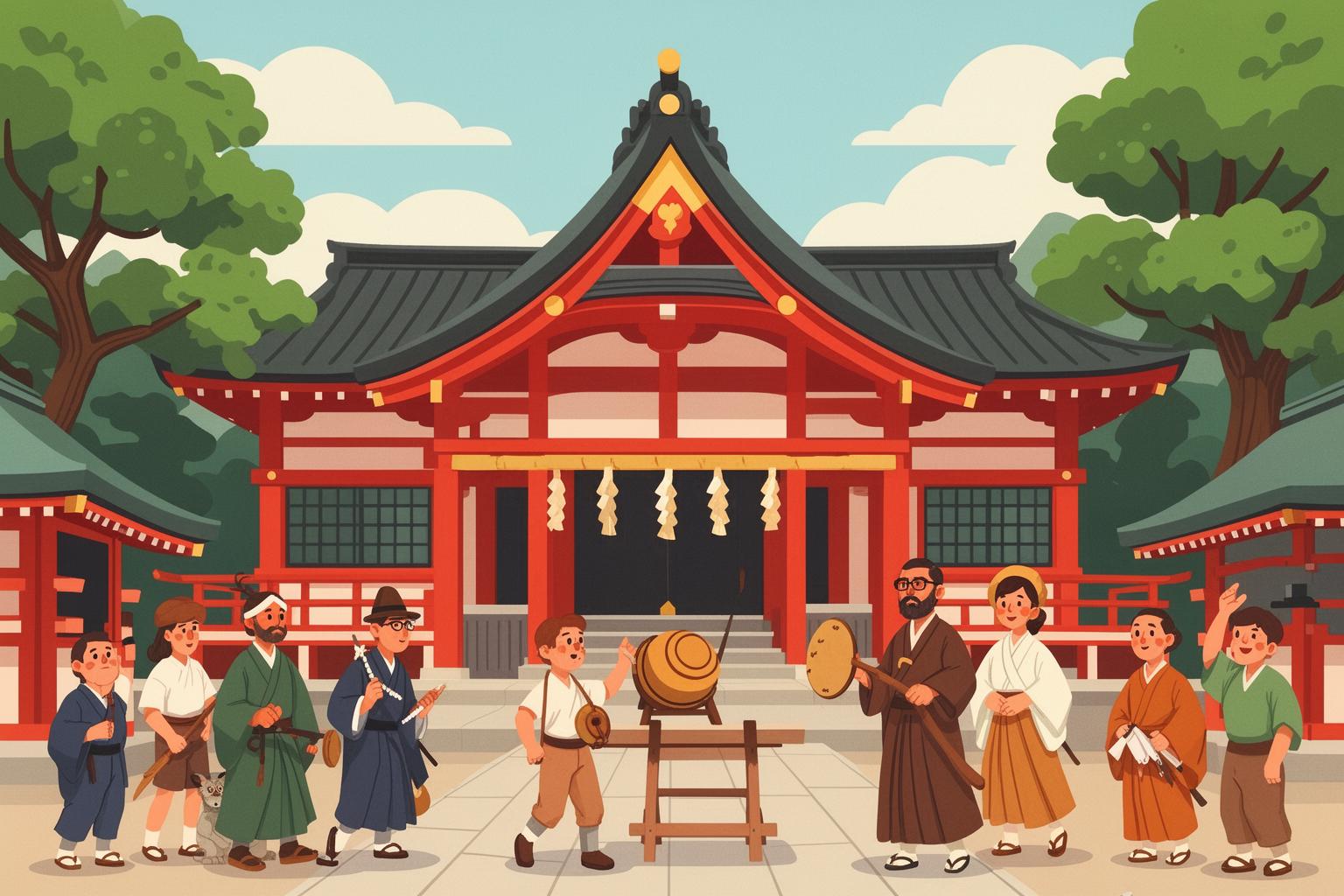
Visiting Tamatsukuri Inari Shrine today feels like stepping onto a historical stage where the drama of the Toyotomi clan is still unfolding. The energy is tangible. As you pass through the first large stone torii gate, the city’s noise begins to fade, replaced by the crunch of gravel beneath your feet and the cawing of crows perched in ancient trees. The air here feels different—laden with history, yet calm and serene. Though the space is compact, every inch is rich with meaning.
The Dance of the Fox Messengers
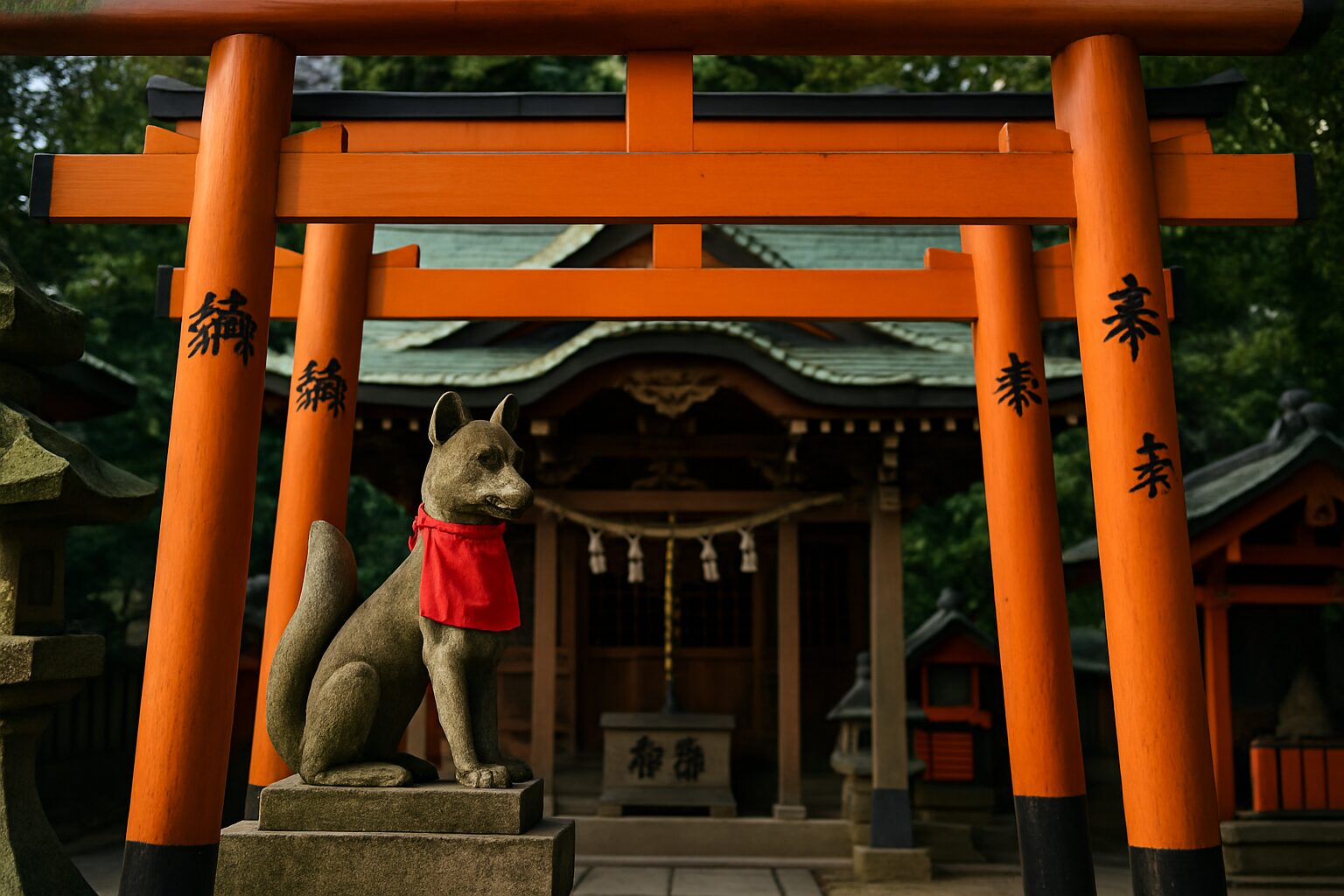
The first thing that strikes you is the sheer number of foxes. They are everywhere, standing guard on stone pedestals, their expressions ranging from fierce and protective to almost playful. Each has been donated over the centuries by devoted worshippers. Take your time to really observe them. Some are ancient, weathered by countless rains and winds, their features softened into a gentle blur. Others are newer, with sharp lines and crisp details that testify to the shrine’s continuing significance to the local community. Draped in red votive bibs (yodarekake), they are offerings from patrons seeking favor from the Inari kami. The main attraction, of course, is the parent-child fox statue donated by Yodo-dono. Nestled among the others, it stands apart because of its emotional impact. The tender posture of the mother fox and the trusting innocence of the cub form a powerful symbol that transcends time. Standing before it, you can feel the ghost of Yodo-dono’s gratitude, a silent thank you echoed for more than four hundred years.
The Stone of Destiny: Hideyori’s Umbilical Cord
Near the main hall, there is another, even deeper connection to the young heir: a collection of curious, moss-covered stones. Among them is the Henjō-seki, or Omphalos Stone. Legend holds that this is the very spot where the infant Toyotomi Hideyori’s umbilical cord was ritually buried. At that time, the umbilical cord was seen as a powerful link between a child and their destiny, and its proper burial was essential to ensuring a healthy and prosperous life. By interring it within the sacred grounds of the clan’s guardian shrine, Hideyoshi and Yodo-dono symbolically tied their son’s fate to the protection of the gods. They planted his destiny in sacred soil, hoping it would grow strong and unshakable, like the ancient camphor trees surrounding it. This unassuming stone is perhaps the most potent connection to the Toyotomi’s hopes for the future—a dynasty they wished to rule Japan for centuries, a future tragically unfulfilled. The stone feels cool to the touch, and as your eyes trace the mossy patterns, you can’t help but sense the weight of fragile hope and the sorrow that would follow.
Literary Spirits and Sacred Waters
The shrine’s story doesn’t end with the Toyotomi. It remained a cherished local landmark and, during the Edo Period, became associated with one of Japan’s great literary figures, Ihara Saikaku. A celebrated poet and the creator of the “floating world” prose genre, Saikaku lived nearby and often found inspiration within the shrine’s tranquil grounds. You will see a bronze statue of him here, seated in contemplation with a writing brush in hand. It serves as a reminder that this place has nurtured not only the ambitions of warlords but also the creativity of artists. It has been a muse for those who chronicle human life—its follies, passions, and beauty. Nearby, you may also find the Nanba Tamatsukuri-no-Mizu, a sacred well. Its water was considered pure and life-giving, one reason the area was regarded as spiritually powerful from ancient times. While you cannot drink from it today, its quiet presence connects you to the deep, elemental history of the land—a history that flows even deeper than the tales of samurai and poets.
The Fiery End: Echoes of the Siege of Osaka
The tranquil atmosphere of Tamatsukuri Inari Shrine today conceals the violent upheaval it once endured. After Hideyoshi’s death, Japan’s political landscape fractured. The powerful Tokugawa Ieyasu seized the opportunity to claim ultimate authority, sparking a direct clash with the Toyotomi clan, now led by the young Hideyori and his fiercely protective mother, Yodo-dono, who were entrenched in the supposedly impenetrable Osaka Castle. This led to one of the most epic and tragic confrontations in Japanese history: the Siege of Osaka. The conflict unfolded in two phases: the Winter Campaign of 1614 and the Summer Campaign of 1615. The shrine, situated just outside the castle’s outer defenses, stood at the center of the battlefield. The area served as a staging ground for troops, a field hospital for the wounded, and a chaotic blend of smoke, steel, and desperation. During the final, decisive Summer Campaign, Tokugawa forces, numbering nearly 150,000, overwhelmed the Toyotomi loyalists. The castle’s defenses were broken, and the fortress—once a symbol of Toyotomi power—was engulfed in flames. With no escape, Hideyori and Yodo-dono committed ritual suicide within the castle’s burning keep. The Toyotomi clan was extinguished, and from its ashes arose a new era: the Tokugawa Shogunate. Remarkably, amid this destruction, Tamatsukuri Inari Shrine survived. While many nearby buildings were reduced to ashes, the shrine’s core stood firm, a silent, soot-streaked witness to the end of an era. It had guarded the Toyotomi in life and now preserved their memory in death. The reconstructed Osaka Castle towering over the city today was built by the Tokugawa as a symbol of their victory. Yet here, in the quiet shade of the shrine’s trees, the story of the defeated endures, held not in grand monuments, but in personal, heartfelt relics.
A Practical Guide for the Modern Pilgrim
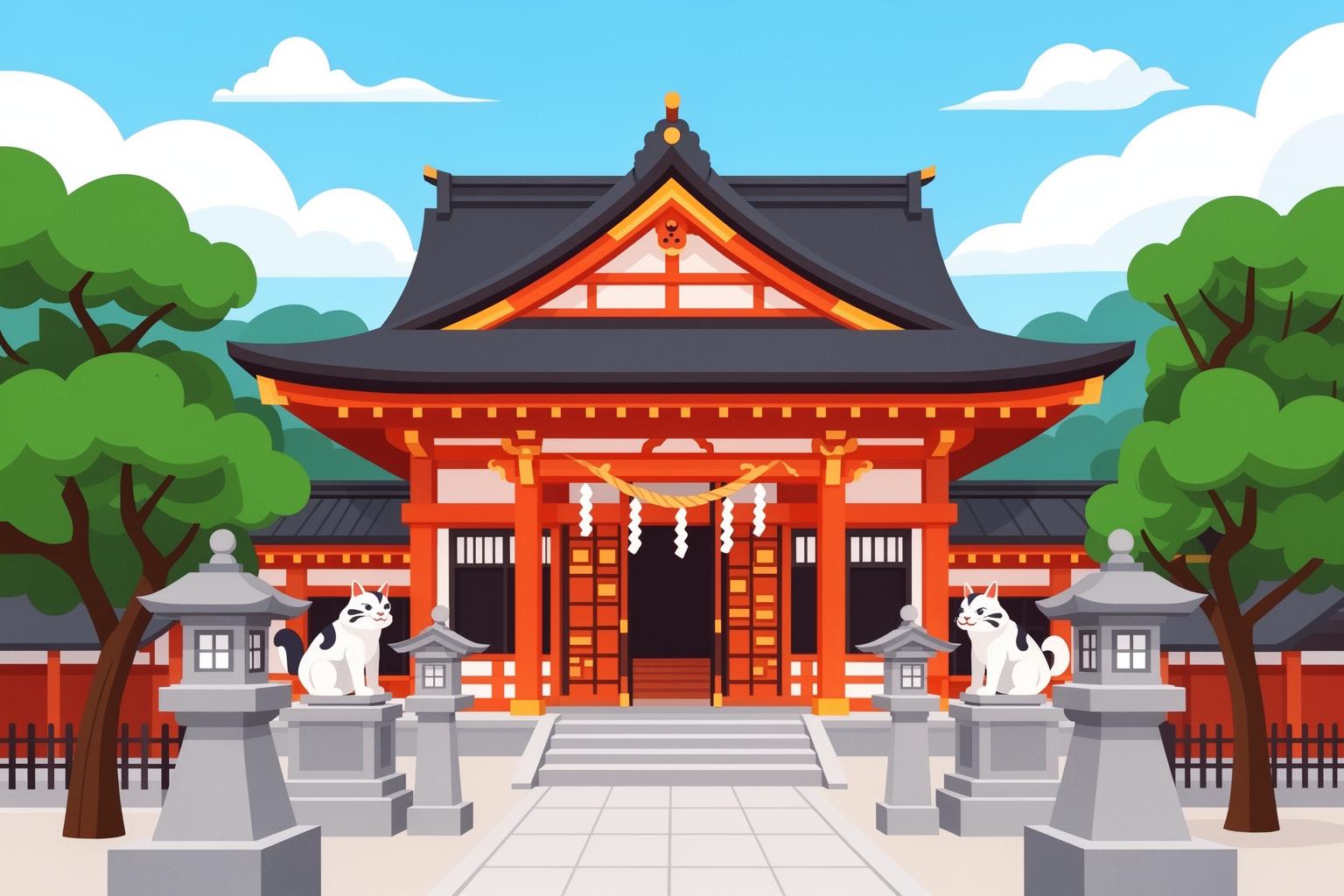
Convinced that you need to see this hidden gem for yourself? Getting to Tamatsukuri Inari Shrine is refreshingly straightforward, making it an easy addition to any Osaka itinerary, especially if you’re already planning to visit the castle.
Reaching the Shrine
Your primary access point is Tamatsukuri Station, conveniently served by two major lines: the JR Osaka Loop Line and the Osaka Metro Nagahori Tsurumi-ryokuchi Line. From the station, it’s a pleasant and simple five-minute walk through a quiet, charmingly local neighborhood that feels worlds apart from the busy tourist areas of Namba or Umeda. Along the way, you’ll pass small shops and residential homes, giving you a glimpse of everyday life in Osaka. This smooth transition from the modern cityscape to the ancient shrine is part of the experience, offering a chance to unwind and prepare for the historical immersion ahead. The shrine remains generally open 24 hours a day, though the main office—where you can purchase charms (omamori) or receive a seal (goshuin)—usually operates during typical daytime hours, around 9:00 AM to 5:00 PM. Admission to the grounds is entirely free.
Exploring the Surrounding Area
One of the best aspects of Tamatsukuri Inari Shrine is its location, serving as an ideal gateway to the quieter, more historical side of the Osaka Castle area. After visiting the shrine, I highly recommend taking a leisurely walk toward the castle park. You can enter the park from the south, a much less crowded approach than the main Otemon Gate. This route takes you past Sanadayama Park, named after Sanada Yukimura, one of the most celebrated samurai who fought for the Toyotomi during the Siege of Osaka. The entire area is deeply rooted in the history of that final, fateful battle. Walking these streets means literally treading on former battlefield grounds. Pairing your shrine visit with a stroll through these historical landmarks before heading to the main castle keep enriches your day’s narrative: you begin with the personal, spiritual story of the Toyotomi at the shrine, walk through the echoes of their last battle, and finish at the monument to their former glory and ultimate downfall. This transforms a simple sightseeing trip into a meaningful historical pilgrimage.
Notes on Etiquette for a First-Time Visitor
Japanese shrines are sacred spaces, and observing a few simple customs will not only show respect but also deepen your experience. As you enter, you’ll pass through a torii gate, where it’s customary to bow once before crossing, marking your entrance into the sacred space. Before approaching the main hall, you’ll find a water pavilion called a chozuya or temizuya for ritual purification. Don’t worry—it’s simple! Pick up a ladle with your right hand, fill it with water, pour some over your left hand to rinse, then switch hands and rinse your right. Next, pour a bit of water into your cupped left hand and rinse your mouth—remember to discreetly spit the water onto the ground beside the basin, never back into it. Avoid drinking directly from the ladle. At the main prayer hall, if you wish to make an offering, gently toss a coin (a 5-yen coin is considered lucky) into the offering box. Then follow the standard prayer ritual common at many shrines: bow deeply twice, clap your hands twice, offer a silent prayer or wish, and end with a final bow. While none of these steps are strictly required, participating in these small rituals can help you feel more connected to the history and spiritual energy of the place.
The Enduring Whisper of a Fallen Dynasty
Leaving Tamatsukuri Inari Shrine and walking back towards the station as the modern city gradually reclaims the surroundings, the essence of the place remains with you. It’s a deep feeling of having encountered something genuine, carefully preserved despite the unyielding flow of time. Osaka Castle is grand and impressive, a must-see for its scale and its museum. However, it stands as a monument built by the victors, its story one of conquest and power. In contrast, the story at Tamatsukuri Inari is quieter, more delicate, and infinitely more human. It tells of a mother’s love, a clan’s hope for the future, and the tragic loss that shaped a nation. It reminds us that history is not merely a series of dates and battles confined to textbooks. Rather, it is a tapestry woven from personal prayers, desperate hopes, and the quiet moments of those who lived it. Beneath the watchful gaze of the stone foxes, the Toyotomi are not just a fallen clan in a history book; they are a family whose presence is still palpable. So when you visit Osaka, by all means, admire the grandeur of the castle. But then take a brief walk, follow the whispers of the past, and visit its true guardian. You’ll discover that the most powerful stories often lie not within the grandest palaces, but in the most sacred and quiet spaces.