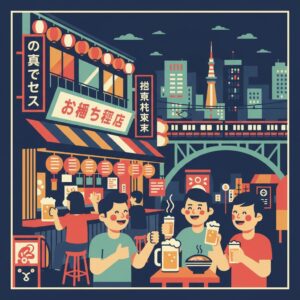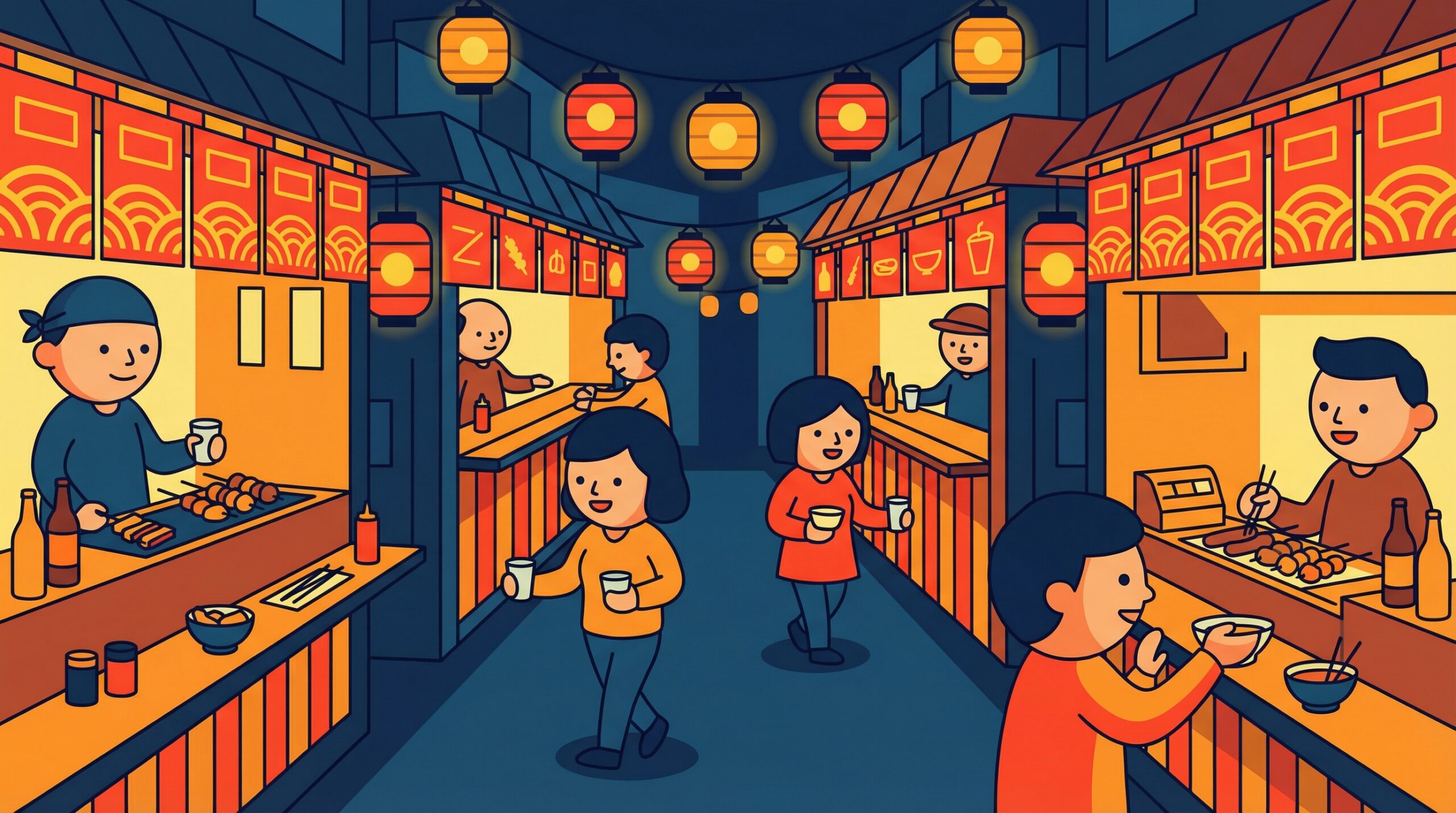
Step off the train at JR Tenma Station, and you’re not just stepping onto a platform; you’re stepping into the pulsating, gastronomic heart of authentic Osaka. Forget the neon-drenched tourist streams of Dotonbori for a moment. Here, under the tangled web of the railway tracks and down a labyrinth of lantern-lit alleyways, lies Tenma, a district that thrums with the rhythm of local life. This isn’t a spectacle put on for visitors; it’s the real deal. It’s where salarymen loosen their ties, where friends gather for boisterous laughter, and where the city’s profound love affair with food and drink—a culture known as kuidaore, or eating until you drop—is practiced with nightly devotion. Tenma is an unfiltered, unpretentious, and utterly intoxicating immersion into the soul of Osaka’s nightlife. The air itself is a rich broth of aromas: the sweet, smoky char of grilled chicken from a yakitori stand, the savory scent of simmering dashi broth from an oden cart, and the faint, celebratory perfume of spilled sake. This is the stage for hashigo-zake, the art of izakaya hopping, and you’re invited to be part of the performance. It’s a culinary crawl, a social adventure, and the very best way to taste the true flavor of this incredible city.
For a different flavor of Osaka’s vibrant nightlife, consider exploring the nostalgic, Showa-era atmosphere of the nearby Juso district.
The Soul of Tenma: Where Local Life Unfolds
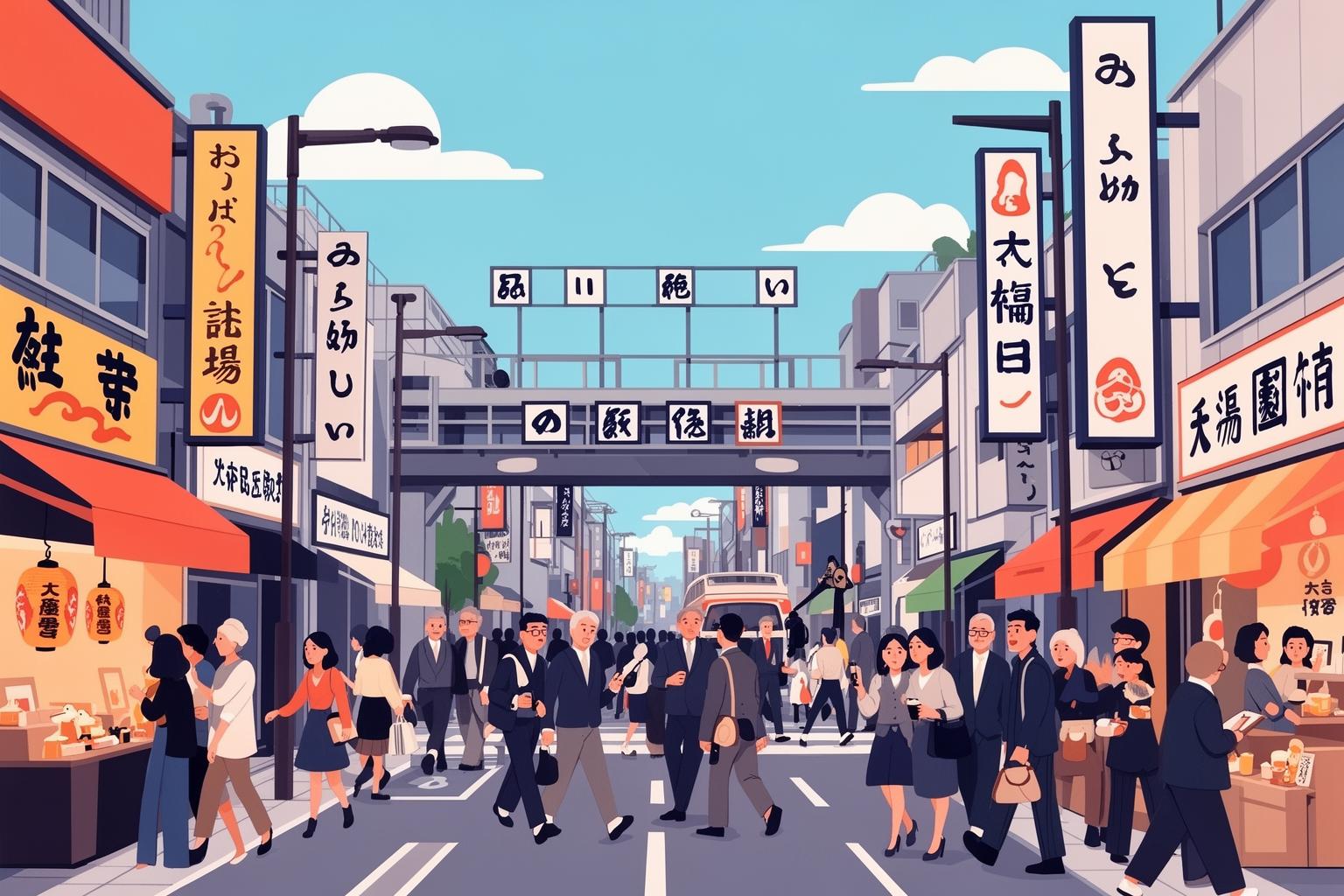
To truly understand Tenma, you must first grasp its geography, which is as much about feeling as it is about location. It’s a beautifully chaotic maze of narrow streets and even tighter alleys, most radiating out from JR Tenma Station. This is not a district of broad boulevards or grand plazas. Its charm is intimate, almost secretive, inviting you to peek around corners and uncover what lies beyond. It’s a world designed on a human scale, where the journey is as enjoyable as the destination.
A Labyrinth of Lanterns and Laughter
As dusk descends over Osaka, Tenma undergoes a magical change. One by one, hundreds of red paper lanterns, called akachochin, flicker to life, casting a warm, welcoming glow over the cobblestones. Each lantern, emblazoned with the calligraphic name of its establishment, serves as a beacon promising delicious food, cold drinks, and friendly company. Relatively quiet during the day, the district bursts awake with a symphony of sounds: the clinking of glasses, the sizzle of food on hot grills, and the murmur of conversations that swell into joyous chatter as night deepens. Steam rises from open storefronts, carrying tantalizing aromas that mingle and dance in the air. This sensory immersion defines Tenma’s atmosphere—it’s lively, vibrant, and unapologetically alive. Strolling through these alleys feels like navigating a living organism, where each doorway opens a portal to a new experience. The close proximity of venues fosters a unique sense of community; laughter spills from one izakaya and blends with music from the next, creating a collective energy that is both exhilarating and inviting.
Beyond the Tourist Trail: The Appeal of Authenticity
What truly distinguishes Tenma from other entertainment districts in Osaka is its deep authenticity. Although tourism has discovered its charms, Tenma remains fundamentally a local haven. This is where Osakans come to relax, and that local emphasis shapes every part of the experience. Prices are refreshingly reasonable, reflecting the area’s working-class roots and commitment to value. You won’t find flashy facades or gimmicky themes here. Instead, small, often family-run establishments that have perfected their craft over generations prevail. The food is honest, unpretentious, and firmly rooted in Kansai’s culinary traditions. This is the place to eat like an Osakan, drink like an Osakan, and connect with the city on a deeper level. The absence of polished tourist gloss is Tenma’s greatest asset. It allows for genuine interactions and moments of shared understanding over a plate of grilled skewers, even without a common language. It’s a place that rewards curiosity and an adventurous spirit.
The Tenjinbashisuji Connection
Tenma’s vibrant nightlife isn’t isolated; it’s closely connected to its daytime counterpart: the Tenjinbashisuji Shotengai. This is Japan’s longest covered shopping arcade, an astonishing 2.6-kilometer stretch of commerce and culture running north to south. By day, the shotengai bustles with activity, featuring shops selling everything from fresh produce and tofu to kimonos and kitchenware. As evening falls, many visitors wrap up their shopping or wandering in the arcade and then veer into the side streets, stepping straight into the welcoming embrace of Tenma’s izakayas. This synergy crafts a perfect, full-day Osaka experience. You can spend the afternoon exploring the endless delights of the arcade, soaking in the local vibe, and then transition effortlessly into an evening of culinary discovery in Tenma. The two are like two sides of the same coin, each complementing the other and offering a comprehensive insight into the city’s daily life.
Navigating the Izakaya Maze: A Starter’s Guide to Hashigo-zake
The true joy of Tenma lies in the practice of hashigo-zake, which literally means “ladder drinking.” It’s the Japanese version of a pub crawl, but with a much stronger focus on food. The aim isn’t merely to drink but to create a progressive meal by sampling the distinct specialties of several different venues throughout an evening. This method lets you experience the remarkable variety of Tenma’s culinary scene. Don’t stay in one spot all night; embrace the spirit of movement and discovery.
The Art of the First Stop: Setting the Tone
Your initial stop is vital as it sets the pace for the entire night. The key is to begin somewhere casual and lively, a place that doesn’t demand a significant investment of time or money. This is where Tenma’s many tachinomi, or standing bars, come into play. These are typically small, busy spots where you stand at a counter or high table. The atmosphere is energetic, the turnover quick, making them the perfect place to start the evening.
Tachinomi: The Standing Start
Entering a tachinomi, you immediately feel the vibrant pulse of Tenma. Patrons gather closely, creating a lively and social ambiance. The charm of the standing bar lies in its simplicity. You order a drink—a crisp draft beer (nama biiru) or a refreshing lemon highball—and a few small plates. The menu often features quick, tasty bites. Look for classics like kushikatsu (deep-fried skewers) or doteyaki (slow-cooked beef sinew stew). With no seats available, there’s an unspoken rule that you won’t linger for too long. This makes it an ideal first stop. Enjoy a drink, sample a couple of signature dishes, soak in the atmosphere, then move on. It’s also a great spot for solo visitors; standing at a shared counter makes it easy to start a conversation with neighbors, often friendly and curious locals.
The Classic Seated Izakaya
If a standing start feels too hectic, consider beginning at a more traditional, seated izakaya that offers lighter fare. Look for a place with a welcoming wooden counter where you can watch the chefs work. These establishments often have a calmer, more intimate vibe. Shelves might be lined with bottles of sake and shochu, and menus handwritten on strips of paper pinned to the walls. This is a wonderful way to start your evening with a bit more comfort while still embracing the spirit of hashigo-zake. Order a selection of appetizers, such as edamame and Japanese pickles (tsukemono), to whet your appetite for the culinary journey to come.
The Second and Third Acts: Diversifying Your Palate
Once you have warmed up with your first stop, the real adventure begins. The goal for your second, third, and even fourth stops is to build a varied and satisfying meal by moving between venues with different specialties. Think of your evening as a multi-course tasting menu where you are the curator. Did you start with fried foods? Then for your next stop, seek out an izakaya known for fresh, clean flavors, like a seafood specialist.
From Yakitori to Seafood
A classic Tenma progression might look like this: After a tachinomi for a quick beer and kushikatsu, move on to a yakitori-ya where grilled chicken skewers take center stage. The air is filled with the mouthwatering aroma of chicken fat dripping onto hot charcoal. Spend some time here sampling various chicken parts, from juicy thigh meat (momo) to crispy skin (kawa). For your third stop, switch gears entirely and find a kaisen izakaya, a place dedicated to seafood. Indulge in glistening sashimi plates, grilled fish, or perhaps a rich seafood gratin. This thoughtful change in flavors keeps your palate excited and makes the overall experience more memorable.
Diving into Drinks: Beyond Beer and Highballs
Just as you vary your food, don’t hesitate to vary your drinks. While Japanese beer is always a reliable choice to start, the world of Japanese alcohol is broad and fascinating. When you move to a place specializing in grilled items, try switching to sake. The complex flavors of rice wine can beautifully complement the smoky notes in grilled food. Ask for the osusume (recommendation) to sample a local brew. If you find yourself at a spot serving rich, savory stews, a glass of shochu might be perfect. This distilled spirit can be made from sweet potatoes (imo), barley (mugi), or rice (kome), each offering a unique character. It’s often served on the rocks or mixed with hot or cold water. Exploring these different drink pairings is an essential part of the hashigo-zake experience.
Tenma’s Culinary Constellations: Must-Try Genres and Dishes
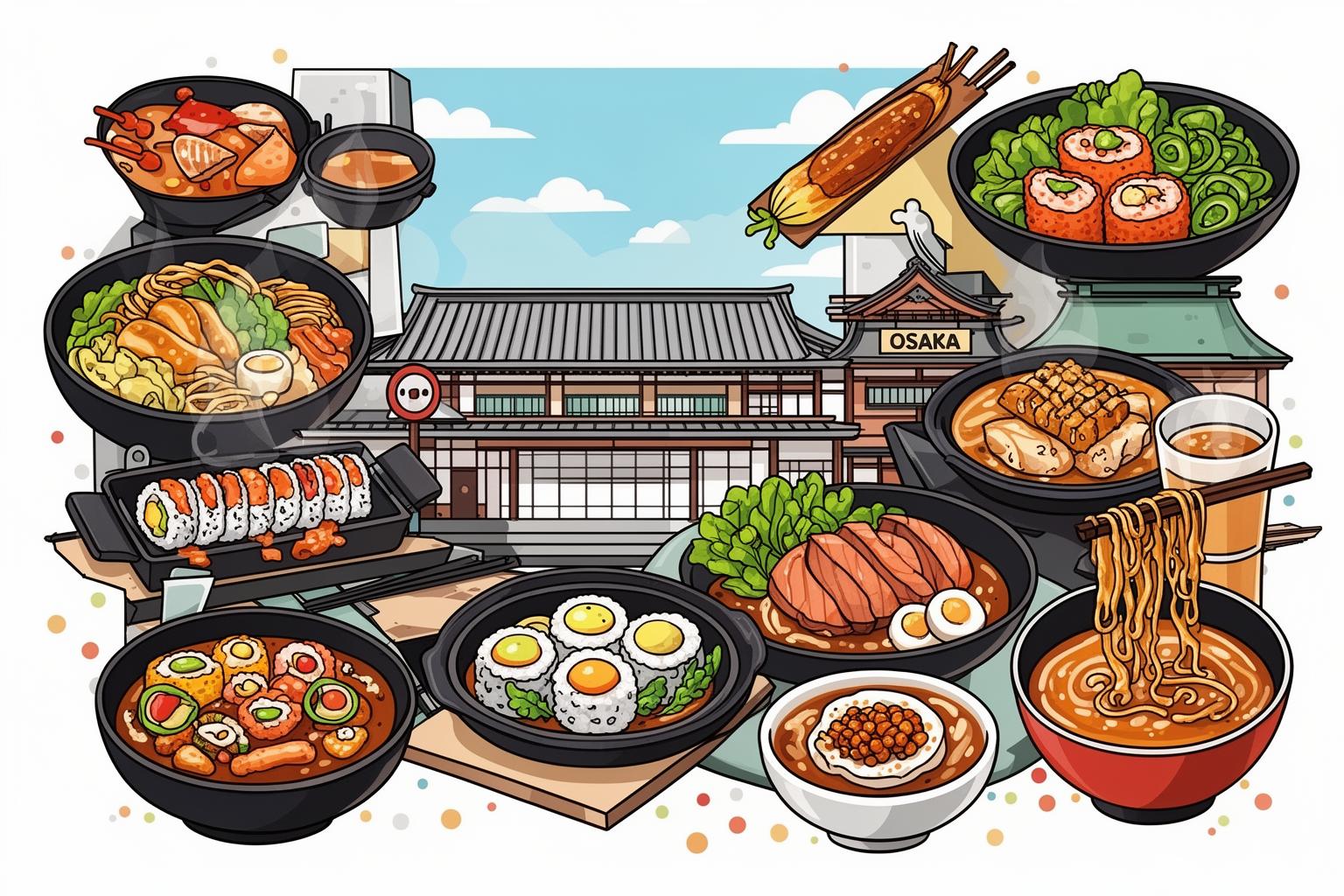
Tenma is a galaxy of culinary wonders, filled with countless small izakayas, each a shining star showcasing its own unique specialty. While part of the thrill is in random discovery, being familiar with some key genres and dishes will help you navigate this delicious universe. Here are some quintessential Tenma experiences you won’t want to miss.
The Smoke and Sizzle: Yakitori and Kushikatsu Hotspots
These two styles of skewered foods are cornerstones of Osaka’s izakaya culture, and Tenma boasts some of the city’s finest establishments. They exemplify comfort food at its best—simple, satisfying, and perfect for sharing.
Yakitori Explained
Yakitori is much more than just chicken on a stick. A true yakitori-ya is a temple dedicated to poultry, where the master griller, standing before a long, narrow charcoal grill, performs a delicate dance of turning, fanning, and seasoning. The menu is a lesson in chicken anatomy, featuring everything from familiar thigh meat (momo) and chicken with green onion (negima) to more adventurous cuts like heart (hatsu), liver (rebā), and gizzards (sunagimo). A must-try is tsukune, a savory chicken meatball often served with a raw egg yolk for dipping. When ordering, you’ll usually be asked to choose between two seasonings: shio (salt) or tare (a sweet and savory soy-based glaze). A helpful tip is to select simpler cuts with salt to savor the natural chicken flavor, and richer, fattier cuts with tare. Watching the chef work is part of the fun, so try to snag a seat at the counter if possible.
Kushikatsu Tales
If yakitori is about smoky finesse, kushikatsu is about crispy, deep-fried delight. This is one of Osaka’s most famous culinary inventions. Various ingredients—meats, seafood, and vegetables—are threaded onto bamboo skewers, coated in a light panko breadcrumb batter, and fried to golden perfection. The variety is astounding: pork, beef, shrimp, scallops, lotus root, shiitake mushrooms, quail eggs, and even cheese. The skewers arrive piping hot and are meant to be dipped into a communal container of thin, savory tonkatsu-style sauce. Here, the single most important rule of kushikatsu applies: NO DOUBLE-DIPPING. Once you’ve taken a bite from your skewer, it must never return to the sauce. This rule ensures hygiene and respect, and it is taken very seriously. If you need more sauce, use the provided cabbage leaves to scoop some onto your plate. The cabbage also acts as a refreshing palate cleanser between rich, flavorful bites.
Fresh from the Sea: Sashimi and Seafood Experts
Given Japan’s island geography, it’s no surprise that seafood is a cornerstone of its cuisine. In Tenma, you’ll find an impressive array of izakayas celebrating the ocean’s bounty, serving it both raw and cooked with incredible skill.
The Craft of Raw Fish
Even in a casual izakaya setting, the quality of sashimi in Tenma can be stunning. Look for places where fish is displayed on ice at the counter—a clear sign of freshness. A standard sashimi platter (moriawase) is an excellent way to sample a variety of the day’s best offerings. Expect classics like ruby-red maguro (tuna), buttery hamachi (yellowtail), and delicate tai (sea bream). Don’t just douse it in soy sauce; take the time to appreciate the texture and subtle flavors of each slice. Presentation is part of the art, with fish often arranged beautifully alongside shredded daikon radish and shiso leaves. It reflects the Japanese reverence for ingredients.
Grilled and Simmered Treasures
Beyond raw fish, seafood izakayas offer a wealth of cooked dishes. Look for whole grilled fish such as hokke (Atka mackerel), salted and grilled until the skin is crispy and the flesh flaky and moist. Grilled scallops with butter and soy sauce (hotate bata-yaki) provide an irresistibly savory treat. You may also find simmered dishes, known as nitsuke, where fish is gently cooked in a broth of soy sauce, mirin, and sake, resulting in a deeply flavorful and comforting dish. These cooked preparations highlight seafood’s versatility.
The Heartwarming Classics: Oden and Doteyaki
Especially on a cool evening, nothing is more comforting than the slow-cooked, soul-warming dishes that are staples in many Tenma izakayas. These are homey flavors cherished by generations of Osakans.
Oden: Comfort in a Bowl
Oden is a classic Japanese one-pot dish consisting of various ingredients simmered for hours in a light, flavorful dashi broth. Passing by an oden spot, you’ll see large, partitioned pots steaming gently, each compartment holding different treasures. Items are ordered individually, allowing you to create your own custom bowl. Essentials include tender, broth-soaked daikon radish, wobbly blocks of tofu (atsuage), soft-boiled eggs, and assorted fish cakes (nerimono). A dab of hot karashi mustard on the side adds a sharp, pungent counterbalance to the mild, savory broth. Oden is the ultimate comfort food—simple, healthy, and deeply satisfying.
Doteyaki: Osaka’s Rich Heritage
This dish speaks directly to Osaka’s soul. Doteyaki is a rich, savory stew made from beef sinew, slow-cooked for hours with konnyaku (a firm, gelatinous yam cake) in a sweet and savory miso-based broth. The long cooking process transforms tough sinew into something tender and gelatinous, melting in your mouth. The flavor is deep, complex, and slightly sweet, making it incredibly addictive. It pairs exceptionally well with a cold beer or robust sake. You’ll often see it simmering in large pots on the counters of many classic izakayas.
Practicalities and Pro-Tips for the Savvy Explorer
A bit of practical knowledge can significantly enhance a good night out in Tenma, turning it into a memorable experience. Although the district is wonderfully welcoming, knowing a few local customs and logistical details will help you navigate it with the ease of a seasoned regular.
Getting There and Getting Around
Tenma boasts excellent connectivity. The easiest way is to take the JR Osaka Loop Line to Tenma Station, placing you right in the heart of the action. Alternatively, the Sakaisuji Subway Line to Ogimachi Station is nearby, just a short walk away. Once there, ditch the map. Exploring Tenma’s izakaya scene on foot is truly the best—and practically the only—way to go. The joy lies in wandering and letting the sights and aromas lead you down unexpected alleys. Be sure to wear comfortable shoes, as you’ll likely be walking and standing quite a bit.
Timing is Everything: When to Go
Tenma really comes alive on weekday evenings, typically from around 6 PM onward. This is when the after-work crowd fills the area, creating a lively and buzzing atmosphere. It’s the perfect time to soak in the district’s authentic vibe. Fridays and Saturdays are naturally the busiest nights, with a packed scene and electrifying energy, though you may face waits at popular spots. Many small, family-run izakayas in Tenma close on Sundays or Mondays, so having a backup plan is smart when visiting on those days. Arriving a bit earlier, around 5:30 PM, can help you secure a prime seat before the main rush.
The Unspoken Rules: Izakaya Etiquette
Though izakayas are casual, being aware of certain customs will smooth your experience and show respect for local traditions.
Ordering and Seating
In many seated izakayas, a small appetizer—called otoshi or tsukidashi—is served soon after you sit down, even before you order. This isn’t complimentary; it serves as a type of table charge and is part of the dining culture. Think of it as a welcome dish. To get a server’s attention, it’s common to say “Sumimasen!” (Excuse me!). Don’t hesitate—it’s the usual way. While credit cards are becoming more accepted, many smaller, traditional spots in Tenma remain cash-only. It’s wise to carry sufficient yen to avoid any hassle when paying your bill (okanjo).
A Woman’s Perspective on Safety
As a solo female traveler, I’ve always found Tenma to be remarkably safe and welcoming. Solo patrons, including women, are common in izakayas. Still, as with any bustling nightlife area, staying mindful is key. Main streets and popular alleys are well-lit and busy, so stick to these if you feel uncertain. Keep your bag closed and in front of you, especially in crowded standing bars. The real secret is pacing yourself with drinks; hashigo-zake (bar hopping) is a marathon, not a sprint. Sitting at the counter is often a great choice for solo diners, offering a natural barrier, clear view of your surroundings, and the bonus of watching chefs at work. Local customers are generally respectful and more focused on their own meals and company than on bothering visitors.
Language and Menus
Don’t be daunted by a possible language barrier. Although Japanese is the main language, Tenma’s welcoming spirit goes beyond words. Many spots, aware of the international crowd, offer picture menus or simple English translations. Even if not, pointing is universally understood. Just point to a dish on a neighbor’s table or the menu and say, “Kore o kudasai” (This one, please). Learning a few key phrases is greatly appreciated. Asking “Osusume wa nan desu ka?” (What do you recommend?) is a great way to find the chef’s specialties. And a sincere “Oishikatta!” (That was delicious!) when you leave will always be met with a warm smile.
Beyond the Izakaya: Enriching Your Tenma Experience
While izakayas are undoubtedly the main attraction, the area surrounding Tenma offers much more to explore, adding cultural depth to your visit and allowing you to create a richer itinerary.
Tenjinbashisuji Shotengai
As noted, a stroll through Japan’s longest shopping arcade is a must. It serves as a living museum of Japanese daily life. Here, you’ll find traditional sweet shops, kombu seaweed specialty stores, classic coffee shops (kissaten), and lively pachinko parlors. It’s an excellent spot for people-watching and finding unique souvenirs. Walking even a portion of its length provides a genuine sense of the neighborhood’s character before experiencing its vibrant nightlife.
The Spiritual Heart: Osaka Tenmangu Shrine
A short walk from the center of the izakaya district is Osaka Tenmangu Shrine. This significant Shinto shrine is dedicated to Sugawara no Michizane, the deity of scholarship and learning. It offers a peaceful retreat amid the urban bustle. The shrine is also the centerpiece of one of Japan’s grandest festivals, the Tenjin Matsuri, held in late July. Even on an ordinary day, it’s a serene place to visit, providing a moment of quiet reflection and a link to the deep history that underlies this lively, modern neighborhood.
A Final Toast to Tenma
Tenma is more than merely a collection of bars and restaurants; it is a declaration of Osaka’s identity. It is a place where the love of honest, good food and the joy of shared company are celebrated every night. This district invites you to get a little lost, be adventurous, and trust your senses. Each red lantern is a promise, and every open door an invitation. So come with an empty stomach and an open mind. Let the rhythm of the district guide your steps. Raise a glass, take a bite, and listen to the chorus of laughter and conversation filling the air. This is the song of Tenma—a melody of flavor and friendship. Here’s to crafting your own unforgettable culinary journey, one delicious izakaya at a time. Kanpai!