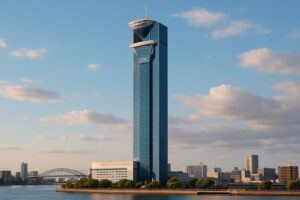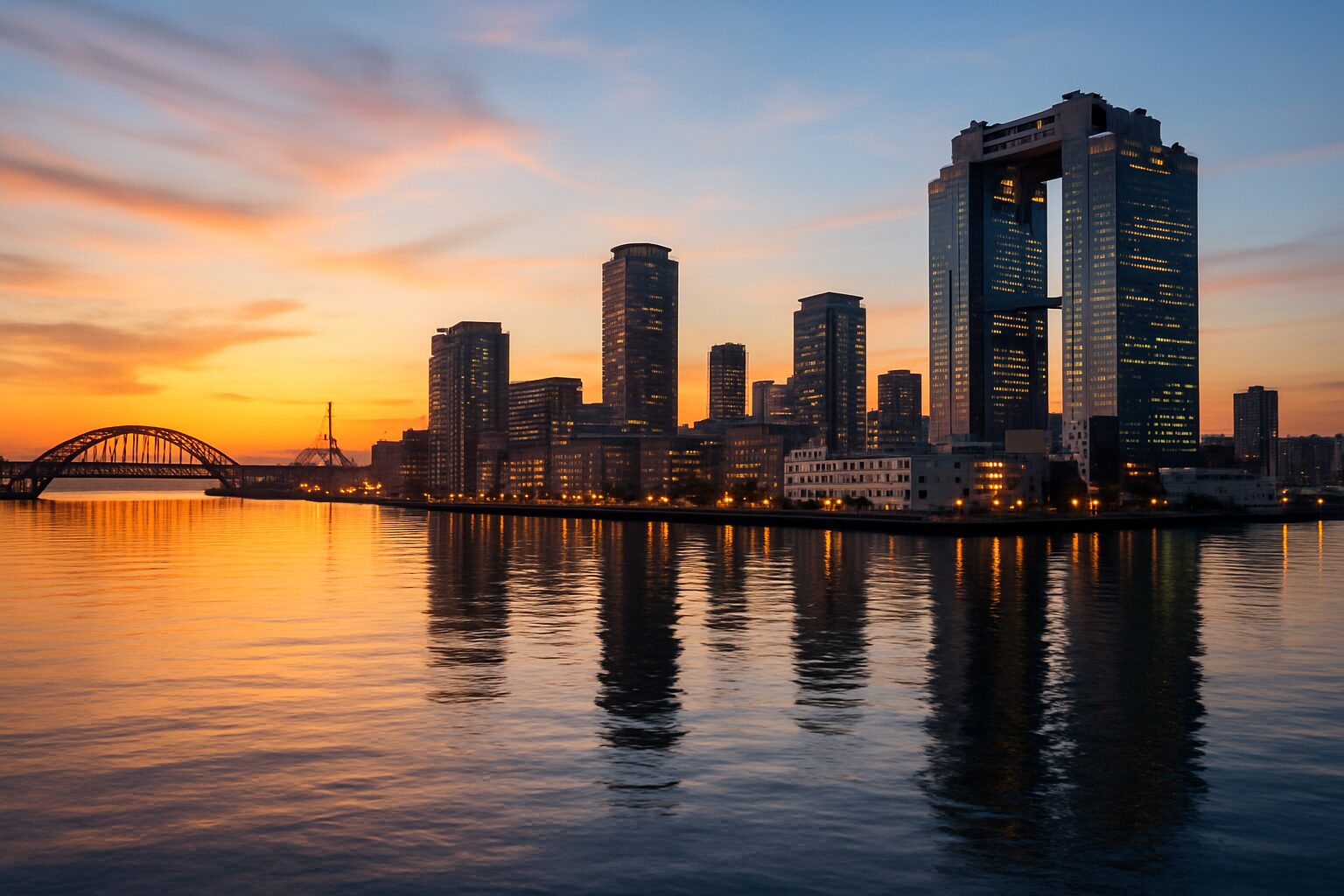
There are places in a city that offer more than just a view. They are silent storytellers, concrete and glass chronologies of ambition, fortune, and the relentless march of time. In Osaka, a city that has perpetually reinvented itself, one of the most eloquent of these storytellers is the Sakishima Cosmo Tower. Piercing the sky at 256 meters over the reclaimed land of Osaka Bay, its observation deck isn’t merely a place to see the city’s sprawl. It’s a perch from which you can read the last three decades of Osaka’s history, a dramatic tale of dizzying heights, a sobering fall, and a vibrant, forward-looking rebirth. To ascend Cosmo Tower is to witness the ghost of Japan’s Bubble Economy, a period of unimaginable wealth and audacious dreams, and to see how its legacy has been reshaped into the dynamic, global-facing metropolis of today. Standing on its 55th floor, you’re not just a tourist with a camera; you’re a historian with a 360-degree manuscript laid out before you, written in highways, harbors, and horizons.
From this vantage point, you can also see the man-made island of Tempozan, whose incredible history as a mountain born from the water is a testament to Osaka’s long-standing ambition to shape its own landscape.
The Tower of Ambition: A Bubble-Era Dream Reaching for the Sky
To understand Cosmo Tower, you need to go back to the late 1980s. Japan was experiencing an unprecedented economic boom. Stock prices and land values soared to extraordinary heights, and a spirit of limitless optimism filled the national mindset. This was the “Bubble Economy,” with the guiding principle to think bigger, build higher, and dream bolder. Osaka, traditionally Japan’s commercial hub, was determined to solidify its position as a global economic powerhouse. The city government approved the “Technoport Osaka” project, an incredibly ambitious plan to develop the waterfront using vast areas of reclaimed land. This new coastal sub-center was envisioned as a cutting-edge hub for international trade, technology, and information—a 21st-century city created from the ground up on the bay.
At the core of this vision stood the World Trade Center Osaka, also known as the WTC Cosmo Tower. Construction began in 1991, just as the bubble began showing signs of weakening, but the project maintained its momentum. Completed in 1995, its sleek, inverted pyramid design made a bold statement. It was more than just an office building; it symbolized Osaka’s global ambitions and served as a beacon for international commerce. For a time, it was the tallest skyscraper in western Japan, a title it wore with pride. The ascent to the top was designed as part of the allure—a high-speed, glass-walled elevator carried visitors from the ground floor to the 52nd in a thrilling rush, with the cityscape unfolding beneath them as they climbed. This remains a futuristic experience today, a holdover from an era when no expense was spared to evoke architectural wonder.
However, by the time the tower opened, the economic environment had dramatically shifted. The bubble had burst, plunging Japan into a prolonged period of stagnation known as the “Lost Decade.” Grand ventures like Technoport Osaka suddenly seemed like relics from an overly optimistic past. The extensive office space in the tower proved challenging to lease, and the building’s financial difficulties became emblematic of the post-bubble downturn. In a symbolic change, the Osaka Prefectural Government eventually took over the tower, renaming it the Osaka Prefectural Government Sakishima Building. Although this name might sound less glamorous than “World Trade Center,” it tells an important part of the story. The tower evolved from a symbol of private-sector ambition to a piece of public infrastructure, adjusting to new circumstances. Yet the observatory—the original promise of a spectacular view—remained. It became an accidental museum, preserving not art or artifacts, but a flawless, panoramic snapshot of the very economic history that shaped its fate.
A 360-Degree Panorama of Past, Present, and Future
The true magic of Cosmo Tower resides in the story embedded within its sweeping views. The observation deck is a long, wrap-around corridor lined with floor-to-ceiling windows, presenting an uninterrupted panorama in every direction. Unlike some of its more renowned urban counterparts, Cosmo Tower’s waterfront location offers a distinctive sense of scale and contrast. Here, you see not only the city but also the city’s enduring connection to the water that has always been its lifeblood. Each cardinal direction reveals a different chapter of Osaka’s narrative.
Gazing East: The Beating Heart of a Metropolis
Looking eastward, you face the traditional core of Osaka. The view is a dense mosaic of urban development, an endless sea of buildings stretching toward the distant Ikoma mountain range. From this vantage point, the city’s other modern giants come into view. The striking Umeda Sky Building, with its floating garden observatory, marks the northern center of Umeda. Further south, the towering Abeno Harukas—the tallest skyscraper in Japan—commands the skyline above Tennoji district. Among the concrete jungle, the historic Osaka Castle stands as a reminder of the city’s feudal origins.
This scene powerfully illustrates urban density, representing centuries of organic growth—a city that expanded block by block, district by district, driven by the energy of its merchants and artisans. This is the established Osaka, the powerhouse that fueled the dreams of waterfront expansion. The contrast between this dense, almost chaotic urban core and the planned, spacious layout of the bay area beneath you is striking. Gazing east, you witness history as it was; looking down, you see history as it was planned. The central city streets form a tangled web, while the roads on Sakishima island unfold in wide, grid-like patterns, often surprisingly empty. It’s a visual dialogue between old and new, a conversation between organic evolution and ambitious urban planning.
Looking West: The Endless Ocean and the Gateway to the World
Turning westward, the concrete jungle yields to the vast, shimmering expanse of Osaka Bay. This view is about horizons and possibilities. On a clear day, the vista is breathtaking. The deep blue bay is scattered with enormous container ships and tiny fishing boats—an ongoing dance that reflects the port’s relentless activity. In the distance, the faint silhouette of Awaji Island stretches across the water, and beyond it, the delicate, web-like towers of the Akashi Kaikyō Bridge—the world’s longest suspension bridge—connect the mainland to Shikoku. This is the Seto Inland Sea, Japan’s historic maritime highway.
This westward vista links modern Osaka to its ancient roots. Long before towering skyscrapers defined the city, Osaka—then called Naniwa-tsu—was Japan’s primary gateway to the continent. Through this very bay, culture, religion, and trade flowed in from Korea and China, shaping the nation. What you see today is the 21st-century continuation of that legacy. The sprawling container terminals of the Port of Osaka create a captivating scene—a complex choreography of cranes lifting and stacking colorful containers like giant Lego blocks. You’re witnessing the mechanics of global trade in real time. This view feels elemental—water, sky, and human endeavor. It reminds you that despite its inland hustle, Osaka’s spirit has always been bound to the sea. It is, above all, a port city, forever looking outward.
The Immediate Landscape: Sakishima and the Legacy of “Technoport Osaka”
Perhaps the most intriguing view is the one directly below and around you. You hover above Sakishima, the man-made island at the heart of the Technoport vision. This is where the story of the bubble economy is most vividly inscribed. The landscape is a curious blend of monumental structures and wide-open spaces. Intex Osaka, the sprawling international exhibition center, stands out as an unequivocal success of the original plan, still hosting major trade shows and events. Adjacent is the Asia-Pacific Trade Center (ATC), a vast shopping and business complex with a scenic seaside promenade. Though it faced struggles in the post-bubble era, ATC has reinvented itself with outlet malls, unique shops, and family-friendly restaurants. The imposing Hyatt Regency hotel stands as another testament to the area’s envisioned five-star future.
Yet it is the space between these landmarks that tells the real story. The boulevards are remarkably wide, designed for traffic volumes that never fully materialized. There are undeveloped plots covered in manicured green grass, waiting for a purpose. This is not urban decay but the tangible footprint of retracted ambition. It gives the area a slightly surreal, tranquil atmosphere unlike anywhere else in Osaka. It feels planned, clean, and quiet. On a weekday, the scarcity of pedestrian traffic can be startling—a sharp contrast to the shoulder-to-shoulder crowds of Namba or Shinsaibashi. From atop Cosmo Tower, you see the grand design—the blueprint of the city of the future as imagined in 1990—and the empty spaces where the rest of the story was meant to unfold. It’s a poignant and deeply fascinating urban landscape, a living museum of what might have been.
From Post-Bubble Silence to a New Vibrancy
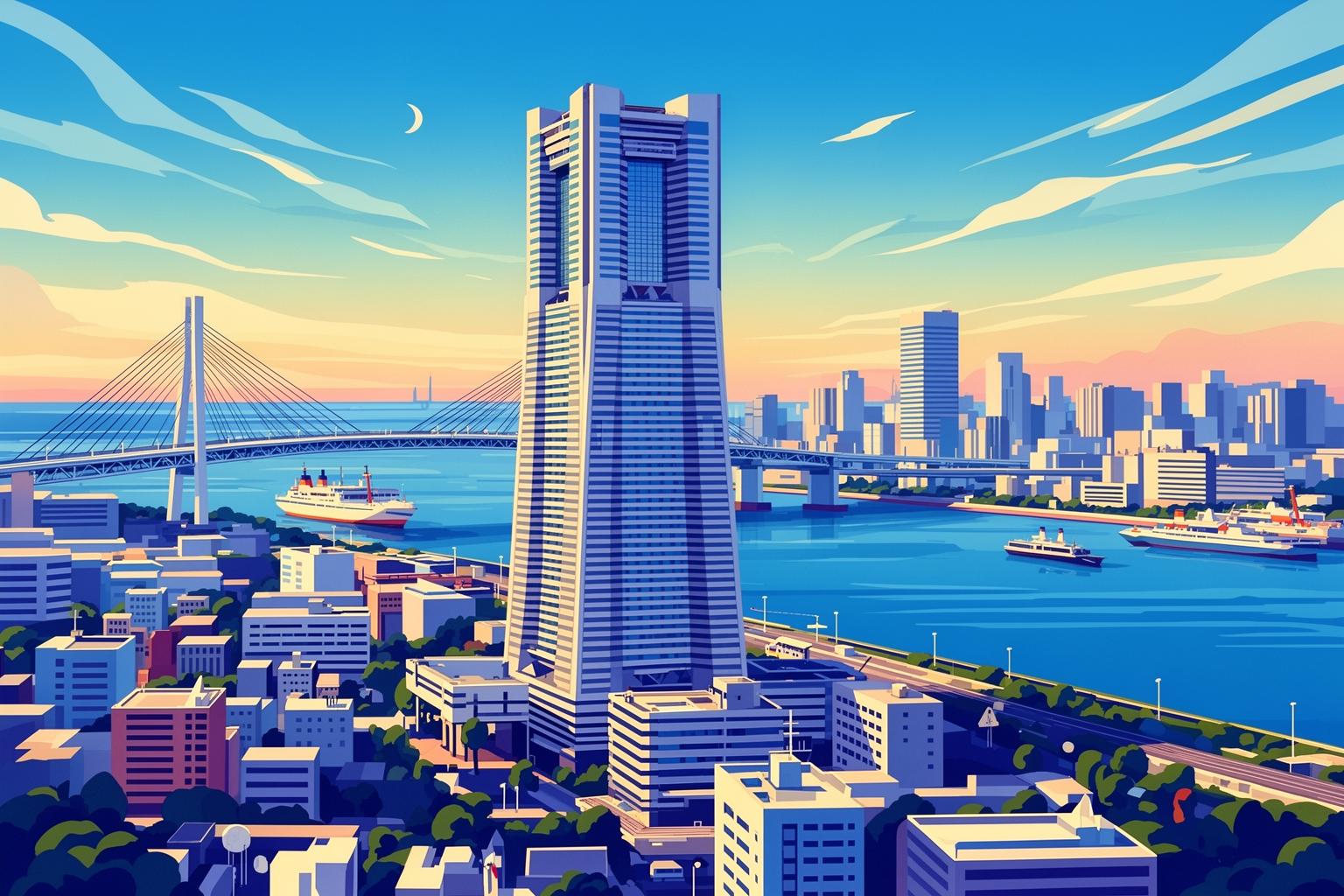
The story of the bay area, however, does not conclude with the burst of the bubble. The decades that followed tell a tale of adaptation, reinvention, and a fresh kind of energy. The quiet of the 90s has slowly given way to the vibrant buzz of entertainment and a renewed global spotlight, crafting a second chapter for Osaka’s waterfront that is perhaps more lively and diverse than the original planners ever envisioned.
The Rise of Entertainment and Tourism
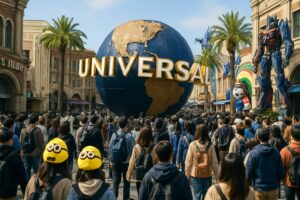
While the business-centered vision of Technoport faced challenges, another form of development began to thrive across the water. In 2001, Universal Studios Japan opened on the nearby island of Sakurajima. Its impact was immediate and transformative. Suddenly, the bay area evolved from being solely a hub for business conferences to a worldwide attraction for tourism and enjoyment. From the west-facing windows of Cosmo Tower, you can spot the iconic Hogwarts Castle and the exhilarating rollercoasters of USJ, a touch of fantasy amid the industrial waterfront. Its success sparked a renaissance for the entire bay.
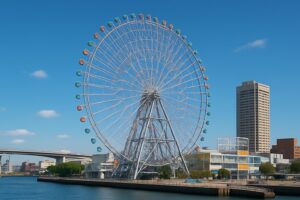
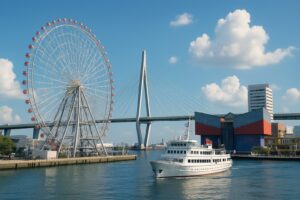
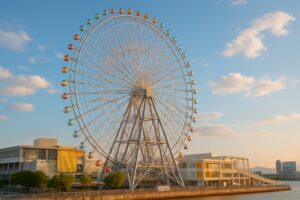
This was further boosted by the lasting popularity of Tempozan Harbor Village. Centered around the magnificent Kaiyukan Aquarium, one of the largest and most esteemed globally, this area became a favorite destination for families, couples, and tourists alike. The gigantic Tempozan Ferris Wheel, once the tallest in the world, introduced another iconic landmark to the skyline, its colorful lights illuminating the night. The success of these entertainment centers demonstrated that the bay’s future lay not only in commerce and technology but also in leisure and experience. They drew people back to the waterfront, filling it with laughter and excitement and creating a critical mass that benefited nearby facilities like the ATC.
The Dream Reimagined: The 2025 World Expo
Now, a new and monumental chapter is unfolding, with Cosmo Tower offering a prime vantage point. Look toward the northwest, just past USJ, and you will see Yumeshima, or “Dream Island.” For years, this was another vast, mostly empty man-made island. Today, it is a hive of construction activity. This is the site of Expo 2025 Osaka, Kansai. From your vantage, you can observe massive pavilions and futuristic infrastructure taking form. Cranes swing across the sky as the land is reshaped to welcome the world.
This event brings the bay area’s story full circle. The vision of a global, future-oriented hub on the waterfront, first imagined during the bubble era, is being revived. Expo 2025 symbolizes renewed optimism and international ambition, but with a 21st-century focus on sustainability, technology for life, and global collaboration. It’s a vision that feels both linked to and distinct from the corporate dreams of the 1990s. Watching the Expo site develop day by day from the observatory is a truly unique experience. You are witnessing the future of Osaka taking shape—a powerful emblem of the city’s ability to learn from its past and confidently envision its future.
Practical Guide to Your Ascent: Experiencing Cosmo Tower
Visiting Cosmo Tower is as much about the journey as it is about the destination. It feels like a small adventure, taking you away from the busy tourist routes of central Osaka into a less explored side of the city.
Getting There is Half the Fun
The simplest way to reach the tower is by using the city’s excellent subway system. You’ll board the green Osaka Metro Chuo Line, which runs east-west through downtown Osaka. Your stop is the line’s terminus, Cosmosquare Station. From there, you transfer to a unique mode of transport: the New Tram. This automated guideway transit system is a sleek, driverless train running on elevated rubber tires. The ride itself is a delight. As it glides silently above the broad streets of Sakishima, you’re treated to striking views of the area’s distinctive architecture and spacious design. You’ll get off at the very next stop, Trade Center-mae Station, which connects directly to the tower’s entrance. The entire trip feels clean, efficient, and unmistakably modern, setting the perfect tone for your visit to this symbol of the bubble era.
The Perfect Time to Visit
While the view from Cosmo Tower is stunning at any hour, arriving in the late afternoon offers the most magical experience. This timing lets you see the city bathed in the golden glow of the setting sun. As the sun sinks beneath the horizon behind Awaji Island, it paints the sky and bay in breathtaking hues of orange, pink, and purple. Then, as twilight falls, you witness the city’s transformation. Lights gradually flicker on, turning the vast urban expanse into a sparkling carpet of illumination known in Japan as “yakei,” or night view. The flow of headlights along the Hanshin Expressway becomes a captivating stream of red and white. It’s a sight you won’t soon forget.
One major benefit of Cosmo Tower is that it tends to be much less crowded than the Umeda Sky Building or Abeno Harukas. This offers a more relaxed and tranquil atmosphere to enjoy the vista. There’s plenty of space by the windows to set up a camera or simply stand and take in the scenery at your own pace. For the clearest long-distance views, crisp, dry winter days are unbeatable. Yet even the humid haze of a summer evening has its own appeal, softening city lights into a gentle, dreamy glow.
Beyond the View
Before your visit, it’s a good idea to check the official website for current opening hours, ticket prices, and any planned closures for maintenance. The observatory offers a straightforward, no-frills experience focused solely on the views, with some seating available for those who wish to linger. The building itself hosts government offices and several university campuses, so the lower floors have a quiet, professional atmosphere. There are also cafes and convenience stores both inside the building and in the nearby ATC, ideal for picking up a drink or snack before or after your visit.
Exploring the Surroundings: Making a Day of the Bay Area
Don’t just visit the tower and leave. The true pleasure of this area lies in exploring its unique atmosphere on foot. After coming down from the observatory, take a leisurely walk along the covered walkway to the Asia-Pacific Trade Center (ATC). This vast complex exudes a nostalgic 90s vibe, and its seaside promenade, known as Umi-no-Jikukan (Sea’s Space-Time), provides spectacular ground-level views of the bay and passing ships. It’s a perfect spot for a relaxing stroll.
For a truly unforgettable experience, consider connecting both sides of the bay. From a pier at the ATC, you can board the Captain Line ferry, a small and speedy shuttle that crosses the water directly to Tempozan Harbor Village, dropping you off right beside the Kaiyukan Aquarium. The ten-minute ride is a mini-cruise, offering a unique view of the city’s waterfront, bridges, and skyline that you won’t get from land. It’s an efficient and wonderfully scenic mode of travel.
Once you reach Tempozan, a whole new world of activities awaits. You can explore the Pacific Ocean wonders at the Kaiyukan, take a spin on the giant Ferris wheel for yet another breathtaking view, or visit the Naniwa Kuishinbo Yokocho, a food court styled like a retro 1960s Osaka street, where you can taste local favorites like takoyaki and okonomiyaki. By combining a visit to Cosmo Tower with the ATC and Tempozan, you can easily plan a full and engaging day trip highlighting the many facets of Osaka’s vibrant bay area.
A Final Reflection from 252 Meters Above
Standing at the window of the Cosmo Tower observatory as night descends is a deeply contemplative experience. You find yourself suspended between a sky full of stars and a city glowing with lights, gazing over a landscape shaped by extraordinary ambition. This is more than just a beautiful view; it’s a lesson in urban resilience. It tells the story of a city that dreamed on a grand scale, endured hardships when those dreams faced harsh realities, and then patiently and creatively discovered new ways to revive its waterfront. The view from Cosmo Tower reveals that a city is not a fixed entity but a living, breathing organism, constantly evolving, forgetting, and remembering.
You witness the steady flow of global commerce at the port, the vibrant energy of the theme parks, and the determined construction underway for a future World Expo. You observe the calm, wide avenues of Sakishima, tranquil reminders of a past vision, standing alongside the lively, revitalized districts across the water. Everything is there—the entire story—unfolded in one breathtaking panorama. A visit to Cosmo Tower offers a chance to grasp the soul of modern Osaka, a city that honors its rich history while boldly embracing the creation of a new one.