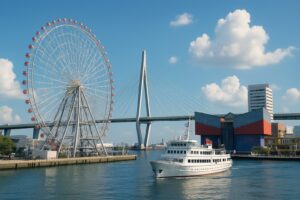
Welcome to a corner of Osaka that feels like a dream painted in the most vivid colors imaginable. Tucked away in the city’s dynamic Bay Area, on a man-made island where the urban landscape meets the endless blue of the sea, lies a place of pure, unadulterated joy: Maishima Seaside Park. This isn’t just another city park; it’s a seasonal masterpiece, a sprawling canvas that transforms with the calendar, offering a breathtaking escape for anyone craving a dose of nature’s magic without ever really leaving the city. Imagine stepping off a city bus and, just moments later, finding yourself standing before a rolling ocean of flowers, the sea breeze in your hair and the distant silhouette of the Akashi Kaikyō Bridge on the horizon. This is the promise of Maishima—a place where seasons don’t just change, they erupt. Whether you’re chasing the impossible blue of a million Nemophila flowers in the spring or basking in the golden glow of an endless sunflower field in the summer, a trip here is a full-sensory experience. It’s a chance to breathe, to wander, and to fill your camera roll with memories that are as vibrant and beautiful as the petals at your feet. For those of us living in this incredible city, Maishima is our secret garden, a Technicolor reminder of the beauty that waits just a short journey from the hustle and bustle of downtown. It’s the perfect prescription for a weekend reset, a place to lose yourself in a sea of color and find a little piece of tranquility in the process.
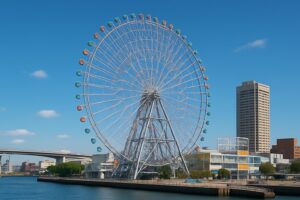
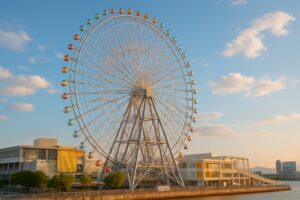
For an equally breathtaking perspective of Osaka Bay, consider a ride on the Tempozan Ferris Wheel.
The Soul of Maishima: A Tale of Two Seasons
At its core, Maishima Seaside Park’s renown stems from two spectacular, must-see events that mark the passage of the year here. These are far more than mere flower beds; they are immersive, large-scale floral displays that seem to blend seamlessly with the sky and sea. The park’s distinctive location, extending into Osaka Bay, offers a breathtaking backdrop that transforms a simple stroll into an almost cinematic experience. The expansive open skies and the fresh, salt-kissed air foster a sense of boundless freedom, serving as a refreshing contrast to the bustling urban energy of areas like Namba or Umeda.
Spring’s Blue Symphony: The Nemophila Harmony
Each mid-April, Maishima Seaside Park transforms into a vast ocean of blue. This event, known as the Nemophila Harmony, has become a signature highlight of Osaka’s spring season. Set aside all preconceived notions about flower viewing—this is on an entirely different scale. Over a million Nemophila, affectionately called “baby blue eyes,” carpet the park’s rolling hills, creating a stunning panorama that reflects both the sky above and the bay beyond. The enormity of the scene is almost unimaginable until you are standing amid it. The hue is an ethereal, soft blue, so pure it seems almost otherworldly. As you wander the curving paths snaking through the flowers, you’re fully enveloped. It feels like walking inside a living watercolor painting. On a clear day, the effect is captivating, with the flower’s blue, the ocean’s deeper blue, and the sky’s endless blue merging into one breathtaking view. The mood during this period is one of quiet awe. Families, couples, and solo photographers alike quietly take in the splendor, their expressions mirroring the serene beauty surrounding them. The gentle murmur of delighted visitors blends with the wind rustling the tiny petals and the distant calls of seabirds. It’s an experience both calming and uplifting. The park thoughtfully places charming photo props—such as a whimsical blue door that seemingly opens only onto the flower field, and crisp white benches standing out against the azure backdrop—inviting visitors to capture their perfect shot. This is not just about seeing flowers; it’s about immersing yourself in a color, a sensation, a pure moment of spring’s magic.
Summer’s Golden Roar: The Sunflower Festival
As the last blue hues of the Nemophila fade, the park readies itself for its second grand spectacle. By mid-summer, typically in July and August, Maishima bursts forth again, this time in a brilliant blaze of gold. The Million Sunflowers Festival stands in striking contrast to spring’s gentle calm—it’s a celebration of summer’s vibrant, unabashed vitality. Vast fields are filled with countless sunflowers, their heavy heads turning in unison to track the sun’s path. Walking among the towering stalks feels like navigating a golden maze. Some flowers rise above head height, their vivid yellow faces shining with an almost joyous intensity. The atmosphere buzzes with life and heat. The air is rich with the sweet, earthy fragrance of sunflowers and the hum of busy bees darting from bloom to bloom. Unlike the delicate Nemophila, sunflowers are bold and robust, their bright petals embodying the power of the summer sun. Osaka Bay’s backdrop takes on a new character in summer; its surface sparkles under the strong sunlight, offering a dazzling contrast to the deep greens and vivid yellows of the fields. This is a perfect moment for lively photos, for celebrating the height of the season, and for soaking in the warmth. The park often extends its hours during the festival, allowing visitors to experience the enchanting golden hour, when the setting sun bathes the sunflowers in warm, honeyed light, casting long shadows and creating a mood of pure romance. It’s a stunning, joyful display that captures the very essence of a Japanese summer.
Planning Your Floral Escape: A Practical Guide
Getting lost in the beauty of Maishima is the easy part; reaching it takes a bit of planning, especially for those unfamiliar with Osaka’s bus systems. The park is situated on a man-made island and isn’t directly accessible by train, so the bus serves as your main mode of transportation. But don’t let that discourage you—the trip is simple and forms part of the adventure, offering a chance to see a different aspect of Osaka, moving from the bustling city center to the industrial and recreational bay area.
Getting to the Island of Flowers
Your journey typically begins at major transit hubs like JR Osaka Station or the area near Universal Studios Japan, located on the neighboring Sakurajima island.
From JR Osaka Station: This is often the most convenient option for many travelers. Head to the bus terminal on the station’s north side and look for signs directing you to the Osaka City Bus. Board bus number 59 heading to Hokko Yacht Harbor (北港ヨットハーバー). Ride to the `Konohana Ohashi Nishizume` (此花大橋西詰) stop, then transfer to the Maishima Active Bus (舞洲アクティブバス), a loop bus that goes around the island. Take this bus to the `Hotel Lodge Maishima-mae` (ホテル・ロッジ舞洲前) stop, right in front of the park entrance. The total trip usually takes 45 to 60 minutes, depending on traffic. It’s advisable to have cash or an IC card like ICOCA or Suica ready for the fare.
From Sakurajima Station (near USJ): If you’re combining your visit with Universal Studios Japan or staying nearby, this is the best option. From JR Sakurajima Station (the last stop on the Yumesaki Line), you can catch the Maishima Active Bus (舞洲アクティブバス) directly. This direct route crosses the bridge to Maishima island, and you’ll disembark at the `Hotel Lodge Maishima-mae` (ホテル・ロッジ舞洲前) stop. This route is generally quicker, taking about 15 minutes.
From Cosmosquare Station: If you’re traveling on the Osaka Metro Chuo Line, get off at Cosmosquare Station. From there, catch the Hokko Kanko Bus (北港観光バス) on the Cosmos Dream Line (コスモドリームライン), which also goes directly to the `Hotel Lodge Maishima-mae` stop. This option is convenient for those coming from the city’s southern or eastern areas.
One important tip: Bus schedules can be less frequent on weekdays or outside peak festival seasons. Always double-check the latest bus timetables on the official Maishima Seaside Park website or the Osaka City Bus site before you depart. These often include valuable access guides, especially during festival periods. Having a translation app handy for bus stop names can be a real lifesaver.
Timing, Tickets, and Tips for a Perfect Visit
- Check the Bloom Status: The most crucial advice is to check the official park website for the bloom forecast (`kaika joukyou`, 開花状況). The peak viewing period for Nemophila and sunflowers can shift by one or two weeks annually depending on the weather. Arriving a week too early or too late can mean the difference between a good view and an unforgettable one.
- Ticket Information: There is an entrance fee to the park, which usually varies depending on the season and whether a major festival is ongoing. Prices typically hover around 1,500 yen for adults during peak season. Tickets can be purchased at the entrance gate; cash is recommended. The park’s opening and closing times also change seasonally, often staying open later during the summer sunflower festival, so confirm these details online before you go.
- Weekday Wonders: If possible, try to visit on a weekday. The park can get extremely crowded on weekends and national holidays during peak bloom. A weekday morning visit offers a much quieter, more personal experience, allowing photos without crowds and a chance to enjoy the tranquility.
- Come Prepared: There’s a lot of walking on unpaved paths, so comfortable shoes are essential. The park is quite exposed, with little natural shade, especially in the main flower fields. Bring a hat, sunglasses, and sunscreen—even on cloudy days. In summer, the heat can be intense, so carrying a water bottle, a small towel, and a portable fan is highly recommended. While vending machines and food stalls are available, having your own water is always a smart choice.
Beyond the Blooms: Sights and Tastes of Maishima

While the flowers are undeniably the main attraction, the experience at Maishima Seaside Park is enriched by the small details and nearby sights that add depth and context to your day trip.
A Taste of the Season
One of the charming traditions of seasonal events in Japan is the limited-edition food, and Maishima lives up to the expectation. During Nemophila Harmony, the park’s food stalls and cafe serve a range of blue-themed treats. The most popular is the “Blue-Eyed” soft-serve ice cream, a striking blue vanilla or ramune-flavored cone that is as tasty as it is visually appealing. You’ll also find blue lemonade, blue churros, and other playful snacks that perfectly complement the scenery. In summer, the menu shifts to highlight the sunflower season with items featuring mango, lemon, or other bright, sunny flavors. Grabbing a seasonal snack and picking a bench with a view of the fields is an essential part of the Maishima experience— a simple joy that connects you to the moment.
The Whimsical Neighbor: Maishima Incineration Plant
As you travel to or from the park, you cannot miss an extraordinarily fantastical building nearby that looks like it was pulled from a fairy tale or a psychedelic dream. This is the Maishima Incineration Plant, designed by the eccentric Austrian artist and architect Friedensreich Hundertwasser. With its flowing lines, vibrant ceramic tiles, mismatched windows, and golden onion dome, it’s a breathtaking piece of architecture that starkly contrasts with the usual industrial environment. Hundertwasser believed in harmony between nature and technology, and the plant exemplifies this philosophy, with its rooftop and walls covered in greenery. Though you can’t explore the interior freely, its exterior alone is a tourist attraction and provides surreal photo opportunities. It adds an unexpected quirky charm to the Maishima area and is a fantastic conversation starter.
Making a Bay Area Weekend of It
Maishima’s location makes it an ideal base for a full day or even a weekend exploring the Osaka Bay Area. Since a visit to the park usually takes a few hours, it’s easy to pair it with other nearby attractions. A popular plan is to spend the morning at Maishima Seaside Park, enjoying the flowers in the best light and before the biggest crowds arrive. Afterwards, you can catch the bus back toward the Sakurajima area for an afternoon and evening of excitement at Universal Studios Japan. Alternatively, you might head to the Tempozan area, home to the renowned Osaka Aquarium Kaiyukan, one of the largest and most impressive aquariums worldwide. Next to the aquarium stands the Tempozan Giant Ferris Wheel, which offers stunning panoramic views of the bay, the city, and on clear days, even the mountains. The Tempozan Marketplace also provides a wide range of dining and shopping options, making it a great place to unwind after your floral adventure.
The Deeper Meaning: Appreciating Fleeting Beauty
A visit to Maishima Seaside Park offers more than just a perfect Instagram photo; it presents an opportunity to connect with a fundamental aspect of Japanese culture: the appreciation of seasonal beauty and its fleeting nature. This idea, known as mono no aware (物の哀れ), reflects a gentle sadness or awareness of impermanence, which in turn enhances the beauty of things. While most famously linked to the brief cherry blossoms in spring, this sentiment applies to all seasonal changes. The Nemophila at Maishima reach their stunning peak for only a couple of weeks each year. The sunflowers stand tall and proud during a short summer period before starting to wilt. Understanding that this remarkable sight is temporary adds a sense of preciousness to the experience. It invites you to be present, to fully absorb the view, the colors, and the feeling, knowing it won’t last forever. Maishima provides a modern, grand-scale setting for this timeless cultural tradition. It is a place where people from all backgrounds come not just to observe, but to experience the season, commemorate its passing, and celebrate its unique and fleeting beauty.
Your Final Invitation

Osaka is a city bursting with incredible energy, renowned for its cuisine, nightlife, and vibrant street culture. Yet, it also holds surprising beauty and moments of deep tranquility. Maishima Seaside Park perfectly captures this duality. It stands as a testament to vision and creativity—a man-made island transformed into a natural sanctuary. The park serves as a powerful reminder to slow down, observe, and cherish the simple, profound beauty of the world around us. A weekend visit here acts as a reset for the soul. It offers a chance to exchange concrete and steel for petals and sea breeze, and city noise for the soft whisper of the wind. So, as the seasons change, keep an eye on Maishima. Follow the bloom reports, plan your bus route, and prepare to be amazed. Whether you find yourself swimming in a sea of celestial blue or standing in a field of liquid sunshine, you’ll leave with a lighter heart, a camera filled with impossible colors, and a cherished memory of Osaka’s floral spirit, beating strong along the bay’s shore.