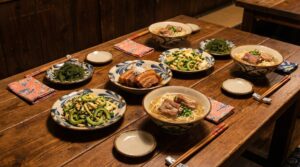
Osaka. The name itself sings a song of sizzling grills, bubbling broths, and the joyous, unrestrained laughter of people who truly, deeply love to eat. This is Japan’s undisputed kitchen, a city where the local greeting might as well be “Did you eat yet?” and where the philosophy of kuidaore—to eat oneself into ruinous, blissful bankruptcy—is not just a saying, but a way of life. It’s a sprawling metropolis of gleaming towers and neon-drenched canals, but its heart beats in the tiny, fragrant kitchens of its countless eateries. And while a culinary journey here could take you from Michelin-starred kaiseki to humble street-side stalls, there’s one place that captures the city’s boisterous, delicious soul in a way nothing else can: Naniwa Kuishinbo Yokocho.
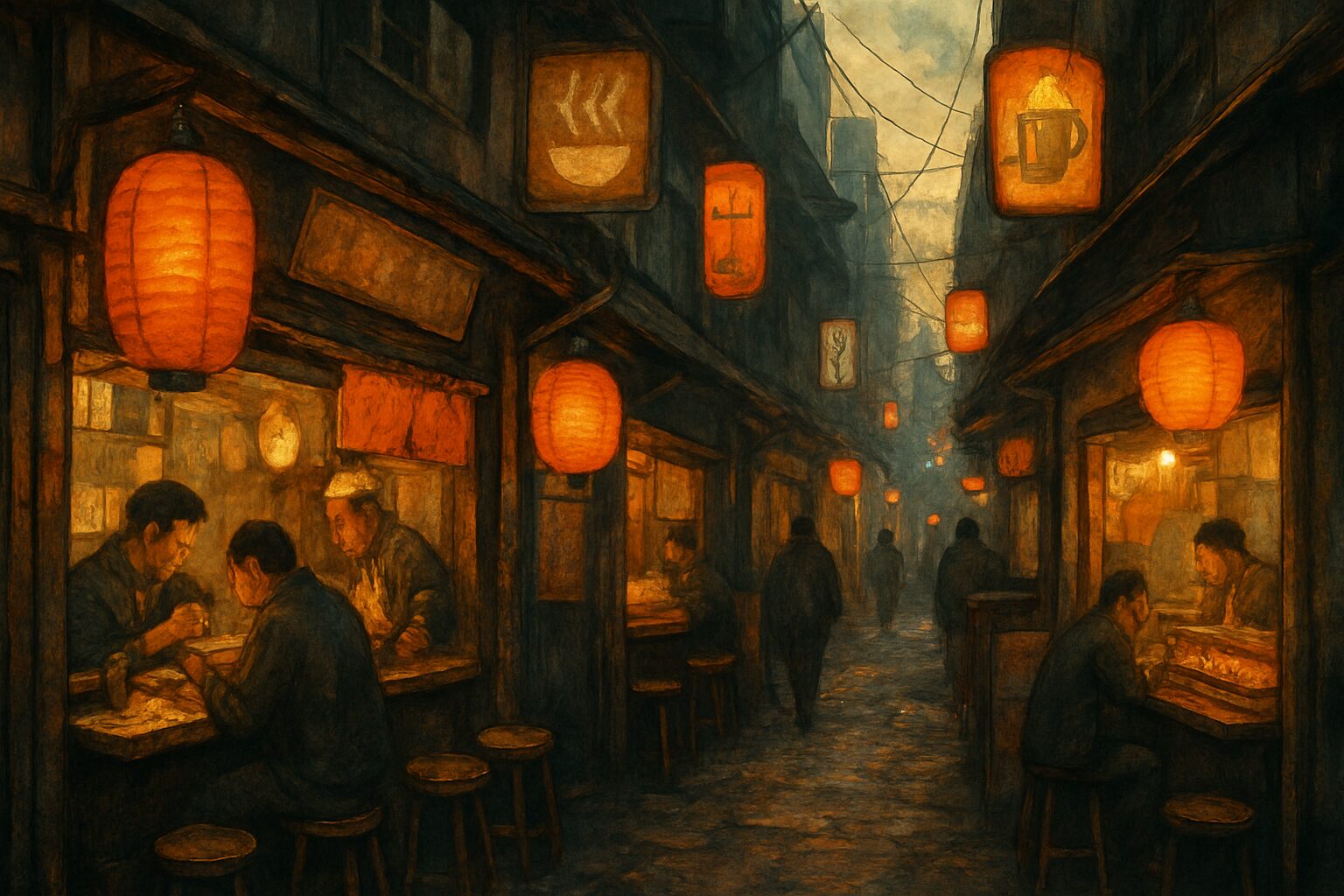
Nestled within the modern, family-friendly confines of the Tempozan Marketplace in the city’s vibrant Bay Area, this place is more than just a food court. It’s a time machine. Step through its unassuming entrance, and you leave the 21st century behind, plunging headfirst into the vibrant, optimistic streets of mid-1960s Osaka. This meticulously crafted food alley is a loving homage to the Showa Era, a period of explosive economic growth and cultural blossoming that defined modern Japan. Here, beneath a canopy of vintage advertisements and glowing paper lanterns, the city’s most beloved “B-kyu” gourmet (B-grade, or delicious and unpretentious comfort food) comes to life. It’s a place where the flavors are as authentic as the retro decor, a culinary theme park curated with the best tastes of Osaka. For any foodie visiting this magnificent city, a pilgrimage to Naniwa Kuishinbo Yokocho isn’t just recommended; it’s an essential chapter in your epicurean story, a chance to taste the very history that makes Osaka the kitchen of the nation.
After immersing yourself in the nostalgic flavors of 1960s Osaka, you can continue your journey through the city’s unique attractions by exploring the classic car museum housed in a historic red brick building.
A Symphony of Sights and Sounds: The Atmosphere of a Bygone Era

The transition is immediate and striking. One moment you find yourself in the bright, airy, modern concourse of the Tempozan Marketplace, surrounded by contemporary shops and the distant cries of joy from the nearby Legoland Discovery Center. The next, you pass through the entrance curtains—the noren—and the atmosphere transforms. The lighting softens to a warm, nostalgic glow, cast by bare incandescent bulbs and red paper lanterns decorated with calligraphy. The air becomes rich with a dozen competing yet harmonious aromas: the savory char of grilled squid, the sweet and tangy scent of okonomiyaki sauce, the nutty fragrance of sesame oil, and the faint, almost electric smell of frying batter.
Your ears are enveloped by the sounds of the Showa period. The tinny, cheerful melodies of kayokyoku, the popular music of the time, drift from hidden speakers, serving as a soundtrack of crooning vocalists and upbeat rhythms that evoke a simpler, more optimistic era. This is layered with the percussive symphony of the kitchens: the rhythmic clatter of spatulas on hot iron griddles, the sharp sizzle of oil meeting batter, the lively shouts of vendors calling out orders, and the constant, joyful hum of conversation among patrons seated in cozy booths and small tables. It’s a sensory overload in the most delightful way.
Visually, the Yokocho is an immersive masterpiece. The creators have meticulously recreated a romanticized streetscape of 1965 Osaka. Faux telephone poles are adorned with period-accurate wiring, and walls are plastered with faded movie posters advertising long-forgotten samurai epics and romantic dramas. Vintage enamel signs for everything from Asahi Beer to Calpis, a popular soft drink, add a layer of authentic commercial nostalgia. You might spot a classic red postbox, a rotary-dial public telephone, or even a lovingly restored Daihatsu Midget—the iconic three-wheeled mini-truck that symbolized Japan’s post-war economic miracle—parked jauntily in a corner. Every detail, from the slightly worn wooden facades of the shop stalls to the retro packaging displayed in a mock candy shop, is designed to transport you. It doesn’t feel like a replica; it feels like a living, breathing neighborhood miraculously preserved in time.
This is more than decoration; it’s storytelling. The mid-1960s were a pivotal era for Osaka and Japan as a whole. The nation was riding a wave of prosperity, symbolized by the first Shinkansen bullet train in 1964 and the upcoming World Expo in Osaka in 1970. There was a palpable energy, a sense of boundless possibility, and this is the spirit Naniwa Kuishinbo Yokocho captures. It’s a celebration of the simple, hearty foods that fueled the working people who built modern Osaka. It’s a taste of their joy, resilience, and unwavering love for good, honest food.
The Heart of the Matter: A Deep Dive into Osaka’s Soul Food
While the atmosphere is captivating, the undeniable highlight of Naniwa Kuishinbo Yokocho is the food. The alley hosts about twenty of the most renowned and respected establishments from across the Kansai region, each excelling in their specialty. This is far from a collection of ordinary food court stalls; it is a carefully curated museum of flavors, where every dish carries its own story and heritage. The best way to enjoy it is with an empty stomach and a daring spirit, ready to embrace the kuidaore philosophy.
Takoyaki: The Spherical Heart of the City
If Osaka has one signature dish that defines its culinary character, it is takoyaki. These seemingly simple balls of batter, filled with tender octopus, offer a world of flavor and texture. Here in the Yokocho, you can taste them at their peak. Forget the mass-produced versions found elsewhere; this is the genuine article. Your first stop should be a stall like Aizuya, a name revered among takoyaki aficionados. It is said that this very shop invented takoyaki back in the 1930s.
The experience begins well before your first bite. Stand and watch the experts at work. A cast-iron griddle, peppered with dozens of hemispherical molds, is blazing hot. With incredible speed and precision, the chef pours a thin, savory batter — likely a secret recipe rich with dashi (kelp and bonito stock) — into each mold. Then, a single piece of cooked octopus (tako) is placed inside, followed by a sprinkle of crispy tenkasu (tempura scraps), pickled red ginger, and green onion. The magic unfolds next. Using sharp metal picks, the chef skillfully flips and rotates the forming spheres, coaxing them into perfect rounds. The batter crisps to a delicate shell while the inside remains molten and creamy. The process is a mesmerizing blur of motion, a dance of precision.
Aizuya’s original takoyaki is served without the usual brown sauce and mayonnaise, highlighting the quality of their batter. The flavor is so harmoniously savory that it requires no embellishment. Each bite reveals a slight crispness giving way to a steaming, almost liquid center, with the chewy, satisfying octopus at the core. Other vendors, like Kukuru, offer a contrasting style, smothering their plump takoyaki in a sweet and tangy sauce, a drizzle of Japanese mayonnaise, a dusting of green aonori seaweed, and a cascade of dancing katsuobushi (bonito flakes) that shimmer in the heat. To truly appreciate this dish, you must try both styles. It’s not merely a snack; it’s a quintessential Osakan experience.
Okonomiyaki and Ikayaki: The Griddled Treasures of Kansai
Venturing further into the alley, the distinct aroma of sizzling cabbage and savory pancake batter leads you to the okonomiyaki stalls. The name literally means “grilled as you like it,” and this beloved dish is Japan’s ultimate comfort food. At places like Botejyu, a chain founded in 1946, you can watch its preparation firsthand.
A mound of finely shredded cabbage is combined with a light, airy batter, often enhanced with grated mountain yam (nagaimo) for extra fluffiness. This mixture is placed on the hot teppan grill and shaped into a thick, round pancake. Your choice of ingredients — thinly sliced pork belly, shrimp, squid, or a combination — is layered on top. As it cooks, the cabbage softens and sweetens, melding perfectly with the batter. The pancake is flipped using two large metal spatulas — a move demanding practiced skill — and cooked to a golden brown on both sides. The finishing touch is a masterpiece. The chef spreads a generous layer of rich, dark okonomiyaki sauce, a complex blend of fruits, vegetables, and spices that is sweet, savory, and tangy all at once. Next comes a lattice of creamy Kewpie mayonnaise, a sprinkle of aonori, and a shower of bonito flakes. The result is a dish of striking contrasts: soft and crunchy, sweet and savory, creamy and tangy. It’s a hearty, comforting meal that warms you from within.
Nearby, you may find a vendor specializing in ikayaki, a lesser-known but equally delicious local specialty. Not to be confused with grilled whole squid, Osaka’s ikayaki is a unique pressed pancake. A simple batter of flour, dashi, and egg is mixed with chopped squid tentacles, then pressed between two heavy, heated iron plates. The process takes only a minute or two, yielding a thin, chewy, intensely flavorful pancake that’s brushed with savory sauce and folded over. It’s a quick, inexpensive, and utterly addictive snack—a taste of Osaka’s lively summer festivals and street fairs, available year-round.
Kushikatsu: The Unwritten Rules of Fried Perfection
No exploration of Osaka’s B-kyu gourmet would be complete without kushikatsu. This is the art of skewering various ingredients, coating them in fine panko breadcrumbs, and deep-frying them to golden crisp perfection. A stall like Daruma, one of the pioneers of Shinsekai-style kushikatsu, might be your destination. The menu offers a tempting array: beef, pork, chicken, shrimp, scallops, lotus root, shiitake mushrooms, quail eggs, asparagus, and even cheese.
You order by the skewer, which arrives piping hot on a metal tray. The magic lies in the dipping sauce. Each table or counter spot shares a stainless-steel container of thin, dark, savory-sweet sauce. Here, you must learn the one inviolable rule of kushikatsu: NO DOUBLE DIPPING. You dip your skewer once, and only once, before taking your first bite. This is essential for hygiene, but also deeply ingrained in kushikatsu culture and etiquette. If you need more sauce mid-skewer, use the provided raw cabbage slice to scoop some up and drizzle it on. The cabbage also acts as a refreshing palate cleanser between rich, fried bites.
The experience is pure delight. The panko coating is incredibly light and crispy, never greasy. It crunches between your teeth, revealing perfectly cooked, flavorful ingredients inside. Juicy beef, crisp lotus root, molten cheese—paired with a cold beer, it’s one of Osaka’s most satisfying and social eating experiences.
Beyond the Big Three: Other Must-Try Specialties
The culinary journey doesn’t stop there. Seek out a stall offering omurice, another dish with Osakan roots. It is a masterful creation where savory chicken fried rice is wrapped in a delicate, flawlessly cooked omelet, often split open at the table to reveal its creamy, half-cooked interior, then topped with a rich demi-glace sauce. The version at Jiyuken is legendary—a unique style where the rice and curry-like sauce are mixed before being crowned with a raw egg. You stir the egg into the hot rice, letting it cook gently into a rich, creamy texture. This dish was born in the bustling kitchens of early 20th-century Japan, and its comforting flavor endures.
For a sweet finale, the options are just as nostalgic. Visit a dagashiya, the old-fashioned candy shop—a riot of color and memories for any Japanese person. Here you can purchase inexpensive, cheerful sweets from childhood—or a childhood you never had. Look for vendors selling freshly made ice cream monaka, a scoop of ice cream sandwiched between two crispy mochi wafers, or warabimochi, a jelly-like dessert made from bracken starch and coated in sweet roasted soybean flour (kinako). And to drink, try Ramune, the iconic Japanese soda in a Codd-neck bottle sealed with a glass marble. The simple act of pushing the marble into the bottle is a ritual—a fizzy, sweet taste of a Japanese summer day.
Your Practical Guide to a Retro Food Adventure

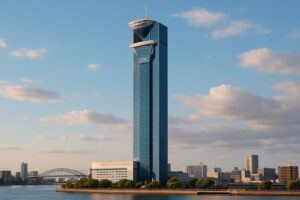
Finding your way to this culinary hotspot and maximizing your visit is straightforward, but a few tips will help ensure a smooth and delicious experience. The Tempozan Marketplace is a key landmark in the Osaka Bay Area, making it easily accessible and an ideal hub for a full day of sightseeing.
Charting Your Course: Getting to Tempozan
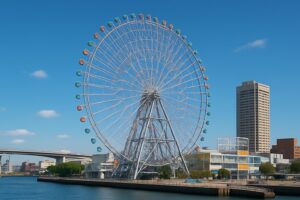
The easiest way to reach Tempozan Harbor Village is by train. The entire area is served by the Osaka Metro Chuo Line (the green line). You’ll want to get off at Osakako Station (Station C11). From there, it’s a pleasant, well-marked five- to ten-minute walk north toward the giant Ferris wheel—you can’t miss it. The Marketplace building sits right at its base.
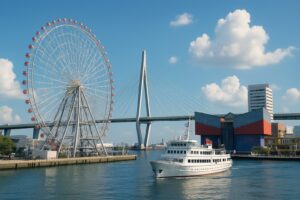
For those seeking a more scenic journey or combining their trip with a visit to Universal Studios Japan (USJ), the Captain Line ferry is an excellent choice. This small shuttle ferry runs frequently throughout the day, connecting Tempozan pier directly with Universal City Port pier. The crossing takes about 15 minutes and offers fantastic views of the port and the Bay Area’s striking architecture. It’s a fun and efficient way to travel between two of Osaka’s biggest entertainment hubs.
If you’re coming from the Namba or Umeda areas, you can take the Midosuji Line (red line) to Hommachi Station, then transfer to the Chuo Line heading toward Cosmosquare. The trip is straightforward and takes roughly 30-40 minutes in total.
Strategy and Timing: A First-Timer’s Game Plan
Naniwa Kuishinbo Yokocho is located on the second floor of the Tempozan Marketplace. It’s open daily, typically from 11:00 AM to 8:00 PM, though it’s wise to check the official website for the latest hours before your visit. As you’d expect, it’s a popular spot. It gets very busy during peak lunch (12:00 PM – 2:00 PM) and dinner (6:00 PM – 7:30 PM) times, especially on weekends and national holidays. The narrow alleys can become crowded, with lines forming at the most popular stalls.
For a more relaxed visit, consider going on a weekday. If you must visit on a weekend, try to come during off-peak hours. Arriving right at opening time, 11:00 AM, lets you see the place come to life, while visiting mid-afternoon (between 2:30 PM and 5:00 PM) often means fewer crowds and more room to explore and enjoy.
A few insider tips for your culinary exploration:
- Divide and Conquer: The best way to experience the Yokocho is with a group. Use a “divide and conquer” approach—have each person queue at different stalls, then regroup at a table to share everything. This maximizes the variety of dishes you can try.
- Pace Yourself: The kuidaore spirit is about savoring, not racing. Portions are generally snack-sized, perfect for sampling. Don’t fill up on the first thing you see—take a full lap of the alley first to survey all options before choosing.
- Bring Cash: While Japan is increasingly card-friendly, many smaller, traditional stalls in the Yokocho still operate on a cash-only basis. It’s smart to carry enough yen to avoid any inconvenience.
- Look for Seating: Seating can be limited during busy times. There are small tables and benches scattered around, plus counter seating at some stalls. If you spot an empty table, grab it before ordering your food.
Making a Day of It: The Tempozan Harbor Village
Naniwa Kuishinbo Yokocho is just one part of the incredible Tempozan Harbor Village. It’s a destination that can easily fill an entire day with fun and discovery. Before or after your food adventure, consider exploring the other world-class attractions nearby.
The Osaka Aquarium Kaiyukan is the crown jewel. One of the largest and most impressive aquariums worldwide, its innovative design guides you from the ocean’s surface to the depths of the Pacific. The centerpiece is a massive central tank housing majestic whale sharks, the largest fish in the sea. Watching them glide gracefully alongside rays and schools of smaller fish is truly awe-inspiring.
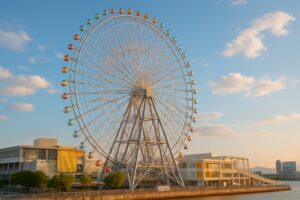
Next door, the Tempozan Giant Ferris Wheel rises 112.5 meters high. A ride in one of its colorful gondolas offers stunning panoramic views of the entire Osaka Bay Area—from the sprawling cityscape to distant mountains and the iconic Akashi Kaikyo Bridge on a clear day. For an added thrill, try one of the few glass-bottomed “see-through” cabins.
Inside the Marketplace itself, you’ll find a diverse range of shops offering everything from Osaka souvenirs to character goods and fashion. There’s also a petting zoo and the Legoland Discovery Center, making it an excellent spot for families.
The Lingering Taste of Time and Tradition
Leaving Naniwa Kuishinbo Yokocho is like awakening from a vivid, delicious dream. You step out into the bright, modern world of Tempozan Marketplace, with the sounds of Showa-era pop fading away, replaced by the contemporary rhythm of the 21st century. Yet the experience stays with you. The savory taste of dashi-rich batter, the smoky char of the griddle, and the sweet tang of okonomiyaki sauce remain—a tangible reminder of your journey into Osaka’s past.
This remarkable food alley is more than just a dining spot. It serves as a living museum and a cultural ambassador for the city’s humble yet deeply satisfying soul food. It proves that food is never merely nourishment; it embodies community, history, and identity. It captures the energy and optimism of a pivotal era in Japanese history and presents it on a plate—hot, fresh, and bursting with flavor. For any traveler who believes that the true heart of a city lies in its kitchens and streets, Naniwa Kuishinbo Yokocho is an essential destination. It distills the spirit of kuidaore into one vibrant, intoxicating, and unforgettable alleyway. Come hungry, leave joyful, and take a taste of old-school Osaka with you long after you’ve gone.