The air in Osaka changes before the sun comes up. It’s a secret the city keeps, a subtle shift from the neon-soaked hum of last night to the quiet, purposeful energy of a new day. While most of the metropolis still dreams, a different kind of heartbeat begins to thrum in the Fukushima ward, down by the bay. This is the pulse of the Osaka Municipal Central Wholesale Market, the vast, sprawling institution that feeds the soul of a city known as Tenka no Daidokoro—Japan’s Kitchen. Forget what you think you know about breakfast. We’re not here for coffee and croissants. We’re here for an experience that connects you directly to the ocean’s bounty, a ritual that has defined Osaka’s culinary greatness for generations: breakfast sushi. This isn’t a tourist gimmick; it’s a pilgrimage to the source, a chance to taste the freshest seafood on earth just moments after it has been auctioned to the city’s top chefs. It’s a raw, unfiltered, and utterly delicious slice of local life, and it’s waiting for you in the predawn glow.
To fully appreciate how this bay area has transformed into the vibrant hub it is today, consider the historical development of Osaka’s bay area since the bubble economy.
The Dawn Chorus of a Culinary Giant

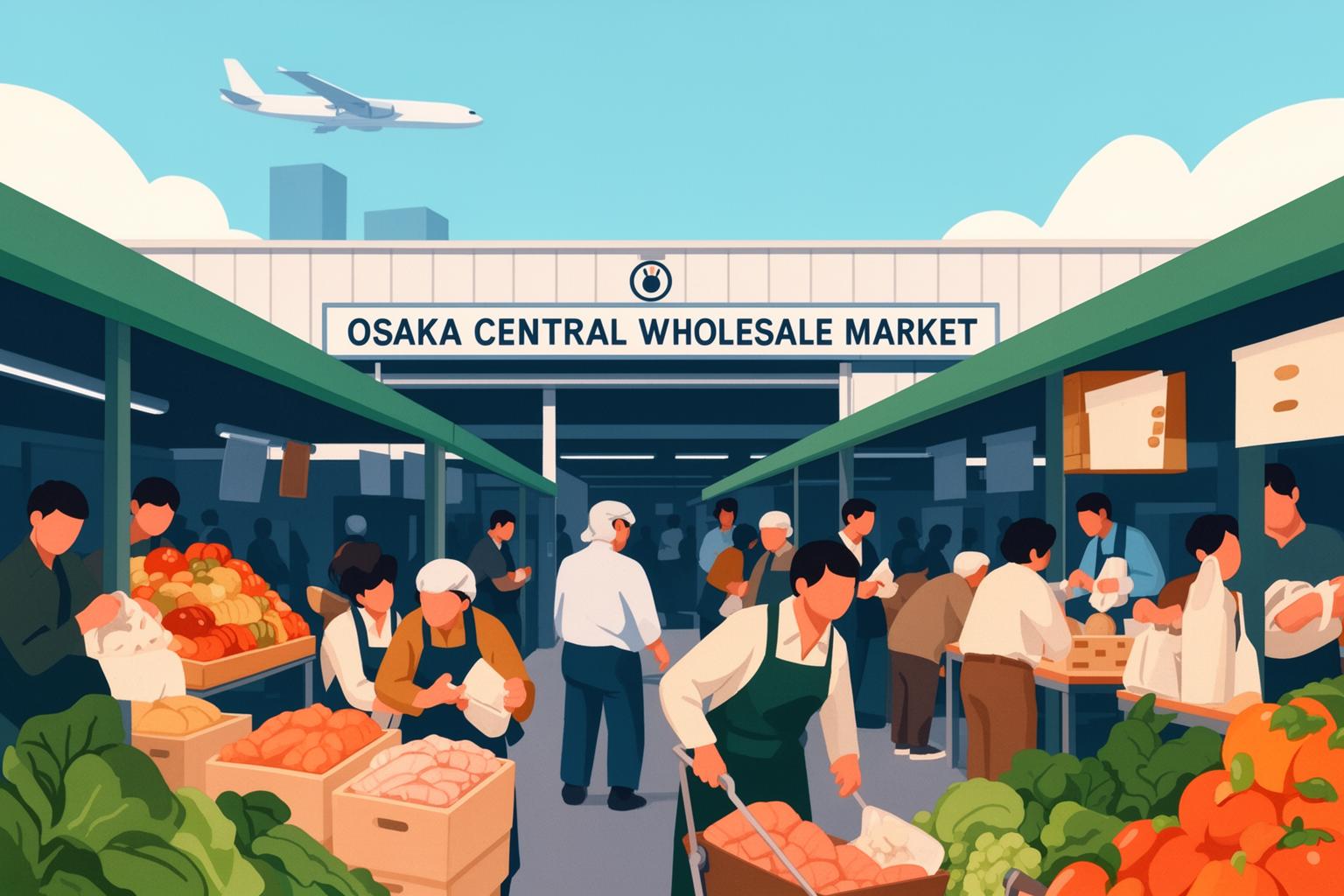
Entering the orbit of the Central Wholesale Market before 6:00 AM feels like stepping into another realm. The atmosphere buzzes with an electric energy, a symphony of controlled chaos honed since its founding in 1931. This isn’t a polished venue meant for visitors; it’s a gritty, industrial cathedral devoted to the craft of fresh food. The air is cool, carrying the crisp, clean scent of sea brine that cuts through the morning chill. The ground is often wet and slippery from melting ice and constant hose-downs, making practical, closed-toe shoes essential. From both a practical and stylistic perspective, think functional-chic: comfortable footwear is crucial, along with a light jacket you don’t mind getting splattered. The market’s soundtrack is a rich tapestry: the deep, guttural rumble of diesel trucks reversing into loading docks, the sharp whine of iconic turret trucks—small, cylindrical vehicles darting skillfully through narrow aisles—and the melodic, rhythmic calls of vendors hawking their goods. Above it all, the steady, percussive rhythm of work resonates—the thud of heavy fish boxes hitting the floor, the sharp slap of knives against wooden boards, and the boisterous laughter and bargaining of longtime comrades. The people here are the market’s lifeblood. Their movements are precise, their focus unwavering. These artisans, brokers, and logistics experts make up the unseen backbone of Osaka’s food world. Observing them is like witnessing a ballet of remarkable precision and strength. Though the main tuna auction and deepest wholesale sections are generally off-limits for safety and efficiency, the market’s vibrant energy spills into nearby buildings, where our treasure awaits—the sushi counters.
Why Breakfast Here? The Philosophy of Market Sushi
The question is not only why you should eat sushi for breakfast, but why you must eat it here. The answer lies in the concept of ichiba-zushi, or market sushi—a philosophy based on one simple, powerful idea: proximity. The journey from ocean to plate is measured not in days or hours, but in minutes and meters. This extraordinary freshness elevates the dining experience from mere consumption to a true communion with the ingredient. The fish you enjoy at a market counter was likely swimming in the deep, cold waters off Japan’s coast just a day or two prior. It was brought into this very market in the dead of night, expertly evaluated by discerning auctioneers, and purchased by the chef standing before you, who probably selected it himself only a few hours ago. This immediate connection delivers a taste and texture impossible to find elsewhere. The fish’s flesh is firm yet tender, the flavors are clean and sophisticated, and the natural sweetness, the umami, is both pronounced and unforgettable. Think of the hamachi (yellowtail), its fat so rich and delicate it seems to dissolve on your tongue. Imagine the ika (squid), which offers a delightful, almost crunchy snap before melting into creamy sweetness—a texture lost within hours of being caught. This is the essence of market sushi: a taste of the sea at its absolute peak. The chefs behind these small counters are masters of their craft, experts in the subtle qualities of the day’s catch. They aren’t cooking for passing tourists; their main customers are the market workers themselves—people with the most discerning palates in the city. To earn their respect, the quality must be flawless, the price fair, and the service swift. Dining here means participating in that tradition, being served by a chef who dedicates his entire life to honoring the very best of the day’s harvest.
Navigating the Maze: Finding Your Perfect Sushi Counter

The Osaka Central Wholesale Market is vast, essentially a city within a city, and locating the restaurants can feel like a small adventure on its own. Most of the eateries open to the public are concentrated in a building called the Kanren Tou, or the associated retail building. Here, you’ll find a collection of small shops and restaurants catering to market workers and the occasional well-informed visitor. Don’t expect flashy signs or elaborate decor—the charm of these places lies in their straightforward authenticity. Look for modest storefronts, often marked by a simple, weathered noren—the traditional fabric curtain that hangs over the doorway. A small line of locals waiting outside is always a promising indicator. The restaurants here generally fall into a few classic categories, each offering a slightly different but equally rewarding experience.
The Temple of Tradition
Picture sliding open a well-worn wooden door. Inside is a tiny space, seating no more than eight to ten people along a single cypress counter. The air is warm, filled with the scent of vinegared rice and the subtle aroma of simmering dashi. Behind the counter stands the taisho, the master chef, a man whose face reflects decades spent perfecting his craft. He might give a brief nod of acknowledgement, his focus quickly returning to the gleaming block of fish before him. This is the old-school sushi-ya, a place of quiet reverence. Conversation may be minimal, but the connection is deep. The best approach here is simply to say, “Omakase onegaishimasu” (Chef’s choice, please). This places your trust in the master, letting him guide you through the freshest selections of the morning. He’ll begin placing pieces of nigiri directly onto the counter in front of you, one by one. A piece of glistening tai (sea bream), lightly scored and seasoned with a pinch of sea salt and a drop of sudachi citrus. Then, a lustrous slice of chu-toro (medium fatty tuna), its intricate marbling resembling a work of art. As it touches your tongue, the fat starts to melt, flooding your palate with profound, savory richness. The rice, or shari, is a revelation—perfectly seasoned, slightly warm, with each grain distinct. This is a meditative experience, a quiet dialogue between chef, ingredient, and diner.
The Citadel of Abundance
Slightly larger and livelier, you’ll also find spots renowned for their kaisen-don, magnificent bowls of seafood sashimi artfully arranged over sushi rice. These places tend to be brighter, louder, and filled with the cheerful chatter of friends and colleagues beginning their day. The energy is infectious. The highlight is the sheer generosity of the portions. Your bowl will arrive looking like a pirate’s treasure chest, overflowing with jewels from the sea. Thick slices of salmon, ruby-red cuts of tuna, shimmering piles of ikura (salmon roe) that burst in your mouth, creamy tongues of golden uni (sea urchin), and perhaps even sweet, succulent shrimp. It’s a feast both visual and gustatory. This is an excellent choice if you’re with a group or simply want to sample a wide variety of seafood at once. The value for money is often astonishing, given the outstanding quality of the ingredients. It’s less of a formal, piece-by-piece ritual and more of a joyful, uninhibited celebration of the ocean’s bounty.
A First-Timer’s Guide to Market Etiquette and Ordering
For a first-time visitor, the market’s intensity can feel a bit overwhelming, but following a few simple guidelines will help you navigate it with the confidence of a local. This is not just about courtesy; it’s about respecting the workplace and appreciating the culture you’re experiencing. Above all, be aware of your surroundings. The environment is active and occasionally hazardous. Turret trucks move quickly and may not always see you. Stick to designated walkways, stay alert, and keep a safe distance from workers. Think of it like a busy street—you wouldn’t stand in the middle of traffic, and the same logic applies here. Avoid carrying large backpacks or luggage that could block the narrow pathways.
Timing and Attire
The market’s rhythm determines the best time to visit. The ideal window for a breakfast sushi experience is generally between 6:00 AM and 10:00 AM. Arriving too early means the restaurants might not yet be open, while coming later means the market’s vibrant energy will have faded and some of the most prized fish may already be sold out. Regarding attire, comfort and practicality are key. Closed-toe, non-slip shoes are essential since the floors are always wet and you’ll be walking quite a bit. Dress in layers, as the refrigerated halls can be chilly even on warm days. This is a place for functionality over fashion. From the perspective of a solo female traveler, the market is quite safe, but it remains a predominantly male, blue-collar environment. Moving with purpose and maintaining spatial awareness is the best way to blend in respectfully. Everyone is focused on their work, and as long as you avoid being in the way, you’ll encounter indifference or, more likely, friendly curiosity.
The Art of Ordering
While omakase is often the simplest and most rewarding choice, you might prefer to order specific items. Don’t hesitate. Most chefs appreciate customers who know what they want. You can point to ingredients in the glass refrigerated case or learn a few key terms. Maguro (tuna) is a great place to start, with its various cuts like akami (lean red flesh), chu-toro (medium-fatty), and o-toro (the highly prized fatty belly). Other classics include sake (salmon), anago (sea eel simmered in a sweet soy glaze), and tamago (a sweet rolled omelet often regarded as a measure of a chef’s skill). When your sushi arrives, observe a few etiquette tips. Soy sauce is meant to enhance flavor, not overpower it; pour only a small amount into your dish. When dipping nigiri, turn it on its side and lightly touch the fish to the soy sauce, avoiding the rice, which can absorb too much and fall apart. Pickled ginger, or gari, is intended to be eaten between different pieces as a palate cleanser, not as a topping. Whether you use chopsticks or your hands is entirely up to you; both are acceptable ways to eat nigiri. Finally, be prepared with cash. Many small, traditional establishments do not accept credit cards, as this is still largely a cash-based environment—a holdover from when a handshake and cash payment sealed the deal.
Beyond the Sushi Counter: Other Market Treasures

While sushi takes center stage, your culinary journey through the market shouldn’t stop there. The Kanren Tou and its surrounding area are a goldmine of other delicious treats. Take some time to explore and let your senses lead the way. You’ll encounter stalls offering incredibly fluffy and flavorful tamagoyaki. Some varieties are sweet, others savory and infused with dashi, often sold fresh and warm, making for a perfect little snack. There are shops dedicated to the essential ingredients of Japanese cuisine. You’ll find vendors selling premium katsuobushi (dried, fermented, and smoked skipjack tuna), shaved to create dashi broth. You can purchase sheets of artisanal kombu (dried kelp) from Hokkaido, along with all kinds of pickles (tsukemono) stored in large wooden barrels. These stores provide a fascinating insight into the foundational flavors found in restaurants throughout the city. Another vital part of the market’s ecosystem is the kissaten, the traditional Japanese coffee shop. These spots are like time capsules, often featuring dark wood paneling, worn velvet seats, and the subtle aroma of freshly brewed coffee. This is where market workers take their breaks, where deals are struck over thick slices of toast and morning coffee. Visiting one offers a wonderful opportunity to observe the market’s social rhythm and rest your feet. The contrast between the bustling energy of the fish stalls and the serene, smoky ambiance of a kissaten is a quintessential market experience.
Access and Logistics: Getting to the Heart of the Action
Reaching the Osaka Municipal Central Wholesale Market is surprisingly simple, though it does require an early start. The easiest way to get there is by train. The nearest station is Tamagawa Station on the Osaka Metro Sennichimae Line, followed by a 10-15 minute walk. As you leave the station and head towards the market, the city’s residential feel gradually shifts to an industrial atmosphere. The streets widen, you’ll notice more trucks, and the air takes on a subtle, invigorating hint of the sea. Another option is Noda Station on the JR Osaka Loop Line, which involves a slightly longer but still manageable walk. For those aiming to arrive very early, before trains run frequently, a taxi is a great alternative—just say “Osaka-shi Chūō Oroshiuri Shijō Honjō,” and any taxi driver in the city will know the destination. One crucial detail to keep in mind is the market’s calendar: it’s usually closed on Sundays, most Wednesdays, and national holidays. There’s nothing more disappointing than waking before dawn, only to find everything quiet and shuttered. A quick search for the “Osaka Central Wholesale Market Calendar” online will prevent this. The official website offers a thorough schedule, allowing you to plan your visit on a day when the market is bustling and vibrant.
A Closer Look: The Market’s Role in Osaka’s History
To truly appreciate the experience, it’s helpful to understand the market’s deep significance. Osaka has long been the commercial and logistical center of Japan. During the Edo Period, it was famously called Tenka no Daidokoro, or “The Nation’s Kitchen,” because rice and other products from across the country were collected, stored, and distributed here. The Central Wholesale Market, established in 1931, is the modern continuation of this tradition. It stands as one of the oldest, largest, and most important markets in Japan—a critical hub in the nation’s food supply network. Its scale is impressive, handling not only seafood but also huge quantities of fruits and vegetables. Those perfect strawberries in department stores, the pristine daikon radish served in upscale kappo restaurants, the cabbage used in countless okonomiyaki eateries – their journey most likely begins here. This market connects directly to a history of trade, skill, and a steadfast dedication to quality that shapes Osaka’s identity. When you taste sushi here, you’re not just savoring fish; you’re tasting history, economics, and the very essence of a city that thrives on its culinary culture.
A Gentle Farewell: The Lingering Taste of the Sea
Leaving the market is just as memorable as arriving. As you walk away, the sun climbs higher, casting a warm golden glow over the city. The intense, focused energy of the market begins to fade, giving way to the more familiar rhythm of a city coming to life. Office workers rush to their subway stations, shopkeepers roll up their shutters, and the rest of Osaka is just starting its day. Yet, you hold a secret. You have already witnessed the city in its most elemental, authentic form. You’ve taken part in a daily ritual that has sustained it for nearly a century. The taste of fresh sea air, the warmth of perfectly seasoned rice, and the image of a master chef’s focused expression will linger with you long after you leave. A visit to the Osaka Central Wholesale Market for breakfast is more than just a meal; it’s an immersion. It’s a lesson in Japanese reverence for ingredients, a masterclass in culinary craft, and a vibrant, life-affirming way to begin your day. It’s a challenge to wake early, navigate an unfamiliar place, and step beyond your comfort zone, but the reward is an experience that is pure, unforgettable, and quintessentially Osaka.