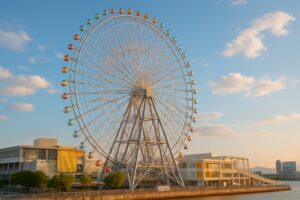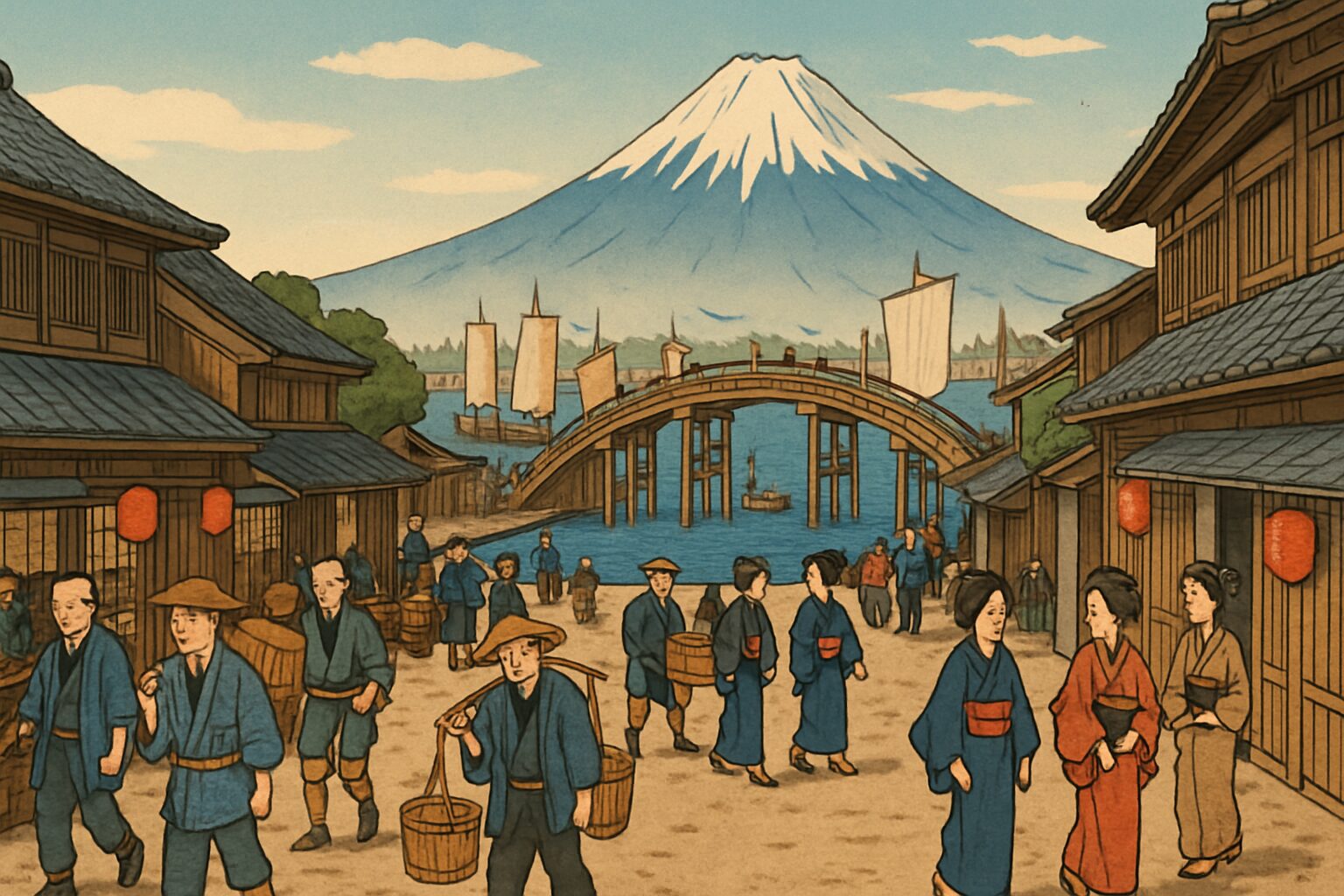
Welcome to Osaka’s Bay Area, a vibrant, shimmering district where the future feels ever-present. Here, the magnificent Osaka Aquarium Kaiyukan holds the deep blue mysteries of the Pacific Rim, and the towering Tempozan Giant Ferris Wheel paints the night sky with a kaleidoscope of light. It’s a place of wonder, of family fun, of ocean breezes and modern marvels. But nestled right in the heart of this dazzling entertainment hub is a quiet, green hill that most visitors walk right past. It doesn’t look like much—a gentle slope, a few trees, a small marker at its peak. This, my friends, is Tempozan. And it’s not just a hill. It’s a mountain. A man-made mountain, born from the riverbed in the heart of the Edo Period, with a story that echoes the very soul of Osaka: its resilience, its commercial spirit, and its unwavering love for a good time. To understand Tempozan is to understand the rhythm of this city, a rhythm that flows from the past, through the present, and into the future, all connected by the vital waters of the bay.
So, before you rush to see the whale sharks or soar into the sky on the ferris wheel, take a moment. Let’s peel back the layers of time and discover the tale of how a massive dredging project transformed into one of old Osaka’s most beloved destinations. This isn’t just a mound of earth; it’s a monument to ingenuity, a forgotten pleasure ground, and a quiet witness to the incredible transformation of Japan’s most dynamic merchant city. Let’s journey back to a time of samurai and shoguns, of bustling waterways and wooden ships, to uncover the secret history of the lowest mountain in Japan, a place where the spirit of Edo-period Osaka is still very much alive.
This story of ingenuity and transformation is a perfect example of how Osaka’s past continues to shape its present, much like the nostalgic culinary journey you can experience at Naniwa Kuishinbo Yokocho.
The Birth of a Mountain: A Tale of Rivers and Resilience
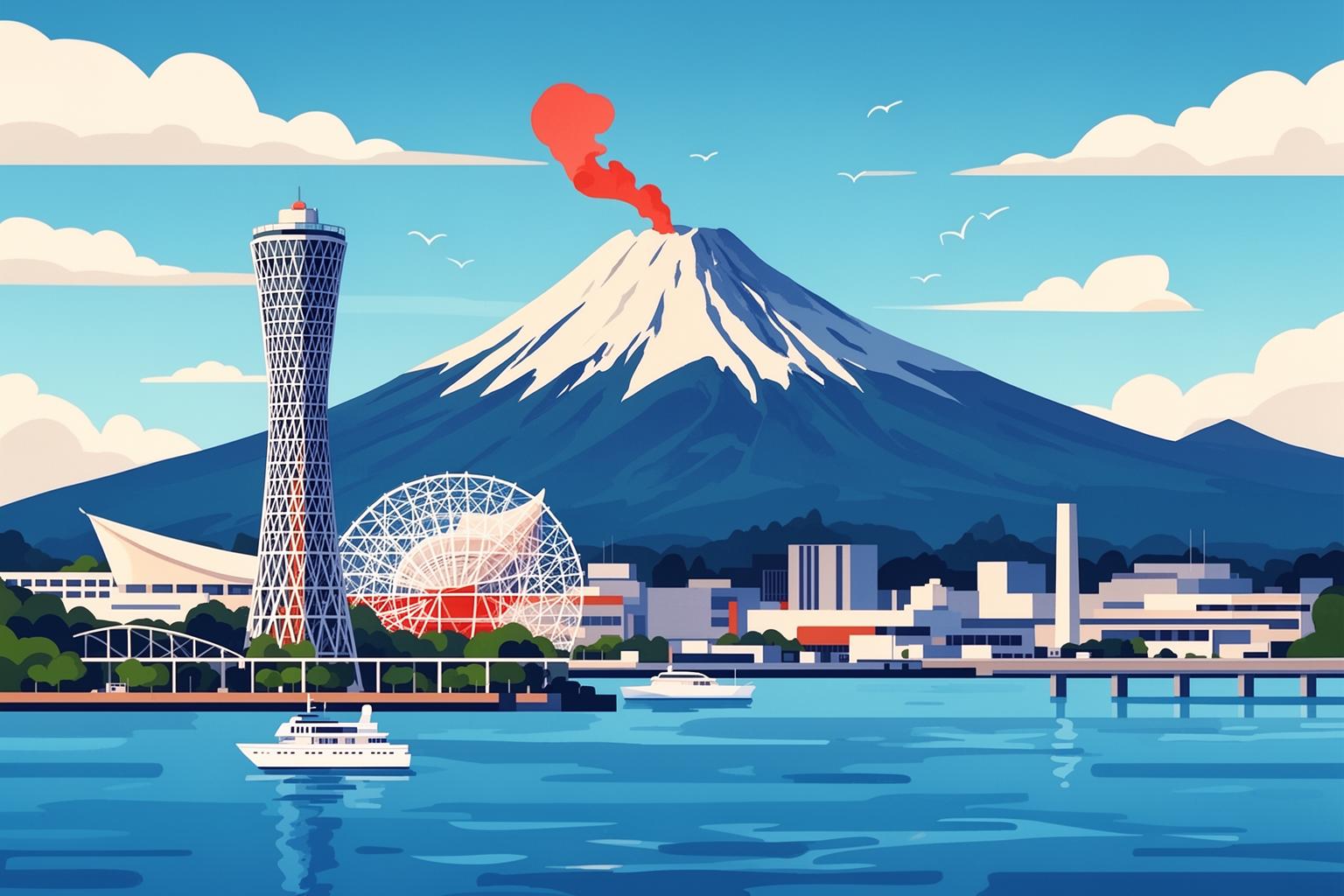
To understand the origin of Tempozan, you must first envision Osaka during the Edo Period (1603-1868). This was no ordinary city; it was Japan’s economic powerhouse, famously called the Tenka no Daidokoro, or the “Kitchen of the Nation.” While Edo (modern Tokyo) served as the political hub and Kyoto as the imperial capital, Osaka stood as the undisputed center of commerce. Rice, sake, textiles, and goods from all corners of the country flowed into its warehouses, traded by a skilled and affluent merchant class. The city’s lifeblood was its intricate system of rivers and canals, with the mighty Aji River acting as the main artery connecting the city’s port to Osaka Bay. Everything and everyone arrived by water, and the health of this waterway was directly tied to the city’s prosperity.
A Clogged Artery: The Waterway’s Challenge
Despite its significance, the Aji River faced a persistent challenge: silt buildup. Over centuries, sediment carried from the mountains settled at the river’s mouth, forming sandbars and shallow areas. This natural process constantly plagued the city. As time went on, the river grew increasingly shallow, making navigation difficult for the large cargo vessels of the day—the magnificent sengokubune. These ships, capable of transporting a thousand koku of rice (about 180 liters per koku), were vital to Osaka’s economy. When fully loaded vessels could no longer reach the docks, goods had to be offloaded to smaller boats offshore, a process that was inefficient, costly, and slow. The economic heartbeat of the Kitchen of the Nation was weakening. The Tokugawa Shogunate, Japan’s military government based in Edo, realized that if Osaka’s port faltered, the nation’s economy could be at serious risk.
The Tempo Era’s Grand Endeavor
By the early 19th century, the problem had reached a critical point. The shogunate decided on a bold solution. In 1831, the second year of the Tempo era (1830-1844), they launched a massive public works project with a clear but immense objective: dredge the Aji River to deepen its channel and restore the passage of large vessels. For several months, countless workers labored by hand, removing mountains of sand, mud, and earth from the riverbed. This enormous task was completed using only manual labor and simple tools. The next challenge was what to do with the huge volume of dredged material. Transporting it far away would have been prohibitively expensive and impractical. The ingenious, characteristically Osakan solution was not merely disposal but reuse. They began piling the sediment on the riverbank, forming a new artificial hill at the river’s mouth.
From Dredged Soil to Renowned Landmark
The mound grew steadily until it reached roughly 20 meters (about 65 feet) in height. It was named to honor the era of its creation: Tempozan, meaning “Tempo Era Mountain.” This was more than just a mound of earth; it stood as a symbol of Osaka’s resilience and ingenuity, a landmark born from necessity. The shogunate officially designated it as a navigational marker for ships entering the bay, a man-made beacon heralding the revitalized port’s entrance. Yet, to the people of Osaka, it was something beyond that—a new vantage point, a public space, and a source of civic pride. Almost overnight, this byproduct of industrial labor transformed into one of the city’s most cherished recreational locales. The mountain that saved Osaka’s economy soon captured its heart.
Tempozan in its Golden Age: A Vista of Pines and Pleasure
What followed stands as a testament to the lively, pleasure-seeking culture of Edo-period Osaka. The citizens saw more than just a functional landmark; they recognized its potential for beauty, leisure, and community. Leading the effort, the city’s officials and affluent merchants launched a campaign to enhance their new mountain. Hundreds of pine trees, a traditional symbol of longevity and beauty in Japanese art, were planted along its slopes. Cherry blossom trees were also added, ensuring the mountain would bloom in delicate pink and white each spring. The once-barren mound of river mud was carefully landscaped into a picturesque park, designed for strolling and reflection.
Osaka’s Most Popular New Attraction
Tempozan soon became a meisho—a famous and cherished place. For residents of Osaka’s flat, densely packed urban area, the chance to climb even a small hill and take in a panoramic view was an exciting novelty. From its peak, one could see the wide expanse of Osaka Bay, sails gliding across the water, the distant mountains of Awaji Island on clear days, and the vast cityscape beyond. It offered a perspective previously unavailable to the average citizen. Visiting Tempozan became a fashionable pastime enjoyed by people from all walks of life—merchants and their families, artisans, clerks, and servants. They flocked there, especially on holidays and weekends, to relish the fresh sea breeze and escape the city’s confines.
A Scenic Vista Immortalized in Art
The area around the mountain’s base blossomed into a vibrant entertainment district. Teahouses, known as chaya, welcomed visitors to rest their feet, sip green tea, and savor traditional sweets while enjoying the view. Restaurants served fresh seafood caught directly from the bay. Stalls selling snacks, toys, and souvenirs sprang up, creating a festive, bustling scene. The area gained fame for its seasonal beauty. In spring, it was one of the city’s top spots for hanami (cherry blossom viewing), where crowds gathered under the blooming trees for picnics and celebrations. In autumn, it was a favored location for tsukimi (moon viewing), watching the full moon rise over the calm bay waters. The picturesque setting caught the imagination of Japan’s greatest ukiyo-e (woodblock print) artists. Masters such as Utagawa Hiroshige and Utagawa Kuniyoshi, renowned for their landscapes and depictions of daily life, created stunning prints of Tempozan. These artworks, featuring elegantly dressed figures enjoying the view from the pine-covered mountain, were widely circulated, securing Tempozan’s reputation as a cultural icon across Japan.
The Atmosphere of the Place
Picture yourself there in the 1840s. You would hear the crunch of gravel beneath your geta sandals as you climbed the gentle slope. The air would be filled with the scent of salty sea spray mingled with the sweet fragrance of pine needles and the aroma of grilling dango from a nearby stand. Around you, the murmur of cheerful crowds, children’s laughter, and the clatter of teacups from the chaya would create a lively soundtrack. At the summit, a refreshing breeze would cool your skin as you gazed toward the horizon. It was a place of simple, profound joy, embodying the spirit of the Osaka merchant class—practical and diligent, yet deeply appreciative of life’s pleasures. Tempozan was their creation, their playground, their refuge. It was a democratic space where a wealthy rice broker and a humble shop assistant stood side by side, sharing the same beautiful view, united by their love for their city.
From Meiji Modernization to Wartime Woes
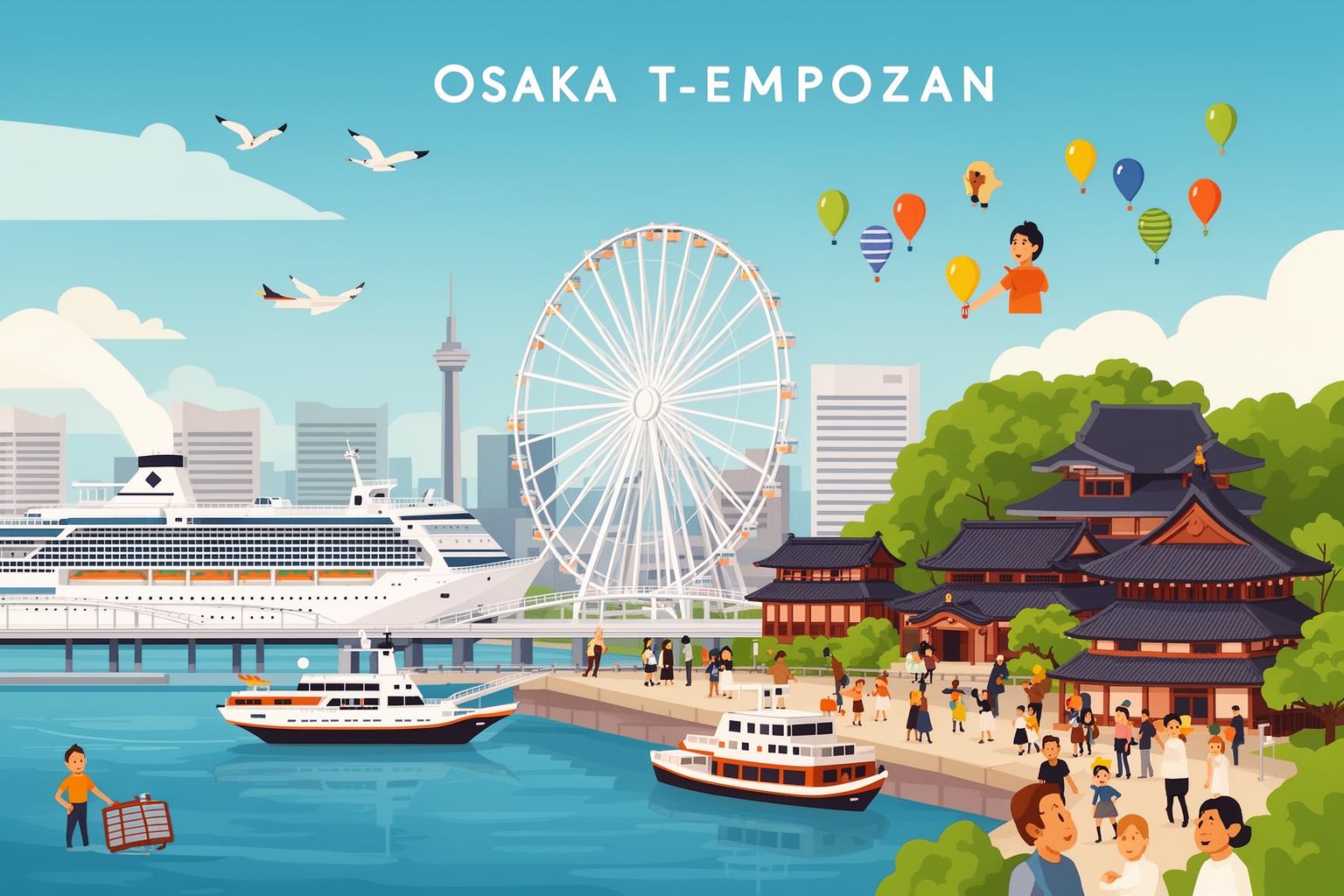
The idyllic era of Tempozan as a pleasure ground could not endure indefinitely. In 1868, the fall of the Tokugawa Shogunate and the onset of the Meiji Restoration ushered in a period of swift and profound change for Japan. The country opened its doors to the West, wholeheartedly embracing industrialization, modernization, and military expansion. Osaka, as a key port and commercial hub, was at the forefront of these shifts. The charming Edo-period waterfront, once dotted with wooden boats and teahouses, gradually gave way to brick warehouses, steamships, and modern port infrastructure.
A Changing Landscape and Fading Glory
The focus of the Osaka Bay Area shifted from leisure pursuits to industry and defense. The Aji River was dredged again, this time using powerful steam-powered machinery, and the port was redeveloped to accommodate larger, more modern vessels. Amid this surge of progress, the gentle, recreational allure of Tempozan began to wane. The new generation was enthralled by different innovations—trains, telegraphs, and Western-style buildings. The simple pleasure of climbing a small hill for a bay view felt quaint and outdated. The once-busy teahouses saw fewer visitors, and the festive atmosphere dissipated as the area around the mountain grew increasingly industrial and utilitarian.
The Mountain’s Sacrifice for a New Era
The most significant blow to Tempozan’s original character came with Japan’s increasing militarization in the early 20th century. As international tensions mounted, Osaka Bay was identified as a strategic defense point. Tempozan, commanding the mouth of the Aji River, was repurposed for military use. The beautiful, ancient pine trees that had adorned its slopes for nearly a century were cut down, and the summit was leveled and fortified to build a gun battery equipped with coastal artillery cannons to defend the port from naval threats. The mountain, once a symbol of peace and prosperity, was transformed into a tool of war. Its height was drastically reduced, and its gentle, scenic slopes were reshaped into functional, stark embankments. During World War II, the area played a key role in Osaka’s coastal defenses—a sharp departure from its origins as a public park.
A Symbol in the Shadows
After the war, Japan prioritized rebuilding its shattered economy. The Osaka Bay Area became an even more intense center for heavy industry and shipping. Tempozan was largely forgotten, becoming an overgrown, neglected relic of a bygone era amid cranes, warehouses, and concrete. The original summit marker was lost, and for many Osakans, the name “Tempozan” came to denote merely the broader port area, its historical significance as a beloved landmark fading from collective memory. The mountain that had once been the city’s pride sat in the shadows—a quiet, unassuming mound of earth, its vibrant past buried beneath the relentless advance of modernity.
The Rebirth of Tempozan: A Modern Landmark with Deep Roots
By the 1980s, Osaka, like many post-industrial cities worldwide, began reimagining its waterfront. The era of heavy industry was shifting, and city planners saw a chance to reclaim the bay for public use. Their vision was to transform the industrial port area into a vibrant hub for culture, entertainment, and international tourism—a destination for visitors and a beloved recreational spot for locals. This ambitious redevelopment required a name and a focal point, and in a stroke of historical insight, planners looked back to the area’s golden era. They chose to revive the name and spirit of Tempozan, creating Tempozan Harbor Village.
A New Village on an Old Shore
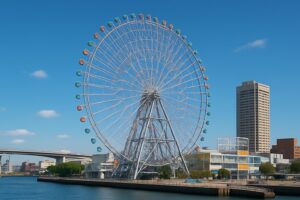
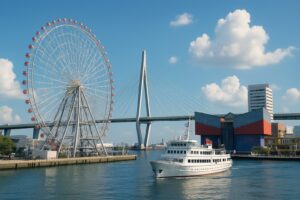
The project was a deliberate effort to reconnect with the area’s past as a space of public enjoyment. The new development was designed not to build over the old mountain but to encircle it, honoring its legacy. The centerpiece was the stunning Osaka Aquarium Kaiyukan, which opened in 1990. Designed by visionary architect Peter Chermayeff, its innovative design takes visitors on a journey from the surface to the depths of the Pacific Ocean, instantly gaining recognition as one of the world’s premier aquariums. It revived the waterfront with life, wonder, and millions of visitors. Following its success, the Tempozan Marketplace was developed—a lively shopping and dining complex featuring Naniwa Kuishinbo Yokocho, a food theme park that authentically recreates the nostalgic ambiance of mid-20th century Osaka. In 1997, the skyline changed forever with the opening of the Tempozan Giant Ferris Wheel. Once among the tallest in the world, its nightly light shows forecasting the next day’s weather became a new city beacon, much like the original mountain had been a beacon for ships.
Honoring the Past in the Present
What became of the original mountain? It was preserved rather than demolished and integrated into the new development as Tempozan Park. This small, tranquil green space sits adjacent to the towering modern structures, serving as a humble but meaningful link to the past. The government’s Geospatial Information Authority of Japan officially surveyed the remaining mound, declaring it the lowest mountain in Japan, with a summit just 4.53 meters above sea level. A small triangular survey marker was placed at its peak, alongside a plaque recounting its history. Though the title of “lowest mountain” has been playfully disputed by other small hills across Japan, it brought a unique fame to Tempozan, turning it into a quirky, charming destination for those in the know—a place where visitors can earn a “summit certificate” from a nearby shop.
Experiencing Tempozan Today: A Guide for the Modern Traveler
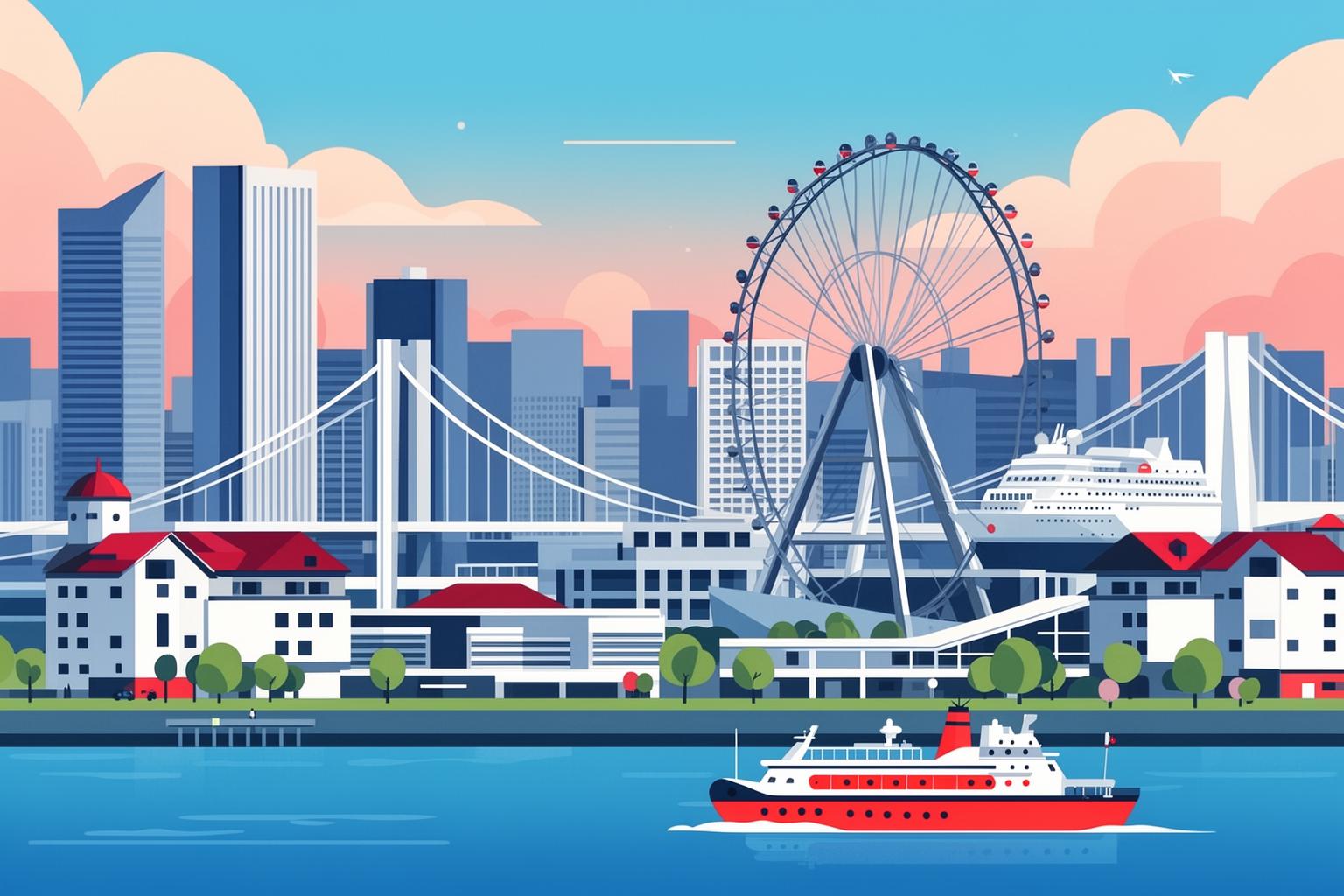
Visiting Tempozan Harbor Village today offers a delightful blend of contrasts. On one hand, there are thrilling, world-class attractions attracting large crowds; on the other, a calm, historic core quietly awaits your discovery.
Discovering the Historic Heart
Your first task, if you’re up for it, is to locate the actual mountain. It’s easier than you might expect. Tempozan Park lies just a short walk from the aquarium and ferris wheel. As you approach, the vibrant noise and energy of the main complex begin to soften, replaced by the gentle rustle of leaves and birdsong. The “climb” to Tempozan’s summit takes less than a minute. The path is mild and shaded by trees, some descended from cherry trees planted during the Edo Period. At the top, you’ll find a simple stone marker. Standing there is a uniquely reflective moment. You are standing on history. The earth beneath your feet was once the bed of the Aji River, brought here by countless laborers nearly two centuries ago. This spot was once filled with joyful picnics and later guarded silently by coastal cannons. To stand here, with the gleaming, futuristic ferris wheel in sight, is to experience the sweeping history of Osaka in a single moment.
The Current Atmosphere: A Reimagined Pleasure Ground
Today’s Tempozan Harbor Village carries forward the spirit of its Edo-period predecessor. It has once again become a space for public enjoyment and leisure. The atmosphere is vibrant. Families gaze in wonder at the graceful movements of whale sharks in the Kaiyukan, couples hold hands on the ferris wheel as they watch the sun set over the bay, and groups of friends laugh while savoring takoyaki and okonomiyaki in Naniwa Kuishinbo Yokocho. The essence of the old chaya and entertainment stalls lives on through modern cafes, restaurants, and street performers. The area’s fundamental purpose has come full circle: it remains a place designed to bring joy to Osaka’s residents and visitors alike.
Practical Tips for Your Visit
- Getting There: Reaching Tempozan is simple. Take the Osaka Metro Chuo Line (green line) to Osakako Station (Station C11). From there, it’s an easy, well-marked five-minute walk—you’ll spot the giant ferris wheel long before you arrive.
- Timing Matters: The Osaka Aquarium Kaiyukan is incredibly popular. To avoid large crowds, visit on a weekday, either right at opening or later in the afternoon. The area transforms at night when the ferris wheel and surrounding buildings light up. Riding the ferris wheel at dusk, as the city lights start to sparkle, is truly unforgettable.
- Connecting the Attractions: Staying true to its history as a transportation hub, Tempozan remains a key connection point. The Captain Line ferry offers a convenient and scenic 15-minute ride across the river between the Kaiyukan and Universal Studios Japan (USJ). It’s a fantastic way to combine two of Osaka’s top attractions in one fun-filled day.
- A Day Well Spent: You can easily spend a full day here. Begin with a peaceful morning in Tempozan Park to connect with history. Then lose yourself for a few hours in the aquatic wonders of the Kaiyukan. For lunch, travel back in time at Naniwa Kuishinbo Yokocho in the Tempozan Marketplace. In the afternoon, explore the shops or catch a street performance. End your day with a stunning evening ferris wheel ride, watching the sunset color the sky over the bay.
A Mountain of Memories
Tempozan is far more than just the sum of its modern elements. It is a living story of Osaka—a narrative that starts with a challenge—a river blocked by silt—and concludes with a solution that brought joy and community to generations. It tells a tale of adaptation, of a place that evolved from a cherished park to a military fortress, and has since been reborn as a world-class attraction. This small mountain reflects the practical yet playful spirit of Osaka. It stands as a testament to the city’s continuous ability to reinvent itself, honoring its past while boldly shaping its future. So when you visit, look beyond the gleaming glass and vibrant lights. Take the brief walk along the quiet, tree-lined path. Place your hand on the summit marker and close your eyes. You may just catch the faint echo of Edo-period laughter carried on the sea breeze, a timeless beat linking you to the enduring soul of this remarkable city.