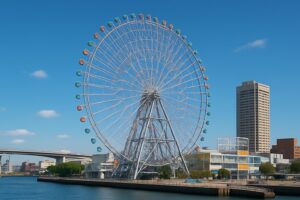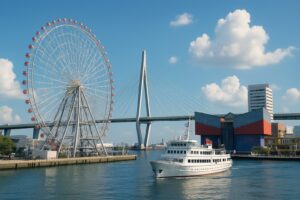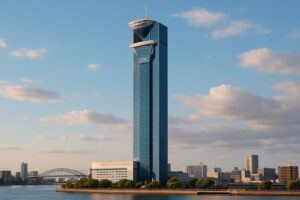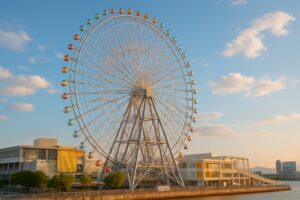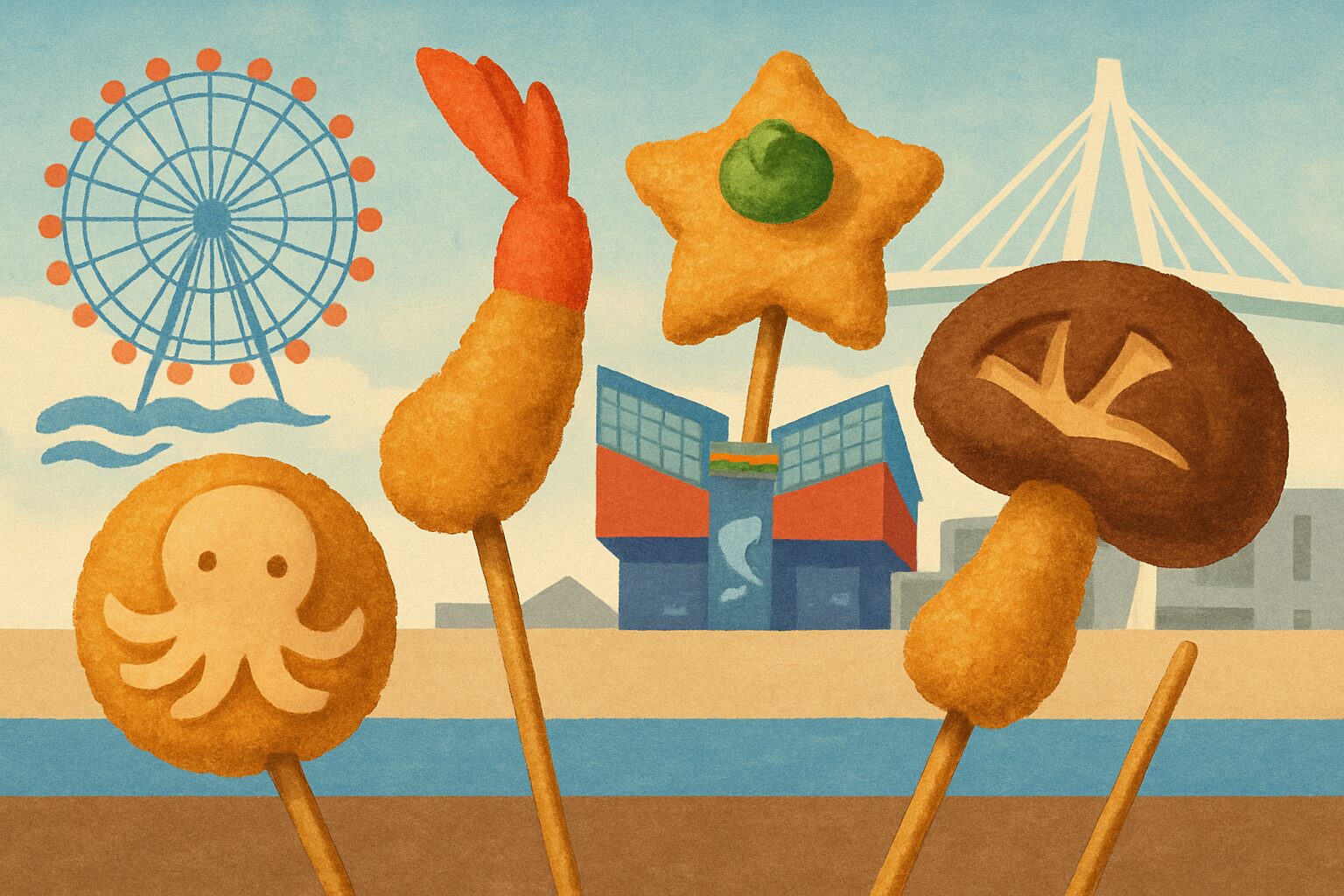
Welcome, fellow traveler, to a side of Osaka that glitters and glows right by the sea. My name is Megumi Hara, and as an event planner from Tokyo, I’m constantly on the hunt for experiences that sparkle with genuine fun and local flavor. While the neon maze of Dotonbori and the historic grandeur of Osaka Castle often steal the spotlight, I want to take you to the city’s vibrant Bay Area. Here, against a backdrop of endless blue sky and the gentle rhythm of the waves, stands the majestic Tempozan Ferris Wheel, a colossal, colorful clock that watches over the harbor. Next to it, the world-renowned Osaka Aquarium Kaiyukan holds oceanic wonders. But nestled between these giants is our destination: Tempozan Market Place. It might look like a simple shopping center from a distance, a convenient stop for souvenirs, but step inside, and you’ll discover it’s a treasure chest of Osakan culinary culture, specifically a playground for one of the city’s most beloved soul foods: kushikatsu. Forget what you think you know about simple fried skewers. Here in the refreshing sea breeze, we’re about to uncover an interactive, creative, and utterly delicious adventure that goes far beyond the standard tourist trail. This is where Osaka’s playful spirit meets its passion for food, creating a memory you won’t just savor, but one you’ll have a hand in making yourself.
After enjoying the creative kushikatsu, you might also want to explore the best sushi spots near Osaka Aquarium Kaiyukan.
The Aura of the Osaka Bay: A Breath of Fresh Air

There’s a noticeable change in energy as your train on the Osaka Metro Chuo Line leaves the city’s underground maze and glides toward Osakako Station. The dense urban landscape of Umeda’s skyscrapers and Namba’s busy arcades starts to give way, replaced by broader skies and a palpable sense of openness. Upon stepping out of the station, the first thing that greets you isn’t a view, but a sensation—the cool, slightly salty touch of the sea breeze. It brings with it a different kind of excitement, a relaxed, holiday-like rhythm that defines the Tempozan area. The walk to the Market Place is brief and enjoyable, a straightforward path that builds anticipation with each step. To your left, the massive Tempozan Ferris Wheel begins to dominate the skyline, its bright red frame a lively beacon against the blue backdrop. It moves with a slow, mesmerizing grace, carrying sightseers in its capsules up into the sky for panoramic views of the bay, city, and distant mountains. Its scale is both humbling and joyful. Straight ahead, the striking blue and red mosaic façade of the Kaiyukan Aquarium hints at the oceanic wonders inside. The architecture here is sleek, modern, and designed for enjoyment, standing in sharp contrast to the gritty, historic charm of areas like Shinsekai. This is Osaka’s contemporary playground, a thoughtfully created hub of entertainment. The atmosphere is light, filled with a universal language of happiness. You hear the excited chatter of children pointing at the Ferris wheel, couples laughing while strolling hand in hand along the waterfront promenade, and the multilingual buzz of tourists from around the world, all drawn to this scenic retreat. The open plaza in front of the Market Place often hosts street performers, whose lively acts attract joyful crowds and add a theatrical touch to the afternoon. It’s a place that invites you to slow down, breathe deeply, and simply savor the moment. The soundscape is a gentle mix of cheerful pop music drifting from the marketplace entrance, the distant, melancholic call of a ship’s horn from the port, and the soft lapping of water against the docks. This coastal environment fills everything with a sense of calm and possibility, making it the perfect introduction to a truly unique culinary experience.
Deconstructing Kushikatsu: More Than Just Food on a Stick
Before we dive into the lively center of Tempozan Market Place, let’s focus on the highlight of our experience: kushikatsu. For those unfamiliar, the idea is wonderfully straightforward. ‘Kushi’ means skewer, and ‘katsu’ comes from ‘katsuretsu,’ meaning cutlet. Essentially, kushikatsu consists of various bite-sized pieces of meat, seafood, and vegetables threaded onto a bamboo skewer, dipped in a light batter, coated with fine panko breadcrumbs, and deep-fried to a crispy, golden-brown perfection. It’s Osaka’s version of tapas, a social and endlessly adaptable dish that’s deeply embedded in the city’s food culture. But to truly appreciate kushikatsu, you first need to know its one inviolable rule.
The Golden Rule: No Double-Dipping!
Step into any traditional kushikatsu restaurant, especially in the nostalgic Shinsekai neighborhood, and you’ll find large communal stainless-steel containers filled with a dark, sweet, and savory dipping sauce on the tables. This sauce is the soul of the dish and shared by all guests. Because of this, the ultimate taboo in kushikatsu dining is double-dipping. Once you’ve taken a bite from your skewer, it must never be returned to the communal sauce container. This rule is about hygiene and respect for fellow diners and is taken with the seriousness of a law. So, what if you need more sauce halfway through? That’s where the complimentary side of raw cabbage comes into play. The crisp cabbage leaves serve as edible spoons—you use a clean leaf to scoop sauce from the pot and drizzle it onto your kushikatsu. The cabbage itself is also delicious, offering a refreshing, crunchy contrast to the richness of the fried food. Understanding and honoring this rule is your first step to dining like a true Osakan.
The Craft Behind the Crisp
The secret to outstanding kushikatsu lies in its texture. The aim is a light, airy crispness that shatters pleasantly on the first bite, revealing a juicy, perfectly cooked interior without any greasiness. This is achieved through careful technique. The batter—a simple blend of flour, egg, and water—must be just right: thin enough to coat without weighing down. The true hero, though, is the panko. Unlike the coarse, jagged breadcrumbs common in Western cooking, Japanese panko is made from crustless bread, resulting in lighter, flakier crumbs. This fine panko forms a protective layer around the ingredient, allowing it to steam in its own juices while the exterior fries to a crisp, even crunch. The oil temperature is also crucial; it must be hot enough to cook the skewer quickly, preventing it from absorbing excess oil and becoming soggy. When prepared properly, it’s a masterpiece of culinary precision, balancing textures and flavors perfectly.
From Humble Origins to Creative Canvases
Kushikatsu started as a simple, hearty, and affordable dish for laborers in Osaka’s working-class neighborhoods. Early menus featured basic ingredients like beef, onion, potato, and occasionally quail eggs. It was quick, satisfying, and tasty. While these traditional eateries remain vital and a must-visit part of the Osaka experience, a new wave of kushikatsu has emerged, treating the bamboo skewer as a blank canvas for creativity. There’s no better place to witness this evolution than Tempozan Market Place, where the classic formula is playfully reinvented with interactive fun and limitless imagination.
The Kushikatsu Carnival: A DIY Dining Adventure
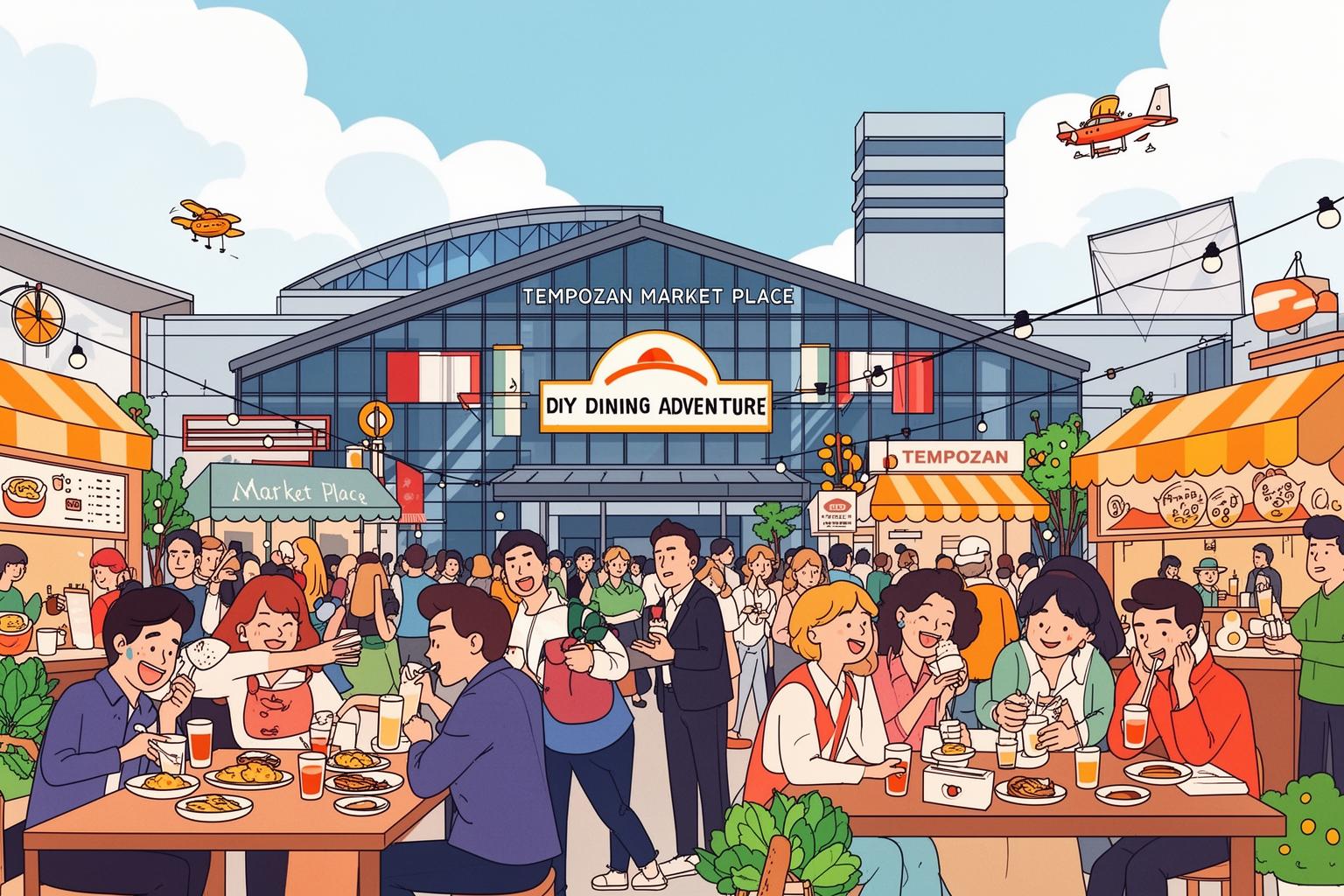
As you step into Tempozan Market Place, you’ll discover a wide range of dining choices, but for the ultimate inventive kushikatsu experience, seek out a restaurant with a distinctive concept: all-you-can-eat, cook-it-yourself dining. Establishments like Kushiya Monogatari have perfected this approach, turning a simple meal into an unforgettable occasion. The moment you’re seated, you realize something special awaits. Built into the center of your table is a deep fryer—a personal cauldron of bubbling golden oil, ready for your creations. This is where the excitement begins. You’re not just a guest; you’re the chef.
The Buffet: A Universe of Skewers
The centerpiece of the experience is the buffet. It’s a stunning sight, a refrigerated display lined with dozens upon dozens of trays, each offering a different ingredient, neatly skewered and ready for transformation. The variety is astonishing and extends far beyond the classics. Let’s dive into this edible wonderland.
The Savory Staples
Naturally, the essentials are all here. You’ll find classic beef cubes, tender pork loin, juicy chicken thigh, and small, crisp sausages. The seafood selection is just as impressive, featuring plump shrimp that curl into a perfect pink as they cook, delicate white fish fillets, tender squid pieces, and sometimes even scallops. The vegetables present a rainbow of freshness: thick rings of sweet onion, vibrant green bell peppers, earthy shiitake mushrooms, slices of sweet potato and kabocha pumpkin that become creamy when fried, and beautiful, lacy lotus root slices that turn incredibly crispy.
The Glorious and Unexpected
Here is where creativity truly flourishes. You’ll encounter skewers that challenge every notion of kushikatsu. Picture a skewer of takoyaki, the famous Osaka octopus balls, ready to be double-fried into a crispy-on-the-outside, molten-on-the-inside delight. Or a mini skewer of gyoza dumplings, their savory filling wrapped in an extra crunchy layer. Often, there are bacon-wrapped items—such as asparagus, cherry tomatoes, or cheese—that sizzle and release an irresistible aroma. Speaking of cheese, cubes of camembert or processed cheese that melt into gooey, savory lava inside their crispy shell are a must-try. You might even find mochi, the chewy pounded rice cake, which puffs and softens delightfully in the hot oil. The possibilities are endless, and half the fun lies in bold experimentation.
The Ritual of Creation: A Step-by-Step Guide
After selecting your initial skewers, you return to your table to begin the ritual. The restaurant provides two troughs: one filled with liquid batter (`neriyako`) and the other piled high with fine, pale panko breadcrumbs. The process is a simple, satisfying dance.
First, take a skewer—say, a plump shrimp—and dip it into the batter, ensuring it’s coated in a thin, even layer. A gentle tap on the trough’s edge removes any excess.
Next, press the battered shrimp into the panko, rolling it carefully to cover every surface with the light, airy breadcrumbs. This crunchy coating will protect it in the fryer.
Then comes the moment of truth. Gently lower the prepared skewer into the hot oil. It immediately bursts into a satisfying sizzle, surrounded by tiny bubbles. The restaurant usually offers a cooking guide—just a couple of minutes—but your eyes are the best tool. Watch as the panko changes from pale white to a flawless, even golden brown.
Using tongs, lift the skewer from the oil and set it on the small metal rack at your table to drain excess oil. This crucial step helps achieve the signature non-greasy finish.
Finally, the reward of your efforts. Dip your freshly fried creation into the sauce of your choice. That first bite—the audible crunch, the burst of steam, the perfectly cooked ingredient inside—is pure triumph.
A World Beyond the Standard Sauce
While the classic sweet and savory kushikatsu sauce is always available (served in individual bowls so you can dip freely without worry), the creative journey extends further. These restaurants pride themselves on offering a wide variety of dipping sauces. You might find tangy ponzu with grated daikon radish, a sweet-spicy chili sauce, or a rich cheese fondue for extra indulgence. There are often seasoned salts too, such as matcha salt, curry salt, or yuzu salt, which provide more subtle ways to flavor your skewers. The freedom to mix and match skewers and sauces means no two bites need ever be the same.
More Than Just Skewers
As if the endless kushikatsu variety weren’t enough, the all-you-can-eat price usually includes an extensive side dish buffet. You can balance the fried richness with fresh salads, Japanese potato salad, and assorted pickles. Staples like steamed white rice and often a delicious Japanese curry to pour over it are available too. You might find miso soup, udon noodles, or even ochazuke—a comforting rice dish topped with various ingredients and hot green tea poured over. And be sure to save room for dessert. The dessert bar is a paradise in itself, often featuring a soft-serve ice cream machine, a mesmerizing chocolate fountain with fruits and marshmallows for dipping, and an array of cakes, jellies, and fresh fruit. It’s a complete feast that satisfies every craving.
Perfect Pairings and a Festive Atmosphere
The interactive aspect of a DIY kushikatsu meal creates a lively and communal atmosphere. The constant sizzle from the tabletop fryers, the animated chatter of people comparing their creations, and the clinking of glasses compose a soundtrack of pure enjoyment. It’s a far cry from a quiet, formal dinner; this is a setting for laughter, conversation, and shared discovery. To fully enjoy the experience, you need the right drink in hand.
The unbeatable pairing for kushikatsu is a cold, crisp Japanese beer. A frosty mug of Asahi Super Dry or Kirin Ichiban perfectly complements the fried food. The bubbles and subtle bitterness refresh the palate, cutting through the richness and preparing you for the next skewer. Another excellent choice is the Japanese highball, a simple yet refreshing mix of Suntory whisky and sparkling soda water served over ice in a tall glass. It’s light, zesty, and won’t feel heavy. For those who prefer non-alcoholic options, oolong tea is a great pick as it also helps to balance the oiliness. And for a touch of classic Japanese café charm, you can’t go wrong with a vibrant green melon soda topped with a scoop of vanilla ice cream.
Beyond the Fryer: Exploring Tempozan Market Place

After indulging in kushikatsu, your journey through Tempozan Market Place is far from finished. This multi-level complex is brimming with other treasures waiting to be uncovered, most notably a nostalgic culinary voyage through time.
Naniwa Kuishinbo Yokocho: A Journey to Showa-Era Osaka
On the second floor lies Naniwa Kuishinbo Yokocho, a cleverly designed food theme park that recreates the lively streets of Osaka during the mid-Showa era (around the 1960s). Entering this space feels like stepping into a time warp. The decor is precisely retro, featuring vintage movie posters, quaint shop signs, a classic red mailbox, and even a restored mid-century three-wheeled delivery vehicle. The atmosphere is enriched by the sounds of vintage Japanese pop songs and the enticing aromas of various Osakan specialties. Here, you can taste other iconic elements of the city’s cuisine from well-established, renowned eateries. Sample dishes from `Hokkyokusei`, reputed to have invented `omurice` (a fluffy omelet served over fried rice and topped with ketchup). Or enjoy `takoyaki` from `Aizuya`, a shop known for creating the original sauce-free version, highlighting the flavor of the octopus and batter. You will also find exceptional `okonomiyaki` (savory pancakes) and `ikayaki` (grilled squid). It’s a wonderful opportunity to savor more of Osaka’s culinary traditions in one charming and immersive setting.
Shopping and Entertainment
The marketplace also offers a diverse selection of shops. You can discover everything from character goods stores featuring merchandise from Studio Ghibli, Pokémon, and other beloved anime, to shops selling traditional Japanese crafts, clothing, and unique souvenirs. There is an abundance of Osaka-themed snacks and keepsakes, ideal for bringing a memento of your trip home. For added excitement, an arcade on the upper level offers classic Japanese gaming entertainment, while the outdoor plaza often hosts live music and performances, giving the whole area a festive, lively atmosphere.
Practical Advice for Your Bay Area Adventure
Finding your way to this coastal area of Osaka is simple, but a few helpful tips can make your visit even more enjoyable.
Getting to Tempozan
The easiest and most common way to get here is by train. From major stations such as Namba or Umeda, take the Osaka Metro Chuo Line (marked in green). Board a westbound train heading toward Cosmosquare and disembark at Osakako Station, which is station C11. From Exit 1, it’s a straightforward, well-signposted five-minute walk to the Ferris wheel and Market Place. For a more scenic and unique route, try the Captain Line shuttle ferry. This boat links Tempozan Harbor Village directly with Universal City Port, near Universal Studios Japan. The crossing takes about ten minutes and offers wonderful views, making it an ideal choice if you plan to visit both attractions in one day.
Timing Your Visit
Tempozan Market Place and the nearby attractions are popular throughout the year. To avoid the biggest crowds, aim to visit on a weekday. Weekends and public holidays tend to be very busy, especially around lunchtime. If you’re heading to the Kaiyukan Aquarium, booking tickets online in advance is highly recommended to secure a specific entry time and skip long lines. An evening visit to the area is especially enchanting. The Ferris wheel glows with a dazzling light show that beautifully reflects on the water, creating a romantic and festive mood. Enjoying kushikatsu while taking in the shimmering night view is an unforgettable experience.
Tips for a Perfect Day
- Wear comfortable shoes. The area is quite large, and you’ll want to casually explore the waterfront and marketplace without getting tired feet.
- Arrive hungry and with an open mind. The all-you-can-eat kushikatsu is more of a marathon than a sprint. Take your time, sample a variety of skewers, and don’t hesitate to try some of the more unusual options.
- Although most shops and restaurants accept credit cards, it’s wise to carry some Japanese yen for smaller items or food stalls.
- If you plan to enjoy all the main attractions, consider buying a combo ticket that includes both the Ferris wheel ride and entry to the Kaiyukan to save a bit of money.
More Than a Meal, It’s an Osaka Memory
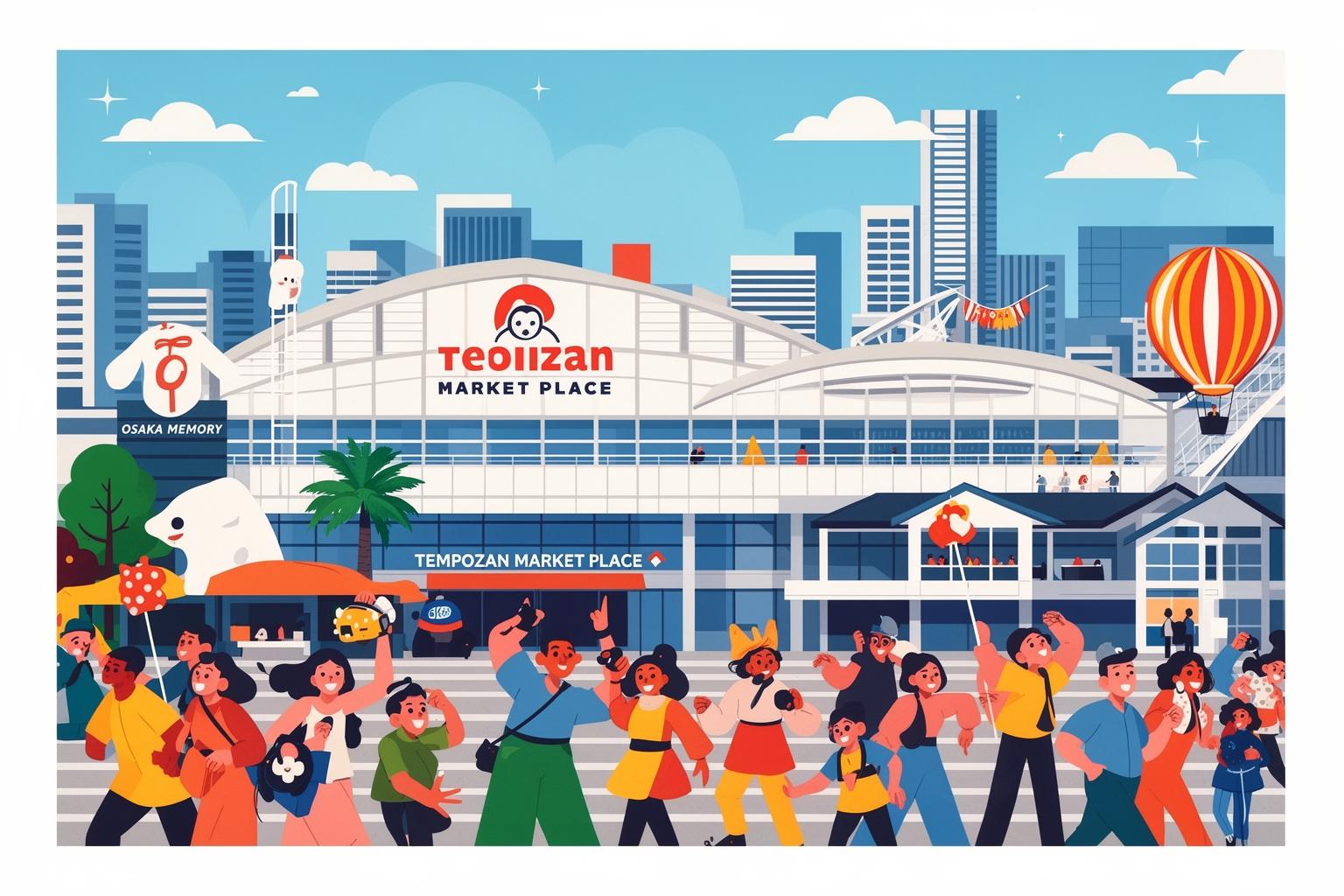
In a city renowned as Japan’s Kitchen, a meal is rarely just about nourishment. It’s about joy, community, and fun. The experience of making your own kushikatsu at Tempozan Market Place perfectly captures this philosophy. It removes the formality of dining and replaces it with the pure, unfiltered pleasure of creation. It’s the sizzle of the oil, the excitement of pulling a perfectly golden skewer from the fryer, the freedom to invent your own flavor combinations, and the laughter shared with friends and family around a table filled with your culinary creations. This is what makes Osaka’s food culture so unique. It’s interactive, approachable, and endlessly creative. So when you visit Osaka, be sure to enjoy the view from the Ferris wheel and marvel at the whale sharks in the Kaiyukan. But afterwards, let your appetite lead you into the heart of the Market Place. Look beyond the souvenir shops, find the bubbling fryer, and craft a meal that is uniquely yours. It’s a delicious, hands-on adventure that embodies the vibrant, playful spirit of Osaka in every single crispy bite.