Osaka. The name itself crackles with energy, a neon-lit symphony of sizzling takoyaki, boisterous laughter echoing from packed izakayas, and the relentless, rhythmic pulse of a city that never seems to sleep. It’s a metropolis of glorious excess, a feast for the senses that can leave you breathless and buzzing. But beneath this vibrant, high-voltage surface lies a quieter, more intimate rhythm, a daily ritual of release and renewal that beats at the very heart of neighborhood life. As the sun dips below the horizon and the city’s electric glow intensifies, countless Osakans turn their backs on the chaos and walk towards a different kind of light—the warm, steamy welcome of the local sentō, the public bathhouse. This isn’t a tourist attraction; it’s a living, breathing institution, a sanctuary where the day’s grime, both literal and metaphorical, is washed away, leaving behind a profound sense of peace and community. Forget the grand castles and glittering shopping arcades for a moment. To truly understand Osaka, you must understand the evening ritual of the sentō, the humble yet essential pillar of daily life where the city’s soul comes to get clean.
This deep sense of community and connection, forged in the steamy quiet of the sentō, mirrors the genuine bonds that can be formed through language exchange meetups in Osaka.
The Neighborhood’s Beacon of Warmth
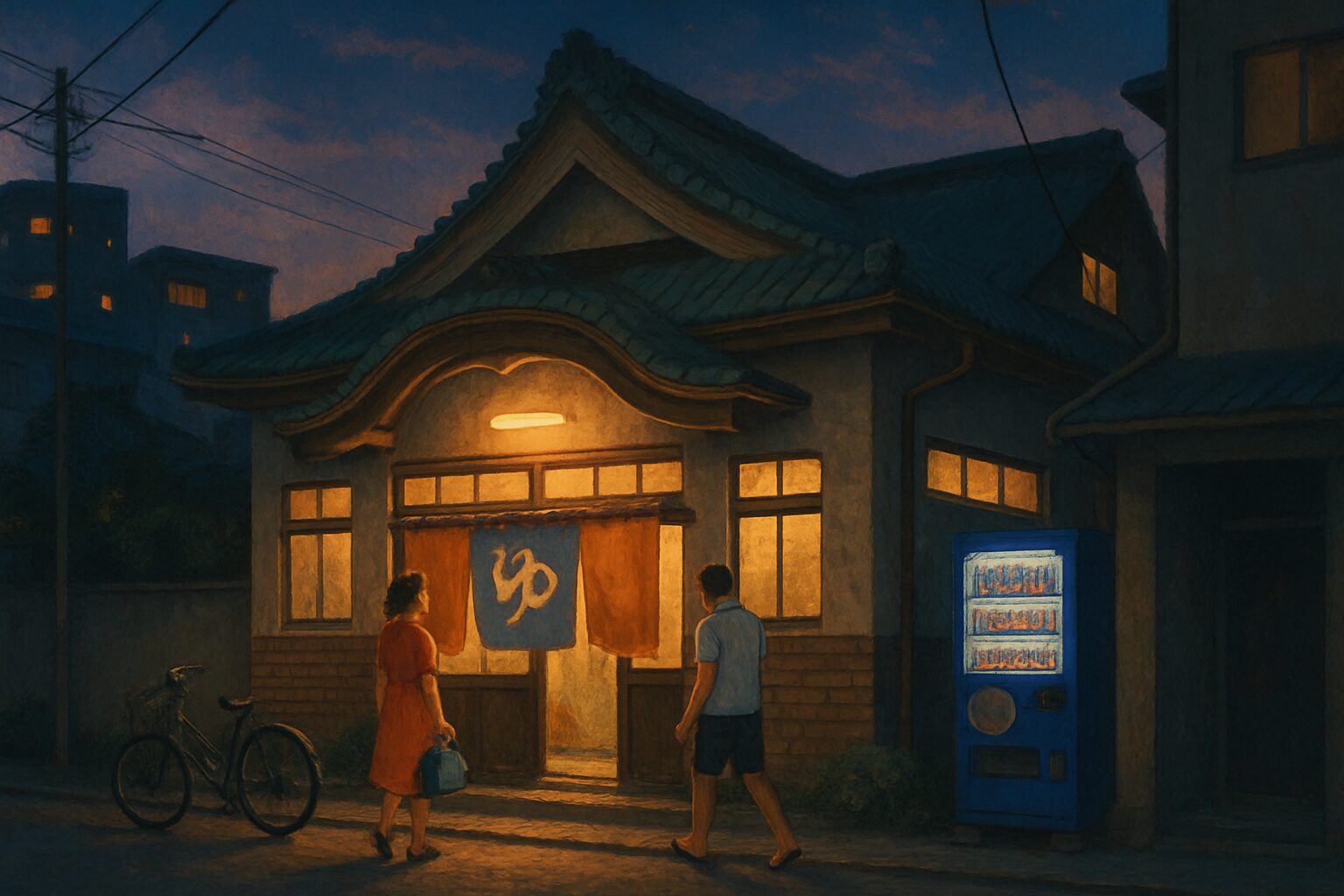
The journey begins at dusk. You’ll find yourself walking down a narrow residential street, far removed from the noise of the Midosuji line. The air, heavy with the humidity of a Japanese evening, carries the aroma of soy sauce from a nearby kitchen and the subtle, sweet fragrance of daphne from a hidden garden. The sounds here are distinct as well—the clatter of a bicycle, the distant chime of a train crossing, the soft murmur of a television through an open window. Then, you spot it. It could be a grand, temple-like building with an ornate, sweeping roof—a style known as miyazukuri—or a simpler, more modern structure, but the unmistakable signs stand out. A tall, slender chimney reaching skyward, a gentle light spilling from the entrance, and, most notably, the noren: a short, split curtain hanging over the doorway, typically dyed a deep indigo blue and adorned with the single elegant kanji character `湯` (yu), meaning “hot water,” or its hiragana counterpart, `ゆ`. This simple emblem serves as a beacon, a promise of warmth, relaxation, and a brief escape from the stresses of the outside world. It extends an open invitation to cross a threshold not just into a building, but into a different state of being.
Crossing the Threshold: A Journey Back in Time
Pushing aside the soft, heavy fabric of the noren feels like stepping through a curtain into another era. The first thing you encounter is the getabako, a wall of small wooden lockers for your shoes. Inside, the air immediately changes—warm, humid, and infused with a clean, soapy scent mingled with a subtle hint of cedar or cypress. You slide your shoes into a locker, then take the large, often clunky wooden key—a charmingly low-tech security system designed to be impossible to forget in your pocket. From here, you approach the bandai, a raised platform where the attendant, often an elderly man or woman who has likely witnessed generations of locals, sits collecting the entrance fee. For a few hundred yen, a price standardized throughout the prefecture, you gain access to this beloved communal space. You hand over your coins and receive a friendly nod, perhaps accompanied by a quiet “irasshai” (welcome). The attendant at the bandai is the gatekeeper, the quiet observer of this nightly flow of visitors. To your left and right, two more noren hang—one typically blue for men (男), and one red for women (女)—leading to separate changing rooms. You choose your path and step through, leaving behind the last traces of the bustling city.
The Sacred Space of the Datsuijo (Changing Room)
The datsuijo, or changing room, is where the transformation truly begins. It hums with a gentle, convivial energy. The sounds form a unique symphony: the click-clack of wooden locker doors, the soft rustle of clothes being folded, the low murmur of conversations among neighbors, and the distant, echoing splash of water from the bathing area beyond. Wicker baskets or simple open lockers line the walls, waiting for your belongings. The distinct lack of privacy might feel surprising to a first-timer, but it’s fundamental to the sentō experience. This is a place of shared vulnerability, where you shed not just your clothes but also the social armor worn all day. You might see a group of elderly women chatting animatedly while drying off, a father patiently helping his young son, or a student quietly reading a manga while cooling down. In the corner, classic artifacts of Showa-era life often appear: a large, analog weighing scale requiring a 10-yen coin, a vintage massage chair that rumbles and shakes with questionable therapeutic effect, and perhaps an old wall-mounted fan that slowly oscillates, stirring the warm, damp air. This room is the antechamber to bliss—a decompression zone where you prepare, both physically and mentally, for the ritual of the bath.
The Rite of Purification: Washing Before Soaking
Before you can even consider sinking into the blissful warmth of the baths, there is a vital, non-negotiable first step: you must wash. This is the cardinal rule of the sentō, a core principle of hygiene and respect. Passing through the last sliding door from the changing room, you enter the main bathing area, a vast space filled with tile and steam. The air is thick and warm, sometimes obscured by swirling vapor. Along the walls, rows of washing stations await, each outfitted with a small plastic stool, a faucet with hot and cold taps, a handheld shower nozzle, and often a fixed overhead shower. You take a stool and a plastic basin, find an empty spot, and begin the process of thoroughly scrubbing yourself from head to toe. This isn’t a quick rinse. Osakans treat this part of the ritual with great care, working up lather with soap and shampoo to meticulously wash away the sweat and grime of the day. It becomes a moment of personal meditation amid the communal atmosphere. You’ll notice people using their own special “sentō sets”—small baskets holding their preferred soaps, shampoos, and exfoliating towels. Once completely clean, you perform a final purification called kakeyu. Filling your basin with hot water from the main bath, you pour it over your body to acclimate your skin to the temperature and give a final rinse before entering the shared tubs. This act communicates to everyone that you are clean and ready to join the communal soak.
A Symphony of Steam and Water: Exploring the Baths
Now, the reward. The bathing area of a typical neighborhood sentō is a playground of aquatic therapies, featuring a variety of tubs each providing a unique experience. The centerpiece is almost always a large, deep tub filled with steaming hot water, often adorned with a tile mural on the wall behind it. This is where the sentō’s social life truly thrives, but there are many other pleasures to discover.
The Main Attraction: The Atsuyu and Nuruyu
The main bath is usually divided into two parts. One is the atsuyu, or hot bath, maintained at a temperature that can feel shockingly hot to newcomers (typically around 42-44°C or 108-111°F). Entering this tub requires a slow, deliberate approach. The initial heat shock gradually gives way to a deep, penetrating warmth that seems to dissolve every tight muscle knot. The other part is the nuruyu, a lukewarm bath that provides a gentler, more leisurely soak. This is often where longer conversations unfold, as bathers can relax for extended periods without overheating. Submerged up to your neck in these waters, feeling your body’s weight melt away, you hear the hum of local gossip, discussions about the Hanshin Tigers baseball team, or friendly debates over the best okonomiyaki spots. It’s a full-body immersion not just in hot water, but in the rhythm of local life.
The Bubbling Cauldron: Jet Baths and Jacuzzis
For those suffering from specific aches and pains, the jet baths are a blessing. These tub sections are equipped with powerful underwater jets that massage your back, shoulders, and legs with high-pressure streams of water. The sensation is intense—a deep-tissue massage that loosens the kinks from a long day of standing, walking, or sitting. You’ll frequently see older men and women positioning themselves just right in front of these jets, their faces reflecting blissful relief. The steady, low roar of the jets adds to the sentō’s ambient soundscape — a white noise that drowns out your thoughts, pulling you into pure physical sensation.
The Shocking Tingle: The Denki Buro (Electric Bath)
Perhaps the most uniquely Japanese and intimidating feature in a sentō is the denki buro, or electric bath. This small tub section, usually marked by a sign, passes a low-voltage electric current through the water between two plates. The adventurous bather who sits between these plates experiences a strange, tingling vibration that causes muscles to gently contract. For first-timers, it’s an odd and slightly unsettling sensation, but devotees praise it as an addictive therapy believed to ease sore muscles and boost circulation. If you choose to try it, the key is to enter slowly and carefully. It’s a conversation starter, at least, and a testament to the Japanese passion for inventive bathing experiences.
The Trial by Fire and Ice: Sauna and Mizuburo
Many sentō also include a small sauna, often a dry Finnish-style one with tiered wooden benches. Inside this scorching wooden box, regulars sit in quiet contemplation or muted conversation, sweating out toxins and stress in the intense heat. The true magic happens afterward. After enduring the sauna as long as you can, you rinse off your sweat at a washing station, then take the ultimate plunge into the mizuburo—the cold water bath. The shock is immediate and breathtaking. The icy water, usually around 15-18°C (59-64°F), jolts your system, closes your pores, and sends a surge of adrenaline and clarity through your entire body. After the initial gasp, a deep calm and invigoration follow. Alternating between the extreme heat of the sauna and the icy cold of the mizuburo is a practice beloved by health enthusiasts, believed to strengthen the immune system and sharpen the mind. It serves as the final, powerful reset button after a long day.
More Than Just Water: The Art and Soul of the Sentō
As you soak, take a moment to observe your surroundings. A sentō is more than just a functional space; it often serves as a work of art. The most striking feature is the grand tile mural that stretches across the wall above the main bath. While the classic image is a majestic Mount Fuji, symbolizing permanence and beauty, Osaka sentō may showcase other scenes: graceful koi fish swimming, heroic samurai, or peaceful local landscapes. These murals, meticulously assembled from thousands of individual tiles, were intended to provide bathers with a beautiful scene to contemplate—a mental escape as their bodies relax. The ceilings are typically high and skillfully designed to allow steam to escape, the floors are covered with unique, slip-resistant tiles, and even the spigots can be decorative, fashioned like lion heads. The sentō is a living museum of mid-century Japanese design and craftsmanship, where utility and aesthetics blend harmoniously.
The Final Act: Post-Bath Rejuvenation
The ritual doesn’t conclude the moment you step out of the water; the post-bath experience is equally essential. After a final rinse, you return to the datsuijo feeling completely renewed. Your skin is soft and radiant, your muscles relaxed and supple, and your mind clear and peaceful. This is the “afterglow” of the sentō. As you dry off, you might notice locals applying toner, combing their hair, or simply sitting on a bench, savoring the sensation of deep cleanliness. Then comes the final, perfect touch: the post-bath drink. The changing rooms almost always feature vintage-style vending machines stocked with a carefully curated selection of beverages. The classic choice is milk, served in a traditional glass bottle. Options include plain milk, coffee-flavored milk, or the popular “fruit milk,” a sweet, fruity drink that evokes childhood. Popping the paper cap and sipping the ice-cold milk is a moment of pure, simple joy. For others, an ice-cold beer or a bottle of Pocari Sweat is the ideal way to rehydrate. This is a time for quiet reflection or a final chat with a neighbor before dressing and stepping back into the world.
Your First Sentō Journey: A Practical Guide
Feeling ready to take the plunge? A bit of preparation and understanding of local customs will help make your first visit smooth and enjoyable.
Gearing Up
Although you can usually arrive empty-handed, it’s best to bring a few essentials. You’ll need two towels: a small one for washing your body and for modesty when walking around the bathhouse, and a larger one for drying off afterward. You’ll also want soap or body wash and shampoo. Many people carry these items in a small, waterproof basket or bag. If you forget anything, don’t worry—most sentō sell a “tebura setto” (empty-handed set) for a few hundred yen, which usually includes a small towel, soap, and single-use shampoo packets.
Mastering the Etiquette
The rules are simple and mostly based on common sense, created to ensure everyone enjoys a comfortable experience.
- Wash First: Absolutely do not enter a bath without thoroughly washing your body at the shower stations first.
- Towel Out: Your small washing towel should never go into the bath water. Most people place it on their head or leave it beside the tub.
- No Splashing, No Swimming: The baths are intended for quiet soaking, not for playing or swimming.
- Tattoos: While many larger onsen (hot springs) still ban tattoos, neighborhood sentō tend to be more relaxed, especially in a down-to-earth city like Osaka. If you are discreet and respectful, you’ll likely be fine. Those with extensive tattoos might consider visiting during less busy times.
- Be Respectful: Keep your voice low and be considerate of others’ personal space. The sentō is a shared sanctuary.
Decoding the Sentō
Finding a local sentō is part of the experience. As you wander through Osaka’s residential areas, watch for tall chimneys and the `ゆ` symbol. Most sentō open in the late afternoon, usually around 3:00 PM, and remain open late into the night, often until midnight or 1:00 AM, catering to people returning home from work. Prices are regulated by the local government, making sentō an incredibly affordable luxury, usually costing less than 500 yen.
A Community’s Living Room
Ultimately, the lasting strength of the sentō lies in its function as a crucial community gathering place. In an increasingly digital and isolated world, the sentō offers a tangible space for human connection. The Japanese use the term hadaka no tsukiai, meaning “naked communion” or “naked friendship.” It conveys the idea that when people are unclothed, they shed their social status, titles, and pretenses. At the sentō, a company CEO might be bathing beside a construction worker, and a grandmother could be sharing bathing tips with a young mother. It serves as a great equalizer—acting as the neighborhood’s living room, social network, and therapy space all in one. It’s a place where you can come alone but never feel lonely.
So, on your next evening in Osaka, when the city’s energy begins to feel overwhelming, look for that modest `ゆ` sign. Leave your phone, worries, and shoes at the entrance. Submerge yourself in the hot water and the warm embrace of the community. Sip a bottle of fruit milk and stroll home under the stars, feeling cleaner, lighter, and more connected to the true spirit of this remarkable city. You won’t just be taking a bath; you’ll be engaging in a ritual that has nourished and revitalized Osakans for generations.