The glow of your laptop screen paints the room a cool blue. Outside, the world is alive. You hear the clatter of a shop shutter rolling up, the cheerful, sing-song call of the sweet potato truck, the distant laughter of kids coming home from school. You came to Osaka for this. For the life, the energy, the famous friendliness you read about in every travel blog. You set up your remote work station, ready to dive in. But weeks, maybe months, have passed, and you feel… separate. You’re watching the vibrant life of your neighborhood through a window, like a movie you’re not a part of. The friendly smiles on the street feel polite, but they don’t lead anywhere. You’re physically here, but socially, you’re still buffering.
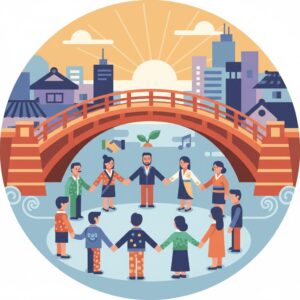
This is the remote worker’s paradox in Osaka. You’ve chosen a city built on human connection, but your lifestyle creates a natural barrier. The key to understanding this disconnect lies in a concept that’s far deeper than just being “friendly.” It’s called Gokinjo-zukiai, and it’s the intricate, unwritten operating system of every Osaka neighborhood. This isn’t about making best friends or weekend party buddies. It’s about the complex, rhythmic dance of duties, greetings, and mutual observation that keeps a community functioning. It’s a social fabric woven from a thousand tiny threads, and if you’re working from home, you’re not naturally bumping into the weavers. So, can a remote worker, isolated by the very nature of their job, ever truly plug into this system? Can you move from being a silent observer to an active participant in the life of your Osaka neighborhood? The answer is yes, but it requires a different kind of work, one that starts the moment you close your laptop.
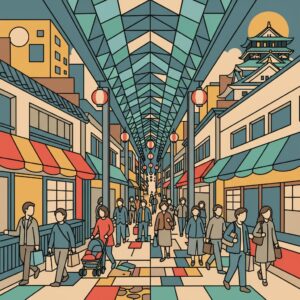
Embracing the energetic shotengai lifestyle can help remote workers bridge their digital solitude with the authentic community vibe that defines Osaka’s neighborhoods.
The Unspoken Rules of the Osaka Neighborhood
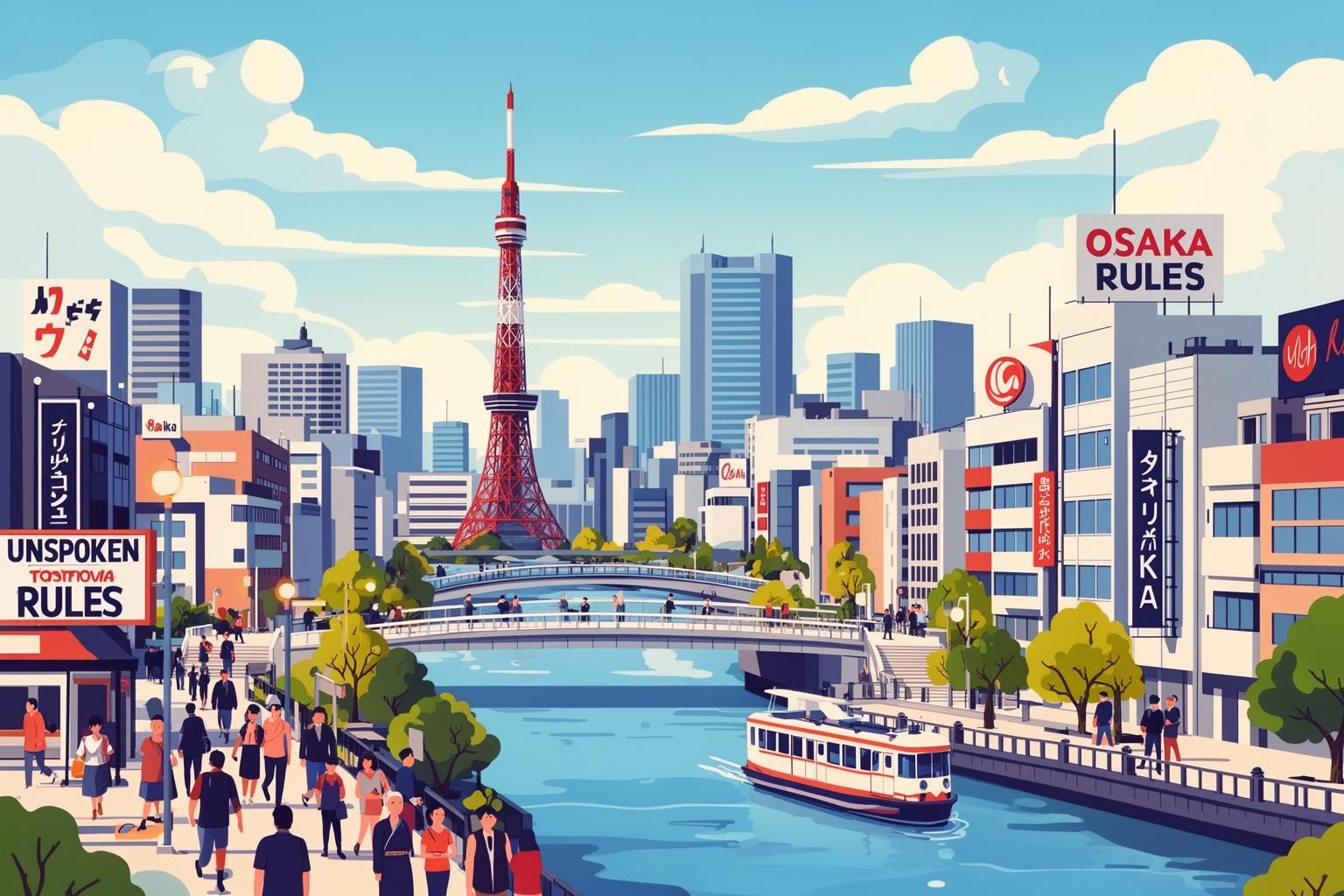
First, let’s clarify one thing. Gokinjo-zukiai isn’t what many foreigners tend to assume. The term translates to “neighborhood relations,” but it’s less about warm, fuzzy feelings and more about a deeply embedded social contract. It’s a system of mutual support and shared responsibility aimed at ensuring the smooth, safe, and predictable functioning of a densely populated community. It explains why streets stay clean, why lost items often find their way back, and why someone might notice if an elderly neighbor hasn’t opened their curtains for two days. This is the foundation of daily life here, and grasping its unspoken rules is your first step toward true integration.
It’s Not Friendship, It’s Function
One major challenge for Westerners is overcoming the belief that all positive social interactions lead to friendship. In Osaka, being a good neighbor isn’t about inviting someone over for a barbecue. It’s about fulfilling your role within the community ecosystem. The aim isn’t necessarily to become best friends (nakayoshi), but to maintain harmony (wa). This means the smiles and small talk exchanged with the woman watering her plants next door are about acknowledging your shared space and confirming that you’re both dependable members of the collective. She’s not seeking your life story; she’s merely ensuring you’re a familiar, stable presence in her immediate environment. The relationship is grounded in reliability, not intimacy. Do you separate your trash properly? Do you keep noise to a minimum? Do you greet people courteously? These practical actions are valued far more than a charismatic personality. The system exists for the collective good, and your primary role is to avoid disrupting it.
The All-Seeing Eye of the Oba-chan
You’ll soon notice that the heart of any Osaka neighborhood lies in its network of older women, the oba-chan. They are the custodians of Gokinjo-zukiai. They’re the ones sweeping the pavement in front of their homes, chatting at the corner vegetable stall, and sitting on their porches, observing the world around them. To outsiders, this might feel like surveillance. And, in a way, it is. But it’s not driven by malice. It’s a form of community oversight rooted in care and security. They act as the neighborhood’s living security system and information hub. They know who’s new, who’s ill, whose children are preparing for high school exams, and on which days the recycling truck runs late. This continuous, low-key flow of information keeps the community safe and connected. If you’re a foreigner working from home, you become an object of great curiosity. Your unusual schedule, or lack of one, marks you as an anomaly. Being seen and acknowledged by this network is vital. A simple, cheerful greeting each time you encounter them can shift their perception from “that mysterious foreigner who’s always home” to “that friendly foreigner who’s part of our neighborhood.” Their approval acts as your social passport.
Aisatsu is Your Passport
In many Western cultures, greetings are often mere formalities, sometimes skipped if you’re not in the mood. In Osaka, the aisatsu (greeting) is a crucial social ritual. It’s the most basic, non-negotiable element of Gokinjo-zukiai. A crisp “Ohayo gozaimasu!” in the morning or a clear “Konnichiwa” in the afternoon is more than politeness. It’s an act of social acknowledgment. It’s you saying, “I see you. I acknowledge our shared space. I’m part of this community, and I pose no threat.” Ignoring a neighbor or offering a weak, mumbling greeting while staring at your phone is a major red flag. It suggests you’re aloof, disrespectful, or simply unaware of the rules. For remote workers with limited social interactions, mastering aisatsu is essential. It must be proactive and confident. This simple act, repeated daily, is the most powerful tool you have for building a foundation of trust. It costs nothing but carries immense social currency.
Why Your Tokyo Habits Won’t Work Here
Many foreigners arrive in Osaka after spending time in Tokyo, bringing with them social habits shaped by their time in Tokyo. This is often a misstep. Although both are large Japanese cities, their social frameworks are fundamentally different. Attempting to navigate Osaka’s neighborhoods with a Tokyo mindset is like trying to use a New York map to find your way around London. The streets may appear similar, but the underlying logic is completely different. Tokyo’s culture values anonymity and privacy; Osaka’s values engagement and community.
The Wall of Privacy vs. The Open Door
In Tokyo, especially in the central wards, you could live in an apartment building for years without ever learning the name of your next-door neighbor. This isn’t considered rude; it’s simply the norm. The city’s immense scale and density have nurtured a culture where personal space creates a bubble of social anonymity. You don’t disturb your neighbors, and they don’t disturb you. Privacy is held as the highest virtue. In Osaka, this same behavior might be perceived as cold, suspicious, or arrogant. The “open door” is more than just a metaphor here—it’s a mindset. People are expected to be more engaged in each other’s lives, even if only superficially. That’s why a neighbor might ask questions that feel very personal by Tokyo standards, such as “Where do you work?” or “Are you married?” They aren’t being nosy with bad intentions; they’re trying to place you within the community to understand your context and know how to interact with you. In Tokyo, you build walls to safeguard your privacy. In Osaka, you open doors to forge connections.
“Uchi” vs. “Soto” in Motion
The Japanese concepts of uchi (inside/in-group) and soto (outside/out-group) influence social interactions everywhere, but their application varies. In Tokyo, your “uchi” group tends to be narrowly defined: your family, your company. Your apartment acts as your fortress, and the moment you step outside, you enter the vast, anonymous “soto.” In Osaka, the boundaries are less distinct. The neighborhood itself can feel like an extension of “uchi.” Your immediate community, the local shotengai (shopping arcade), and the people you see daily occupy a gray area—sort of a semi-“uchi.” This lowers the barrier to casual conversation. People feel a shared ownership and a sense of belonging to the neighborhood. This shift in mindset is key. When you view your neighbors not as strangers in the “soto” but as peripheral members of your “uchi,” the logic of Gokinjo-zukiai becomes clear. You look out for them because they are, in a very real sense, part of your team.
The Remote Worker’s Gauntlet: Navigating Gokinjo-zukiai from Home
For someone with a typical nine-to-five job, becoming part of the neighborhood happens fairly naturally. You leave for work at the same time every morning, establishing a predictable routine. You might encounter neighbors at the train station, and your presence is understood as part of a normal workday pattern. However, as a remote worker, you don’t have this advantage. Your routine is invisible; you’re always around but without an obvious reason. You need to put in effort to navigate the particular challenges your lifestyle brings in this highly social environment.
The Curse of Being Always Home but Never Seen
If you spend every day entirely inside your apartment, you become something of a mystery. Your lights are on, yet you rarely appear outside during regular hours. This disrupts the neighborhood’s expected rhythm. Neighbors may start to wonder: Are you alright? Are you unwell? Or worse, are you unfriendly? In a community that values visibility and predictability, being a mysterious homebody is a social drawback. Your silence and invisibility can easily be misinterpreted as aloofness. You cannot rely on the predictable pattern of a commuter’s life to become a familiar face. You are physically present, but socially, you might as well be invisible. This is the primary challenge you must deliberately and thoughtfully address.
Chokai: The Test of the Neighborhood Association
Soon after moving in, a neighbor will probably knock on your door to invite you to join the chokai or jichikai (the neighborhood association). For a small monthly fee (usually 300-500 yen), you become an official member. To many foreigners and even younger Japanese, this can feel like an outdated, bureaucratic inconvenience. You receive newsletters and are asked to take part in community events. It’s tempting to say no. This is a crucial error. The chokai serves as the formal, structural core of Gokinjo-zukiai. It organizes community activities, distributes information from the city office, and manages rotating neighborhood responsibilities. Politely declining membership is tantamount to telling the whole neighborhood, “I want to enjoy the benefits of your safe, tidy community, but I won’t contribute.” This immediately marks you as an outsider—someone who consumes but does not belong. Joining the chokai is your official entry pass. You don’t have to become president, but you must be on the list.
Garbage Day as a Community Litmus Test
The chokai system is most visible and your community membership most tested at the local garbage collection point (gomi-suteba). This is the frontline of Gokinjo-zukiai. Osaka’s garbage sorting rules are notoriously complicated. Get them wrong, and the entire neighborhood’s trash may be left uncollected, accompanied by a stern note of disapproval. But it goes beyond that. Most neighborhoods assign a rotating duty called gomi toban, responsible for keeping the collection spot clean and orderly. This can include unlocking a cage, putting out a net to keep crows away, and sweeping up after the collection truck has come through. When your turn on the toban list arrives, performing the task thoroughly and cheerfully is a public display of your commitment to the community. It’s a small, sometimes irritating chore, but it carries great symbolic significance. For remote workers, it’s a prime opportunity. Being seen diligently doing your garbage duty signals that, despite your unconventional work style, you are a responsible and contributing community member. It’s the great equalizer—everyone handles refuse.
The Local Shotengai as Your New Workplace Hub
At the center of many Osaka neighborhoods is the shotengai, the covered shopping arcade. These are more than just a group of stores; they serve as the neighborhood’s communal living room. They are where the oba-chan network gathers, where shopkeepers share gossip, and where the neighborhood’s heartbeat can be experienced. For a remote worker, the shotengai is a secret weapon. Instead of isolating yourself in your apartment, you can use the shotengai as a kind of satellite office and social hub. It helps solve the issue of invisibility. Make a habit of buying your groceries at the small, family-owned shops there rather than at large, impersonal supermarkets. Build relationships with the butcher, the fishmonger, and the tofu vendor. Their shops act as listening posts, and if they like you, they become your advocates within the community. Their endorsement is priceless.
A Practical Guide to Plugging In
Grasping the theory is one thing, but applying it in practice is quite another. Decoding the nuances of Gokinjo-zukiai as a remote worker demands a proactive and intentional approach. You must recreate the social interactions that a traditional workplace offers. Visibility has to be self-generated, and connections must be developed step by step through small, consistent interactions.
Engineer Your Visibility
Since your work doesn’t naturally make you visible, you have to take charge of it. Establish a routine that gets you out of the house and into your neighborhood at set times. This helps you become a familiar and approachable presence. Avoid just appearing when running errands. Instead, take a 15-minute walk around the block every day at 10 AM. Get your coffee from the local kissaten (a classic coffee shop) rather than making it at home. Even better, spend an hour working there on your laptop. The owner and regular customers will start to recognize you. When you’re walking, make eye contact and confidently greet (aisatsu) everyone you pass. Don’t wait for others to initiate greetings—be the one to start. Your aim is to shift your identity from “the person in apartment 301” to “the friendly foreigner who always walks by in the afternoon.” Predictability fosters comfort and trust.
Master the Art of Small Contributions
Your place in the community is measured by what you contribute, no matter how small. These gestures show your understanding of the reciprocal nature of Gokinjo-zukiai. Upon moving in, the tradition of hikkoshi no aisatsu is your prime opportunity to make a positive first impression. Bring a modest gift—a small towel, a box of cookies, or even a bar of soap, valued between 500 to 1,000 yen—and visit your closest neighbors (next door, above, and below). Introduce yourself briefly and offer the gift. This simple act carries great significance. It announces your arrival and shows respect to the existing community. Additionally, participate whenever possible. If there’s a neighborhood cleaning day, join in—even if only for half an hour. The gesture itself matters more than how many weeds you pull. When the local shrine hosts its summer matsuri (festival), attend, buy a drink, try a game, and be visible. These small time investments yield substantial social rewards.
Speak Their Language (Literally and Figuratively)
Nobody expects you to be fluent in Japanese, but putting in effort truly matters. Learning a few key phrases in the local dialect, Osaka-ben, makes an even stronger impression. It signals a deeper commitment to the local culture. Simple expressions like “Maido!” (a versatile greeting and thank you used in business) to a shopkeeper or a playful “Mokari makka?” (“Are you making a profit?”) can break the ice and earn a warm smile. Beyond literal language, learn to communicate in the figurative language of the neighborhood. Engage with local shopkeepers—don’t see them just as cashiers. Ask the fruit vendor what’s fresh today. Compliment the baker on his bread. These individuals are community pillars. By nurturing genuine, friendly relationships with them, you tap into the neighborhood’s core information network. They’ll learn your name and story, and in turn, vouch for you to others. Your local reputation is built on these small, everyday exchanges.
The Payoff: Is It Worth the Effort?
Reading all this, you might think it sounds like a lot of effort. It’s a complex social dance with steps you need to learn and practice. For a remote worker who values independence and flexibility, it can feel restrictive. So, is it really worth going through all this just to fit in? The answer is an unequivocal yes, because what you gain is much deeper than merely avoiding dirty looks on garbage day. It’s about transforming your experience of living in Osaka from one of lonely isolation into one of genuine belonging.
Beyond the Stereotype of “Friendly”
When you successfully integrate into the neighborhood, you uncover what the “friendly Osaka” cliché truly means. It’s not just a superficial friendliness. It evolves into a strong, dependable support system. The neighbor you once thought was simply nosy will be the first to offer help when a typhoon hits. The shopkeeper you chat with daily will set aside your favorite bread just for you. People share extra vegetables from their gardens, watch over your apartment while you’re away, and lend a hand if they see you carrying something heavy. This is the real essence of community—a network of mutual support that is increasingly rare nowadays. You shift from being an anonymous resident to someone who is genuinely cared for.
A Cure for Remote Work Loneliness
For many remote workers, the biggest challenge isn’t managing time or Wi-Fi speed; it’s loneliness. The absence of regular, casual human interaction can be emotionally taxing. Gokinjo-zukiai, while not replacing deep friendships, offers a powerful remedy. The simple, daily routine of greetings, brief chats at the vegetable stand, and the sense of being a recognized part of something larger—these create a feeling of connection and belonging. They ground you. Your world expands beyond the four walls of your apartment and the faces on your video calls. You become part of a living, breathing community, and that feeling of inclusion can profoundly impact your mental well-being.
The Real Osaka Experience
Ultimately, engaging with Gokinjo-zukiai marks the difference between merely living in Osaka and truly experiencing life here. You can stay in your apartment, order everything online, and keep to yourself. You can certainly survive that way. But you will miss the heart of this city. Osaka’s soul isn’t found in its castles or skyscrapers; it’s in the loud, lively, caring, and sometimes meddlesome exchanges that happen on its residential streets and in its shopping arcades. Cracking this code requires effort, patience, and a willingness to step outside your cultural comfort zone. For a remote worker, it demands twice the effort. But the reward is immense. You stop being a visitor looking through the glass and become part of the picture itself. And that is when Osaka finally, truly, feels like home.