Step off the roaring subway at Umeda, a concrete and glass canyon of commerce, and you can feel the pulse of modern Osaka. It’s a city that moves at lightning speed, a symphony of hurried footsteps, flashing advertisements, and the relentless hum of progress. But just a ten-minute walk north, a world away in spirit, lies a secret whispered on the wind. This is Nakazakicho, a neighborhood that time, by some beautiful accident, forgot to change. Here, the grand avenues of Umeda dissolve into a tangled web of impossibly narrow alleyways, where the sunlight dapples through a lacework of overhead wires and the buildings lean in to share their stories. This isn’t just a place; it’s a feeling, a living museum of Showa-era Japan that miraculously survived the wartime firebombing that flattened so much of the city. For the traveler, it’s a charming detour. For the artist, it’s a wellspring of inspiration. And for the remote worker, the digital nomad weary of sterile co-working spaces and soulless chain cafes, Nakazakicho is nothing short of a sanctuary. It’s here, amidst the creak of wooden floorboards and the scent of slow-dripped coffee, that work transforms from a task into a creative pursuit. This is your guide to finding your focus, your flow, and your perfect cup of coffee in the most atmospheric office you’ll ever have.
To fully appreciate the unique atmosphere of this retro neighborhood, you can learn more about the history and charm of Nakazakicho.
The Soul of the Workplace: Why Nakazakicho Captivates
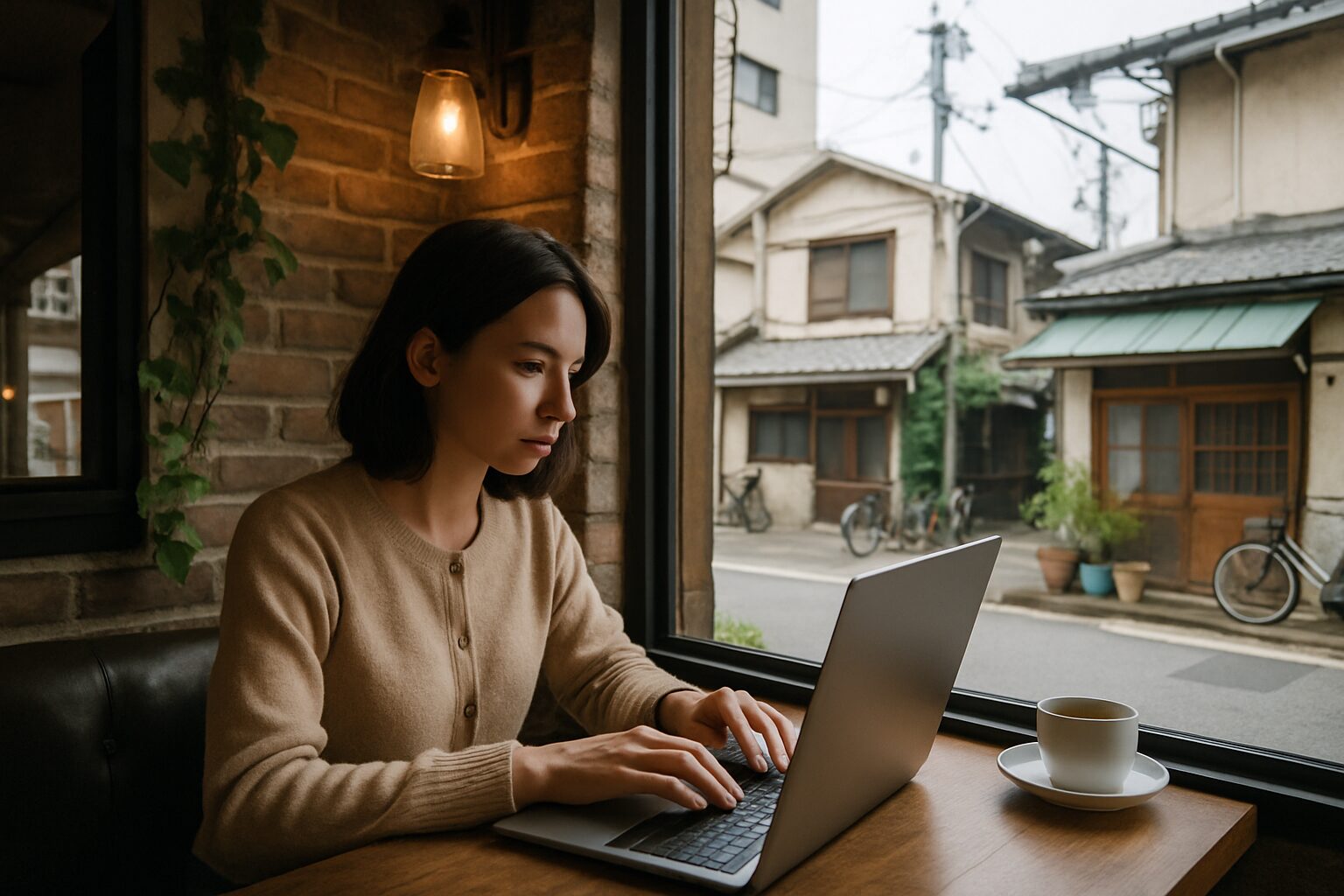
Before discussing Wi-Fi speeds or the strategic placement of power outlets, we first need to focus on the vibe. This is the crucial, intangible element that makes working in Nakazakicho a truly unique experience. Choosing to open your laptop here is a deliberate choice to exchange efficiency for inspiration, and predictability for discovery. The neighborhood itself becomes your office, and its rhythm merges with your own. Forget the sterile white walls and the fluorescent hum typical of conventional workspaces. Instead, your surroundings are a collage of weathered wood, peeling paint revealing layers of history, and windows framed by trailing ivy. The soundtrack isn’t a curated playlist of focus music but the soft murmur of conversations, the distant clang of a railway crossing, and the chirping of sparrows nesting in the eaves of a pre-war nagaya—a traditional wooden row house.
The history of the area is tangible. You sense it in the uneven cobblestones beneath your feet and the slightly tilted doorways of homes that have settled over the decades. Because Nakazakicho was spared the destruction of World War II, it retains a character increasingly rare in major Japanese cities. These are not replicas or themed reconstructions; they are the real thing—homes and shops that have sheltered generations of families. In recent years, a new generation has arrived, not to demolish and rebuild but to lovingly restore and repurpose. Young artists, designers, leatherworkers, and baristas have breathed new life into these old structures, transforming former residences into galleries, boutiques, and the very cafes we seek out. This blending of old and new generates a powerful creative energy. It’s an environment that invites you to slow down and notice small details—the pattern on a ceramic tile, the intricate design of a window lattice, or the way light falls across a tatami mat. This mindfulness influences your work. Challenges that once felt overwhelming in a hectic urban setting suddenly become manageable. Words flow more freely, designs feel more natural, and code becomes more elegant. You’re not just working; you’re engaging with the life of the neighborhood.
The Digital Nomad’s Field Guide to Nakazakicho Cafes
Navigating the cafe scene here as a remote worker calls for a slightly different mindset. This isn’t a place where you can simply assume every spot functions as a plug-and-play office. The charm of Nakazakicho lies in its authenticity, which often means embracing a few quirks. Think of it as a treasure hunt, where the prize is finding your own perfect productivity corner. The first and most essential tool in your kit is observation. Peer through the windows. Does it seem like a place welcoming to lingering, or is it a high-turnover venue for quick espressos? The smaller the cafe, the more important this becomes. A tiny, eight-seat shop run by a single elderly woman might serve the best coffee of your life, but it’s not the place to settle in for five hours with a laptop and a conference call.
Now, let’s get specific. Wi-Fi is vital, but its quality can vary greatly. Some of the more modern, youth-oriented cafes offer high-speed connections, understanding their clientele’s needs. The traditional kissaten (old-style coffee shops) may have a connection more like a gentle stream than a rushing river—ideal for emails and writing, but risky for uploading large files or video calls. Having a personal hotspot as a backup is wise. Then there’s the holy grail: the power outlet. In these old, repurposed buildings, outlets are precious. They’re often scarce and sometimes hidden in awkward spots. Experienced Nakazakicho remote workers develop a sixth sense for spotting them. They learn to arrive early, not only for the quiet but to claim that coveted seat by the wall with the two-pronged socket. Always come with fully charged devices. Think of your laptop’s battery life as a timer that limits which cafe you can choose on any given day.
Finally, there’s unspoken etiquette. Japanese cafe culture, especially in independent shops, is founded on respect. The owners are not just business operators; they are artisans and hosts. It’s polite to order at least one item every hour or two you stay. Nursing a single coffee all afternoon is generally frowned upon. Be mindful of your footprint. Don’t spread your papers, laptop, and various accessories across a table meant for four, especially during the busy lunch rush from noon to 2 PM. Keep your voice low; if you must take a call, step outside. By being a considerate patron, you’re not only ensuring you’ll be welcome back but also helping preserve the wonderfully peaceful atmosphere that attracted you here. You become part of the solution, not the problem.
Sanctuaries of Focus: A Curated Tour of Nakazakicho’s Work-Friendly Havens
While exploring and uncovering your own hidden gem offers half the enjoyment, let me sketch a few archetypal spots you might come across. These locations embody the varied spirit of Nakazakicho’s cafe culture, each providing a distinct atmosphere for your workday.
The Weaver’s Loft: A Modernist’s Dream
Picture turning off the main shopping street to find an old, two-story warehouse with a deep terracotta brick façade. A subtle sign reading “The Weaver’s Loft” directs you up a flight of industrial steel stairs. As you climb, the air shifts—growing cooler and filled with the aroma of roasted espresso beans, steamed milk, and something earthy like fresh linen. You open a heavy door to reveal the space. This is The Weaver’s Loft, a striking example of Nakazakicho’s new wave. The ceilings soar cathedral-high, with original wooden beams crisscrossing above. Sunlight floods through massive factory windows, lighting up dust motes dancing in the air. The interior perfectly balances industrial chic with handmade warmth. Polished concrete floors are softened by large, handwoven rugs in muted earth tones. Walls combine exposed brick and clean white plaster, doubling as galleries for local textile artists. Large tapestries and intricate macramé hang like silent, beautiful sentinels.
Seating is as thoughtfully designed as the décor. A massive communal table crafted from a single slab of reclaimed wood anchors the center. This is the Loft’s heart, where freelancers and creatives work side by side in companionable silence, their laptops glowing like modern campfires. Along the windows, individual tables offer perfect solo focus, each fitted with a sleek, minimalist lamp and, crucially, a dedicated power strip. Yes, you read that right. The Weaver’s Loft is a sanctuary for power-hungry digital nomads. The Wi-Fi is as robust and reliable as the building’s foundation, built to support everything from video editing to complex coding.
The menu mirrors the space: modern, wholesome, and artfully presented. Baristas here are true artists, pulling shots of single-origin espresso and crafting lattes with impossibly intricate designs—forget simple hearts; you’ll find swans, phoenixes, and delicate rosettas. The food leans toward healthy, energizing fare: vibrant grain bowls packed with roasted vegetables and quinoa, open-faced sandwiches on hearty sourdough, and a dazzling array of vegan and gluten-free pastries that are genuinely delicious—not just sad substitutes. The background music is a carefully curated playlist of ambient electronic and down-tempo indie, loud enough to create a pleasant buzz but never intrusive. The Weaver’s Loft is ideal for professionals who need space, power, and speed while craving an inspiring and soulful environment. It’s the perfect place to spend a full, productive day fueled by excellent coffee and surrounded by creativity.
Komorebi Kissaten: A Journey into Showa Serenity
Now, venture deeper into the winding alleyways to a spot marked only by a small, hand-painted wooden sign and a curtain of beads hanging in the doorway. This is Komorebi Kissaten. The name itself is poetic: Komorebi means the sunlight filtering through leaves. Passing through the beads, you leave the present behind for the mid-20th century. The air inside is thick with the rich, intoxicating aroma of siphon-brewed coffee and a faint, sweet scent of old wood and tobacco from decades past. The room is dim, bathed in warm amber light from stained-glass lamps casting kaleidoscopic patterns on the dark polished wood of tables and walls. The furniture is all vintage—plush velvet armchairs molded by countless patrons and small, intimate tables each topped with a tiny brass lamp. A grandfather clock ticks a slow, hypnotic rhythm, serving as the café’s true metronome.
Behind a long wooden counter, the master—a gentleman in his late sixties with kind eyes and deliberate movements—presides with quiet authority. He does not rush. His craft is the siphon, a dramatic and beautiful brewing method resembling a science experiment from another era. Watching him is meditative. He measures beans, grinds them by hand, and tends bubbling glass globes with surgical precision. This is not a place for a quick caffeine fix; it’s a place to savor the ritual.
For the remote worker, Komorebi Kissaten offers a different kind of productivity. The Wi-Fi is functional but modest, sufficient for writing, research, and sending emails but discouraging mindless scrolling and digital distraction. Power outlets are rare and precious; you might find one or two along a wall, but never count on them. Come fully charged—both electronically and spiritually. Seating is cozy, perhaps too cozy for spreading out a large project. This café is tailor-made for the writer, poet, or thinker. It’s a place for deep focus, wrestling with a difficult paragraph, or sketching new ideas in a well-worn notebook. The menu is a classic kissaten capsule in time. Coffee is dark, rich, and deeply flavorful. The “morning set” includes a thick slice of toasted shokupan (Japanese milk bread) with butter and a small mound of sweet red bean paste or a hard-boiled egg. For lunch, the nostalgic Napolitan spaghetti—a dish of soft noodles with sweet ketchup-based sauce, onions, and peppers—is a must-try. The beauty of working here is the enforced focus. The quiet, contemplative mood, absence of digital distractions, and the analog charm compel connection with the task at hand. It’s a retreat, a haven from modern noise where your thoughts can finally be heard.
88 Tatami & Tea: The Garden of Digital Zen
There are days when even the comforting buzz of a café feels like sensory overload. On those days, you seek a place like 88 Tatami & Tea. Hidden behind a simple bamboo fence, this café is a renovated kominka—a traditional Japanese house. As is custom, you slip off your shoes in the genkan (entranceway) and step onto cool, smooth wooden floors. The host, a graceful woman in a simple samue, greets you with a soft bow and leads you to the main room. The clean, grassy scent of tatami mats fills the air. There are no chairs or tables in the Western sense; instead, low lacquered tables rest on the expansive tatami floor, each surrounded by several zabuton, or floor cushions.
The entire back wall has been replaced by sliding glass doors that offer an uninterrupted view of a small, meticulously tended Japanese garden. A stone lantern, a carp pond with lazy fish, and a single beautifully sculpted maple tree create a living painting that shifts with the light and seasons. This is your view for the day; your natural screensaver. The atmosphere is one of profound tranquility. The only sounds are the gentle trickle of water in the garden’s bamboo fountain (shishi-odoshi), rustling leaves, and quiet sips of tea.
Working at 88 Tatami & Tea is an exercise in mindfulness. Wi-Fi is available but feels nearly irrelevant. Power outlets are nearly nonexistent; this is a place to arrive fully charged, with a focused goal for a few hours. Sitting on the floor encourages a different posture and a different mode of thinking. It can be challenging for long stretches but also encourages breaks—to stretch, stand, and admire the garden. It naturally builds a healthy rhythm into your workday.
The menu celebrates Japanese tea—there is no coffee. Instead, you choose from a wide selection of exquisite green teas, from the vivid, powerful bitterness of high-grade matcha whisked to a froth before your eyes, to the nutty, roasted comfort of hojicha or the savory notes of genmaicha. Each tea is served in beautiful handmade pottery, accompanied by a small, seasonal wagashi—a traditional Japanese sweet as much a work of art as a confection. The experience engages all the senses. 88 Tatami & Tea isn’t for every task. It’s not suited to deadlines or frantic conference calls. It’s for work requiring peace, clarity, and introspection—editing a manuscript, planning long-term strategy, journaling, or simply giving your mind quiet space to solve complex problems. It’s a place to work on your project, and perhaps, on yourself as well.
Intermissions and Inspirations: Exploring Nakazakicho on Your Break
One of the biggest benefits of setting up your office in Nakazakicho is what you can do once you close your laptop. Taking a break here isn’t about scrolling through your phone; it’s about immersing yourself in a world of tangible beauty and quiet discovery. A fifteen-minute walk can feel like a brief vacation, recharging your creative energy in a way no corporate breakroom ever could. Step outside your chosen café and let the alleyways lead you. No grand plan is necessary; the joy lies in the serendipity.
You’ll come across tiny shops that are the passion projects of their owners. One doorway might open to a vintage clothing store, featuring a curated collection of treasures from the 70s and 80s. Another could reveal a leatherworker’s studio, filled with the scent of hides and wax, where you can watch the artisan hand-stitch a wallet. You’ll find shops devoted to handmade ceramics, each bowl and cup a unique work of art. There are quiet, dusty bookstores packed with second-hand books and galleries so small they occupy just a single room, showcasing the work of emerging local painters. These places aren’t for mindless consumption; they invite appreciation and connection.
Pay attention to the details that make the neighborhood special. Notice the variety of old, decorative tiles embedded in house walls. Look for the small, family-run businesses that have been there for generations—a tofu maker, a rice cracker vendor, a public bathhouse with its tall chimney still standing. You might even discover a tiny, nearly hidden Shinto shrine tucked between two buildings, where locals stop for a quick prayer. For those visually inclined, Nakazakicho is a photographer’s paradise. Every corner offers a new composition: the texture of a weathered wooden wall, the play of light and shadow in a narrow lane, a bicycle leaning against a wall of potted plants, a sleeping cat curled in a patch of sunlight. These small moments of beauty provide a powerful antidote to screen fatigue. They remind you of the world beyond your work, allowing you to return to your laptop with a clearer mind and a refreshed perspective.
The Nomad’s Almanac: Practical Advice for a Perfect Day
To ensure your remote workday in Nakazakicho goes as smoothly as possible, having some local insights can be very helpful. First, let’s discuss how to get there. Although Nakazakicho has its own station on the purple Tanimachi subway line, it is also highly walkable. From the expansive JR Osaka Station or the various Umeda stations, it’s an enjoyable and straightforward 10-to-15-minute walk north. Simply pass the HEP Five shopping mall featuring its iconic red Ferris wheel, cross the main road, and soon you’ll notice the atmosphere shift as the tall buildings give way to low-rise traditional homes. This walk offers a great way to unwind and transition from the city center’s bustle to the neighborhood’s calm.
Timing is crucial. Weekday mornings are ideal. The cafes are quiet, the streets calm, and you’ll have your choice of the best seats. From around noon, the lunch crowd begins to arrive, and by the weekend, the area changes significantly. The narrow alleys fill with shoppers, tourists, and couples on dates, and the cafes become lively social hubs. While this energy can be enjoyable, it’s not always the best for focused work. If you need to work on a weekend, try to arrive right when a cafe opens to claim a spot before the rush.
Let’s revisit etiquette, which is key to a pleasant experience. Think of yourself as a guest in a shared living room. Keep your belongings within your own space, use headphones for any audio, and keep the volume reasonable. Offering a smile and a simple “Gochisousama deshita” (Thank you for the meal) to the owner when you leave is much appreciated. Also keep in mind the unspoken rule of reciprocity: the longer you stay, the more you should order. After your initial coffee, consider having a slice of cake a few hours later, or perhaps some juice or tea. It’s a small way to show you appreciate the space you’re using. Finally, although Japan is becoming more card-friendly, many smaller, independent, family-run shops in Nakazakicho still accept cash only. It’s wise to carry enough yen to avoid any awkward moments.
Beyond the Keyboard
Choosing to work in Nakazakicho goes beyond merely securing a desk for the day. It is a deliberate choice to integrate your work into a richer, more textured daily experience. It recognizes that the environment where we work deeply influences the work we create. The creative, soulful, and distinctly human energy of this neighborhood subtly permeates your awareness, shaping your thoughts and inspiring your output. You may find a solution to a coding problem emerging while admiring a piece of pottery, or the ideal phrase for your article coming to mind as you observe the afternoon light shift in a quiet garden.
So, the next time you face a day filled with deadlines and digital tasks, I encourage you to resist the lure of the familiar and convenient. Pack your bag, take the short walk from Umeda, and immerse yourself in the timeless alleys of Nakazakicho. Find a cafe that resonates with you, order a carefully brewed coffee, and open your laptop. You’re not just swapping your office for the day; you’re transforming your entire relationship with your work. You’re discovering that productivity doesn’t need to be sterile, and that inspiration can be found in the most unexpected and beautiful places.