When you first tell people you’re moving to Osaka, their minds flash to a highlight reel of glorious chaos. They picture the glowing Glico Man running forever over Dotonbori Canal, steam billowing from takoyaki stalls, and the sheer, kinetic energy of a city that never seems to hold its breath. They think of food, of laughter, of a certain brash, unapologetic vibrancy. They don’t picture silence. They don’t picture sprawling, empty warehouses staring out at quiet shipping canals under a wide-open sky. They don’t picture Kitakagaya.
And yet, this is where a different Osaka story is being written, one that speaks volumes about the city’s soul, far from the tourist trails. Kitakagaya, a flat expanse of land in Suminoe Ward, south of the neon glare of Namba, is Osaka’s burgeoning art district. It’s a place built on the bones of industry, a landscape of post-war factories, aging shipyards, and low-slung residential blocks. It’s a neighborhood in transition, where rust and renaissance are locked in a slow, fascinating dance. For a creative person, a painter, a sculptor, a musician, or a designer looking for something increasingly impossible to find in modern Japan—space—Kitakagaya presents a tantalizing question. What does it actually mean to live and create here? This isn’t just a hunt for a cheap studio with high ceilings. It’s an immersion course in the Osaka mindset: a world of pragmatism, fierce independence, and an uncanny ability to see a future in the forgotten corners of the past. Forget what you think you know about Japanese urban living; Kitakagaya asks you to start with a blank canvas. Let’s explore what it takes to find your own wall to paint on.
For those seeking a more structured creative environment, Osaka also offers excellent co-working spaces in Umeda.
The Kitakagaya Vibe: Where Rust Meets Renaissance
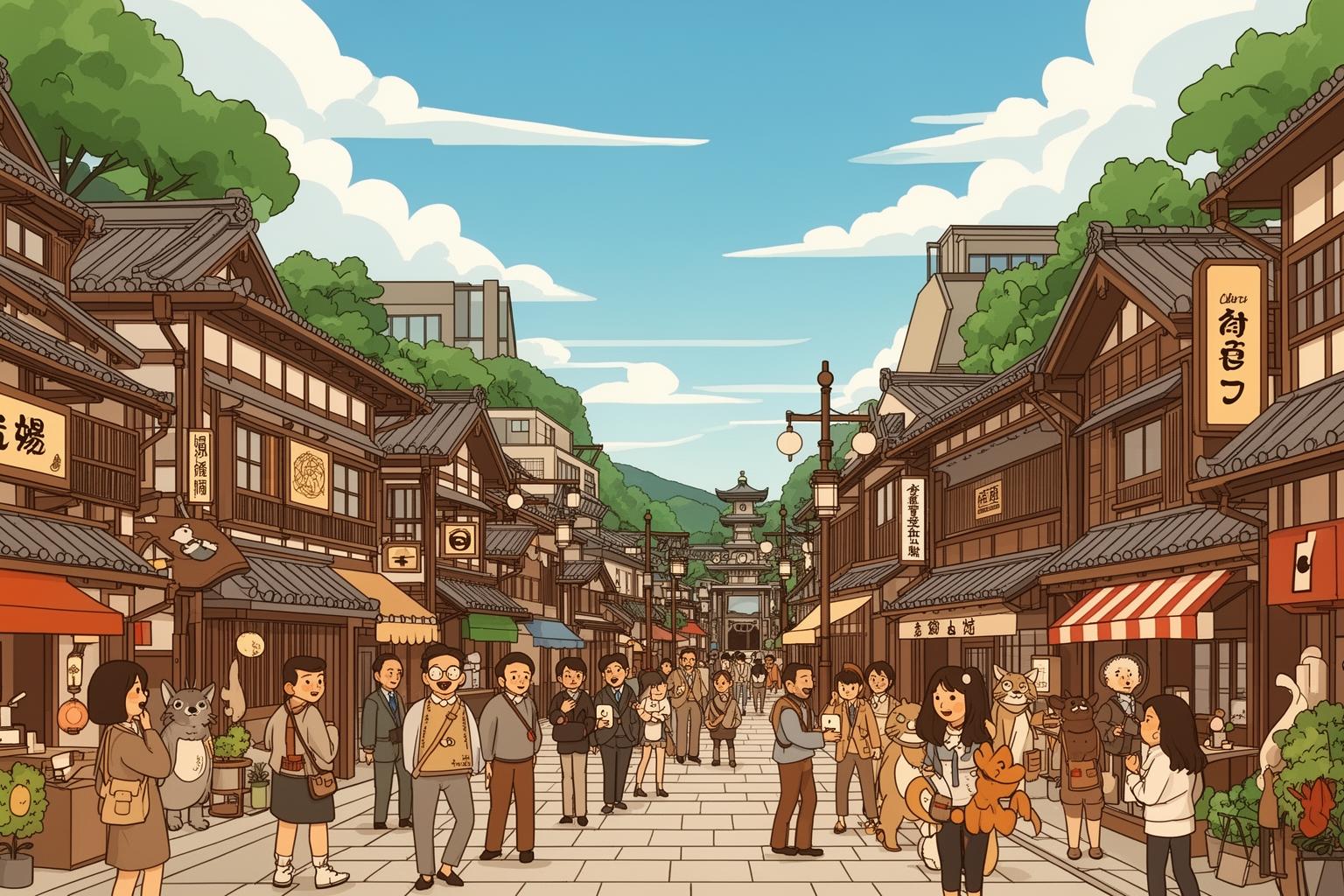
To grasp Kitakagaya’s rental market, you first need to understand its streets—that is crucial. Exiting the Yotsubashi Line at Kitakagaya Station doesn’t drop you into a carefully curated world of trendiness. There are no vintage clothing shops with meticulously weathered signs, nor minimalist coffee spots with queues out the door. The surroundings at first are deceptively—and almost shockingly—ordinary. You’ll find a handful of chain restaurants, a pachinko parlor, a nondescript supermarket. It feels like any other residential enclave in a large Japanese city. But take a five-minute walk, especially eastward toward the Kizugawa Canal or west into the grid of industrial lots, and the vibe shifts markedly. The streets broaden. The buildings grow larger and older. The noise fades to a quiet punctuated not by the buzz of shoppers but by the distant clang of metal, the rumble of trucks, or the sound of wind sweeping across vast, empty asphalt lots.
This is the legacy of Kitakagaya’s history as a major center for shipbuilding and heavy industry—a landscape shaped by practicality, not aesthetics. You’ll spot massive corrugated steel warehouses, rust-streaked sides, windows clouded by decades of grime. Small, family-run metalworking shops still operate, their doors wide open to reveal caverns of machinery. And nestled among them is the art: a giant, colorful mural splashed across a once-monochrome factory wall; a whimsical, slightly surreal sculpture standing in a nondescript public park; a subtle gallery sign beside the roll-up door of a former storage space. This contrast defines Kitakagaya. It hasn’t been cleaned up and rebranded; it’s a place where art exists alongside active industry, where grit itself is part of the gallery.
Kitakagaya’s transformation from industrial hub to creative district was not a spontaneous, organic development like the youthful subcultures emerging in Tokyo’s Shimokitazawa or Koenji. Those neighborhoods grew from a concentration of small shops, live music venues, and affordable apartments that drew young people. Kitakagaya’s shift has been more intentional, more… Osaka. It was largely initiated by the Chishima Foundation for Creative Osaka, linked to the Chishima Real Estate company, which owned many of the old industrial sites here. Rather than demolishing these aging buildings to make generic apartment blocks—the usual Tokyo approach to urban renewal—they recognized another kind of value. They saw untapped potential in these vast empty spaces and began renting them at reasonable rates to artists and creators. This reflects a fundamentally Osakan mindset: pragmatic, resourceful, grounded in a merchant’s instinct to turn underused assets into something productive. It’s less about chasing trends and more about investing long-term in cultural capital. The outcome is a scene that feels less commercial and more foundational, focused less on consuming cool and more on creating it.
This makes living or working in Kitakagaya a distinctly different daily experience from places like Tokyo. A day in Koenji might involve wandering between thrift stores, record shops, and cozy yakitori bars. In Kitakagaya, you encounter wide stretches of quiet, the need for a bicycle to traverse its scattered attractions, and interactions more often with fellow creators in studios than shopkeepers. It’s a place that requires intention—you don’t simply stumble on the scene; you have to actively seek it out, know which unmarked warehouse door conceals a bustling shared studio or which quiet street leads to an innovative installation. This self-reliance and the need to carve out your own place within a vast, tranquil environment defines life here and perfectly embodies the independent, no-nonsense spirit of the city itself.
Decoding the “SOHO Kanō” Apartment: What You’re Actually Renting
So, you’re convinced by the vision and ready to embrace both the challenges and the space. You begin searching rental websites, entering “Kitakagaya” and “artist loft” into the search bar. What you encounter is a bewildering mix of terms and property types that need careful interpretation. While the romantic notion of a spacious, sunlit New York-style loft exists, it’s just one part of a far more intricate picture. Grasping the main categories of creative-use rentals is the essential first step to managing your expectations and finding a space that truly suits your needs.
The Dream: Converted Warehouses and Factories
For many creatives, this is the ultimate prize. These genuine industrial spaces, often labeled “sōko” (warehouse) or “kōjō” (factory) in listings, provide what is rare in Japan: volume. We’re talking about impressively high ceilings, expansive open floor plans of 100 square meters or more, and a raw, unfinished look with concrete floors and exposed steel beams. They are canvases in the truest sense. However, living in one comes with numerous caveats reflecting the Japanese rental market’s emphasis on practicality and safety.
Many are not officially zoned for residential use; these commercial properties occupy a legal grey area for living purposes. Amenities are minimal at best—you might find a basic industrial toilet and a slop sink, but a full kitchen with a gas stove or a bathroom with separate shower and bath is rare. Insulation is often non-existent, resulting in freezing winters and sweltering summers. Utility bills, especially for heating and cooling such vast spaces, can be very high. Additionally, electrical systems may not support heavy residential loads, so installing equipment like a high-powered kiln, multiple amplifiers, or even an air conditioner could require an expensive electrical upgrade negotiated with the landlord.
Renting one of these spaces means embracing a DIY spirit. You’ll be creating your living environment from scratch by using partitions to form rooms, running extension cords for power, and relying on space heaters for warmth. It’s a project rather than just an apartment. This aligns with Osaka’s ethos of self-sufficiency (jiko sekinin, or self-responsibility) but can be a shock to foreigners used to move-in-ready homes. Here, renting means taking on the responsibility of making the space livable.
The Practical Reality: SOHO-Friendly Mansions
Much more common are standard apartments known as “mansion” (a term for concrete apartment buildings) that are designated “SOHO Kanō” (SOHO Possible). These are typical one- or two-bedroom units where the landlord has pre-approved some form of work-from-home business. This option is the most realistic and accessible for many creatives who don’t require the industrial scale of a warehouse. You benefit from modern Japanese apartment features: good insulation, clean and functional kitchen and bathroom, and proper residential utilities.
However, “SOHO Kanō” comes with unspoken rules and limitations. Usually, it is intended for quiet, desk-based work—graphic designers, writers, programmers. If your creative work involves noise, odors, or vibrations—such as woodworking, music production, or oil painting with solvents—you need to be very upfront. A landlord’s approval for “SOHO” doesn’t automatically cover a noisy “atelier.” You may face restrictions on working hours or complaints from neighbors if your work causes disturbance. Walls in Japanese apartments are notoriously thin, and cultural expectations for quiet are strict. This often causes friction and misunderstandings for foreign tenants, as a reasonable daytime noise level to you may be unacceptable to neighbors.
It’s also crucial to differentiate “SOHO Kanō” from “Jimusho Kanō” (Office Possible). The latter often means the space can be registered as a formal business address, which may be necessary for freelancers, but might come with higher rent and a commercial rather than residential contract. Navigating these differences requires clear and direct communication with your real estate agent.
The Hybrid Model: Purpose-Built Atelier Spaces
As Kitakagaya’s reputation has grown, a new rental type has appeared: buildings specifically designed for artists, often called “atorie tsuki chintai” (rentals with atelier). These properties offer the best of both worlds—a comfortable, modern living space combined with an attached or integrated studio built for creative work. Studios might feature reinforced flooring, better ventilation, soundproofing, and higher electrical capacity, designed with the understanding that art can be messy and noisy.
Of course, this convenience and functionality come at a premium. These spaces are among the more expensive options in Kitakagaya and remain relatively rare. They are highly sought after, with vacancies seldom available. Finding one often depends on connections within the local art community or working with a real estate agent specializing in these unique properties. They represent a polished, planned version of the creative life, marking a slight departure from the raw, DIY spirit that originally defined the area.
Ultimately, the kind of space you rent in Kitakagaya depends on your budget, craft, and tolerance for inconvenience. This market demands brutal honesty about what you truly need. Do you want the romantic ideal of a vast, raw warehouse despite its discomforts? Or do you prefer the practical, quiet efficiency of a SOHO apartment, even if it limits your work’s scale? Your choice says much about your approach to art and life, and the market here offers a space for every preference.
The Hunt: Navigating Osaka’s Real Estate Labyrinth for Creatives
Finding your creative space in Kitakagaya isn’t as straightforward as browsing a website and booking a viewing. It involves negotiation, conversation, and the ability to navigate the distinctive cultural landscape of Osaka real estate. Here, the city’s well-known directness and practicality are clearly evident. Your interactions with the fudōsan-ya (real estate agent) and the landlord will differ significantly from the more formal and reserved atmosphere you might find in Tokyo.
The Osaka Real Estate Agent: Your Guide and Gatekeeper
An Osaka real estate agent often has a distinct personality. They can be exceptionally friendly, quite talkative, and strikingly direct. Whereas a Tokyo agent might showcase properties with polished, polite neutrality, an Osaka agent tends to offer their honest, unfiltered opinion. They might tell you a place is too old, too far from the station, or that the landlord is notoriously strict. This frankness isn’t rudeness; it’s a form of practical kindness aimed at saving everyone time by getting straight to the point. This embodies the Osaka business mindset: efficiency and honesty, even if blunt, are highly valued.
For foreigners seeking unconventional space in areas like Kitakagaya, this directness can be a double-edged sword. Expect a series of frank questions such as, “Why Kitakagaya? It’s so inconvenient.” “What will you do in this space? Will it be noisy?” “Are you sure you can manage a place this old/cold/large?” They aren’t trying to discourage you but rather testing your commitment and gauging whether you’re a serious, reliable tenant who understands the reality of the situation. A vague response like “I’m an artist” won’t suffice. You need to be specific: “I am a painter working with acrylics, so there are no strong odors. I work during the day, usually from 9 am to 6 pm, and I don’t use power tools.” Providing this level of detail reassures them that you are responsible and mindful of the potential impact on the property and neighbors.
The Unspoken Rules That Must Be Spoken
Beyond the agent’s questions, you must grasp the fundamental rules of Japanese rentals—often unwritten but absolutely non-negotiable. For a creative tenant, two stand out.
First is noise. The acceptable noise level in Japan is far stricter than in most Western countries. In a typical apartment building, even a “SOHO Kanō” type, activities like playing instruments (including acoustic), singing, or using sewing machines after 8 or 9 pm can prompt complaints. In a converted warehouse, you may have slightly more freedom, but you still have neighbors—residential or industrial—and must remain considerate. The expectation is that you will minimize your acoustic footprint wherever possible. Soundproofing is nearly always the tenant’s responsibility and expense.
Second, and perhaps the most critical, is the concept of “genjō kaifuku” (restoration to original condition). This clause, standard in virtually all Japanese rental contracts, requires you to return the property to the exact state it was in when you moved in, excluding normal wear and tear. For artists, this is a major concern. You cannot drill holes to hang heavy artwork, install new ventilation, or paint walls a different color without explicit written permission from the landlord. Any changes you make, even if viewed as improvements, will likely need to be undone and repaired at your cost when you move out. The “DIY spirit” fostered by Kitakagaya lofts exists only within the strict boundaries of the rental agreement. This is a common source of disputes between foreign tenants and landlords, and misunderstandings can cost your entire security deposit. It’s essential to have a detailed conversation about allowed modifications before signing the contract.
Your Portfolio is Your Application
Since landlords view creative tenants, especially foreigners, as higher risks, you need to proactively establish your credibility. Treat your rental application like a professional proposal. If you have a website or online portfolio, share the link with the real estate agent. If your work is physical, have photos readily available on your phone. Explain your process and demonstrate that you are a serious professional, not just a hobbyist who might be loud or messy. This shows respect for the property and the landlord’s concerns. It shifts the dynamic from one of interrogation to a presentation of a compelling case. In a city grounded in commerce and craftsmanship like Osaka, displaying this level of professionalism and preparation is highly respected. Those who take their work seriously earn respect in return.
The Price of a Blank Canvas: Money, Contracts, and the Osaka Discount
Let’s discuss money. One of the main appeals of Kitakagaya, and Osaka more broadly, is its relative affordability compared to the sky-high expenses of Tokyo. This “Osaka Discount” is genuine and extends to the rental market for creative spaces. However, securing such space requires a significant upfront investment and an understanding of a fee structure that can be confusing to outsiders. The way money is discussed and negotiated also provides insight into Osaka’s merchant spirit.
Breaking Down the Bill: Rent and Initial Fees
First, the yachin (monthly rent). In Kitakagaya, you can find a reasonably sized (e.g., 50-60 square meter) SOHO-friendly apartment for a price that would only get you a tiny one-room studio in a similar creative neighborhood in Tokyo. A large warehouse space, while not inexpensive, still costs only a fraction of a comparable commercial lease in the capital. This price gap is the key driver behind the entire Kitakagaya scene, offering the economic breathing room that creativity needs.
But before you can move in, you must tackle the daunting mountain of initial fees. This usually amounts to anywhere from three to six times the monthly rent and is standard across Japan. The main components are:
- Shikikin (Security Deposit): Typically one to two months’ rent. This refundable deposit covers damages or unpaid rent. For creative tenants, especially in raw spaces, landlords may ask for a higher deposit due to the perceived risk of damage.
- Reikin (Key Money/Gift Money): This fee often confuses foreigners the most. It’s a non-refundable payment to the landlord, typically one to two months’ rent, effectively a “thank you” for allowing you to rent the property. It has complex historical roots. However, a critical Osaka vs. Tokyo distinction exists here: reikin is much less common in Osaka and the broader Kansai region. Many properties, especially older ones or those the landlord wants to fill quickly, have no reikin fee. This represents a major saving and reflects Osaka’s more pragmatic, less speculative rental market. Always seek out “reikin zero” properties.
- Chūkai Tesūryō (Agent’s Commission): This fee pays the real estate agency for their service. It is legally capped at one month’s rent plus tax and is non-negotiable.
- Other Fees: You’ll also be responsible for the first month’s rent upfront, lock-changing fees, and mandatory guarantor company fees and property insurance. The guarantor company is crucial for foreigners as it acts as a Japanese co-signer on your lease, charging a fee usually equal to 50-100% of one month’s rent.
The Art of the Deal: Negotiation in Osaka
In Tokyo’s fiercely competitive rental market, negotiation is rare—the price is fixed. In Osaka, the merchant city, there’s usually more room to maneuver. This doesn’t mean you can haggle over the monthly rent like at a flea market, but certain elements of the deal can be negotiated, especially if a property has been vacant for some time. Osaka’s direct and pragmatic business culture means a reasonable proposal will at least be considered.
A common negotiation tactic is requesting a period of “free rent” (furī rento). Asking for the first month free can help offset hefty initial costs and is a frequent incentive landlords offer to fill vacancies quickly. Another negotiable point is the reikin. If a property lists reikin, your agent might ask the landlord to waive it in exchange for quickly signing the lease.
Your chances of success depend on your approach: frame it as a win-win situation. For example: “I am a professional artist seeking a long-term studio space and am ready to sign a two-year contract immediately if you would consider waiving the reikin.” This conveys that you are a serious, stable tenant, making you more appealing. Such straightforward, business-like negotiation is understood and often respected in Osaka. It’s a mutual-interest dance, not an adversarial confrontation. Working with a knowledgeable agent who understands the local market and has good connections with landlords is essential to navigating this process effectively.
Living the Kitakagaya Life: Beyond the Studio Walls

Securing your space is only the beginning. Living daily in Kitakagaya blends quiet isolation with a vibrant, focused community in a way that is uniquely its own. This lifestyle demands a proactive attitude and an appreciation for a slower, more deliberate urban rhythm. It is not the convenient, 24/7 hyperactive environment of central Osaka or Tokyo.
Finding Your People: Community vs. Isolation
On a typical Tuesday afternoon, much of Kitakagaya’s streets are deeply quiet. There are no crowds or bustling cafes. This can be startling if you’re accustomed to the constant stimulation found in a typical Japanese city. The creative community here is very much alive, but it thrives behind the closed doors of studios and galleries. It’s not something you can simply absorb by wandering around; engagement is necessary.
That means visiting local art spaces. Places like the renovated shipyard complex Creative Center Osaka, the contemporary art gallery Mösc, or the artist-run space Kagoo serve as community hubs. Attending exhibition openings and open studio events is the main way to meet fellow creators. The atmosphere is typically collaborative and unpretentious. People come here to work and respect others doing the same. It’s a community founded on shared purpose rather than shared consumption. Conversations often dive deeply into process, materials, and the challenges of making a living as a creative in Japan. This is a refreshing contrast to more superficial social scenes elsewhere. But it takes effort. If you tend to wait for an invitation, Kitakagaya may feel lonely. However, if you’re willing to knock on a studio door and introduce yourself, you’ll discover a warm and supportive network.
The Practicalities: Supermarkets and Bicycles
Life in Kitakagaya centers on practicality. This isn’t a neighborhood of curated lifestyle boutiques or artisanal bakeries. Your daily shopping will likely be done at Super Tamade, a local Osaka supermarket chain known for its loud neon signs, blaring in-store jingle, and incredibly low prices. It’s an Osaka institution—chaotic and unglamorous, yet effective. This perfectly symbolizes the neighborhood itself: valuing function over form and substance over style.
Getting around also demands a different mindset. Although the Yotsubashi Line offers excellent access to Namba and Umeda, Kitakagaya is extensive and spread out. A bicycle is not a luxury but an essential tool. It’s the most efficient way to navigate the wide streets, carry art supplies, and explore the dispersed studios, galleries, and cafes. Cycling along quiet canals, past old factories and new murals, becomes a daily ritual—a way to connect with the area’s industrial landscape. It encourages a slower, more attentive engagement with your surroundings, sharply contrasting with the underground, time-distorting experience of relying solely on Tokyo’s subway.
Daily life here is a conscious trade-off. You give up the convenience and variety of a central location in exchange for the luxury of space and quiet. This lifestyle attracts those content with a smaller, more intentional world, who find energy not in the noise of the crowd but in the focused calm of their own studio.
The Osaka Mindset in Concrete and Steel: Why Kitakagaya Could Only Happen Here
Ultimately, the story of Kitakagaya’s rental market is a reflection of Osaka itself. The neighborhood’s past, present, and future serve as a tangible embodiment of the city’s core values. It’s an urban experiment that simply couldn’t unfold the same way in Tokyo, and understanding why reveals the essence of what makes Osaka distinct.
Pragmatism Over Polish
Tokyo is a city fixated on the new. Buildings are demolished and reconstructed in an endless cycle, with a constant focus on crafting a polished, perfect, and often sterile urban appearance. Osaka, on the other hand, embraces a deep-rooted pragmatism. An old, partly vacant warehouse isn’t viewed as an eyesore to be torn down but as a valuable asset with potential. Why waste a sound structure? This outlook, shaped by centuries as a city of merchants and craftsmen, prioritizes utility and ingenuity. The Chishima Foundation’s choice to repurpose its industrial properties for artists is a prime example of this. It was a practical response to a business challenge that unintentionally created a cultural hub. This emphasis on function over superficial aesthetics gives Kitakagaya its raw, genuine character.
The Enduring “Akindo” Spirit
The spirit of the akindo, the merchant, runs deep through Osaka’s identity. It’s a spirit of entrepreneurship, opportunity-seeking, and deal-making. The entire Kitakagaya initiative represents a long-term cultural investment, a belief that fostering creativity will ultimately yield benefits, not only in reputation but in a revitalized community. On a micro level, this spirit is evident in real estate negotiations, where fair proposals are always considered. There’s a mutual understanding that a successful deal benefits both parties. This contrasts with Tokyo’s more rigid, top-down business culture, where rules tend to be inflexible. Osaka’s commercial DNA makes its systems, including its rental market, slightly more adaptable and human-scaled.
A Healthy Skepticism of Hype
If Kitakagaya were located in Tokyo, it would likely have been branded, marketed, and overwhelmed by commercial activity within a few years, diluting its original character with hype. People in Osaka are well known for their skepticism toward trends. They possess an ingrained resistance to anything that feels overly polished or artificial. Kitakagaya’s growth has been slow, organic, and driven by the creators themselves, rather than by marketing efforts. It feels authentic because it truly is. It’s a working neighborhood, not a creativity theme park. This fosters a more sustainable and genuine community, capable of weathering inevitable cultural shifts.
Finding a place to live and work in Kitakagaya is therefore more than a simple real estate transaction. It’s about aligning yourself with this uniquely Osakan mindset. It requires self-reliance, a readiness for direct and honest communication, an eye for potential in the overlooked, and a deep appreciation for the beauty of the unfinished. It’s not the easiest route, nor the most convenient lifestyle. But for the creative spirit who values substance over style and longs for the increasingly rare gift of physical and mental space, Kitakagaya presents a compelling opportunity. It is a blank canvas, not only for art but for a different kind of life in Japan. It embodies the pragmatic, unpretentious, and fiercely independent spirit of Osaka, expressed through concrete, steel, and vibrant splashes of paint.