Step off the Yotsubashi line at Kitakagaya station, and the air changes. It’s not the electric hum of Umeda or the chaotic symphony of Namba. Here, the silence is punctuated by the distant clang of metal, the rumble of a lone truck down a wide, empty street. The smell is different, too—a mix of sea salt from the nearby port and the faint, metallic scent of industry. This is Osaka’s old heart, a grid of low-slung warehouses, dormant factories, and quiet residential blocks that once powered the city’s post-war boom. To the uninitiated eye, it might look forgotten, a relic of a bygone era. But look closer. Peer into the cavernous mouths of those old steelworks and shipyards. You’ll see a flicker of a different kind of fire. You’ll see art. You’ll see life. You’ll see the future of Osaka’s creative spirit being forged in the crucible of its past.
This isn’t a story about gentrification, not in the way you might see it in Brooklyn or East London. This is a story about adaptation, a deeply Osakan trait. It poses a question that gets to the very soul of this city: What do you do when the world changes and leaves your old tools behind? Do you tear them down and build something shiny and new, erasing the past? Or do you pick up those old, heavy tools, feel their weight in your hands, and figure out how to make something entirely different with them? Tokyo often chooses the former. Osaka, especially here in Kitakagaya, is all about the latter. This neighborhood is a living testament to the city’s pragmatic, unpretentious, and relentlessly resourceful character. It’s where the city’s blue-collar grit meets the unbridled energy of its artists, creators, and dreamers. The result is a landscape of art-infused cafes and collaborative workspaces that feel fundamentally different from their polished counterparts in other cities. They are not just places to drink coffee or rent a desk; they are windows into the Osaka mindset, a mindset that values substance over style, community over hierarchy, and a good idea over a big budget. This is your guide to understanding that world, not as a tourist, but as a resident trying to decode the city’s rhythm. Welcome to Kitakagaya.
To fully immerse yourself in this unique fusion of creativity and industry, be sure to explore our detailed guide to the hidden art district and industrial-chic cafes of Kitakagaya.
The Kitakagaya Mindset: Grit, Grime, and Glorious Reinvention
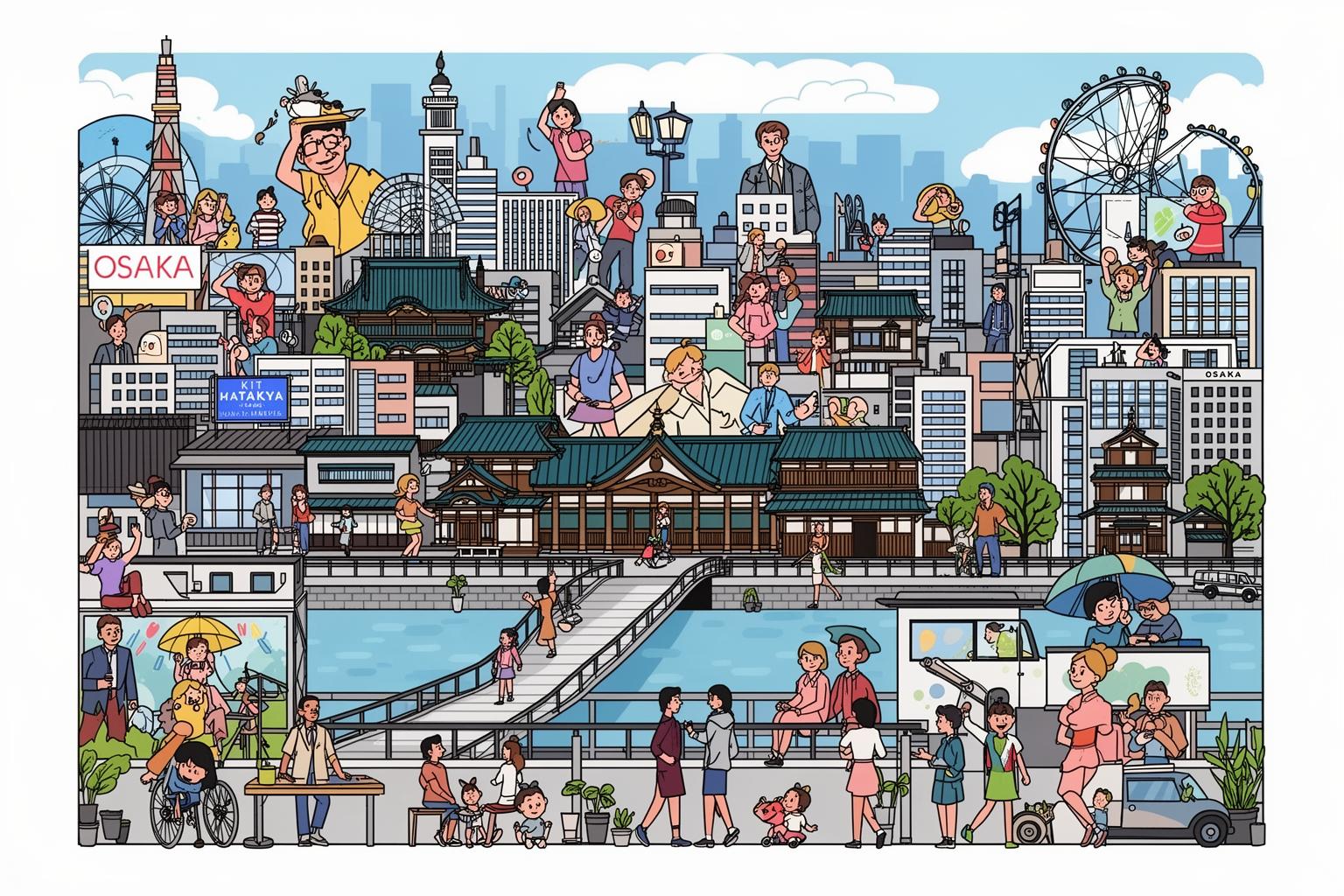
To grasp the creative heartbeat of Kitakagaya, you first need to understand the foundation of the place. This isn’t a neighborhood built for beauty; it was built to function—intensely so. Located in Suminoe Ward, it played a crucial role in the industrial machinery of Osaka, a hub for shipbuilders, steelworkers, and laborers. Its aesthetic, if it can be called that, is rooted in pure practicality: concrete, steel, corrugated iron. Broad streets designed for trucks, not pedestrians. The daily rhythm was set by factory whistles, not department store chimes. This history is ingrained in the very pavement and fundamentally shapes both the community’s character and the art that now flourishes there.
From Shipyards to Studios: The DNA of a Working-Class Town
The local character here directly stems from that industrial heritage. There’s a bluntness and lack of pretense that might surprise those used to Tokyo’s more nuanced social exchanges. People prioritize utility. Does it work? Is it useful? Is it honest? These are the questions that matter most. This practical mindset is a hallmark of Osaka, but it’s even more pronounced in former industrial areas like Kitakagaya. The art that emerges here mirrors this sensibility: often large-scale, made from industrial materials, rarely delicate or purely ornamental. It carries a weight and presence that feels earned, not simply imagined.
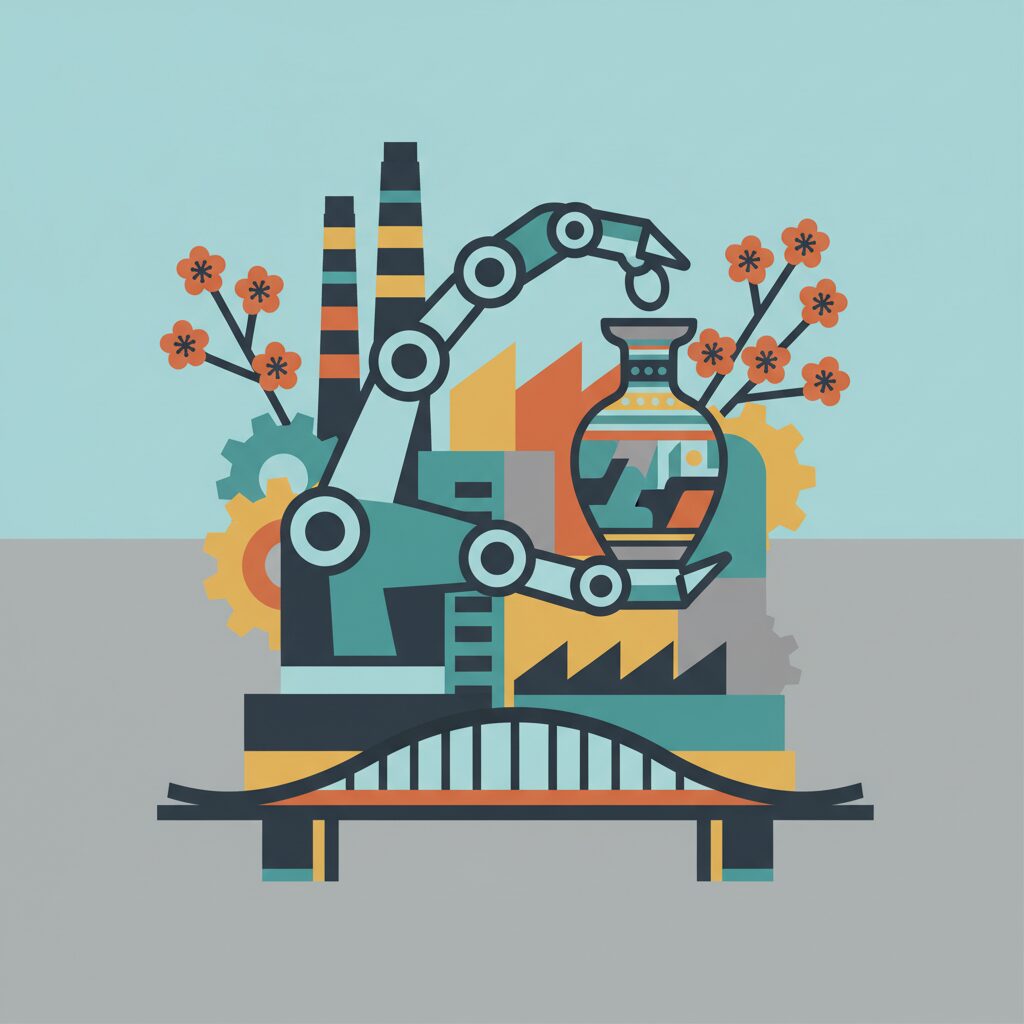
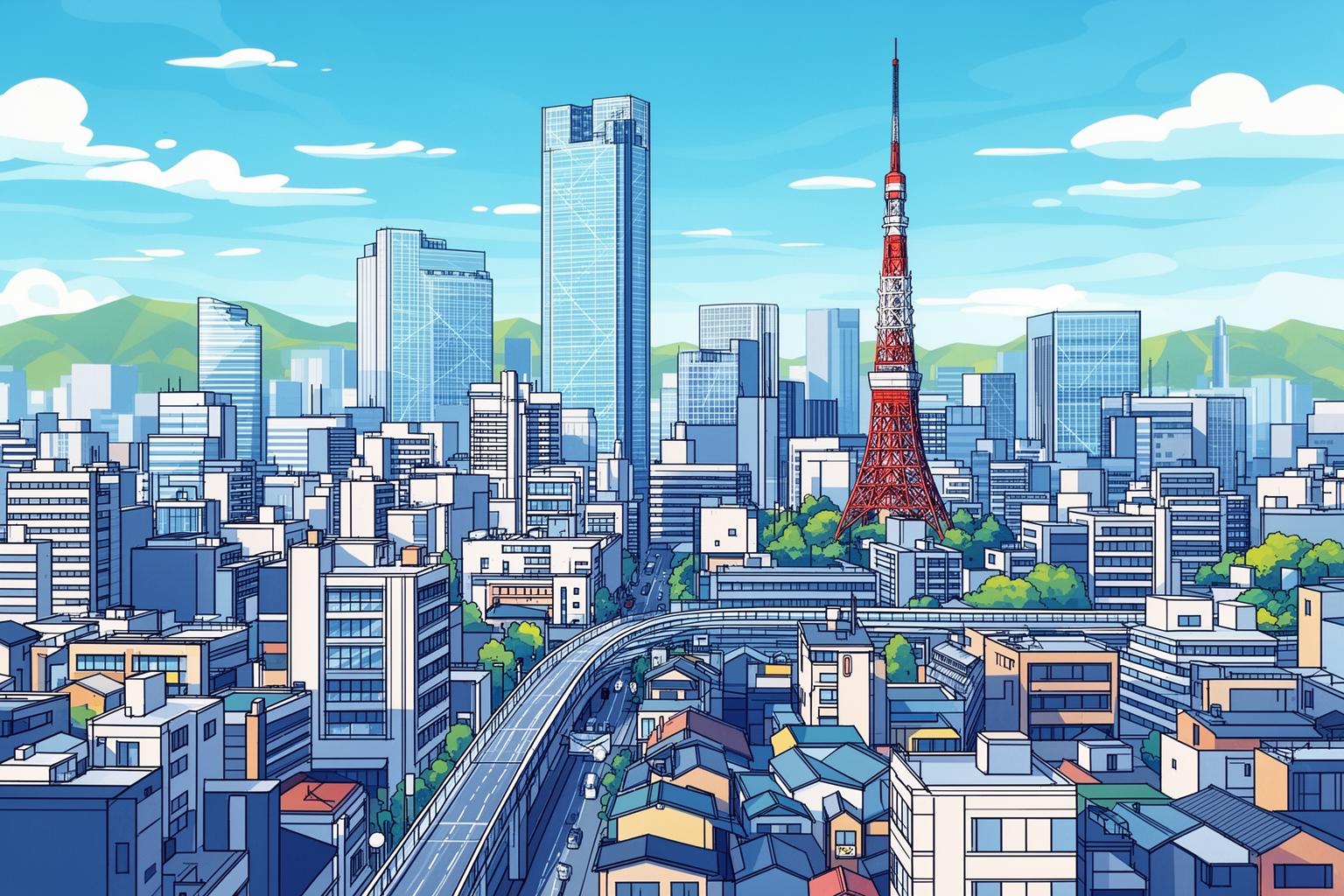
By contrast, Tokyo Bay’s redevelopment projects, such as Odaiba, are top-down corporate visions of the future—carefully planned, gleaming with steel and glass. While impressive, they can feel sterile and disconnected from the city’s organic past. Kitakagaya’s revival is quite the opposite. It’s grassroots, driven not by developers with slick presentations, but by artists recognizing potential in decay. They settled in abandoned warehouses not as part of a branding effort, but because that’s what they could afford. The result is a revival that’s messy, chaotic, and deeply human. Old factory signs rust on the walls while new murals and installations coexist beside them—not replacing, but conversing. It’s a visual dialogue between past and present, embodying an Osaka philosophy: don’t discard the old, just find new ways to use it.
Why Here? The Economics of Creative Freedom
The most crucial factor behind Kitakagaya’s creative surge is a principle familiar to any Osakan: value—specifically, affordable rent. This cannot be overstated. Osaka, a city of merchants, embodies the akindo shuhon (merchant spirit) of spotting opportunities, assessing value, and acting decisively. For generations of artists pushed out by Tokyo’s exorbitant market, Kitakagaya’s landscape of akiya (vacant buildings) and underused warehouses offered the ultimate chance: space.
Space to think. Space to build. Space to create a mess. And most importantly, space to fail. Tokyo’s high-pressure creative industry demands commercial success from the start, with failure’s cost often devastating. This breeds a certain kind of creativity—frequently brilliant but cautious and market-oriented. In Osaka, especially Kitakagaya, low overhead provides a safety net. It nurtures a culture of experimentation and passion projects. Artists can afford to take risks on bold sculptures or experimental performances because their studio rent doesn’t force them to compromise. This economic reality fuels the area’s creative freedom and attracts a particular type of person: resilient, resourceful, and more focused on the integrity of their work than on brand polish. It’s a mindset perfectly aligned with Osaka’s identity as a city of pragmatists and hustlers, always having to be a bit cleverer and more resourceful than their counterparts in the capital.
The New Wave of Creative Sanctuaries: Cafes Beyond Coffee
The cafes that have emerged throughout Kitakagaya serve as the public face of this transformation. However, if you enter expecting a quiet, cozy retreat with latte art and soft jazz, you’re likely to be surprised. These venues focus less on crafting the perfect cup of coffee and more on functioning as versatile hubs for the creative community. They act as living extensions of the warehouses they occupy, blending the boundaries between gallery, workshop, and public square. They form the social fabric that connects artists and makers, fueled by caffeine and a shared purpose.
The Warehouse Cafe: Beyond Exposed Brick
Imagine pushing open a heavy, sliding corrugated door like those found on loading docks. Inside, the space is vast. The ceiling soars three stories high, crossed by old steel beams. The concrete floor still shows scars and oil stains from its past. This is the quintessential Kitakagaya cafe. It’s not a mere imitation of industrial chic—it’s the authentic article. The furniture reveals Osaka’s resourcefulness: heavy wooden tables made from reclaimed scaffolding, chairs salvaged from a closed school, and lighting fixtures fashioned from old pipes.
The atmosphere is far from peaceful. The acoustics of the enormous space amplify every sound: the hiss of an espresso machine, the boisterous discussion of designers debating blueprints, the screeching grinder from the adjoining metal workshop. This is a place of activity, unapologetic about the noise. The art on the towering concrete walls is equally bold—not a collection of serene landscapes but often political and occasionally uncomfortable. Each piece is for sale, with prices handwritten on masking tape beside them.
This setting reveals something profound about Osaka. There’s an implicit understanding that life is messy and creativity is not a neat process. Osakans embrace the blending of categories. A space need not serve only one purpose. A café can double as a gallery. A gallery can function as a workshop. A workshop can host performances. Why not? It’s practical and sensible. This multifunctionality contrasts sharply with Tokyo’s hyper-specialization, where establishments have highly specific, carefully curated purposes. In Kitakagaya, spaces are fluid, shaped by the people using them rather than a fixed business model. Visitors range from paint-splattered artists grabbing coffee, to local factory workers on breaks, to freelance programmers typing away. There’s no dress code or social hierarchy; your presence is welcomed as long as you respect the space. This democratic approach to public space stems from a working-class culture indifferent to pretension.
The “Misedashi” Gallery & Coffee Stand: Blurring Public and Private
As you explore the backstreets, you’ll find another unique feature: studios that also serve, informally, as coffee shops. This is a contemporary twist on the traditional misedashi practice, meaning “showing the shop”—displaying goods or skills publicly. In Kitakagaya, this concept is taken to its most literal and transparent limit. A sculptor, painter, or fashion designer might have their studio door wide open to the street. Just inside sits a modest setup on a workbench: a pour-over coffee dripper, a kettle, and a few mugs.
There may be a small, hand-painted sign reading “Coffee ¥300,” or no sign at all. The coffee isn’t the main business; it’s an invitation, a social lubricant. It offers curious passersby a legitimate reason to step inside, crossing from public street into private creative space. The interaction that follows is what really matters. You’re not just a customer served coffee; you’re a guest welcomed into someone’s world. The artist may chat about their current work while preparing your coffee, ask where you’re from or what you do. The transaction is secondary to the connection.
This stands in stark contrast to the hushed, reverent atmosphere typical of high-end galleries in Tokyo’s Ginza, where art is guarded by protocol and social distance. In Kitakagaya, art is demystified and brought down to street level. It is something actively made, covered in dust and fingerprints, rather than pristine and untouchable on a white wall. This accessibility exemplifies Osaka culture, where people value genuine human interaction over status and formality. The open-door coffee stand perfectly expresses this: a simple, honest exchange placing artist and public on equal footing.
Coffee as a Conversation Starter
It’s important to recognize that in these spaces, coffee quality often matters less. It might be excellent single-origin and expertly brewed—or just average. What counts is its function. Coffee acts as a prop, a tool to start dialogue. This is a classic Osaka communication style. Deals are sealed over food and drink; friendships form in the lively noise of an izakaya. Similarly, a simple cup of coffee in an artist’s studio becomes a bridge.
The directness of the conversation can surprise many foreigners. The artist may point to a chaotic abstract painting and ask, “What do you think of this? Be honest.” They are not fishing for compliments or sophisticated art criticism, but for a gut reaction and straightforward human response. This is the famous Osaka directness bypassing the polite but often opaque social veneer (tatemae) prevalent in Japanese communication, especially in Tokyo. For the artist, this raw feedback is valuable data. For you, it’s an opportunity to engage meaningfully and feel like part of the creative process rather than just a passive consumer. It’s a small yet powerful example of how Osaka’s culture favors sincere engagement over superficial pleasantries.
The Osaka-Style Coworking Space: Community Over Cubicles
Just as the cafes of Kitakagaya have transformed the public social space, its coworking spaces have redefined the modern workplace. Forget the sleek, minimalist style of the global coworking giants, with their glass-walled meeting rooms, ergonomic chairs, and relentlessly upbeat motivational posters. Kitakagaya’s coworking spaces are a wholly different creature. They share the same essence as the warehouse cafes—a dedication to function, community, and the tangible act of creation.
The Repurposed Factory Floor: Where Ideas Get Messy
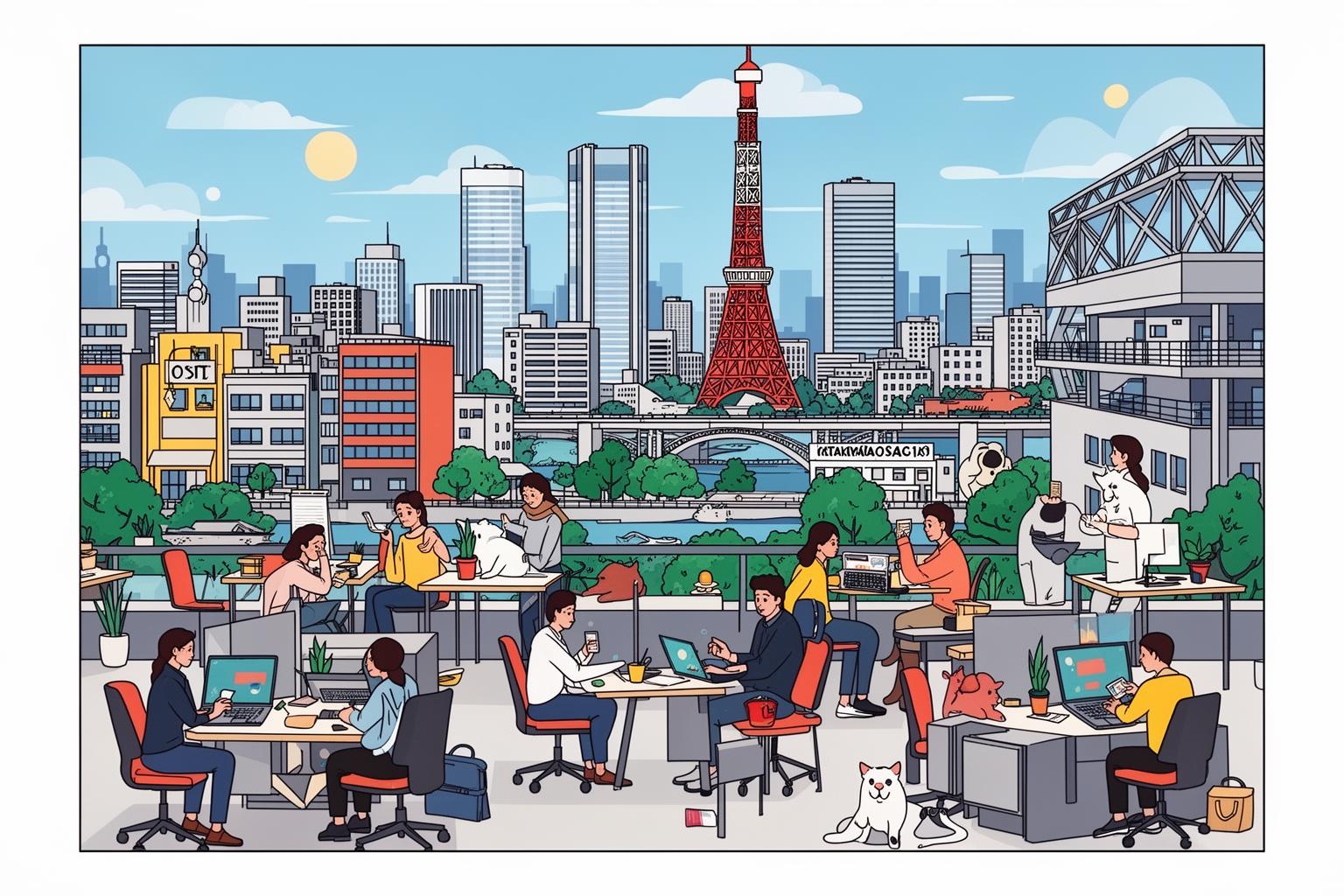
Step into a coworking space here, and you’re likely to find yourself on a vast, open-plan factory floor. Rather than being divided by cubicles, the space is organized by function and, quite frankly, by messiness. In one corner lies the “clean zone”: rows of desks where graphic designers, writers, and programmers work quietly on their laptops, accompanied by the soft click of keyboards. Move to the other side of the building, and you enter the “dirty zone,” where the sounds and smells of making are vivid and immediate. You might spot a furniture maker sending sparks flying from a welding torch, a textile artist running a noisy screen-printing press, or a sculptor carving a huge block of wood, filling the air with sawdust.
This physical fusion of digital and manual work serves as a powerful statement of values. It embodies a core principle of the Osaka mindset: a profound respect for craftsmanship and the hands-on act of making. In many modern economies, there is a growing divide between “knowledge work” and physical labor. Kitakagaya’s coworking spaces reject this split entirely. Here, the belief is that innovation occurs where disciplines intersect. A web developer wrestling with a user interface challenge might find insight by watching a potter shape clay on a wheel. A furniture maker might receive a crucial business tip from the marketing consultant at the adjacent desk. The environment is deliberately crafted to encourage this cross-pollination. It acknowledges that creativity isn’t always a neat, straightforward process; sometimes you need to get your hands dirty.
“Maido!” as a Business Model: Harnessing the Local Network
“Maido!” It’s a word you’ll hear countless times a day in Osaka. It serves as a greeting, a thank you, and a casual acknowledgment of a business relationship, all wrapped into one cheerful, down-to-earth exclamation. It provides the soundtrack of Osaka’s commerce and perfectly captures the spirit of its coworking spaces. Collaboration here is not a formal, scheduled event held in reserved meeting rooms. Instead, it’s an ongoing, informal, and often boisterous process.
You won’t see people emailing someone sitting just a few feet away. Instead, you’ll hear them calling across the spacious room: “Suzuki-san, you know about laser cutters, right? Can you take a look at this for a moment?” There’s a strong sense of shared workshop and community. Physical and intellectual tools are freely exchanged. Someone with a 3D printer will run a job for a neighbor, often in return for coffee or a favor down the line. A programmer might assist a less tech-savvy member with setting up their website. This isn’t driven by formal rules, but by the unwritten codes of Osaka’s community-centered culture. There’s a deep conviction that a rising tide lifts all boats—that helping your neighbor succeed ultimately benefits everyone. It feels less like a random mix of competing freelancers and more like a tightly knit guild.
Tokyo vs. Osaka Coworking: A Contrast in Culture
This relational mode sharply contrasts with the typically transactional nature of coworking in Tokyo. In Tokyo, the offer is straightforward: pay for a desk, fast Wi-Fi, and a calendar full of formal networking events. These events often resemble a series of polite, efficient job interviews, where people exchange business cards and deliver elevator pitches. It’s about building a professional network to advance individual careers.
In Kitakagaya coworking spaces, networking happens naturally, over shared lunch tables and after-work drinks at a local tachinomi (standing bar). Relationships are founded on personality and trust, not just professional credentials. Here, the concepts of giri (social obligation) and ninjo (human feeling) come into play. People in Osaka are far more inclined to collaborate with or hire someone they like and trust personally—even if another candidate looks stronger on paper. Your reputation as a dependable, helpful community member is your most valuable asset. Foreigners who approach this environment with a purely transactional, Western business mindset often struggle to make headway. To thrive here, you must invest time in cultivating authentic human connections. You have to become part of the collective fabric.
Decoding the Kitakagaya Code: Unspoken Rules for Foreign Residents
For a non-Japanese resident, navigating this distinctive environment can be both thrilling and perplexing. The typical rules of Japanese social etiquette may feel relaxed or nearly absent, yet they are replaced by a different, unwritten set of local norms. Understanding these is essential not only for working or living in a place like Kitakagaya but also for genuinely connecting with its community.
Don’t Wait for an Invitation, Make One
One common misconception foreigners have about Osaka is confusing its straightforwardness with automatic friendliness. While the doors to studios and workshops may literally be open, it doesn’t mean someone will immediately come out to greet you formally. People are busy and focused on their work. The open door is a passive invitation; it’s up to you to be the active participant. You must take the initiative, show curiosity, and start the conversation.
This can feel intimidating, but it’s vital. Waiting politely to be noticed often leads to being overlooked—not out of rudeness, but because the assumption is that if you needed something, you would speak up. The key is to be direct and sincere. Equip yourself with a few simple phrases, preferably in the local Osaka dialect. A heartfelt “Meccha kakkoii yaan!” (“This is so cool!”) when admiring a piece of art is far more effective than a perfectly polite, textbook phrase. Show genuine interest, and you’ll receive the same in return. Ask straightforward questions like, “What is this made of?” or “How long did it take to make?” This shows respect for the work and opens the door to a real conversation.
Embrace the “Chau-Chau” Culture of Direct Feedback
Osaka-ben is known for the phrase “chau nen,” a versatile expression meaning something like “no, that’s not it” or “you’re wrong.” This reflects a cultural comfort with direct contradiction and debate that can be surprising. In creative or business contexts, an Osakan collaborator won’t hesitate to tell you if they think your idea is bad. “Sore wa akan,” they’ll say. “That won’t work.”
For foreigners used to the more indirect, harmony-focused communication styles found elsewhere in Japan (and many Western cultures), this can feel like a personal criticism. It’s important to understand it’s almost never personal. It’s about efficiency. Time is precious, and in the Osaka mindset, it’s better to quickly and honestly identify a problem than to politely avoid it. This direct feedback is actually a form of respect. It shows the person takes you and your work seriously enough to engage critically. Learning to accept this feedback without defensiveness and to offer your own opinions honestly is a key skill for integrating into Osaka’s professional and creative environments. It builds trust and leads to stronger, more effective outcomes.
Your Lunch Money is Your Social Capital
In Kitakagaya, as throughout Osaka, the real networking and relationship-building doesn’t happen in the office or studio. It happens over a hot bowl of ramen at a small diner or with beers and kushikatsu at a crowded izakaya after work. These shared meals are not optional social events; they are a fundamental part of the business and creative process.
When someone from your coworking space says, “We’re grabbing lunch, want to join?” the only appropriate answer is “yes.” Repeatedly declining these invitations is social suicide. It signals you’re not interested in being part of the community. It’s during these informal gatherings that professional facades come down. People talk about their families, hobbies, and struggles. This is where you build the foundation of trust—ninjo—that will support your professional collaborations later. It’s where you might hear about a new, unannounced project or get introduced to a valuable contact. In Osaka, business flows through personal relationships. Investing your time and lunch money in cultivating these connections is the most important investment you can make.
Is Kitakagaya a Blueprint for Osaka’s Future?
The story of Kitakagaya goes beyond being merely a charming narrative of urban renewal. It serves as a microcosm of Osaka’s ongoing struggle to define its identity within 21st-century Japan. The tale raises essential questions about development, culture, and the meaning of a modern city. As the area attracts increasing attention, it stands at a crossroads that will shape its future and potentially provide a model for other post-industrial cities.
The Double-Edged Sword of “Cool”
There is an undeniable irony at the core of Kitakagaya’s success. The very qualities that initially drew artists—its grit, isolation, and affordability—are now endangered by its rising reputation as a “cool” neighborhood. As magazine features emerge and Instagrammers capture its photogenic murals, the forces of gentrification start to gather. Developers may move in, rents may soar, and the original artists and makers could be forced out to seek the next overlooked neighborhood. The area risks losing its raw, creative spirit and becoming another sanitized, commercialized art district, a shadow of its former self.
Yet, the spirit of Osaka provides a strong built-in resistance to this. There is a profound skepticism toward anything that feels overly polished, corporate, or reminiscent of Tokyo. The local community ardently guards its identity. They did not create this ecosystem to sell it off to the highest bidder. There is a deliberate effort to keep development local and organic, prioritizing community needs over outside investors’ demands. Whether this cultural immune system is strong enough to withstand powerful economic forces remains uncertain, but the battle to preserve the area’s authenticity is a genuine and distinctly Osaka struggle.
A Sustainable Model for Urban Revival
In the end, Kitakagaya’s path offers a compelling alternative model for urban revival—one based not on demolition and displacement but on adaptation and integration. This approach is pragmatic, cost-effective, and deeply human-centered—all hallmarks of Osaka’s way. It shows that a city’s industrial heritage is not a liability to erase but an asset to redefine. The old factories and warehouses are more than vacant buildings; they hold memories, history, and character, offering a strong foundation for creating something new.
For foreigners choosing to build a life in Osaka, a place like Kitakagaya provides a profound opportunity. Living or working here is more than just securing an affordable apartment or a trendy studio. It means plugging directly into the city’s vibrant, beating heart. It’s a chance to join a community that cherishes practical skills, straightforward communication, and collective strength. It’s not always easy—it can be noisy, messy, and brutally honest—but it is undeniably authentic. Kitakagaya is still being shaped, a canvas far from complete. For any creative spirit, there is no more thrilling place to be.