Ask any foreigner to paint a picture of Osaka, and the canvas will likely explode with color. They’ll sketch the electric, chaotic glow of Dotonbori’s neon signs, the towering, goofy grin of the Tsutenkaku Tower, the boisterous shouts of vendors in the Kuromon Market. It’s a city defined by its kinetic energy, its unapologetic commercialism, and a palpable, almost theatrical, human presence. Osaka, in the popular imagination, is loud. It’s a feast for the senses, yes, but a relentless one. And for many, that’s the entire story. This perception creates a fundamental misunderstanding, a belief that Osaka lacks a space for quiet contemplation, for civic grace, for the kind of refined elegance one might more readily associate with its historical rival, Tokyo, or its serene neighbor, Kyoto. But that’s because they haven’t walked through Nakanoshima.
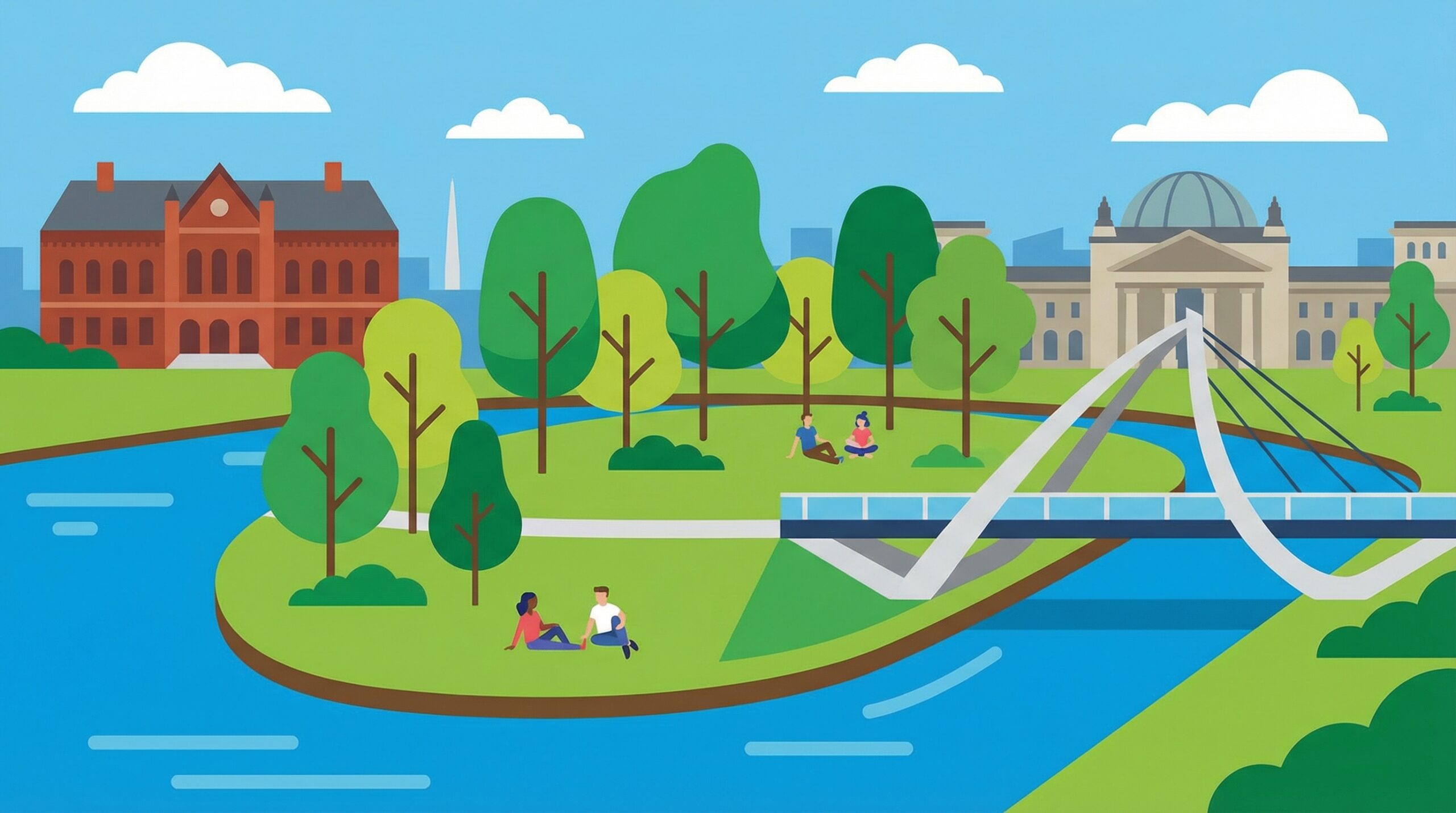
Nakanoshima is Osaka’s quiet rebuttal. It’s a long, slender sandbank, a 3-kilometer-long island nestled between the Dojima and Tosabori rivers, right in the administrative and economic heart of the city. This is not a tourist attraction in the conventional sense. It’s something far more integral: the city’s heart and soul, rendered in stone, steel, water, and roses. It’s an open-air museum of the city’s ambitions, a testament to a civic pride that feels distinctly different from the state-sponsored grandeur of Tokyo. To understand Nakanoshima is to understand the soul of the Osaka merchant, the mindset that built this metropolis not just with commerce, but with a profound sense of public duty and cultural aspiration. It’s where the city exhales. It’s where the daily rhythm shifts from the frantic beat of business to the gentle lapping of the river against stone walls. This island reveals the city’s dual nature: a place that can haggle and hustle with the best of them, but also one that has invested its wealth, for over a century, in creating a space of profound beauty and intellectual nourishment, open to all. For anyone truly wanting to grasp the complex character of Osaka, a stroll from one end of this island to the other is more revealing than a dozen nights out in Namba.
After experiencing the serene contrast of Nakanoshima, you can explore the bustling modern hub of the city by checking out our guide to the best coworking spaces and cafes in Umeda.
The Island as a Statement: Civic Pride vs. Centralized Power
To truly understand Nakanoshima, one must first recognize the fundamental difference between Osaka and Tokyo. Tokyo is a city defined by centralized power. Its identity was shaped as the residence of the shogun, and later, the Emperor and the national government. Its grandest projects often seem imposed from above, showcasing national or corporate strength. The expansive government ministries in Kasumigaseki, the striking profile of the Tokyo Metropolitan Government Building, and the careful restoration of Tokyo Station by JR East—all symbolize a powerful central authority molding the city’s appearance. They are impressive, yet they communicate the voice of institutions.
Nakanoshima, however, speaks a distinct language. It embodies the voice of the citizen, the merchant, and the philanthropist. The island’s most iconic buildings were not gifts from a remote government; they were created by the will of the city’s own people. This is the essential difference that reveals the Osaka mindset. The city’s history isn’t one of samurai lords and imperial courts, but of rice merchants, stockbrokers, and industrialists. Their influence was economic, and their legacy was manifested not in castles, but in civic institutions. They practiced a form of capitalism deeply entwined with civic responsibility, believing that private wealth should serve the public good.
The Story of a Building, The Soul of a City
The most striking example of this spirit is the Osaka Central Public Hall. With its splendid red brick exterior, domed roof, and neo-renaissance elegance, it proudly stands at the island’s eastern tip, more reminiscent of a European opera house than a Japanese municipal hall. A tourist may admire its beauty and move on, but for locals, it is a monument to a uniquely Osakan narrative. This building exists because of one man, Einosuke Iwamoto, a highly successful stockbroker in the early 20th century. Inspired during a trip to the United States by grand public buildings funded by American philanthropists, he declared that Osaka, Japan’s industrial heart, deserved no less. He pledged a then-astonishing sum of one million yen—his entire personal fortune—to the city for its construction.
Yet, his story is not simply one of generosity. The stock market is volatile. During World War I, it crashed, and Iwamoto lost everything. Confronted with ruin and unable to face failing his promise to the city he cherished, he took his own life in 1916, two years before the hall’s completion. Still, his vision was so powerful that the city and its leaders ensured it was realized exactly as he had envisioned. Today, the Kōkaidō is more than just an architectural landmark. It is a sacred space, a symbol of ultimate devotion to one’s city. It illustrates that in Osaka, a promise made to the public is a debt of honor, and the city’s cultural landscape was built on the passion and sacrifice of its own people. Such a story is unlikely to be found behind a government building in Tokyo. Here, power feels personal, emotional, and deeply rooted in the local community.
A Library for the People
A short walk from the Public Hall stands another Taisho-era treasure, the Nakanoshima Library. This dignified neo-baroque building with its soaring colonnaded entrance resembles a temple dedicated to knowledge. Like the Public Hall, it was largely funded by private generosity, primarily from the vast wealth of the Sumitomo family, one of Japan’s most powerful business conglomerates with origins in Osaka centuries ago. This was not a government directive to educate the masses; it was a prominent business family deciding that a world-class city deserved a world-class library—and then building it for them. This pattern is crucial. In Osaka, business and culture are not opposing forces but two aspects of the same coin. A thriving business community has a responsibility to cultivate a rich cultural environment. This belief deeply influences the city’s mindset. There is a shared understanding that true prosperity encompasses not just financial success but also a vibrant civic life.
This heritage shapes everyday attitudes. The people of Osaka show a fierce, almost possessive pride in their city. Though they may voice persistent complaints about local politicians or the Hanshin Tigers baseball team, their grumbling is that of a devoted owner, not a distant tenant. There is a deeply rooted conviction that the city belongs to them, not some abstract authority. Nakanoshima stands as tangible proof of this ownership, a lasting tribute to their ancestors’ dedication. It is why the island feels less like a government district and more like the city’s carefully maintained front parlor—a space to be proud of and to share with visitors.
A Tale of Two Rivers: The Rhythm of Daily Life on the Water’s Edge
Osaka’s identity is deeply intertwined with water. Founded on a delta, it is a city of rivers and canals that once served as vital trade routes, transporting rice, textiles, and timber, which earned it the nickname “Water Metropolis.” Although many of these canals were filled in during the post-war drive to modernize, Nakanoshima remains defiantly shaped by the two rivers that border it: the Dojima to the north and the Tosabori to the south. These rivers are more than mere scenic elements; they actively shape the daily rhythm of life on the island, creating a pace distinctly different from the bustling commercial districts just a few blocks away.
Spending a day on Nakanoshima reveals a subtle, evolving ballet of human activity. The day begins at dawn. As the first light gleams off the glass skyscrapers to the west, the riverside walkways come alive with the soft sound of joggers’ footsteps and the quiet chatter of dog walkers. These early risers—office workers from nearby apartment towers and residents of Kitahama and Yodoyabashi—seize a moment of tranquility before the city fully awakens. The air is fresh, punctuated only by the cawing of crows and the gentle hum of the first trains crossing the bridges.
By midday, the scene shifts. Benches along the waterfront fill with office workers in crisp suits, unpacking bento boxes and convenience store lunches. Facing the water, they silently turn away from the pressures of the towering office buildings behind them. This is a vital, unspoken ritual. In a culture where personal space is scarce and the workday can be relentless, these thirty minutes of quiet reflection by the river offer a crucial psychological respite. They watch tour boats glide past, sunlight sparkling on the water’s surface, and for a brief moment, they are not merely parts of an economic engine but individuals savoring simple sensory pleasure. It is a shared solitude, a public expression of the need for private pause.
The Unspoken Rules of the Oasis
This highlights a common misconception about the people of Osaka. They are often stereotyped as loud, direct, and unabashedly gregarious. And in places like the Shinsaibashi arcade or a Tenma izakaya, this is often true. But Osakans excel at code-switching. They possess an intuitive understanding of TPO—Time, Place, Occasion. Nakanoshima is the perfect example of this. The same person who might be laughing loudly and slapping a friend on the back in a pub will, upon entering the manicured lawns of Nakanoshima Park, instinctively lower their voice. A palpable calm envelops the island, and everyone who visits becomes a guardian of that serenity.
You won’t see large, rowdy groups picnicking here as you would in Yoyogi Park in Tokyo. You won’t hear blaring music from portable speakers. It’s a tacit, unwritten social contract: this space is for peace. It’s a place for strolling, reading, and quiet conversation. This challenges the simplistic caricature of the Osakan temperament. They are not always “on”; they deeply appreciate nuance and context. Nakanoshima is their shared sanctuary for dialing down the energy, proving that the city’s loud spirit is a choice, not a constant state.
As evening falls, the mood softens, becoming more romantic. Heritage buildings are bathed in warm, respectful lighting. Riverside cafés in the beautifully restored Kitahama Terrace, just across the Tosabori River, begin to glow as patrons spill out onto decks overlooking the water. Couples stroll hand-in-hand along the promenades, their silhouettes framed against the glittering cityscape. The distant sound of a lone saxophonist practicing beneath a bridge might drift through the cool night air. This is the side of Osaka seldom captured in travel guides: a city of quiet elegance and refined leisure. It is a modern metropolis re-learning how to coexist with its waterways, not just as commercial arteries but as sources of beauty and well-being. This deliberate move to develop the waterfront for public enjoyment marks a shift in urban priorities—a move toward a more European style of city living that values quality of life alongside economic productivity.
Art and Intellect: The ‘Brain’ of a Merchant City
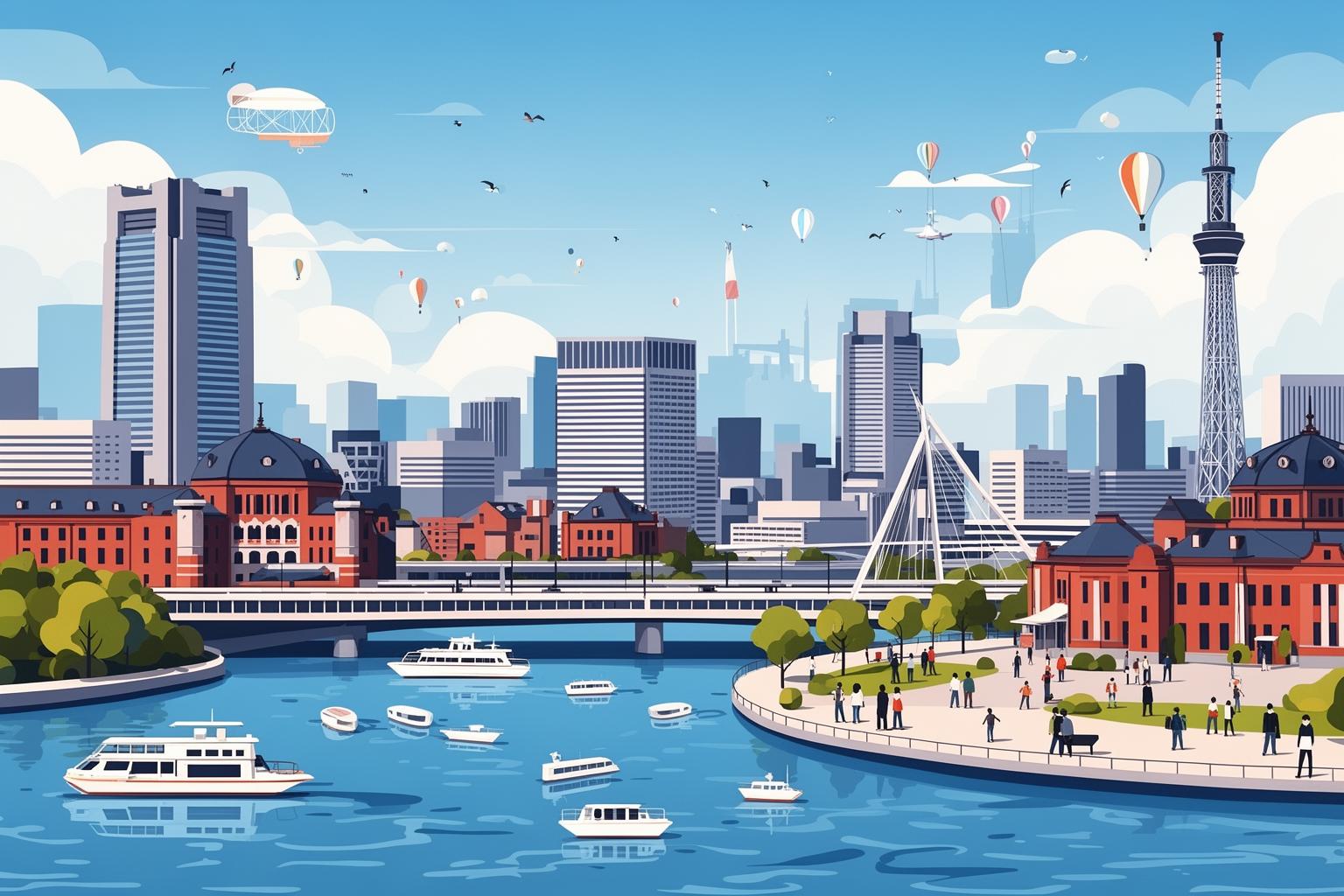
Nakanoshima is far more than just a scenic park or a center of government; it is undeniably the cultural and intellectual heart of Osaka. The concentration of world-class museums and performance venues on this narrow strip of land is no coincidence. It reflects the deliberate application of the same merchant philosophy: that a thriving commercial city must also be a vibrant cultural hub. The wealth generated in the markets of Dojima and the boardrooms of Kitahama was reinvested into institutions aimed at enriching the minds of its residents.
This intellectual ambition is perhaps best exemplified by a structure that remains invisible from afar: The National Museum of Art, Osaka (NMAO). Its entrance features a striking, soaring metal sculpture by César Pelli, designed to evoke the vitality of bamboo and reeds, yet its galleries are entirely located underground. This uniquely Osakan approach addresses an urban planning challenge: How do you situate a major national museum on a historic, narrow island without overwhelming the landscape or blocking the views of the park and river? The answer is to bury it. This is both an act of architectural modesty and brilliant practicality. It preserves the public green space while creating an exceptional subterranean art world. The museum focuses on post-war and contemporary art, clearly signaling that Osaka’s cultural vision is forward-looking, actively engaging with modern ideas and aesthetics.
Collections Built on Commerce and Community
Just a short distance from the NMAO is The Museum of Oriental Ceramics, considered one of the finest institutions of its kind globally. Its story once again embodies the Osaka way. The museum centers on the legendary Ataka Collection, a priceless array of Chinese and Korean ceramics accumulated by Ataka & Co., a major trading firm. In the 1970s, the company faced financial collapse. In many other cities, such a corporate collection might have been broken up and sold off to the highest bidders, scattered among private collectors worldwide. But this did not happen in Osaka. A consortium of Sumitomo Group companies, another Osaka-based corporate giant, stepped in. They purchased the entire collection with the sole purpose of keeping it intact and donating it to the City of Osaka, on the condition that the city construct a museum worthy of housing it. This was a monumental act of corporate citizenship, declaring these cultural treasures—though acquired through private enterprise—as public heritage. The Sumitomo Group regarded itself not merely as a business, but as a guardian of the city’s cultural legacy. This ethos descends directly from the merchant philanthropists of the Meiji and Taisho eras. It weaves a continuous thread through the city’s fabric: business builds, but it also preserves and shares.
Rounding out the island’s intellectual triad are the Osaka Science Museum, featuring a world-class planetarium, and the magnificent Festival Hall, a concert venue famed for its acoustics. The presence of a leading science museum highlights Osaka’s history as a center of practical knowledge and innovation—after all, this is the city where the world’s first formal futures exchange, the Dojima Rice Exchange, was established. The combination of art and science in one location reinforces a holistic vision of civic enrichment. Culture encompasses not only paintings and sculptures but also scientific discovery and engineering skill. Festival Hall, rebuilt as part of a skyscraper complex, seamlessly unites culture and commerce, embodying the island’s modern spirit. On any given evening, the sounds of a world-class orchestra might drift out towards the river, a reminder that the city’s soul is nourished by more than just profit.
The Architecture of Aspiration: A Bridge Between Past and Future
A walk from the eastern tip of Nakanoshima to its western edge is a journey through time, a tangible reflection of Osaka’s development. The island’s architecture narrates the story of a city that honors its past without being confined by it, a city defined by a dynamic, often striking, yet always engaging contrast between old and new. This architectural dialogue across the decades unveils a key aspect of Osaka’s character: a practical embrace of change.
The East: A European Vision
The eastern end of the island evokes 19th and early 20th-century Europe. The Central Public Hall and the Nakanoshima Library stand as proud symbols of the Meiji and Taisho periods, when Japan was rapidly modernizing and drawing inspiration from the West. This was the era when Osaka earned the nickname “Manchester of the Orient,” a smoky, industrious, and fabulously wealthy city. These buildings were aspirational statements. They represented Osaka’s declaration of its place on the global stage, employing the architectural language of Western power—stone, brick, domes, and columns—to proclaim its modernity and sophistication. They are solid, ornate, and carry a sense of permanence and civic dignity. Standing before them, one can almost sense the confidence of the industrialists and merchants who built them, men who were shaping a new Japan from the core of their city.
The West: A Shining Future
Moving westward, the landscape shifts dramatically. The historical grandeur fades into the sleek, vertical lines of contemporary business and luxury. The Nakanoshima Festival Tower and the Conrad Osaka hotel rise boldly against the sky, their glass-and-steel façades reflecting the river and clouds. This represents 21st-century Osaka: global, corporate, and interconnected. These buildings host the headquarters of major corporations, law firms, and a five-star hotel catering to an international clientele. The architecture here communicates efficiency, technology, and economic strength. It is confident and unapologetic.
What stands out most is the absence of any imposed, uniform aesthetic. Such a sharp contrast in styles would be unthinkable in Kyoto, and even Tokyo maintains architectural harmony in certain districts. Osaka, however, embodies a distinct pragmatism. There’s no sentimental effort to make new structures imitate the old. Buildings are valued for their function. The Public Hall’s purpose was to serve as a grand civic stage; the Festival Tower’s role is to be a cutting-edge office and performance center. The fact that they stand only a few hundred meters apart is not seen as a contradiction but rather as a logical progression. This practicality, this emphasis on utility over forced aesthetic uniformity, is deeply embedded in the city’s DNA. Osaka is continually building, demolishing, and rebuilding—a permanent work in progress, free from an overly reverent attachment to its past.
The bridges connecting Nakanoshima to the city also contribute to this architectural story. They are not uniform, impersonal concrete spans. Each bridge displays its own character and design, from the grand, lion-guarded Naniwa Bridge to the graceful arch of the Yodoyabashi Bridge. These are landmarks in their own right, essential parts of any Osakan’s mental map of the area. They serve as reminders that this is a city built on connections, where the flow of people and ideas matters as much as the flow of the rivers themselves.
Nakanoshima’s Place in the Osakan Psyche: More Than Just a Pretty Park
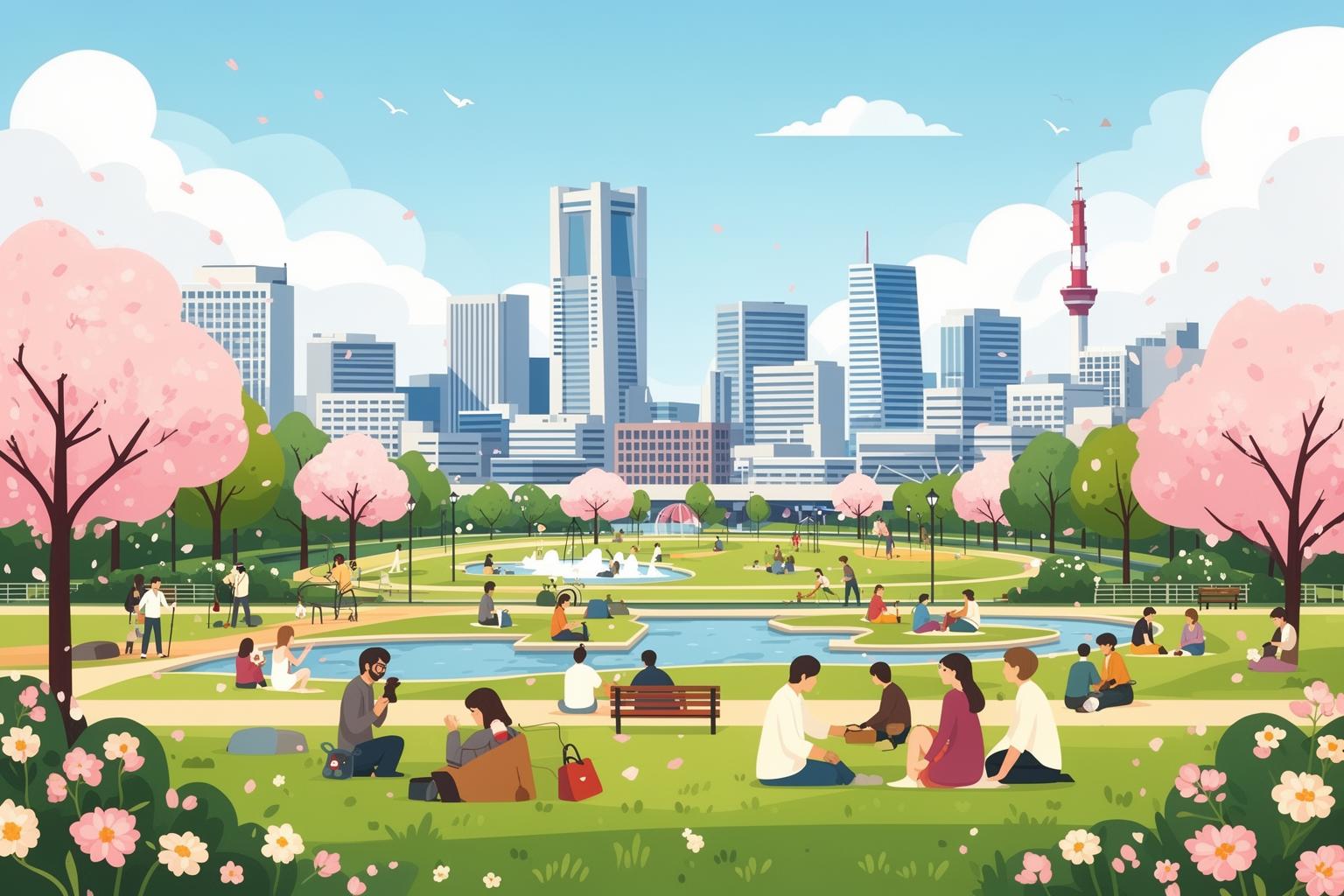
For the average person living in Osaka, Nakanoshima is not necessarily part of their everyday routine. Someone living in the southern districts of Tennoji or Abeno might visit only a few times a year. Yet, the island holds a vital and clearly defined place in the collective consciousness of the city. It stands as Osaka’s symbol of civic pride. It’s the destination you choose when the occasion calls for something a bit more formal, a bit more special.
It is where you go for a memorable date, a walk through the rose garden in spring, or beneath the illuminated trees in winter. It’s where you listen to the Vienna Philharmonic at Festival Hall or attend a landmark exhibition at one of the museums. It serves as the backdrop for wedding photos, with the red bricks of the Public Hall adding timeless elegance to the event. Nakanoshima embodies the city dressing up in its Sunday best. It’s a shared emblem of sophistication in a city often proud of its unpretentious nature.
This role as a balancing force is essential. Osaka’s identity is rooted in the raw, energetic, and often chaotic vitality of its commercial districts. The city draws strength from the lively hustle of its covered shopping arcades, the warm hospitality of its local eateries, and its famously straightforward style of communication. But a city cannot thrive on high-energy alone. It requires a place to refresh its spirit, a space that appeals to a different side of its character. Nakanoshima is that place. Its presence reflects a deep self-awareness on the part of the city. Osakans recognize their spirited and sometimes boisterous nature, and they have deliberately fostered this island as an oasis of calm, a refuge of art and nature amid the urban rush. It is not an escape from Osaka; rather, it is the city’s other facet.
A final comparison to Tokyo sharpens the perspective. Tokyo boasts its own stunning public spaces. Ueno Park is a grand cultural hub, and Shinjuku Gyoen is a masterpiece of landscape architecture. But Ueno feels like a national institution situated in Tokyo, while Shinjuku Gyoen is a formal, enclosed environment with an entrance fee. Nakanoshima is fundamentally different in its integration. It is an open, permeable, public thoroughfare that connects government, business, art, and leisure. You don’t just visit Nakanoshima; you pass through it on your way to work, cut across it to attend meetings, and live beside it. It is not separate from the city; it is the city’s vital, beautiful, and intelligent heart, through which the lifeblood of Osaka flows every day.