Step off the train at Tenma Station, and you’re not just stepping onto a platform; you’re stepping into the pulsating, savory heart of Osaka itself. This isn’t the glossy, futuristic Japan you see in magazines, nor is it the serene, temple-filled landscape of Kyoto. Tenma is gloriously, unapologetically real. It’s a symphony of sizzling grills, the clatter of beer mugs from stand-up bars, the cheerful chatter of locals weaving through the longest covered shopping arcade in the country, and above all, the intoxicating aroma of dashi-infused batter crisping to a golden-brown perfection. This is the sacred ground of takoyaki, the city’s iconic soul food. Forget the perfectly uniform, mass-produced versions you might find elsewhere. Here in the labyrinthine streets of Tenma, we’re on a quest for something more elemental, something steeped in tradition: the old-school takoyaki stalls, cherished by generations of Osakans, that serve not just a snack, but a taste of the city’s very essence. These humble stands are culinary time capsules, offering a direct line to the authentic, unpretentious flavors that define Osaka as Japan’s Kitchen.
If you’re looking for a different kind of Osaka labyrinth after dark, you might explore the exclusive nightlife of Kitashinchi.
The Tenma Atmosphere: The Living Heartbeat of Naniwa

To truly grasp Tenma’s takoyaki, you first need to understand Tenma itself. This district pulses with a distinct, unyielding energy. Its main lifeline is the Tenjinbashisuji Shotengai, an extensive covered shopping street stretching an impressive 2.6 kilometers. Strolling its length offers a slice of local life: gleaming pachinko parlors ringing with electronic chimes sit side-by-side with quiet, family-run shops selling hand-forged kitchen knives or delicate seaweed. Elderly women on bicycles carefully weave past groups of uniformed students, while salarymen in crisp suits loosen their ties as they make their way to favorite evening spots. The air carries a mix of scents—the sweet fragrance of flower shops, the earthy aroma of roasted tea leaves, the sharp tang of pickles from grocers—and always, threading through everything, the irresistible lure of cooking food. Unlike the polished, tourist-focused districts of Dotonbori or Shinsaibashi, Tenma feels lived-in. It’s rougher, warmer, and infinitely more personal. The magic here isn’t crafted for visitors; it’s the authentic rhythm of a community going about its day. Yet the true spirit of the area isn’t confined to this main street. The real gems lie hidden in countless narrow side streets—the yokocho and alleys branching off like veins from the main artery. It’s within these dimly lit, lantern-adorned paths that you discover the beating heart of Tenma’s food scene, where the most genuine takoyaki stalls have honed their craft quietly for decades, far from the spotlight of tourist maps and guides. Here, conversations flow as freely as the inexpensive sake, and sharing a boat of freshly grilled takoyaki becomes a cherished communal ritual.
Decoding the Takoyaki Stall: More Than Just a Snack Stand
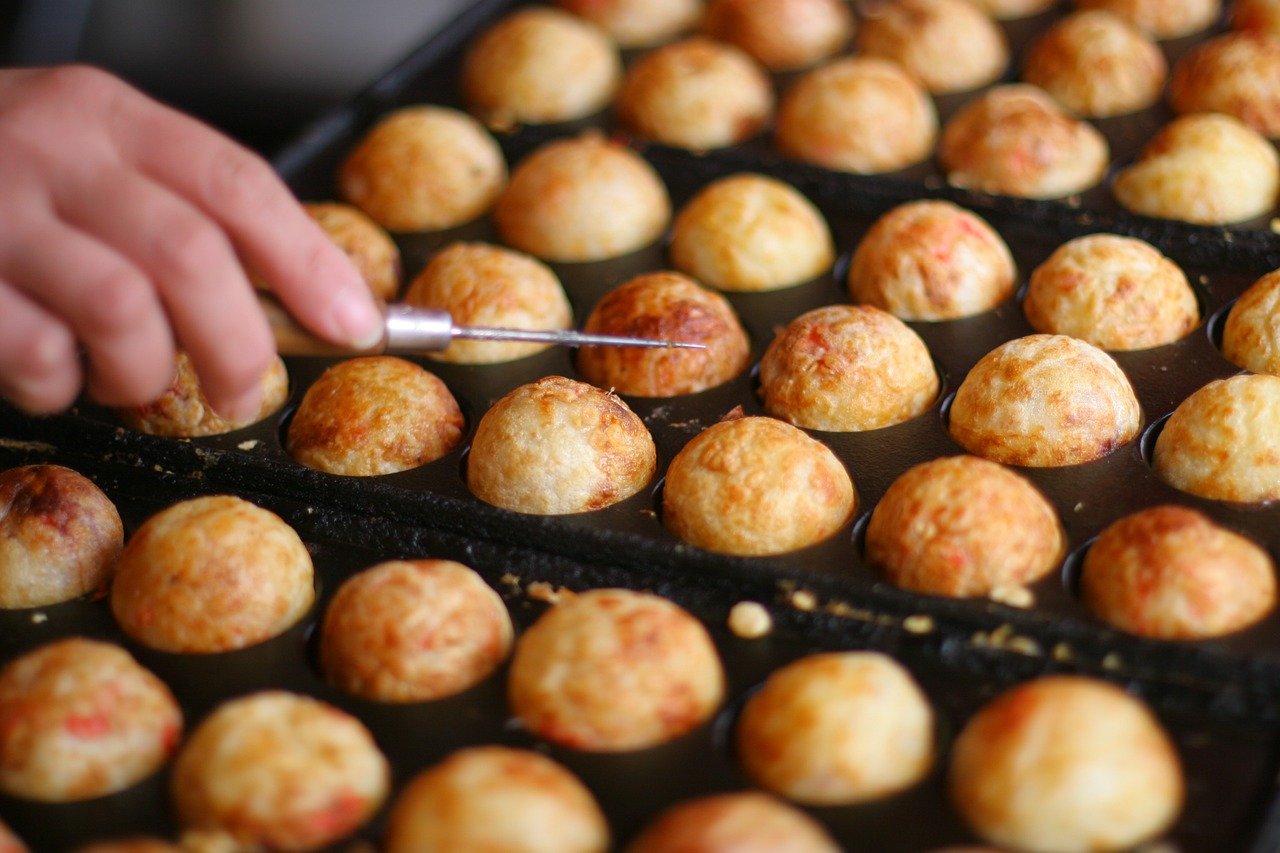
A traditional takoyaki stall in Tenma exemplifies delicious efficiency, serving as a compact stage for culinary artistry. Your first hint is often the sight of a simple red lantern, an akachochin, glowing warmly in the evening, guiding the hungry and the curious. The stall itself might be little more than a small wooden cart or a tiny storefront, its exterior worn by years of steam and Osaka’s humid summers. Menus in English are rare; instead, the offerings are conveyed through the vivid sensory language of sight and aroma. At the heart of this world is the grill, a heavy cast-iron plate dotted with dozens of perfect hemispherical molds. This is the stage where the drama unfolds. Leading the operation is the taisho, the master, a figure of intense concentration and fluid motion. Watching their work is captivating—a performance of practiced efficiency, a dance refined over tens of thousands of repetitions. It starts with a generous coating of oil, followed by pouring the batter, a pale, creamy liquid that sizzles immediately upon hitting the searing iron. The taisho moves with rhythmic grace, filling each mold to the brim before skillfully dropping in the key ingredients: a hearty piece of boiled octopus (tako), a sprinkle of crunchy tenkasu (tempura scraps), and a dash of sharp, vibrant beni shoga (pickled red ginger). Then comes the most crucial step: turning. Using one or two small metal picks, the taisho swiftly and precisely flips the half-cooked batter, tucking in the edges to form perfect spheres. The motion is a continuous, fluid roll, ensuring the outside becomes a thin, crispy shell while the inside remains lusciously soft and molten. This textural contrast is the essence of authentic Osaka-style takoyaki—a delicate balance that distinguishes masters from amateurs. Within minutes, the liquid batter has transformed into a tray of beautiful, golden-brown orbs, ready to be garnished and enjoyed.
The Anatomy of a Perfect Bite: An Umami Symphony
To truly savor Tenma’s takoyaki, you must understand its components, as each plays an essential role in the overall flavor harmony. This is more than street food; it is a thoughtfully crafted culinary experience. The journey starts with the batter, the kiji, where the true character of a stall is revealed. A great takoyaki batter is not just flour and water; it is based on high-quality dashi, a traditional Japanese broth made from kombu seaweed and dried bonito flakes. This dashi imbues the batter with a deep, savory, and complex umami taste that transforms it from simple dough into something exceptional. It offers a subtle, oceanic richness that lingers on the palate—a flavor distinctly Japanese. When cooked, it achieves that signature texture: a delicate, slightly crisp outside that yields to a gooey, almost custard-like interior, flooding the mouth with savory warmth. This is the hallmark locals seek, far removed from the dense, cake-like texture of lesser versions.
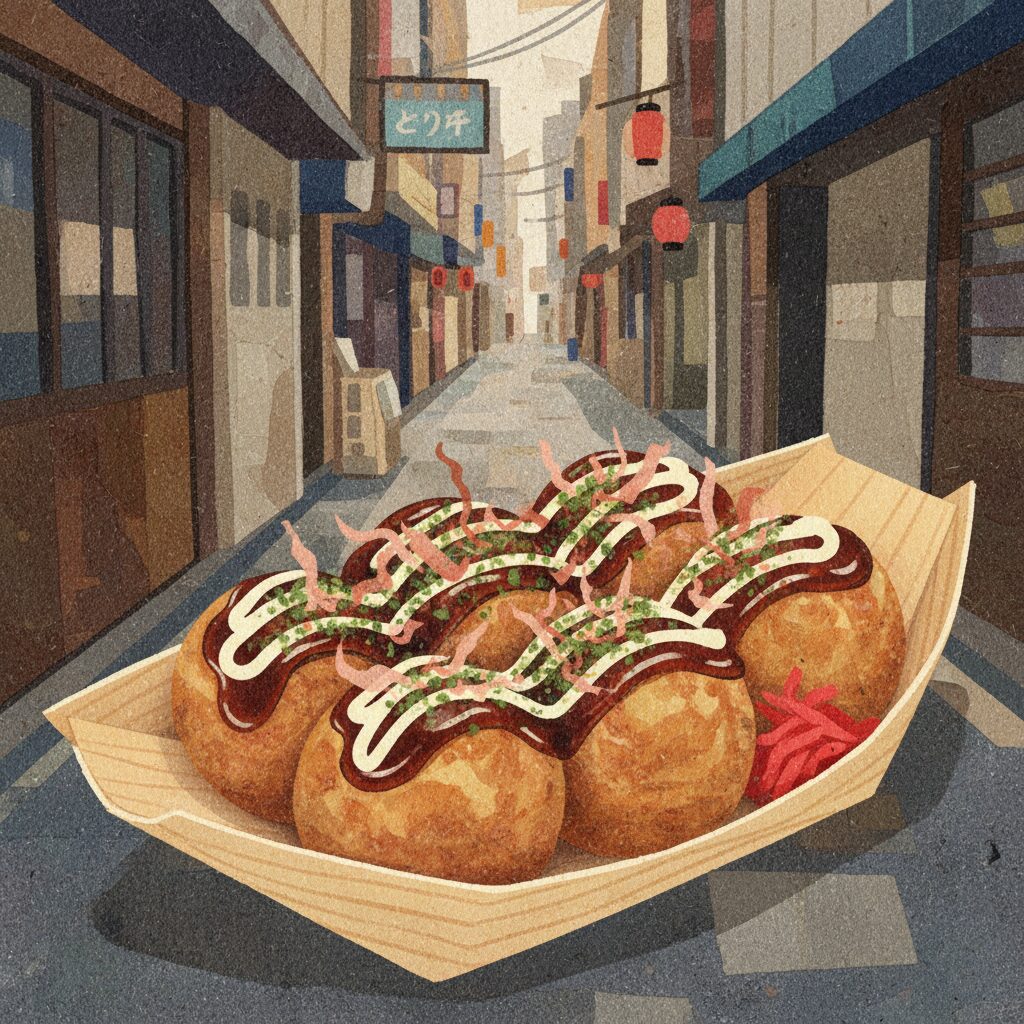
Next is the star ingredient: the tako, or octopus. In a quality stall, the octopus piece is generous, not a mere speck. It should be tender yet pleasantly springy, providing a wonderful textural contrast to the soft batter. It delivers a burst of clean, oceanic flavor at the center of the ball. The supporting ingredients are equally important. The tenkasu, tiny crunchy bits of deep-fried tempura batter, are scattered throughout, adding pockets of crispness and subtle richness from the frying oil. The beni shoga, pickled red ginger, offers a sharp, zesty counterbalance, its bright acidity cutting through the richness of the batter and sauce, cleansing the palate and beckoning the next bite. Finally, the toppings complete this masterpiece with a classic trinity of flavors and textures. First, a generous drizzle of a special takoyaki sauce, a thick, brown condiment blending sweet and savory notes, akin to Worcestershire sauce but with a unique fruit and vegetable base. Next, a lattice of creamy, slightly tangy Japanese mayonnaise adds a luscious richness. On top of that, a liberal sprinkling of katsuobushi, dried, smoked, and fermented bonito flakes, creates a mesmerizing scene as the thin flakes curl and dance with the rising steam. The finishing touch is a dusting of aonori, powdered green seaweed, which imparts a subtle briny and earthy aroma. When you finally take that first careful bite, all these elements unite in a harmonious burst of flavor: savory, sweet, tangy, creamy, and rich, with an incredible mix of textures—from crispy and gooey to chewy and crunchy. In a single bite, it captures the essence of Osaka.
The Art of the Takoyaki Master: A Lifelong Dedication
In Tenma, the person working behind the grill is as crucial as the ingredients themselves. These individuals are not merely cooks; they are artisans and custodians of a culinary heritage. Many of the finest stalls are managed by a single taisho or an okami-san (female proprietor), often an elderly figure who has devoted most of their life to perfecting one particular dish. Their stalls reflect their personalities, with their movements serving as a form of non-verbal communication that conveys pride, skill, and an unwavering dedication to quality. There’s a distinct stoicism in their work, an intense concentration in their eyes as they monitor the grill, knowing the exact moment to turn each ball—an expertise not learned from books but acquired through decades of sensory experience. Their hands, often worn and marked by years near the hot iron, move with a mesmerizing efficiency. The rhythmic clack-clack-clack of their metal picks against the cast iron forms the percussive soundtrack of the neighborhood.
These stalls are much more than businesses; they serve as important community hubs. Regular customers receive a familiar nod and brief exchanges about the weather or local news. The taisho memorizes their orders. For locals, stopping by their favorite takoyaki stand is a ritual, a small, comforting moment in their day. It’s a quick lunch, an after-school treat for children, or a savory snack paired with a beer after a long day at work. There is an unspoken intimacy in the exchange. You’re not just purchasing food; you’re engaging in a local tradition and sharing a brief yet genuine interaction with a master of their craft. This human element transforms the experience from simple eating into something far more meaningful. Each boat of takoyaki served is not merely a product; it embodies a lifetime of dedication, a piece of the taisho’s soul, offered for just a few hundred yen. Witnessing this commitment firsthand, standing in a quiet alley watching a master at work, reveals the deep respect for craftsmanship that lies at the core of Japanese culture.
A Self-Guided Takoyaki Tour Through Tenma: Finding Your Perfect Ball
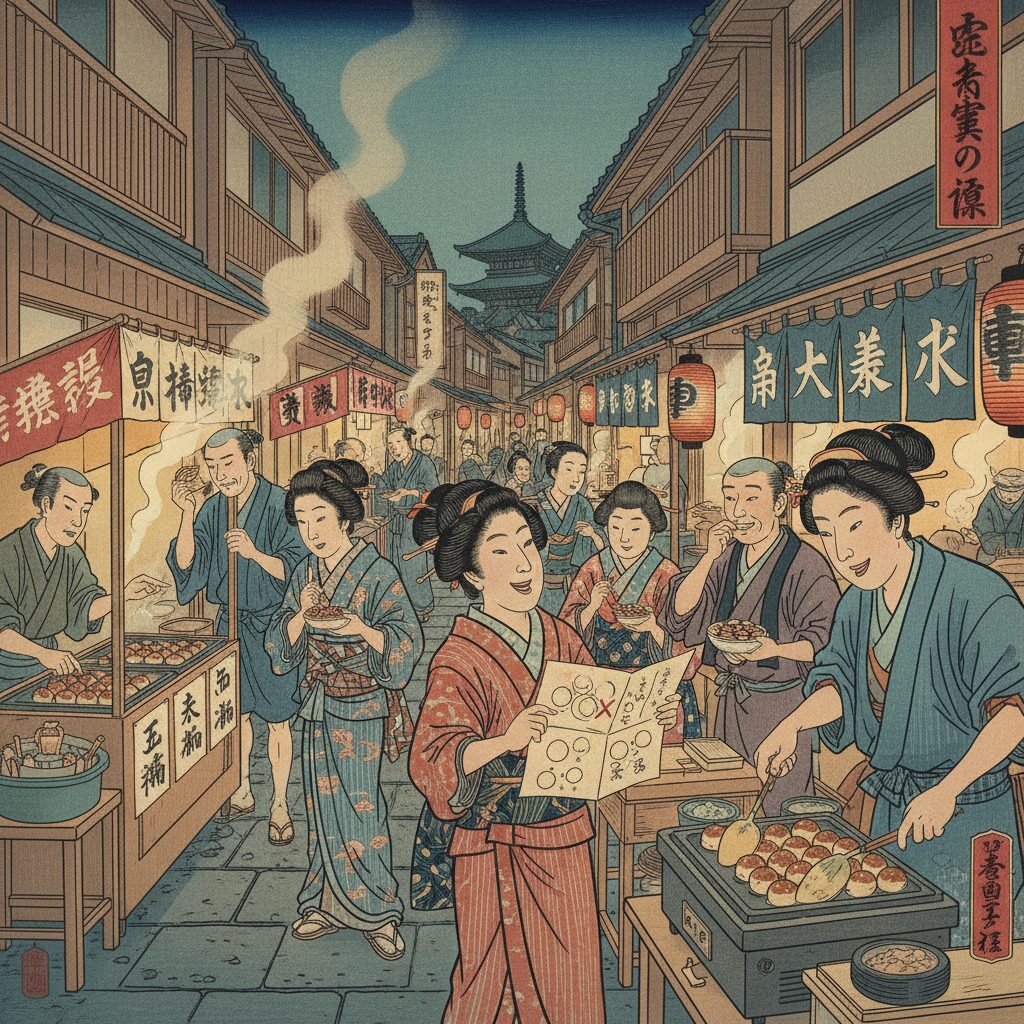
Navigating Tenma in search of the ultimate takoyaki is an adventure in itself—a mouthwatering treasure hunt where the map is drawn in scents and sounds. Instead of chasing specific names from blog posts that can lead to overcrowded spots, the real pleasure comes from discovery. Allow yourself to get lost. Drift away from the bright lights of the main arcade and explore the narrow, dimly lit alleyways. This is where the most authentic experiences await. Look for telltale signs: a simple, hand-painted sign, a lone red lantern, and most importantly, a small line of locals waiting patiently. A local queue is the most reliable mark of approval you can find. These hidden gems are often tiny, standing-room-only spots where you enjoy your prize at a small counter or standing just outside the stall. The experience is intimate and immediate, with takoyaki passed straight from the grill to your hands—scorchingly hot and impossibly fresh.
As a starting point, the stalls along Tenjinbashisuji Shotengai are often excellent and more welcoming to newcomers. They provide a solid baseline for what good takoyaki should taste like. Once you’ve familiarized yourself with that, you can explore subtler variations. Some stalls might offer different toppings, like melted cheese or green onions with a splash of ponzu (citrus-soy sauce) instead of the traditional sauce and mayo. Don’t hesitate to try these local twists. For a different kind of atmosphere, seek out an izakaya—a traditional Japanese pub—that specializes in takoyaki. Tenma has plenty. Here, you can sit back, relax, and savor your takoyaki at a slower pace, pairing it with a frosty draft beer or a small carafe of sake. It’s a wonderful way to enjoy takoyaki as part of a larger meal while soaking in the lively, convivial spirit of Osaka’s nightlife. When it’s time to order, a little effort goes a long way. Although pointing is perfectly fine, learning a few phrases will enrich your experience. A simple “Takoyaki, kudasai” (“Takoyaki, please”) is all you need. A typical serving, or fune (boat), includes six or eight pieces. You may be asked about toppings, but the standard combination is usually the default. Embrace the unknown, follow your nose, and let the warm glow of a distant lantern lead you to your next delicious discovery.
Beyond the Takoyaki: The Culinary Tapestry of Tenma
While takoyaki may be the highlight, it represents just one thread in the rich culinary fabric of Tenma. To fully appreciate the area, you need to explore the other flavors it offers. The neighborhood’s cultural and spiritual heart is the Osaka Tenmangu Shrine, a beautiful and significant Shinto shrine dedicated to Sugawara no Michizane, the deity of scholarship and learning. This shrine has influenced the community for centuries. It hosts the Tenjin Matsuri, one of Japan’s three greatest festivals, held every July. During the festival, the streets around the shrine burst with color, music, and an incredible variety of food stalls, providing a spectacular glimpse into the city’s festive spirit. Even on an ordinary day, a visit to the shrine offers a peaceful contrast to the lively energy of the shopping streets.
As night falls, Tenma truly shines as a haven for food and drink enthusiasts. The area is famous for its dense concentration of tachinomi, or standing bars. These small, informal spots often have no seating, where patrons stand shoulder-to-shoulder, enjoying affordable drinks and tasty small plates. The atmosphere is lively, friendly, and uniquely communal. It’s easy to strike up conversations with fellow guests, making it a great way for solo travelers to experience local nightlife. Bar hopping from one tachinomi to another is a quintessential Tenma activity. Beyond takoyaki, you’ll find other Osaka soul food favorites. Don’t miss kushikatsu, skewers of meat, seafood, and vegetables breaded and deep-fried to crispy perfection. They come with a communal pot of dipping sauce, with the golden rule being “no double-dipping.” Tenma also offers an excellent selection of fresh, affordable sushi and sashimi, often served in bustling, market-style restaurants where the energy is high and the quality outstanding. This reflects Osaka’s historical role as Tenka no Daidokoro, or “The Nation’s Kitchen,” a distribution center where the finest ingredients from across Japan came together. A perfect evening in Tenma might start with a pre-dinner snack of takoyaki from an alley stall, followed by rounds of kushikatsu and beer at a lively tachinomi, and end with pristine sushi at a local counter. It’s a culinary journey allowing you to savor the full spectrum of Osaka’s vibrant food culture.
Practical Guide for the Tenma Explorer: Navigating Like a Local
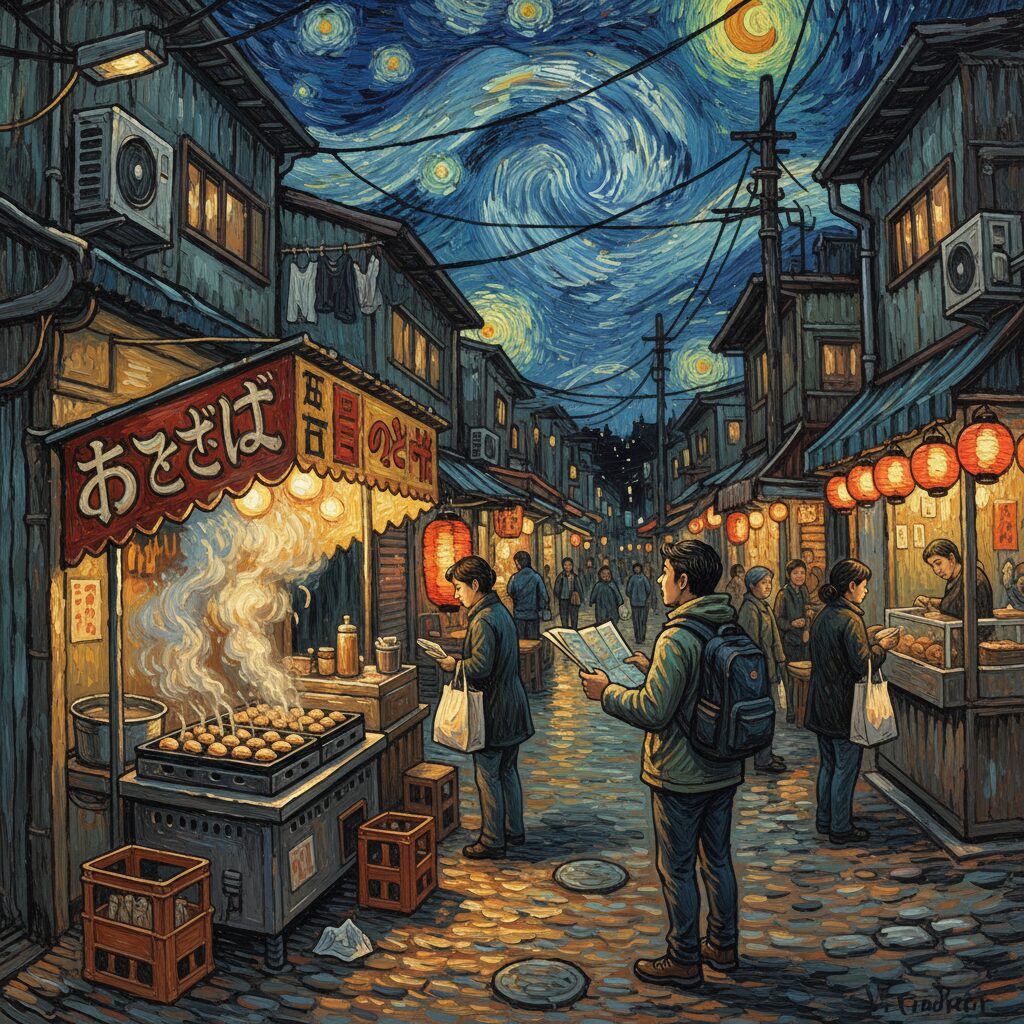
Reaching Tenma is simple. The neighborhood is centrally located and easy to access. The main access point is JR Tenma Station on the Osaka Loop Line, just one stop from the major transit hub of Osaka-Umeda Station. Alternatively, you can take the subway to Ogimachi Station on the Sakaisuji Line, which is situated at the southern end of Tenjinbashisuji Shotengai. The ideal time to visit Tenma is from late afternoon into the evening. While the shopping arcade remains busy throughout the day, the true charm appears around 4 or 5 PM. This is when the small food stalls and izakaya open, red lanterns begin to glow, and the streets fill with locals heading out for the night. Keep in mind that many of the most authentic, traditional takoyaki stalls are small, family-run businesses with irregular hours, often closing when they run out of batter for the day, so flexibility is advisable.
While exploring, a few local etiquette tips will enhance your experience. First, cash is preferred. Most small stalls and bars don’t accept credit cards, so it’s important to carry a good amount of yen, particularly smaller bills and coins, for smooth transactions. Second, although it might be tempting to walk while eating your takoyaki, eating on the go is generally viewed as impolite in Japan. Most stalls have a small spot, such as a tiny bench or a side area, where you are expected to stop and finish your food before moving on. This also helps prevent any accidental sauce spills on passersby. When done, be sure to dispose of your trash responsibly—either return the empty paper boat to the vendor, who will have a bin, or hold onto it until you find a public trash can, which can sometimes be hard to find in Japan. Lastly, an important tip for first-time takoyaki eaters: be patient! The takoyaki is served straight from a grill heated to very high temperatures, and the creamy interior can be like molten lava. The most common beginner mistake is popping an entire piece into your mouth right away. The correct method is to use your toothpick to break one open, allowing the steam to escape for a moment before eating. Your taste buds will thank you for this small patience. Following these simple customs shows respect for local culture and ensures a delightful and delicious experience.
The Lingering Taste of Authenticity
A journey through the alleys of Tenma is more than just a food tour; it’s a deep dive into the very heart of Osaka. The takoyaki you discover here is more than a snack; it’s a story told through batter and dashi, a tradition handed down through generations, and a symbol of the city’s warm, unpretentious, and passionate food culture. Standing in a narrow lane, surrounded by the sounds and scents of local life, and savoring a boat of perfectly crafted takoyaki offers a moment of pure, unfiltered joy. It’s a flavor that connects you to the people who call this lively neighborhood home. This is the Osaka beyond the guidebooks, where the most meaningful experiences are often the simplest. So, when you visit this magnificent city, allow yourself to wander. Follow the aroma of sizzling batter down an unfamiliar path. Share a smile with the master at the grill. And take that first, careful bite. You’ll find the lingering taste is not just sauce and seaweed, but the warm, savory, and unforgettable essence of authenticity itself.