They call it Umeda. But that’s too simple a name. It’s a concrete canyon, a human river, a shimmering, multi-layered nexus where all of Western Japan’s ambitions and energies collide. Seen from the sky, it’s a constellation of glass and steel. From the ground, it’s a perpetual motion machine, humming with the footsteps of millions. To a tourist, it’s a dazzling spectacle of shopping malls, labyrinthine train stations, and towering skyscrapers. But to live here? To call this epicenter of controlled chaos your home? That’s an entirely different story. It’s a life lived on fast-forward, a daily negotiation between unparalleled convenience and relentless sensory overload. People often ask me, what’s it really like to have an address in the heart of Osaka’s busiest hub? The answer isn’t a simple ‘good’ or ‘bad.’ It’s a trade-off, a conscious choice to plug yourself directly into the city’s main circuit. You gain the world at your fingertips, but you might just lose the quiet moments in between. It’s a lifestyle that will sharpen you, streamline you, and maybe even exhaust you. This isn’t the slow, charming Japan of postcards. This is the raw, beating, commercial heart of Osaka, and living inside it is an experience unlike any other.
For a different pace, consider exploring the quieter, creative energy of Osaka’s Kitakagaya district.
The Highs: The Unbeatable Pulse of Convenience
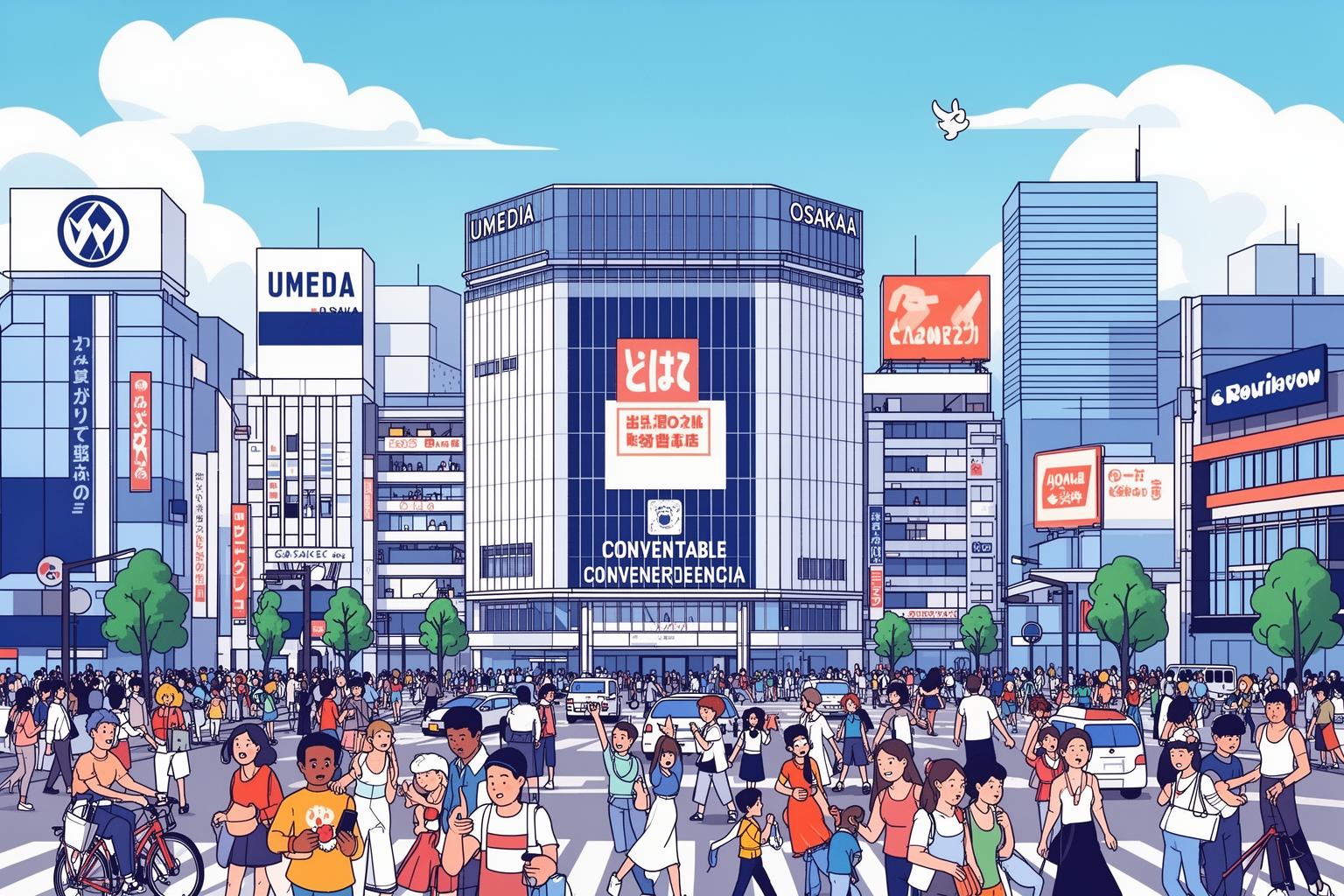
Living in Umeda is like holding a key that unlocks the entire region. It offers a life of exceptional ease, where obstacles are minimized and opportunities expanded. This goes beyond simply having everything close by; it represents a fundamental reshaping of your relationship with time and space. The city—and the entire Kansai region—adapts to your schedule, not vice versa. This deep convenience is Umeda’s irresistible charm, the chief reason anyone chooses to root their life amid the bustle.
The Hub of Everything
To grasp Umeda, you first need to understand its function as a transportation fortress. It’s not a single station but a cluster—a complex web of rails and cables forming western Japan’s most vital transit hub. There’s the vast JR Osaka Station, a central point for lines reaching Kyoto, Kobe, and beyond. Nearby are private railway terminals: Hankyu Umeda Station, the elegant gateway to northern Osaka, Kobe, and Kyoto’s upscale areas; and Hanshin Umeda Station, a direct route to coastal towns and the famed Koshien baseball stadium. Underfoot, Osaka Metro’s Midosuji, Tanimachi, and Yotsubashi lines flow like arteries, linking you to every part of the city, from the neon-lit streets of Namba in the south to the business districts of Yodoyabashi and the serene residential areas to the north. This isn’t merely a list of train lines—it’s a blueprint of your life’s possibilities. Craving authentic Kobe beef for dinner? You’re on a 25-minute Special Rapid Service train, no hassle involved. A friend in Kyoto invites you to see autumn leaves spontaneously? The Hankyu Limited Express will get you there in under 45 minutes. Here, logistical challenges vanish; the question is never “Can I get there?” but “When should I leave?” This connectivity permeates your social and professional life as well as your sense of freedom. It erases distance. Unlike Tokyo, with its multiple competing hubs like Shinjuku, Shibuya, and Tokyo Station, Osaka feels more centralized. Umeda reigns supreme in the north as the undisputed center of gravity. This concentration means living here places you truly at the heart of everything. Your world contracts in the best way, making spontaneous outings and last-minute plans your everyday norm.
A Universe of Shopping and Dining at Your Fingertips
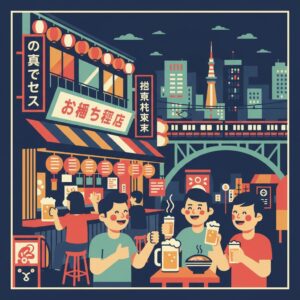
The density of commerce in Umeda is awe-inspiring. It’s a realm designed for consumption, where nearly every desire can be met within a ten-minute walk. The grand department stores, or ‘depato,’ dominate the scene. Hankyu Umeda Main Store is the grand dame: a palace of luxury goods housing a food hall, the ‘depachika,’ that’s a destination in its own right. Far from a mere grocery basement, it’s a culinary theater. Perfectly marbled wagyu, jewel-like French pastries, limited-edition sake, and exquisitely packaged gifts create a feast for the senses. Osakans, famous for their love of fine food and practicality, visit not just for daily shopping but for the ritual—finding the perfect omiyage (souvenir gift) or grabbing a special bento for a train trip. Across the street, Hanshin Department Store offers a more down-to-earth but equally cherished food floor, known for its standing-room-only snack park and legendary ‘ikayaki’ (squid pancake). Daimaru, linked directly to JR Osaka Station, and modern complexes like Grand Front Osaka, with its international brands and sophisticated atmosphere, as well as Lucua, a vast fashion mall seamlessly connected to the station, complete the array. Beyond these landmarks, the authentic texture of Umeda’s dining lies in its hidden corners. The maze-like alleys of Shin-Umeda Shokudogai beneath the train tracks buzz with smoke and conversation from tiny yakitori spots and standing bars. The four ‘Ekimae’ buildings (‘in front of the station’) house multi-story troves of affordable, delicious, and utterly unpretentious eateries, popular with office workers. A short walk west brings you to Kitashinchi, Osaka’s top entertainment district, where exclusive sushi restaurants and private clubs lie behind discreet doors. This “anything, anytime” spirit is at Umeda’s core: Michelin-starred meals and 300-yen noodle bowls within the same city block; bespoke suits and rare manga available until 9 PM. This immediacy, the banishment of waiting, is a powerful and addictive part of life here. Your home extends this commercial universe, a private space mere moments from endless possibilities.
The Professional’s Playground
Umeda is unquestionably Osaka’s white-collar core. The sleek skyscrapers shaping the skyline—the Umeda Sky Building and Grand Front Osaka towers—house the offices of major corporations. This defines the area’s rhythm and identity. On weekday mornings, underground passages and pedestrian decks flow with a river of dark suits and focused faces, all moving briskly with a business-first mindset. The energy is sharp, purposeful, and ambitious. Living in Umeda means immersion in this professional environment. Your neighbors are likely corporate employees, many temporarily assigned from other parts of Japan or overseas. This creates a particular social fabric: cosmopolitan, educated, and fast-paced, yet also somewhat transient. The deep-rooted, multigenerational community feel found in older Osaka neighborhoods is missing here, replaced by a population largely shaped by their careers. Boundaries between work and leisure blur entirely. Business lunches take place in Hilton Plaza’s upscale restaurants, and after-work networking naturally transitions to drinks at Kitashinchi’s wine bars. For career-driven individuals, this is a significant asset. You’re physically and socially linked to Osaka’s economic engine. Casual meetings spark opportunities; even grabbing coffee can become a networking occasion. The atmosphere thrives on ambition and success, offering strong motivation. However, this also means the neighborhood’s identity revolves around a 9-to-5 (or more realistically, 9-to-9) routine. Weekends, though still lively with shoppers, lose some professional urgency, leaving a more anonymous, purely commercial vibe. It’s a playground for those climbing the ladder, rewarding energy and ambition with endless chances for work and leisure alike.
The Lows: The Price of Perpetual Motion
For all its thrilling convenience, living in Umeda comes at a steep cost—not just in terms of rent. It’s a daily toll paid in peace, personal space, and patience. The very energy that makes the area so vibrant can also be deeply exhausting. Life here unfolds under fluorescent lights, accompanied by the constant sound of train announcements and the never-ending shuffle of countless feet. This is the flip side of the coin—the friction that is an unavoidable part of the Umeda experience.
The Human River: Navigating the Endless Crowds
The defining feature of Umeda is the crowd—a constant, unavoidable presence. This isn’t the gentle bustle of a market town; it’s a relentless, surging tide of humanity. Navigating Umeda requires becoming an expert in fluid dynamics: continuously adjusting your route, anticipating others’ movements, and finding gaps in the human river. On a Saturday afternoon, JR Osaka Station’s main concourse feels less like a public space and more like a stadium during the final moments of a championship game. Crossing from one department store to another demands focus and agility, which can be draining. The real challenge, however, is the infamous “Umeda Dungeon.” This local nickname refers to the vast, bewildering network of underground passages connecting train stations and shopping centers. A marvel of engineering yet a nightmare to navigate, corridors branch off at strange angles, signage can be unclear, and GPS is utterly useless. For newcomers, it’s a source of genuine anxiety; getting lost is a rite of passage. Even seasoned locals treat it with purposeful navigation rather than casual wandering. Unspoken rules apply: walk on the left, don’t stop suddenly, keep phone conversations brief. This constant negotiation of space generates low-level, persistent stress. A quick supermarket run to buy milk can turn into a 30-minute ordeal of weaving through crowds and waiting in lines. You learn to schedule your life around the flow of people, avoiding the station during peak weekend hours and running errands late at night. The sheer number of people means a loss of anonymity in one way (you’re always being watched) but a profound impersonality in another (you’re just one among millions). The crowd is the price of admission to Umeda, a daily challenge that shapes your mood, schedule, and sanity.
The Impersonal Nature of the Hub
Herein lies one of the great paradoxes of living in Umeda, especially in a city as famously friendly as Osaka. Surrounded by more people than you could ever meet, Umeda can also be one of the loneliest places in the city. Interactions tend to be purely transactional. The convenience store clerk is polite but ruthlessly efficient. The person next to you in a café is absorbed in their laptop, headphones acting as a clear social barrier. The pace and transience of the crowd leave little room for the casual, neighborly exchanges that give Osaka its charm. In neighborhoods like Tenma or Nakazakicho, just a 15-minute walk away, the atmosphere is entirely different. Shopkeepers greet you on the street, the tofu shop owner knows your usual order, and there’s a tangible sense of community. In Umeda, your ‘local’ is a Starbucks, a chain restaurant, or a department store food hall. While staff may be friendly, they serve hundreds of faces an hour—you’re a customer, not a neighbor. This is a crucial difference for foreigners moving to Osaka expecting the warm, boisterous, “nande ya nen” (why/what the heck) spirit everywhere. Umeda is the exception—it’s Osaka’s corporate, cosmopolitan face. It feels closer in spirit to Tokyo’s Marunouchi district than to Osaka’s own Shinsaibashi. Building a social circle here requires deliberate, proactive effort. Friendship won’t happen just by existing in the neighborhood. You need to join a gym, take a class, or find a niche hobby group. The environment isn’t conducive to organic community building. It’s a place people come to do things—to work, shop, transit—not necessarily to belong. This impersonality can feel liberating for those valuing privacy, but for those seeking connection, it resembles a beautiful, glittering desert.
The Cost of Centrality
The cost of living in Umeda is, unsurprisingly, among the highest in Osaka. Rent for a small one-room apartment here can match that of a much larger, family-sized unit just a few train stops away. You’re paying a premium not for space, quiet, or comfort, but for one intangible asset: location. Every minute saved on commuting factors into your monthly rent. This premium extends throughout daily life. A coffee at a station-side café costs 100 or 200 yen more than in residential districts. Lunch sets are priced for the office-worker expense account, not the budget-conscious resident. Groceries from high-end supermarkets in department stores are far costlier than at local ‘gyomu supa’ (wholesale stores). This creates psychological pressure as well. You live inside a machine designed to encourage spending. Every walk from your apartment to the station passes enticing shop windows, restaurant ads, and limited-time offers. The temptation to consume is constant and pervasive. Resisting it demands discipline that can be draining. Choosing to live in Umeda is a conscious financial decision to prioritize convenience above all else. For a young professional whose life revolves around work and a busy social calendar, this trade-off makes perfect sense. They’re buying back time—the most precious commodity. But for anyone seeking to save money, enjoy more spacious living, or escape the pressure of constant consumerism, Umeda poses a significant financial and psychological burden. It’s a lifestyle that can quickly become a gilded cage, offering immense freedom of movement while exacting a high, ongoing tribute.
The Umeda Mindset: How Living Here Changes You
Living in a place as intense as Umeda does more than just change your address; it subtly rewires your brain. You adjust to the city’s heartbeat, absorbing its values of speed, efficiency, and constant motion. Life in Umeda shapes you into a particular kind of urbanite—hyper-aware, logistically savvy, and comfortable with the blurring of life’s usual boundaries. This transformation is born of necessity, a survival mechanism for thriving amid beautiful chaos.
Master of Logistics
Living in Umeda turns you into a master of urban logistics. You quickly realize not all routes are equal. You develop an internal GPS—an instinctive mental map of the complex Umeda labyrinth that’s far more reliable than any app. You know which subway car to board to be closest to your destination’s escalator. You discover secret, less-crowded passageways through department store basements that save you minutes on your walk to the Hankyu line. You learn to read crowd flows like a sailor reads currents, effortlessly slipping through gaps and avoiding bottlenecks. This mirrors the broader Osaka mindset, which prioritizes practicality and efficiency above almost all else. There’s a local term, ‘serakasu,’ roughly meaning to hurry things along without fuss. Life in Umeda is a daily lesson in ‘serakasu.’ You don’t wander aimlessly; you navigate with purpose. This contrasts subtly with Tokyo. While Tokyo residents are famously efficient and orderly, their movements often carry a sense of stoic, disciplined resignation. In Osaka, especially Umeda, the efficiency is more energetic, more impatient. People walk faster, speak faster, and expect things to happen immediately. Living here, you absorb this tempo. Your decisions become quicker, your planning sharper. You grow intolerant of inefficiency—in yourself and others. You’re no longer just a resident; you become an operator within a complex, high-speed system, proud of your ability to make it work.
The Blurring of Work and Play
In most places, a clear spatial and temporal divide exists between professional and personal life—you commute from a quiet neighborhood to a bustling business district. In Umeda, those boundaries vanish. Your office tower might be a five-minute walk from your apartment, which could be atop a shopping mall. This creates an extremely integrated lifestyle. You can finish a project at 7:00 PM and be seated for a 7:30 PM show at the Umeda Arts Theater. A casual after-work drink can easily extend into late dinner, since no one faces a long commute home. Your social and professional lives occupy the same physical—and often mental—space. This is invigorating, fostering a sense of constant connection and keeping you in the loop. The city’s energy becomes your energy, fueling a fast-paced life. However, the downside is the challenge of finding an ‘off’ switch. The city’s background noise—the distant rumble of trains, the faint station melodies, late-night sirens—is a constant soundtrack. The clear lines between ‘workday’ and ‘weekend’ blur when your office, gym, favorite restaurant, and home all lie within a few blocks. Life becomes an unbroken stream of activity, exhilarating yet prone to burnout. You must consciously carve out moments of calm and disconnection, because the environment itself won’t provide them.
Redefining ‘Local’
In Umeda, the idea of a ‘local neighborhood’ is completely transformed. Your ‘local bar’ isn’t a cozy, family-run izakaya but a sleek wine bar on the 30th floor of a skyscraper. Your ‘neighborhood park’ isn’t a shady square with a playground; it’s the carefully manicured rooftop garden of Grand Front Osaka, featuring water elements and panoramic city views. Your ‘corner store’ is a vast, brightly lit food hall within a major department store. This shift changes how you find and build community. It’s not through traditional neighborhood associations or chats with the greengrocer. Community in Umeda is elective, formed through shared interests and deliberate choices. You meet your people at a specialized gym, a language exchange, a French cooking class, or among regulars at a standing bar hidden in the Ekimae building. You must actively seek your tribe; it doesn’t come to you. For foreigners, this presents both challenges and opportunities. On one hand, you miss integration into a traditional Japanese community. On the other, the communities you do discover tend to be more cosmopolitan, diverse, and open, united by shared passions rather than geography alone. It takes effort, but it allows you to craft your own version of ‘local,’ building a personalized social world within the city’s vast, anonymous core.
Surviving and Thriving: A Practical Guide for the Umeda Resident
Living well in Umeda isn’t about simply enduring the chaos; it’s about learning to channel its energy. It demands a specific set of strategies and a deliberate approach to managing the intensity of your surroundings. To thrive here, you must master the art of quick escapes, grasp the city’s hidden logic, and recognize where to find quiet moments amid the noise.
Discover Your Escape Routes
The most vital survival skill for anyone living in Umeda is knowing how to get away. Preserving your sanity means leveraging Umeda’s exceptional connectivity, not just for major trips to other cities but for frequent, small escapes. Make it a habit to explore neighborhoods just a stop or two away. A ten-minute walk east brings you to Nakazakicho, a bohemian neighborhood of Showa-era wooden houses, quiet cobbled streets, and quirky independent cafés. It’s like stepping into another era. Venture a bit further and you’ll find yourself in Tenma, home to one of Japan’s longest shotengai (covered shopping arcades) and a vibrant, chaotic, yet incredibly welcoming array of affordable izakayas. It’s an ideal counterbalance to Umeda’s corporate sheen. To the south, a short subway ride or a pleasant walk leads you to Nakanoshima, an island in the river that serves as Osaka’s cultural core, featuring beautiful parks, striking architecture, and world-class museums. Making these spots part of your regular routine is essential. They act as pressure-release valves, reminding you that Umeda is just one aspect of Osaka’s multifaceted character. Living in the hub doesn’t mean being trapped by it; your home is a launchpad, not a prison.
Conquer the Underground
Don’t battle the Umeda Dungeon; uncover its secrets. The first step is to abandon any expectation that it will ever make logical sense. It wasn’t planned—it evolved organically over decades as various train lines and buildings interconnected. Rather than relying solely on overhead signs, which can be a bewildering tangle of colors and arrows, learn to navigate by landmarks. Use the circular fountain in Whity Umeda, the distinctive red pillars near the Hanshin entrance, or the grand staircase in front of Lucua as your reference points. Pay attention to the flooring; tile patterns and materials often shift when crossing from one company’s domain (like JR) to another’s (like Hankyu). Over time, you’ll develop an intuitive sense of the space. You’ll realize that a gentle slope leads toward the Yotsubashi subway line or a specific draft of air signals you’re approaching an exit to the street. Chat with longtime residents or station staff—they often know shortcuts that aren’t on any map. Mastering the underground isn’t just practical; it’s a rite of passage that makes you feel like a true insider, a navigator of the city’s hidden circulatory system.
Look Up, Look Down, Look Around
In Umeda, the best experiences rarely happen at street level. This is a core principle of Japanese urbanism that many foreigners overlook. The ground floor is usually occupied by major brands with high rent. The real essence resides vertically. Look down. The basements of office buildings, especially the four Osaka Ekimae Buildings, are sprawling worlds of tiny, decades-old eateries offering incredible food at a fraction of the cost of those on the ground floor. They’re bustling, noisy, and utterly authentic. Look up. The upper floors of department stores (typically floors 7 through 10) and shopping malls host restaurant levels featuring a curated variety of cuisines from across Japan and the world. Many of the best meals and finest views are found high above the street’s hustle and bustle. Look around. Don’t hesitate to enter an unremarkable office building and check the directory. You might uncover a hidden gem—a specialty coffee shop on the fourth floor or a quiet bar on the twelfth. Umeda rewards those who explore; it hides its best secrets in plain sight, waiting for anyone willing to step off the beaten path and discover its vertical dimension.
Is Umeda For You?
Ultimately, choosing to live in Umeda is about deciding what you value most. It involves making significant trade-offs: exchanging peace for excitement, space for convenience, and a traditional neighborhood atmosphere for unmatched global connectivity. It’s neither an easy nor a relaxed lifestyle. It requires energy, alertness, and a certain resilience to constant stimulation.
So, who is Umeda suited for? It’s ideal for the young professional with a fast-paced career who measures their day in minutes and thrives on ambitious energy. It suits the social butterfly who wants a world of entertainment, dining, and shopping as their extended living room. It fits the perpetual traveler who uses their apartment as a basecamp for ongoing adventures, tapping into the hub’s connectivity to explore every part of the country. It’s perfect for the urbanist fascinated by the intricate workings of a modern city and eager to live at its core.
And who might want to reconsider? It’s probably not the best choice for families with young children, who would struggle with the scarcity of green space and constant crowds. It’s not ideal for artists or writers needing quiet and solitude for their work. It’s unsuitable for those seeking a deep, slow, immersive experience of traditional Japanese culture and community. Nor is it for anyone easily overwhelmed by noise, light, and crowds.
Living in Umeda feels like living in a state of constant arrival. You’re always at the center, perpetually on the cusp of the next event, train, appointment, or discovery. While it may not reflect the warm, folksy Osaka imagined by many, it offers an equally authentic expression of the city’s modern identity: powerful, commercial, practical, and alive with vibrant, forward-driving energy. For the right person, at the right stage in life, there is simply no better place. It’s a choice to live at the city’s speed, with your finger firmly on its electric, intoxicating pulse.