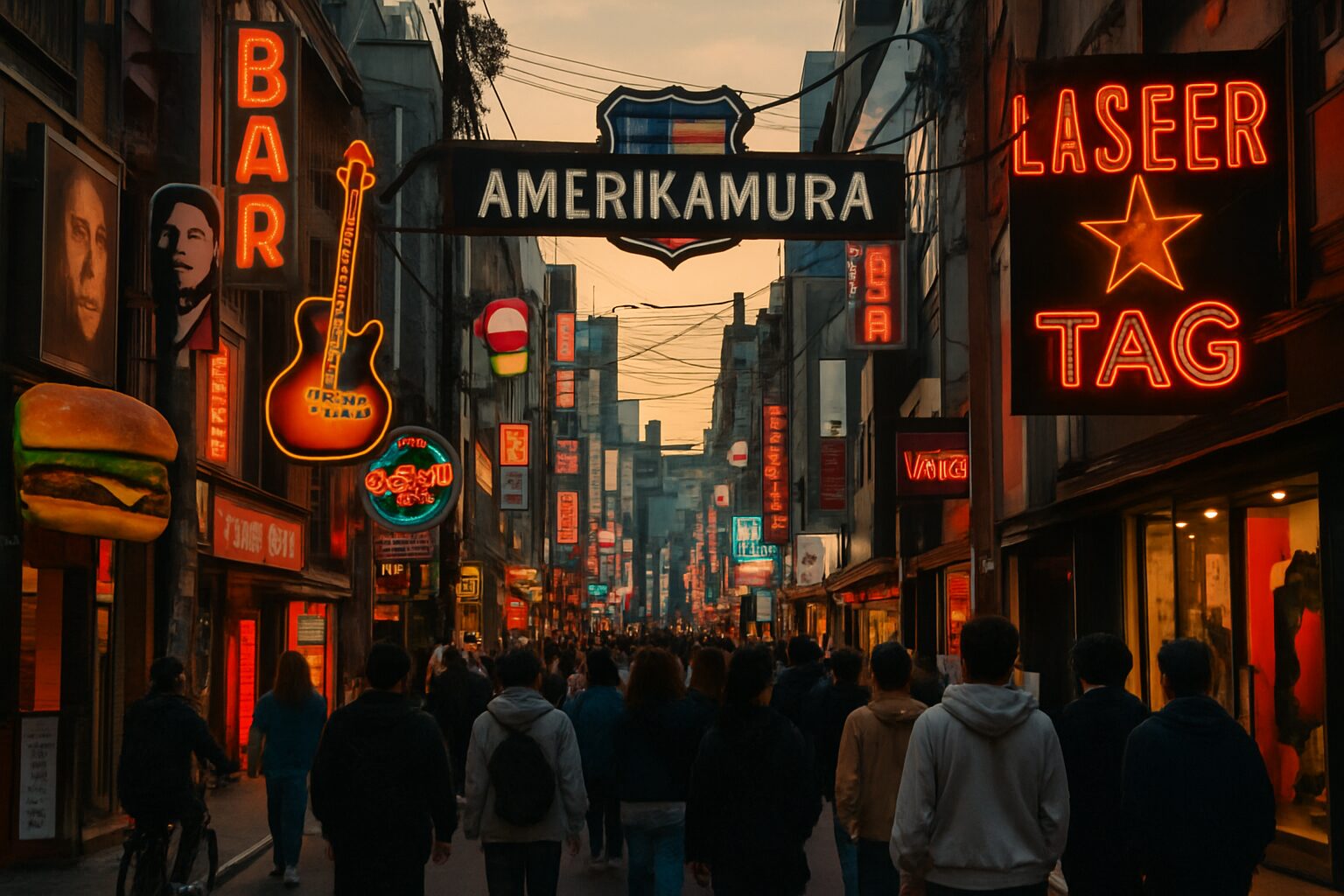
Welcome to the concrete jungle where the wild things are, a place where Osaka’s vibrant heart beats to the rhythm of a different drum. This ain’t your quiet, serene Japan of temples and tea ceremonies. This is Amerikamura, or as the locals call it with a casual, cool affection, Amemura. Tucked away just west of the glittering Shinsaibashi shopping arcade, this district is a raw, unapologetic explosion of youth culture, a living gallery of street style, and the undisputed social epicenter for anyone who colors outside the lines. Forget what you think you know about Japanese conformity; Amemura is the glorious, graffiti-splashed exception to the rule. It’s more than a shopping district; it’s a stage, a sanctuary, and a statement. Here, fashion isn’t just worn; it’s lived. Music isn’t just heard; it’s felt in the rattling windows of a basement live house. Community isn’t just found; it’s forged on the concrete steps of a triangular park, over sizzling octopus balls and shared cigarettes. For any foreigner living in or traveling through Osaka, understanding Amemura is understanding the city’s modern, creative soul. It’s a place to see and be seen, to find your tribe, and to witness the relentless, beautiful pulse of self-expression that defines a generation. So, lace up your boldest sneakers, open your mind, and get ready to dive headfirst into the glorious, chaotic, and utterly captivating world of Amerikamura. This is where the real Osaka comes out to play.
To truly understand the city’s multifaceted energy, consider exploring the daily lives of those who work in Osaka’s Dotonbori.
The Unmistakable Vibe: A Symphony of Creative Chaos
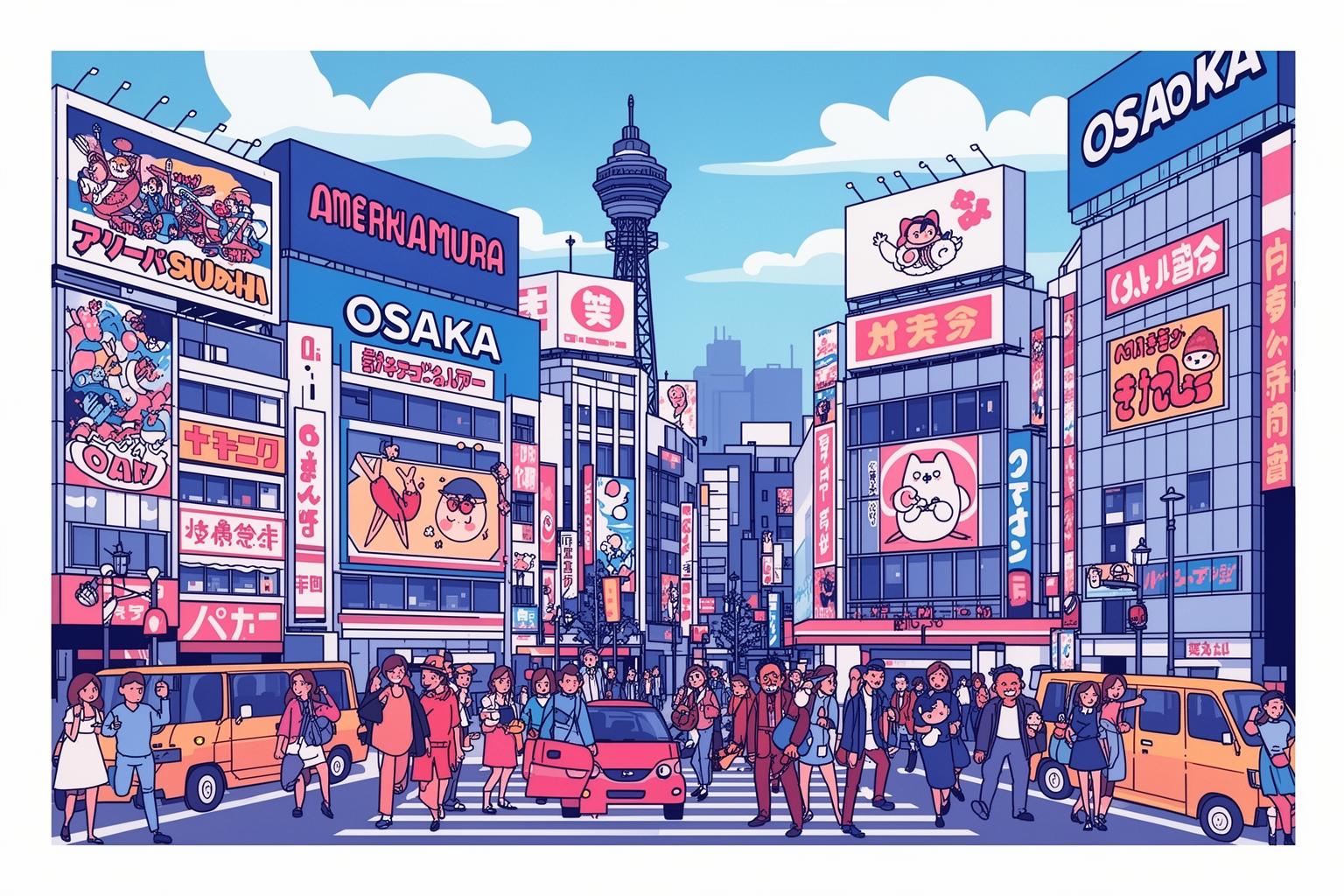
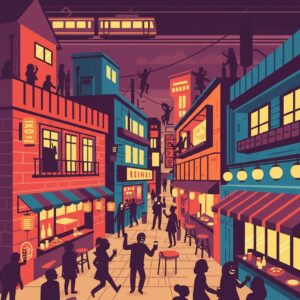
Stepping into Amerikamura is a full-body sensory experience. The air itself feels different, thick with the low thump of bass leaking from a streetwear shop, the sizzle of takoyaki grills, and the distant, warped cry of a guitar from a soundcheck in an underground venue. It’s a place buzzing with kinetic energy from midday until the early hours of dawn. The visual scene is a chaotic yet unified collage. Almost every surface serves as a canvas. Walls are covered in vibrant, elaborate murals and graffiti tags, reflecting the area’s deep bond with street art. Look up, and you’ll spot the district’s distinctive, custom-designed streetlights and whimsical sculptures of human figures frozen in dynamic, cartoonish poses, lighting up the scene below. They stand as quirky guardians of this creative domain, subtly reminding that even the infrastructure here refuses to be ordinary. The architecture is a mix of low-rise buildings, many showing their age, but each customized with a unique storefront, bold colors, or curious and captivating pieces of art. The most renowned of these is the Peace on Earth building, from which a gigantic, kitschy clown head bursts forth—a landmark as emblematic of Amemura as the Statue of Liberty is to New York, albeit with a far more surreal and playful vibe.
The real spectacle, however, is on the streets. The sidewalks are the runways. People don’t simply pass through Amemura; they inhabit it. They lounge on steps, lean against graffiti-covered walls, and gather in groups, their vivid outfits forming a constantly shifting mosaic of subcultures. You’ll see skaters weaving effortlessly through the crowds, the clatter of their boards on the pavement an ongoing part of the area’s soundtrack. You’ll spot groups of friends, each member a study in unique style but clearly linked as a tribe—whether the all-black attire of goths and punks, the oversized silhouettes of the hip-hop crew, or the carefully curated vintage looks of thrift store enthusiasts. There’s a tangible sense of freedom here. It’s a space where experimentation is the norm and judgment stays outside. The mood is one of mutual respect for individuality. A person with neon green hair, facial piercings, and nine-inch platform boots will pass by someone dressed in a meticulously recreated 1950s rockabilly outfit, and no one bats an eye. In fact, there’s a quiet respect, an unspoken understanding that everyone here is part of the same grand project of self-definition. This is not a place for the timid, yet it is incredibly welcoming. The energy is contagious, inviting you to lower your guard, perhaps try on a persona you’ve only imagined, or simply sit back and marvel at the creativity on display. It’s a place that feels alive, pulsing with the collective energy of thousands of young people carving out their own identities in the heart of a major city.
Fashion as a Language: Decoding the Street Styles of Amemura
In Amerikamura, clothing serves not just a practical purpose but acts as a deeply personal and powerful means of communication. It functions as a uniform for your chosen tribe, a billboard for your musical preferences, and a canvas for your artistic spirit. Unlike high-fashion districts that chase global trends, Amemura’s style is a bubbling melting pot of subcultures, each with its own history, symbols, and codes. The foundation of this entire ecosystem rests on vintage and secondhand clothing, known as furugiya. The streets are densely packed with these stores, ranging from massive, warehouse-like emporiums such as Kinji and JAM, where racks upon racks of pre-loved garments from every imaginable decade await exploration, to small, hyper-curated boutiques tucked away on the second or third floor of old buildings. For Osaka’s youth, furugiya shopping is not merely about saving money; it’s a treasure hunt. It’s about discovering that one-of-a-kind item—a perfectly faded 80s band t-shirt, a leather jacket with stories ingrained in its creases, or a gaudy 70s patterned shirt—that allows for a truly unique form of self-expression. This culture of reuse and reinterpretation is fundamental to Amemura’s DNA. It rejects the fast-fashion mentality in favor of pieces with history and character. You’ll see people sporting American college sweatshirts, military surplus gear, retro sportswear, and floral prairie dresses, all mixed in inventive and unexpected ways. The style is built on contrast and personality.
This vintage core supports a constellation of distinct subcultures. The punk and rock scenes have deep roots here, a legacy reflected in the abundance of leather jackets, studded belts, ripped denim, and Dr. Martens boots. This style is inseparable from the area’s vibrant live music scene. Fans wear merchandise from their favorite local punk or metal bands, turning themselves into walking billboards for the underground music they support. Record stores selling vinyl and CDs are sacred spaces, and the fashion seen on the streets directly mirrors the raw, aggressive energy found in the mosh pits of nearby venues like Shinsaibashi BIGCAT and Clapper. This is not a costume; it is an identity forged through loud music and defiant spirit.
At the same time, the influence of American hip-hop and skate culture is unmistakable. Baggy jeans, oversized hoodies from brands like Supreme or local Japanese streetwear labels, well-maintained sneakers, and baseball caps worn at a jaunty angle are everywhere. This aesthetic centers around Sankaku Koen (Triangle Park), where skaters practice kickflips and B-boys and B-girls hold spontaneous dance battles. The style emphasizes comfort, movement, and a particular kind of laid-back cool. Sneaker culture is especially prominent, with specialty shops attracting collectors from all over the region seeking rare and limited-edition kicks to complete their outfits. The fashion here is less about shock and more about brand loyalty, authenticity, and being part of a global movement that finds a distinct Osakan expression in the heart of Amemura.
While Harajuku in Tokyo may be more renowned for its hyper-cute and fantastical styles, Amemura offers a gritty, alternative interpretation. You’ll find devotees of Lolita fashion, characterized by intricate lace, frills, and bell-shaped skirts, often with a darker, gothic edge. You might spot elements of Decora, with layers of colorful accessories and a playful vibe, but blended with punk or vintage pieces. Amemura’s take on these styles feels less polished and more lived-in, woven into a broader tapestry of subcultures rather than standing alone. The unifying thread that connects all these diverse styles is an unwavering dedication to individuality. Amemura shows that fashion is not about following rules, but about breaking them, remixing them, and crafting a visual identity that is genuinely and unapologetically yours. It’s a daily masterclass in personal expression, taught on the streets, in the shops, and at the park.
The Social Hub: More Than Just a Place to Shop
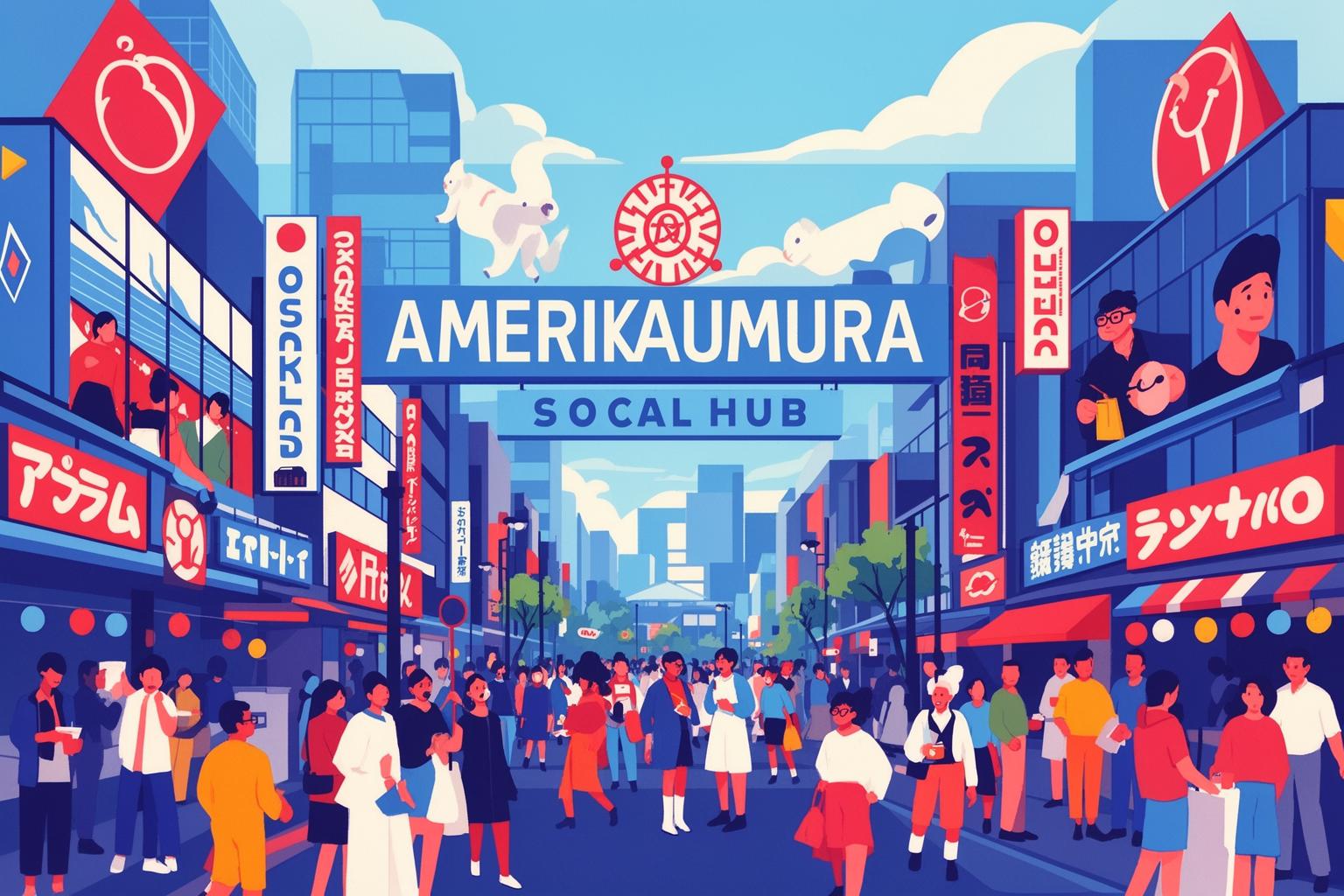
To truly understand the essence of Amerikamura, you need to recognize it as a vast, open-air community hub. Above all, it is a place to simply be. At the undeniable core of this social ecosystem lies Sankaku Koen, or Triangle Park. Though it is a small, concrete-paved plaza rather than a traditional park with greenery, its significance cannot be overstated. It serves as Amemura’s living room. From midday until late into the night, it buzzes with activity. This is the spot where people gather before heading out to shop or catch a show. Skaters spend hours honing their tricks here, their boards producing a rhythmic, percussive beat. Aspiring dancers rehearse routines, attracting small groups of onlookers. Friends lounge on the wide concrete steps, chatting, smoking, and watching the endless procession of passersby. It’s the ultimate place for people-watching, a venue to absorb the area’s culture in its rawest form. The park is also known for its takoyaki stands, especially the famed Kogaryu. The ritual of grabbing a boat of piping hot, delicious octopus balls, topping them with mayonnaise and bonito flakes, and sitting down to eat in the park is a quintessential Amemura experience. It acts as a social catalyst, a simple and spirited meal that fuels afternoon gatherings.
As evening falls, the social scene shifts and broadens. The music that was once background noise during the day now takes center stage. Amemura is dotted with live houses—small music venues often tucked away in basements or upper floors of inconspicuous buildings—serving as the cradle for Osaka’s independent music scene. For a few thousand yen, you can enjoy shows featuring several emerging bands, ranging from thrash metal to indie pop to experimental noise. These venues are more than just performance spaces; they are close-knit communities where regulars know each other well, bonded by a shared passion for music. Attending a show in Amemura is an intense, immersive experience, far removed from sterile arena concerts. It’s loud, sweaty, and genuinely authentic.
For those desiring a more laid-back yet equally distinctive social atmosphere, Amemura’s network of independent cafes, bars, and small restaurants offers myriad options. These are far from generic chains; each spot boasts a unique character and diverse clientele. You might find a tiny rock-and-roll bar adorned with band stickers, operated by a solo owner who plays vintage vinyl records. Or you could stumble upon a cozy, dimly lit cafe ideal for deep conversations, or a vibrant standing bar where it’s easy to strike up conversations with local artists and musicians. These small businesses are the community’s lifeblood, providing intimate spaces for connection. They extend the public square of Triangle Park indoors, offering refuge, refreshment, and gathering places for the area’s varied tribes. Discovering these hidden gems is essential to grasping Amemura’s social fabric. It’s within these small, personal interactions—chatting about a band with a bartender, admiring someone’s artwork in a cafe—that you truly sense the neighborhood’s welcoming and creative spirit.
A Taste of the Village: Fueling Your Exploration
While Amemura is a feast for the eyes and ears, it also offers a delightful and eclectic mix of flavors, mainly through casual street food that perfectly suits the district’s social, on-the-go vibe. The undisputed star of Amemura’s culinary scene is takoyaki. Although you can find these famous Osakan octopus balls throughout the city, many locals insist that the ones served in Amemura—especially at Kogaryu in Triangle Park—are in a league of their own, having even earned a Bib Gourmand recognition from the Michelin Guide. The experience is as memorable as the taste. You join a line of locals and tourists, watching skilled vendors deftly flip the batter balls in their special cast-iron pans. When you receive your steaming hot tray, the fragrant aroma of dashi, savory sauce, and bonito flakes immediately hits you. Finding a spot in the park to eat them while they are still molten hot inside is a rite of passage. It’s the perfect, affordable fuel for a day of shopping and socializing.
Beyond takoyaki, Amemura is renowned for its photogenic and often quirky sweets. The most iconic is the “Long Soft Cream” from Pop Sweet. This isn’t just any ice cream cone; it’s a gravity-defying tower of soft-serve stretching an absurd 40 centimeters high. Eating it before it melts is a challenge, and it makes for a must-have photo that perfectly captures the neighborhood’s playful, over-the-top spirit. You’ll also find shops selling colorful fruit- and cream-stuffed crepes, bubble tea in countless flavors, and other trendy, Instagram-worthy treats. These sweets form part of the Amemura experience, a fun, indulgent touch that adds to the sensory overload.
However, the food scene isn’t just about snacks and sweets. Hidden in the side streets are dozens of small, independent eateries reflecting the area’s international and countercultural influences. You’ll find excellent, greasy American-style burger joints that pay tribute to the neighborhood’s name, cozy curry houses, rock-and-roll-themed ramen shops, and even vegetarian and vegan-friendly cafes, still somewhat rare in Japan. Dining in Amemura is less about formal, sit-down meals, and more about grabbing something quick, tasty, and full of character. Whether you’re craving a classic Japanese street food staple or a taste of American comfort food, the options are plentiful and always served with a dose of Amemura’s unique, laid-back vibe. The food is designed to be enjoyed on the move, shared with friends, and savored as part of the lively adventure of exploring the district’s vibrant streets.
A Practical Guide for Your Amemura Adventure
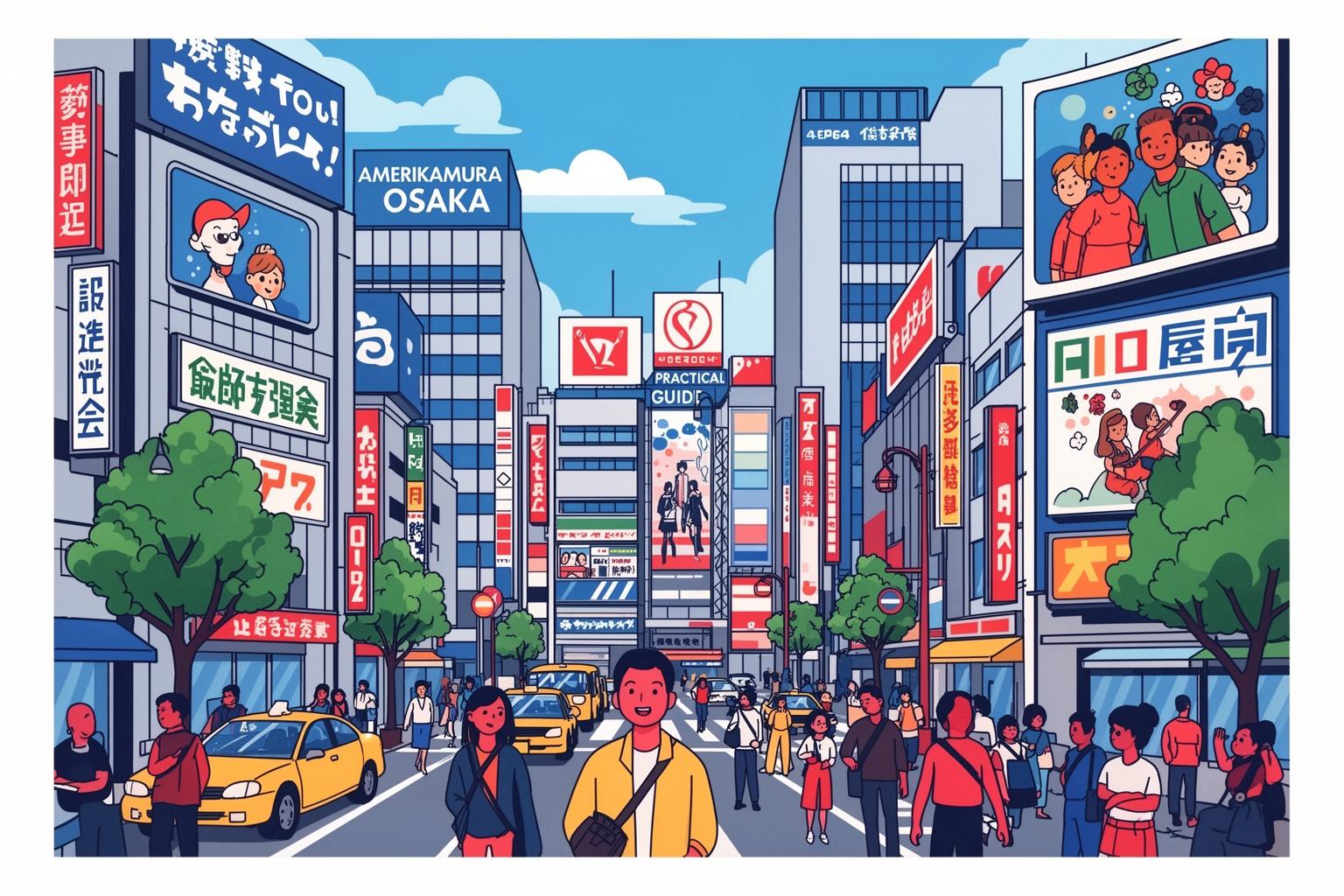
Navigating Amerikamura is simple, but a few local tips can significantly enhance your visit. The district is centrally located and easy to reach. The nearest subway stations are Shinsaibashi on the Midosuji Line (Osaka’s main north-south subway route) and Yotsubashi on the Yotsubashi Line. From either station, it’s just a five-minute walk west. If you’re coming from the lively Dotonbori area, known for its iconic Glico Running Man sign, you can walk north along the main Midosuji Avenue before turning west into the grid of streets that make up Amemura. The change is striking; you leave behind high-end department stores and luxury brands and suddenly find yourself surrounded by street art and indie boutiques. Though the area is a relatively compact grid, its dense concentration of shops, cafes, and hidden alleys invites exploration. The best way to experience it is to put away the map and simply wander. Let your curiosity lead you down a narrow lane or up a rickety staircase. Some of the most interesting discoveries lie off the main streets.
Timing is key in Amemura. The district starts slow; a morning visit reveals shuttered storefronts and a ghost town atmosphere. Activity picks up around noon, and the area truly comes alive from mid-afternoon onward, peaking in the early evening and continuing late into the night, especially on weekends. For the best people-watching and to soak in the vibrant social scene, a weekend afternoon is unbeatable. The streets will overflow with the district’s most fashionable residents, and Triangle Park will buzz with energy. If shopping is your main focus, a weekday afternoon might be preferable, offering more space to browse the often-cramped vintage stores without large crowds. Regardless of when you visit, wear comfortable shoes, as there will be plenty of walking.
For first-timers, a few tips can make your experience smoother. While credit card acceptance is increasing, many small independent shops, especially furugiya, remain cash-only. It’s wise to carry a good amount of yen. When it comes to photography, feel free to capture the amazing street art, quirky storefronts, and overall atmosphere. However, be respectful when photographing people. Locals take pride in their style and often will pose for photos if asked politely. Pointing a camera at someone without permission is considered rude. A simple “Sumimasen, shashin ii desu ka?” (“Excuse me, is it okay to take a photo?”) goes a long way. Lastly, don’t try to do everything at once. Amemura can feel overwhelming. The best approach is to take your time. Find a bench in Triangle Park, grab a coffee or some takoyaki, and simply observe. Watch the skaters, admire the fashion, and soak in the unique, creative vibe. This is the true spirit of Amerikamura.
A Rebel’s History: The Birth of a Culture Hub
The story of Amerikamura is a captivating account of organic urban development and countercultural energy. Its roots trace back to the late 1960s and early 1970s when the area was a quiet zone of warehouses and parking lots, a stark contrast to the booming commercial district of nearby Shinsaibashi. The change began when an innovative designer, Ganeso, opened a café there, decorating it with items and furniture he personally sourced from the United States, creating a distinctive and exotic atmosphere that drew in a youthful, artistic crowd. Inspired by him, other young entrepreneurs started transforming the affordable, vacant warehouse spaces into shops. They would travel to the American West Coast, filling their suitcases with vintage clothing, records, surfboards, pinball machines, and other cultural goods that were rare in Japan at the time. They weren’t just selling products; they were offering a glimpse of a different world, a fragment of American freedom and rebellious cool.
This is how the neighborhood came to be known as “American Village.” It became Osaka’s main gateway into Western youth culture, the go-to spot for authentic Levi’s jeans, Hawaiian shirts, and rock and roll vinyl. The shops were run by young people for young people, fostering a sense of community and a DIY spirit that remains central to Amemura’s identity today. Unlike other commercial districts carefully planned and developed by large corporations, Amemura grew naturally from the ground up, propelled by the passion and creativity of individuals. This grassroots beginning is essential to understanding its raw, authentic vibe.
Over the years, Amerikamura has continuously reinvented itself, absorbing and reinterpreting new cultural trends while staying true to its core identity. In the 80s and 90s, it became the center of Osaka’s punk rock and hip-hop scenes. The once-empty warehouses that stored imported goods turned into ideal venues for loud, underground concerts. The district has always reflected the prevailing youth subcultures of each era. Often compared to Tokyo’s famous Harajuku district, the two are fundamentally different. Whereas Harajuku sometimes feels like a polished, commercially driven theme park of “kawaii” culture, Amemura has always retained a grittier, more rebellious, and less curated edge. Its fashion is more closely tied to music and street sports, its art is rawer and more spontaneous, and its overall atmosphere seems less performative and more authentic. It stands as a testament to Osaka’s distinct character—a city that has always been a bit louder, more irreverent, and more independent than its eastern counterpart. Amemura embodies that defiant, creative Osakan spirit.
The Unending Beat of Amemura
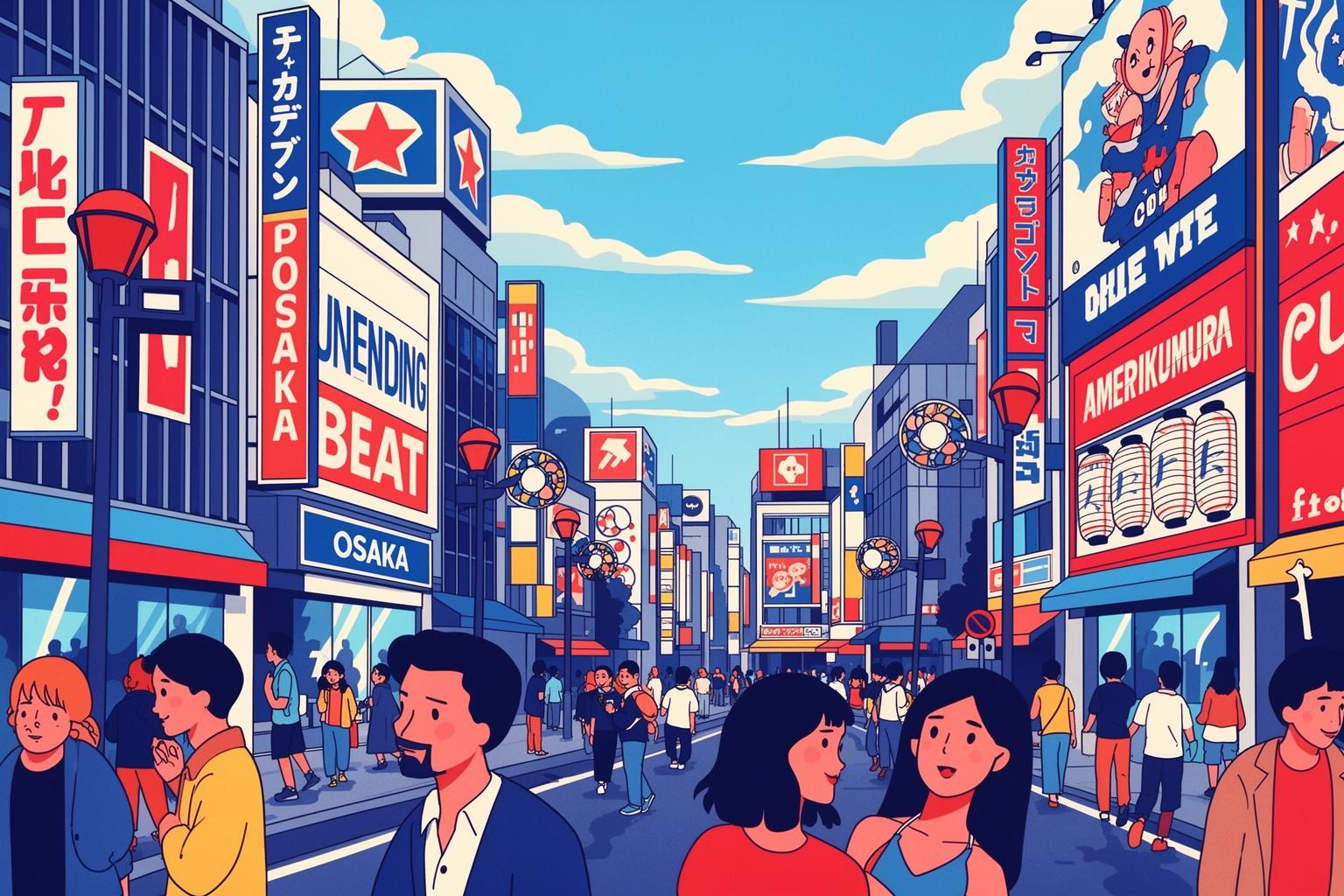
Amerikamura is much more than just a group of streets on a map. It is a living, breathing entity, a cultural phenomenon constantly evolving. It is a place where trends originate rather than follow, and where individuality is the most valuable currency. Walking through its mural-covered alleys is like experiencing a daily celebration of self-expression—a powerful declaration that, in a country often associated with harmony and collectivism, there exists a vibrant space for the individual, the eccentric, and the rebel. It serves as a reminder that culture is not a static display to be viewed in a museum but a dynamic force shaped and reshaped every day by the young people who claim these streets as their own. So when you visit, come with an open heart and a curious spirit. Engage with the shopkeepers, watch the skaters in Triangle Park, catch a show at a live house, and dare to try on an identity a little bolder than your own. Amerikamura isn’t just a place to observe; it’s a place to join in. Dive in, explore its chaotic beauty, and you will undoubtedly leave with a piece of Osaka’s electric, untamable soul beating within you.