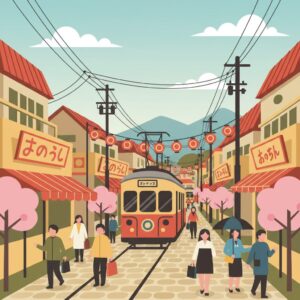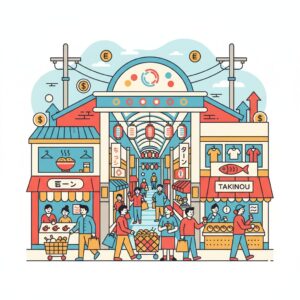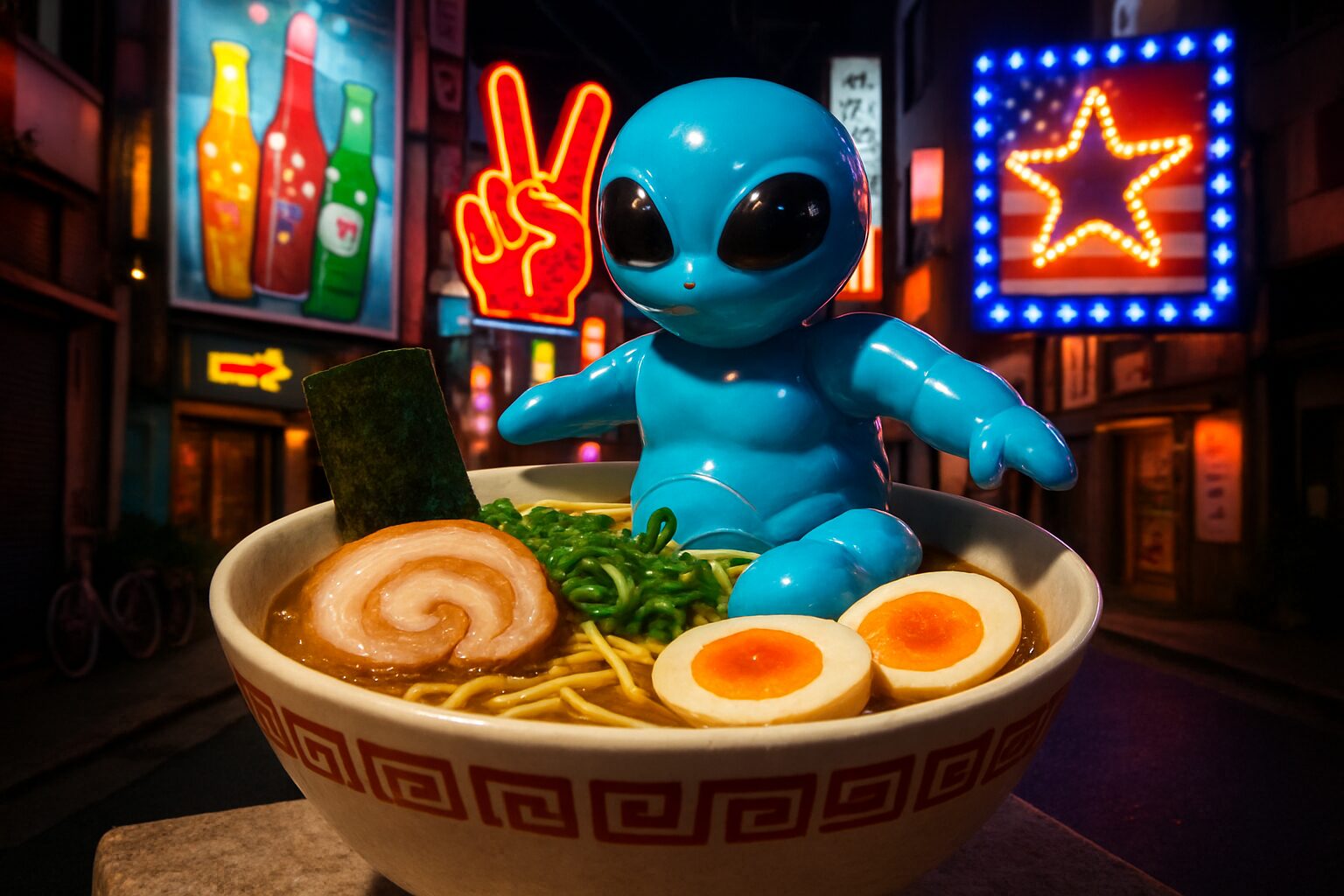
Welcome to the electric heart of Osaka, a place that beats to a rhythm all its own. This is Amerikamura, or ‘Amemura’ as the locals call it, a vibrant, pulsating neighborhood that has long been the epicenter of youth culture, fashion, and artistic rebellion in Western Japan. Forget what you think you know about quiet temples and serene gardens; Amemura is a concrete canvas splashed with graffiti, a symphony of street style, and a playground for the avant-garde. As a Tokyo-based event planner, my job is to find the pulse of a city, to understand what makes it tick, and here in Osaka, that pulse is strongest in the narrow, crowded streets of Amerikamura. It’s a place where tradition is not so much rejected as it is remixed, reimagined, and reborn into something thrillingly new. And nowhere is this spirit of creative defiance more deliciously apparent than in its ramen scene. We’re not here to talk about your standard shoyu or tonkotsu, as wonderful as they are. We’re diving headfirst into a world where ramen bowls are canvases, where chefs are artists, and where every slurp is a statement. This is a guide to the ramen that breaks the rules, a celebration of the unique, the modern, and the wonderfully weird creations you can only find simmering in the soul of Amerikamura.
While Amerikamura’s ramen scene thrives on creative rebellion, those seeking the deep, classic comfort of a perfectly executed tonkotsu ramen will find their pilgrimage fulfilled just south in the bustling streets of Namba.
The Concrete Canvas: Why Amemura’s Ramen is Different
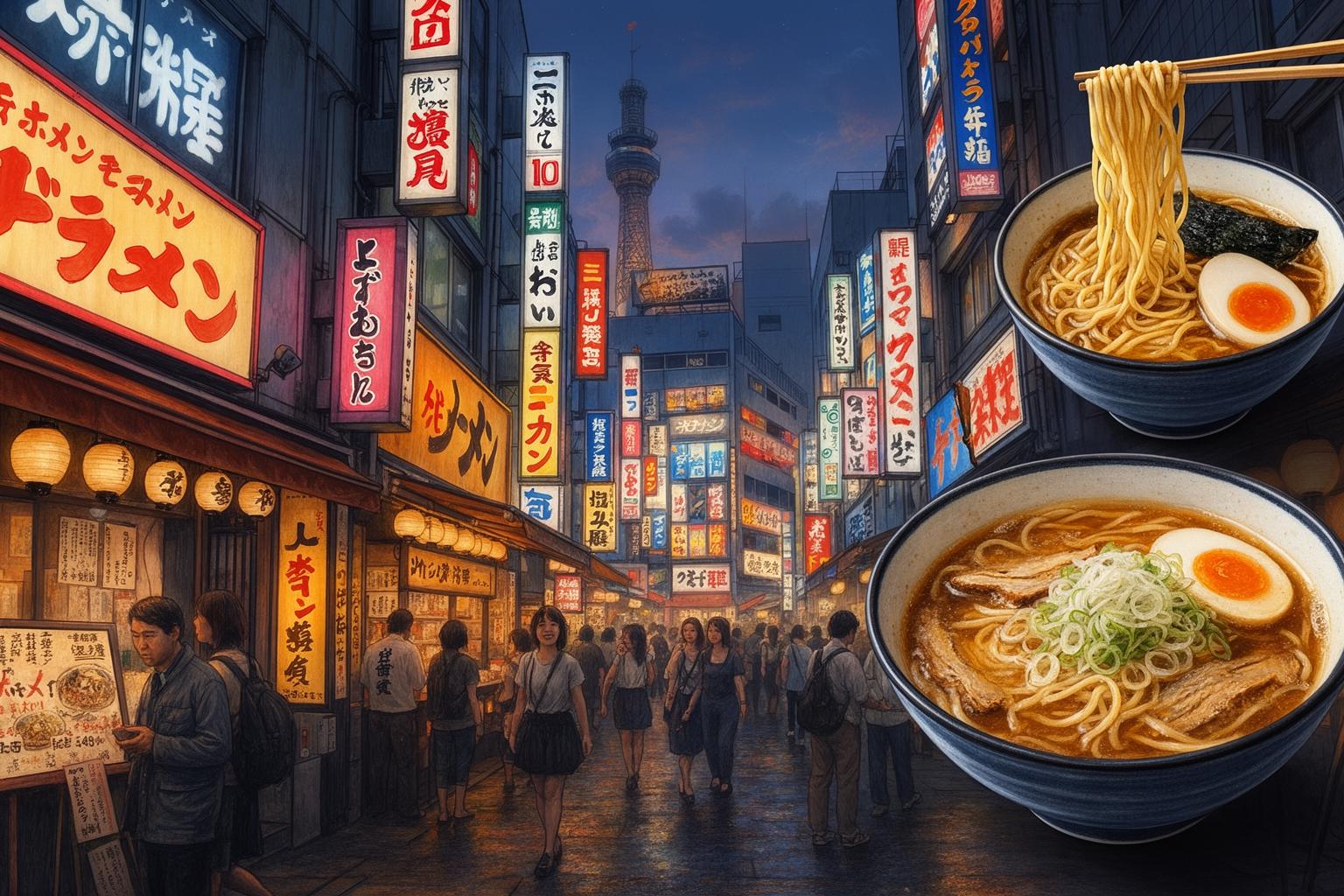
To truly understand ramen, you first need to grasp the soil from which it springs. Amerikamura wasn’t born from a deliberate plan; it grew organically. In the late 1960s and 70s, warehouses in this area began selling imported American goods—jeans, vintage clothing, vinyl records. It attracted young people eager for a taste of Western counter-culture. This wasn’t the polished, high-fashion world of Tokyo’s Ginza; it was gritty, authentic, and unapologetically loud. The neighborhood’s identity was forged amid punk rock, hip-hop, and skateboarding. The very air here hums with an infectious creative energy. You see it on the walls, adorned with murals by local and international artists. You see it in the fashion of the kids who gather in Sankaku Koen (Triangle Park), each outfit a unique statement. And you taste it in the food. Conventional culinary rules here feel more like suggestions than requirements. The takoyaki might have unconventional toppings, the crepes imaginative fillings, and the ramen… well, the ramen is a story all its own.
Traditional ramen is a craft perfected through repetition, a respect for recipes passed down through generations. The ramen masters of old Japan are revered for their consistency and unwavering dedication to a singular, perfected form. Amerikamura’s chefs, however, are a different breed. They are rebels and innovators, often young entrepreneurs raised in the neighborhood’s eclectic, global atmosphere. They see a bowl of ramen not as a sacred text to be preserved but as a canvas for self-expression. They draw inspiration from Italian pasta, Mexican mole, French consommé, and Thai curries. They are alchemists, blending the deep, soulful umami of Japanese cuisine with bold, surprising global flavors. They honor the fundamentals—the quality of the dashi, the texture of the noodles, the tenderness of the chashu—but they don’t feel constrained by them. This is the essential difference. The ramen here reflects the neighborhood itself: a bit punk rock, a bit high fashion, and wholly original. It’s a culinary dialogue between Osaka and the world, unfolding one delicious, defiant bowl at a time.
The Italian Kiss: When Tonkotsu Meets Tomatoes
Imagine stepping off a busy street, passing vintage clothing racks and the distant thump of a bassline from a nearby club, and entering a small, warmly lit ramen-ya that smells not of soy and dashi, but of roasted garlic, basil, and San Marzano tomatoes. This is the reality of Amerikamura’s fusion ramen, with the Italian-inspired bowls standing out as perhaps the most spectacular gateway into this new world. I discovered a spot hidden in a basement, a space that felt more like a modern trattoria in Milan than a ramen shop in Osaka. Polished concrete floors, minimalist wooden counters, and a single, dramatic spotlight illuminating the chef’s station set the scene. Here, the star is a creation I can only call a culinary masterpiece: the Tomato Tonkotsu.
The journey of this broth is an epic tale. It starts traditionally, with pork bones boiled for over twenty-four hours, churned and skimmed until they transform into a luscious, opaque, and impossibly creamy paitan soup. This forms the soul of Hakata-style ramen, rich with collagen and porky goodness. Then, the rebellion begins. The chef prepares a second, parallel element. Whole San Marzano tomatoes are slow-roasted with cloves of garlic, sprigs of thyme, and a generous splash of extra virgin olive oil until their sugars caramelize and their flavor deepens into a sweet, jammy concentrate. This tomato essence is then carefully blended into the simmering tonkotsu base, an act that feels almost heretical. The result is a color unlike any ramen bowl before—a vibrant, creamy sunset-orange. The aroma is intoxicating, a tug-of-war between the deep, savory pork scent and the bright, acidic sweetness of the tomato.
Then come the noodles. These aren’t your usual thin, straight Hakata noodles. The shop has them custom-made, slightly thicker and with a higher gluten content to provide a distinct, pasta-like chew. They’re designed to cling to the thick, complex broth, ensuring every bite offers a perfect harmony of flavors. The toppings complete this Italian-Japanese fantasy. Instead of the usual slice of rolled chashu, you find a delicate sheet of cured prosciutto, its saltiness cutting through the richness of the broth. A swirl of vibrant green pesto replaces the traditional black garlic oil, adding a fresh, herbaceous kick. Rather than a sheet of nori, a crispy, frico-like wafer of baked Parmesan cheese perches on the bowl’s edge, ready to be broken into the soup to add another layer of savory umami. A perfectly soft-boiled ajitama egg remains, its creamy, soy-marinated yolk a comforting familiar in this sea of innovation. That first sip is a revelation. It’s ramen, without doubt, yet something entirely new. It’s the comfort of a bowl of pasta and the soul-warming depth of ramen, all at once. It stands as a testament to Amerikamura’s fearless creativity—a dish that shouldn’t work, yet absolutely, magnificently does.
The Art of Emptiness: Ramen as a Zen Experience

Shifting from the bold and expressive to the calm and reflective, another side of Amerikamura’s modern ramen culture is the deconstructed, artistic style. This is ramen presented as performance art, crafted to make you slow down and savor each individual element. I came across an establishment that stood in complete contrast to a lively, noisy ramen counter. The interior was a lesson in Japanese minimalism: a single counter of smooth, light-hued hinoki wood, walls painted in tranquil grey plaster, and no background music at all. The only sounds were the soft movements of the chef and the gentle clinking of ceramics against wood. Among those familiar, this experience is often called ‘The Zen Bowl’; it is less a meal and more a meditative ritual.
When you order, a steaming bowl of soup does not arrive. Instead, a large, black lacquered tray is set before you. On it, everything is individually separated and arranged with the precision of a calligrapher. In one corner rests a small heated stone teapot, a dobin, holding the broth. It’s a crystal-clear chintan soup, a shimmering golden liquid created from a careful infusion of free-range chicken, aged Rishiri kombu, dried shiitake mushrooms, and a hint of smoked bonito. Its clarity belies a profound depth of flavor. Beside it, on a piece of beautiful Arita porcelain, the noodles are neatly coiled into a perfect, nest-like shape. They are served at room temperature to maintain their ideal texture, with a gentle wheaty aroma rising. A third, elongated ceramic plate displays the toppings, arranged like a miniature karesansui rock garden. There might be two paper-thin slices of sous-vide duck breast, fanned out to reveal their rosy pink interior. A scattering of vivid green micro-herbs. A single, crisp lotus root chip, its lattice pattern a natural work of art. A tiny soy-cured quail egg, its yolk a radiant orange gem. And a small dollop of yuzu kosho, a spicy, citrusy paste, adding a point of vibrant contrast.
Before you begin, the chef, who works with the quiet focus of a tea master, will gently guide you through the process. First, you pour a small amount of broth into a tiny tasting cup and savor its pure aroma and flavor. Then, you are encouraged to take a single noodle and appreciate its texture and taste by itself. Next, you sample each topping individually. Only after becoming acquainted with every component are you invited to combine them. You pour the hot broth over the noodles yourself, watching them relax and float in the golden liquid. Then you arrange the toppings on top, composing your own personal masterpiece. The act of eating becomes deeply mindful. You notice the subtle sweetness of the duck, the peppery sharpness of the herbs, the firm, satisfying chew of the noodles, and how the clear, clean broth unites everything without overpowering any single element. This is not merely about eating; it’s about appreciating the purity of ingredients, the chef’s skill, and the beauty of simplicity. It is an experience that demands presence—a moment of tranquility amid the vibrant energy of Amerikamura—and a profound assertion that ramen can be as elegant and refined as any haute cuisine.
The Earth’s Bounty: The Rise of Gourmet Vegan Ramen
For a long time, vegan ramen was overlooked in Japan, typically made with a simple vegetable broth and uninspired toppings. However, in a progressive area like Amerikamura, that was never going to suffice. The neighborhood now hosts a new generation of ramen chefs who are completely transforming plant-based cuisine, creating vegan bowls that aren’t just “good for vegan,” but genuinely rank among the most complex and delicious ramen you can find, period. I visited a shop devoted entirely to this craft, a space with an earthy, organic atmosphere—reclaimed wood, hanging plants, and soft, natural light streaming through the windows. The menu didn’t apologize for lacking meat; instead, it celebrated the endless possibilities of vegetables and fungi.
Their signature bowl, which I’ll call “The Earth’s Embrace,” is built on a broth that defies belief. The chefs have spent years perfecting a recipe that matches the creamy, mouth-coating richness of tonkotsu without using any animal products. The process showcases their ingenuity. It begins with a base of charred vegetables—onions, leeks, and carrots—providing a deep, smoky sweetness. To this, they add a potent dashi made from three types of mushrooms: dried shiitake for a savory, smoky foundation; porcini for a deep, woodsy richness; and fresh maitake for a delicate, almost floral aroma. This umami-rich broth is then simmered for hours. The secret to its incredible creaminess lies in the final step: a carefully balanced blend of raw cashews, macadamia nuts, and a touch of white miso is blended into the broth at high speed, emulsifying it into a silky, opaque, and unbelievably decadent soup. The finished dish is rich, complex, and deeply satisfying, with layers of flavor that reveal themselves with every sip.
The noodles are equally thoughtful, often made with spinach or kale kneaded into the dough, giving them a vibrant green color and an added layer of earthy flavor. Yet, it’s in the toppings that the creativity truly shines, demonstrating a mastery of texture and flavor that elevates vegetables to the spotlight. Instead of chashu, you might find a thick slice of king oyster mushroom that has been scored, seared, and glazed with a sweet soy reduction, mimicking the chewiness and caramelized flavor of pork belly. Or slices of smoked tofu, firm and infused with a deep hickory aroma. Other toppings might include tender-crisp asparagus spears, sweet corn kernels blistered with a torch, a tangle of spicy fermented bamboo shoots (menma), and a swirl of house-made chili oil or a nutty, fragrant tantan-style sesame paste. This isn’t about replacing meat; it’s about celebrating vegetables on their own terms. It’s a bowl that feels both virtuous and indulgent—a vibrant, life-affirming meal proving that the future of ramen is inclusive, innovative, and incredibly delicious. This is the kind of food that reflects Amemura’s progressive spirit, serving a new generation of diners who demand flavor without compromise.
Navigating the Neon Labyrinth: Practical Tips for Your Ramen Quest

Exploring the ramen scene in Amerikamura is an adventure, and like any great adventure, a bit of preparation goes a long way. This neighborhood is a compact, delightfully chaotic grid of streets situated just west of the main Shinsaibashi-suji shopping arcade. The easiest way to reach it is by subway—get off at Shinsaibashi Station on the Midosuji Line or Yotsubashi Station on the Yotsubashi Line. From there, it’s only a five-minute walk west, and you’ll know you’ve arrived when generic storefronts give way to independent boutiques, towering murals, and the iconic ‘Peace on Earth’ statue by local artist Taro Okamoto.
The best time to visit depends on the kind of experience you’re after. For a quieter, more relaxed meal, aim for a weekday lunch, either just before noon or after 2 PM. Evenings, however, are when Amerikamura truly comes alive: neon signs flicker on, the streets buzz with energy, and ramen shops fill with locals and travelers alike. Many of the top spots are small, seating only a few people at a counter, so be prepared to wait, especially on weekends. Instead of seeing this as a hassle, consider it part of the experience—a chance to people-watch and soak up the atmosphere. Don’t hesitate to explore narrow side streets and look for signs on second or third floors; some of the most inventive kitchens are tucked away from plain sight.
Once inside a ramen shop, the ordering process is generally simple. Many use ticket machines (券売機, kenbaiki) where you insert cash, select your ramen by pressing a button, and hand the ticket to the chef. If you don’t read Japanese, don’t worry—most machines feature pictures, and many modern eateries in Amemura offer English menus or welcoming staff to assist. My advice for first-timers is to be adventurous. If there’s a unique, limited-edition special, go for it. This is not the place to play it safe—let your curiosity lead the way. While you’re in the area, make a day of it. Before or after your ramen feast, wander through vintage clothing stores, browse quirky accessory shops, visit local art galleries, or simply grab coffee and sit in Triangle Park to watch the incredible street fashion parade. Amerikamura is a holistic experience, and its ramen is the perfect fuel for a day of urban exploration.
As your day in Amerikamura winds down, finishing with a bowl of ramen feels like the perfect ending. The neon lights reflect in the rich broth before you—a microcosm of the vibrant, chaotic, and beautiful energy of the surrounding streets. Ramen here is more than nourishment; it’s a conversation—a dialogue between deep Japanese culinary traditions and the forward-thinking pulse of global youth culture. Each bowl tells the story of a chef daring to ask, ‘What if?’ What if ramen tasted like Italy? What if a bowl of noodles became a meditative experience? What if plants could create a broth richer than pork? In Amerikamura, these questions aren’t just posed—they’re answered with skill, passion, and fearless creativity that inspires. So come with an open mind and an empty stomach, ready to challenge your expectations. Because at the heart of Osaka’s most rebellious neighborhood, you won’t just find a great meal—you’ll discover the delicious, soul-stirring future of ramen.