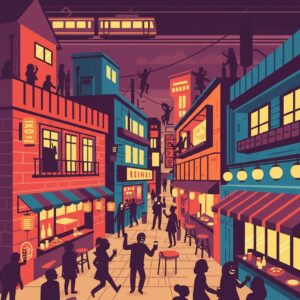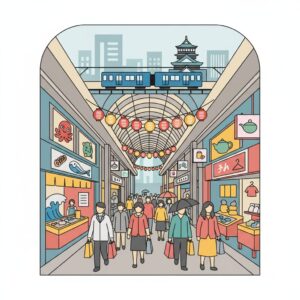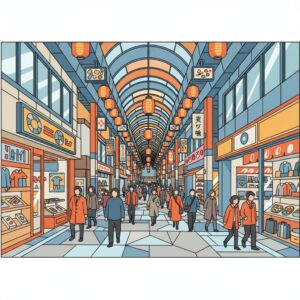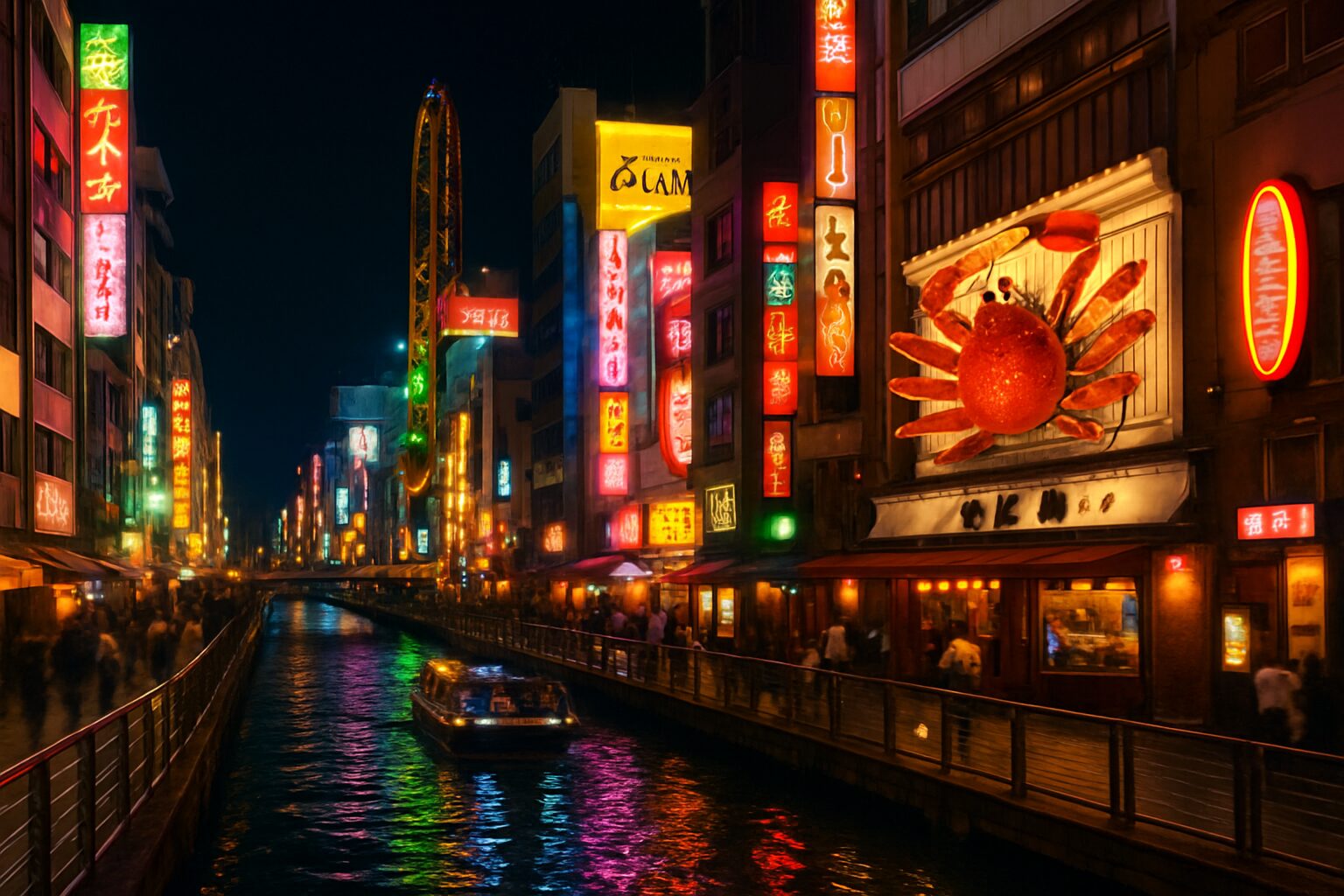
Welcome to the electric heart of Osaka, a place where the night doesn’t just fall; it ignites. Dotonbori is more than a district; it’s a living, breathing creature of light, sound, and flavor that has pulsed at the center of this city’s identity for centuries. For those of us who call Osaka home, Dotonbori isn’t just a tourist spectacle—it’s a landmark, a meeting point, a place for celebration, and the undisputed capital of kuidaore, the noble philosophy of eating until you drop. This is where the city’s boisterous, fun-loving soul is on full display, a chaotic yet harmonious symphony played out under the watchful eyes of giant mechanical crabs and the eternally running Glico Man. Forget what you’ve seen in pictures; to truly understand Dotonbori, you have to feel its energy wash over you, let the scent of grilled octopus and sweet takoyaki sauce guide your steps, and dive headfirst into its brilliant, beautiful madness. This isn’t just a guide to seeing the sights; it’s an invitation to experience the Dotonbori that locals know and love, to find the rhythm in its chaos and make its vibrant nightlife your own.
To truly embrace Osaka’s vibrant energy, consider exploring the youthful street fashion and culture of Amerikamura as your next adventure.
The Neon River: First Impressions and Finding Your Bearings
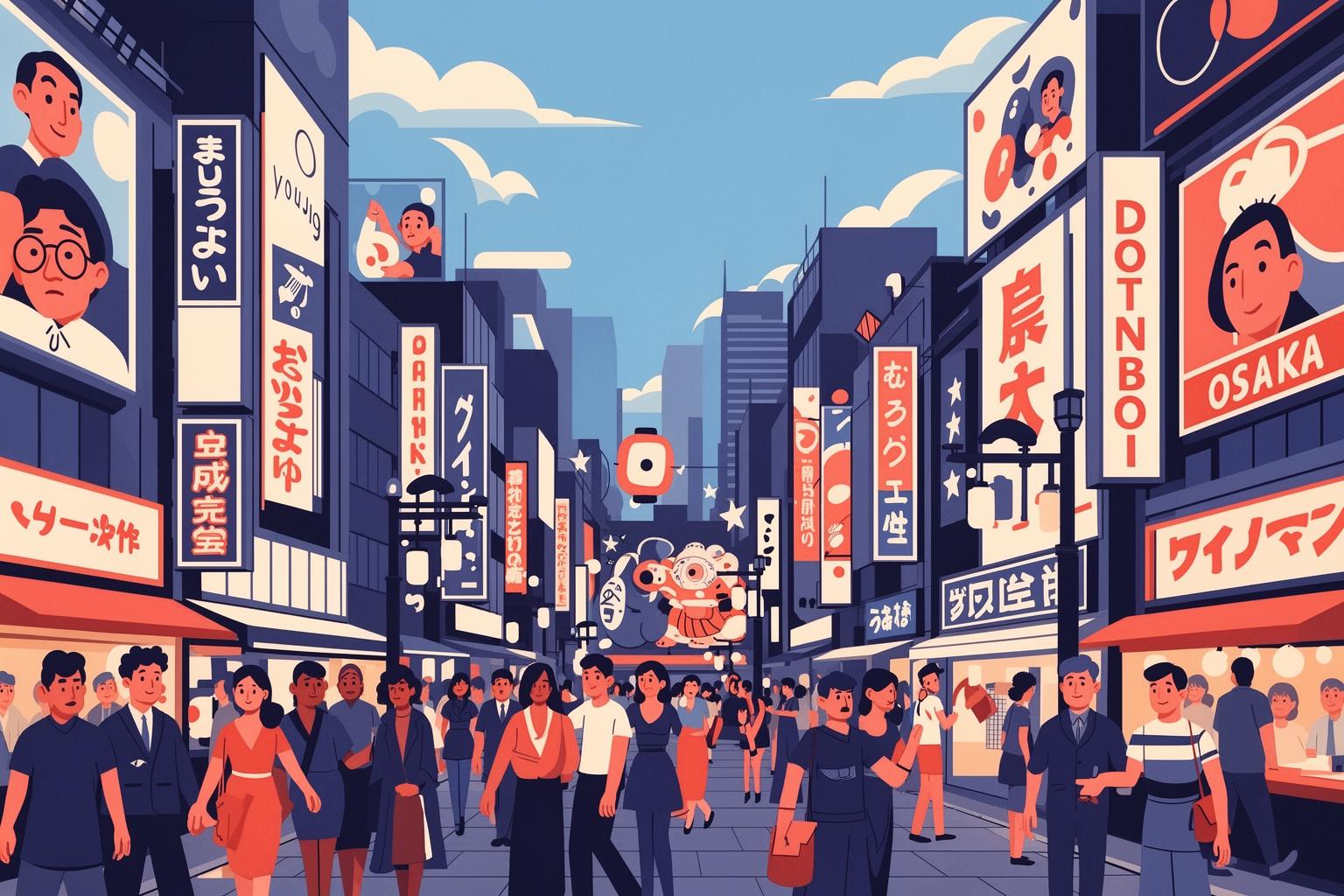
The moment you emerge from Namba or Shinsaibashi Station and head towards the canal, the shift in energy is unmistakable. The city’s low hum swells into a thunderous roar. Dotonbori announces itself not with a sign but through a sensory explosion. Your eyes are the first to be overwhelmed. Towering walls of light, flickering digital billboards, and massive three-dimensional sculptures—a dragon, a hand clutching sushi, a steaming chef—all compete for your attention. The air itself feels different here, thick with the savory steam rising from countless food stalls and the faint, sweet scent of the Dotonbori River below. This is no place for quiet reflection. It’s a place to be swept up in the relentless flow of humanity along the canal’s pedestrian paths. The first local tip is simple: don’t resist it. Let the crowd carry you for a while. Your initial walk along the Tonbori River Walk is a rite of passage, your orientation lap. Look up. Look around. Take in the sheer audacity of it all. Neon sign reflections shimmer and dance on the dark water of the canal, creating a mesmerizing, almost psychedelic effect. It feels like walking through a scene from a sci-fi movie, yet it’s been the throbbing heart of Osaka’s entertainment scene for over 400 years.
Decoding the Icons: More Than Just Photo Ops
Every visitor to Dotonbori is captivated by its famous landmarks, but for a local, these are more than just backgrounds for a selfie; they form part of the city’s shared identity. They act as familiar beacons amid the dazzling chaos, meeting points for friends, and symbols of Osaka’s distinctive character.
The Glico Running Man: A Symbol of Victory
That triumphant runner, arms raised against a bright blue track, is arguably Osaka’s most iconic single image. First installed in 1935 by the confectionery company Ezaki Glico, the sign has become a symbol of the city’s resilience and forward-thinking spirit. It has been updated several times over the decades, with the current version being a dazzling LED display that shifts backgrounds throughout the day and night. For locals, the Ebisubashi Bridge, where everyone stops to photograph the sign, is the quintessential meeting spot. Saying “Let’s meet at Glico” is as common as saying “Let’s meet at the station.” When you stand there, don’t just take a photo. Observe the people around you. Notice the local baseball fans, the Hanshin Tigers supporters, who famously leap from this bridge into the canal to celebrate a major victory. Feel the collective energy of a city that wears its heart on its sleeve. The sign isn’t just an advertisement; it’s a testament to endurance and a continual source of civic pride.
Kani Doraku’s Giant Crab: The Art of Motion
Down the street, the enormous mechanical crab of the Kani Doraku restaurant waves its claws and legs with a slow, hypnotic rhythm. This sign is a perfect example of kanban, the traditional Japanese art of elaborate, eye-catching signage. In a city as competitive as Osaka, especially in the restaurant business, you have to do something dramatic to stand out. Kani Doraku’s founder achieved just that in the 1960s, creating an icon now inseparable from the Dotonbori landscape. It’s a bold statement: this is the place for crab. Its constant, gentle movement offers a strange sense of calm amid the visual noise surrounding it. It’s a reminder that even in this modern neon jungle, there remains a connection to an older, more theatrical way of advertising, rooted in craftsmanship and a hint of whimsy.
Kuidaore Taro and the Pufferfish Lantern
Don’t miss the clown-like drummer boy, Kuidaore Taro, who has been beating his drum outside a building since 1950, serving as a mascot for the kuidaore spirit. His cheerful, slightly manic expression perfectly captures the relentless pursuit of culinary delight that defines this area. Likewise, the giant pufferfish lantern of the Zuboraya restaurant (though the restaurant itself has closed, the lantern often remains) is another iconic kanban. It’s big, bold, and slightly menacing, much like the delicacy it represents. These signs are not merely decorations; they form the visual language of Dotonbori, telling stories of its culinary passions and its long history as a district designed to entertain.
The Gospel of Kuidaore: Eating Until You Drop, The Local Way
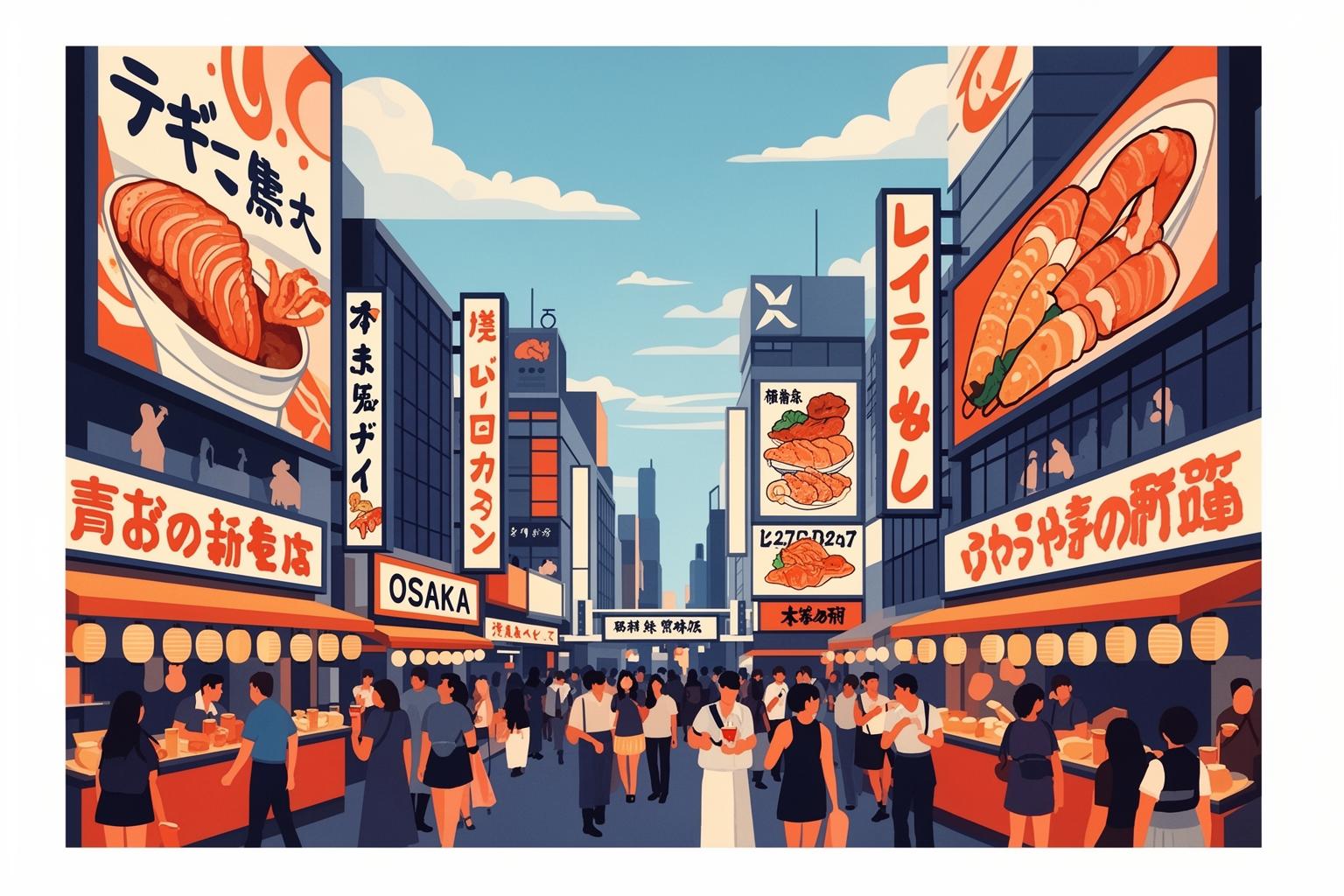
Now we arrive at the core of the matter. The reason Dotonbori exists and the philosophy that ignites its spirit is kuidaore (食い倒れ). Though it literally means “eat until you ruin yourself financially,” it’s better understood as a passionate, all-encompassing devotion to food. In Dotonbori, this isn’t just a phrase; it’s a way of life. A night out here isn’t about having a single sit-down meal—it’s a culinary adventure, a progressive feast moving from stall to stall, snack to drink, savory to sweet.
The Holy Trinity of Dotonbori Street Food
To embark on your kuidaore journey, start with the essentials. These are not mere snacks; they form the foundation of Osaka’s food culture.
Takoyaki: The Soul of Osaka in a Ball
Forget any takoyaki you’ve tried elsewhere. Here, it’s a true art form. Stalls abound, each with subtle differences in batter, dashi, and sauce. The authentic local experience is watching the masters at work. They stand before large cast-iron pans filled with dozens of hemispherical molds. With lightning speed, they pour the batter, drop in a piece of octopus (tako), and deftly flip the balls using two metal picks in a fluid, mesmerizing motion. The exterior becomes perfectly crisp and golden, while the inside stays molten and creamy, a savory custard encasing tender octopus. Osaka-style takoyaki is dangerously hot, so be cautious with your first bite. It’s typically topped with a sweet and tangy brown sauce, a drizzle of Japanese mayonnaise, a sprinkle of green laver (aonori), and a generous handful of dancing bonito flakes (katsuobushi). Find a spot by the canal, open your container, and savor the complex textures and layers of flavor—savory, sweet, smoky, and utterly satisfying.
Okonomiyaki: The Savory Pancake Masterpiece
Often described as a “Japanese pancake” or “Japanese pizza,” okonomiyaki is much more than that. The name means “grilled as you like it,” and it is a beautiful, customizable dish. A batter made from flour, grated nagaimo (a type of yam that makes it fluffy), and dashi is combined with a generous amount of shredded cabbage and other ingredients like pork belly, shrimp, or squid. It’s grilled on a large flat-top griddle, or teppan. Some restaurants let you cook it yourself at the table, which adds to the fun, but for your first time, let the professionals handle it. Watching them expertly shape, flip, and dress the okonomiyaki is a show in itself. Like takoyaki, it’s finished with the signature sweet sauce, mayo, aonori, and bonito flakes. It’s hearty, comforting, and quintessentially Osaka. A meal to share with friends over laughter and a cold beer.
Kushikatsu: The Art of the Skewer
Kushikatsu are deep-fried skewers featuring just about anything imaginable: meat, seafood, vegetables, even cheese. The magic lies in the batter—light, airy, and perfectly crisp—and the dipping sauce. There is an important rule of kushikatsu etiquette: NO DOUBLE DIPPING. The communal pot of thin, savory sauce is shared by all, so you dip your skewer once and only once before taking a bite. If you need more sauce, use the provided slices of raw cabbage to scoop some onto your plate. Kushikatsu restaurants are often lively, no-frills spots, ranging from standing-only bars to bustling sit-down places. Ordering a variety of skewers—pork, onion, quail egg, lotus root—and a highball is a classic Dotonbori night out. It’s fast, social, and delicious.
Beyond the Main Drag: Finding Dotonbori’s Hidden Soul
While the main canal street is a spectacle, the area’s true character emerges in the narrow alleys and side streets that branch off from the neon chaos. This is where you shift from observer to participant. This is where the locals go.
Hozenji Yokocho: A Step Back in Time
Just a short walk from the Glico sign, you’ll discover a narrow, stone-paved alley that feels like it belongs to another century. This is Hozenji Yokocho. The bright lights of Dotonbori give way to the soft, warm glow of traditional paper lanterns. The roar of the crowd softens into a gentle murmur of conversation and the clinking of glasses behind the wooden facades of tiny, exquisite restaurants and bars. At the heart of this alley stands Hozenji Temple itself, a small but potent spiritual anchor amid the commercial bustle. Here you’ll find the famous Mizukake Fudo statue, a Buddhist deity cloaked in a thick, green carpet of moss. Worshippers pour water over the statue while making a prayer, and centuries of this ritual have nurtured the beautiful moss. The act of pouring water offers a moment of quiet reflection, a chance to pause and breathe amid the city’s energy. The restaurants in Hozenji Yokocho tend to be more traditional and upscale, specializing in kappo cuisine, fine sushi, or exquisite okonomiyaki. Even if you don’t stop for a full meal, simply walking through this alley is a transporting experience—a reminder of the history that supports the modern spectacle just steps away.
Ukiyo Koji: The Alley of Floating Worlds
Even closer to the main street is a tiny, covered alley known as Ukiyo Koji. It’s easy to miss if you’re not looking for it. This small passageway is decorated with art and dioramas depicting life in Osaka during the Edo period, when Dotonbori was the city’s premier theater district. The name refers to the “Floating World” of popular entertainment. Walking through it feels like a mini-museum experience, linking the Dotonbori of today with its past as a hub for Kabuki and Bunraku puppet theater. It’s a quiet little shortcut offering a dose of culture and a brief respite from the crowds.
The Labyrinth of Izakayas
Venturing into the nameless alleys around Dotonbori is where you’ll discover the best izakayas (Japanese pubs). These aren’t just bars; they are places where food holds equal importance to the drink. They range from tachinomi (standing bars), where you can enjoy a quick drink and a few skewers after work, to cozy, no-frills establishments run by the same family for generations. Don’t be deterred if there’s no English menu. Often, the best spots don’t have one. This is your chance to be adventurous. Point at what others are eating, use a translation app, or simply say “Osusume wa?” (What do you recommend?). The reward is an authentic experience, surrounded by locals unwinding after their day. This is where you’ll hear the true Osaka dialect and see the city’s famous friendliness in action. An evening spent hopping between a few of these hidden gems, sharing small plates and drinks, is the ultimate local Dotonbori experience.
The River’s Perspective: Cruises and Waterside Views
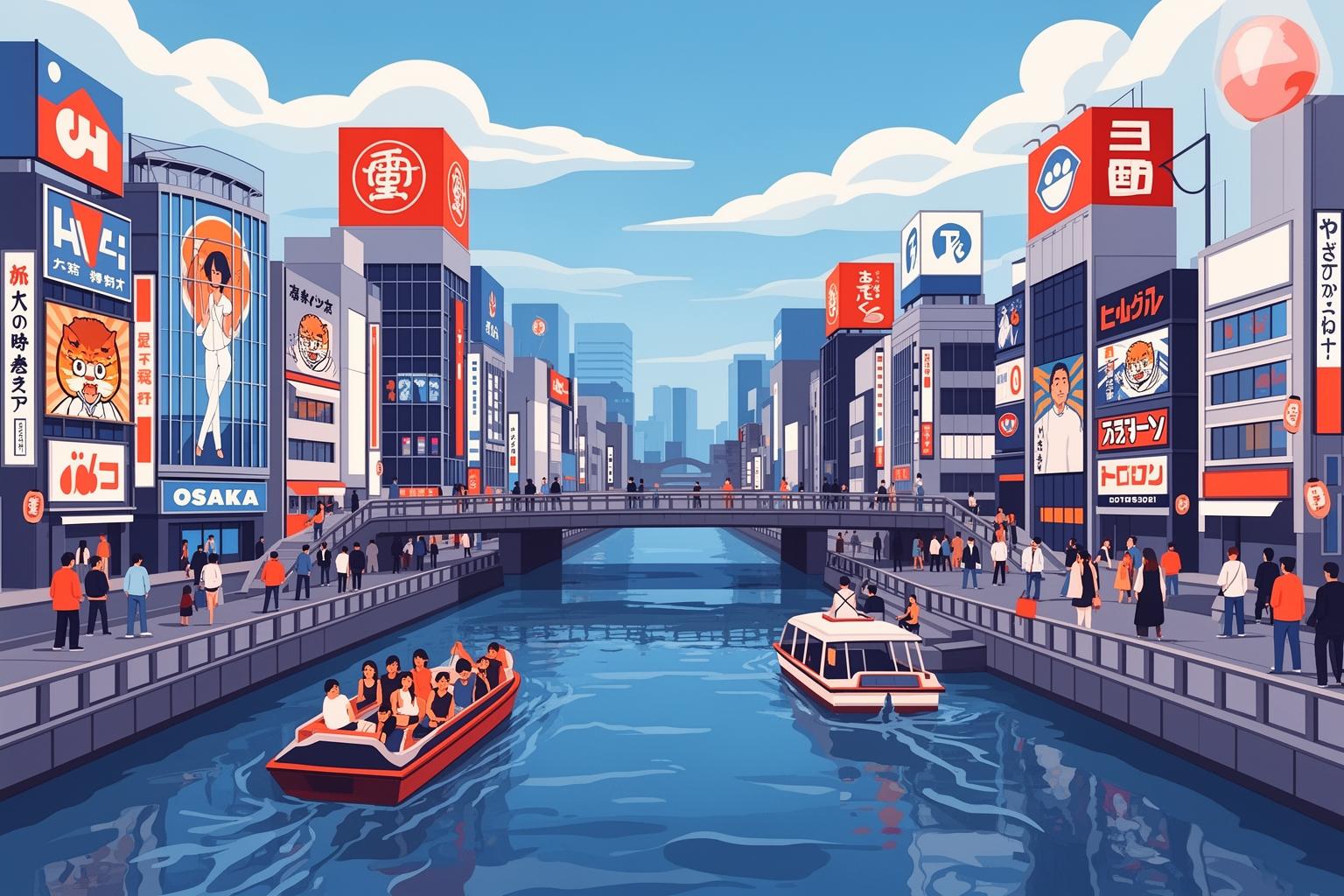
One of the best ways to truly appreciate the vast scale and spectacle of Dotonbori is to view it from the water. The Tonbori River Cruise provides an excellent perspective. These short boat tours take you along the canal, right through the heart of the neon-lit canyon. From this viewpoint, the signs appear even larger, and the crowds on the bridges resemble spectators in a grand amphitheater. The guides are often lively and share fascinating trivia about the area’s history and landmarks. Taking a cruise at sunset, just as the lights begin to glow, offers a particularly magical experience. You watch the district transform in real time from a bustling commercial area into the vibrant nightlife hub it’s known for. It’s a great way to get your bearings before exploring the streets on foot, and it offers some of the best, unobstructed photo opportunities of the Glico Man and other giant signs.
Entertainment Beyond Food: The Theatrical Roots
Dotonbori’s history is deeply intertwined with entertainment. Before becoming a food haven, it was known as Japan’s Broadway, lined with theaters showcasing traditional Kabuki and Bunraku puppet performances. Although many of these historic theaters have disappeared, the essence of performance endures.
Shochikuza Theatre
The impressive neo-Renaissance facade of the Shochikuza Theatre stands as a symbol of this legacy. Opened in 1923, it was built for Kabuki performances and still hosts shows today. Even if you don’t catch a performance, appreciating the architecture is essential. It contrasts sharply with the surrounding modern bustle, like a dignified elder overseeing a lively celebration.
Namba Grand Kagetsu
A brief walk from Dotonbori brings you to the Namba Grand Kagetsu, the flagship venue of Yoshimoto Kogyo, Japan’s leading comedy company. This theater is the heart of Japanese stand-up comedy (manzai). While the shows are in Japanese, the physical comedy, slapstick, and vibrant energy often cross language barriers. Experiencing the contagious laughter of an Osaka crowd offers a genuine cultural experience, providing insight into the city’s famed humor and love of laughter.
Modern Fun: Arcades and Karaoke
Naturally, modern entertainment is abundant. Massive multi-level arcades like Round1 and Taito Station are sensory havens, packed with the latest video games, claw machines filled with amazing prizes, and purikura photo booths. They are loud, colorful, and immensely entertaining. Karaoke is another staple of Japanese nightlife. Dotonbori boasts numerous karaoke boxes where you can rent a private room with friends, order drinks and snacks, and sing your heart out until the early morning hours. It’s an ideal way to conclude a night of kuidaore.
Practical Tips for a Perfect Dotonbori Night
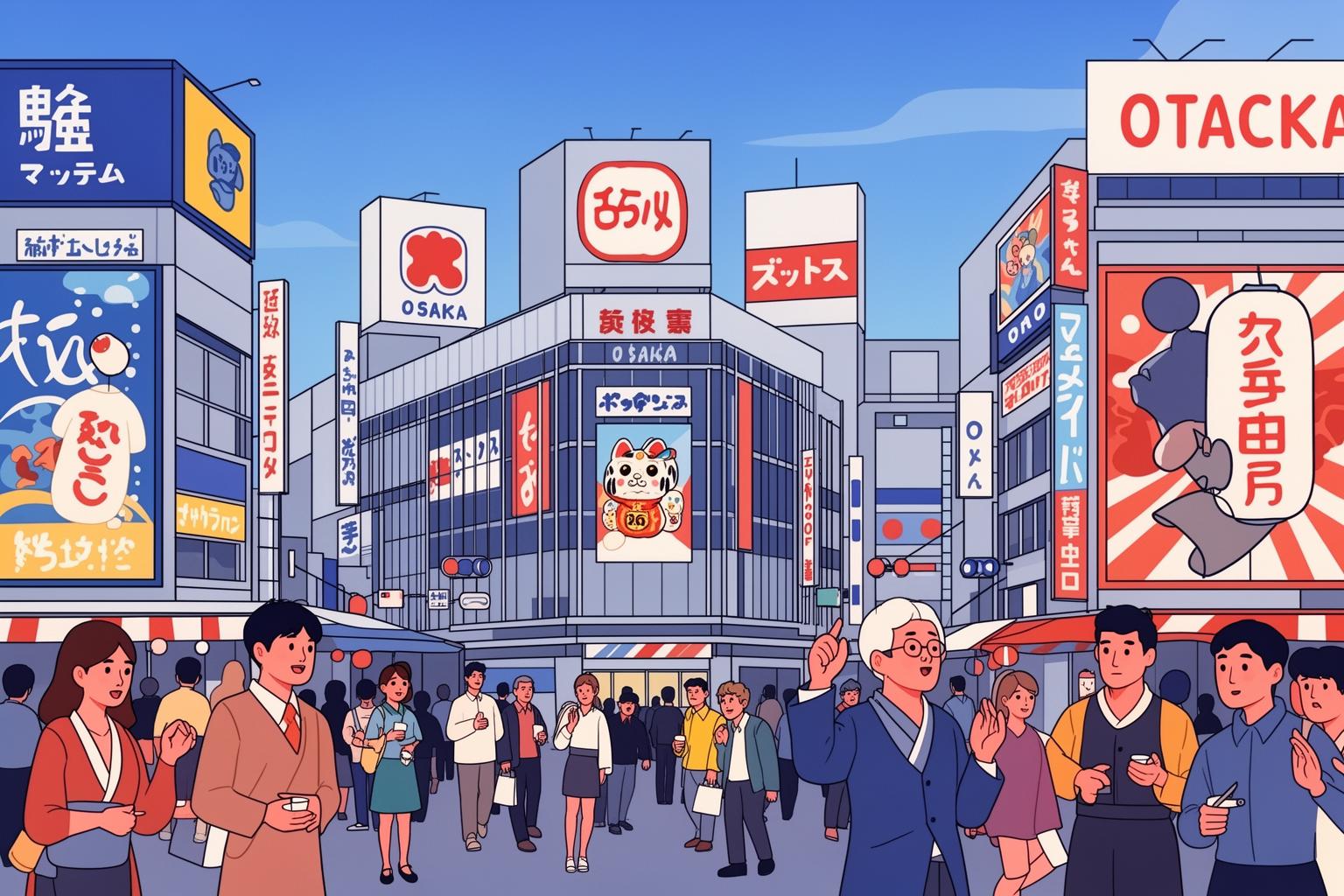
Exploring Dotonbori is an adventure, and a bit of preparation can help make it a smooth experience.
When to Visit
Dotonbori buzzes around the clock, but it really shines after dark. The best time to arrive is around 6 or 7 PM. This allows you to witness the shift as daylight fades and the neon lights dazzle in full effect. The area is most crowded on Friday and Saturday nights, so if you’d rather avoid the biggest crowds, a weekday evening is ideal. Still, enjoying the weekend hustle is part of the charm.
Getting There and Around
Dotonbori is very well-connected. The nearest subway stations are Namba (serviced by the Midosuji, Yotsubashi, and Sennichimae lines) and Shinsaibashi (on the Midosuji and Nagahori Tsurumi-ryokuchi lines). JR Namba Station and Nankai Namba Station are also within walking distance. Osaka’s subway generally stops running just after midnight, so be sure to check the last train times if you plan to stay late. Taxis are plentiful but expect lines at busy spots late at night.
Payment Tips
Although Japan is becoming more accommodating to cards, cash remains king, especially at smaller street food vendors and cozy izakayas. It’s wise to carry a good amount of yen with you. Larger restaurants and chains typically accept credit cards, but when aiming for the most authentic experiences, cash is preferred.
Managing the Crowds
The main streets can be extremely crowded. The local approach is to move with the flow rather than against it. If you need to pause, step aside. Keep your belongings secure as you would in any busy area. If the crowds become too much, take a break in one of the quieter side streets like Hozenji Yokocho for a refreshing escape.
A Final Thought: Embrace the Beautiful Chaos
Dotonbori isn’t a place to admire from afar; it calls for your full engagement. It’s a spot to be loud, to share laughter with strangers, to taste foods you can’t even pronounce, and to lose yourself a little in the shimmering maze of its streets. For those of us living in Osaka, it serves as a constant, vibrant reminder of our city’s essence: unpretentious, lively, and endlessly eager for more. So arrive with an empty stomach and an open heart. Let the neon lights lead you, follow the aroma of something sizzling on a teppan, and immerse yourself. You may discover that amid Osaka’s dazzling chaos, you truly feel at home.