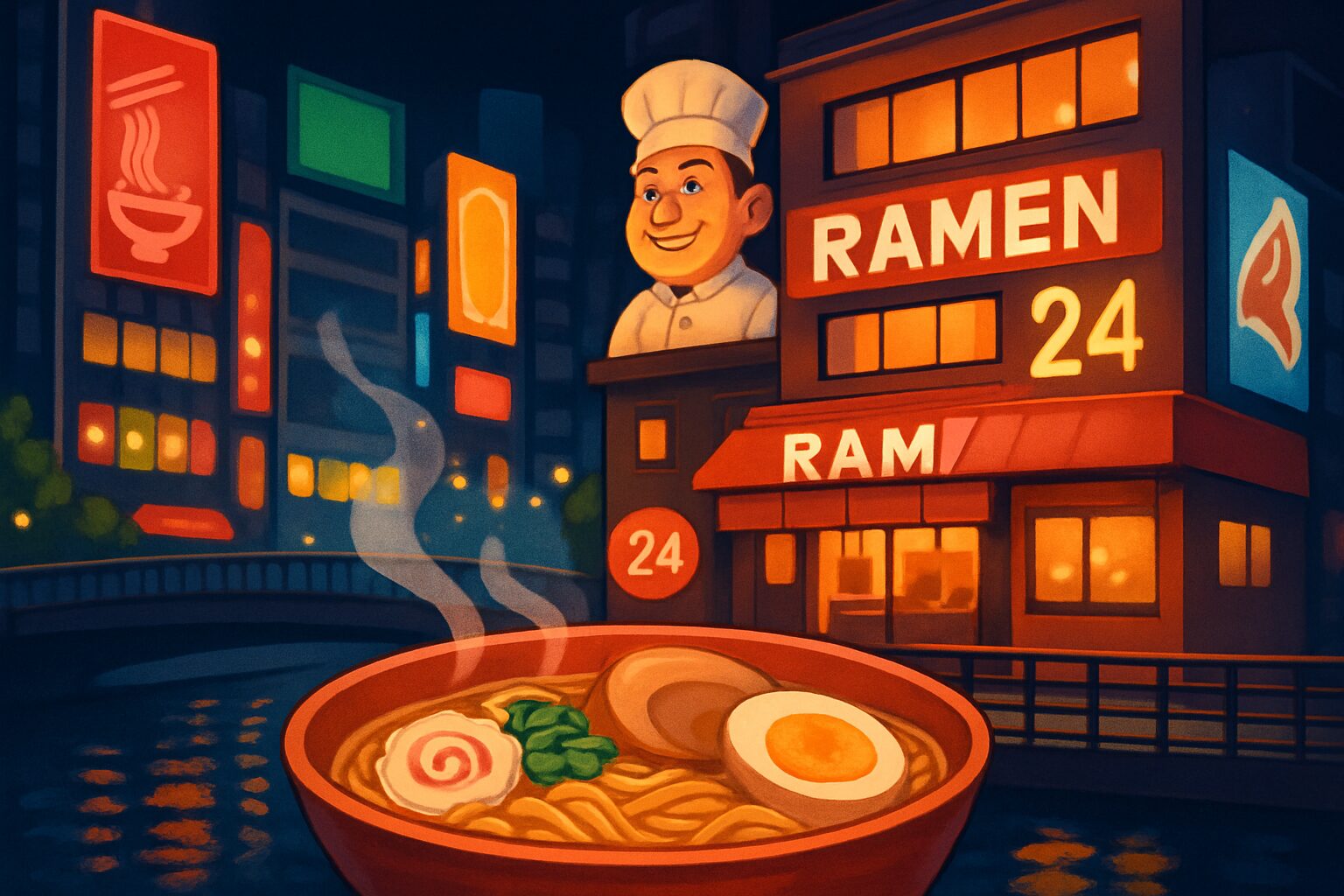
Welcome, fellow traveler, to the electric heart of Osaka, a place where the clocks seem to melt away under the glare of a million neon signs. This is Dotonbori, a dazzling canal-side dreamscape that pulses with a life force all its own. By day, it’s a bustling hub of shoppers and sightseers. But by night, it transforms into something more. It becomes a sanctuary for the hungry, the sleepless, and the seekers of authentic flavor. This is the city of kuidaore—a glorious creed that means “to eat until you drop”—and nowhere is this philosophy more alive than in the steam-filled, soul-warming ramen shops that defy the very concept of a closing time. In Osaka, the night doesn’t end with a final drink; it finds its true crescendo in a perfect bowl of ramen. This ritual, known as shime-ramen, is more than just a late-night snack; it’s a cultural punctuation mark, a way to bring a perfect evening to a satisfying, savory close. Forget your midnight pizza or your late-night drive-thru. Here, we chase the dragon of flavor down alleyways glowing with paper lanterns, seeking out the simmering pots that hold the city’s secrets. We’re about to embark on a journey into the heart of Dotonbori’s 24-hour ramen scene, a world where the broth is always hot, the noodles are always ready, and the soul of Osaka is served one delicious bowl at a time. This isn’t just a food tour; it’s an immersion into the rhythm of a city that truly never, ever sleeps.
After immersing yourself in Dotonbori’s vibrant food culture, you can explore another facet of Osaka’s soul by experiencing the traditional Bunraku puppet theater.
The Soul of Osaka’s Nightlife: Why Dotonbori Never Sleeps
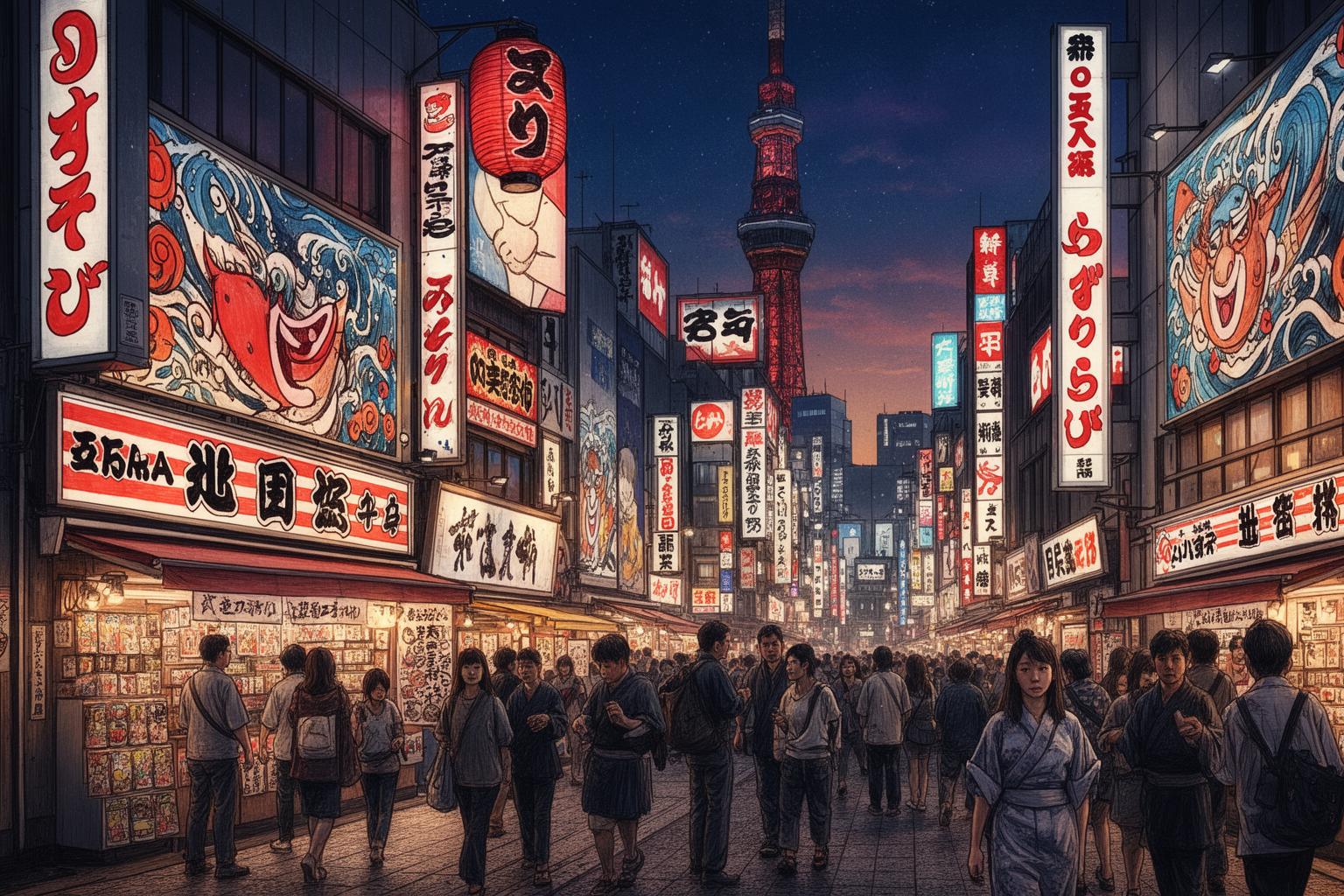
To truly grasp the magic of a midnight bowl of ramen in Dotonbori, you first need to sense the heartbeat of the district itself. Step out of Namba Station, and you’re not merely on a street; you’re on a stage. The air buzzes with energy, a symphony of sounds from sizzling takoyaki grills, lively vendor calls, the rumble of pachinko parlors, and a dozen different songs blasting from storefronts, all vying for your attention. Your senses are instantly overwhelmed in the most delightful way. Look up, and you’re met with a surreal collection of giant, kinetic sculptures. A massive crab waves its mechanical claws, a glowing pufferfish lantern emits an eerie light, and a huge hand proudly grasps a piece of sushi. Overseeing it all is the Glico Running Man, a symbol of athletic victory and enduring commerce that has cheered on the city for generations. This is no mere decoration; it’s a declaration. It embodies Osaka’s bold, unapologetic spirit in steel, plastic, and light.
Dotonbori’s history is deeply rooted in entertainment. More than 400 years ago, a merchant named Yasui Doton invested his life savings to widen the Umezu River into a canal, aiming to create a new channel for commerce. Though he died in battle before finishing the project, his cousins completed it, and the waterway was named Dotonbori—Doton’s canal—in his memory. The local government then designated the south bank as an entertainment district, soon lined with kabuki theaters, bunraku puppet theaters, and traditional performance houses. This legacy of performance and spectacle is ingrained in the district’s DNA. The crowds that gather here each night are not just here to eat; they come to participate in the ongoing, vibrant performance of Osaka itself. The atmosphere is carnival-like, a never-ending festival where every night feels like a celebration. Neon signs reflect on the dark canal surface, creating a river of liquid light flowing through the heart of the city’s nightlife. This is the setting for our ramen journey—a realm where the extraordinary is everyday, and the pursuit of food becomes an adventure in its own right.
The Kings of the Clock: Unveiling Dotonbori’s 24-Hour Ramen Legends
In a district that never sleeps, its most cherished eateries must keep up with its relentless energy. The 24-hour ramen shop is a cornerstone of the Dotonbori experience, serving as a beacon for night owls, tired travelers, and post-karaoke partiers. These are more than mere restaurants; they are institutions, each with its own unique character, philosophy, and flavor profile. Let’s explore the three giants that define the round-the-clock ramen scene, each delivering a distinctly different yet equally unforgettable experience.
The Solo Dining Haven: Ichiran’s Flavor Concentration Booths
Our first stop is a name revered by ramen lovers worldwide: Ichiran. But the Dotonbori Main Building is a special kind of pilgrimage spot. From the outside, it appears as a modern structure, its name glowing in red and green. Often, a queue winds out the door, a testament to its enduring popularity. Yet, the true Ichiran experience commences the moment you enter. You are not greeted by a host but by a vending machine. This is your first interaction, a delightfully efficient and quintessentially Japanese system. You select your ramen, maybe some extra pork, a seasoned egg, or a side of rice, then pay. The machine dispenses a set of small tickets—your currency for the meal ahead.
With your tickets in hand, you’ll be guided to a seating chart resembling a circuit board, with lights indicating available seats. This ushers you to what Ichiran is best known for: the “Flavor Concentration Booth.” You proceed down a narrow corridor lined with small, individual wooden stalls. You slide into your seat, and for a moment, the overwhelming sensory overload of Dotonbori fades away. Here, it’s just you, a bamboo curtain before you, and a small sheet of paper. This paper is the key to creating your perfect, personalized bowl of ramen. You become the maestro of this flavor symphony. How firm do you want your noodles — from extra firm to extra soft? How rich do you wish the broth to be? Would you like a hint of garlic, or a full clove? How much of their signature Original Red Sauce, a secret blend of over 30 spices, do you dare to add? You circle your choices, press a small button, and hand the sheet along with your tickets to a pair of hands that appear from behind the curtain. Then, the curtain lowers, leaving you in a private cocoon built for one purpose: to focus solely on the bowl of ramen about to arrive.
When it comes, it’s a moment of quiet reverence. The curtain lifts just long enough for the server to place the beautiful ceramic bowl before you, then closes again. Steam rises, carrying the intoxicating aroma of a deeply savory, creamy tonkotsu broth. This pork bone soup is the star, simmered for hours to strike a perfect balance of richness without heaviness. The noodles are thin, straight, and cooked to your exact preference. At the center of the bowl is a bright red swirl of the spicy sauce, waiting to be stirred in. Taking that first sip is a revelation. The broth is smooth, complex, and rich in umami. The noodles have the ideal bite. The thin slices of chashu pork are tender and flavorful. As you mix in the red sauce, a gentle heat rises, cutting through the richness and adding another layer of depth. Slurping is not only allowed—it’s encouraged. In the privacy of your booth, free from distractions, you can fully immerse yourself in the textures and flavors, savoring every nuance of the chef’s craft. If your noodles run low but you still have plenty of delicious broth, placing a small metal plate on the sensor triggers a cheerful chime to alert the hidden staff that you want kaedama—an extra serving of noodles. A fresh, steaming portion arrives shortly, letting you continue the journey. Ichiran is more than a meal; it’s a meditative experience. A quiet island in a loud, chaotic sea, offering a personalized perfection you create yourself.
The Roaring Dragon’s Embrace: Kinryu Ramen’s Iconic Street Presence
If Ichiran is a tranquil haven for the individual, our next stop, Kinryu Ramen, is a lively, open-air celebration for the crowd. You can’t miss it. In fact, you’ll likely spot one of its locations before realizing you’re looking for it. Just look for the dragon. A massive, three-dimensional green dragon bursts from the building’s facade, its mouth wide in a mighty roar, claws clutching a pearl. This isn’t just signage; it’s a Dotonbori landmark, a beacon that has attracted the hungry and curious for decades. Kinryu, meaning “Golden Dragon,” embodies a wholly different ramen philosophy. It’s loud, communal, and unapologetically part of the street scene.
There’s no vending machine here, no customizable order sheet. The menu is refreshingly simple: ramen, or ramen with extra chashu pork—that’s it. You buy your ticket from a vendor upfront and find a seat on one of the unique raised tatami mat platforms. Sitting floor-style, you share the space with strangers who quickly become your temporary dining companions. The open kitchen is on full display, a chaotic but efficient dance of cooks slinging noodles and pouring broth. The atmosphere contrasts starkly with Ichiran’s hushed booths. This is a place for conversation, people-watching, and soaking in the raw, unfiltered energy of Dotonbori. You’ll see groups of friends reviewing their night out, solo diners taking a brief pause from wandering, and tourists marveling at the spectacle.
When your bowl arrives, you’ll notice the broth is lighter in color than Ichiran’s. Kinryu serves a milder, cleaner-tasting tonkotsu soup—comforting and easy to drink down to the last drop. The noodles are medium-thick with a satisfying chew. But the real magic lies in the toppings you add yourself. On the counter are large communal containers filled with toppings, free for you to use as you wish: heaps of pungent, freshly minced garlic, vibrant green nira chives, and a mountain of spicy, fermented kimchi. Here, you customize your bowl. A generous spoonful of kimchi adds a delightful sourness and a spicy kick that cuts through the pork broth. A dash of garlic adds pungent depth, and the chives lend a fresh, sharp bite. The experience is interactive and delightfully messy. It feels less like a formal restaurant and more like a bustling street food stall with some of the best ramen in town. Kinryu Ramen is a Dotonbori institution: fast, affordable, delicious, and deeply woven into the neighborhood’s fabric. It’s the quintessential shime-ramen spot, welcoming everyone, anytime, to share a meal beneath the watchful gaze of its golden dragon.
The Richness Perfected: Zundo-ya’s Intense Tonkotsu Experience
For our final destination, we venture to a place that elevates rich tonkotsu broth to its absolute peak. Just a short walk from the main Dotonbori drag, into the equally vibrant Shinsaibashi district, you’ll find Zundo-ya. This ramen shop caters to purists who crave a broth so thick, decadent, and intensely flavorful that it coats your lips and warms you from within. The aroma alone is enough to halt you—a deep, primal scent of simmering pork bones promising an unforgettable meal. Zundo-ya specializes in Himeji-style ramen, famed for its powerful, collagen-rich soup.
Inside, Zundo-ya is often loud and energetic, with rhythmic greetings and staff calls echoing through the space. Like Ichiran, you’ll probably order from a vending machine, but here, the key customization isn’t saltiness or garlic—it’s the back fat. Known as seabura, this is Zundo-ya’s secret to legendary richness. You can select your desired level of seabura: light, standard, heavy, or “mamire,” meaning “drenched.” For newcomers, “standard” is a great starting point, but for the adventurous, moving up the scale delivers an experience of unmatched creamy indulgence. The tiny globules of fat melt into the already thick broth, creating a velvety texture and an explosion of savory flavor.
The broth itself is a slow-cooked masterpiece. Pork bones simmer for over twenty hours in a special pot, constantly stirred to break down marrow and collagen, resulting in a soup as thick as gravy. It is unapologetically porky, intensely savory, and deeply satisfying. This robust broth pairs with very thin, straight Hakata-style noodles, perfect for soaking up all that rich soup. Typically served firm, the noodles provide a wonderful textural contrast to the smooth broth. The chashu pork is another highlight, so tender it practically melts in your mouth. To complement your bowl, Zundo-ya offers excellent condiments on the table, notably a spicy pickled mustard green called karashi takana. Adding a small amount provides a sharp, spicy, and salty counterpoint that cuts through the broth’s richness, refreshing your palate and making each bite as exciting as the first. A meal at Zundo-ya is not for the faint-hearted—it is a full-contact ramen experience, a deep dive into the richest and most indulgent side of tonkotsu. It’s a flavor you’ll be thinking about for days, a taste that lingers in the best way possible.
Beyond the Bowl: The Art of the Midnight Ramen Run
Now that you know where to go, it’s just as important to understand how to approach your late-night ramen adventure like a local. This experience is about more than merely eating; it’s about taking part in a beloved urban ritual. Grasping a few essential points of etiquette and culture will transform your meal from a simple dinner into a genuine cultural immersion.
Understanding Ramen Etiquette
First, let’s discuss slurping. In many Western cultures, slurping is seen as impolite. However, in a Japanese ramen shop, it is the highest form of compliment. Slurping your noodles serves two main purposes. Firstly, it helps cool the piping hot noodles as you eat, preventing burns. Secondly, and more importantly, it aerates the noodles and broth, enhancing their flavor and aroma. So, don’t hesitate. Lean over your bowl and slurp enthusiastically. The sound of joyful slurping is the hallmark of a great ramen shop.
Next is the pace of eating. Ramen shops, especially popular ones in areas like Dotonbori, are fast-paced environments. They are not meant for long, leisurely meals. The goal is to eat, enjoy, and then free up a spot for the next person waiting in line. While you should savor your food, be mindful of the queue. It’s considered polite to leave soon after finishing your last bite.
Finally, there’s the concept of kaedama. As mentioned with Ichiran, this is the practice of ordering a second helping of noodles to add to your remaining broth. It’s common, especially in tonkotsu shops serving thin noodles. This is a fantastic way to extend your meal and make sure no precious, labor-intensive broth goes to waste. Typically, you should request your kaedama when you’re about halfway through your first serving, so it arrives just as you finish.
What to Pair with Your Ramen
Although ramen is a full meal on its own, a few classic side dishes can enhance the experience. The most popular and cherished companion to ramen is gyoza. These Japanese pan-fried dumplings offer a perfect contrast in texture and flavor. They are crispy and golden-brown on the bottom, soft and steamy on top, filled with a juicy mix of ground pork and vegetables. Dipping them in a blend of soy sauce, vinegar, and chili oil is absolute perfection.
For drinks, nothing cuts through the rich, fatty tonkotsu broth like a cold beer. A frosty mug of Japanese draft beer, such as Asahi or Kirin, is incredibly refreshing and serves as a palate cleanser between spoonfuls of savory soup. For a non-alcoholic choice, a simple glass of cold water or mugicha (barley tea) works wonderfully.
Navigating Dotonbori After Dark
Getting to Dotonbori is straightforward. It’s a short walk from several major train stations, including Namba Station, which serves the Midosuji, Yotsubashi, and Sennichimae subway lines, as well as Osaka-Namba Station for the Hanshin and Kintetsu lines. The area is a maze of covered shopping arcades and narrow alleys, making it delightful to explore, though having a map app on your phone is always advisable.
The district is lively and generally very safe, even late into the night. The bustling crowds add to the fun. However, as with any busy urban area, it’s wise to stay aware of your surroundings. The biggest challenge you’ll face is choice. Every corner offers a tempting new food stall or restaurant. Stay committed to your ramen mission, but allow yourself to be enticed by the sights and smells along the way. The real joy of Dotonbori lies in the discovery.
A Final Slurp: Capturing the Taste of Osaka’s Heartbeat
As night deepens and the crowds start to thin, even if only slightly, Dotonbori reveals a new kind of magic. The neon lights glow a little brighter against the dark sky, their reflections shimmering on the quiet canal. It is in these moments, sitting before a steaming bowl of ramen, that you can truly sense the heartbeat of Osaka. This is more than just food to satisfy hunger. It is a connection to culture, tradition, and the endless energy of a city that thrives on the delicious mantra of kuidaore.
Whether you find peace in the quiet solitude of an Ichiran booth, join the communal celebration under the watchful eye of the dragon at Kinryu, or challenge yourself with the deep richness of Zundo-ya, you are taking part in a ritual refined over generations. The warmth of the bowl in your hands, the savory steam rising to greet you, the first flawless slurp of noodles and broth—it is a multi-sensory experience that anchors you in the present, a delicious refuge amid the vibrant, swirling chaos of Dotonbori. So step forward, explore the glowing streets, follow the scent of simmering pork bone, and discover the bowl that calls to you. Your perfect midnight feast is waiting, ready to offer more than just a meal—a memory, a final, perfect taste of Osaka’s sleepless soul.