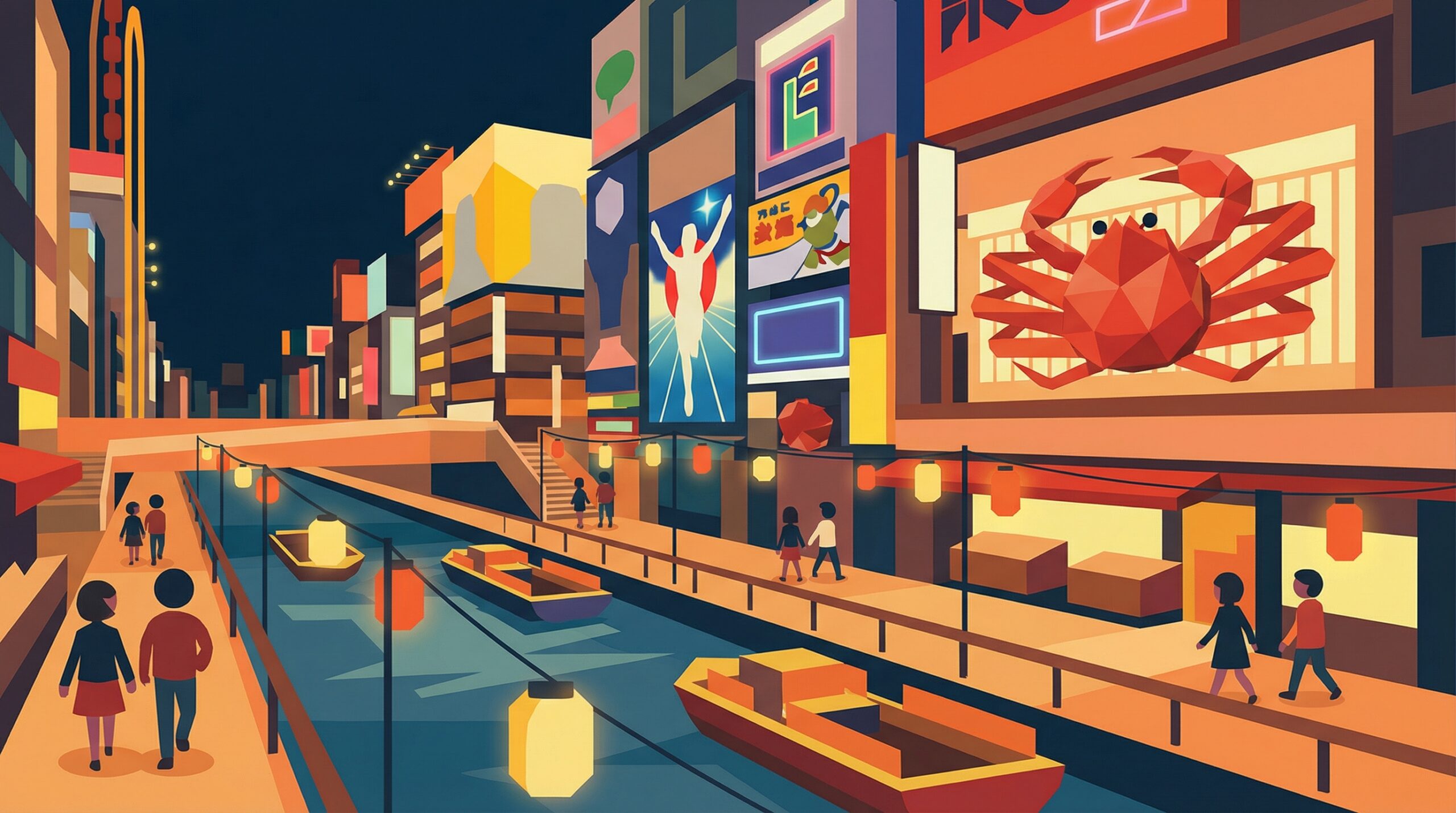
Welcome to Dotonbori, the electric, beating heart of Osaka’s nightlife. As the sun dips below the horizon, this iconic canal-side district doesn’t just wake up; it explodes into a dazzling symphony of light, sound, and flavor. Giant neon signs, a mechanical crab waving its claws, a puffing dragon—they all flicker to life, casting a vibrant glow upon the crowds surging below. This is the epicenter of Osaka’s famed kuidaore philosophy, which translates to ‘eat till you drop,’ and there is no better way to dive headfirst into this glorious pursuit than by exploring its legendary izakayas. An izakaya is so much more than a simple bar or restaurant; it’s Japan’s answer to the public house, a social sanctuary where salarymen unwind, friends gather, and the true, unfiltered spirit of the city is on full display. It’s in these bustling, atmospheric dens that you’ll find the most authentic taste of Osaka, served up on small plates alongside frothing mugs of beer and delicate flasks of sake. Forget quiet, reserved dining; an evening in a Dotonbori izakaya is a lively, communal, and utterly unforgettable adventure into the soul of Japanese culinary culture.
For those looking to extend their Osaka adventure beyond the night, consider exploring how to balance work and play in the nearby Namba area.
Decoding the Izakaya: Your Passport to Osaka’s Nightlife
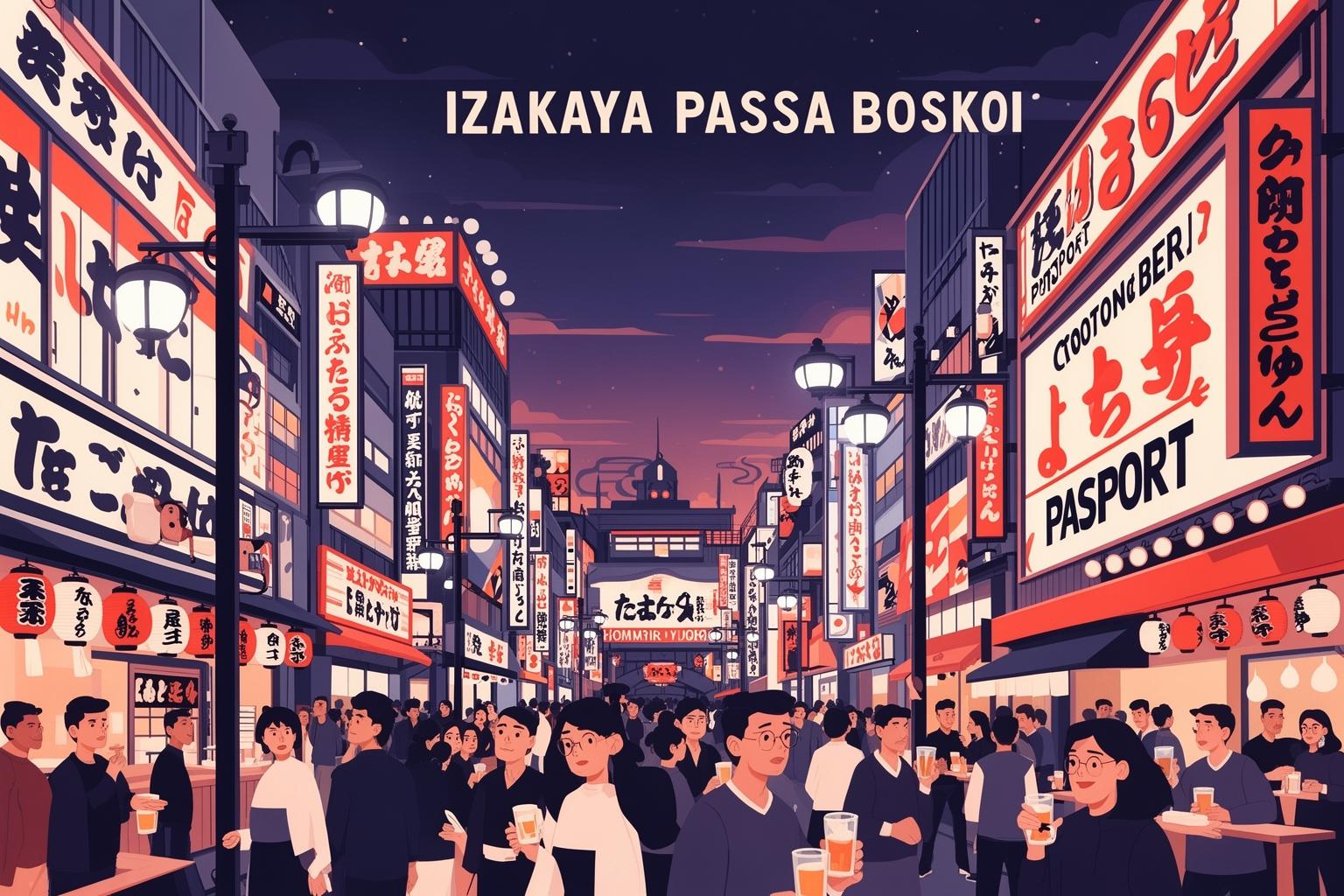
Before diving into the neon-lit maze of Dotonbori, it’s important to grasp the nature of the place you’re about to enter. The izakaya stands as a fundamental pillar of Japanese social culture, a distinctive blend of casual dining and a buzzing pub. Here, the emphasis is equally on the drinks, the food, and the lively conversations that accompany them. Learning its pace and customs can elevate your outing from a mere meal to a richly immersive cultural journey. It’s about settling in, slowing down, and relishing each moment, dish by dish.
What Exactly is an Izakaya?
The term itself gives the clearest insight. It combines i (to stay) and sakaya (sake shop). Historically, sake shops began welcoming customers to linger on-site, serving simple snacks alongside drinks. From these modest beginnings, the modern izakaya emerged. Unlike Western restaurants, which normally follow a sequential order of appetizer, main course, and dessert, the izakaya experience unfolds as a fluid, ongoing tapestry of flavors. Dishes are ordered in rounds, shared among guests, and crafted specifically to complement the drinks. The vibe is the opposite of stuffy fine dining. Expect a cacophony of sounds: the grill sizzling, kitchen tools clattering rhythmically, chefs calling out greetings and orders, glasses clinking merrily, and a lively buzz of chatter and laughter filling the air. In many traditional establishments, a thin veil of fragrant smoke from the charcoal grill lingers, enhancing the multi-sensory atmosphere. It’s a space to be loud, social, and connect with those around you over a mutual passion for great food and drink.
Navigating the Menu: A Culinary Adventure
An izakaya menu can appear overwhelming at first, resembling a long scroll filled with unfamiliar characters and dishes. But don’t worry; it’s a treasure map leading to delightful flavors. Most items fall under otsumami, a general term for foods that pair well with alcohol. Think of it as the Japanese version of tapas. The trick is to order a variety of dishes from different sections to experience a full range of tastes and textures.
Yakitori: The Soul of the Skewer
Perhaps the most emblematic izakaya fare, yakitori is essential to try. These are chicken skewers grilled expertly over a blazing charcoal grill called a shichirin. Its brilliance lies in simplicity, utilizing every part of the bird. When ordering, you’ll often choose between shio (salt) or tare (a sweet-savory soy-based glaze). A balanced approach is to try both. Common varieties include momo (juicy thigh meat), negima (thigh meat alternated with sweet Japanese leek), kawa (crispy grilled skin), hatsu (heart, tender and flavorful), and the beloved tsukune (succulent chicken meatballs, sometimes served with raw egg yolk for dipping). Don’t hesitate to explore the more adventurous options; they often pack the greatest flavor.
Agemono: The Art of Frying
Agemono, or fried dishes, are a staple of izakaya menus, offering a crunchy contrast to your drinks. The standout here is karaage, Japanese-style fried chicken. Marinated in soy sauce, ginger, and garlic, then coated in starch and deep-fried until golden, it’s irresistibly juicy inside with a crisp exterior. Another crunchy treat is nankotsu karaage—fried chicken cartilage—known for its addictive texture. For a lighter option, agedashi tofu is classic. Silken tofu lightly dusted with starch is fried until it forms a delicate crust, then served in warm, savory dashi broth, often garnished with grated daikon and bonito flakes. It’s a comforting and refined dish showcasing the subtlety of Japanese flavors.
Sashimi & Seafood: Fresh from the Sea
Even casual izakayas in port cities like Osaka pride themselves on fresh seafood. Starting the evening with a small platter of sashimi moriawase (assorted sashimi) is an excellent choice. You might find glossy slices of maguro (tuna), creamy salmon, and firm hamachi (yellowtail). Local specialties are worth noting too. Shime saba (cured mackerel) offers a rich, oily flavor balanced by a sharp vinegar tang. Grilled fish, or yakizakana, is another favorite. A whole grilled hokke (Atka mackerel) is common, its flaky white meat easily separated with chopsticks. The smoky char combined with a squeeze of lemon is simple yet perfect.
A World of Other Delights
Beyond these main categories lies a vast array of dishes. Nimono are simmered items providing a taste of Japanese home cooking. Nikujaga, a hearty stew of thinly sliced meat, potatoes, and carrots simmered in a sweet soy broth, feels like a warm embrace in a bowl. To end the meal (shime), you might choose from gohanmono (rice dishes). A simple bowl of ochazuke (rice soaked in green tea or dashi, often with toppings like pickled plum or grilled salmon) serves as a restorative finish to a night of drinking. Alternatively, yaki onigiri—grilled rice balls brushed with soy sauce until crispy and fragrant—make a satisfying finale. Each dish tells its own story, adding another layer to your culinary evening.
The Drink Menu Unveiled
Naturally, the other half of the izakaya experience is the drinks, which cater to every taste.
Beer: The Universal Starter
Almost invariably, an izakaya visit kicks off with a chorus of “Toriaezu, nama!” meaning “Draft beer for now!” This ritual involves a glass of frosty, perfectly poured Japanese draft beer (nama biru), the ideal thirst-quencher to start the night. Brands like Asahi, Kirin, and Sapporo dominate, their crisp lagers expertly crafted to cut through the richness of grilled and fried dishes.
Nihonshu (Sake): The National Brew
For those eager to delve deeper into Japanese drinks, nihonshu, or sake, is a must. Don’t let the choices intimidate you. Menus usually feature a few options, and simply asking for o-susume (recommendation) works well. Sake can be served hot (atsukan) or cold (hiya), with each temperature highlighting different nuances. It’s typically served in a tokkuri (small ceramic flask) alongside tiny cups called ochoko meant for sharing.
Shochu, Highballs, and Chuhai: The Session Drinks
Shochu, Japan’s native distilled spirit made from barley (mugi), sweet potatoes (imo), or rice (kome), is incredibly versatile. It can be enjoyed on the rocks, diluted with cold water (mizuwari), or with hot water (oyuwari). Its most popular form is in a chuhai (shochu highball), mixed with soda water and fruit flavors like lemon, grapefruit, or plum. These are refreshing, easy to drink, and dangerously smooth. The simple whisky highball—made with Japanese whisky and highly carbonated soda water—is also ubiquitous, pairing wonderfully with almost any dish on the menu.
The Dotonbori Izakaya Scene: From Hidden Gems to Bustling Chains
Dotonbori boasts an impressive array of izakayas, each possessing its own distinct charm. From tight, smoky alleys that transport you back in time to vast, multi-story venues buzzing with activity, there’s a perfect place for every mood and group. The true pleasure lies in exploring—wandering the streets and letting your senses lead you to your next stop.
The Yokocho Experience: Alleys of Genuine Flavor
For the most atmospheric and authentic experience, step off the main canal-front boulevard and explore the narrow side streets known as yokocho. These lantern-lit lanes hold the essence of old Osaka. Intimate, occasionally gritty, and always full of character, they offer a glimpse into the city’s soul. Hozenji Yokocho is one of the most renowned, but countless smaller, unnamed alleys hide remarkable culinary gems.
Picture slipping under a small noren curtain into a tiny yakitori spot. Inside, there might be just ten seats, all arranged around a wooden counter. Behind it, a seasoned master—the taisho—tends his charcoal grill with calm, practiced motions. The air is heavy with the aroma of grilled meat and sweet tare sauce. The menu is simple, focused, and perfected over decades. Here, you can enjoy a truly personal dining experience, watching your food prepared right before your eyes.
Another classic yokocho type is the seafood izakaya. You’ll often find these by the styrofoam boxes of fresh fish and shellfish stacked outside. Inside, the atmosphere is lively and boisterous. Walls might be decorated with fishermen’s flags, and a large open kitchen displays the day’s catch on ice. Their specialties include pristine sashimi, grilled whole fish, and perhaps a simmering pot of nabe (hot pot) in cold weather. These spots are vibrant, noisy, and ideal for groups wanting to share a feast.
Main Street Marvels: Large, Lively, and Unforgettable
While the alleys provide intimacy, the izakayas along the main Dotonbori strip offer spectacle. These often large, multi-level venues are as much part of the visual scene as the giant neon signs. They’re designed to handle the huge crowds that gather nightly. Though they may lack quaintness, they compensate with energy, variety, and convenience.
Many bigger establishments belong to well-known chains, which isn’t a downside in Japan. Chains like Isomaru Suisan, offering 24-hour service and focused on tabletop grilling of fresh seafood, or Torikizoku, where every menu item—including drinks—is priced uniformly and affordably, provide an excellent, low-pressure introduction to izakaya culture. They usually have picture menus or increasingly multilingual tablets for ordering, breaking down language barriers. The atmosphere is consistently lively, filled with a diverse mix of locals, tourists, students, and office workers. They’re a dependable and highly enjoyable choice, especially for first-timers.
Hozenji Yokocho: A Glimpse Into the Past
Just a short walk from Dotonbori’s neon glare lies Hozenji Yokocho, a place that feels from another age. This narrow, stone-paved alley is one of Osaka’s best-preserved historical spots. The atmosphere here is more tranquil and refined. Instead of neon, traditional paper lanterns cast a warm, gentle glow along the path.
In the heart of the alley stands Hozenji Temple, home to a famed statue of Fudo Myo-o, one of Buddhism’s fierce Wisdom Kings. Over time, worshippers have poured water over the statue during prayers, covering it entirely in a thick, vibrant green moss. Pausing to observe this ritual offers a peaceful, beautiful contrast to Dotonbori’s bustle.
The establishments in Hozenji Yokocho reflect this traditional vibe. You’ll find upscale kappo restaurants, longstanding okonomiyaki specialty spots, and quiet, elegant bars. Though some are more formal than typical izakayas, they still embody the spirit of fine food and drink in an intimate setting. An evening here feels special—a chance to connect with the city’s deep history and culture.
Izakaya Etiquette: How to Navigate Like a Local
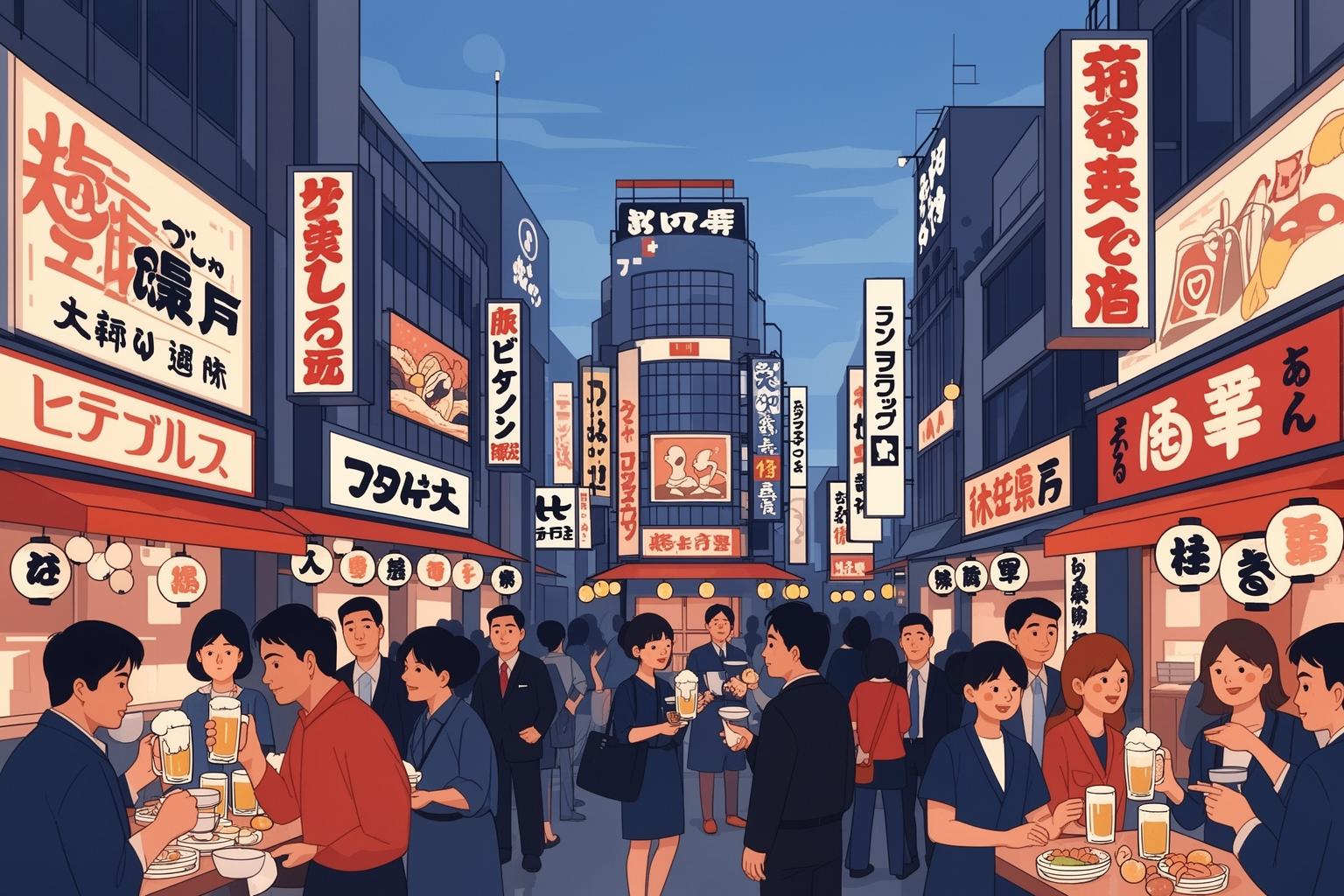
Entering an izakaya for the first time might feel a bit intimidating, but the rules are straightforward and designed to ensure everyone has a smooth and enjoyable experience. Knowing a few essential etiquette tips will help you feel at ease and dine with the confidence of a seasoned patron.
The Grand Entrance: What to Expect
Upon arrival, you’ll be greeted with a loud and enthusiastic “Irasshaimase!” (Welcome!). A staff member will ask about the size of your party: “Nan-mei-sama desu ka?” (How many people?). Just hold up the corresponding number of fingers. You may be offered different seating options. Kaunta-seki are counter seats, ideal for solo diners or couples who want to watch the kitchen in action. Te-buru-seki are regular table seats. Some traditional izakayas may have zashiki, low tables set on raised tatami mats. If seated in a zashiki area, you must remove your shoes before stepping onto the mat, where a small shoe locker or shelf is usually provided near the entrance.
The Art of Ordering
Once seated, a staff member will bring you an oshibori (a wet towel, either hot or cold depending on the season) to clean your hands. Shortly after, you may be served a small appetizer you didn’t order—this is the otoshi, or table charge. It’s a mandatory part of the izakaya system, so see it not as a hidden fee but as a tasty welcome snack that pairs well with your first drink.
Regarding drinks, your first priority is always to order a beverage. Traditionally, a round of draft beers is the classic way to start. After your drinks arrive and you’ve toasted (“Kanpai!”), you can begin looking at the food menu. The key is to order in stages—don’t order everything at once. Start with a few items, such as edamame, sashimi, and some yakitori skewers. Enjoy those, order another round of drinks, then decide what you’d like next. This leisurely pace captures the true essence of the izakaya experience. To get the staff’s attention for your next order, a polite but clear call of “Sumimasen!” (Excuse me!) will work perfectly.
Sharing is Caring: The Izakaya Philosophy
Izakaya dining is essentially a communal experience. All dishes brought to your table are meant for everyone to share. You will receive a torizara, a small individual plate, on which you can place portions from the main dishes. It’s a great way to sample a variety of flavors without committing to a single large dish. This culture of sharing helps create a warm, friendly atmosphere, making the meal feel truly collective.
Paying the Bill: The Grand Finale
When you’re full and ready to leave, ask for the check by saying “Okaikei onegaishimasu.” A staff member will bring your bill to the table. In many izakayas, especially traditional ones, you then take the bill to the cashier at the front to pay. Tipping is not customary in Japan and is generally not expected. If you’re dining with a group, note that splitting the bill can be tricky for the staff. The easiest approach is for one person to cover the total, and then the group can settle their individual shares afterward.
Practical Tips for Your Dotonbori Izakaya Crawl
With a little planning, your night out in Dotonbori can be both smooth and thrilling. Here are some practical tips to guide you.
Getting There and Getting Around
Dotonbori is exceptionally well-connected by public transportation and is just a short walk from several major stations. Namba Station serves as the primary hub, connecting the Midosuji, Yotsubashi, and Sennichimae subway lines. Nearby, Osaka-Namba Station links to the Hanshin and Kintetsu private railways, while JR Namba Station connects with the Japan Railways network. Once you arrive, the best way to explore Dotonbori is on foot. The streets form a lively maze, and the most memorable experiences often come from wandering aimlessly.
The Best Time to Go
Dotonbori truly shines after dark. The ideal time for an izakaya outing is anytime after 6:00 PM, when local office workers, or salarymen, finish their day and head out for drinks. The energy continues to build, peaking between 8:00 PM and 10:00 PM. Unsurprisingly, Friday and Saturday nights are the busiest. If you have a favorite popular izakaya in mind, booking ahead is wise. However, much of the charm of an izakaya crawl lies in the spontaneity of discovering a vacant seat at a place that catches your eye. Don’t be discouraged if your first choice is full—there’s always another fantastic spot just nearby.
Cash, Cards, and Connectivity
Although Japan is slowly becoming more card-friendly, cash remains the preferred payment method, especially at smaller, independent venues. It’s always a good idea to carry enough Japanese Yen. Many charming, family-run izakayas in the back alleys accept cash only. If you run low, ATMs that accept international cards can be found in the numerous convenience stores (like 7-Eleven, FamilyMart, or Lawson) scattered throughout the area.
Language and Communication
In a popular tourist spot like Dotonbori, many izakayas are prepared for international guests. Picture menus are common, and some places provide English menus. Don’t let language barriers hold you back. A little effort goes a long way, and the staff will appreciate it. Here are a few handy phrases:
- Kore o onegaishimasu (This one, please) – The most useful phrase; just point at your menu choice.
- O-susume wa nan desu ka? (What do you recommend?) – A great way to learn about the chef’s specialties.
- Oishii! (Delicious!) – A compliment that is always welcomed.
- Gochisousama deshita (Thank you for the meal) – A polite phrase to say when you leave.
Beyond the Izakaya: Crafting the Perfect Dotonbori Night
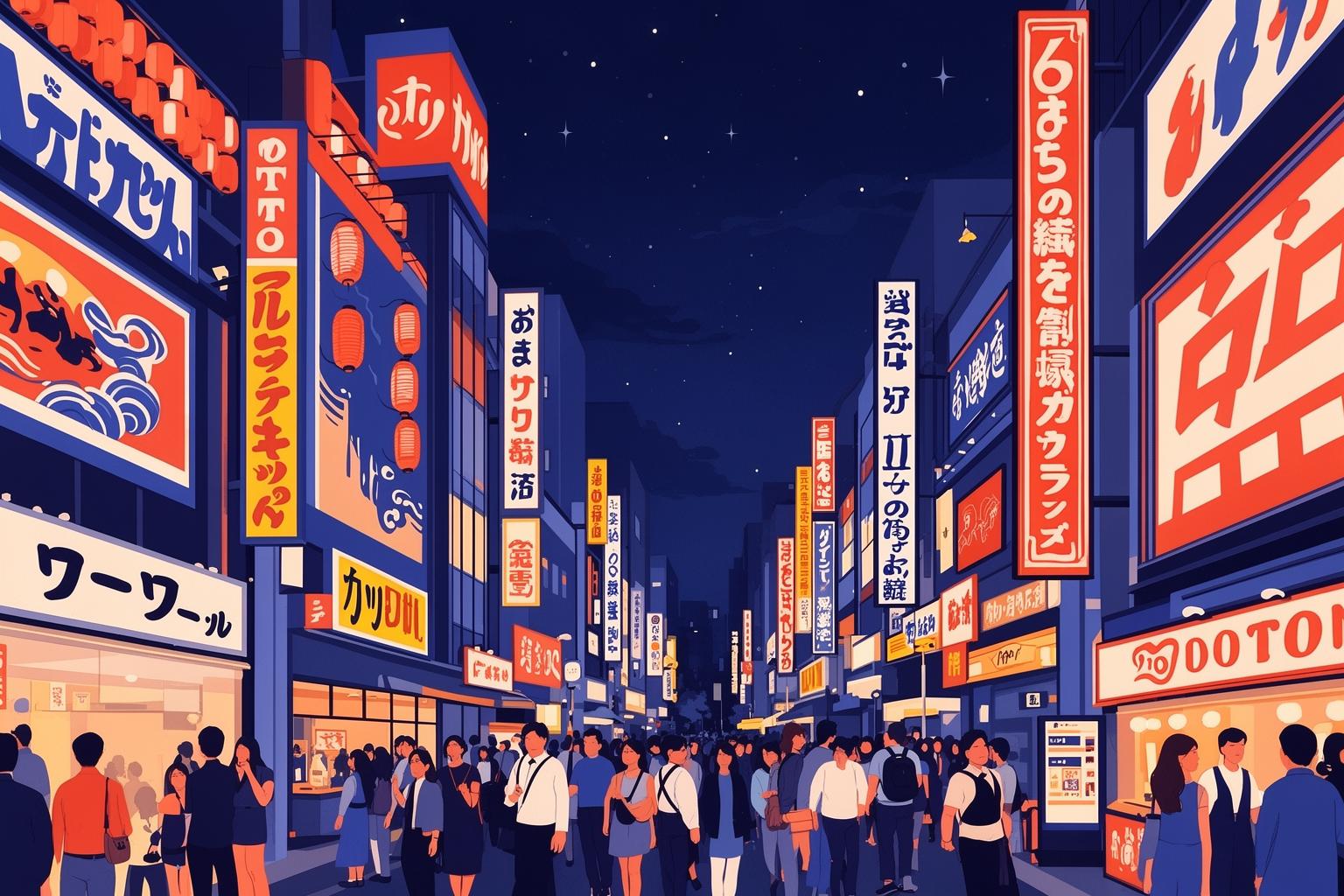
An izakaya is the highlight of the evening, but a truly memorable night in Dotonbori involves more than just one stop. Think of the night as a multi-act performance, with each part offering a unique kind of excitement.
Pre-Izakaya Warm-Up: Street Food and Sightseeing
Arrive in Dotonbori just as dusk begins to fall. This is the magical hour when the city shifts from day to night. Start with a leisurely walk along the Tonbori River Walk. Watch the tour boats glide past and find the ideal spot on the Ebisu Bridge to admire the iconic Glico Running Man sign as it lights up. This is the perfect moment for a street food snack. Grab a boat of freshly made takoyaki, the renowned Osakan octopus balls, smothered in savory sauce and mayonnaise. Or try a small serving of okonomiyaki, the city’s famous savory pancake. This isn’t your main meal, just a tasty prelude to the izakaya feast ahead.
The Second Stop: Ni-ji-kai Culture
After enjoying your time at the izakaya, the night is still young for many Japanese. It’s time for the ni-ji-kai, or the second party. The group moves on to a different venue to keep the fun going. This might be a tiny, specialized bar focusing on Japanese whisky or craft cocktails. It could be a lively karaoke box where you can sing your heart out in a private room. Or it may even be a different style of izakaya, like a tachinomi (standing bar) for a quick final drink and skewer before heading home. Embracing the ni-ji-kai means embracing the city’s boundless nocturnal energy.
The Late-Night〆 (Shime)
The final chapter of a long night of drinking in Japan is the shime, a closing dish meant to satisfy late-night hunger and soak up the alcohol. The undisputed star of the shime is ramen. Dotonbori and the nearby Namba area are filled with legendary ramen shops, many open until the early morning hours. A rich, steaming bowl of tonkotsu (pork bone broth) ramen from a famous chain like Ichiran or Kinryu is the perfect, comforting finale to an unforgettable night in Dotonbori.
An Unforgettable Taste of Osaka’s Soul
An evening spent hopping between the izakayas of Dotonbori is more than just a meal; it’s a complete immersion into Osaka’s lively, generous, and food-loving culture. It’s found in the flavor of smoky grilled chicken, the chill of a cold beer, the warmth of shared sake, and the buzz of a room full of people enjoying the simple joy of good company. It’s about shedding inhibitions, embracing the chaos, and letting yourself be carried away by the city’s vibrant nightlife.
So, be bold. Wander down that narrow alley. Peek behind the curtain of that intriguing doorway. Point to that mysterious menu item. Try something you’ve never encountered before. You’ll discover that the izakaya is a welcoming space, eager to share its delights with those who arrive with an open mind and an empty stomach. In the heart of Japan’s culinary scene, you’re not just a tourist; you’re part of a nightly celebration of life. Go forth, find your favorite spot, make memories, and live the spirit of kuidaore to the fullest.