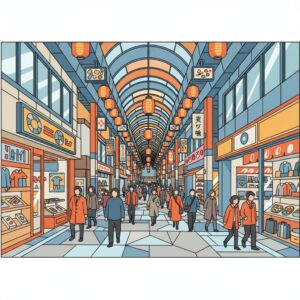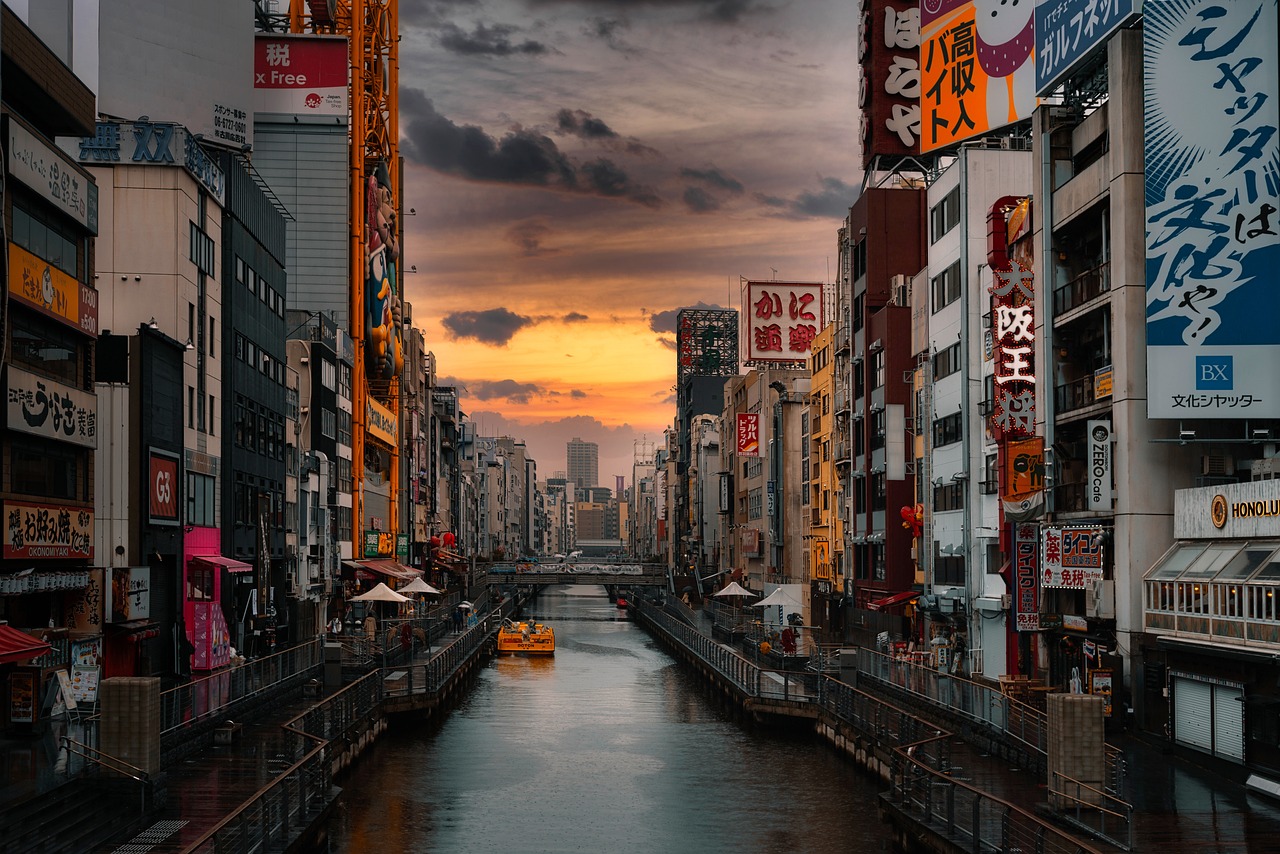
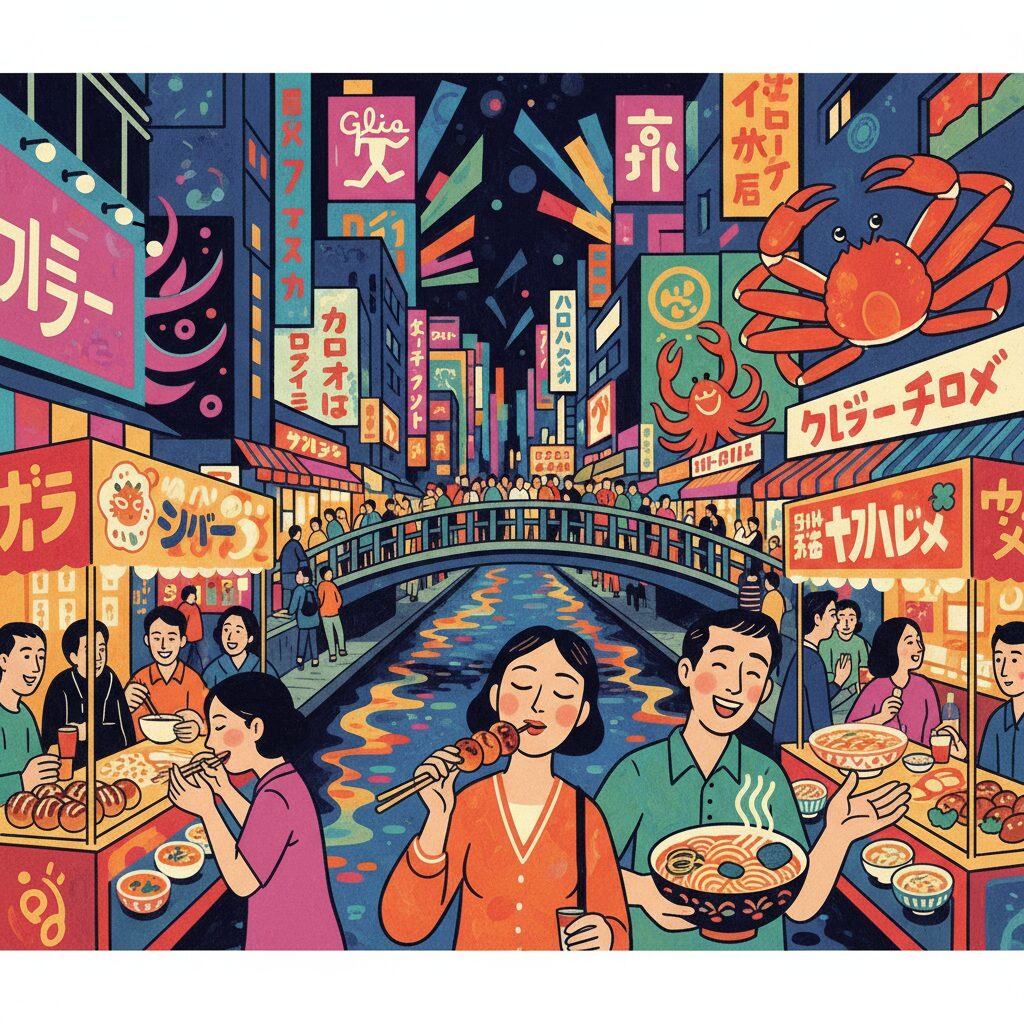
There’s a saying in Japan that perfectly captures the spirit of its second city: while Kyotoites might spend their fortunes on elegant kimono and Tokyoites on a fashionable address, the people of Osaka pour their souls and their savings into food. This philosophy has a name: kuidaore, which translates, with a cheerful sense of abandon, to ‘eat until you drop.’ And if this vibrant, life-affirming creed has a physical epicenter, a throbbing, neon-drenched heart, it is unquestionably Dotonbori. More than just a street or a district, Dotonbori is a full-body sensory experience. It’s a canal-side carnival of gigantic mechanical crabs, fire-breathing dragons, and titanic pufferfish lanterns, all serving as bombastic invitations to the culinary pilgrimage that awaits below. This is where the story of modern Osaka is written every night in sizzling batter, savory sauces, and the joyous clamor of people united in their love for a good meal. To walk through Dotonbori is to walk through the living, breathing stomach and soul of a city that has perfected the art of indulgence.
For a more traditional and intimate culinary experience just a short walk from the neon lights, be sure to explore the charming, lantern-lit alleyways of Hozenji Yokocho.
The Electric Heartbeat of Osaka
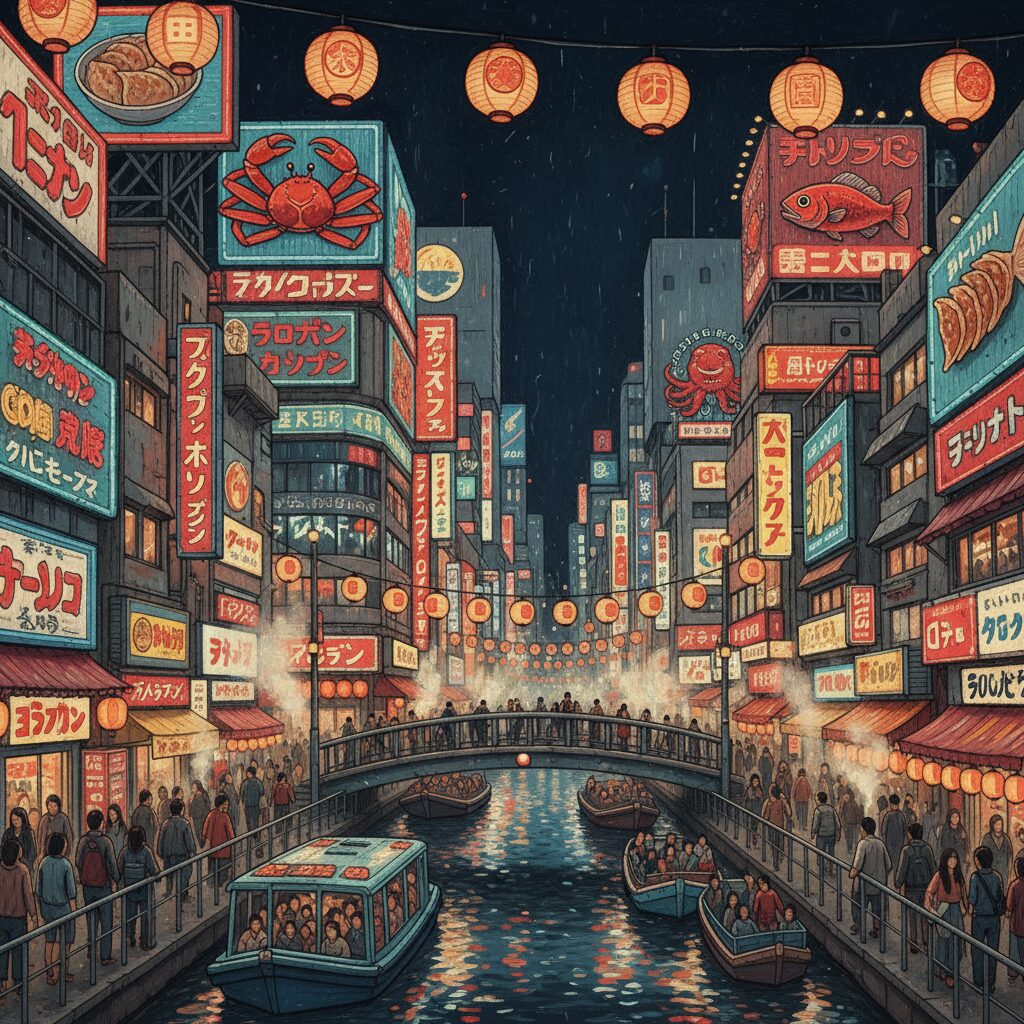
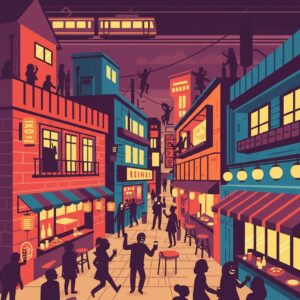
To truly grasp Dotonbori, one must first surrender their senses. It’s not merely a place to see; it’s one to feel, hear, smell, and, most importantly, taste. As you step out from the relative calm of Namba subway station and approach the Ebisubashi Bridge, the atmosphere shifts. The air thickens with the tempting scents of grilled meat, sweet soy sauce, and the deep, oceanic fragrance of dashi broth. The city’s background murmur rises into a joyous cacophony: the rhythmic clanging of spatulas on iron griddles, vendors cheerfully calling out their specialties, the crisp sizzle of batter hitting hot oil, and the collective buzz of thousands caught in shared gastronomic delight.
A Symphony of Senses
The visual scene is a dazzling barrage on the everyday. Towering digital billboards wash the crowd in waves of kaleidoscopic light, their reflections flickering on the dark, calm surface of the Dotonbori canal below. This is a gallery of giants where commerce and art collide in the most theatrical fashion. The Kani Doraku crab, with its enormous mechanical legs waving in a slow, hypnotic rhythm, has become a local emblem. A giant octopus clutches a serving of its own specialty—takoyaki—with an oddly playful grin. A larger-than-life chef, Kuidaore Taro, relentlessly beats his drum, a permanent figure since the 1950s. Overseeing it all, the Glico Running Man, frozen mid-stride against a vibrant blue track, stands as the district’s most iconic symbol, embodying victory and vitality and inspiring generations of Osakans.
The overwhelming density of it all can be intense at first, but it soon merges into a distinctive, thrilling rhythm. Unlike the more reserved, orderly public spaces found elsewhere in Japan, Dotonbori flourishes in a controlled chaos. People don’t just walk here; they flow, swirling around food stalls, pausing to capture photos, and gathering in lively groups. The vibe is deeply social and casual. It’s a place where suit-clad salarymen, fashion-forward students, and curious travelers from around the world stand side by side, united by the simple, democratic joy of a skewer of freshly fried kushikatsu or a boat of steaming takoyaki.
From Dusk Till Dawn: The Rhythm of Dotonbori
Dotonbori shows two distinct faces. By day, it is a lively commercial street. The signs remain impressive, though softened by sunlight. You can admire the architecture, see the shopkeepers’ faces more clearly, and navigate the crowds with relative ease. It’s an ideal time for a leisurely stroll, perhaps taking a river cruise to view famous bridges and landmarks from a fresh angle. But as dusk falls, a noticeable transformation takes place. Neon signs flicker to life one by one, then in a flood. The canal’s dark waters reflect a galaxy of artificial light, and the whole district pulses with a renewed, almost primal energy. Nighttime is when Dotonbori truly comes alive and reveals its essence. Crowds grow larger, music from shops grows louder, and the steam rising from food stalls hangs in the air like a fragrant mist. This is the prime time for kuidaore, when the hunt for the next delicious bite turns into a nocturnal adventure.
The Philosophy of ‘Kuidaore’: More Than Just Eating
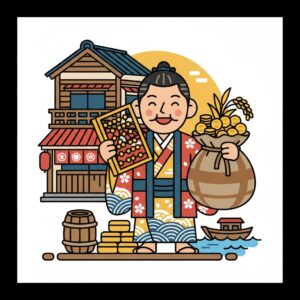
The term kuidaore represents more than just an invitation to feast; it stands as a cultural cornerstone of Osaka. It reflects a history of commerce and a community that treasures tangible, immediate pleasures. Historically, Osaka was known as tenka no daidokoro, or ‘the nation’s kitchen,’ serving as a central hub where rice and various goods from across the country were gathered and traded. This legacy of abundance and access to premium ingredients cultivated a discerning and demanding populace. Food was not merely sustenance; it was a source of pride, a subject of passionate debate, and a form of entertainment in itself.
A Legacy Etched in Canals and Theaters
The tale of Dotonbori is deeply connected to the canal that bears its name. In the early 17th century, a local entrepreneur named Yasui Doton invested his own fortune to widen an existing river into a new waterway, aiming to link the major canals of the area and enhance commerce. Although he tragically died in battle before its completion, his cousins completed the project in his memory. The new Dotonbori canal soon became the southern border of the city’s entertainment district. Theaters showcasing traditional arts like kabuki and bunraku puppet theater sprang up along its banks, attracting large crowds. And where there are crowds, food inevitably follows. Teahouses and simple food stalls appeared to serve theatergoers, laying the groundwork for the culinary hotspot we know today. The theatricality of Dotonbori’s massive signs and lively vendors is a direct continuation of this entertainment-driven heritage. They are more than mere advertisements; they are part of the spectacle.
The Osakan Spirit on a Plate
Dotonbori’s food mirrors the spirit of its people: straightforward, hearty, and unpretentious. This is not the delicate, subtle cuisine of Kyoto’s kaiseki. Rather, it is konamon, or ‘flour-based foods,’ a category that is affordable, satisfying, and endlessly versatile. Dishes such as takoyaki and okonomiyaki originated from the need for inexpensive, delicious fare, and have been refined into an art through generations of evolution. The Osakan approach to food is also intensely social. Many eateries in Dotonbori feature open kitchens where chefs’ practiced movements can be witnessed in a blur of efficiency. Okonomiyaki is often prepared on a large griddle, or teppan, built right into the customer’s table, making the meal a communal and interactive event. This is food that breaks down barriers and encourages conversation. The spirit of kuidaore celebrates this shared joy just as much as personal indulgence.
A Culinary Pilgrimage: The Icons of Dotonbori’s Street Food
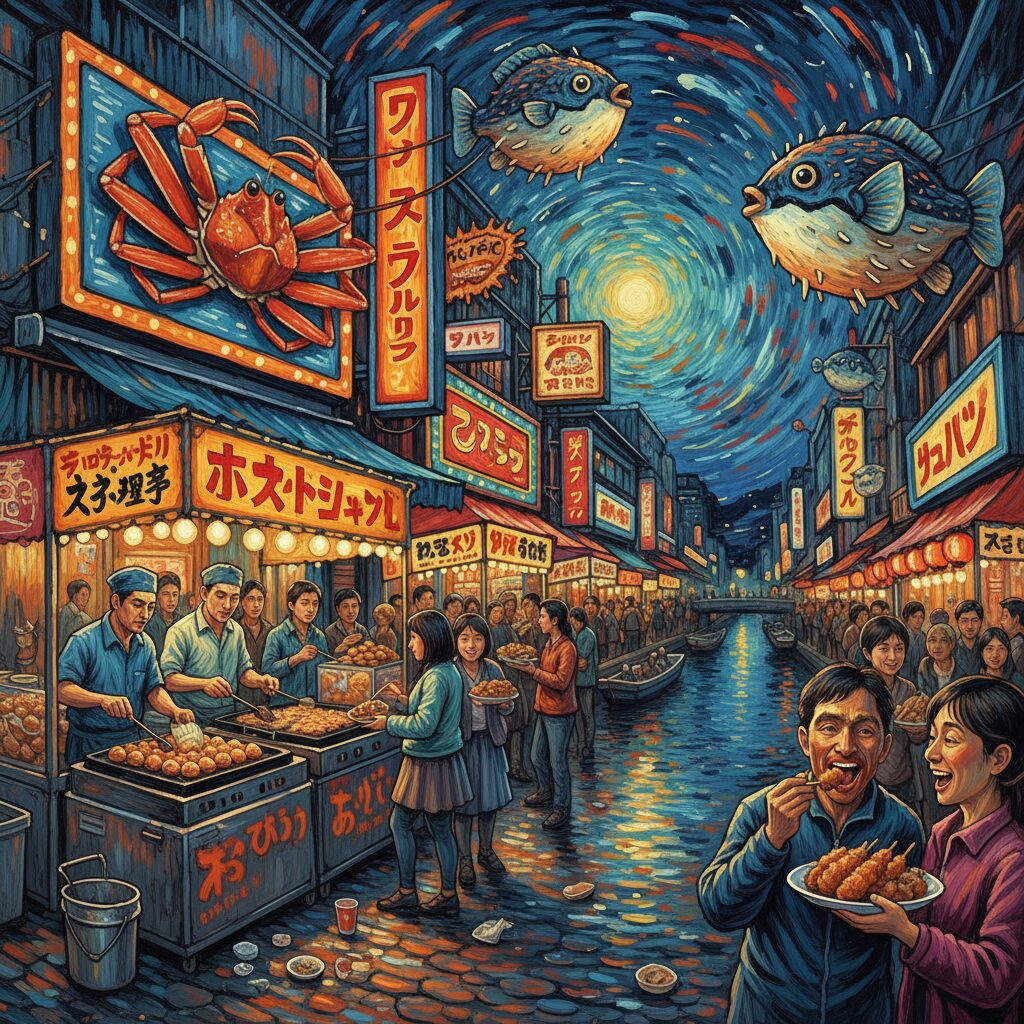
Exploring Dotonbori without a plan can be delightfully chaotic, but knowing its signature dishes is essential to truly experiencing its culinary essence. These dishes are more than just food; they are institutions, each with their own history, techniques, and devoted followers. Your adventure into kuidaore begins right here, at street level, surrounded by steam and sizzle.
Takoyaki: Osaka’s Iconic Sphere
If Osaka had a single flavor, it would likely be takoyaki. These golden-brown balls of grilled batter, filled with tender octopus (tako), serve as the city’s unofficial mascot. Watching a takoyaki chef in action is a captivating form of street theater. With two small metal picks, they skillfully and swiftly turn dozens of batter spheres in a specially shaped cast-iron pan. The motion is a mesmerizing dance of precision and speed. Perfect takoyaki features a slightly crispy exterior that gives way to a molten, creamy interior, where the savory dashi-infused batter beautifully contrasts with the chewy octopus inside. They’re typically served in a paper boat, topped with a tangy, sweet brown sauce, a drizzle of Japanese mayonnaise, a sprinkle of green laver (aonori), and a generous shower of bonito flakes (katsuobushi) that dance and curl from the heat.
The Flip Mastery
What elevates takoyaki from average to exceptional is the texture. The best vendors strike a perfect balance between a firm outer crust and a molten, lava-hot center. Achieving this requires remarkable skill and precise temperature control. Watching the cooks, you’ll notice their constant turning of each sphere, ensuring even cooking while adding more batter to maintain a perfectly round shape. It’s a craft refined over thousands of repetitions, showcasing the Japanese dedication to perfecting even the simplest tasks.
Finding the Best Bite
Dotonbori boasts countless takoyaki stalls, many perfecting their recipes for decades. Friendly but fierce rivalries exist among famous spots, each claiming superiority in batter mix or sauce blend. Expect long but efficient lines at legendary establishments, and joining one is part of the experience. Don’t hesitate to try several places to compare. Some offer variations like cheese or shrimp fillings, but for first-timers, the classic octopus is a must. Be warned: they’re served piping hot. The urge to pop one into your mouth immediately is strong, but patience will protect your palate.
Okonomiyaki: The Savory Pancake Dream
Often called a ‘Japanese savory pancake’ or ‘Japanese pizza,’ okonomiyaki is much richer and more satisfying than those simple labels imply. The name means ‘grilled as you like it,’ reflecting its wonderfully versatile nature. The batter is made from flour, grated nagaimo yam (which lends fluffiness), dashi, and eggs, mixed with heaps of shredded cabbage. From there, endless possibilities arise. Popular additions include thin pork belly slices, squid, shrimp, or a mix of all three. This delicious mixture is poured onto a large, flat teppan grill and expertly shaped and cooked by a chef. Once done, it’s topped with thick, sweet okonomiyaki sauce, Japanese mayonnaise, aonori, and bonito flakes, much like takoyaki. It’s ultimate comfort food: hearty, savory, and immensely satisfying.
Made Your Way
The charm of okonomiyaki is in its customization. Many Dotonbori restaurants let you pick your own ingredients. Some even provide you with a bowl of raw components so you can cook it yourself on the teppan grill at your table, adding a fun, interactive twist. A popular regional variation is modan-yaki (modern-yaki), which incorporates a layer of fried noodles pressed into the pancake, turning it into an even heartier feast.
Social Cooking Around the Grill
Eating okonomiyaki is a communal affair. Friends and families gather around the warm teppan, sharing different varieties and enjoying the sizzle and aroma as the food cooks before their eyes. You usually eat it straight from the grill using a small metal spatula called a kote or hera. Cutting off a piece, letting it cool slightly, and savoring the complex blend of flavors and textures is an essential Dotonbori experience. It’s a meal that encourages you to slow down, connect with your food, and enjoy the company.
Kushikatsu: The Art of Fried Skewers
Head south from the main Dotonbori area and you’ll enter Shinsekai, widely regarded as the spiritual home of kushikatsu, though its influence is strong throughout Dotonbori as well. Kushikatsu involves skewering various ingredients, coating them with a light panko breadcrumb batter, and deep-frying to golden perfection. The selections are vast, including meats like beef, pork, and chicken; seafood such as shrimp, scallops, and squid; and vegetables like onion, shiitake mushrooms, eggplant, and lotus root. Adventurous options include quail eggs and cheese.
The Golden Rule: No Double-Dipping
When enjoying kushikatsu, the skewers arrive hot and crispy, accompanied by a communal pot of thin, tangy dipping sauce. Here, the one unbreakable rule is no double-dipping. You dip your skewer once, then take your first bite. This rule is about hygiene since the sauce pot is shared by all diners. If you need more sauce, use a slice of raw cabbage to scoop some up and spoon it over your skewer. The rule is clearly displayed and enforced with friendly seriousness. Observing it shows respect for the culture and fellow diners.
From Humble Beginnings to a City Craze
Kushikatsu started as inexpensive, quick, filling fare for laborers in the early 20th century. Its simplicity is its charm. The light, crispy panko coating seals in flavor and moisture, creating a perfect textural contrast. Paired with a cold beer or highball, it’s ideal casual food for an evening of conversation and snacking. Dotonbori’s kushikatsu joints range from lively stand-up counters to more comfortable sit-down places, all sharing a warm, convivial atmosphere.
Ramen: A Tale of Two Broths
While ramen is a national obsession, Osaka and Dotonbori offer their own unique takes on this beloved noodle soup. The area is dotted with renowned ramen shops, famous for their long queues and distinctive facades. Two iconic examples represent contrasting ramen philosophies.
Kinryu Ramen’s Dragon and Light Broth
Kinryu Ramen is impossible to miss, boasting a massive, three-dimensional green dragon bursting through the building façade, a Dotonbori landmark. This popular chain serves a light, clear tonkotsu (pork bone) broth that’s approachable any time of day or night. The menu is straightforward, usually offering just a standard ramen or one with extra chashu (braised pork). Customers buy a ticket from a vending machine, hand it to staff, and sit at unique tatami-mat style counters. The fast, no-frills bowls have refueled Dotonbori crowds for years. A toppings bar with kimchi, garlic, and chives lets you customize your dish to your liking.
Ichiran’s Solo Dining Sanctuary
In contrast to the communal atmosphere of most Dotonbori eateries, Ichiran Ramen offers a personal, introspective experience. Known for its ‘flavor concentration booths,’ Ichiran lets you dine in private cubicles designed to minimize distractions so you can focus solely on your ramen. You fill out a form customizing every detail, from broth richness and noodle firmness to garlic amount and signature spicy red sauce. This meticulous process yields a highly personalized, consistently excellent bowl of rich, creamy tonkotsu ramen. For those seeking a quiet moment amid Dotonbori’s bustle, Ichiran provides a unique and delicious refuge.
Beyond the Plate: Navigating the Neon Jungle
While food is undeniably the main attraction, the Dotonbori experience also involves immersing yourself in the vibrant atmosphere and discovering the sights and sounds that make this district truly unforgettable. The area serves as a living museum of popular culture, advertising, and Osaka’s history, with treasures to uncover both along the bustling main street and in the quiet alleys branching off it.
The Guardians of the Canal: Dotonbori’s Iconic Signage
The oversized signs of Dotonbori, called kanban, are as well-known as the dishes they promote. These signs are more than just advertisements; they are landmarks, meeting spots, and beloved characters in the city’s narrative. Their extravagant designs embody Osaka’s lively and mercantile spirit, continuing a tradition of capturing public attention in the most bold and entertaining manner possible.
The Glico Running Man: An Emblem of Triumph
First installed in 1935, the Glico Running Man sign reigns supreme in Dotonbori. Showing a runner crossing a finish line with arms raised in victory, it has become a global symbol of Osaka. The sign promotes the Glico confectionery company, and its simple yet powerful image of health and vitality has resonated for generations. The current version is a cutting-edge LED display cycling through various animated backgrounds, but the iconic runner remains unchanged. Posing with the ‘Glico stance’ on the Ebisubashi Bridge for a photo is a cherished ritual for visitors. It’s a place of celebration, where fans gather after sports victories and friends meet to kick off their evening.
Kani Doraku’s Mechanical Crab
Equally famous is the enormous mechanical crab above the Kani Doraku restaurant. Its continuously moving legs and claws have been a landmark since the 1960s. This sign perfectly exemplifies Dotonbori’s straightforward approach to advertising: this is a crab restaurant, so here is a giant crab to prove it. Its slow, rhythmic movement is almost hypnotic, adding ongoing life and character to the streetscape.
A Gallery of Giants
Strolling along the canal, you’ll encounter a collection of these remarkable signs. There’s a huge pufferfish lantern for the fugu restaurant Zuboraya, a giant hand holding sushi, and the fierce-faced Daruma doll advertising a kushikatsu chain. Each vies for your attention with vivid colors, flashing lights, and sometimes moving parts. They stand as a tribute to an era before digital marketing, when creating a tangible, unforgettable impression was essential. This outdoor gallery is best enjoyed at night, when the illuminated signs reflect beautifully on the canal’s surface.
A Voyage on the Water: The Tombori River Cruise
For a unique view of the neon spectacle, try the Tombori River Cruise. These 20-minute boat tours provide a fantastic vantage point of the signs, bridges, and bustling riverfront promenades from the water. As you glide under the nine bridges spanning this section of the canal, a guide offers commentary on the area’s history and landmarks. Seeing the Glico Running Man and other signs from the boat while passing beneath the Ebisubashi Bridge is a truly memorable experience, helping you grasp the district’s scale and offering a moment of tranquility amidst the lively sidewalk crowds.
Echoes of the Past: A Walk Through Hozenji Yokocho
Just steps away from the bright lights and bustle of Dotonbori’s main street lies a hidden enclave that feels like stepping back in time: Hozenji Yokocho. This narrow, stone-paved alley, lined with traditional lanterns and small, intimate restaurants, provides a peaceful and atmospheric contrast to the modern chaos nearby. The air here is quieter, filled with the soft clinking of glasses and hushed conversations behind the wooden doors of long-established eateries.
The Moss-Covered Fudo Myo-o
In the heart of the alley stands the small Hozenji Temple, home to a well-known statue of the Buddhist deity Fudo Myo-o. Over the years, worshippers have expressed their devotion not by lighting incense, but by dousing the statue with water. Consequently, the statue is now covered in a thick, vibrant green layer of moss, giving it a mystical and otherworldly appearance. Known affectionately as Mizukake Fudo, it is believed that making a wish while pouring water on the statue brings good fortune. The serene, spiritual atmosphere of this small temple, hidden away from the commercial frenzy, powerfully reminds visitors of the layers of history present even in Osaka’s most contemporary entertainment districts.
Practical Navigation for the Intrepid Foodie

Exploring Dotonbori is an adventure, and like any great adventure, a little preparation can make a big difference. Knowing the layout and having a few local tips ready will help you confidently navigate the vibrant sensory overload and fully enjoy your kuidaore journey.
Getting Your Bearings: Access and Orientation
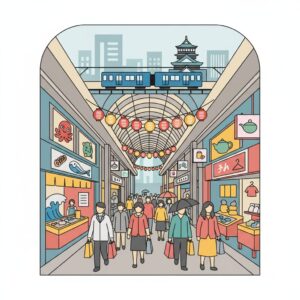
Dotonbori is very easy to reach, situated in the heart of Osaka’s Minami (South) district. The most convenient way to get there is by subway. It’s a brief walk from several stations, including Namba Station (a major hub for multiple subway lines and the Nankai line from Kansai Airport), Shinsaibashi Station, and Nippombashi Station. The main excitement is centered along the Dotonbori Canal, stretching from Dotonboribashi Bridge in the west to Nippombashi Bridge in the east. The iconic Ebisubashi Bridge, next to the Glico sign, serves as the focal point and links Dotonbori with the expansive Shinsaibashi-suji shopping arcade to the north. Exploring is simple: you can stroll along the main Dotonbori street running parallel along the canal’s south side or walk the riverwalks on either side for excellent views.
A First-Timer’s Field Guide
To ensure your first visit goes smoothly and is enjoyable, keep a few tips in mind. The overwhelming number of options can be confusing, so it’s helpful to have a mental list of the key dishes you want to try. At the same time, leave room for improvisation. A long line of locals is almost always a sign of quality at a stall.
Cash is King (Sometimes)
While larger restaurants and chain stores usually accept credit cards, many smaller street food stalls and ramen shops with ticket vending machines only take cash. It’s wise to carry a good amount of yen to avoid any inconvenience. Having smaller bills and coins is especially useful for quick purchases at busy stands.
Pace Yourself
The golden rule of kuidaore is to see it as a marathon, not a sprint. The urge to satisfy your hunger at the first enticing stall is a common rookie mistake. Street food portions like takoyaki and kushikatsu are meant for snacking. Share orders with a friend to sample a broader range of dishes without filling up too soon. Think of your visit as a multi-course feast where the whole district is your restaurant and each stall is a different course.
Embrace the Queue
You’ll encounter lines, particularly at the most popular spots. Don’t be discouraged. Queues in Japan are orderly and typically move quickly. Waiting in line is part of the Dotonbori experience itself. It builds anticipation and provides a prime opportunity for people-watching. You can watch the chefs at work, plan your next stop, and soak up the atmosphere. The reward at the end is almost always worth the brief wait.
The Unspoken Language of Dotonbori
Beyond the food and the lights, what truly defines Dotonbori is its human spirit. It is a place that feels deeply alive, driven by the energy of the people who work, play, and eat there. The character of Osaka shines brightly here—it’s louder, more direct, and arguably more expressive than what you might encounter in other Japanese cities.
The Sounds, the Smells, the People
Listen closely, and you may catch the distinctive rhythm of the local dialect, Osaka-ben, known for its unique tones and vivid expressions. The vendors calling out to passersby aren’t just selling food; they’re performing, engaging the crowd with friendly banter and abundant enthusiasm. There’s a warmth and openness to these interactions. People are generally eager to help if you seem lost, and a simple smile paired with a gesture toward what you want to order will almost always be understood. The experience is a rich tapestry woven from the sizzle of grills, the glow of lanterns, the reflection on the canal, and the ever-present, joyful noise of a city in love with life.
A Culture of Welcome
Despite the crowds and the fast pace, an overwhelming sense of welcome pervades. Dotonbori has been a public gathering place for centuries, and that spirit of hospitality remains strong. It’s a place designed for pleasure, built to entertain and satisfy. Whether you’re a local grabbing a quick bite after work or a traveler seeing the Glico sign for the first time, you become part of the same vibrant, unfolding spectacle. This shared experience, this collective participation in the ritual of kuidaore, is what makes a visit so unforgettable. It’s a feeling of being fully immersed in the moment, a perfect occasion of culinary discovery.
A Final Taste of Osaka’s Soul
A trip to Dotonbori is more than just sightseeing; it’s a vital immersion into the very essence of Osaka. It’s a place that celebrates the joy of eating with an honesty and exuberance that is truly contagious. Strolling its crowded, neon-lit streets allows you to grasp the city’s history as the nation’s kitchen, its theatrical heritage, and its down-to-earth, fun-loving spirit today. You may arrive as a visitor, but you leave as part of the grand tradition of kuidaore, with the flavor of takoyaki still lingering on your tongue and the glow of a thousand lights etched into your memory. Dotonbori guarantees that in Osaka, a good time and a great meal are always just a few steps away. And as you walk away, stomach full and senses alive, you realize you haven’t merely eaten food; you have experienced the vibrant, beating heart of a city.