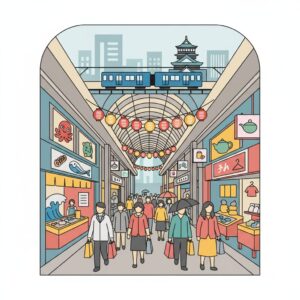
There’s a rhythm to Osaka, a beat that pulses not from its neon-drenched avenues or soaring skyscrapers, but from its kitchens. It’s a city that wears its heart on its sleeve and its culinary soul out in the open, a place where the phrase kuidaore—to eat until you drop—is less a challenge and more a way of life. At the very center of this gastronomic universe lies a covered artery of flavor, a bustling, vibrant corridor known as Kuromon Ichiba Market. For over a century, this place has been affectionately called Tenka no Daidokoro, or “The Nation’s Kitchen,” serving as the pantry for Osaka’s finest chefs and most discerning home cooks. But in recent years, it has transformed into something more: a spectacular, sprawling stage for street food theater, where the ingredients don’t just wait to be sold but are cooked, grilled, and served right before your eyes. Amidst the mountains of fresh seafood, colorful pickles, and exotic fruits, one particular treasure draws pilgrims from across the globe: the legendary Japanese Wagyu. This is not just a market; it’s a culinary quest. And our mission, should we choose to accept it, is to navigate this delicious labyrinth in search of the most sublime, melt-in-your-mouth Kobe beef and Wagyu skewers, a taste of luxury made accessible in the heart of Japan’s most food-obsessed city.
After savoring these legendary skewers, you can continue exploring Osaka’s unique culture by visiting the nearby Kozu Shrine, a sacred stage dedicated to the city’s spirit of laughter.
The Heartbeat of Naniwa: Understanding the Kuromon Atmosphere
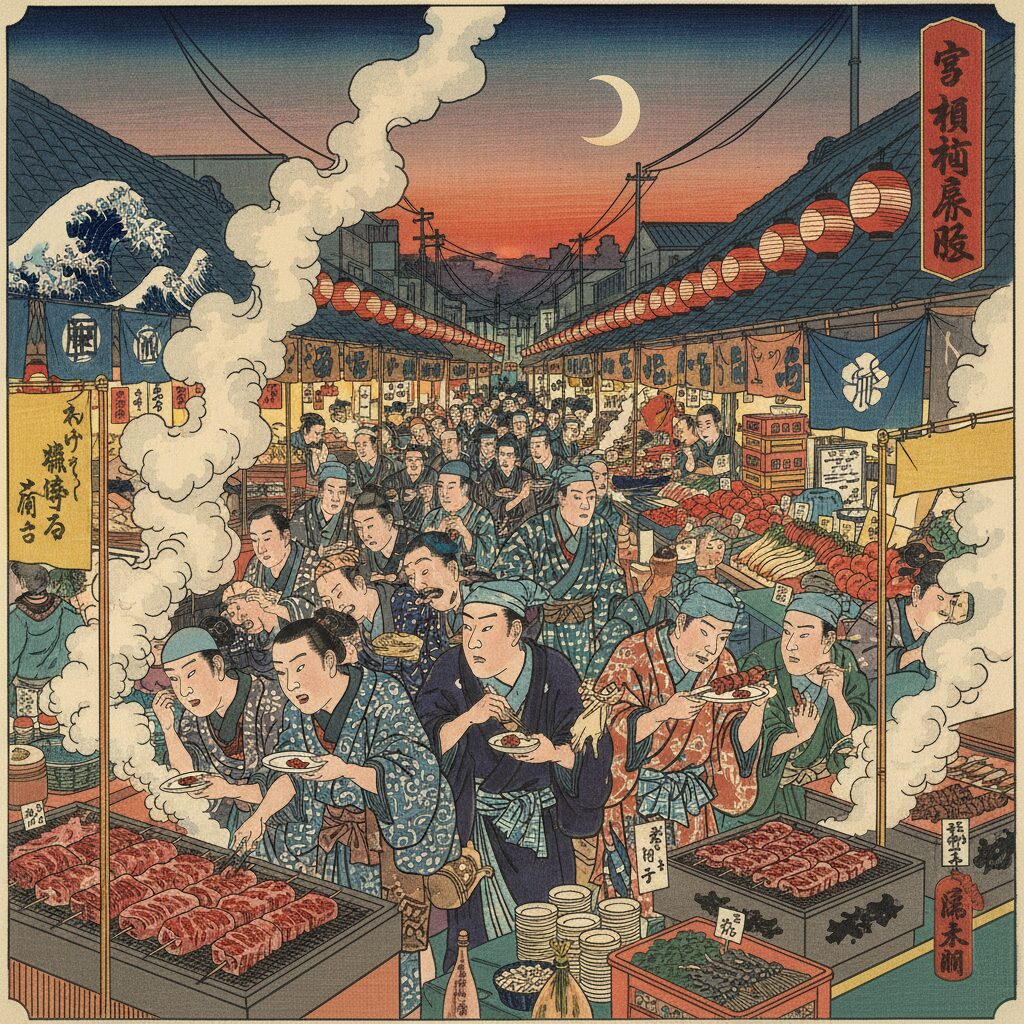
Entering Kuromon Ichiba Market feels like plunging into a vibrant sensory symphony. The air is thick with a delightful medley of aromas: the briny freshness of the ocean from vendors offering oysters and sea urchin, the sweet, smoky scent of grilled eel glazed with a dark, glossy tare sauce, the soothing fragrance of dashi broth simmering in large pots, and, weaving through it all, the rich, mouthwatering aroma of beef fat sizzling on a hot iron griddle. The sounds are equally captivating. Lively shouts of “Irasshaimase!” (Welcome!) ring from every stall, a chorus of greetings that makes you feel truly welcomed. You catch the sharp clatter of knives on wooden boards, the hiss of oil frying, the lively chatter of shoppers, and the excited gasps of tourists discovering new flavors for the first time. It’s a place of constant movement, a dynamic mosaic of locals on their daily shopping routes, skillfully navigating the crowds, and wide-eyed visitors pausing at every stall, cameras ready, eager to capture the delicious chaos.
The heart of the market lies in this striking contrast. On one side, it is a living museum, a tribute to an era when local markets were the city’s lifeblood. Vendors here have often been at their stalls for generations, their faces reflecting the pride and expertise of their craft. They are artisans—whether carefully arranging cuts of tuna, skillfully skewering baby octopus, or precisely slicing marbled beef. On the other side, Kuromon has embraced its status as a global destination. Menus often include English, Chinese, and Korean translations, and many vendors have perfected single-serving street food portions, crafted for immediate and immense enjoyment. This blend of old and new, local and international, gives Kuromon its distinctive and irresistibly vibrant energy. It’s not just a market to buy food; it’s a place to experience the very spirit of Osaka’s kuidaore culture and witness the passion and precision that turn simple ingredients into culinary art.
The Crown Jewel of Japanese Cuisine: What Makes Wagyu and Kobe Beef So Special?
Before you begin your tasting journey, it’s important to understand what lies ahead. The names “Wagyu” and “Kobe” are often mentioned with great reverence—and for good reason. They symbolize the pinnacle of beef production, offering an unmatched flavor and texture developed through centuries of dedicated Japanese animal husbandry. To truly savor the skewer in your hand, you must first appreciate the craftsmanship behind it.
A Closer Look at Wagyu
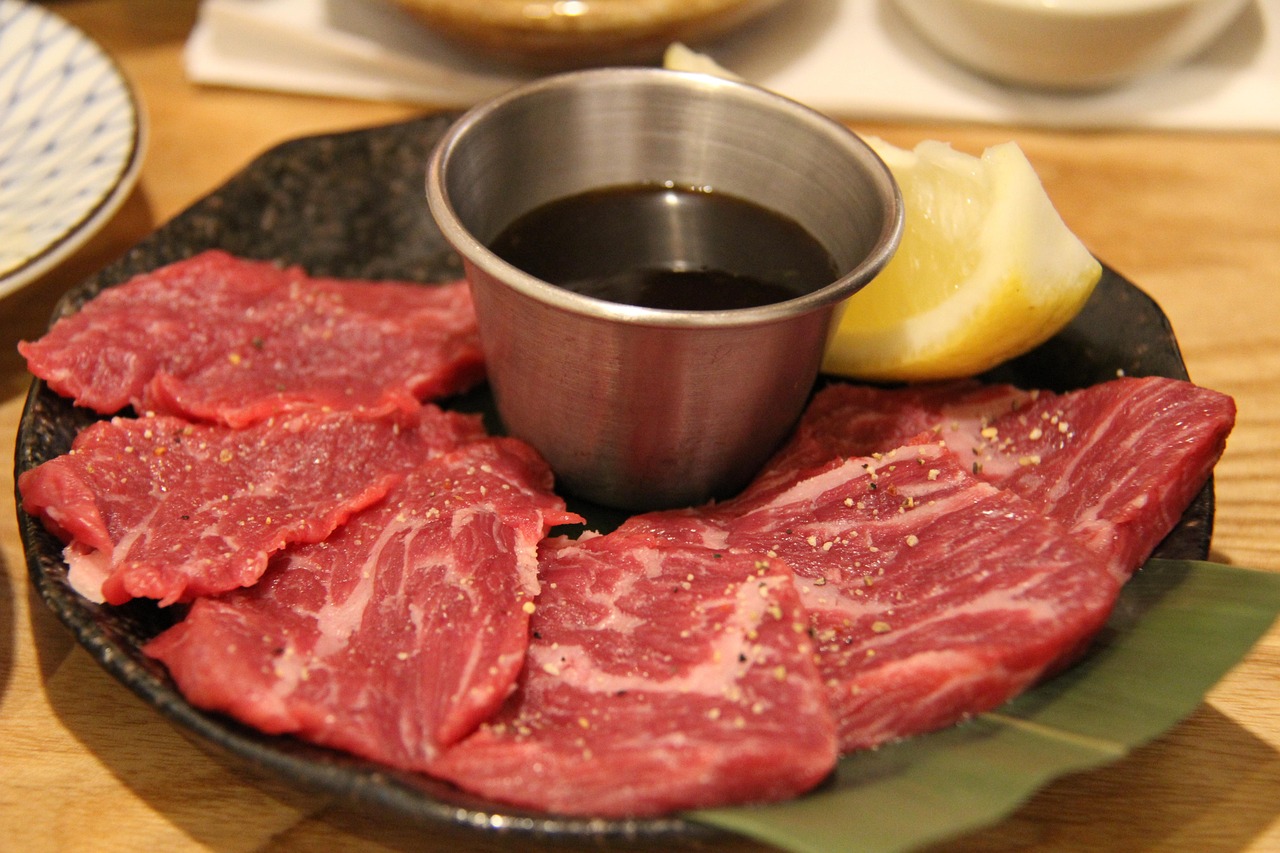
The term “Wagyu” literally means “Japanese cow” (Wa meaning Japanese, and gyu meaning cow). It designates four specific breeds of cattle native to Japan. Among these, the Japanese Black, or Kuroge Washu, is the standout, making up the vast majority of Wagyu you’ll encounter at Kuromon Market and beyond. Wagyu is distinguished by its remarkable genetic tendency to develop intense intramuscular fat. This isn’t the thick, tough fat found on the edge of a Western steak; rather, it is sashi, a delicate, intricate marbling that intricately weaves through the muscle, resembling lace or frosted glass.
This marbling is the key to Wagyu’s enchantment. The fat is exceptionally rich in unsaturated fatty acids, resulting in a melting point so low that it begins to dissolve at human body temperature. When cooked on a hot grill, the sashi liquefies, basting the meat from within to create a steak that is incredibly tender, juicy, and rich. The flavor is a complex harmony of deep, beefy umami with a subtle sweetness that lingers on the palate. To guarantee quality, Japan uses a stringent grading system. Meat is rated on yield (from C to A) and quality (from 1 to 5), with A5 representing the highest possible grade. This A5 designation signifies beef possessing exceptional marbling, color, texture, and fat quality—a true masterpiece of meat.
The Story of Kobe Beef
Within the elite realm of Wagyu, an even more exclusive category exists: Kobe beef. It’s vital to recognize that while all Kobe beef is Wagyu, only a very small portion of Wagyu qualifies as Kobe. Kobe is not a breed but rather a brand—a protected appellation as rigorously controlled as Champagne in France or Parmigiano-Reggiano in Italy. To earn this prestigious label, the beef must meet exacting criteria. The animal must be a purebred Tajima-gyu, a specific strain of Japanese Black cattle, born, raised, and processed entirely within Hyogo Prefecture, whose capital is Kobe.
The standards go further. The animal must be a steer or virgin cow, and the beef must achieve a Beef Marbling Standard (BMS) score of 6 or above on a 12-point scale, along with top marks for meat quality. Each certified cut is marked with a unique 10-digit ID number, enabling anyone to trace its lineage back to the farm of origin. This painstaking, meticulous process results in beef famous for its delicate texture, refined buttery flavor, and clean finish. While tales of farmers massaging their cattle or feeding them beer are largely myths, they underscore the truth of the exceptional care and stress-free conditions provided to these animals—a philosophy that shines through in the unparalleled quality of the final product. To taste authentic Kobe beef is to experience the culmination of centuries of tradition, passion, and mastery.
The Ultimate Street Food Quest: Navigating the Stalls of Kuromon Market
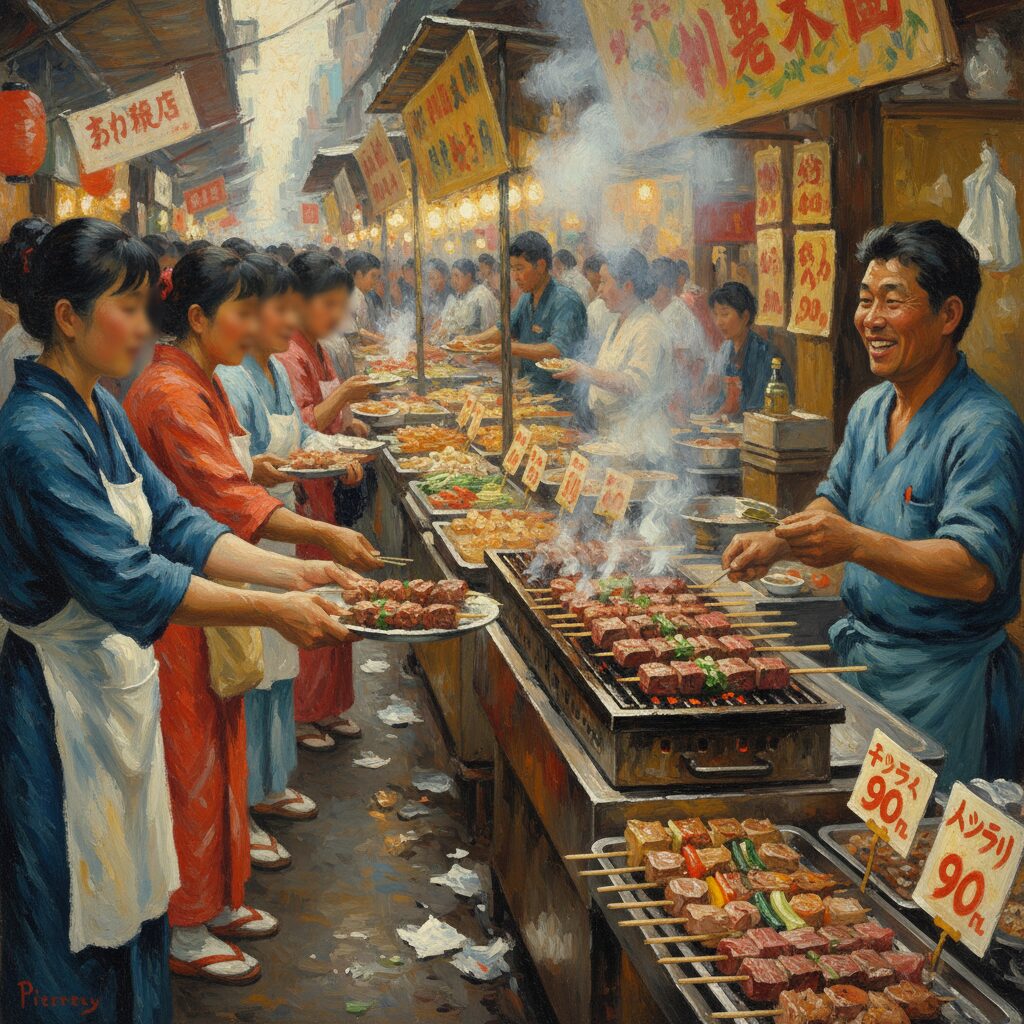
Armed with knowledge, you are now ready to hunt for your prize. The quest for the perfect Wagyu skewer in Kuromon is an adventure in itself. The market is a labyrinth of temptations, and with dozens of vendors offering sizzling beef, making the right choice can feel overwhelming. However, with a few key insights, you can navigate the market like a seasoned expert and ensure your experience is nothing short of spectacular.
Spotting the Real Deal: How to Choose a Vendor
Your best option is often to seek out dedicated butcher shops (niku-ya) that have a small grill or teppan set up outside. These vendors specialize in beef. Their main business is selling high-quality raw cuts to locals and restaurants, and the street food they serve is a way to showcase the excellence of their product. Look for shops with large, spotless refrigerated display cases exhibiting impressive blocks of beef. The marbling should be clearly visible—a brilliant white web against a vibrant, cherry-red background. True quality speaks for itself, and a vendor proud of their product will display it prominently.
If you are specifically seeking certified Kobe beef, look for the official seal: a purple Japanese chrysanthemum logo. Trustworthy sellers will have their certification documents on proud display. Be aware of the price. Authentic Kobe beef and top-grade A5 Wagyu are premium products, and their cost reflects that. A single, small skewer of top-tier Wagyu can run several thousand yen. If you see a stall advertising “Kobe-style” beef at a suspiciously low price, it’s likely a lower-grade domestic beef or an import. In Kuromon, as in life, you get what you pay for. Lastly, trust your instincts. Watch the chef at work. Are they cooking the meat to order? Is the grill clean? Do they handle the beef with the care and respect it deserves? The best stalls operate with theatrical flair, a confidence born of serving only the best.
The Ritual of the Order: From Pointing to Tasting
Ordering is wonderfully simple and straightforward. Most stalls display various cuts and grades of beef, often already cubed and placed on skewers, or available as small individual steaks. You simply point to the one you want. The vendor then confirms the price, which is usually based on weight. Once paid, the magic begins. Your chosen beef is placed onto a blazing hot teppan. The sizzle is immediate, a sharp, satisfying sound cutting through the market’s noise. The chef expertly turns the beef, searing each side to form a perfect crust while keeping the inside tender and pink.
One hallmark of high-quality Wagyu preparation is its simplicity. The chef typically adds just a pinch of salt and a light dusting of black pepper. Heavy marinades or overpowering sauces are unnecessary; the goal is to enhance, not mask, the meat’s extraordinary natural flavor. As you stand there, the rich, buttery aroma surrounds you, a tantalizing preview of the indulgence to come. Within minutes, your skewer is ready, presented on a small paper tray. This isn’t fast food; it’s a moment of culinary ceremony, a direct connection between you, the chef, and an ingredient of unparalleled quality.
Beyond the Skewer: Exploring Different Cuts and Preparations
While the skewer is the quintessential Kuromon Wagyu experience, it’s far from the only choice. Keep an eye out for different preparations that highlight the versatility of this incredible beef. Many vendors offer saikoro steak—small, perfectly uniform cubes grilled and served in a cup, making them easy to enjoy on the go. This is a great way to sample a more generous portion.
You may also encounter various cuts, each with its unique character. Sirloin (sāroin) provides a beautiful balance of hearty beef flavor and tenderness. Ribeye (riburōsu) is often the most heavily marbled cut, delivering an intensely rich and juicy experience. For the ultimate tenderness, look for tenderloin (hire), a leaner but incredibly soft cut that melts on your tongue. Don’t hesitate to ask the vendor for a recommendation. By simply saying “osusume wa?” (What do you recommend?), you might discover the best cut of the day, a choice guided by the butcher’s expert knowledge.
A Symphony of Flavors: What to Pair with Your Wagyu
That first taste of A5 Wagyu is a sublime experience. The exterior boasts a slight, gratifying crust from the grill, giving way to an interior so tender it barely needs chewing. The fat melts immediately, enveloping your mouth in a wave of rich, savory, and subtly sweet flavors. It’s an intense sensation, and while the Wagyu is undeniably the highlight, a few carefully selected accompaniments can enhance it even more. The charm of Kuromon Market lies in the abundance of perfect pairings right within your reach.
The richness of the beef can be beautifully offset by something fresh and slightly acidic. Seek out a stall offering freshly squeezed fruit juices. A cup of tart strawberry or bright orange juice can refresh your palate between bites, letting you savor each one as if it were the first. For an alternative pairing, try a mini “surf and turf” adventure. Just a short walk from the beef vendor, you’ll often find a seafood stall grilling giant prawns or plump scallops (hotate) brushed with butter and soy sauce. The sweet, oceanic notes of the seafood create a wonderful contrast to the Wagyu’s earthy richness.
Naturally, a classic drink pairing is always a winning choice. A cold Japanese beer, like a crisp Asahi Super Dry or a smooth Kirin Ichiban, complements perfectly. Its light bitterness and effervescence cut through the fat, refreshing your palate for the next bite. For a more traditional touch, some specialty shops in the market offer small cups of sake. A dry, clean junmai sake pairs well with the beef without overshadowing its delicate flavors. One piece of advice: enjoy your Wagyu before indulging in other heavy or deep-fried dishes. Keeping your palate clean helps you fully appreciate the complex and subtle notes of this world-class ingredient.
Practical Guidance for Your Kuromon Culinary Journey
A bit of planning can greatly enhance your Kuromon Market visit, making it smooth, enjoyable, and absolutely delicious. From how to get there to understanding the unspoken rules of market etiquette, these helpful tips will guide you confidently through your culinary adventure.
Getting There: Access and Transportation
Kuromon Ichiba Market is conveniently situated in Osaka’s Minami district, ensuring easy access. The most straightforward way to get there is via the Osaka Metro. Take either the Sakaisuji Line or the Sennichimae Line to Nippombashi Station. Exit 10 brings you just steps from the market’s entrance. The market is also a pleasant ten-minute walk from Namba Station, a major transport hub serving the Nankai Railway (ideal if coming from Kansai International Airport), JR lines, and the Midosuji, Yotsubashi, and Sennichimae subway lines. This central spot makes it simple to combine your Kuromon visit with trips to nearby attractions like the lively Dotonbori canal district or Den Den Town’s electronics area.
Timing is Everything: The Best Time to Visit
Timing is key to maximizing your visit. The market typically operates from around 9:00 AM to 6:00 PM, though not all stalls share the same hours. For the best experience, try to arrive late morning, between 10:00 AM and 11:00 AM. By then, vendors will be fully set up and grills fired up, yet you’ll avoid the peak lunchtime rush. Between noon and 2:00 PM, especially on weekends and holidays, the narrow arcade can become very crowded. For a more relaxed experience, visiting on a weekday is advisable. Keep in mind that many shops begin to close and run out of popular items by late afternoon, so avoid leaving your visit until the end of the day.
Market Etiquette and Insider Tips
Navigating a busy Japanese market involves a few unwritten rules. While larger shops may accept credit cards, many smaller stalls are cash-only, so it’s smart to carry plenty of yen. One key custom is not walking while eating, as it’s seen as impolite and can cause spills in crowded spaces. Instead, enjoy your food in the vendor’s designated standing or seating area. If none is provided, simply step aside, out of the foot traffic flow. After finishing, make sure to dispose of skewers, trays, and any trash in the proper bins. Vendors typically provide trash cans, and there are public receptacles at the Kuromon Information Center in the market’s center.
Pacing yourself is essential at Kuromon. The wide variety can be overwhelming, and it’s easy to fill up too fast. Walk through the entire market before purchasing anything. Check out the offerings, compare prices, and spot the stalls that catch your eye. This way, you can craft your ideal multi-course meal, moving from grilled scallops to Wagyu beef to a fresh fruit mochi for dessert. Don’t worry about language barriers; food speaks a universal language. A smile and a simple point often suffice. Be patient, observant, and above all, curious.
Kuromon and its Place in Osaka’s Culinary Landscape
Kuromon Ichiba Market is more than a mere tourist spot; it serves as a vital organ within Osaka’s culinary landscape. For generations, it has been the main source of top-quality ingredients for the city’s diverse restaurants, ranging from modest neighborhood izakayas to Michelin-starred kaiseki venues. The fishmonger who sells you a skewer of grilled tuna in the afternoon may have spent his morning delivering the same premium fish to Osaka’s finest sushi chefs. This longstanding connection to the local food community preserves the market’s authenticity and ensures its offerings remain exceptionally high in quality. It truly is “Osaka’s Kitchen.”
Visiting Kuromon offers an intriguing look into the flavor supply chain that underpins the city’s kuidaore fame. It stands as the vibrant, pulsating heart of the Namba district, making it an ideal starting point for your day’s adventures. After savoring the market’s treats, you can stroll a few blocks north to the dazzling spectacle of Dotonbori, with its giant mechanical crabs and the iconic Glico Running Man sign. There, you can enjoy other Osaka specialties like takoyaki (octopus balls) and okonomiyaki (savory pancakes), appreciating how the fresh ingredients from Kuromon transform into the city’s most beloved dishes. The market is not an isolated experience; it opens the door to understanding the entire food culture of Osaka—a city that truly lives and breathes culinary delight.
A visit to Kuromon Ichiba Market is a pilgrimage for any food enthusiast. It is a place where tradition and modernity intertwine in a delicious harmony, where the simple act of eating a skewer of beef becomes a profound cultural experience. That first bite of perfectly cooked, exquisitely marbled Wagyu, enjoyed amid the market’s lively bustle, is more than just a meal. It is a memory, a story, a moment of pure, unfiltered joy. It embodies the essence of Osaka itself—bold, generous, and utterly unforgettable. So arrive with an empty stomach and an open heart, and let the Nation’s Kitchen fill you with the finest flavors Japan has to offer. Your own sizzling sensation awaits.