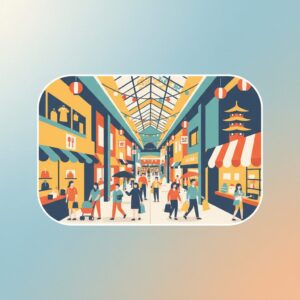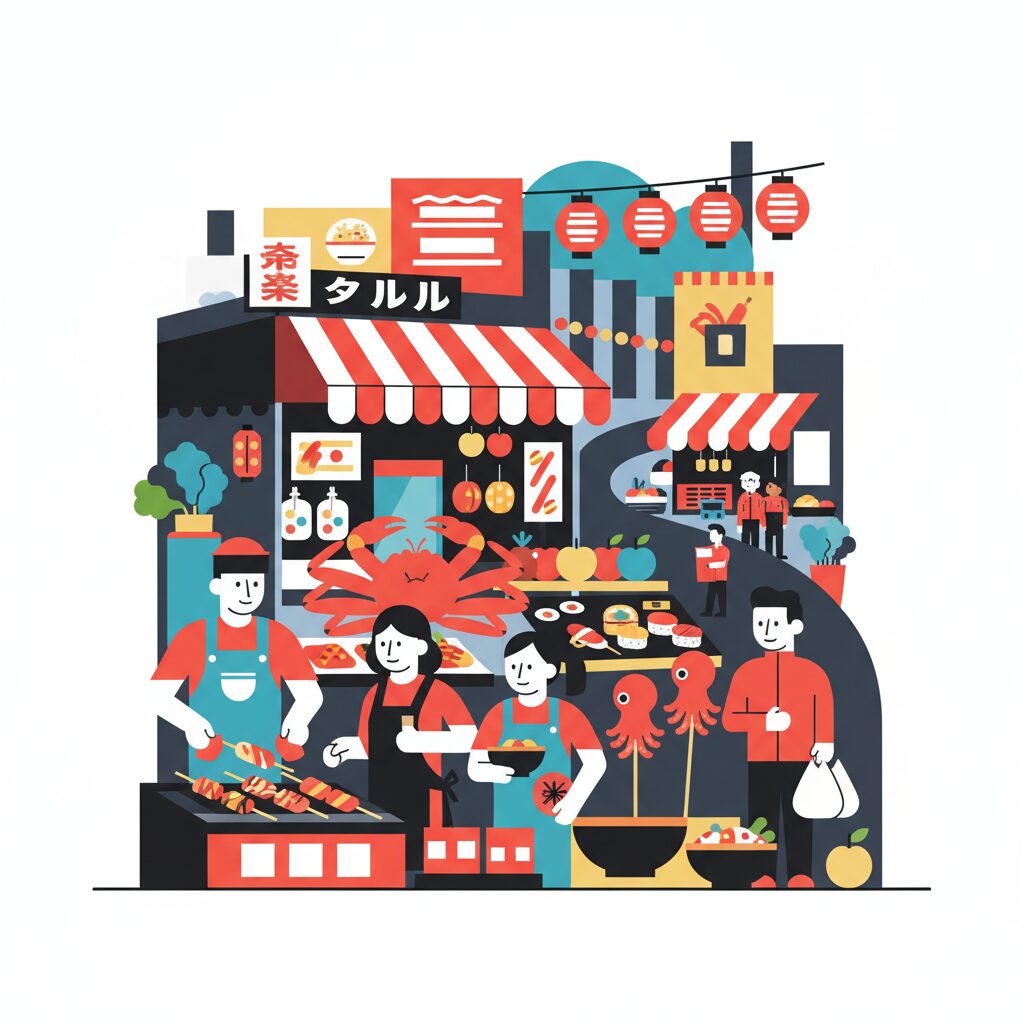
Walk into Kuromon Market for the first time, and your senses are thrown into a beautiful, chaotic spin. The air is thick with the savory smoke of grilled eel and the sharp, clean scent of the sea. Vendors shout greetings with a gravelly warmth, their voices a percussive soundtrack to the rhythmic clack of knives on wooden blocks. Giant crab claws, glistening with butter and soy sauce, are thrust towards you. Perfectly marbled beef sizzles on tiny grills, and jewel-like strawberries sit plump in their boxes, each one a tiny work of art. It’s a feast, an onslaught, a spectacle. And for many newcomers, especially those accustomed to the hushed, almost reverent atmosphere of a Tokyo department store food hall, the immediate reaction is a mix of awe and intimidation. Is this just for show? A performance for the endless river of tourists? The answer, like most things in Osaka, is more complicated and far more interesting. This isn’t just a market; it’s the city’s heart, a living, breathing classroom for understanding the unique social commerce of Osaka. To navigate Kuromon is to learn the language of the city itself—a language of directness, humor, and a deep, abiding respect for good food and the people who sell it. Forget what you know about polite, distant transactions. Here, commerce is a conversation, and to get the most out of it, you need to learn how to talk back.
To truly understand Osaka’s vibrant street life, it’s also worth learning about the experience of visiting Dotonbori during peak season.
More Than a Market: The “Akindo” Spirit in Action
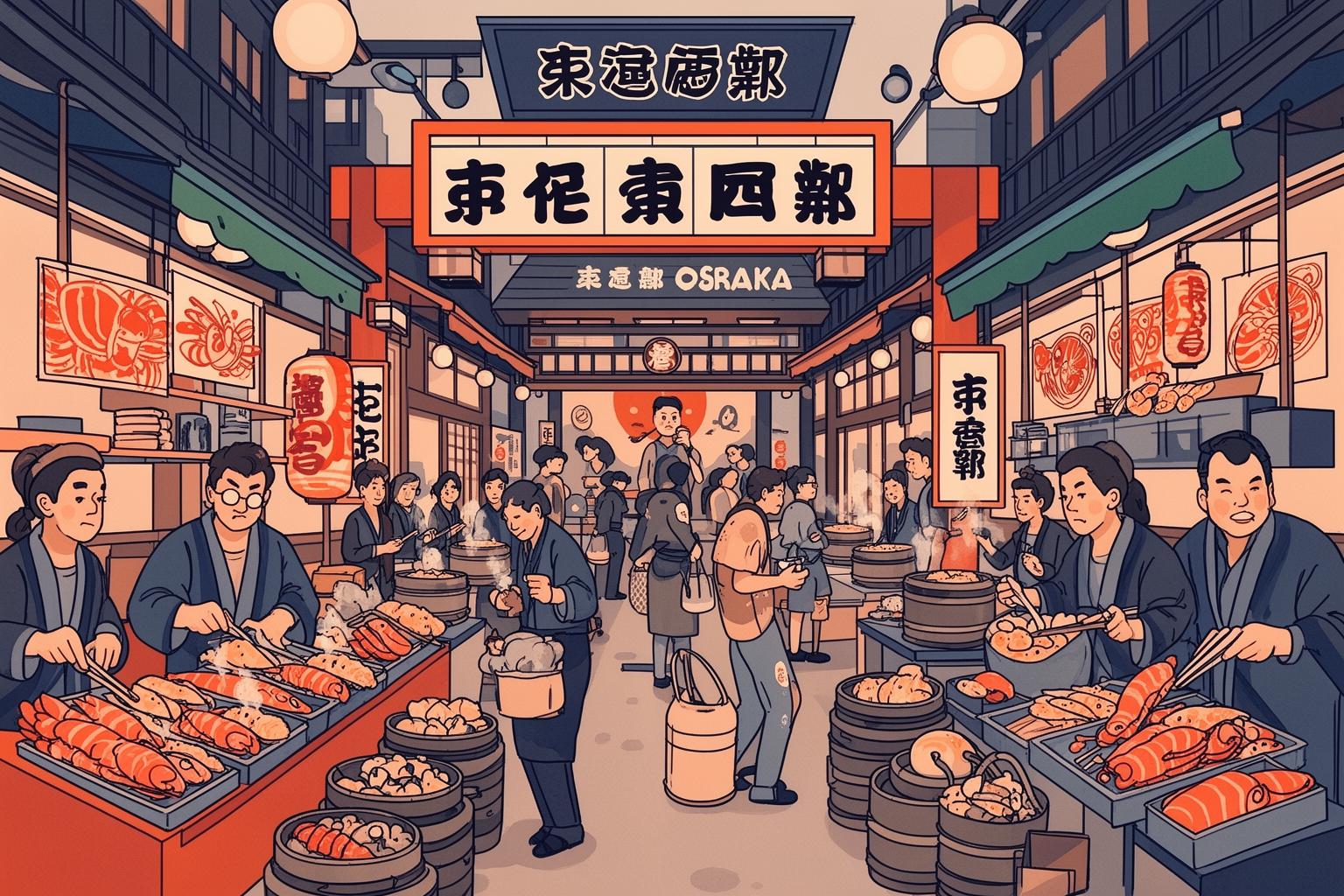
To truly understand what’s happening in the bustling aisles of Kuromon, you first need to grasp a key piece of Osaka vocabulary: akindo. The standard Japanese word for a merchant is shonin, a term that feels businesslike, formal, and somewhat detached. But in Osaka, Japan’s historic merchant hub, the word has always been akindo. The distinction is crucial. An akindo isn’t merely someone who sells goods. They are an artisan, a community cornerstone, a person whose identity is deeply connected to their trade and customers. The weathered man skillfully cutting up a massive bluefin tuna isn’t just a fishmonger; he’s likely the third generation of his family operating at that very stall. He understands the tides, the seasons, and the particular tastes of local chefs and grandmothers who have been his loyal patrons for decades. His pride lies not only in the freshness of his fish but also in the trust he has fostered through years of honest dealings and expert guidance. This is the akindo spirit, the driving force behind every exchange in the market.
“Akindo” vs. “Shonin”: The Merchant’s Essence
The difference between a shonin and an akindo reveals itself in their manner. A transaction with a shonin may be impeccably polite and efficient, yet it remains just a transaction. The objective is simply the exchange of goods for money. For an akindo, the transaction is a byproduct of a relationship, even if brief. That’s why Kuromon’s energy feels so lively and inviting. The loud, booming calls of “Irasshaimase!” (Welcome!) or “Yasukushitoku de!” (I’ll give you a good deal!) aren’t mere formalities. They are openings—inviting you into their world. They make direct eye contact, perhaps pointing to a particular item and proclaiming it the best of the day. A Tokyo resident might see this as pushy or intrusive, a violation of the unspoken personal space that governs public life there. But in Osaka, it signals confidence and reflects the akindo’s faith in their product. They don’t wait silently behind a counter for you to decide; they actively shape your experience, steering you toward their finest offerings. They want to engage, explain, and share their knowledge. It’s possible to ignore this invitation, merely point at an item, pay, and walk away, but doing so misses the entire point. You’d be treating an akindo like a shonin, overlooking the soul of the market.
The Currency of Conversation
In Osaka’s commercial culture, conversation serves as a form of currency. It builds trust and shows respect, setting the stage for a better transaction for both parties. The true business of Kuromon happens in the questions and answers exchanged across the counters. Rather than silently examining the products, the experienced local initiates dialogue. They ask the fishmonger, “Kyou no osusume wa nani?” (What do you recommend today?). This simple question is a powerful tool. It signals to the vendor that you’re not just a passive shopper seeking the cheapest option, but an engaged customer who values their expert advice. In a typical Tokyo supermarket, this might prompt a polite but generic response directing you to the day’s promotional item. At Kuromon, it can spark an enthusiastic monologue. The vendor’s eyes will brighten as they describe the specific port this sea bream was caught from, how the seasonal currents have made it especially fatty, and the best way to prepare it—perhaps grilled with just a pinch of salt to enhance its natural sweetness. They might deliver a mini-lecture on the different grades of sea urchin, explaining the distinct flavors of those harvested from Hokkaido versus Kyushu’s coast. This exchange isn’t a waste of time; it is the time. It’s how the vendor asserts their expertise and the customer gains not simply an ingredient, but a story and the confidence to prepare it perfectly. It’s a transfer of knowledge, a moment of human connection that enriches the entire experience of cooking and eating. For foreign residents, learning to start these small conversations is the key step in moving from outsider to insider.
The Unspoken Rules of Engagement: How to “Play the Game”
Like any intricate social ecosystem, Kuromon runs on a set of unwritten rules. Mastering this etiquette unlocks the market’s true potential, transforming it from an overwhelming tourist spot into your personal pantry and a space for genuine connection. It’s a dance of respect, playful teasing, and showing appreciation for the craftsmanship behind the trade. Once vendors recognize your willingness to engage, the whole dynamic changes. You’re no longer just another face in the crowd; you become a participant who understands. This is when the real enjoyment starts, and you begin to feel the authentic pulse of daily life in Osaka. It calls for a bit of courage and a readiness to step beyond the typical, more reserved communication styles you might have encountered elsewhere in Japan. The rewards, however, are rich, offering not just superior food but a deeper sense of belonging.
The Art of “Mekiki”: Demonstrating Knowledge Even Without Expertise
At the heart of the market’s culture is the concept of mekiki, roughly meaning a discerning eye or the ability to judge quality. Osaka’s akindo hold great respect for customers who show good mekiki. You don’t need to be a professional chef or marine biologist. What counts is sincere interest and attention to detail—it’s a performance of appreciation. When you approach a fish stall, don’t just skim prices. Examine the fish itself. Look into its eye—a clear, bright eye signals peak freshness. Comment on the deep, vivid red of the tuna. At the butcher, inquire about the marbling on Kobe beef, using your hands to gesture to the intricate fat patterns. At a fruit stand, resist grabbing the first pack of strawberries; pick one up, observe the rich color and even shape, and perhaps ask, “Kore, amai?” (Are these sweet?). This act of questioning accomplishes something key: it elevates you. You’re no longer a tourist who will buy anything flashy—you signal you’re a discerning customer who respects the quality and effort behind these premium products. Vendors, in turn, treat you with greater respect, more likely to share their best items, offer cooking tips, and see you as a fellow appreciator of fine food. It’s a subtle but powerful shift, turning the interaction from a simple sale into a consultation between two people who care about quality.
Navigating “Honma ni?”: The Ritual of Playful Doubt
Here’s social etiquette that feels completely counterintuitive to those familiar with wider Japan, and it’s pure Osaka spirit. A vendor declares, “This is the best, fattiest eel you’ll find in the whole city!” In Tokyo, the polite response is to nod, smile, and agree. In Osaka, the ideal reply is to look them in the eye, smile slightly, and say, “Honma ni?” (Really? For real?). This isn’t an insult or a sincere doubt; it’s a conversational challenge, a playful jab inviting the vendor to engage in a bit of theatrical salesmanship. This style reflects Osaka’s communicative rhythm, rooted in manzai comedy’s back-and-forth. When you say “Honma ni?,” you’re bouncing the ball back to them. The akindo almost always responds with mock offense and laughter. “Of course it is!” they’ll proclaim. “Look at this glaze! My grandfather invented this sauce! The neighbor uses sugar; I use a secret mirin blend! You won’t find this flavor anywhere else!” This banter lies at the heart of the relationship—a performance for both parties that builds rapport and adds fun, turning a dry transaction into a memorable, human moment. For foreigners, this can be the toughest cultural barrier to overcome, as it feels confrontational. But in Osaka, this playful skepticism is a sign of engagement: it shows you’re listening, interested, and ready to join the game. Trying it for the first time is nerve-wracking, but the warm, laughing response you’ll receive is among the most rewarding experiences in the city.
Price and “Omake”: The Subtle Art of Gaining Extras (Without Haggling)
A common misconception among visitors is that Kuromon is a place for aggressive haggling, like a bazaar elsewhere in the world. That’s not the case. Directly challenging the price or lowballing is rude and likely to end the conversation. Osaka’s style of getting a deal is more subtle and relational. It’s not about bargaining, but about earning a small bonus through positive interaction. This bonus, called omake, is a little something extra given for free. You don’t get omake by demanding it; you earn it by being a good customer—engaging in conversation, showing your mekiki, purchasing multiple items, and being pleasant. Once you’ve built rapport and are ready to pay, you might gently hint, saying, “I’m buying all this, can you give me a little service?” or more directly, “Chotto omake shite kureru?” (Can you give me a little extra?). Often, the vendor will happily add an extra shrimp, a piece of pickled radish, or round the price down to a neat number. This isn’t a discount won through confrontation but a gift expressing a good relationship. It’s the vendor’s way of saying, “Thanks for being a good customer. Please come again.” The value of the omake is less important than the gesture itself—it’s a tangible sign of the positive social connection you’ve created during your visit.
The Etiquette of Eating: It’s Not a Food Court
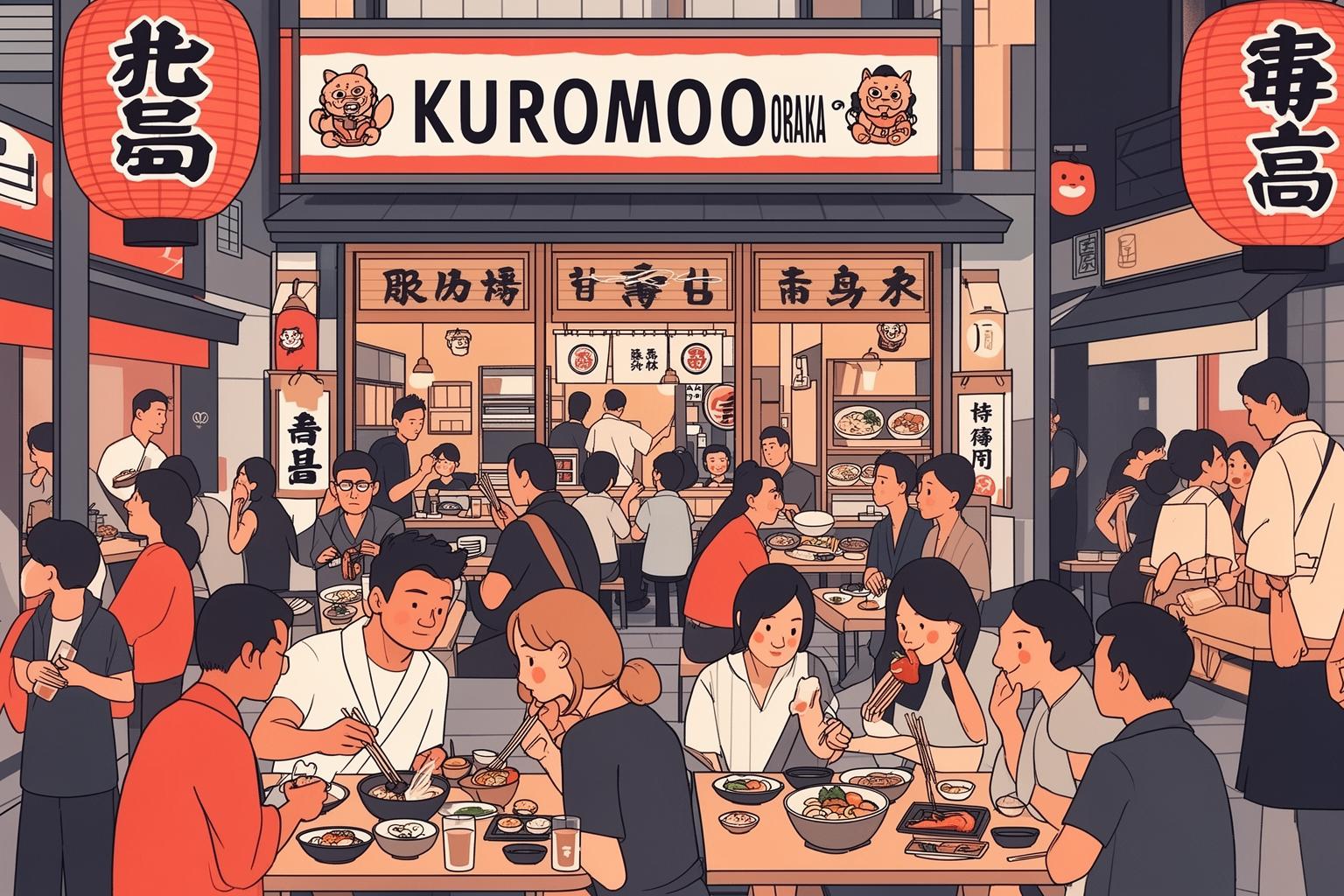
Kuromon has transformed from a traditional grocery market into a top destination for tabe-aruki, or eating while walking. However, this term is somewhat misleading, as the “aruki” (walking) aspect is strongly discouraged. The market is primarily a functional commercial space. Its narrow aisles serve as vital arteries of local trade, and blocking them is a serious breach of social etiquette. This is probably the most common mistake visitors make and the one most likely to elicit quiet irritation from locals and vendors alike. Knowing the proper way to enjoy the delicious food you’ve just bought is essential to being a respectful market-goer. The rules are simple and all rooted in the Japanese value of omoiyari—consideration for others. The market is a shared space, and enjoying its offerings means doing so in a way that honors the flow and purpose of the environment for everyone.
“Tachigui” Culture and Where to Stand
The proper way to eat at the market is tachigui, or stand-and-eat. But where you stand matters greatly. The absolute rule is: never eat in the middle of the walkway. The aisles are meant for passage. People are pushing carts, carrying groceries, and moving between shops. Gathering with friends to devour sea urchin in the main corridor is like having a picnic on a busy highway—disruptive and thoughtless. The correct etiquette is to eat your food at the place where you bought it. Most vendors who sell ready-to-eat items provide a small designated area for this purpose. It might be a tiny counter at the back of the stall or a small space to the side, away from the flow of foot traffic. You purchase your grilled scallops, step two paces to the left, and eat right there, standing next to the shop’s wall. You enjoy your food within the vendor’s space. This keeps the main aisle clear and respects the hundreds of others navigating the market. If a shop lacks a designated eating spot, the expectation is that you find a quiet corner or alcove nearby where you won’t block anyone. The “eat where you buy” rule is straightforward, sensible, and vital for the smooth running of the market.
Garbage and Gratitude: Closing the Loop
So you’ve finished your delicious grilled octopus on a stick. What next? You’re left holding a used wooden skewer and a paper napkin, and like in much of Japan, public trash cans are nowhere to be found. This is an important final step in market eating etiquette. Your trash belongs to the shop that provided it. You must return your empty plate, cup, or skewer to the vendor you purchased it from. They will have a small bin behind their counter specifically for this purpose. This system is elegantly efficient, keeping the market clean and assigning waste responsibility to the business that created it. But it’s more than just waste management—a crucial social ritual is involved. When you return your empty dish, you have a perfect moment to close the loop on your interaction. You look the vendor in the eye and say, “Gochisousama deshita.” Often translated as “Thank you for the meal,” its meaning is deeper, expressing gratitude for the food, its preparation, and the entire experience. Adding a simple “Oishikatta!” (It was delicious!) brings a smile to the vendor’s face and reinforces the positive connection you’ve made. This small act of returning your trash with thanks is the final bow in the transaction. It’s a gesture of respect and appreciation that strengthens the relationship, turning a simple purchase into a complete, meaningful social exchange. It distinguishes a thoughtful participant from a careless consumer.
Kuromon as a Microcosm of Osaka Life
After spending enough time in Kuromon, you start to realize that the market is not an anomaly; it is the most concentrated reflection of Osaka itself. The rhythms, attitudes, and ways of communicating that you practice and refine in these bustling aisles are the very same ones that shape daily life throughout the city. The directness, the focus on mutual benefit, the humor, and the core belief that business is personal—these are the foundations of Osaka’s character. The market serves as a training ground. If you can learn to navigate the lively chaos of Kuromon, you can thrive anywhere in Osaka. The city’s reputation for being “friendlier” than Tokyo isn’t about superficial warmth; it’s about a deeply ingrained culture of proactive engagement, a readiness to connect on a human level swiftly and sincerely.
The Echo of “Osaka wa Shobai no Machi”
There’s an old saying you’ll often hear: “Osaka wa shobai no machi”—Osaka is a city of commerce. This phrase isn’t just about its economic background; it reflects a cultural philosophy. In Osaka, everyone is, in a way, a merchant. Everyone understands the art of the deal, the importance of value, and the necessity of building trust. The style of communication reflects this. It’s pragmatic and efficient. People get straight to the point. They use humor to disarm and quickly build rapport. This can be surprising for those used to more indirect, layered communication. But it’s not rudeness; it’s a form of honesty. In Kuromon, the vendor tells you what’s best today because they want you to have the best experience, so you’ll return tomorrow. In a business meeting in Osaka, your counterpart will express their concerns directly because they want to solve the problem and move forward—not skirt around the issue. The interactions in the market—the playful banter, the honest recommendations, the reciprocal acts of goodwill—are a perfect mirror of this city-wide mindset. They reveal a culture that values straightforward talk, practicality, and the strength of good relationships above all else.
From Tourist Trap to Local Living Room
It’s true that Kuromon has become a major international attraction. Prices for single-item snacks are higher than they once were, and on any given day, you’re likely to hear more Mandarin, Korean, and English than Japanese. Some longtime locals grumble that the market has lost its soul, that it’s become a “tourist trap.” But that’s a surface-level view. Look closer, and you’ll see the original spirit is still very much alive. The same vendor who just sold an expensive grilled prawn to a tourist will immediately turn to greet a neighborhood regular, an elderly woman they know by name. Their entire demeanor changes. They switch to a rapid, intimate Kansai dialect, discussing which cut of fish is best for tonight’s dinner, asking about her grandchildren, and sharing a bit of local gossip. The soul of the market remains; you just need to know how to access it. For a foreign resident, the path is clear. It’s not about finding some “secret” market unknown to tourists. It’s about learning to engage authentically with the city’s most famous market. Use the etiquette. Ask questions. Try the banter. Return your plate with a smile. The more you engage with the market’s culture, the less you will feel like a tourist. Vendors will begin to recognize you. A nod of acknowledgment will become a warm greeting. You will stop being just another customer and start becoming part of the market’s extended family. You will have transformed the supposed tourist trap back into what it has always been for locals: Osaka’s living room.
Ultimately, Kuromon Market is a masterclass in the art of being an Osakan. It teaches you to observe closely, be direct, and find joy in the simple, everyday interactions of commerce. It’s loud, a bit messy, and deeply human. So, the next time you visit, don’t just be a spectator walking through a museum of food. Be a participant. Dive into the beautiful chaos. Ask the vendor for their recommendation. Try a playful “Honma ni?” and see what happens. When you return your skewer with a heartfelt “Gochisousama,” you’re doing more than discarding trash. You’re speaking the true language of the city. You’ll discover that the Kitchen of Osaka isn’t just selling food; it’s serving up a generous portion of its heart, inviting you to take a bite and truly understand the vibrant, wonderful city you’ve chosen to call home.