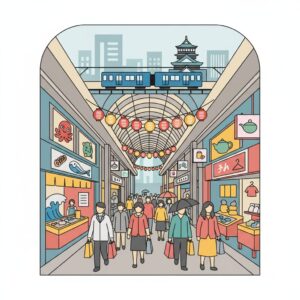
Osaka. The name itself crackles with an electric energy, a city that moves to the rhythm of sizzling okonomiyaki and the hearty laughter of its people. At the very heart of its culinary soul lies a place spoken of in reverent tones by food lovers across the globe: Kuromon Ichiba Market. Known affectionately as “Osaka’s Kitchen,” this covered arcade is a sensory explosion, a vibrant, chaotic, and utterly delicious artery pumping life and flavor into the city. For nearly two centuries, it has been the go-to pantry for top chefs and home cooks alike, a place where the freshest and finest ingredients are not just sold, but celebrated. As you step under its roof, you’re not just entering a market; you’re entering a living museum of Japanese gastronomy. The air hangs thick and heavy with a tantalizing medley of aromas—the briny kiss of the ocean from freshly shucked oysters, the sweet, smoky char of grilling eel, the deep, savory perfume of simmering dashi broth, and the delicate fragrance of impossibly perfect, snow-white strawberries. It’s a place where you can see giant tuna being expertly broken down, where marbled wagyu beef glistens like precious jewels under the fluorescent lights, and where tiny stalls offer tastes of everything from fiery pickles to creamy sea urchin served right in its spiny shell. Most visitors come with a clear mission: to feast on the legendary seafood and A5-grade beef that have made Kuromon a global destination. And while those are experiences of a lifetime, I found myself searching for something else on my last visit. I wanted to peel back a layer, to find a flavor that spoke more of the local, everyday Osaka. I was hunting for a story, a taste that wasn’t just for the guidebooks but for the soul. And I found it, tucked away from the main thoroughfare, in the golden, crispy embrace of a standing kushikatsu lunch.
While Kuromon is famous for its fresh catches, those seeking a more local seafood experience should explore the Kizu Wholesale Market, Osaka’s hidden gem for seafood lovers.
The Electric Pulse of Kuromon Ichiba
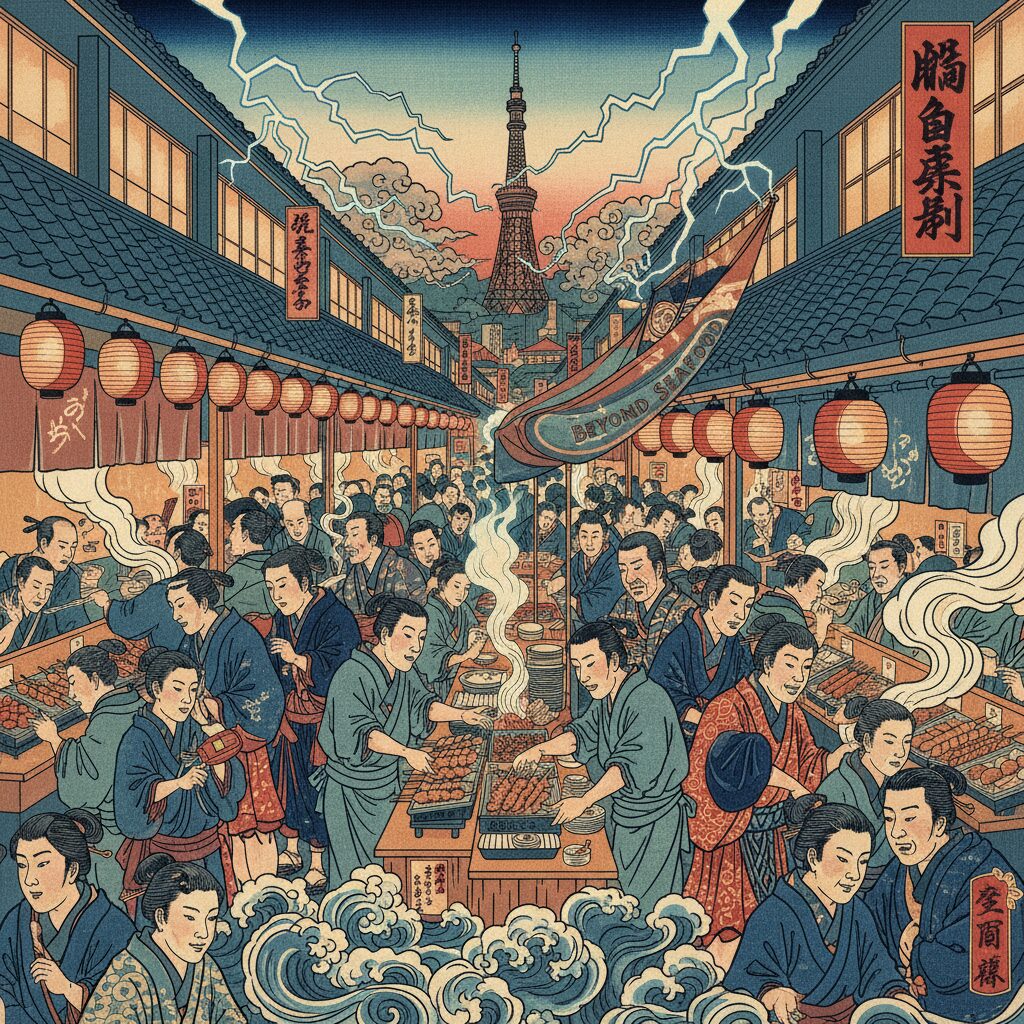
To truly grasp the magic of discovering a hidden spot in Kuromon, you first need to embrace its vibrant chaos. Strolling down the main arcade is a full sensory experience. The floor is a mosaic of worn tiles, dampened by ice beds from fishmongers and the spray of vendors washing their stalls. The air hums with a lively energy—the rhythmic calls of vendors advertising their daily specials, a melodic and percussive “Irasshaimase!” (Welcome!) resonating from every direction. You catch the sharp, satisfying crack of a crab shell being split, the sizzle of fat dropping onto hot coals, and the cheerful chatter of friends deciding which skewer to try next. It’s a symphony of commerce and consumption. Your eyes dart everywhere at once. On your left, a vendor meticulously arranges giant shrimp, their bodies glistening and curved like scimitars. To your right, a man expertly torches the surface of a scallop soaked in butter and soy sauce, the flames dancing and caramelizing the edges. Ahead, heaps of tsukemono, or Japanese pickles, form a kaleidoscope of colors—deep purple eggplants, bright yellow daikon radish, and earthy brown burdock root, all resting in fragrant brines. This place embodies the term tenka no daidokoro (the nation’s kitchen), a title Osaka earned during the Edo period as Japan’s central hub for rice and food distribution. Kuromon Market is a direct heir to that tradition. Though now a huge tourist attraction, it hasn’t lost its true character. You can still see local grandmothers carefully selecting fish for the evening meal, their movements practiced and sure, navigating the crowds with a grace born of decades of familiarity. This dual nature is what makes the market so captivating. It’s a stage where the grand performance of Japanese cuisine is showcased to the world, yet remains a deeply local, functional space. The culture of tabe-aruki, or eating while walking, isn’t just accepted here; it’s the primary way to engage. You grab a paper tray of grilled squid, find a small corner to stand, and savor it before moving on to the next temptation. It’s a progressive feast, a journey through tastes and textures that defines the Osaka food experience.
The Siren Song of Seafood and Steak… and Why I Looked Away
The headliners at Kuromon are impossible to overlook. They beckon from every stall, their beauty and aroma a powerful, nearly irresistible allure. There are trays of otoro sashimi, the richest and most coveted cut of bluefin tuna, its pink flesh intricately marbled with fat that promises to melt on your tongue like a savory snowflake. There are massive oysters, served raw with a squeeze of lemon or grilled with a dollop of cheese, their briny liquor offering a pure taste of the sea. Uni, the creamy, golden sea urchin roe, is presented with reverence in its spiky shell, a delicacy both sweet and oceanic. And then there’s the beef. Oh, the beef. Skewers of Kobe and Matsusaka wagyu are grilled to order, the intense marbling melting into a buttery, umami-rich burst of flavor that coats your entire mouth. I’ve indulged in these delights many times, and they are every bit as spectacular as they sound. Each bite feels like a celebration, a moment of pure, unadulterated luxury. On this particular day, however, I felt a different kind of hunger. As I watched long lines form at the famous tuna stalls and wagyu grills, I was drawn to seek something less… refined. The market’s biggest stars are undeniably dazzling, but they cater to a global palate and often come with prices to match. I craved a taste that felt more grounded, the kind of food an Osaka local might grab for a quick, no-frills lunch. I wanted to find a place where the exchange was less about showmanship and more about the simple, satisfying act of eating. I was searching for the market’s B-side, the hidden gem that true fans know by heart. My quest was straightforward: to find the best non-seafood, non-steak meal that Kuromon had to offer—one that felt authentic, unpretentious, and deeply Osakan.
Kushikatsu: The Unsung Hero of Osaka’s Street Food Scene
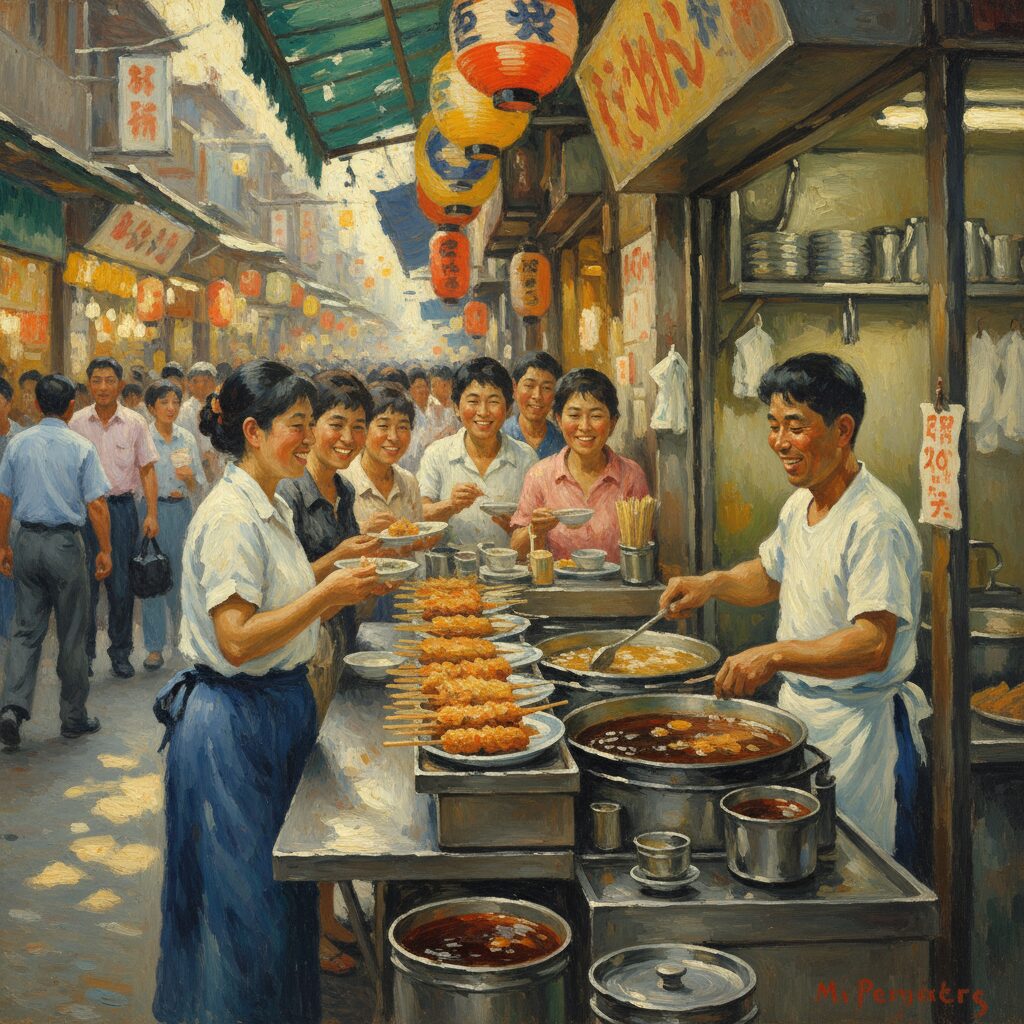
My search led me to explore kushikatsu. Although takoyaki and okonomiyaki often take the international spotlight, kushikatsu is arguably one of Osaka’s most cherished soul foods. The name itself is delightfully straightforward: kushi refers to the bamboo skewers used, while katsu is a shortened form of katsuretsu, meaning cutlet, derived from English. Essentially, it is a complete meal deep-fried on a stick. But calling it merely “fried food” is a serious understatement. Kushikatsu is an art form. It involves skewering a wide variety of ingredients—from classic pork loin and juicy shrimp to more adventurous options like lotus root, shiitake mushrooms, quail eggs, and even cheese—dipping them in a light, fluffy batter, and coating them in fine, airy panko breadcrumbs before immersing them in pristine, hot oil. The outcome, when done correctly, is a minor culinary miracle: a shatteringly crisp, golden-brown crust that reveals a perfectly cooked, steaming-hot interior. The magic comes from the batter and oil, which create a protective layer that essentially steams the ingredient inside, locking in its natural flavor and moisture. Yet the experience of eating kushikatsu is about more than just the food; it’s about the ritual. Central to this ritual is the communal pot of dipping sauce. This thin, dark, savory-sweet sauce, resembling Worcestershire sauce but with a unique blend of spices and fruits, is the indispensable accompaniment. Along with it comes the one unbreakable, sacred rule of kushikatsu: NO DOUBLE DIPPING. After taking a bite from your skewer, it must never be returned to the communal sauce pot. This rule is a matter of public hygiene and mutual respect. Nidozuke kinshi! (No second dipping!) signs are prominently displayed in every kushikatsu restaurant. The rule is enforced with a mix of sternness and good humor, a cultural quirk that unites everyone in the establishment in shared understanding. This culinary tradition traces its roots to Osaka’s working-class Shinsekai district, where it was created as an affordable, quick, and filling meal for laborers. That humble spirit remains at the heart of its identity today.
Stumbling Upon a Golden-Fried Paradise: The Hidden Standing Bar
With my new mission set, I drifted away from the main thoroughfare of Kuromon Market. I slipped into one of the narrower, quieter side alleys where the crowds lessened and the stalls focused less on flashy displays and more on everyday goods. The air here held a different scent—less grilled seafood and more dried goods, fresh tofu, and simmering broths. It was down one of these offshoots that I caught a subtle yet unmistakable aroma of clean, hot frying oil, promising crispy, golden satisfaction. I followed the scent to a small, unassuming storefront. There was no large English sign, just a simple, weathered red lantern (akachochin) hanging outside and a short, blue noren curtain over the entrance. The windows were steamed up, obscuring the interior, but I could make out the silhouettes of people standing shoulder-to-shoulder along a counter. This was it. I pulled back the curtain and stepped into a world apart from the tourist-filled market outside. The space was tiny, barely wide enough for the narrow wooden counter and a single line of customers. It was a tachinomi, a standing-only bar, known for its efficiency and convivial vibe. Behind the counter, a single man, the master of the shop, moved with quiet, focused grace. Probably in his late sixties, his face was stern but not unkind, and his hands moved with the practiced precision of someone who has fried tens of thousands of skewers. He tended a deep, rectangular fryer filled with bubbling, pale golden oil. In front of him, a refrigerated glass case displayed the day’s selections: dozens of prepped skewers in a colorful mosaic of meat, seafood, and vegetables, all waiting for their turn in the hot oil. The other customers were a mix of local shopkeepers on break and a couple of salarymen in suits, all eating with quiet intensity. I was the only foreigner, the sole tourist, and for a moment, felt a flicker of self-consciousness. But a quick nod from the master was all the invitation I needed. I found a small spot at the end of the counter, and suddenly, I felt less like an observer and more like a participant in a daily Osaka ritual.
An Education in Crispy Perfection: Ordering and Eating
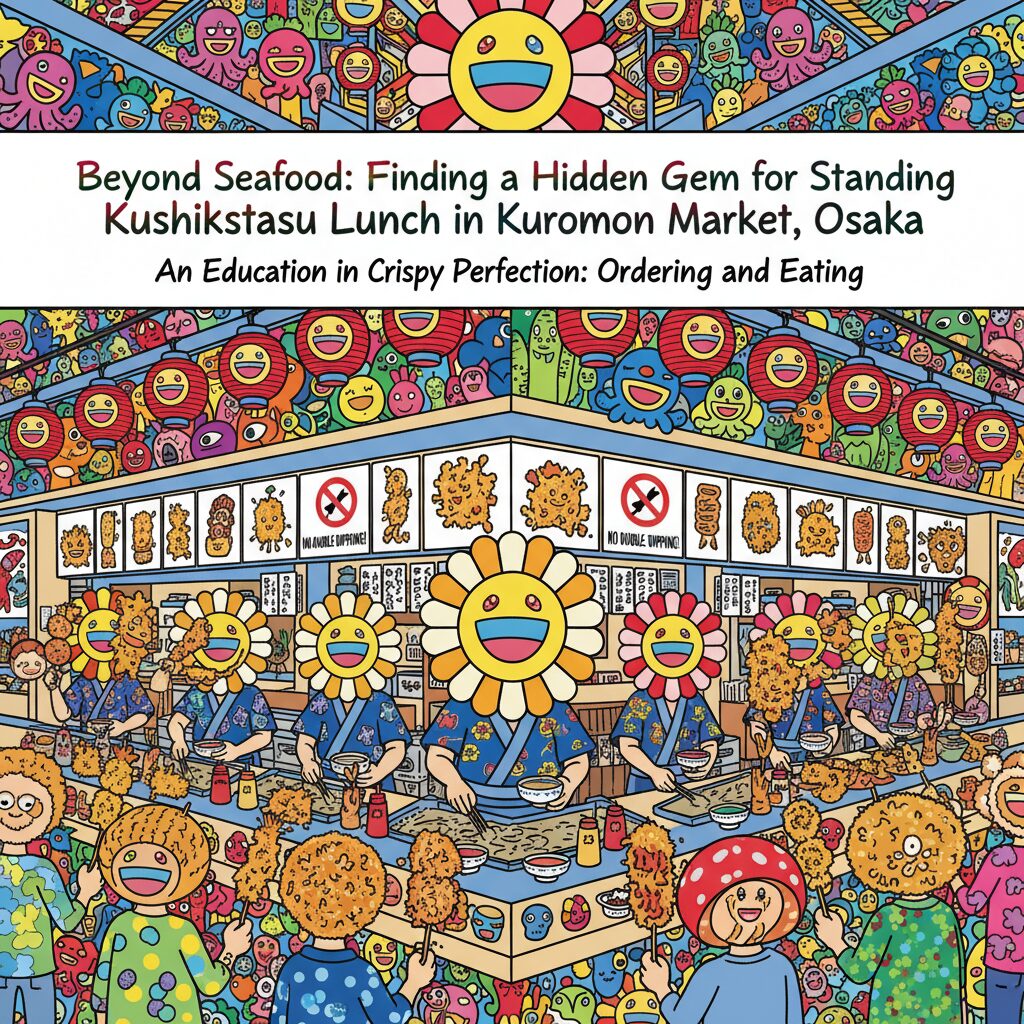
There was no English menu, only a list of items written in Japanese characters taped to the wall. This is where a bit of observation and courage proves useful. I watched the man next to me simply point at what he wanted in the glass case and decided to do the same. I started with the classics, pointing at a skewer that looked like pork loin (buta bara), a plump shrimp (ebi), and a thick slice of onion (tamanegi). The chef gave a curt nod, took my chosen skewers, and began the process. He dipped each one into the vat of batter, ensuring an even coating, then pressed it firmly into a tray of pristine white panko before gently sliding it into the bubbling oil. There was no timer; he relied on sight, sound, and instinct to know exactly when each skewer was perfectly cooked. A few minutes later, he lifted them out, letting excess oil drip away briefly, then placed the three golden-brown skewers onto a small metal tray in front of me. He then gestured toward a stainless-steel container filled with dark dipping sauce and a small bowl of complimentary raw cabbage wedges. Now came the ritual. I took the pork skewer, plunged it deeply into the sauce, ensuring a generous coating, and took my first bite. The sound was incredible—a loud, satisfying crunch that echoed in my ears. The panko crust was unbelievably light and not greasy at all, shattering to reveal the tender, juicy pork inside. The sauce was the perfect complement: tangy, slightly sweet, and deeply savory, cutting through the richness of the fried coating. It was absolute perfection. Next came the shrimp, cooked so precisely it remained snappy and sweet. Then the onion, which the hot oil had transformed: its sharp bite mellowed into a delightful sweetness, with soft, yielding layers inside its crispy shell. Feeling encouraged, I ordered another round, this time getting more adventurous. I pointed to a skewer of lotus root (renkon), a speckled quail egg (uzura no tamago), and a cube of cheese. The lotus root was a textural marvel, its lacy, fibrous crunch intact. The quail egg was a tiny flavor bomb, its creamy yolk a wonderful contrast to the crisp exterior. And the cheese… the cheese was a revelation, melting into a glorious, gooey stream of savory delight the moment I bit into it. I also discovered the secret of the cabbage. It acts as a palate cleanser, its cool, crisp freshness cutting through the richness between skewers. More importantly, it serves a practical purpose. If you take a bite of your skewer and want more sauce, you don’t break the sacred rule. Instead, you use a piece of cabbage as a spoon, scooping up the sauce and dabbing it onto your skewer. It’s a simple, elegant solution that keeps the communal experience hygienic and respectful.
Practicalities for Your Kushikatsu Quest
Discovering your own hidden kushikatsu gem in or near Kuromon Market is a rewarding adventure, and a few practical tips can help make the experience even smoother. First, getting there is simple. Kuromon Market is situated in the heart of Osaka’s Minami district. The nearest subway station is Nippombashi, served by both the Sakaisuji and Sennichimae lines. From there, it’s just a one-minute walk to the market entrance. It’s also within easy walking distance of the major hubs of Namba and the famous Dotonbori entertainment district, making it an ideal stop during a broader exploration of the area. Timing matters. The market generally operates from around 9 AM to 6 PM, but the busiest hours are between 11 AM and 3 PM. To enjoy a more relaxed visit at a small standing bar, consider eating slightly earlier or later for lunch. These spots are designed for quick turnover, so even if there’s a short line, it usually moves quickly. When you find a place, be sure to bring cash. Many of these small, family-run shops accept cash only. It’s wise to have smaller bills handy. Don’t be intimidated if you don’t speak Japanese. A smile, a point, and a polite nod go quite far. Learning a few simple phrases will be greatly appreciated. “Kore kudasai” (This one, please) is all you need to order. “Oishii!” (Delicious!) will put a smile on the chef’s face. And when you’re done, “Gochisousama deshita” (A polite way of saying ‘thank you for the meal’) is the most respectful way to show your gratitude. Finally, embrace the standing culture. It’s not about lingering for hours. It’s about enjoying a fantastic, freshly cooked meal, settling your bill, and moving on with your day. It’s efficient, communal, and a uniquely Japanese way of dining.
Beyond the Skewers: Soaking in the Kuromon Neighborhood
Your culinary adventure doesn’t have to conclude once you’ve finished your last skewer. The area surrounding Kuromon Market is abundant with sights and activities, providing a deeper exploration of Osaka’s diverse culture. After your meal, take the time to leisurely stroll through the market and notice the details you might have overlooked earlier. Marvel at the extraordinary knife skills of the fishmongers, browse stalls offering premium dashi ingredients like kombu and katsuobushi, or indulge in a dessert of mochi or a perfectly ripe melon. Just a short walk from Kuromon is Doguyasuji Arcade, also known as Osaka’s “Kitchenware Street,” a haven for cooking enthusiasts. This covered street is filled with shops selling everything from professional-grade Japanese knives and exquisite ceramic bowls to the charming plastic food models (sampuru) displayed in restaurant windows. It’s an intriguing insight into Japan’s professional food industry. If you enjoy anime and gaming as I do, you’re in luck—Den Den Town, Osaka’s counterpart to Tokyo’s Akihabara, is right nearby. Here, multi-story buildings overflow with manga, video games, character figurines, and electronics, creating a vibrant and colorful environment that offers a unique sensory experience. As evening falls, the irresistible allure of Namba and Dotonbori comes alive. The calm, food-centered vibe of the daytime market transforms into a spectacular display of neon lights, giant animated signs, and endless entertainment options. The shift from Kuromon’s traditional atmosphere to Dotonbori’s futuristic cityscape within just a few blocks perfectly captures the dynamic spirit of Osaka.
A Final, Savory Thought
There is an undeniable excitement in checking off famous dishes from a culinary bucket list and tasting the foods that have attracted people from all over the world. The fatty tuna and grilled wagyu of Kuromon Market are legendary for good reason, fully deserving their acclaim. Yet sometimes, the most unforgettable travel experiences lie in the spaces between the highlights. They emerge when you choose to wander down a quiet alley, follow an intriguing scent, overcome a language barrier, and take a chance on the unfamiliar. My standing lunch of kushikatsu was more than just a meal—it was a connection to a more intimate side of Osaka. It was the simple, profound joy of a perfectly fried skewer, the shared respect around a communal sauce pot, and the quiet satisfaction of discovering a place that felt like a secret just for me. Kuromon Market is indeed Osaka’s Kitchen, but like any great kitchen, its true heart isn’t always in the most spectacular dish on display. Sometimes, it’s found in the simple, honest, soul-warming food that locals enjoy every day. So by all means, come to Kuromon and savor its treasures, but as you do, keep your eyes open, trust your instincts, and don’t hesitate to look beyond the seafood. You might just find your own golden-fried piece of paradise waiting for you.