The air in Osaka hums with a different kind of energy in the morning. Before the neon canyons of Dotonbori fully awaken and the business suits flood the subways of Umeda, a more ancient, more visceral rhythm takes hold in the city’s core. It’s a rhythm you can taste, a pulse you can feel in the soles of your shoes. This is the heartbeat of Kuromon Ichiba Market, affectionately and accurately known for centuries as Tenka no Daidokoro—the Nation’s Kitchen. Stepping under its covered arcade is not just about entering a marketplace; it’s about stepping into the living, breathing soul of Osaka’s legendary food culture. This isn’t just a tourist spot; it’s where Michelin-starred chefs send their apprentices for the day’s finest catch, where grandmothers who have shopped here for seventy years haggle for the plumpest daikon radish, and where the city’s insatiable appetite is born anew each day. For anyone looking to understand why Osaka is a global culinary capital, the education begins here, amidst the sizzle of grills, the shouts of vendors, and the kaleidoscope of flavors that define this extraordinary place. It’s a symphony of chaos and commerce, a delicious assault on the senses that, once experienced, is never forgotten. This is where you come not just to eat, but to participate in the daily ritual that fuels this magnificent city.
After immersing yourself in the morning energy of Kuromon Ichiba Market, you can continue your exploration of Osaka’s vibrant neighborhoods by discovering some of the best cafes in Shinsaibashi for both work and inspiration.
The Symphony of the Senses: Awakening at Kuromon

To truly grasp the essence of Kuromon Ichiba, you must engage all your senses. This is not a passive encounter; it’s an immersive performance where you are both audience and participant. The experience begins the moment you near the entrance, carried on the air thick with the promise of delicious delights. The soundscape envelops you first—a complex symphony of human and culinary noises, a linguistic and gastronomic tapestry distinctively Osakan. At its core is the rhythm of vendor calls: the loud, gravelly shouts of “Irasshaimase!” (Welcome!) and “Yasuide!” (It’s cheap!) resonate from all directions, delivered in the warm and direct Kansai dialect, contrasting with Tokyo’s more reserved tone. You’ll hear fishmongers with booming voices announcing the morning’s fatty tuna special, punctuated by the steady, percussive thud of a heavy blade expertly breaking down a giant maguro. Listen closer, and you’ll catch the high-pitched sizzle of butter melting over fresh scallops on a hot griddle—a sound promising instant pleasure. There’s the gentle, continuous bubbling of oden broth simmering in large pots and the sharp, metallic clang of tongs flipping marbled Kobe beef skewers. Interwoven with these are the hum of human connection—the lively banter between shopkeepers and regulars, friends eagerly deciding what to sample next, the laughter of a child marveling at tanks of live eels. This is a language of food, spoken with passion and pride. These sounds are more than noise; they are the market’s vital signs, a testament to its endless energy and the deep bonds built over counters heaving with ocean treasures.
The olfactory journey is equally profound, a story told through scent. The dominant note is the clean, briny aroma of the sea—fresh saltwater clinging to oysters, the subtle metallic tang of freshly shucked uni, and the rich, savory scent of many fish varieties laid out on beds of glistening ice. This oceanic base is layered with countless other fragrances drifting beneath the arcade roof. One stall offers the intoxicatingly sweet and smoky smell of unagi eel grilled over charcoal, its fatty skin crackling as it’s brushed repeatedly with a dark, glossy tare sauce. Turn a corner, and you’re met with the earthy, forest-floor scent of a produce stand overflowing with seasonal mushrooms and freshly dug root vegetables. A few more steps bring the sharp, funky, and wonderfully complex aroma of a tsukemono (pickle) shop—a kaleidoscope of pickled ginger, daikon, and umeboshi plums that tickle your nostrils. Then there’s the comforting, soulful smell of dashi broth simmering with kombu seaweed and katsuobushi bonito flakes, evoking home and tradition. These smells are no accident; they are invitations, drawing you deeper into the market’s embrace, promising a story of flavor in every breath. It’s a perfume of freshness, heritage, and unbridled appetite.
Finally, the visual feast—a spectacle of color and texture so vivid it can almost overwhelm. Kuromon is a living art gallery where food is the medium. Fish stalls are palettes of silver, pink, and deep crimson. The shimmering scales of tai (sea bream) catch the light like countless tiny mirrors, while the deep ruby-red flesh of prime tuna contrasts starkly with pearly white fat marbling. Boxes of sea urchin lie like golden jewels, their vibrant orange tongues nestled within spiky black shells. Produce stalls burst with natural color—the striking whiteness of winter daikon, the fiery orange of ripe persimmons, deep verdant spinach bundles, and delicate blushing white strawberries, a luxury as beautiful as it is tasty. Even the prepared food stalls are a masterclass in visual appeal: wagyu beef skewers show intricate, snowflake-like marbling; stacks of golden, fluffy tamagoyaki (rolled omelet) rise in tempting towers; bowls of colorful pickles—bright yellow takuan, vivid pink shibazuke, and earthy brown narazuke—form a mosaic of flavor and tradition. Above it all, giant whimsical paper lanterns shaped like fugu (pufferfish) or crabs hang from the ceiling, iconic market symbols that sway gently in the breeze stirred by the river of people flowing below. The visual energy of Kuromon reflects its spirit: abundant, generous, and overflowing with life.
A Culinary Treasure Hunt: What to See and Savor
Exploring Kuromon is like embarking on the ultimate culinary scavenger hunt. Each stall reveals a new discovery—a unique delicacy waiting to be savored. The vast variety might overwhelm first-time visitors, but the best strategy is to let your curiosity lead the way. Follow the longest queues, point to the most intriguing dishes, and prepare for an unforgettable journey through the heart of Japanese cuisine. This market showcases the finest ingredients, often prepared simply and skillfully right before your eyes, allowing the quality of the products to shine. Here, the idea of kuidaore—to eat until you drop—becomes more than a saying; it’s a way of life.
The Kings of the Market: Seafood Sensations
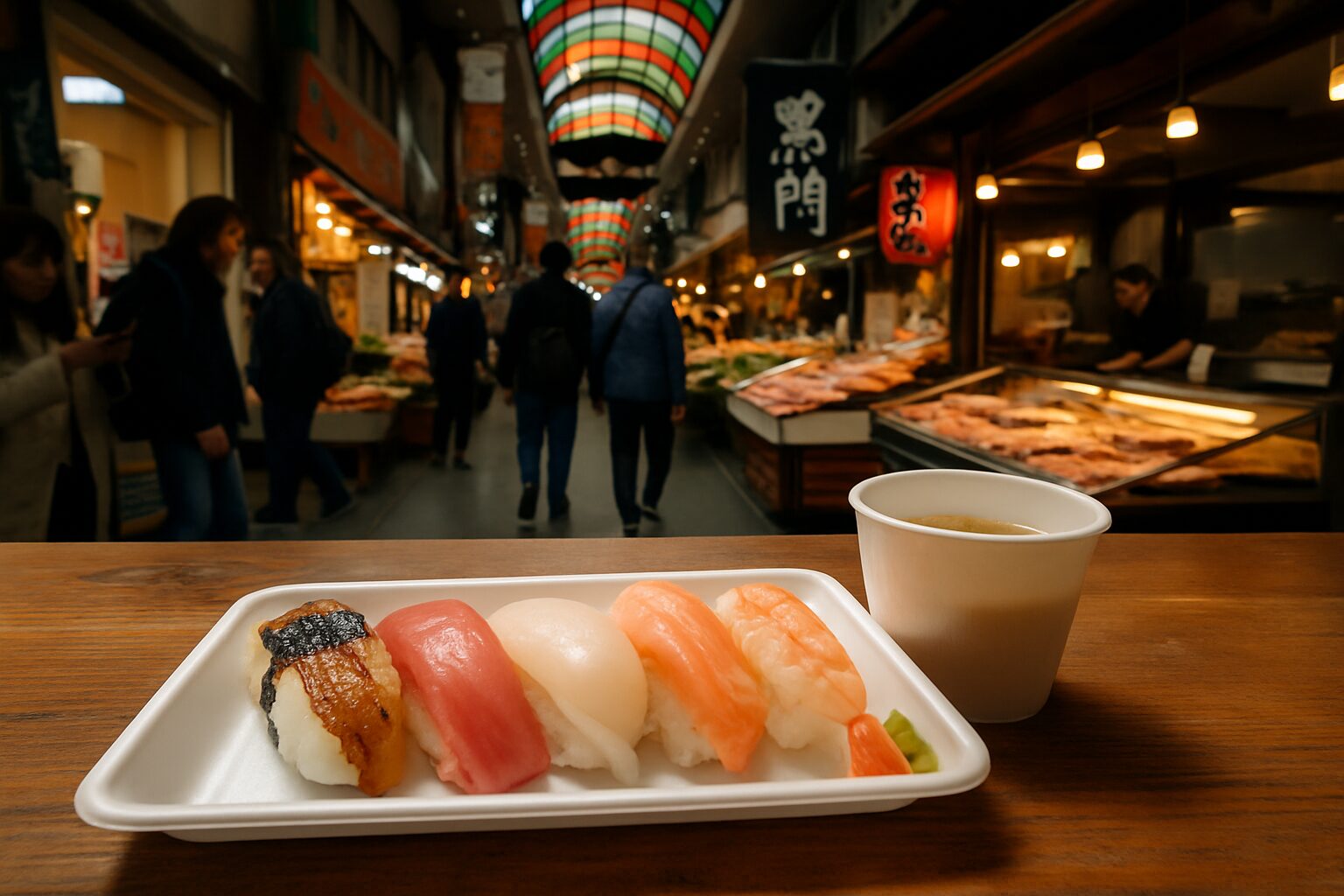
Seafood unquestionably rules Kuromon Ichiba. Thanks to the market’s proximity to the sea and its rich history as a fish market, you can enjoy some of the freshest and highest-quality marine products in Japan. The undisputed star is the mighty tuna, or maguro. Several shops focus solely on tuna, and it’s mesmerizing to watch a master craftsman wield a sword-like knife, expertly slicing a fish that can weigh hundreds of pounds. They offer various cuts, each boasting distinct flavors and textures. There’s akami, the lean, deep red meat from the fish’s back, known for its firm texture and clean taste; chutoro, the medium-fatty belly, which offers a perfect balance of richness and flavor; and finally, the prized otoro, the fattiest belly cut, pale pink to almost white, richly marbled with fat so that it melts on your tongue in a buttery, oceanic bliss. Tasting fresh otoro sashimi moments after it’s sliced at Kuromon is a life-changing culinary experience. Many stalls sell small trays of mixed sashimi or single-serving sushi, making it easy to sample these cuts at a surprisingly affordable price.
Beyond tuna, the grilling stations draw crowds, filling the air with fragrant smoke. Here you’ll find giant Hokkaido scallops (hotate) grilled in their shells with butter and a splash of soy sauce. The heat caramelizes the scallops’ natural sugars, resulting in a sweet, smoky, and incredibly juicy bite. Nearby, plump oysters (kaki) often receive the same treatment, their creamy texture and briny liquor enhanced by the grill. Another must-try is sea urchin, or uni. While it may be an acquired taste for some, fresh uni is a revelation. Served in its spiky half-shell, the vibrant orange lobes are creamy and sweet, with a delicate flavor that tastes purely of the sea. Although a luxury, sampling uni is an essential part of the Kuromon experience. For the adventurous, Osaka’s most notorious delicacy awaits: fugu, or pufferfish. Don’t worry—the fugu here is prepared by licensed chefs trained extensively to safely remove the toxic parts. You can try it as paper-thin sashimi (tessa), which offers a slightly chewy texture and subtle flavor, or as karaage (deep-fried). It’s an exhilarating and culturally significant experience. Finally, the allure of grilled eel (unagi) is impossible to resist. The process is pure spectacle: long eel fillets skewered and grilled over hot coals, repeatedly dipped in a treasured, generations-old sweet and savory tare sauce until the skin crisps and the flesh becomes tender and flaky. Served on a stick, it’s the perfect savory snack, its rich taste and intoxicating aroma epitomizing Japanese culinary artistry.
Beyond the Sea: Carnivore’s Corner and Produce Paradise
While seafood dominates, Kuromon equally delights those who prefer land-based flavors. The sizzle and aroma of grilled meat create a counterpoint to the ocean scents. The highlight here is, of course, Japan’s legendary beef. Several butchers and stalls specialize in top-grade wagyu, including world-famous Kobe beef. You can purchase premium steaks to take home, but the real treat is savoring freshly grilled skewers (kushiyaki). For just a few hundred yen, you can enjoy skewers of perfectly marbled beef, simply seasoned with salt and pepper and grilled to juicy perfection right before you. The fat melts at a lower temperature than other beef, basting the meat as it cooks, yielding an unbelievably tender texture and a flavor that is intensely rich and beefy. These small bites of pure luxury showcase why Japanese beef is considered the finest worldwide.
Kuromon, however, is not solely about indulgent proteins; it’s also a vibrant farmer’s market displaying the stunning quality and diversity of Japanese produce. The fruit and vegetable stalls offer a feast for the eyes. Depending on the season, you might encounter pristine white strawberries (shiroi ichigo), with their uniquely sweet, candy-like flavor; giant, crisp Fuji apples; or perfectly round Kyoho grapes, bursting with rich, wine-like sweetness. The vegetable selection is equally impressive, with everything from massive, earthy daikon radishes and bumpy goya (bitter melon) to a dazzling variety of mushrooms in autumn. Many stalls also sell fresh-squeezed juices, a refreshing palate cleanser between savory bites. A particular highlight is the tsukemono (pickle) shops. These are no ordinary pickles; here you find barrels brimming with a rainbow of preserved vegetables, each boasting a distinctive flavor profile developed over centuries of tradition. There’s bright yellow, sweet-and-sour takuan (pickled daikon), vibrant purple, salty shibazuke (pickled cucumber and eggplant), and intensely flavored umeboshi (pickled plums). Shopkeepers gladly offer samples, and buying a small bag of assorted pickles is not only a delicious snack but also a way to bring authentic Japanese flavors home. These pickles are indispensable in a traditional Japanese meal, acting as palate cleansers, digestive aids, and sources of complex, umami-rich taste.
Sweets, Snacks, and Surprising Sips
No culinary journey is complete without a sweet finish, and Kuromon has plenty to satisfy. Traditional Japanese sweet shops, or wagashiya, offer beautiful and tasty treats. A popular choice is mochi, a soft, chewy rice cake with various fillings. A seasonal favorite is ichigo daifuku, consisting of a whole fresh strawberry and sweet red bean paste (anko) wrapped in a soft mochi shell. The combination of chewy mochi, sweet bean paste, and slightly tart, juicy strawberry creates a delightful mix of textures and flavors. You can also find freshly made dango, small mochi balls grilled and coated with a sweet soy glaze. For a comforting and traditional drink, look for stalls serving amazake, a sweet, low- or non-alcoholic beverage made from fermented rice. With its thick, creamy texture and gentle sweetness, often served warm, it’s the perfect treat on a chilly day. Packed with nutrients and known for its health benefits, it’s a welcome refreshment. Lastly, for those fascinated by the foundations of Japanese cooking, visiting a specialty dried goods store is a must. These shops are stocked with the essential building blocks of Japanese flavor: giant sheets of kombu (dried kelp), bags of dried shiitake mushrooms, and piles of paper-thin katsuobushi (dried, fermented, smoked bonito flakes). Many shopkeepers have a machine that shaves hard katsuobushi blocks into delicate, dancing flakes right before your eyes, releasing an incredible deep, smoky, umami aroma. Buying a small bag of these freshly shaved flakes to prepare your own dashi broth at home is one of the best souvenirs any food lover could desire—a way to recreate the authentic taste of Japan’s kitchen in your own.
Navigating Kuromon Like a Pro: Insider Tips and Etiquette
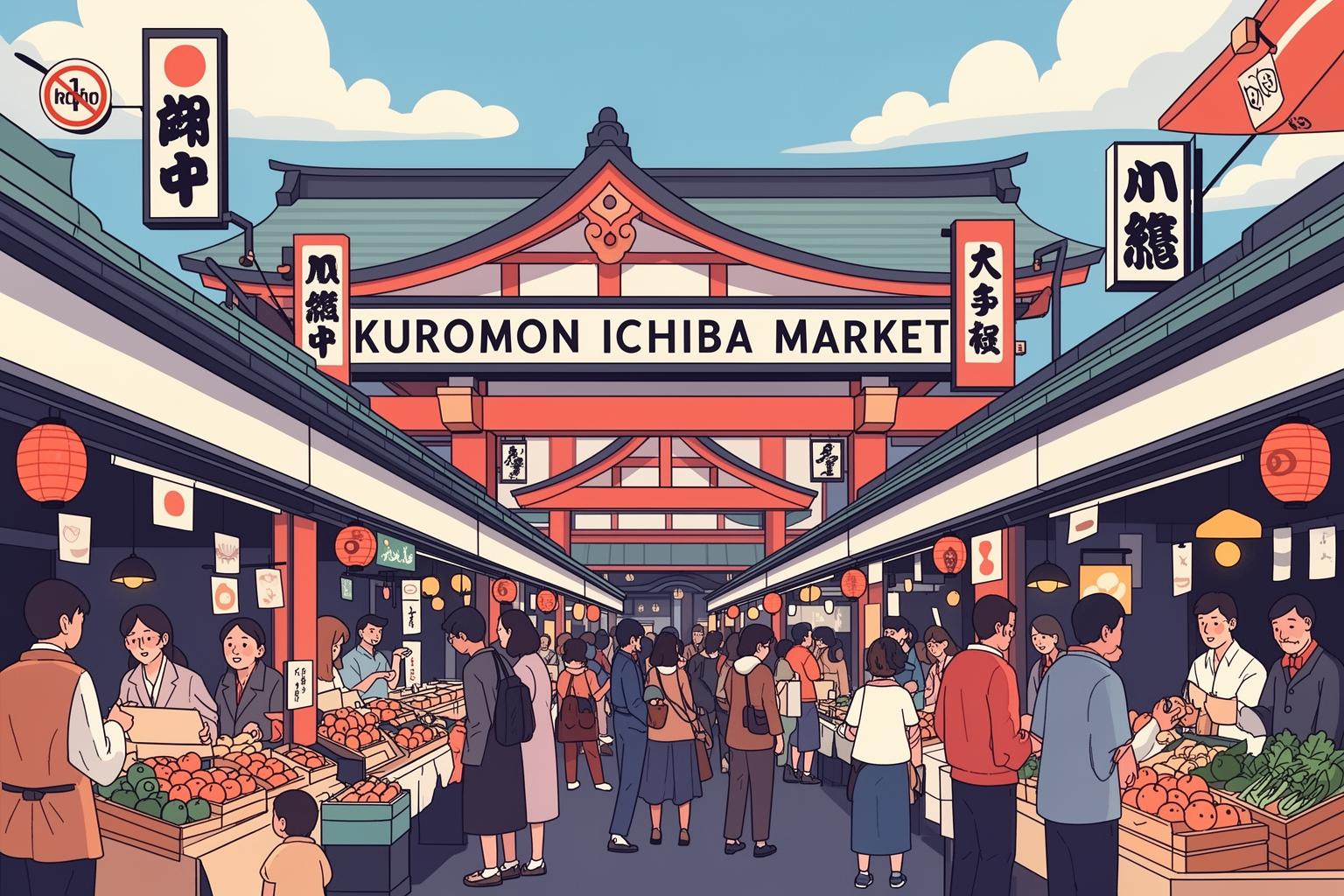
Kuromon Ichiba is a bustling hub of activity, and having a bit of local insight can make your visit smoother and more enjoyable. The first thing to keep in mind is timing. The market officially opens around 9:00 AM, but the real excitement begins earlier as chefs and restaurant suppliers shop. To experience the market at its most authentic and vibrant, and to get the freshest selection of the day’s seafood, arriving between 9:00 AM and 10:00 AM is ideal. During this time, vendors are setting up their displays, and the initial wave of street food starts grilling. From 11:00 AM to 2:00 PM is peak time for tourists and those seeking lunch, when the arcade becomes extremely crowded, and you’ll find yourself navigating through dense crowds. While the atmosphere is lively and energetic, it can also feel overwhelming. For a calmer visit, mid-afternoon around 3:00 PM can be pleasant, though some popular items may already be sold out. Keep in mind that many shops begin closing around 5:00 PM, making Kuromon primarily a daytime destination.
Getting to Kuromon is very convenient, as it’s situated in the heart of Osaka’s Minami district. The nearest subway stop is Nippombashi Station, which is served by both the Sakaisuji and Sennichimae Lines. From Exit 10, the market entrance is just a few steps away. It’s also a pleasant and easy walk from other major areas: about 10 minutes east from the lively Namba Station, and roughly 15 minutes southeast from the Dotonbori Glico Running Man sign. The market itself is a long, covered arcade, or shotengai, stretching approximately 580 meters, making it easy to explore by walking end to end.
Understanding the market’s eating culture is important. While Kuromon is a street food paradise, walking while eating is generally considered rude in Japan. To accommodate visitors, the market has small designated eating areas. Most stalls selling ready-to-eat items offer a small counter, a few stools, or a shared standing spot nearby where you’re expected to pause and enjoy your food. This respects local customs, helps manage foot traffic in the crowded arcade, and keeps the market tidy. Always look for these designated areas before you start eating. When finished, be sure to dispose of your skewers, wrappers, and trays in the bins provided. Many vendors will also gladly take your trash if you return your tray to their stall.
A few practical tips can enhance your experience. Although more vendors, especially larger ones, now accept credit cards, cash remains king at Kuromon Ichiba. Many smaller stalls and family-run shops operate on cash only, so it’s wise to carry enough yen to avoid inconvenience. Don’t hesitate to interact with the vendors. While there may be a language barrier, a smile and pointing go a long way. Learning a few basic phrases will be appreciated: “Kore o kudasai” (“This one, please”) to order, “Oishii!” (“Delicious!”) to compliment, and “Arigatou gozaimasu” (“Thank you very much”) to show gratitude. Remember, these are people’s livelihoods, so always be respectful when taking photos. It’s polite to ask for permission (“Shashin o totte mo ii desu ka?”) before snapping close-ups of vendors or their stalls. Lastly, don’t hesitate to explore the side streets. While the main arcade is the highlight, the smaller branches off it hold hidden treasures such as quality kitchenware shops selling premium Japanese knives, tiny local eateries, and traditional tea shops.
The Spirit of Osaka: Kuromon’s Cultural Heartbeat
To view Kuromon Ichiba simply as a collection of food stalls is to completely overlook its true essence. This market is a vibrant, living institution and a cultural landmark that captures the very spirit of Osaka. It is a place founded on relationships—between vendors and their suppliers, shopkeepers and their loyal customers, and the city and the sea. The real magic of Kuromon is found in its people. These are not faceless workers; they are artisans, experts, and storytellers who have inherited their craft through generations. Speak with the man behind the tuna counter, and he can tell you exactly where your piece of otoro was caught and the story of the fisherman who brought it in. The woman carefully arranging pickles in an elegant display might be following a recipe perfected by her great-grandmother a century ago. Their knowledge is vast, their passion unmistakable, and their pride in their products immense. They embody the character of Osaka: lively, warm, unpretentious, and deeply committed to good food. This personal connection is something no modern supermarket can replicate. It’s the difference between merely buying food and truly experiencing it.
Kuromon also moves in perfect harmony with the seasons, reflecting a concept deeply embedded in Japanese cuisine called shun. Each visit offers a fresh glimpse of the year, a changing palette of flavors governed by nature’s rhythm. In spring, the market bursts with delicate tastes of new beginnings—tender bamboo shoots (takenoko), sweet, plump strawberries, and fresh, vibrant seaweed (wakame). The atmosphere feels light and celebratory. Summer ushers in bold energy and full flavors. Stalls brim with sweet corn, juicy watermelons, and edamame. It’s the season for grilled sweetfish (ayu), a prized river fish known for its delicate flavor. The market hums with heightened excitement, anticipating summer festivals. Autumn brings harvest and rich, earthy flavors. Prized matsutake mushrooms appear, filling the air with their distinct spicy aroma. It’s the season for fatty Pacific saury (sanma), grilled whole with salt, and the comforting sweetness of persimmons and roasted chestnuts. The market glows with warm, golden hues. Winter offers hearty, nourishing foods to sustain through the cold. It is peak season for fugu, crab (kani), and fatty yellowtail (buri). Produce stalls overflow with root vegetables destined for rich, warming hot pots (nabe). In late December, the market reaches its annual peak as locals gather to purchase special ingredients for osechi ryori, the traditional Japanese New Year’s feast. Witnessing this seasonal shift reveals the profound respect for nature central to Japanese food culture. Kuromon is far more than a market; it is a living calendar, beautifully and deliciously marking the passage of time.
A Morning Well Spent: Crafting Your Perfect Kuromon Itinerary
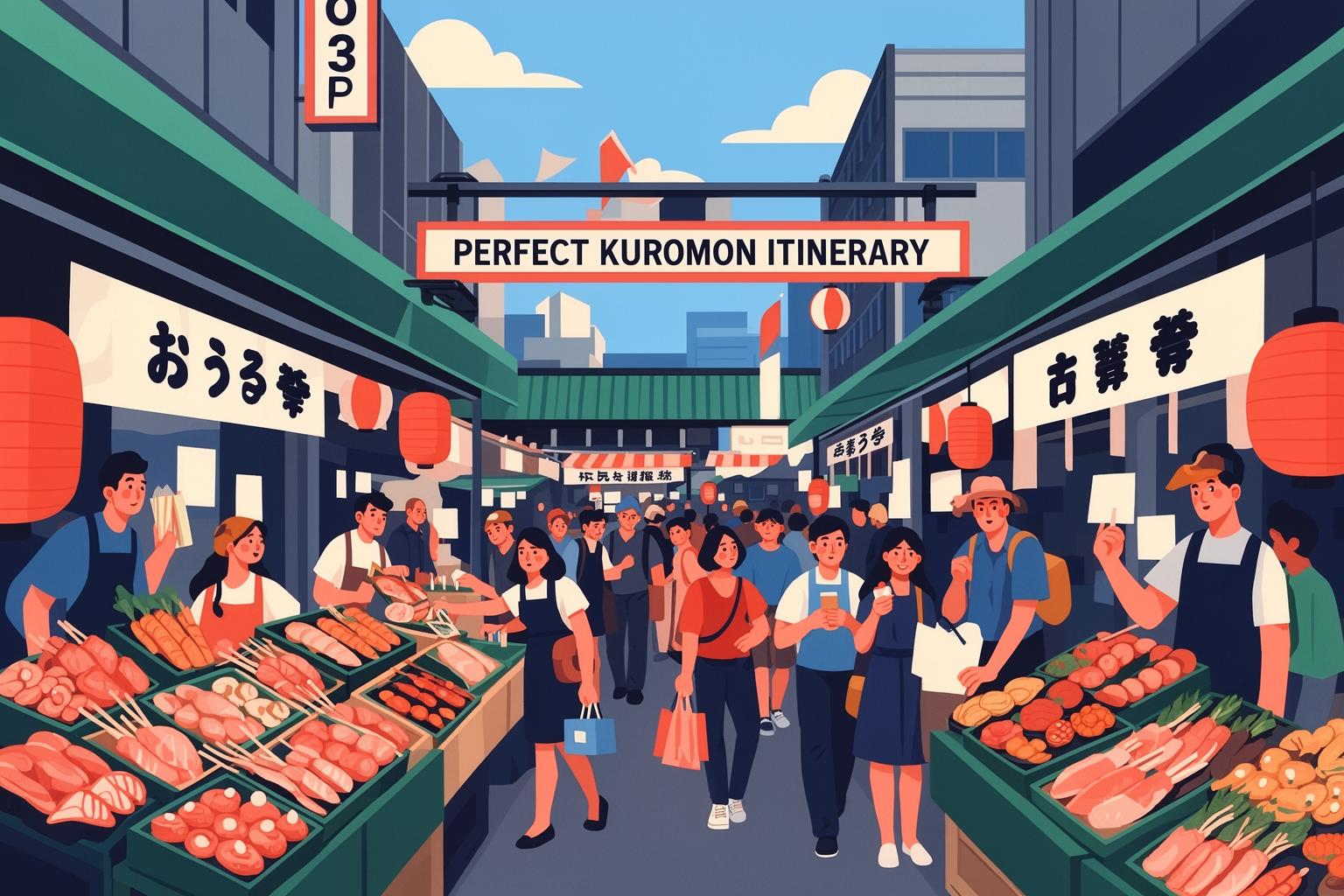
To create the perfect morning at Kuromon, think of it less as ticking off items on a list and more as embarking on a sensory journey. Arrive with an empty stomach and an open mind, letting the market itself be your guide. Begin your adventure at one of the main entrances, perhaps near Nippombashi Station. Take a moment to pause and soak in the atmosphere. Allow the symphony of sounds to wash over you and the intricate web of aromas to lead you in whichever direction they wish. Start with something light to awaken your palate—perhaps a small, fluffy piece of tamagoyaki from a specialty shop, its subtle sweetness a gentle way to begin the day. Or try a cup of rich, creamy soy milk, freshly made at one of the market’s tofu stalls. This isn’t just any soy milk; it’s thick, nutty, and distinctly different from the bottled kind.
As you wander further, it’s time to embrace the seafood. Let your eyes draw you to the freshest-looking sashimi. A small tray with a few slices of chutoro or a gleaming piece of salmon makes for a perfect next bite. Enjoy it right there at a little standing counter, with a dab of wasabi and splash of soy sauce. Feel the cool, fresh fish melt in your mouth and savor the simplicity and perfection of the ingredient. Next, follow the scent of the grill. A single, giant scallop sizzling with butter and soy sauce is an absolute must. The vendor will shuck and grill it for you on the spot, handing it over piping hot in its own shell. The combination of sweet, tender scallop and savory, smoky butter is sheer bliss. If you’re feeling adventurous, now is the time to indulge in a skewer of grilled wagyu. Watch as the chef expertly cooks the marbled cube of beef, the fat rendering and crisping over the flame. That first bite is pure, unfiltered pleasure. To refresh your palate, seek out a fruit stall for a cup of freshly squeezed orange juice or a stick of juicy melon. Then, dive back into the savory with something distinctly Osakan, like a piece of fried fugu or a comforting bowl of oden, choosing your favorite items from the simmering broth.
As your culinary journey comes to a close, it’s time to consider souvenirs. This is your chance to bring Kuromon’s flavors home. Visit a tsukemono shop and ask for an assortment of pickles. They’re excellent with a simple bowl of rice and a vivid reminder of your market experience. Stop by a specialty dashi shop and buy a bag of freshly shaved katsuobushi along with a piece of high-quality kombu. Learning to make your own dashi opens the door to authentic Japanese cooking. For a sweet keepsake, pick up a box of beautifully crafted wagashi or a bag of premium green tea. Before you depart, take one last leisurely stroll through the arcade. Notice the details you might have missed amid your initial excitement—the intricate designs on shop signs, the well-worn cutting boards that have seen decades of use, the genuine smiles exchanged between vendors and customers. This final walk transforms the market from just a place you visited into an experience you truly lived.
An Invitation to Osaka’s Kitchen
Leaving Kuromon Ichiba feels like awakening from a vivid, delicious dream. The sounds and aromas linger as you step back onto the quieter city streets. Your stomach is satisfied, but more importantly, your senses are alive, buzzing with the market’s energy. You’ve done more than just have breakfast; you’ve taken part in a daily ritual that has sustained and shaped Osaka for nearly two centuries. You’ve savored the freshness of the sea, the richness of the land, and the deep, soulful flavors of tradition. You’ve witnessed the skill and passion of vendors whose craft is their life’s work. Kuromon stands as a powerful reminder that food is far more than sustenance. It is culture, community, history, and joy. It is the lively, generous, and endlessly hungry heart of Osaka, revealed for all to see. So when you visit this city, embrace the invitation to its kitchen. Come early, come hungry, and come with an open heart. Immerse yourself in the beautiful chaos, chat with the vendors, try something unfamiliar, and let the spirit of kuidaore take hold. Here, at the heart of the Nation’s Kitchen, you will uncover the true, unforgettable taste of Osaka.