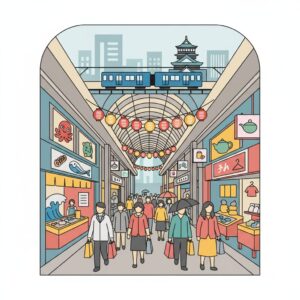
Osaka breathes a different kind of air. It’s electric, a little bit gritty, and hums with the unapologetic energy of a city that has always played by its own rules. You feel it in the steam rising from the takoyaki stands in Dotonbori, you hear it in the boisterous laughter spilling out of izakayas in Tenma, and you see it, in all its chaotic glory, in the blazing, kaleidoscopic neon of a supermarket called Super Tamade. Forget the serene, minimalist aesthetic you might associate with Japan; Tamade is a full-frontal assault on the senses, a pachinko parlor of produce, a beacon for budget-conscious dreamers. For any foreigner setting up a life here, this isn’t just a place to buy groceries. It’s a lesson in Osakan pragmatism, a cultural institution, and a financial lifeline that fundamentally alters how you can afford to live and thrive in this incredible city. It’s the glowing, pulsating heart of frugal living, and understanding its rhythm is key to unlocking a deeper, more authentic, and far more affordable Osaka. Before we dive into the treasure hunt that is a Tamade shopping trip, let’s pinpoint where you can find one of its most iconic locations, a perfect starting point for your adventure.
To further explore the vibrant energy of Osaka’s central districts, consider reading our guide to daily life in Shinsaibashi.
The Sensory Shockwave: Your First Steps into the Tamade Universe

Stepping into a Super Tamade for the first time is an unforgettable experience. Its exterior—a chaotic burst of flashing neon lights, loud yellow signs, and occasionally a giant, oddly placed boat or other oversized sculpture—is just the beginning. As the automatic doors slide open, you’re not merely entering a store; you’re stepping into an entirely different world. The air is alive with a clamor of sounds. A relentlessly upbeat, looping jingle—the store’s theme song—echoes in your mind, competing with the staff’s shouts announcing the latest “time service” deals over a crackling PA system. This soundscape sharply contrasts the quiet reverence of a high-end department store basement or the polite, orderly buzz of typical Japanese supermarket chains like Life or Aeon. There, the atmosphere is designed for calm efficiency; here, it’s crafted for full sensory overload.
Your eyes work to adjust. Fluorescent lights, far brighter than necessary, reflect off every surface. The color palette is a deliberate barrage of canary yellow and fire-engine red. Handwritten signs, marked with thick black and red markers, shout prices at you from every possible angle. They’re taped to shelves, hung from the ceiling, and plastered onto the products themselves. Subtlety is absent; this is the art of the hard sell, Osakan style. The aisles feel impossibly narrow, packed with shoppers expertly maneuvering carts with almost aggressive determination. It’s a dance of organized chaos, and as a newcomer, you’re swept up in it. You find yourself weaving past towering pyramids of instant noodles, dodging quick-moving employees restocking shelves, and marveling at the incredible density of products crammed into every inch of space. It can feel overwhelming, a bit grimy, and utterly disorienting. Yet beneath that initial shock lies an exhilarating sense of discovery. This isn’t a sanitized, curated vision of Japan; this is the authentic article, raw and unfiltered. It’s the vivid and noisy embodiment of Osaka’s spirit: loud, efficient, somewhat rough around the edges, but bursting with life and fixated on delivering value.
Decrypting the Deals: How Super Tamade Saves Your Yen
The entire philosophy of Super Tamade revolves around one steadfast principle: radical affordability. This isn’t merely about being slightly cheaper than competitors; it’s a relentless, almost theatrical quest for the lowest possible prices. To newcomers, the pricing strategy may appear chaotic, but for regular customers, it’s a familiar language. Mastering this language is the key to truly transforming your living expenses in Osaka. The most iconic of these tactics is the renowned 1-yen sale. Yes, you read that correctly—just one yen. These aren’t just rumors, but a daily reality. Usually, to qualify for a 1-yen item, you must spend a minimum amount in the store, often 1,000 yen. Once you reach that threshold, you can select the designated item of the day—maybe a carton of eggs, a block of tofu, a bottle of tea, or a bag of bean sprouts—for a single coin. For locals, this isn’t merely a gimmick; it’s a cornerstone of their weekly shopping routine. It encourages a full cart and provides a staple item nearly free of charge. This brilliant loss-leader strategy has established Tamade as the undisputed king of cheap.
Beyond the headline-grabbing 1-yen sales, the store operates on a steady rhythm of discounts. Listen closely to the announcements over the loudspeaker. This is the “time service,” or limited-time sale, where a particular item is sharply reduced for a short period. It could be a tray of chicken thighs, a brand of coffee, or a specific vegetable. This creates a sense of urgency and a treasure-hunt atmosphere where being in the right place at the right time means significant savings. Then there are the evening discounts, a ritual for those working late or living on a tight budget. As closing time nears, staff begin to wander through the prepared foods section armed with sticker guns. Bento boxes, sushi platters, fried croquettes, and salads receive discounts: 20%, 30%, and in the final hour, the coveted 半額 (hangaku) – 50% off sticker. Watching this unfold is a spectacle. A crowd often gathers, patiently waiting for the stickers before descending. Snagging a half-price 500-gram platter of assorted tempura or a substantial katsudon bento for under 200 yen feels like a major win. This system not only saves customers money but also drastically cuts food waste, embodying a pragmatic win-win that defines Tamade’s ethos. These aren’t just sales; they are the store’s lifeblood, a dynamic, ever-shifting landscape of opportunity for savvy shoppers.
The Bounty: Aisle by Aisle Breakdown
To truly appreciate the impact on your budget, let’s explore the main sections of a typical Super Tamade.
Fresh Produce: The Foundation of Frugality
The fruit and vegetable section is often your first stop and sets the tone. You’ll encounter prices that seem almost too good to be true. A whole cabbage for 80 yen, a bag of onions for 100 yen, a bunch of bananas for less than 100 yen. The catch? Selection and quality can vary. Tamade’s produce strategy often focuses on bulk buying and rapid turnover. You won’t find perfectly shaped, blemish-free designer strawberries here. Instead, the produce is ideal for cooking that day or the next. The key is flexibility. Don’t enter with a fixed recipe in mind. See what’s remarkably cheap that day—be it daikon radish, bell peppers, or mushrooms—and plan your meals accordingly. This approach promotes seasonal eating and culinary creativity, encouraging you to experiment with what offers the best value. It’s a different mindset from the polished perfection of other stores, but for daily cooking, the savings are undeniable.
Meat and Seafood: The Protein Powerhouse
This is where the savings really shine. For anyone used to the high cost of meat in Japan, Tamade’s butcher section is a revelation. Large trays of thinly sliced pork for shabu-shabu or stir-fries, chicken thighs, and ground meat are priced 30-50% lower than at competitors. This makes it feasible to include meat regularly without breaking the bank. The seafood area is similar. While the highest-grade sashimi tuna may be absent, you’ll find very fresh, affordable salmon, mackerel, squid, and octopus perfect for grilling, pan-frying, or stewing. The pre-packaged sushi and sashimi platters are a standout. A decent-sized nigiri platter costing 1,200 yen elsewhere can be had for 700 yen, even before the evening discounts. For many students and singles, a half-price Tamade sushi platter is a beloved weeknight treat.
The Sozai Wonderland: Your Lifeline on Busy Days
The prepared foods, or 惣菜 (sozai), section is arguably the heart of Super Tamade and the ultimate budget hack. The variety is overwhelming. Rows of bento boxes featuring everything from fried chicken nanban to grilled mackerel and tonkatsu. A wide assortment of fried foods (揚げ物, agemono) sold by the piece: crispy potato croquettes for 30 yen, juicy menchi-katsu for 80 yen, and golden tempura shrimp for under 100 yen. You can create a filling, tasty meal for just a few hundred yen. For solo dwellers, these prepared dishes are often cheaper, faster, and easier than cooking a multi-course meal from scratch. This section reflects Tamade’s keen understanding of its customers: those short on time, money, or both. It offers hot, ready-to-eat food that feels home-cooked without the effort or cost. A 250-yen bento from Tamade isn’t just an affordable meal; it symbolizes the convenient, budget-friendly lifestyle the store enables.
Pantry, Snacks, and Drinks: Stocking Up for Less
Beyond fresh and prepared foods, Tamade is a sanctuary for stocking your pantry. Staples like rice, soy sauce, mirin, miso, and dashi are aggressively priced. You’ll find giant bags of pasta, curry roux blocks, and essential Japanese condiments for a fraction of the cost elsewhere. The snack aisle is an adventure all its own, packed with familiar brands and some you may have never seen, all at rock-bottom prices. It’s the place to satisfy your cravings for senbei rice crackers, chocolate sticks, and potato chips guilt-free. The drinks section is equally impressive. Massive two-liter bottles of green tea and barley tea (mugicha) for around 100 yen sit alongside a wide range of inexpensive beer, chuhai, and sake, making hydrating or relaxing at home far more affordable. Shopping here means filling your cupboards and fridge on a budget that seems impossible anywhere else.
The Tamade Effect: Reshaping Your Osaka Lifestyle

Incorporating Super Tamade into your routine impacts much more than just your grocery bill. It significantly changes your monthly budget, freeing up funds for other parts of life in Japan. Imagine saving, conservatively, 5,000 to 10,000 yen per week on groceries. Over a month, that adds up to 20,000 to 40,000 yen. This is no small amount; it can be the difference between staying home or taking a weekend trip to nearby cities like Kyoto or Nara. It could mean new additions to your collection, tickets to a concert, or the ability to enjoy dining out at a nice restaurant once a week without worry. For students, it reduces financial stress and allows more focus on studies. For young professionals, it accelerates the process of building savings. For anyone pursuing a creative passion—like myself with anime and writing—it provides the financial flexibility to invest in hobbies, equipment, and experiences.
Adopting the Tamade lifestyle cultivates a particular mindset. It’s a deliberate choice to prioritize value and practicality. You learn to let go of the need for perfect presentation and embrace the charm of a good bargain. You become more resourceful in the kitchen, more aware of food seasonality, and more attuned to the working-class pulse of the city. Shopping at Tamade, you find yourself alongside a wide cross-section of Osaka society: elderly grandmothers carefully planning their weekly meals, university students stocking up on instant noodles and inexpensive chuhai, young families managing tight budgets, and other foreigners who have uncovered this secret. There’s a quiet camaraderie in the aisles, a mutual understanding that everyone is part of the same ecosystem, all working to live well on less. This shared experience breaks down barriers, making you feel less like a temporary visitor and more like a true resident, woven into the city’s fabric. The trade-offs are apparent: you give up ambiance, immaculate presentation, and attentive customer service. But in exchange, you gain financial freedom and a deeper, more genuine connection to the city’s pragmatic spirit.
An Osakan Icon: More Than Just Groceries
To truly grasp Super Tamade is to grasp a vital part of Osaka’s cultural identity. This city, historically known as Japan’s merchant capital, has a deep-rooted appreciation for business savvy, value, and cheerful flamboyance. Tamade perfectly embodies this “akindo” spirit. The store’s style, which might appear gaudy or chaotic in other parts of Japan, fits naturally in Osaka. It shares a spirited connection with the giant mechanical crabs, glowing pufferfish, and running men of the Dotonbori entertainment district. It stands in contrast to the understated, minimalist wabi-sabi aesthetic that often characterizes Japanese design. Tamade is loud, proud, and bold—reflecting the city’s own vibrant personality.
The chain was established by Kyoichi Maekawa, a famously eccentric and shrewd businessman who had a deep understanding of the local mindset. He recognized that in Osaka, price is paramount, and a memorable, slightly quirky brand identity would stand out. The outcome is a chain that feels less like a corporate entity and more like a local phenomenon. Although each store follows the same basic layout, they all boast unique quirks. You might encounter unusual decorations, unexpected products, and a layout that defies conventional logic. This absence of sterile uniformity is part of its charm. It feels human, unpredictable, and refreshingly genuine. Shopping at Tamade is more than just a transaction; it’s an engagement with a vibrant piece of Osakan culture. It reminds visitors that this city celebrates practicality, economy, and joyful eccentricity.
Your Field Guide: Navigating Tamade Like a Local

A bit of preparation can transform your first potentially overwhelming visit into a smooth and successful experience. Here are some key tips to help you navigate the neon jungle and get the most out of your trip.
First, timing is crucial. If you want the freshest produce and meat, it’s best to visit in the morning or early afternoon when the shelves have just been restocked. However, if you’re hunting for the best bargains, the prime time is in the evening, usually after 7 PM, when the staff start marking down prices in the prepared foods section. Expect a bit of a crowd, but the savings are well worth it. Second, bring your own bags. Long before it was a nationwide policy, Tamade embraced the “bring your own bag” approach as a core part of its cost-saving model. While you can buy bags at checkout, bringing your own is the norm and shows you’re a savvy shopper familiar with the store’s culture. It’s a small but meaningful detail.
Third, although many larger stores now accept credit cards and IC cards (like Icoca or Suica), Tamade has traditionally been a cash-focused environment. It’s wise to carry a good amount of yen just in case. The checkout system is designed for speed and efficiency rather than lengthy payment processing, so paying with cash is usually the fastest and most dependable option. Fourth, don’t expect much English-language support. Almost all signage is in Japanese, and staff prioritize quick service. This shouldn’t discourage you; instead, see it as a chance for an immersive experience. Use a translation app to identify specific products or simply enjoy the adventure of pointing and trying new things. Prices are clearly marked, and the checkout process is straightforward, so it’s easy to navigate even with limited Japanese.
Finally, consider location strategically. Super Tamade stores are typically found in residential and working-class areas, just off the main tourist routes. This is a feature, not a flaw. Visiting a Tamade lets you explore authentic Osaka neighborhoods. For those staying near the city center, the Nipponbashi branch is an excellent place to start. It’s situated on the edge of Den Den Town, Osaka’s famous anime, manga, and electronics district, making it easy to combine grocery shopping with an afternoon immersed in otaku culture. You can grab a cheap Tamade bento before heading into the multi-story arcades and collectible shops for a perfect day out.
Beyond the Aisles: Tamade as a Gateway to Local Osaka
Use your trip to Super Tamade as a springboard to discover the authentic, lived-in parts of the city that many tourists often overlook. Each store serves as a gateway to a unique neighborhood with its own distinctive character. For instance, the Tengachaya branch is located in an intriguing area that provides a glimpse into a more traditional and grounded side of Osaka. After shopping, take a walk along the nearby Tengachaya Hondori Shopping Street, a classic covered “shotengai.” Here, you’ll find small, family-run shops offering everything from pickles and tofu to clothing and hardware. It’s a stark contrast to the shiny department stores of Umeda and offers a slower, more personal shopping experience.
If you visit the Hanazonocho store, you’ll be just a short stroll from the Shinsekai district. While Shinsekai itself is a popular tourist destination with its iconic Tsutenkaku Tower and kushikatsu eateries, the surrounding residential streets are rich in character. Exploring this area helps you better understand who Tamade serves and the type of community it supports. By visiting these neighborhoods, you go beyond being a passive observer and become an active participant in the city’s daily life. You begin to see the connections between where people shop, where they live, and the broader economic fabric of the area. This turns a simple grocery run into an act of urban exploration, deepening your appreciation of Osaka in a way that visiting only the main attractions never could.
The Final Verdict: Embracing the Neon Glow

So, is Super Tamade suitable for everyone? Perhaps not. If your priorities include organic certification, artisanal products, and a calm, spacious shopping atmosphere, you might find the experience overwhelming. There are other supermarkets in Osaka that cater perfectly to those preferences. But that’s not the purpose of Tamade. Tamade is an institution with a distinct mission. It serves as a great equalizer, a place where everyone, regardless of background or income, can access affordable food. It’s a tool for empowerment, giving you control over your budget and enabling a fuller life in what can be a costly country.
Beyond that, it’s an adventure. It’s a plunge into the heart of Osaka’s vibrant, chaotic, and pragmatic culture. It’s a place that rewards curiosity and a readiness to step outside your comfort zone. For any foreigner aiming to do more than just visit—for anyone wanting to truly live in Osaka—a relationship with Super Tamade is essential. It will challenge your assumptions about Japan, save you a remarkable amount of money, and connect you to the genuine, beating heart of this incredible city. So take a deep breath, step through those sliding doors, and let the neon glow envelop you. Your wallet and your Osaka experience will be richer for it.