In the heart of Osaka, a city that pulses with a vibrant, modern energy, there exists a world where carved wood and silk breathe with life, where a single voice channels the souls of heroes and villains, and where three-stringed lutes weep and rage with human emotion. This is the world of Bunraku, Japan’s traditional puppet theater, an art form so profound, so intricate, and so deeply rooted in the city’s spirit that to witness it is to touch the very soul of Osaka itself. And there is no greater sanctuary for this mesmerizing tradition than the National Bunraku Theatre, a modern temple dedicated to a centuries-old craft. Forget everything you think you know about puppetry; this is not a diversion for children. Bunraku is a sophisticated, dramatic art form that explores the depths of love, honor, sacrifice, and tragedy with a power that can leave audiences breathless. It is a testament to the Japanese genius for finding the sublime in meticulous, collective artistry. Here, in the Nippombashi district, just a stone’s throw from the neon blaze of Dotonbori, you can step out of time and experience a performance that has been honed to perfection over three hundred years, a living, breathing piece of cultural history born and perfected right here in Osaka.
After immersing yourself in this centuries-old art form, you can continue your exploration of Osaka’s cultural heritage by stepping into the nearby historic alleyways of Hozenji Yokocho.
The Birth of a Legend: Where Osaka’s Heart Beats
To understand Bunraku, one must first grasp the Osaka of the Edo Period. In the 17th and 18th centuries, while Tokyo (then Edo) was the center of samurai power, Osaka served as the nation’s kitchen, a lively and prosperous commercial hub. A wealthy and influential merchant class arose, eager for entertainment that reflected their own lives, struggles, and values. They were not aristocrats interested in the elegant, refined Noh theater favored by the warrior class; instead, they sought drama, passion, and stories portraying the complexity of the human condition. It was within the vibrant theater district of Dotonbori that this new art form, originally known as ningyō jōruri (puppet narrative), took root and flourished.
This golden age was marked by the collaboration of two remarkable talents. The first was Takemoto Gidayu, a chanter with extraordinary power and emotional depth, whose narrative style, gidayū-bushi, became the benchmark for all of Bunraku. His voice could evoke entire worlds, from the soft rustling of cherry blossoms to the desperate cries of a trapped samurai. The second was Chikamatsu Monzaemon, often hailed as the Shakespeare of Japan. Chikamatsu wrote numerous masterpieces for the puppet stage, shifting away from myths and legends to craft domestic tragedies and historical epics that explored the painful tension between social duty (giri) and personal emotion (ninjō). His stories—featuring star-crossed lovers, loyal retainers, and tragic heroines—resonated deeply with the merchant-class audience and remain central to the Bunraku repertoire today. Established in 1984, the National Bunraku Theatre is a direct successor to those lively, innovative Dotonbori playhouses, dedicated to preserving and showcasing this distinctive Osakan art form at its highest standard.
The Trinity of Emotion: Deconstructing the Bunraku Stage
What makes Bunraku so utterly captivating is its distinctive structure—a flawless blend of three separate artistic disciplines performed openly before the audience. This visible collaboration, called the sangyō, lies at the core of the experience. The puppeteers, the chanter, and the shamisen player are not concealed but are essential elements of the visual and auditory fabric. Each role demands a lifetime of commitment, and their flawless coordination brings the illusion of life to the stage.
The Puppeteers (Ningyōtsukai): Masters of Silent Expression
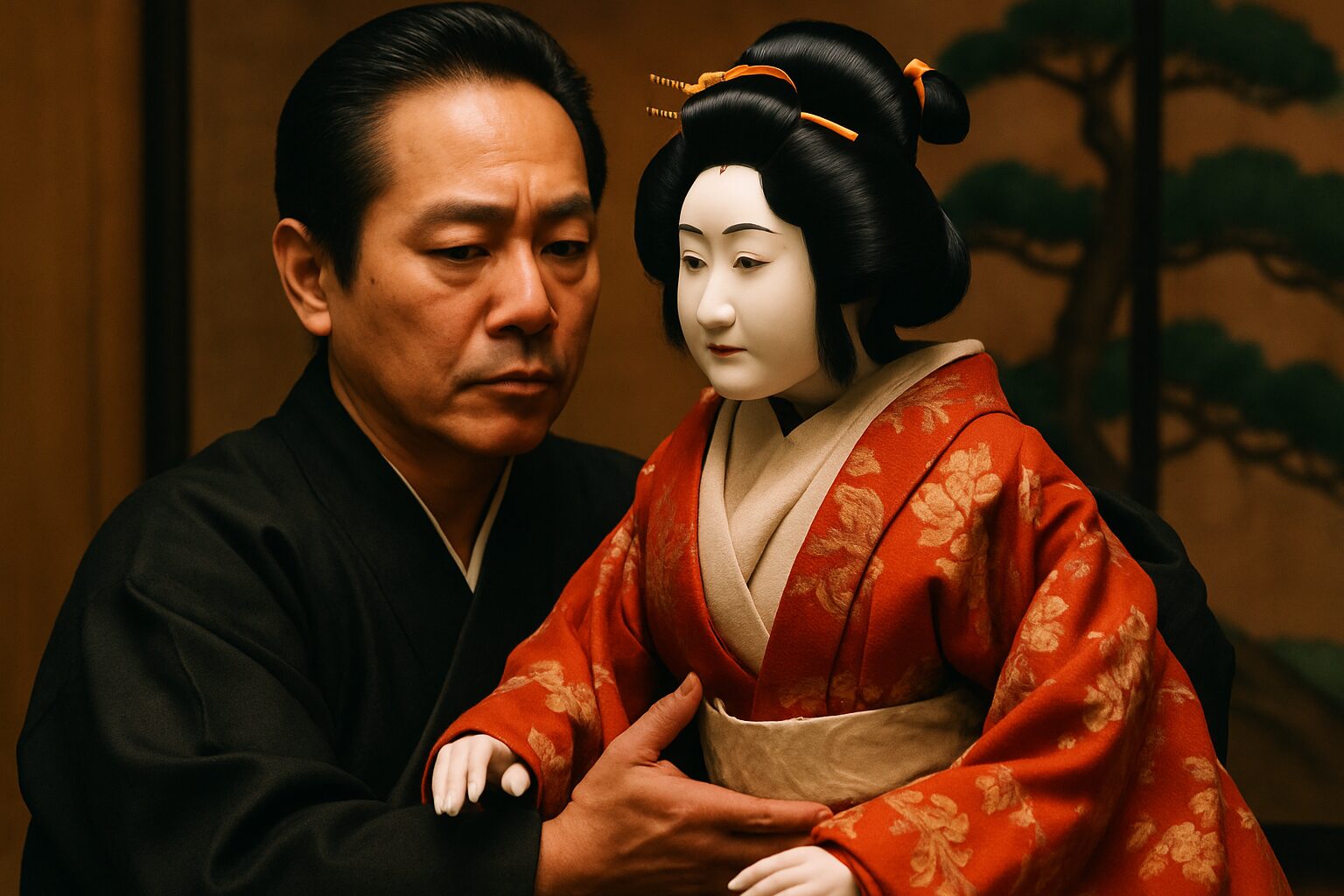
The most prominent artists are the puppeteers, or ningyōtsukai, who command the large, intricately crafted puppets, which can reach nearly two-thirds the size of a human. Unlike other puppet traditions, each main puppet is controlled by a trio of individuals moving in breathtaking harmony. Their movements form a silent ballet of precision and empathy.
The chief puppeteer, the omo-zukai, is the most experienced and the only one whose face is usually visible to the audience. He manipulates the puppet’s head with his left hand—operating levers to move the eyes, mouth, and eyebrows with remarkable subtlety—and controls the puppet’s right arm with his right hand. His visible presence signifies mastery, a status achieved only after decades of training. Witnessing the intense concentration on his face as he reflects the puppet’s emotions is itself a performance.
The second puppeteer, the hidari-zukai, manages the puppet’s left arm. This role demands an extraordinary level of coordination, as he must anticipate every move of the omo-zukai to generate fluid, natural gestures. The third puppeteer, the ashi-zukai, governs the feet and legs. For female puppets, which generally have no visible legs beneath their long kimono, the ashi-zukai uses his hands to press against the kimono’s hem, crafting the illusion of graceful steps, a frantic run, or the delicate pose of a kneeling woman.
All three puppeteers undergo years of training, progressing through a strict hierarchy. An apprentice spends a decade or more mastering foot movements, then another decade on the left arm, before being permitted to train as the principal operator. Dressed in black robes and hoods (kurogo), the junior puppeteers are meant to be ‘invisible’ figures, their presence fading away as the puppet comes alive with startling vividness. The slightest tilt of a head, the flutter of a sleeve, the clenching of a fist—each nuance carries profound significance, transforming a wooden doll into a character of deep emotional complexity.
The Chanter (Tayū): The Voice of Every Soul
To the right of the stage, seated on a revolving platform called the yuka, is the chanter, or tayū. He is not simply a narrator but the emotional center of the entire performance. Kneeling before a lacquered lectern, he gives voice to the entire story. He speaks the dialogue for every character, regardless of age or gender, skillfully varying his tone, pitch, and delivery. He also sings narrative passages that describe the setting, actions, and the innermost thoughts of the characters.
The vocal style, gidayū-bushi, is a powerful, resonant, and deeply expressive form of chanting drawn from the diaphragm. It is both physically and emotionally taxing. The tayū must communicate a broad range of human emotions—from joyous celebration to heart-wrenching sorrow, from quiet introspection to fierce anger. You will see him grimace, sweat, and weep as he channels every ounce of himself into the performance. His vocalizations are a force of nature, shaping the atmosphere and driving the drama forward. Even without understanding Japanese, the raw emotion conveyed by the tayū is universally felt. His performance is a tour de force of vocal endurance and dramatic skill, a central pillar supporting the entire narrative.
The Shamisen Player (Shamisen-hiki): The Rhythmic Heartbeat
Seated next to the tayū on the yuka is the shamisen player. The instrument used in Bunraku is the futo-zao shamisen, the largest type with the deepest, most resonant tone. The shamisen serves as far more than simple musical background; it is an equal storytelling partner and a second voice perfectly synchronized with the tayū. The music sets the rhythm of the drama, creates atmosphere, and expresses emotions beyond words.
The sharp twang of the strings can mimic a flash of lightning or the slash of a sword. A low, mournful melody may evoke the sorrow of a parted lover, while a frenetic, percussive rhythm escalates tension during a climactic battle. The shamisen player can even imitate natural sounds, such as the gentle patter of rain, rushing water, or the chirping of crickets on a summer night. The interplay between the tayū‘s voice and the shamisen’s strings is a complex, dynamic dialogue. They breathe together, their rhythms rising and falling in perfect harmony, crafting a soundscape as vital to the drama as the puppets themselves. Observing their intense, non-verbal communication reveals a profound artistic connection forged through years of shared practice.
Inside the Hallowed Halls: The National Bunraku Theatre Experience
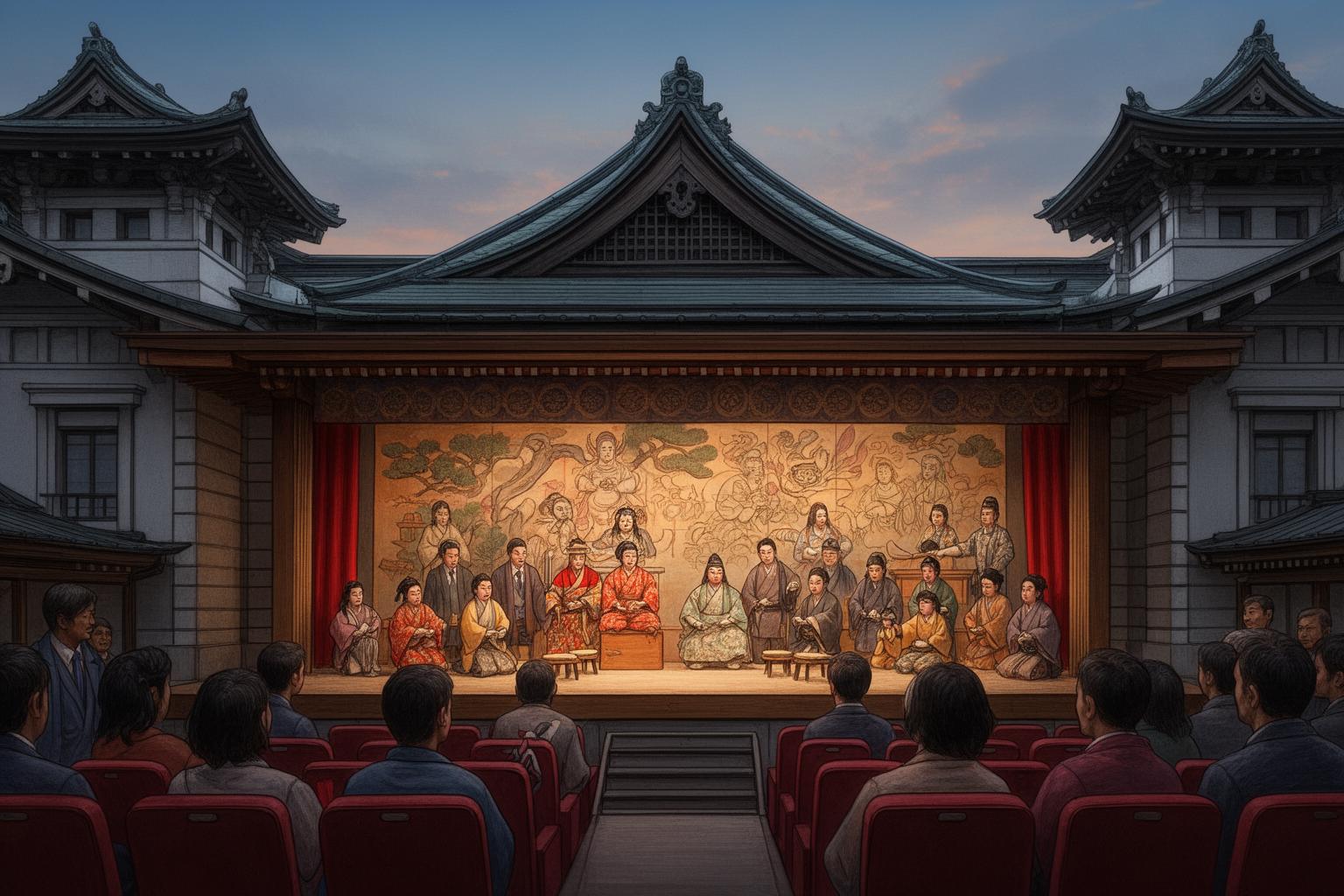
The National Bunraku Theatre is itself a design masterpiece that honors tradition while incorporating modern functionality. Situated in the vibrant Nippombashi district, its sleek, contemporary facade features subtle references to traditional Japanese architecture, creating a serene and distinguished presence amid the urban hustle. Upon entering, the city’s noise fades, replaced by a quiet sense of reverence and anticipation. The spacious lobby feels open and inviting, adorned with exquisite artistic displays related to Bunraku, including intricate puppet heads and stunning costumes.
The main auditorium is crafted for optimal viewing and acoustics. The seats are comfortable, and from nearly every angle, the sightlines are excellent. A distinctive element of the stage is the three-part partitions, or tesuri, which frame the action while hiding the puppeteers’ lower bodies, sharpening the audience’s focus on the puppets. To the right, the notable yuka platform slowly rotates to reveal the tayū and shamisen player at the start of an act and conceal them at its end, a subtle bit of stagecraft that enhances the theatrical experience.
Before the performance or during intermission, be sure to visit the small yet fascinating exhibition room on the second floor. There, you can take a closer look at the trade’s tools, observe the internal workings of the puppet heads, admire the luxurious brocades of the costumes, and explore historical documents and props that chart the art form’s long history. This exhibition provides invaluable context and deepens appreciation for the remarkable craftsmanship on display. The theatre also features a gift shop offering books, recordings, and elegant Bunraku-themed souvenirs—ideal mementos of your visit.
A Practical Guide to Your Bunraku Encounter
Attending a Bunraku performance for the first time can feel intimidating, especially due to the language barrier. However, the National Bunraku Theatre warmly welcomes international visitors and has several measures in place to ensure the experience is accessible and enjoyable.
Getting Your Tickets and Finding Your Seat
Performances at the National Bunraku Theatre are not held throughout the year. The main seasons usually occur in January, April, June, July/August, and November, so it’s important to check the official schedule on their website well ahead of your visit. Tickets can be booked online via their English-language portal or purchased directly at the box office. Prices vary depending on seat location, but even the more affordable seats in the upper tiers provide a clear and enjoyable view of the stage.
When booking, you’ll notice that a full program can be quite long, often lasting four hours or more with intermissions. This is because traditional plays are presented in full. For first-time visitors, this may represent a significant time commitment. Fortunately, there is a fantastic option called maku-mi, or single-act tickets. On the day of the performance, subject to availability, you can buy a cheaper ticket to see just one act of the play. This is an ideal way to experience the art form without dedicating an entire afternoon or evening. An act lasts anywhere from 45 to 90 minutes and offers a complete and fulfilling dramatic arc.
Navigating the Performance: Language and Etiquette
The biggest concern for many international visitors is the language. The plays are performed in a classical form of Japanese, which can be challenging even for native speakers to fully understand. However, this should not discourage you. The theatre provides an excellent English-language earphone guide for a small rental fee. This guide offers scene-by-scene summaries, explains important cultural points, and gives insights into the performance as it unfolds. It’s an invaluable tool that greatly enhances your understanding and enjoyment. Additionally, you can purchase an English program containing a detailed plot summary.
Even without these aids, the strength of Bunraku lies in its visual and emotional storytelling. The puppets’ gestures, the chanter’s emotional tone, and the evocative shamisen melodies all combine to convey a story that transcends language. You will feel the tension, sorrow, and joy. Theatre etiquette is straightforward: arrive on time, remain quiet during the performance to respect the artists and fellow audience members, and reserve applause for the end of an act or the entire play, when the puppeteers, chanter, and shamisen player take their bows.
Access and Timing: Making Your Way to the Theatre
The National Bunraku Theatre is conveniently located and easy to reach. The nearest subway station is Nippombashi Station, served by both the Sakaisuji and Sennichimae lines. From Exit 7, the theatre is just a one-minute walk away. It’s also within comfortable walking distance from the major Namba and Dotonbori areas. Plan to arrive at least 20–30 minutes before the performance starts. This will give you ample time to pick up your tickets, rent an earphone guide, explore the exhibition room, and find your seat without rushing. Rushing is contrary to the Bunraku experience, which requires a calm and focused mindset.
Beyond the Stage: Bunraku’s Echoes in Osaka
A visit to the National Bunraku Theatre is ideally enhanced by exploring its lively surroundings, which present a captivating contrast between the traditional and the modern, the peaceful and the bustling.
Kuromon Ichiba Market: A Feast for the Senses
Just a few minutes’ walk from the theatre lies Kuromon Ichiba Market, affectionately known as “Osaka’s Kitchen.” This covered arcade stretches over 500 meters and is filled with vendors offering fresh seafood, high-quality meats, colorful produce, and a wide array of Japanese delicacies. It’s an ideal spot for a pre-theatre meal or a post-performance snack. Enjoy freshly grilled scallops, a skewer of savory Kobe beef, or a box of glistening sushi. The lively atmosphere, sounds, and aromas of Kuromon create a vibrant, earthy contrast to the polished, dramatic world of Bunraku.
Dotonbori and Namba: The Neon Heartbeat
As evening falls, step from the theatre’s quiet elegance into the dazzling neon lights of Dotonbori. This iconic entertainment district, famous for its giant animated signs like the Glico Running Man and the Kani Doraku crab, is a sensory feast in every sense. Wander along the canal, sample beloved Osaka street foods such as takoyaki (octopus balls) and okonomiyaki (savory pancakes), and immerse yourself in the electric energy. Experiencing a centuries-old art form followed by the vibrant pulse of Japan’s ultra-modern city life offers a distinctly Osakan experience.
Hozenji Yokocho: A Step Back in Time
For a quieter, more atmospheric outing, discover Hozenji Yokocho, a narrow, stone-paved alley near Dotonbori that feels like stepping into a bygone era. Lined with traditional restaurants and izakayas, its centerpiece is Hozenji Temple, which houses a famous statue of the deity Fudo Myoo. Covered in a thick layer of green moss from decades of worshippers splashing it with water, the statue exudes a serene presence. Visiting this peaceful spot after a Bunraku performance provides a fitting conclusion to a day immersed in Osaka’s rich history and deeply rooted cultural traditions.
A Legacy in Motion: Why Bunraku Endures
In an age dominated by fleeting digital entertainment, the survival of an art form as demanding and deliberate as Bunraku is nothing less than miraculous. Its persistence stands as a tribute to the unwavering commitment of its practitioners and the profound impact of its narratives. Recognized as a UNESCO Intangible Cultural Heritage, Bunraku is celebrated as a global treasure. The performers at the National Bunraku Theatre belong to an unbroken tradition, dedicating their entire lives to perfecting their craft through a rigorous apprenticeship system.
Bunraku endures because it addresses the timeless, universal themes of the human experience. The plays of Chikamatsu and other master playwrights delve into the eternal conflict between duty and desire, the ties of family, the tragedy of fate, and the nobility of sacrifice. When a puppet—crafted from wood and paint—sheds tears so convincingly that you feel a lump in your throat, you are witnessing artistic expression at its highest level. This art form demands your full engagement and rewards it with a profound, unforgettable emotional experience.
Visiting the National Bunraku Theatre is more than a cultural outing; it is an immersion into the heart of a city. It offers a rare opportunity to witness a level of artistry and collaborative brilliance seldom found today. As the lights fade and the first resonant note of the shamisen pierces the silence, you are transported to another realm—a world where puppets possess souls, and century-old stories feel as immediate and powerful as if unfolding in the present moment. This is the magic of Bunraku. This is the spirit of Osaka.