Hello, beautiful people! Sofia here. When I first moved to Osaka, I was on a mission to find the city’s pulse, its real, unfiltered heartbeat. I’d heard the usual things—friendly people, amazing street food, a city that works hard and plays harder. But I wanted to go deeper. I wanted to understand the rhythm of daily life, the unspoken rules, the secrets that make Osaka so fiercely, unapologetically itself. And I found it. Not in a temple, not in a castle, but under the blinding, almost psychedelic glow of a supermarket sign that screamed ‘スーパー玉出’—Super Tamade.
From the outside, Tamade looks less like a grocery store and more like a pachinko parlor that’s having an existential crisis. It’s a riot of neon, flashing lights, and bold, primary colors that seem to vibrate with a chaotic energy. It’s loud, it’s garish, and for a newcomer, it’s utterly bewildering. My Tokyo friends had warned me. “Osaka is… different,” they’d say, with a polite, knowing smile. They’d shown me photos of their elegant `depachika`, the basement food halls of department stores like Isetan or Mitsukoshi, where fruits are sold like jewels and bento boxes are arranged with the precision of high art. Tamade is the complete, glorious antithesis of that world. It’s a place that trades aesthetic refinement for something Osakans hold far more dear: jaw-dropping, unbeatable value. It’s here, in the aisles of this unapologetically cheap and cheerful supermarket, that you’ll find the city’s soul, packed into a 250-yen bento box. This isn’t just a store; it’s a cultural institution, a masterclass in Osaka economics, and your ticket to eating like a true local. Forget the tourist guides for a day. Let’s go grocery shopping.
To truly understand the city’s love for communal, hands-on eating, you should also explore the secrets of Osaka’s at-home takoyaki parties.
The Sensory Overload: Your First Tamade Encounter
Walking into a Super Tamade for the first time is an experience that assaults all your senses, whether you intend it or not. It’s a full-on barrage of light, sound, and scent that can be overpowering, but if you embrace it, you start to discern the method behind the madness. This isn’t chaos for its own sake; it’s a carefully designed environment meant to deliver one clear, powerful message: you are about to save a significant amount of money.
Decoding the Neon Jungle
The first thing that strikes you is the light. The exterior bursts like a Vegas spectacle with flashing bulbs and neon signs, the store’s name displayed in a cheerful, almost childlike font. The primary colors—a startling mix of canary yellow and fire-engine red—are chosen because marketing psychologists say they inspire urgency and excitement. Inside, it’s much the same. The ceilings are low, bathed in harsh, unyielding fluorescent lighting that reflects off every surface. There are no warm, cozy spotlights to create ambiance here. The lighting is purely functional, intended to keep electricity costs down and ensure price tags are easily visible. This visual style is the first lesson in Osaka pragmatism. Where a Tokyo supermarket might spend on upscale interior design to evoke luxury and comfort, Tamade spends on nothing of the sort. Every yen saved on decoration is a yen shaved off the price of a pork cutlet. The Osakan shopper understands this instinctively. They’re not seeking ambiance; they’re on a mission. The garish exterior isn’t a flaw—it’s a proud statement of its business model. It’s a beacon for bargain hunters, a lighthouse guiding savvy city shoppers to the shores of affordability.
The Soundtrack of Savings
Next comes the sound. Super Tamade plays its own theme song, an endlessly looping, upbeat jingle that burrows into your subconscious and stays there for days. It’s maddeningly catchy and becomes the soundtrack of your shopping trip. This is not gentle, instrumental music found in more upscale grocery stores, meant to soothe you into spending more time and money. The Tamade jingle is energetic and persistent. It’s repetitive, insistent, and adds to the store’s frenetic pace. Layered over this are constant shouted announcements over the PA system, rapidly delivered like an auctioneer’s pitch, promoting the day’s specials. The entire soundscape creates a sense of urgency—the impression that incredible deals are happening right now and you better act fast before they vanish. It’s the sonic equivalent of the flashing lights—direct, effective, and utterly unsubtle. It’s commerce in its rawest form, a relentless reminder that this is a place of rapid movement, turnover, and deals waiting to be grabbed.
The Smell of Real Life
Finally, there’s the smell. Tamade has a distinctive and unmistakable aroma. It’s a complex mix that tells the story of the store’s offerings. There’s the salty, oceanic scent from the fresh fish section, where whole mackerel and squid gleam on ice. There’s the warm, greasy, deeply comforting aroma of the 惣菜 (sozai) corner, with heaps of freshly fried `karaage` (Japanese fried chicken) and `korokke` (croquettes) constantly replenished. This mingles with the sweet smell of simmering soy sauce and mirin from the stewed dishes, and the faint, earthy scent of root vegetables. It’s not a curated or sanitized odor. It’s the honest scent of food, of a vast, working kitchen. It smells like a thousand home-cooked dinners happening simultaneously. For some, it may be overwhelming, but for those in the know, it’s the scent of authenticity. It’s the perfume of daily life, a testament that this store is the engine room fueling countless Osaka dinner tables.
The Holy Trinity: Bento, Sozai, and the 1-Yen Sale
Once you’ve adjusted to the sensory environment, you can concentrate on the core of the Tamade experience: the food. Specifically, the prepared foods section, which is its own world. This is where you encounter the holy trinity of Tamade’s value proposition: incredibly inexpensive bento boxes, an endless assortment of sozai side dishes, and the almost legendary 1-yen sale. This goes beyond convenience; it’s an immersive dive into the food culture and economic mindset of Osaka.
The Bento Box Arena: More Than Just a Meal
The bento section at Tamade is truly a spectacle. It’s a vast array of clear-lidded plastic containers, each holding a complete meal. The range is astonishing. You’ll see classics like the `Sake Bento` (grilled salmon), the `Tonkatsu Bento` (fried pork cutlet), and the `Nori Bento` (a simple but satisfying dish of rice topped with bonito flakes, soy sauce, and a sheet of nori seaweed, often accompanied by a piece of fried fish). Then, there are more elaborate options packed with fried shrimp, hamburg steak, and a colorful assortment of side dishes. The most surprising aspect is the price. Bento boxes commonly cost 298 yen, 250 yen, or even less. I once picked up a perfectly good `Karaage Bento` for 198 yen. Such pricing defies logic. How is this even feasible?
The secret lies in Osaka’s `akindo` (merchant) philosophy. Tamade operates on extremely high volume and minimal margins. They buy ingredients in massive quantities, efficiently prepare them in central kitchens, and strive to sell everything every day. There’s no room for waste. This relentless efficiency allows them to offer a full, hearty meal for the price of a cup of coffee in Tokyo. This isn’t just an affordable lunch; it’s a vital resource for students, single office workers, and families balancing tight budgets. It reflects a profound understanding of the community’s needs.
Cracking the Code of Discount Stickers
Mastering Tamade’s bento section means learning the art of the discount sticker. It’s a game of timing and tactics that locals engage in with quiet seriousness. Shopping at Tamade during midday gets you the freshest selection, but the real excitement begins later in the day. Around 4 PM, staff start appearing with rolls of stickers to mark down items. The initial wave typically offers a 20% or 30% discount (2割引 or 3割引), suitable for the cautious shopper. The main event is the `hangaku` (半額) or 50% off sticker, usually applied from 7 PM onward. The store’s atmosphere changes. Shoppers become like calm but focused predators circling the bento and sozai sections. There’s no pushing, but a visible tension builds. Everyone waits patiently for the staff wielding the coveted `hangaku` stickers. When they arrive, a quiet, orderly rush ensues as people swiftly grab their half-price items. Scoring a 298-yen tonkatsu bento for 149 yen is a genuine triumph. This nightly ritual reflects more than just frugality; it’s a culture of savvy shopping. In Osaka, snagging a great deal (`eemon katta`) is a point of pride and a story worth telling. It shows you’re clever, practical, and attuned to the city’s economic pulse.
Sozai: The Foundation of an Osaka Meal
Next to the bento boxes lies the expansive world of `sozai`. For those unfamiliar, sozai are individually sold pre-cooked side dishes. Tamade’s sozai section celebrates Osaka’s passion for `konamon` (flour-based foods) and `agemono` (fried foods). It’s a feast of golden-brown delights. You’ll find glistening karaage, perfectly shaped potato korokke, assorted vegetable and seafood tempura, and savory pancakes. But not everything is fried; there are classic home-style dishes like `kinpira gobo` (braised burdock root and carrot), hijiki seaweed salad, nimono (simmered vegetables), and thick, sweet rolled omelets called `dashimaki tamago`. Prices remain impressively low: a large piece of fried chicken for 80 yen, a croquette for 50 yen, a generous portion of salad for 150 yen. Sozai are key to understanding Japanese home cooking. A typical meal includes rice, soup, and several side dishes. For busy families or individuals, preparing three or four different dishes from scratch daily is a huge task. Sozai is the solution. People cook their own rice at home, then stop by Tamade after work to pick up two or three sozai to complete their meals. It’s practical, affordable, and tasty. It brings variety and saves a tremendous amount of time and effort. Tamade’s sozai section is an essential tool in the arsenal of the Osaka home cook.
The Legendary 1-Yen Sale: A Lesson in Osaka Economics
Perhaps the most dramatic and theatrical expression of Tamade’s philosophy is the famous 1-yen sale. The rules are simple: if you spend a set amount, usually 1,000 yen, you qualify to buy a special daily item for the absurdly low price of one yen. And these items aren’t trivial—they might be a carton of ten eggs, a liter of milk, a loaf of bread, or a package of tofu. This is brilliant retail psychology that perfectly embodies Osaka’s merchant spirit. On the surface, the store loses money on that 1-yen item. But the deal acts as a powerful loss leader, ensuring customers spend at least 1,000 yen to qualify. It creates excitement and a sense of reward. Handing over a single yen for a full carton of eggs is uniquely satisfying—it’s an undeniable bargain. This isn’t just a discount; it’s a performance. It’s the store’s way of speaking directly to customers: “We know you love a great deal, and we’re going to give you the best one you’ve ever seen.” It fosters fierce customer loyalty and perfectly captures the playful, bold, and customer-oriented spirit of Osaka commerce.
The Tamade Mindset: Understanding Osaka Through Its Supermarket
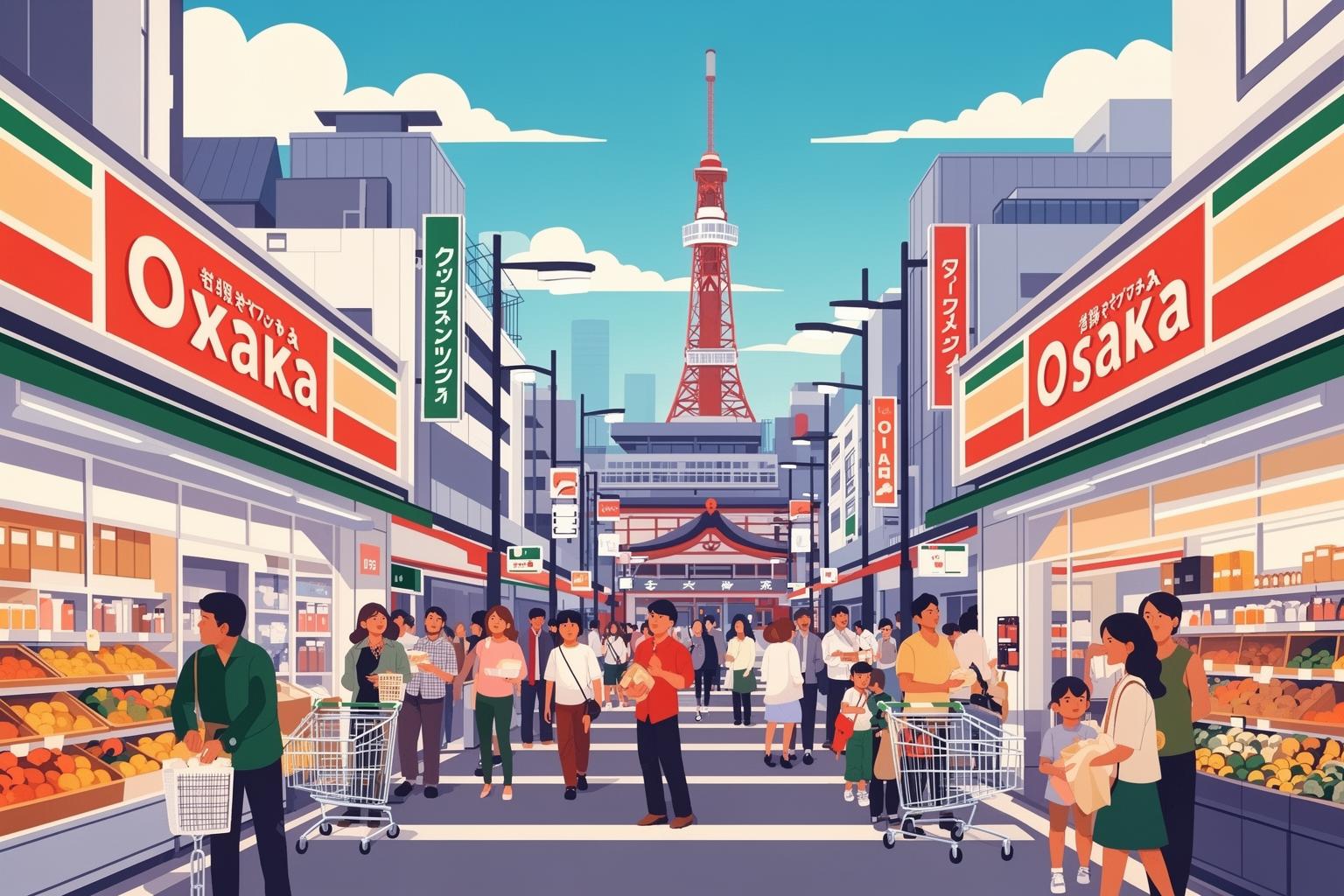
Super Tamade is much more than just a place to buy inexpensive groceries. It represents a living, breathing embodiment of the Osaka mindset. Shopping here means engaging with a culture that values pragmatism, directness, and a shrewd approach to life and money. It stands in stark contrast to the often-reserved and image-conscious culture of Tokyo, and grasping these differences is essential to understanding Osaka itself.
“Mokkari-makka?”: The Merchant’s Spirit
In the Osaka dialect, there is a traditional greeting: `Mokkari-makka?` which roughly means, “Are you making a profit?” The usual response is `Bochi-bochi denna`, signifying “So-so” or “Bit by bit.” This exchange captures the essence of Osaka, a city founded by merchants. Commerce runs in its veins. Tamade can be seen as the modern cathedral of this merchant spirit. Its entire system operates as a finely tuned engine focused on profit through volume. The business model prioritizes cash flow and turnover above all else. The objective is to move products quickly. This philosophy shapes every aspect of the store, from its no-frills décor to the fast-paced checkout. The form of `omotenashi` (Japanese hospitality) here is not expressed through deep bows or elaborate language. Instead, Tamade’s `omotenashi` is reflected in its price tags. The respect shown to customers comes from offering the lowest possible prices. It is a straightforward, honest transaction without any pretenses. While this may be surprising to those used to the polished service culture prevalent elsewhere in Japan, especially Tokyo, Osakans perceive it not as rudeness but as efficiency. It is a relationship grounded in a mutual understanding of value.
Pragmatism Over Polish: Why It Looks the Way It Does
Foreigners—and even Japanese people from other regions—often question the store’s appearance at first glance. The floors may be somewhat worn, the displays untidy, and the overall look cluttered and chaotic. While some might interpret this as neglect, it is actually a deliberate strategic choice. This is Osaka’s hallmark pragmatism in practice. Why invest in costly shelving, artistic lighting, or a team of merchandisers to create perfectly arranged displays? Those expenses would inevitably be passed on to consumers in the form of higher prices. Osakans prefer a somewhat disorderly store if it means saving 50 yen on a block of tofu. They prioritize substance over style, function over form, especially regarding everyday essentials. This stance stands in fundamental contrast to Tokyo, where appearance and presentation (`mitame`) often matter as much as the product itself. In Tokyo, a bento box is treated as a work of art, a meticulously balanced composition of color and texture. At Osaka’s Tamade, a bento box is simply fuel: it must be tasty, filling, and above all, affordable. The beauty lies not in its looks but in its value. This practical, no-nonsense approach is a defining trait of the Osaka identity.
The Unspoken Rules of the Aisles
Navigating a crowded Tamade during peak hours is a lesson in social dynamics. The pace is brisk, and shoppers move with intention. An unwritten code governs behavior that everyone seems to follow. Customers don’t linger or block aisles while considering their options. Instead, they decide quickly, grab their items, and keep moving. With small shopping carts and narrow aisles, spatial awareness is crucial. People skillfully navigate around each other with practiced efficiency. This isn’t aggressive but assertive. The checkout process exemplifies speed. Shoppers are expected to have their wallet or payment method ready. Cashiers scan items rapidly, announce the total, and move on to the next customer without delay. Idle chit-chat is absent. Though this can feel brusque, it arises from necessity. The system is designed to handle a large volume of customers quickly. This reflects the `sekkachi` (impatient, always in a hurry) temperament often attributed to Osakans. They value their time and expect efficiency in everything. This directness should not be mistaken for unfriendliness; it simply mirrors the rhythm of a city that is constantly on the move.
A Practical Guide to Your First Tamade Bento & Sozai Haul
Alright, you’re convinced and ready to dive into the vibrant world of Tamade. To ensure your first mission is a success, here’s a handy cheat sheet. Consider me your guide on this delicious and incredibly budget-friendly adventure.
The Best Times to Visit
Your experience at Tamade will change dramatically depending on when you go. Choose your timing based on your goal.
- Late Morning to Early Afternoon (11 AM – 2 PM): This is prime time for the freshest and widest variety of bento boxes. If you want to see everything available before the crowds arrive, this is the time. The sozai section will also be fully stocked and looking its best.
- Late Afternoon (4 PM – 6 PM): This marks the start of the discount period. You’ll begin seeing the first wave of stickers—20% off, 30% off, or sometimes a fixed yen discount. It’s a good balance between selection and price. You can still find most items you want, but at reduced prices.
- Evening (7 PM onwards): Welcome to the main event, the era of the `hangaku` (50% off) sticker. Selection will be more limited, as much has been picked over during the day. But what remains is an absolute bargain. The atmosphere is electric with bargain hunters. If your goal is the lowest price, this is your moment—be ready to move quickly!
Must-Try Sozai for Beginners
The vast selection in the sozai section can be overwhelming. Here are a few essential classics to start with. These are the cornerstones of the Tamade sozai experience.
- Karaage (Japanese Fried Chicken): This is the ultimate test. Tamade’s karaage is usually sold by weight or piece. It’s juicy, flavorful, with a crispy coating—a perfect savory snack or main protein.
- Korokke (Croquettes): These golden, breaded mashed potato patties are the essence of comfort food. They come in various flavors—plain potato, meat-filled (`niku-jyaga`), or creamy corn. They are incredibly cheap and very satisfying.
- Assorted Tempura: You’ll find a wide range of tempura—shrimp, squid, sweet potato, eggplant, and pumpkin. Grab a few varieties to create a colorful and texturally appealing plate.
- Dashimaki Tamago (Rolled Omelet): This may surprise you. Amid the fried foods, you’ll find these beautifully made, slightly sweet and savory rolled omelets. Moist and flavored with dashi stock, they offer a wonderful contrast to the richer sozai.
- Kinpira Gobo (Braised Burdock and Carrot): For a touch of balance and traditional taste, try this slightly sweet and savory vegetable side dish with a pleasantly crunchy texture. It perfectly cuts through the richness of fried items.
How to Assemble Your Perfect, Ultra-Low-Cost Meal
The real joy of Tamade lies in creating your ideal meal for an unbelievably low price. Here’s a sample haul to show what’s possible if you arrive during `hangaku` hour.
- Main: Spot a delicious-looking `Saba Shioyaki` (salt-grilled mackerel) bento. Original price: 298 yen. With the 50% off sticker, it’s now 149 yen.
- Side Dish 1: Grab a hearty potato `korokke`. Price: 50 yen.
- Side Dish 2: Add a couple of pieces of `karaage`. Price: about 100 yen for two.
- Vegetable: Take a small pack of spinach with sesame dressing (`hourensou no goma-ae`). Price: 120 yen.
Your total for a large, balanced, and tasty dinner? Just 419 yen. This is the reality of Tamade: eating well, authentically, and affordably. It’s more than just a meal—it’s a savvy life hack, Osaka style.
More Than a Supermarket, It’s an Identity
After countless visits, maneuvering the crowded aisles and perfecting the timing for the discount stickers, I’ve arrived at a conclusion. Super Tamade is more than just a place to buy groceries. It stands as a cultural landmark—a living, breathing embodiment of Osaka’s most treasured values: its steadfast pragmatism, its lively sense of humor, its passionate love for a good bargain (`meccha yasui`), and its fundamentally grounded approach to the serious work of everyday life.
To label it merely a “cheap supermarket” is to completely miss the essence. It represents a conscious rejection of the polish and pretense often found in retail elsewhere. This is a place that openly expresses its heart, putting the needs of its community above any concern for appearances. If Tokyo’s sophisticated `depachika` food halls resemble curated art galleries, carefully arranged and softly illuminated, then Super Tamade is more like a chaotic, vibrant, and exhilarating street festival. It’s loud, a little messy, but pulsing with undeniable energy and a sincere love for food and feeding people well at low prices.
So, my recommendation to anyone eager to truly understand this remarkable city is this: one evening, skip the trendy restaurants in Namba and the famous food stalls in Dotonbori. Seek out the nearest neon-yellow-and-red sign. Grab a basket, take a deep breath, and dive into the brilliant, beautiful chaos of Super Tamade. Build a meal from its bento and sozai sections. As you sit down to enjoy your incredibly affordable and surprisingly tasty dinner, you won’t just be tasting food—you’ll be savoring the authentic, unfiltered, and wonderful flavor of Osaka itself.