Osaka. The name itself rumbles with the sound of sizzling grills and joyous, food-filled chatter. Known far and wide as Japan’s kitchen, or ‘tenka no daidokoro’, this city wears its culinary heart on its sleeve. And at the center of that heart, beating with a relentless, delicious rhythm, is takoyaki. These piping hot, savory spheres of batter, studded with tender octopus, are more than just a snack; they are an edible emblem of Osakan identity. You can find them on practically every corner, served up with a flick of the wrist and a generous drizzle of sauce, each stall a testament to a time-honored tradition. But what happens when that tradition is tossed into a creative blender with punk rock, vintage fashion, and a rebellious splash of neon paint? You get Amerikamura. And in Amerikamura, takoyaki isn’t just a classic—it’s a canvas. This is not a journey to find the best traditional takoyaki. Oh no. This is a deep dive, a delicious treasure hunt into the weird and wonderful heart of Osaka’s youth culture epicenter to unearth the most creative, the most unconventional, and the most unapologetically Instagrammable takoyaki this city has to offer. Forget what you think you know about these little octopus balls. We’re going on an adventure where crispy batter meets unexpected flavors, and tradition gets a vibrant, modern makeover. Welcome to the other side of takoyaki.
If you’re craving a more traditional Osakan atmosphere after this modern takoyaki adventure, be sure to explore the nostalgic, lantern-lit alleyways of Hozenji Yokocho.
Welcome to the Concrete Jungle of Creativity: What is Amerikamura?
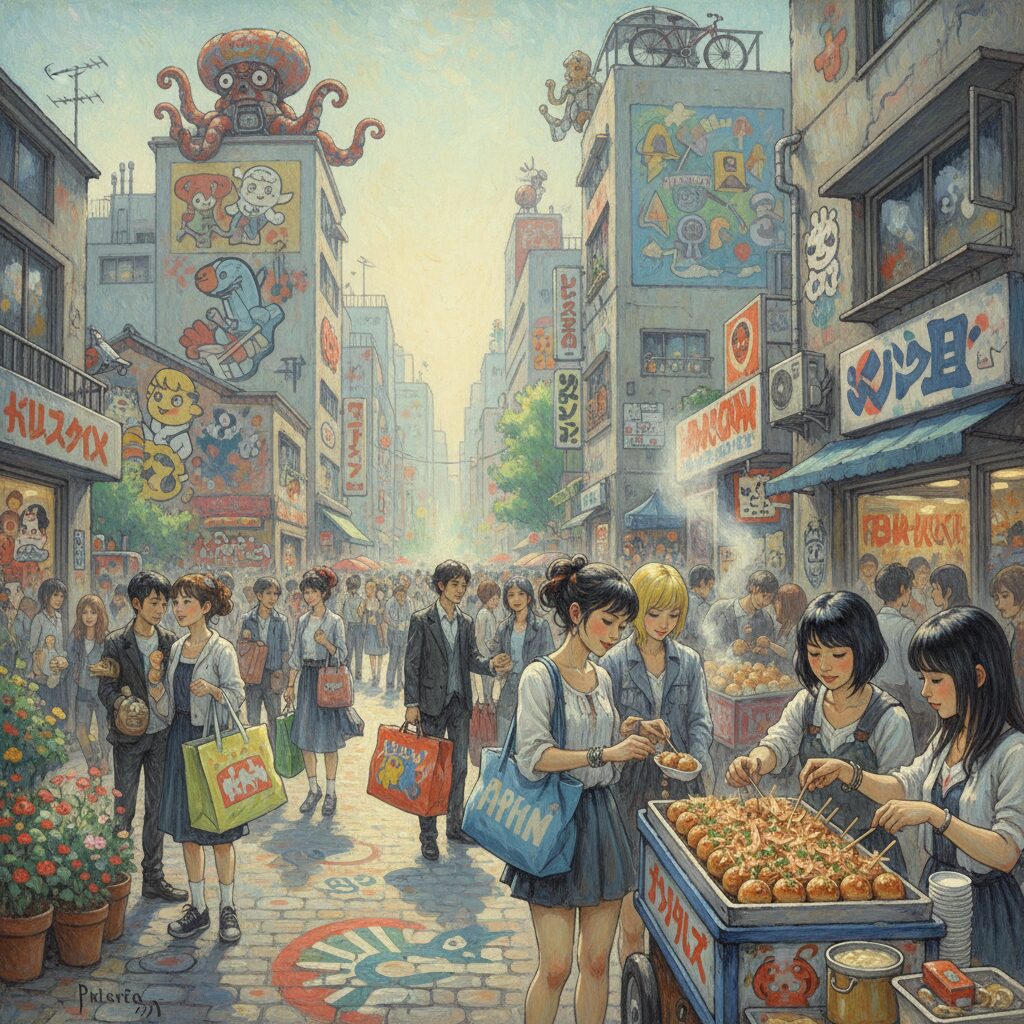
To truly understand the food, you first need to understand the place. Entering Amerikamura, commonly called ‘Amemura’, is like plugging straight into Osaka’s vibrant and youthful spirit. This chaotic yet beautiful maze of narrow streets lies just west of the main Shinsaibashi shopping area. The name itself dates back to the 1970s, when the neighborhood became a center for warehouses selling imported goods from the American West Coast—vintage jeans, Hawaiian shirts, and rock-and-roll records. That countercultural seed has since grown into the sprawling, electric district it is now, a living gallery showcasing Japanese street fashion and artistic creativity.
The atmosphere here pulses with its own unique rhythm. Thumping basslines pour out from underground record shops’ doorways, while the sweet aroma of freshly roasted coffee from a third-wave cafe blends with steam rising from a takoyaki stand. Every surface invites artistic expression: walls burst with colorful murals, metal shutters are adorned with intricate graffiti tags, and even the streetlights are famously shaped like human figures striking dynamic poses above the crowds. It’s a place that rewards those who look up, down, and into every curious alley.
At the heart of it all lies Sankaku Koen, or Triangle Park. More of a concrete plaza than a traditional park, it serves as a popular meeting point and people-watching haven. Here, you can observe the full spectrum of Amemura’s residents: skaters practicing tricks, aspiring musicians strumming guitars, and groups of friends flaunting fashion styles ranging from gothic lolita to effortlessly cool oversized streetwear. This vibrant hub is the neighborhood’s beating heart—a spot to catch your breath, enjoy your freshly purchased street food, and soak in the raw, creative energy that defines this corner of Osaka. Visiting Amemura means immersing yourself in a place that’s constantly reinventing itself—a perfect setting for a dish like takoyaki to evolve in tandem.
The Classic Canvas: Understanding the Original Takoyaki
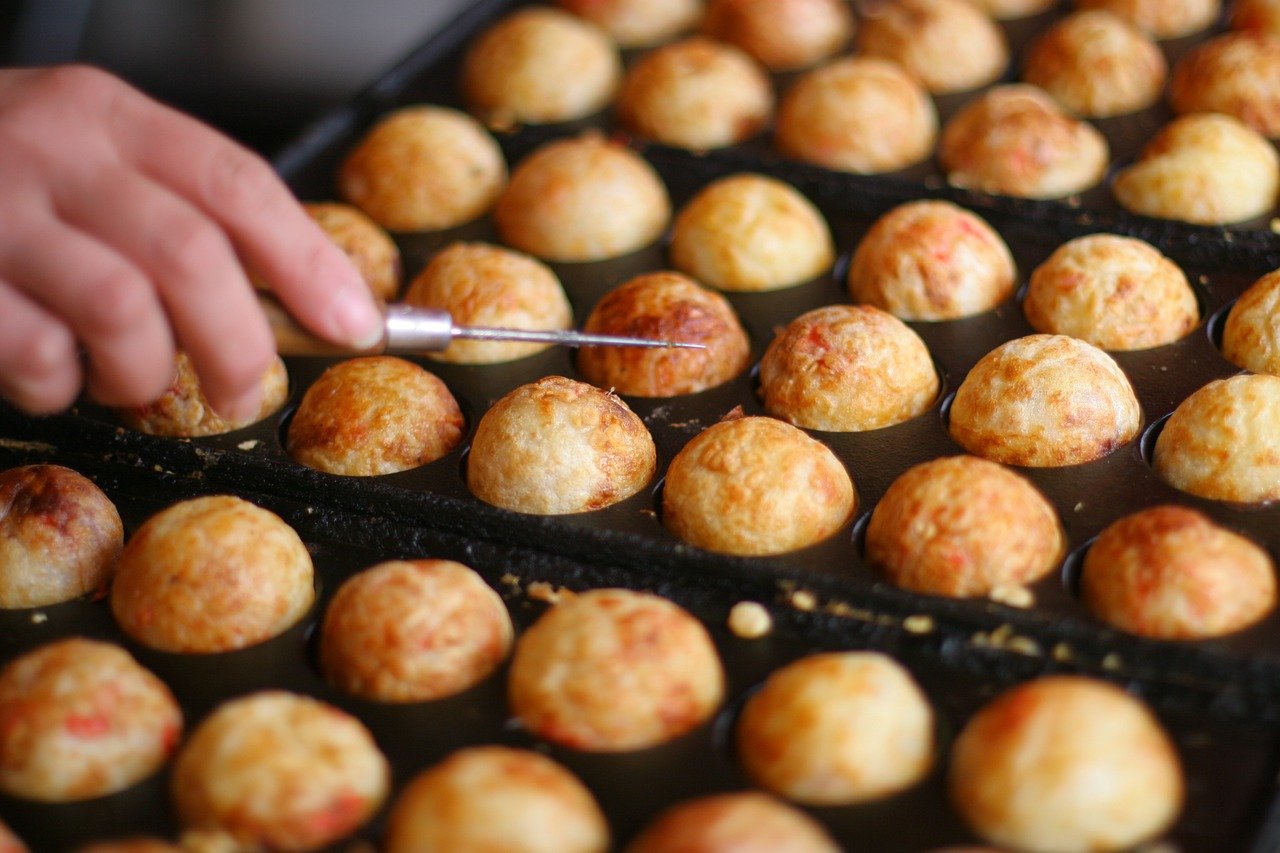
To truly appreciate the rebellion, you must first grasp the orthodoxy. Before plunging into a world of cheese pulls and pesto drizzles, let’s honor the original, the icon, the undisputed king of Osakan street food: classic takoyaki. Watching a skilled vendor at work is pure theater. They stand before a heavy, cast-iron griddle dotted with dozens of hemispherical molds, holding a pitcher of pale, golden batter in one hand and a pair of sharp metal picks, like a surgeon’s instruments, in the other. With practiced elegance, they pour the batter—a savory blend of flour, eggs, and delicate dashi broth—filling each mold to the brim.
Then the magic begins. Into each pool of batter, they drop the treasures: a generous chunk of ‘tako’ (octopus), a sprinkle of ‘tenkasu’ (crispy tempura bits), a dash of ‘beni shoga’ (pickled red ginger), and some finely chopped green onions. As the bottoms start to set, the real artistry unfolds. With swift, rhythmic movements of the picks, the vendor skillfully turns and tucks the uncooked batter underneath each ball, coaxing them gradually into perfect spheres. The motion is a blur—a precise, speedy dance perfected over thousands of hours.
The takoyaki are flipped continuously until they develop a beautiful golden-brown crust on the outside while remaining tantalizingly molten and creamy inside. They are then scooped into a boat-shaped paper dish, a culinary vessel for the final flourish. First comes a generous brushing of thick, sweet-and-savory brown sauce, similar to Worcestershire but carrying its own unique Japanese character. Next, a zigzag of creamy, tangy Japanese mayonnaise follows. Then a liberal dusting of ‘aonori,’ vibrant green powdered seaweed that adds a subtle oceanic note. The grand finale is a flurry of ‘katsuobushi,’ paper-thin shavings of dried, smoked bonito fish. As heat rises from the takoyaki, the katsuobushi shavings twist and dance as if alive—a mesmerizing final touch.
The first bite teaches patience. They are volcanically hot. But once you overcome the heat, the reward is immense: a symphony of textures and flavors. The crisp shell yields to a gooey, savory interior, the chew of octopus, the zing of ginger, the creamy tang of the sauces, and the umami finish of seaweed and bonito. This is the masterpiece. This is the canvas on which the artists of Amerikamura paint their wild, delicious experiments.
The Quest Begins: Our Hunt for the Unconventional
With a deep appreciation for the classics firmly rooted in both mind and stomach, our mission could finally commence. The objective was straightforward: to roam the vibrant, art-filled streets of Amerikamura and seek out takoyaki that dared to stand apart. This was no job for a simple map search. These culinary mavericks often operated from tiny, inconspicuous stalls, their unique offerings promoted not through slick websites but by hand-drawn signs or the enticing aromas drifting down a side alley. Our plan was to rely on our senses. We would follow the most intriguing signs, the longest lines of fashionably dressed teens, and the most mouthwatering scents of steaming food. Amerikamura rewards curiosity, and we were ready to be rewarded, one unusual and delightful takoyaki at a time. The hunt was underway, and our first discovery awaited just beyond a graffiti-covered corner.
First Discovery: The Cheese Volcano Takoyaki
It was the sight of a blowtorch that made us stop in our tracks. A vendor, with the precision of an artist, was directing a jet of blue flame over a tray of takoyaki. But these were no ordinary takoyaki. They lay completely buried under a thick, bubbling layer of molten cheese. We had found the Cheese Volcano Takoyaki. This creation embraced the universal truth that drowning something delicious in melted cheese only makes it better. The process was a spectacle. Once the takoyaki were perfectly cooked, they were nestled into their tray and covered with a generous blend of shredded mozzarella and sharp cheddar. This cheesy mountain was then melted with the blowtorch, forming a beautifully browned, bubbly crust with spots of delightful char. The final result was more than a snack—it was a culinary event. Lifting one ball was a challenge, as it stretched long, elastic strands of molten cheese, the kind of “cheese pull” made for social media dreams. The flavor was pure indulgence. The sharp, salty cheddar cut through the richness of the takoyaki sauce and mayo, while the mozzarella added a satisfyingly chewy texture. It was a fusion of Japanese street food comfort and Western guilty pleasure, perfectly embodying Amerikamura’s cultural blend. Each bite was a rich mix of creamy, cheesy, savory, and gooey. It was heavy, messy, and utterly fantastic.
An Italian Twist: The Tomato Basil Pesto Takoyaki
Deeper into Amemura’s twisting backstreets, we were drawn by an unexpectedly fresh, herbaceous aroma, more like a trattoria in Naples than a street stall in Osaka. The source was a tiny, modern-looking stand bearing a simple sign depicting a takoyaki ball draped in green. Here, they were reinventing takoyaki with a full Italian flair. The creation was as visually stunning as it was unusual: the Tomato Basil Pesto Takoyaki. Traditional brown sauce and mayo were gone. Instead, each golden sphere was lovingly topped with vibrant emerald basil pesto, glistening with good olive oil. The pesto was studded with finely diced sun-dried tomatoes, adding bursts of intense crimson. A final touch of freshly grated Parmesan and a perfect basil leaf completed the presentation. The flavor was revelatory. The sharp, garlicky, nutty pesto cut through the creamy richness of the batter, a brilliant contrast to takoyaki’s inherent savoriness. The sun-dried tomatoes offered concentrated tangy sweetness that complemented the subtle dashi flavor in the batter. The octopus remained the star, its firm texture and mild taste anchoring these bold Italian notes. This daring experiment paid off spectacularly, proving the humble takoyaki to be a far more versatile base than one might imagine. It tasted like a summer holiday in Italy, magically captured within classic Osaka street food.
Spice and Everything Nice: The Mentaiko Mayonnaise Overload
If the cheese takoyaki was indulgence and the pesto takoyaki a fusion, our next find was a pure flavor explosion. Mentaiko, spicy marinated cod roe, is beloved in Japanese cuisine, and its pairing with mayonnaise is now a modern classic. In Amerikamura, one stall had taken this combo to glorious extremes. They called it the Mentaiko Mayonnaise Overload, and the name was no exaggeration. The takoyaki were entirely drowned in a thick, creamy, pastel-pink sauce—not a mere drizzle but a flood. This sauce was a rich blend of Japanese mayo and countless tiny red-orange pearls of mentaiko. The whole dish was topped with a generous heap of finely shredded kizami nori (seaweed) for dramatic contrast. The taste hit immediately with an intense burst of flavor. Creamy mayo arrived first, quickly followed by the spicy, deeply savory umami of the mentaiko. The roe added a subtle graininess to the texture, and its briny ocean flavor perfectly complemented the octopus inside. This was a powerful, addictive flavor that lingered—a harmony of spice, salt, and richness. This takoyaki was for bold flavor seekers, reflecting Amemura’s vibrant and in-your-face personality, served hot in a paper boat.
Sweet Meets Savory: The Dessert Takoyaki Deception
Our most mind-bending discovery came from a stall that, at first glance, seemed like any other takoyaki stand, with the same cast-iron griddle, rhythmic turning, and perfectly round spheres. But a closer look at the menu revealed the secret: this wasn’t takoyaki at all. It was a brilliant imposter—a sweet deception. This stall specialized in ‘Dessert Takoyaki,’ using the iconic cooking method to craft something entirely different. Instead of savory dashi batter, they used sweet, vanilla-scented pancake or castella cake batter. In place of octopus were delightful sweet fillings: molten Belgian chocolate, creamy vanilla custard, or traditional anko (sweet red bean paste). The real genius was in the toppings. Dark, sweet takoyaki sauce was swapped out for rich chocolate or caramel syrup. Japanese mayonnaise was cleverly mimicked by a zigzag of sweetened condensed milk or vanilla cream. The green aonori was replaced by vibrant matcha powder, and the dancing katsuobushi was swapped for delicate milk chocolate shavings. The result was a near-perfect visual twin of the original dish, playing a delightful trick on the senses. The first bite brought moments of confusion followed by pure joy. The warm, fluffy cake exterior gave way to gooey sweet centers, with syrups and powders creating a complex and satisfying dessert. It was whimsical, clever, and irresistibly fun—the perfect sweet finale to a savory journey, showcasing the playful creativity thriving in Amerikamura.
A Luxurious Bite: The Scallop and Uni Takoyaki
Just when we thought we had seen everything, we found a stall elevating takoyaki from humble street fare to gourmet delicacy. This wasn’t about wild toppings or fusion flavors; it focused on pristine, high-quality ingredients. Tucked away from the main bustle, this refined stand offered a taste of luxury. Instead of octopus, each takoyaki held a plump, sweet, perfectly cooked Hokkaido scallop. The scallop’s delicate flavor and tender texture provided a softer, more decadent bite. But the elevation didn’t end there. After cooking, each scallop-filled sphere was crowned with a small, glistening sliver of fresh, high-grade uni (sea urchin). The uni, with its briny, buttery, and slightly sweet flavor, melted into the takoyaki’s warmth, creating an incredibly rich, creamy topping. A single aromatic shiso leaf nestled alongside the uni, its herbaceous, minty note cutting through the richness beautifully. A tiny drop of premium soy sauce was the only other condiment. Eating this was a slow, deliberate experience meant to be savored. The combination of warm, creamy batter, sweet scallop, oceanic uni, and fresh shiso was breathtaking. It was a bold statement that takoyaki could be sophisticated and elegant—a dish worthy of the finest palates, found right here on the streets of Amerikamura.
Beyond the Ball: How to Enjoy Your Takoyaki Hunt in Amerikamura
Embarking on your own takoyaki adventure in Amerikamura is one of the quintessential Osakan experiences, but a bit of practical knowledge can enhance it even more. First, timing is crucial. Although some shops operate during the day, Amemura truly comes alive in the late afternoon and remains vibrant well into the evening. This is when the streets fill up, neon signs glow, and the atmosphere reaches its peak. Aim to begin your hunt around 3 or 4 PM for the best vibe.
Exploring the area is part of the excitement. Don’t hesitate to get lost. Amerikamura is a compact network of small streets, and the best finds often come from leaving the main roads and venturing into narrow alleys. Look out for handwritten signs, colorful banners, and lines of people—these usually indicate hidden gems.
Once you get your hands on some delicious takoyaki, remember an important bit of Japanese etiquette. Although it’s street food, walking and eating is generally seen as impolite. Most stalls have a small standing area nearby, or you can take your food to the central Triangle Park. Find a spot, enjoy your meal, and be sure to dispose of your trash in the designated bins. The vendors will appreciate it, and it helps keep the lively streets clean for everyone.
As for what to bring, the essentials are an empty stomach, a curious mind, and comfortable walking shoes. You’ll be on your feet for hours, weaving through crowds and exploring every corner. While most places accept cash, carrying a transit card like an ICOCA or SUICA loaded with credit can be handy for quick payments at some stalls. For families, the energetic weekend crowds can be intense, so finding a bench in Triangle Park makes an excellent base for one parent to stay with the kids while the other hunts for snacks.
The Supporting Cast: What to See Between Takoyaki Stops

Amerikamura is a feast for all the senses, and your takoyaki quest offers the perfect excuse to discover everything else it has to offer. The neighborhood is widely considered Osaka’s vintage clothing hub. Explore the multi-level thrift stores filled floor-to-ceiling with everything from perfectly worn-in denim to bold 80s jackets and rare band t-shirts. Even if you’re not buying, browsing these curated collections feels like walking through a museum of recent fashion history.
Art is everywhere. Beyond the large, famous murals like the ‘Peace on Earth’ masterpiece by Seitaro Kuroda that overlooks Triangle Park, look out for smaller, more intimate works. Stickers on lampposts, stencils on sidewalks, and tiny sculptures nestled in window sills turn the entire neighborhood into a living art installation. Simply looking around becomes an experience in itself.
As the sun sets, Amemura’s vibe shifts again. The low hum of music you heard during the day grows louder as dozens of ‘live houses’ and cozy bars open their doors. This is the heart of Osaka’s indie music scene, where on any night you might find everything from punk rock bands to experimental DJs. Enjoying a drink in a tiny, themed bar is a quintessential Amemura experience.
And, of course, there’s the people-watching. This cannot be emphasized enough. Amerikamura is a runway for self-expression. Find a spot, grab a coffee or another round of takoyaki, and simply watch the world go by. You’ll encounter fashion subcultures you never knew existed and witness an incredible display of creativity and confidence. It’s inspiring, entertaining, and a core part of what makes this neighborhood so unique.
A Final Morsel of Thought
Our journey through the electric core of Amerikamura uncovered a simple, wonderful truth: takoyaki is far more than just a recipe. It is a living piece of Osakan culture—constantly evolving and endlessly creative. In the hands of Amemura’s visionary vendors, it transforms into a reflection of the neighborhood’s personality—slightly rebellious, deeply inventive, and always delicious. The search for these unconventional octopus balls is more than a food tour; it’s a way to connect with the vibrant, pulsating heart of modern Osaka. It serves as a reminder that even the most cherished traditions can embrace a bit of punk rock spirit. So when you visit Osaka, by all means, enjoy the classic. But then, venture into Amerikamura, get a little lost, and let your curiosity guide you. You might discover a new favorite takoyaki, topped with cheese, pesto, or something no one has imagined yet. The treasure awaits, nestled in a small paper boat.