Osaka. Say the name and a certain image erupts in the mind, a chaotic, vibrant, almost cartoonish explosion of sensory input. It’s the steam rising from a takoyaki stand in the Dotonbori drizzle, the roar of the crowd at a Hanshin Tigers game, the neon glare of a thousand signs reflected in the canal. It’s a city of commerce, of gut-level honesty, of food so good it has its own word for the state of blissful ruin it leaves you in: kuidaore, to eat oneself into bankruptcy. This is the Osaka of travel guides and television shows, a city that wears its heart, and its appetite, on its sleeve. And it’s not wrong. That Osaka is real, it’s loud, and for many, it’s the entire story.
But if you live here, if you’re trying to build a life and a career in this sprawling metropolis, you quickly realize that a city cannot run on pure, high-octane energy alone. You need a place to breathe, to think, to let the frantic rhythm of the Midosuji Line fade into a background hum. You need a place to open a laptop and not feel like you’re in the way, a place where the city’s pulse slows just enough for your own thoughts to catch up. For many newcomers, and even longtime foreign residents, the question becomes: where is the other Osaka? Where is the space for quiet contemplation, for focused work, for the kind of creative spark that doesn’t come from a shot of strong coffee and a plate of fried noodles? The answer, I’ve found, lies on an island. A slender slip of land, caught between two rivers, right in the heart of the city that seems to embody its very opposite. This is Nakanoshima.
Nakanoshima, which translates to “Middle Island,” is Osaka’s civic and cultural soul. It’s a place of grand, European-inspired architecture, of manicured rose gardens, of world-class museums and concert halls. It’s where the city government sits, where the central bank keeps its vaults, and where, for over a century, Osaka has projected its image not just as a merchant’s town, but as a modern, sophisticated, and globally-minded city. For the remote worker, the freelancer, the creative soul, Nakanoshima is more than just a pretty park. It’s an ecosystem. It’s a place where the city’s relentless pragmatism meets a surprising appreciation for public space, creating a unique environment that feels both productive and restorative. It’s where you can understand the deep, often overlooked currents of Osaka’s personality, a personality far more complex than the stereotypes suggest. This isn’t just about finding a good Wi-Fi signal; it’s about finding your place in the city’s real story.
If you’re looking to experience the city’s authentic character beyond its serene parks, consider exploring the story behind Osaka’s iconic kasu udon, a dish that embodies its soulful, pragmatic spirit.
The Nakanoshima Paradox: An Island of Calm in a City of Hustle
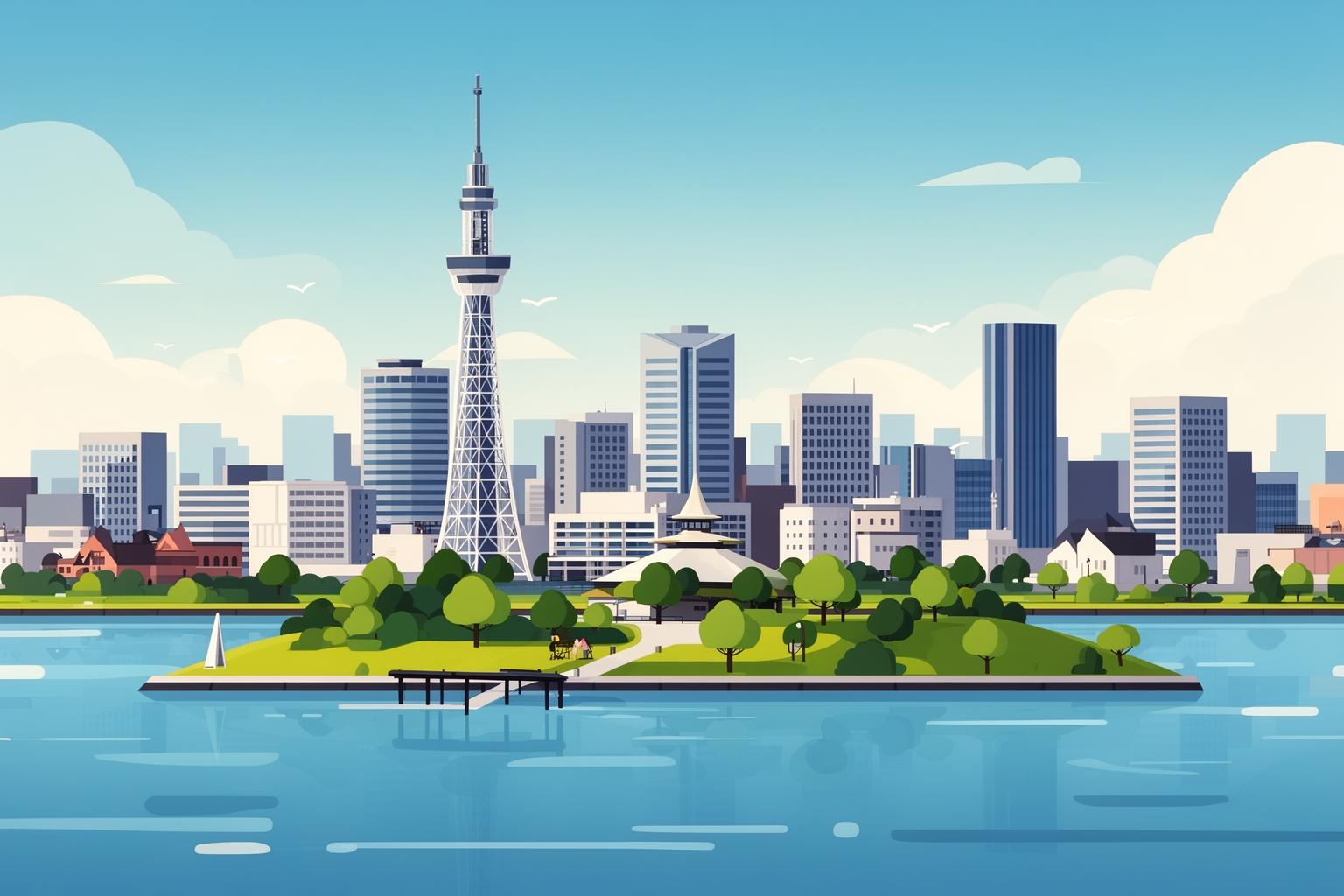
To understand Nakanoshima, you first need to understand the rivers. Osaka is a city built on water. Unlike Tokyo, which grew from a fortified castle on a broad plain, Osaka emerged from the delta of the Yodo River, a network of waterways and reclaimed land. This geography is not merely a detail; it functions as the city’s operating system. The rivers served as its highways, its lifeblood, and the foundation of its mercantile strength. Nakanoshima exists solely because of them—a long, narrow sandbank formed between the Dojimagawa and Tosaborigawa rivers. For centuries, it was little more than a soggy parcel of land.
Its transformation began during the Edo period, when powerful daimyo (feudal lords) from western Japan were required to maintain warehouses, or kurayashiki, in Osaka to store and sell rice collected from their domains as tax. With its prime river access, Nakanoshima became the financial heart of the nation. Rice was not simply food; it was currency, a commodity traded in what is often considered the world’s first futures market, located just across the river in Dojima. Consequently, this island was never about the boisterous retail scene of the common people, the world of Shinsaibashi. It was about high finance, logistics, and power. From the very start, it had a different DNA. It was serious business.
This history is key to understanding the island’s unique atmosphere today. When Japan opened its doors in the Meiji Restoration, Osaka’s merchant elite—citizens who had long held significant economic power but limited political influence—saw their opportunity. They aimed to remake their city in the image of the great industrial and cultural capitals of the West—London, Paris, Berlin. Nakanoshima became their canvas. This wasn’t a top-down initiative imposed by a shogun or emperor in a distant capital. It was driven by the city’s business leaders, men like Tomoatsu Godai, who invested their own wealth and vision to create institutions proving that Osaka was more than a place to make money; it was a center of culture, learning, and civic pride.
This distinguishes Osaka fundamentally from Tokyo. Tokyo’s growth was, and often remains, directed by the central government. Its grand public projects often appear as displays of national power. Osaka’s landmarks, especially on Nakanoshima, embody civic will. The Osaka City Central Public Hall, an exquisite red-brick neo-Renaissance masterpiece, wasn’t funded by taxes. It was built almost entirely through a single stockbroker’s donation, Einosuke Iwamoto, who wished to provide the people of Osaka with a world-class public venue. Consider that mindset. It reflects a form of civic pride rooted not in allegiance to a distant authority but in a deep, almost familial commitment to the city itself. This spirit infuses Nakanoshima. It feels less like a government district and more like the city’s grand public living room, created by and for its inhabitants.
This paradox—an island of organized calm in a city famous for its lively chaos—is what makes it so conducive to focused work. When you sit in Nakanoshima Park, you are not just escaping the bustle of Umeda. You are physically situated in a space that embodies a different facet of Osaka’s identity. It represents the ambitious, intellectual, and globally aware counterbalance to the city’s better-known earthy, gourmand character. The energy here is not one of frantic consumption but measured progress. The pace is dictated not by the clatter of pachinko parlors but by the gentle lapping of the river and the chimes of the Central Public Hall’s clock tower. For a foreigner seeking to understand the soul of Osaka, this place offers a revelation. It reveals that the city’s pragmatism is not just about securing the best deal on okonomiyaki; it is also about appreciating the lasting value of investing in beauty, culture, and public space. It exudes a quiet confidence, a different kind of strength, providing a powerful, stabilizing backdrop for a day’s work.
The Open-Air Office: Why Riverside Parks Work in Osaka
There’s an unspoken etiquette to parks in Tokyo. They are often pristine, meticulously maintained spaces meant for quiet appreciation. You walk, you sit on an assigned bench, you admire the seasonal foliage. There’s a sense of ritual, a shared, polite public performance. Using a Tokyo park as your personal workspace for the day might feel like a minor social breach, a subtle violation of the unspoken rule of tranquil observation. In contrast, Osaka’s approach to public space is strikingly different, and Nakanoshima Park is the perfect example. It’s not a museum display; it’s a workshop.
On any weekday, the park buzzes as a living mosaic of city life. You’ll spot office workers from a nearby trading company, ties loosened, eating bento on a bench while having a lively meeting. Beneath a zelkova tree, a university student furiously types on a laptop, surrounded by textbooks and an empty coffee can. A little further down, a man in his sixties might be practicing the saxophone, his solitary notes drifting over the water. Near the rose garden, amateur painters might have their easels set up, capturing the afternoon light on Central Public Hall. No one minds. A practical, ingrained attitude prevails here: space is for use. If it’s public, it’s yours. Carry on with your business.
This doesn’t mean it’s a free-for-all. There’s an unspoken, fluid negotiation of space happening almost unconsciously. But unlike other parts of Japan, this lacks social anxiety. This reflects a core Osakan trait: valuing substance over form. What matters is what you’re doing, not how you appear while doing it. As long as you’re not disturbing others, there’s broad social permission to create your own little bubble of activity. For a remote worker, this freedom is liberating. You can lay out a blanket, set up your laptop, and settle in for hours without feeling self-conscious or out of place. The park’s ambient buzz becomes white noise, a gentle hum of the city at work and play that’s far more inspiring than the sterile quiet of a library.
The Sensory Landscape of Productivity
Working in Nakanoshima Park is a full sensory experience. You’re not cut off in an air-conditioned box; you’re part of the city’s ecosystem. The soundscape is a symphony of urban life softened by nature. The dominant sound is the low drone of the city—the distant traffic on bridges connecting the island to the mainland. Layered on top is the soft splash of the river against stone embankments, the cheerful chime of the water-bus arriving, the rustle of leaves in the constant breeze flowing down the river corridor, and the caws of surprisingly large crows patrolling their territory with confident arrogance.
The quality of light is distinct here too. It’s not harsh, direct sunshine on concrete plazas. It filters through the park’s many trees—camphor, cherry, and maple. More importantly, it constantly reflects off the surfaces of the two rivers. This creates soft, shifting light throughout the day, preventing screen fatigue and mental stagnation caused by fluorescent lighting. You can track time by the changing sun angles glinting off Umeda’s glass towers in the distance.
Then there are the smells. In spring, especially May, the park’s eastern end bursts with the scent of the rose garden—a rich, sweet perfume lingering in the air. Other seasons bring the earthy scent of the river itself, a mix of water, soil, and a faint briny hint from the nearby bay. The aroma of street food from occasional festival stalls or nearby food trucks drifts in—the savory smell of fried noodles or the sweet fragrance of crepes. These sensory details are not distractions; they are anchors, grounding you in the place and providing subtle, organic stimulation that keeps the mind alert and engaged.
What foreigners often misinterpret about Osaka is that its famed lack of pretension is not a lack of sophistication. It’s a preference for the functional, the real, the unembellished. The city’s parks embody this ethos. They are beautiful, yes, but also deeply practical. They are green lungs, social hubs, and for those who need it, expansive open-air offices. The unspoken rule here isn’t “be quiet and look nice”; it’s “live your life.” For anyone building a life here, that is a very welcome invitation indeed.
The Third Place: Decoding Osaka’s Cafe Culture
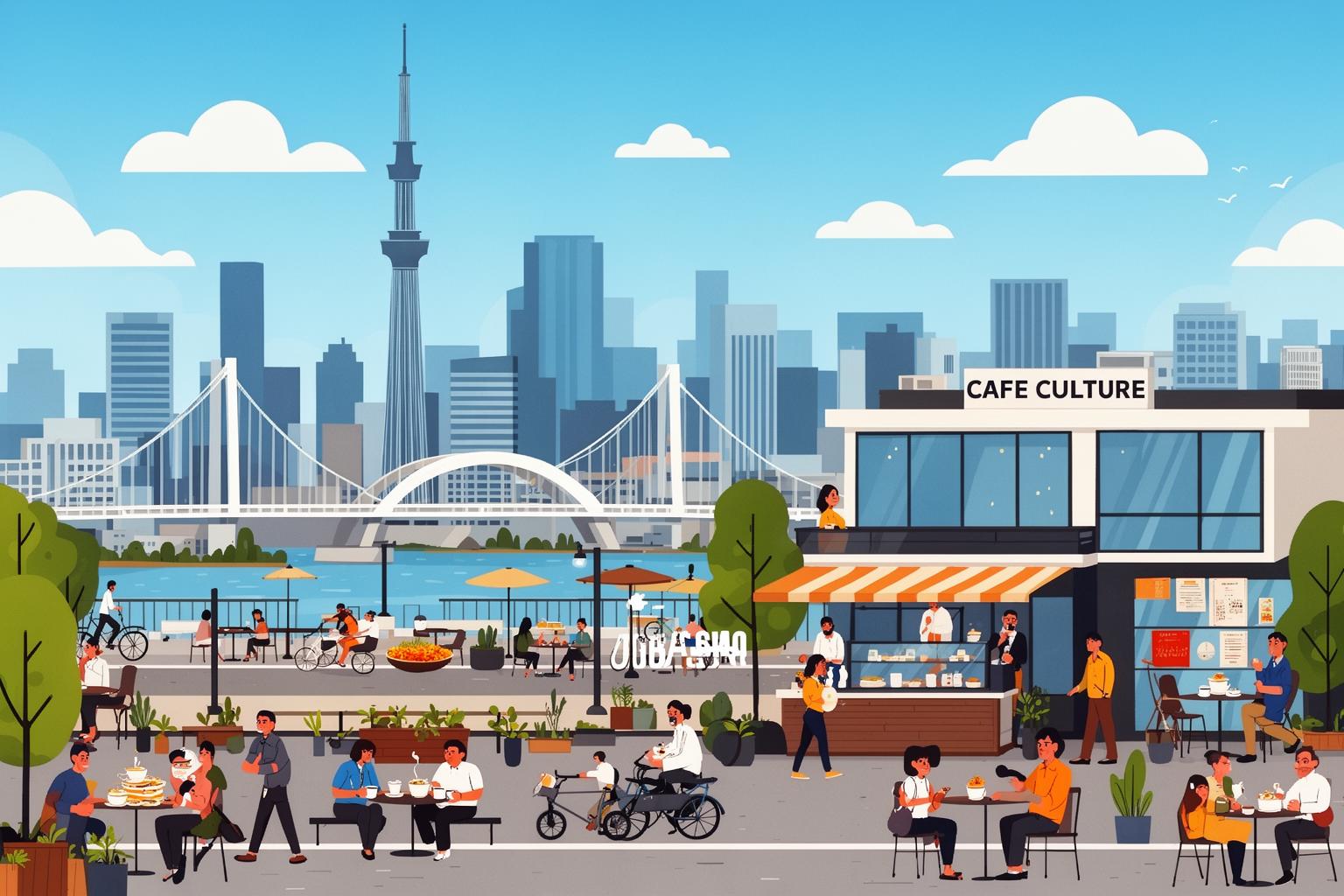
When your battery runs low or the sun climbs too high, shifting from park to cafe becomes a natural rhythm of the Nakanoshima workday. Yet, just as Osaka’s parks differ from those in Tokyo, so too does its cafe culture. The cafes in Nakanoshima aren’t just spots to grab coffee; they epitomize the “third place”—a versatile, functional setting that acts as an extension of the office, the meeting room, and the public square. It’s less about a ritualistic admiration of single-origin beans and more about offering a practical, comfortable space to get things done.
In much of Tokyo, the specialty coffee scene can feel intense, almost theatrical. The barista is a quiet artisan, the environment minimalist and hushed, and conversation often feels intrusive to the sacred act of coffee drinking. Laptops in some cafes are even explicitly banned, viewed as distractions from the main event. In Osaka, especially in business-adjacent areas like Nakanoshima, cafes serve a different priority: the customer’s needs. The prevailing mindset is one of pragmatic accommodation.
Consider a place like Brooklyn Roasting Company in Kitahama, a short stroll across the bridge from Nakanoshima. It’s a spacious, cavernous venue by the river, with vast windows, plenty of seating, and a constant, productive hum. Here, you witness every aspect of Osaka life unfolding. At one table, three salarymen are deep in business negotiations, laptops open with spreadsheets displayed. At another, a couple shares laughs over lattes on a date. In a corner, a student is immersed in exam prep with headphones on. Scattered throughout are freelancers and remote workers like myself, typing away, fueled by a steady caffeine supply. The staff are efficient, friendly, and unbothered by how long you stay—you’ve bought a coffee; the space is yours for a reasonable time. It’s a straightforward, unspoken agreement.
This transactional vibe shouldn’t be mistaken for coldness. On the contrary, it’s built on mutual, unspoken understanding. The cafe relies on your patronage; you rely on their space and electricity. This clarity creates a relaxed atmosphere. There’s no need for the elaborate, high-context politeness you might find elsewhere. Interactions are direct, efficient, and often laced with classic Osaka humor. Staff might comment on the weather, ask about your work, or crack a joke. It’s a genuine human interaction, not a scripted service performance.
The Cafe as a Civic Institution
Beyond independent coffee shops, Nakanoshima offers a distinct category: the institutional cafe. Many of the island’s cultural landmarks include their own cafes, often spectacular. The cafe at the Museum of Oriental Ceramics, for example, offers a peaceful view of the rose garden and river. The one in the National Museum of Art is a subterranean, minimalist space that feels like a sleek, futuristic bunker. These cafes aren’t mere afterthoughts for museum visitors; they are destinations in their own right.
Working in these cafes inspires in a different way. You’re surrounded not by commercial bustle but by the quiet energy of art and history. Conversations you overhear revolve around exhibitions, artists, and ideas. The clientele blends tourists, art students, and locals seeking a cultural pause. It’s a reminder that the work on your laptop connects to a vast world of human creativity and intellectual pursuit. It elevates the mundane task of answering emails into something linked to a higher purpose.
This insight reflects the Osaka mindset. While the city is known for its commercial vigor, it also has a deep respect for culture and learning. The merchant class that amassed wealth through rice and textiles also founded academies, built theaters, and collected art. They understood that a thriving city needs more than a strong economy; it requires a vibrant intellectual life. Nakanoshima’s museum cafes are the modern, accessible embodiment of this tradition—spaces where commerce (a cup of coffee) and culture (a world-class museum) seamlessly blend.
What foreigners often misunderstand is viewing Osaka as one-dimensional: a city of business without art, or food without intellect. Nakanoshima’s cafe culture disproves this notion. It embraces the understanding that work, conversation, art, and a good cup of coffee coexist. They are all woven into the rich, dynamic, productive flow of urban life. For the remote worker, this environment is ideal—a place that respects your need to be productive without requiring isolation. It invites you to work at the very heart of the city’s cultural life, to draw energy from it, and to feel, for a few hours, part of it.
Architecture as Inspiration: Working Amidst History
Sitting with a laptop in Nakanoshima is to engage in a dialogue with history. The island is more than just a park dotted with old buildings; it serves as an open-air museum of modern Japanese history, with its architecture silently providing a profound source of inspiration. As a historian, I find this aspect of Nakanoshima especially captivating. The buildings narrate a tale of ambition, resilience, and the crafting of a distinctly Osakan identity amid the challenges of the 20th century. This setting is not merely a scenic backdrop; it is a mental landscape that shapes the quality and direction of one’s thoughts.
The centerpiece is undoubtedly the Osaka City Central Public Hall. Completed in 1918, it stands as a magnificent anomaly. Its elegant neo-renaissance style, with a red brick facade and a bronze-domed roof, seems transplanted from Vienna or Budapest and gently placed on the banks of the Tosabori River. Yet, its story is uniquely Osaka. Funded by a single citizen, Einosuke Iwamoto—a man who made his fortune in the stock market and, inspired by grand civic halls in the United States, believed his city deserved one as well—his legacy is bittersweet. Sadly, Iwamoto lost his wealth and took his own life before the hall’s completion, but city leaders, honoring his vision, carried the project forward. Working in its shadow reminds one of the power of individual vision and the value of civic philanthropy. The hall stands as a monument to the belief that wealth can and should be dedicated to the public good. It exudes a profound optimism that is contagious.
A short distance down the river is the Bank of Japan’s Osaka Branch, another Meiji-era architectural masterpiece designed by Kingo Tatsuno, the same architect behind Tokyo Station. Its grand neo-baroque stone facade conveys stability, authority, and Japan’s emergence on the global financial stage. It embodies the institutional strength grown from Edo-period rice markets and signifies Osaka’s central role in the nation’s economy. Being near it instills a sense of gravity and a connection to the powerful flows of capital and history that have shaped this city for centuries.
In contrast to these historical giants is the National Museum of Art. Opened in 1977 and entirely rebuilt in 2004, the building is mostly underground. The only visible part is a dramatic, expansive metal sculpture by César Pelli, symbolizing the strength of bamboo and the vibrancy of contemporary art. This structure reflects a different Osaka: post-war, forward-thinking, and unafraid of avant-garde expression. The metallic reeds stretching skyward, set against the century-old brickwork of the nearby Public Hall, visually capture Osaka’s journey—a city proud of its past but not constrained by it, continually reinventing itself.
The Narrative Power of Place
Why does this matter to someone simply trying to work? Because our surroundings deeply influence our mindset. Working in a generic, characterless co-working space can result in generic, uninspired thinking. Yet, being surrounded by architecture that tells a compelling story inevitably seeps into your consciousness. The ambition embodied in these buildings offers a potent remedy to procrastination. The Central Public Hall inspires you to think ambitiously and pursue grand projects. The Bank of Japan underscores the importance of structure and discipline. The National Museum of Art urges you to embrace creativity and innovation.
Moreover, this architectural ensemble challenges common stereotypes of Osaka. The city is often seen as Tokyo’s rough, no-frills cousin, all function and no style. Nakanoshima decisively disproves this misconception. The design, craftsmanship, and aesthetic thought invested in these buildings are truly world-class. They reveal Osaka’s longstanding appreciation for beauty and grandeur, expressed uniquely on its own terms—a civic rather than imperial aesthetic. These monuments honor commerce, culture, and citizens, not shoguns or emperors.
For a foreigner living in Osaka, understanding this is crucial to genuinely grasping the city’s character. It allows one to look beyond surface-level clichés and appreciate the deep civic pride that energizes the place. Osakans take great pride not only in their food and humor but also in their history of innovation, cultural impact, and status as a great city historically standing somewhat apart from Tokyo’s national power center. Working in Nakanoshima, you are not just a passive onlooker of this history but an active participant in its present life. You contribute your own small chapter, your own day’s work, to the unfolding story of this extraordinary island. That sense of connection to a larger narrative provides inspiration no amount of coffee can match.
The Nakanoshima Mindset vs. The Osaka Stereotype
Every foreigner living in Japan for any length of time inevitably becomes an expert—albeit an unwilling one—in managing stereotypes. For those of us in Osaka, the script is well rehearsed. When we mention our residence to friends back home or even acquaintances in Tokyo, we often encounter a familiar checklist: takoyaki, the Hanshin Tigers, loud people who stand on the right side of escalators, and the ever-present image of the Glico Running Man. Osaka is described as “friendly,” “fun,” “chaotic,” and perhaps a bit “crass.” Within the simplified narrative of Japan, it is portrayed as the passionate, emotional heart to Tokyo’s cool, reserved intellect.
Like all powerful stereotypes, this one is not entirely false—but it is dangerously incomplete. It shrinks a complex, multifaceted city of millions into a handful of marketable clichés. For a foreign resident, the greatest value of Nakanoshima lies not in its quiet parks or beautiful buildings, but in its role as a vivid, living counterargument to this simplistic story. Spending time on this island—working, absorbing the atmosphere—enables one to grasp the true complexity of Osaka’s identity. It reveals that the Nakanoshima mindset and the Dotonbori stereotype are not contradictions, but two sides of the same pragmatic, civic-minded coin.
How can the city that gives rise to the raucous energy of Shinsekai also be home to the dignified elegance of the Central Public Hall? The answer lies in Osaka’s historical identity as a self-reliant merchant capital. Unlike Tokyo, shaped around a rigid samurai hierarchy, Osaka’s power dynamic was always more fluid, based on wealth, skill, and reputation. This fostered a mindset that prioritizes practicality and results. Osaka merchants needed to be adept with numbers and people alike—shrewd negotiators who also built lasting relationships based on trust. They lived frugally, yet were willing to spend generously to showcase success and support their community. This explains the apparent paradox.
The loud, direct communication style, often mistaken for brashness, is simply efficiency from the Osakan perspective. It means getting straight to the point without the layers of formal, indirect language common elsewhere in Japan—a businesslike approach to social interaction. Likewise, Osaka’s love of good, affordable food is not mere hedonism; it celebrates value, a fundamental merchant principle. Scoring the most delicious meal at the best price is a triumph. The fervent support for the local baseball team expresses fierce civic loyalty, rooted in the city’s historical rivalry with the political center in Edo/Tokyo.
Nakanoshima represents the other side of this pragmatism. The merchant leaders who funded its development were not driven by a sudden outburst of refined artistic sentiment. Rather, they saw a strategic investment in the city’s brand and future. They recognized that to stand alongside global cities like London or New York, Osaka needed more than factories and stock exchanges—it required cultural infrastructure: museums, libraries, concert halls, and beautiful public spaces. These were not frivolous luxuries but vital assets for attracting talent, encouraging innovation, and securing the city’s global standing. It was a profoundly practical decision, an investment with long-term returns.
Living the Contradiction
For foreign residents, learning to navigate and appreciate these two faces of Osaka is key to feeling at home. It means you can enjoy a lively night of kushikatsu and cheap beer in Tenma, and the following day find a quiet riverside spot in Nakanoshima to read and admire architecture. You come to realize that you are not experiencing two separate cities, but two expressions of the same one. This sharply contrasts with Tokyo, where life often feels more compartmentalized: the business district for work, trendy neighborhoods for coffee, and quiet residential areas for living. The boundaries there are clearer. In Osaka, however, these lines are more porous. The Nakanoshima office worker is the same person who will be shouting their lungs out at Koshien Stadium on the weekend. The city embodies these diverse facets, and its citizens shift between them with effortless ease—initially confusing, but ultimately natural.
What foreigners often miss is that the choice isn’t between a “cultured” Nakanoshima and a “common” Namba. The true Osaka experience embraces both. Understanding that a city’s soul lies in its complexities and contradictions is essential. Nakanoshima is not an escape from “real” Osaka—it is real Osaka. It’s the city’s boardroom, its library, its front parlor. It’s the quiet, confident core from which much of Osaka’s boisterous energy flows. Working here day after day, you gradually absorb this lesson. You begin to connect the dots, understanding the pragmatic logic linking the perfect proportions of a neo-Renaissance hall with the ideal batter on a piece of fried octopus. Both are integral to the same grand, ongoing, and deeply practical project of building and sustaining a great city.
A Conducive Conclusion: Finding Your Rhythm in the City of Water
Living and working in a foreign city is an ongoing quest to find rhythm. It involves adjusting your internal metronome to match the pulse of the place you now consider home. In Osaka, that rhythm often feels like an intense, pounding drum solo—thrilling and invigorating, yet challenging to maintain over time. The city demands your focus, drawing you into its swirl of sounds, flavors, and commerce. While that vibrant energy is a major part of its charm, it doesn’t tell the whole story.
Nakanoshima offers a different pace. It brings a melody, a harmony, a grounding bassline that adds depth and richness to the city’s soundtrack. It demonstrates that amid the wider chaos, there are pockets of deep calm—spaces designed for concentration, reflection, and creativity. For remote workers, freelancers, or anyone relying on the clarity of their thoughts, this is more than a convenience; it’s essential.
What starts as a practical search for an outlet and a decent view becomes something far more meaningful. By choosing to work in Nakanoshima’s parks and cafes, you choose to connect with a more intricate side of Osaka. You immerse yourself daily in its history, civic pride, and quiet ambition. You discover that the city’s character is not a single, fixed stereotype, but a lively balance between the merchant’s hustle and the citizen’s vision, between the frenetic energy of the marketplace and the dignified elegance of its cultural core.
In the end, Nakanoshima is more than just an excellent place to work. It’s an exceptional place to learn. It encourages you to look beneath Osaka’s neon-lit exterior and appreciate the solid, historic foundations that support this remarkable city. It’s where you begin to understand that the straightforward, no-nonsense nature of an Osaka shopkeeper and the philanthropic spirit behind grand public halls both come from the same source: a deep, practical love for the city. Finding your workspace here means more than boosting productivity. It means forging a connection to the true, complex, and endlessly captivating soul of Osaka. And once you discover that rhythm, you’ll realize this city is not just somewhere to live, but somewhere you can genuinely thrive.