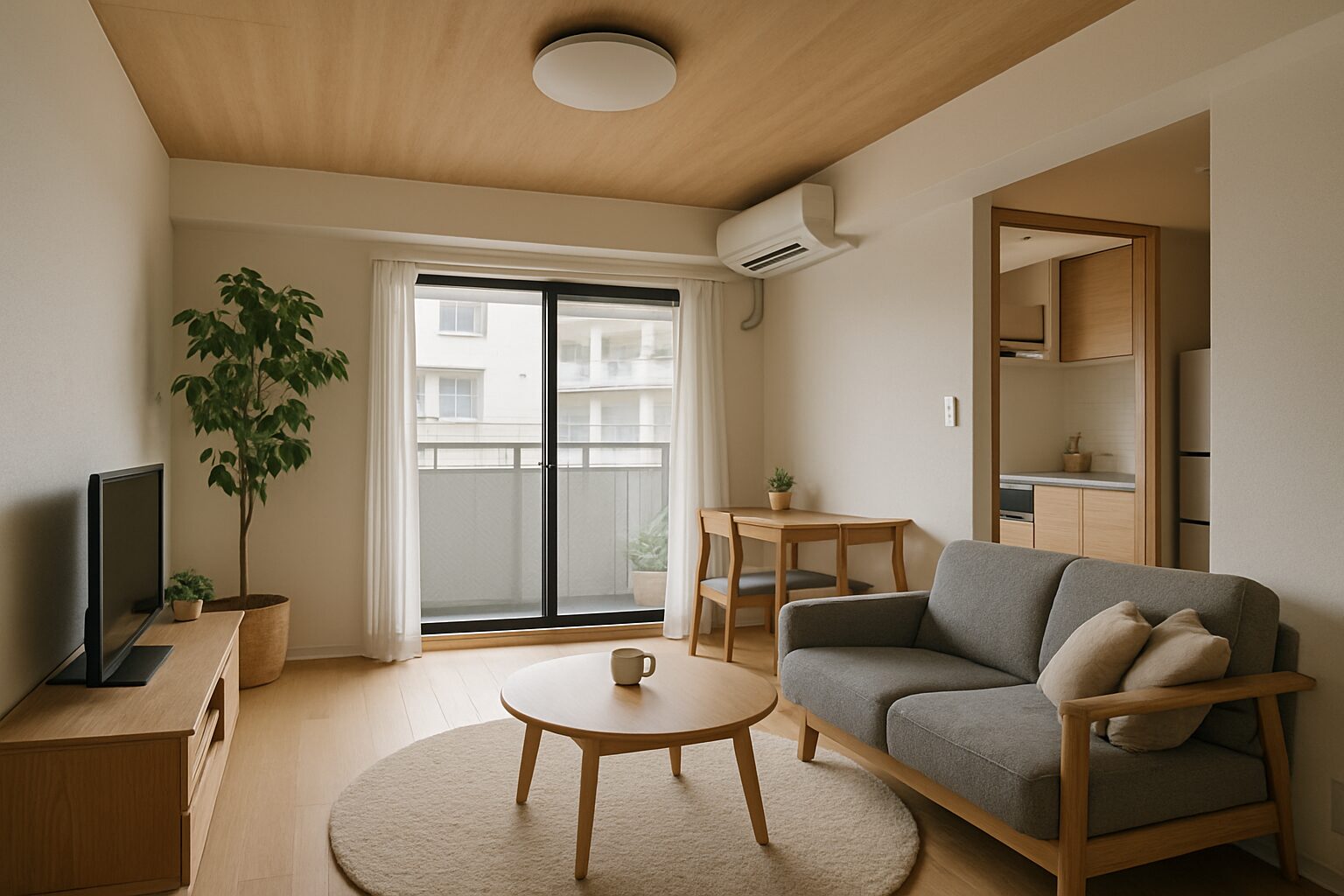
Welcome to Osaka, the city that dances to its own beat. It’s a place where neon-drenched nights give way to serene temple mornings, where the sizzle of takoyaki on a hot plate is the city’s unofficial theme song, and where the people are as warm and savory as the okonomiyaki they’re famous for. Osaka isn’t just a destination; it’s a full-body experience, a whirlwind of energy, commerce, and culture that pulls you in and doesn’t let go. For many, a short visit isn’t enough. The magnetic pull to live here, to become part of its vibrant tapestry, is strong. And at the heart of that dream lies a fundamental question: What is it really like to live in an apartment in the heart of Japan’s kitchen?
This isn’t just about finding a roof over your head. It’s about understanding a lifestyle. Osaka apartment living is a unique blend of hyper-modern convenience and deeply ingrained tradition, a trade-off between boundless urban access and the intimacy of compact spaces. It’s a world away from a sprawling suburban house with a white picket fence. Here, your neighborhood is your living room, the local train station is your gateway to adventure, and the hum of the city is your constant companion. This guide is your backstage pass, your deep dive into the pros, the cons, and the unwritten rules of setting up your home base in this incredible metropolis. We’ll peel back the layers, moving beyond the glossy brochures to explore the true rhythm of daily life, helping you decide if the beat of Osaka is one your heart is ready to match. Let’s find your place in the pulsing grid of this electrifying city.
To fully embrace this lifestyle, you must first decide whether to seek the community of a share house or the independence of an apartment.
The Allure of Urban Density: The Big Wins of Osaka Apartment Living

Choosing an apartment in Osaka is more than just a practical choice; it’s a deliberate embrace of a lifestyle defined by movement, accessibility, and an unmatched sense of immediacy. You’re not merely renting a space; you’re subscribing to the city itself. The benefits are intricately integrated into the urban landscape, creating a living experience that is both efficient and exhilarating. For those who thrive on energy and value convenience above all else, the advantages of apartment life in Osaka are profound and transformative, shaping your daily routines in ways that continually delight and simplify.
Connectivity is King: Your Gateway to Everything
In Osaka, the public transportation system serves as the city’s circulatory network, and living in an apartment places you right at its core. The notion of being ‘car-dependent’ simply fades away here. Instead, your life is measured by walking minutes to the nearest station. Picture waking up in your cozy apartment in the Tennoji area. The entire city, or rather, the entire Kansai region, unfolds before you like a map. A brief walk brings you to Tennoji Station, a vast hub where the JR Loop Line can swiftly take you around the city’s center, the Midosuji subway line can shoot you directly to the shopping havens of Namba and Umeda, and regional lines stand ready to whisk you to the ancient temples of Nara or the stylish port city of Kobe for a weekend getaway. This isn’t a rare privilege; it’s the everyday standard.
Life becomes a seamless chain of effortless transitions. A spontaneous urge to catch the latest blockbuster in Umeda after work? Simple. A craving for a particular ramen spot you heard about across town? You’re likely less than 30 minutes away. This level of connectivity reshapes your personal geography. The city shrinks, becoming an extension of your home. You focus less on the logistics of reaching a destination and more on the experience awaiting you there. The rhythmic clatter of the train becomes a familiar soundtrack to your life—a sound symbolizing freedom and possibility. You’re not confined to a single neighborhood; you live in all of them simultaneously, with a mere tap of your IC card unlocking access to the rich, diverse experiences that make Osaka so captivating. Free from traffic jams, parking hunts, and the costs of car ownership, you gain a significant mental and financial relief, replaced by the simple, elegant efficiency of the Japanese rail network.
A Universe of Convenience at Your Doorstep
Step outside the auto-locking door of a typical Osaka apartment building, and you’re instantly immersed in a world designed for ultimate convenience. The Japanese have perfected the neighborhood concept, ensuring everything you need for daily life is not only nearby but practically within arm’s reach. This is a city that never sleeps, and your apartment serves as its VIP lounge. Run out of milk at 11 PM? The brightly lit, ever-welcoming glow of a Lawson, FamilyMart, or 7-Eleven is almost certainly just a three-minute walk away. These aren’t merely convenience stores; they are mini-hubs of daily life where you can pay bills, send packages, purchase concert tickets, and enjoy surprisingly healthy meals.
But convenience extends far beyond the legendary konbini. Supermarkets like Life, Gyomu Super, and local shotengai (covered shopping arcades) are sprinkled throughout residential areas, offering fresh produce, meat, and a wide variety of ready-made foods for those evenings when cooking feels like too much. Need headache medicine or bandages? A drugstore with towering shelves of health and beauty products is just around the corner. Sudden toothache? There’s likely a dental clinic within a few blocks. The density of these services means daily errands take no special planning—they become simple tasks easily accomplished on your way home from the station. And then there’s the food. Osaka’s identity as Tenka no Daidokoro (The Nation’s Kitchen) is more than a phrase; it’s a tangible reality on every street. Living here places you within reach of an overwhelming number of dining options—from Michelin-starred restaurants to tiny family-run ramen shops, lively izakayas, and trendy cafés. The kuidaore (‘eat till you drop’) culture isn’t just a tourist catchphrase; it becomes your everyday lifestyle. Your kitchen may be small, but the entire city of Osaka is your dining room.
Safety and Security: Peace of Mind You Can’t Put a Price On
One of the most significant, yet often underappreciated, benefits of apartment living in Osaka is the exceptional sense of safety and security. Japan as a whole is famed for low crime rates, and this feeling is heightened within the structure of a modern apartment building, or manshon. From the moment you approach the entrance, multiple layers of security offer peace of mind. Most buildings feature an ōto-rokku (auto-lock) main entrance, requiring a key, fob, or code to access the lobby. This simple feature forms a strong barrier between your private living space and the public street.
Inside your apartment, a video intercom is standard, allowing you to see and communicate with visitors before granting them access. This eliminates the worry of unexpected knocks at your door. Many buildings also have a kanrinin (building manager or caretaker) on-site during the day, who manages maintenance, accepts packages, and generally monitors the property, adding a human layer of security. The concrete construction of most manshon offers a solid sense of physical protection. This multi-tiered approach to security fosters a deep, though difficult to quantify, peace of mind. You can walk home late at night without concern, leave your apartment for the weekend worry-free, and truly relax in your personal sanctuary. This feeling is amplified by the proximity of neighbors. While privacy is respected, knowing you are not isolated creates an implicit community safety net. It’s a quiet confidence, a subtle hum of security that lets you fully engage with the vibrant city outside your door without hesitation.
The Modern Amenities of Japanese Apartments
Step inside a modern Osaka apartment and discover a world of thoughtful engineering and efficient design. While space is limited, the amenities packed within are often cutting-edge and aimed at maximizing comfort and convenience. The Japanese bathroom exemplifies this approach. Often prefabricated, it is waterproof and easy to clean. Its true brilliance lies in its multifunctionality. The yokushitsu kansōki (bathroom dryer function) is revolutionary. At the press of a button, the entire room becomes a heated drying chamber for laundry, an essential feature during the humid rainy season or for those without a balcony. Many baths also offer mist sauna functions or advanced temperature controls.
The kitchen, though compact, is a model of efficiency. Typically, you’ll find a two- or three-burner gas or induction stove, a small grill for fish, and smartly designed storage. Air conditioning and heating units are ubiquitous and highly efficient, giving you precise control over your environment. Another key advantage is professional building management. No need to worry about lawn mowing, gutter cleaning, or structural repairs. Common areas like hallways, elevators, and garbage disposal points are impeccably maintained. If your air conditioner breaks or a pipe leaks, a simple call dispatches a professional to fix the problem. This relieves the burdens of homeownership, freeing you to enjoy life in the city. It’s a turnkey living experience where the background logistics are handled for you, allowing you to focus on the foreground: exploring, working, and immersing yourself in Osaka.
Navigating the Nuances: The Realities and Challenges
Of course, no living situation is without compromises, and the vibrant, convenient lifestyle of Osaka apartment living comes with its own unique set of challenges and realities. These are the trade-offs for enjoying such an incredible location with effortless access. For many newcomers, especially those from countries where wide-open spaces are common, these adjustments can be significant. This lifestyle requires flexibility, a willingness to adapt, and a rethinking of what is essential for a comfortable home. Understanding these subtleties is crucial for a smooth transition and a fulfilling life in the urban heart of Kansai.
The Great Space Debate: Compact Living is Standard
Let’s address the obvious issue: the limited space. Apartments in Osaka, and Japan as a whole, are notably smaller than those in Western countries. This is no exaggeration; it’s a fundamental reality of living in one of the world’s most densely populated nations. You’ll need to become familiar with a new terminology for floor plans: 1K (a single-room studio with a small, separate kitchen), 1DK (one room plus a dining/kitchen area), and 1LDK (one bedroom plus a living/dining/kitchen area). The size can be surprising at first. A typical single apartment might be around 20-25 square meters (about 215-270 square feet), while for couples, a 40-square-meter 1LDK is common.
This compact way of living demands a shift in mindset. You simply cannot bring all of your belongings with you. The minimalism philosophy, popularized by Marie Kondo, didn’t arise by chance; it developed from the practical necessity of living in these confined spaces. Storage is limited. Closets are often small or nonexistent, and there’s no attic, basement, or garage for excess items. You learn to live intentionally. Every item must have a purpose and a place. You become adept at vertical storage, under-bed containers, and multi-functional furniture. That large sofa you loved back home? It probably won’t fit through the door. Your king-sized bed? It will dominate the whole room. This isn’t necessarily negative—many find it freeing to shed unnecessary possessions—but it is a major adjustment. You begin to prioritize experiences over things, and your living space becomes a tidy, efficient base for city life rather than a sprawling personal domain.
“Paper-Thin Walls”? Managing Noise and Neighborly Etiquette
The stereotype of Japanese apartments having “paper-thin walls” holds some truth, particularly in older, wooden-framed buildings called `apāto`. In such structures, sound easily carries. You might hear your neighbor’s TV, vacuum cleaner, or even conversations if they are loud enough. This issue is less pronounced in modern, reinforced-concrete `manshon`, which provide much better sound insulation. Regardless of building type, Japanese culture highly values communal harmony (`wa`) and minimizing disturbance to others.
This results in a set of unwritten rules for apartment living. Making loud noises late at night is a serious faux pas. This includes things people might not consider, like running the washing machine, vacuuming, or even heavy footsteps (especially if you have downstairs neighbors). Parties are usually not allowed unless you live in a building designed for a younger, more tolerant crowd. You must always be mindful of your noise levels. Initially, this can feel restrictive, starkly different from more individualistic cultures. However, the benefit is that neighbors adhere to the same standards, leading to a generally quiet, peaceful environment free from loud music or late-night arguments. It’s a collective understanding to respect each other’s peace and quiet—a social contract essential to happily coexisting in such close quarters.
The Hidden Costs and Complex Contracts
Finding and securing an apartment in Osaka often surprises foreigners with its high upfront costs. The process involves a range of fees that can total four to six times the monthly rent, paid at once. First is the security deposit (`shikikin`), typically one or two months’ rent, which is theoretically refundable minus cleaning and repairs. Then there’s the infamous `reikin`, or “key money,” a non-refundable gift to the landlord usually amounting to one or two months’ rent—a lingering post-war housing custom. On top of that, you pay the real estate agent’s commission (`chukai tesuryo`), usually one month’s rent plus tax.
It doesn’t end there. You’ll likely need a guarantor company (`hoshou gaisha`) acting as a co-signer for your lease, with fees often 50-100% of one month’s rent plus an annual renewal charge. Additional costs include lock changes, fire insurance, and the first month’s rent, making the initial expenses substantial. Navigating this system is doubly difficult for foreigners. Language barriers can make leasing documents, which are dense legal texts, hard to understand without help. Moreover, despite regulations against discrimination, some landlords remain hesitant to rent to non-Japanese tenants due to concerns about communication or cultural differences. Thus, using a real estate agency specializing in assisting foreigners is not just advisable—it’s almost essential. These agencies can help you find foreigner-friendly listings, negotiate on your behalf, and clearly explain every contract clause and fee before you sign.
Rigidity of Rules and Regulations
Japanese apartment buildings operate under a strict set of rules, and compliance is mandatory. The best-known and often most challenging rule for newcomers is the garbage disposal system, which is highly detailed. Trash must be separated into categories—burnable, non-burnable, plastics, glass bottles, PET bottles, cans, oversized items—and placed out on designated days in clear or semi-transparent bags. Missing your scheduled burnable trash day can mean living with smelly garbage inside your small apartment for several extra days. Putting out the wrong type of trash on the wrong day is a serious social faux pas, potentially earning warnings from building management or hostility from neighbors.
Other common regulations include strict no-pet policies. Alterations to the apartment, even simple tasks like painting walls or hanging pictures, often require explicit landlord permission. Balconies, though they appear as personal outdoor spaces, are often designated emergency escape routes with rules against storing bulky items. These rules maintain order, safety, and uniformity within the building. For those used to complete freedom in their rentals, this can feel limiting. It’s part of the trade-off: in exchange for a clean, orderly, well-maintained environment, you give up a degree of personal autonomy over your immediate surroundings.
The Absence of Green: Longing for a Backyard
For those raised with a backyard, the lack of private green space in Osaka apartments can be a tough adjustment. The familiar backyard for barbecues, gardening, or lounging in the sun is simply not part of this urban lifestyle. Your only private outdoor area, if any, is a small balcony, usually a narrow concrete slab primarily meant for drying clothes. The dream of stepping outside into your own garden must be set aside.
That said, life isn’t devoid of nature; it just requires a mindset shift. You need to embrace the city’s public spaces as your backyard. Fortunately, Osaka offers many beautiful options. You can have picnics in Osaka Castle Park, run along the river in Nakanoshima Park, enjoy the rose garden in Utsubo Park, or relax in the expansive Nagai Park. You trade a small private patch of green for vast, well-maintained public parks. This encourages you to engage with the community. You might join a local running club, practice group yoga in the park, or find a favorite bench for reading. It’s a more communal interaction with nature—a shared experience instead of a private one. Embracing this communal aspect is key to fulfilling your longing for green amid the concrete jungle.
Practical Tips for Your Osaka Apartment Hunt
Starting the search for your ideal apartment in Osaka might seem overwhelming, but with the right knowledge and approach, it turns into an exciting journey. This process is not just about securing a place to live; it’s about selecting the backdrop where your life in Osaka will unfold. Familiarizing yourself with the city’s layout, learning the local real estate terms, and knowing what to check during property visits will empower you to make a confident decision that suits your budget, commute, and lifestyle.
Get to Know Your Neighborhoods
Osaka is a city of diverse districts, each with its own distinct character and pace. The neighborhood you pick will greatly influence your daily life. Don’t focus solely on rent costs; pay attention to the atmosphere.
- Kita (Umeda area): Osaka’s main business, transportation, and upscale shopping district. Ideal for corporate workers seeking a sleek, modern, and refined environment. Living here means proximity to towering skyscrapers, department stores like Hankyu and Daimaru, and an extensive underground mall full of shops and restaurants. Apartments tend to be in new high-rise buildings with premium amenities and prices to match. This area is perfect for busy professionals who want a short commute and easy access to everything.
- Minami (Namba, Shinsaibashi): The cultural and entertainment hub of Osaka, full of energy and life around the clock. Famous for the Dotonbori canal, Amerikamura’s youth fashion scene, and many theaters, bars, and clubs, Minami suits those who crave the city’s vibrant and raw energy. Housing options range from older, affordable units to modern condos. Expect a lively atmosphere at all hours. This area is great for night owls, food lovers, and socialites.
- Tennoji/Abeno: A mix of the historic and contemporary, this district features Japan’s tallest building, Abeno Harukas, alongside the ancient Shitennoji Temple. It’s a major transit hub with excellent access, a large park, a zoo, and numerous museums. Offering a somewhat more relaxed, family-friendly vibe than Umeda or Namba while remaining central and well-connected, it provides a wide variety of housing choices, making it a solid all-around option.
- Chuo Ward (West of the Castle): Areas like Tanimachi and Honmachi offer a balance between peaceful residential streets and downtown convenience. Popular among professionals working in business districts who prefer a quieter home environment. Proximity to Osaka Castle Park adds a valuable touch of greenery.
- Beyond the Core: Don’t hesitate to explore neighborhoods along major train lines just outside the city center, such as those along the Hankyu lines toward Kobe or the Kintetsu lines toward Nara. Locations like Esaka or Senri-Chuo in the north provide more spacious and budget-friendly options with a suburban feel while remaining a short subway ride from the city’s pulse.
Understanding the Terms: Apāto vs. Manshon and 1K vs. 1LDK
Japanese real estate listings can be confusing at first due to specific terminology. Two key distinctions are essential. The first is the type of building: `Apāto` (アパート) versus `Manshon` (マンション).
- Apāto: Usually a two-story building made from wood or light-gauge steel frames. These buildings tend to be older, with fewer amenities (such as no auto-lock or elevator) and less sound and thermal insulation. The main benefit is their significantly lower rent. They’re a good budget option but may come with potential noise concerns.
- Manshon: Despite the name, it doesn’t imply a mansion. It describes buildings of three or more stories constructed from reinforced concrete or steel-reinforced concrete. These modern apartment buildings offer better soundproofing, insulation, and security features like auto-lock doors, security cameras, and on-site managers. They cost more but provide greater comfort and peace of mind.
The other important real estate jargon relates to floor plans. The number denotes bedrooms, and the letters describe the living areas:
- 1R (One Room): A studio where the kitchen area is part of the single main room.
- 1K (One Kitchen): A studio with one main room and a separate kitchen space, often near the entrance or in a small hallway.
- 1DK (One Dining Kitchen): One bedroom plus a separate space large enough for dining and kitchen.
- 1LDK (One Living Dining Kitchen): The most common layout for singles or couples, with one bedroom plus a larger, separate living, dining, and kitchen area.
Knowing these terms helps you navigate online listings effectively and communicate clearly with real estate agents.
The Must-Have Checklist Before Signing
After finding a promising apartment, visiting it in person is essential. Photos can be misleading, and many details can only be assessed firsthand. Bring a checklist and observe carefully.
- The Commute: Don’t just rely on the advertised “5 minutes from the station.” Walk the route at a normal pace yourself. Is the path crossing busy roads? Is it well-lit at night? Is there a steep incline? These small factors influence your daily experience greatly.
- Sunlight: Since hanging laundry on balconies is common, the orientation of the main window or balcony is important. South-facing (`minami-muki`) apartments receive sunlight all day, keeping them bright, warm, and helping clothes dry faster. East-facing units get morning sun, while those facing west can become hot in the afternoon. North-facing apartments tend to be darker and more prone to dampness.
- Noise Levels: Stand inside and listen carefully. Can you hear trains? Is the building on a busy road? Are there nearby construction sites? Can neighbors be heard? If possible, visit at different times of day.
- Amenities and Utilities: Test the water pressure in the shower. Locate washing machine hookups. Ask about available internet options (older buildings may offer slower connections). Check the type and condition of the air conditioning system.
- The Building Condition: Inspect common areas. Is the garbage disposal area clean and organized? This indicates how well the building is managed and how considerate the residents are. Examine mailboxes and bulletin boards for notices.
Finally, before signing any contract, make sure you fully understand it. Have a Japanese-speaking friend, colleague, or agent review the document line by line with you. Pay special attention to clauses about lease renewals, early termination, and your responsibilities when moving out. Being thorough now will save you from major issues later.
The Final Verdict: Is Osaka Apartment Life for You?
Thus, we reach the core of the issue. After balancing the thrilling convenience with the limited space, the effortless connectivity against the structured regulations, is living in an Osaka apartment the right choice for you? The answer isn’t simply yes or no. It depends on your priorities and what you value most in a home and lifestyle. It’s about finding the balance between your personal needs and the powerful, unmistakable rhythm of this city.
Choosing apartment life in Osaka means choosing immersion. It means intentionally exchanging a vast personal domain for a key that opens an entire metropolis. You give up a private garden for the city’s grand parks, a large kitchen for countless nearby restaurants, and a spacious living room for life lived among vibrant streets, cafes, and galleries. It’s a life of deliberate efficiency, where the time saved on commuting and errands becomes time devoted to exploring, learning, and connecting. It’s a commitment to a more communal, mindful way of living, where you remain aware of your neighbors, sharing the same space, resources, and an unspoken understanding of how to make it all work.
If you thrive on energy, find joy in spontaneous discovery, and measure wealth by experiences rather than square footage, Osaka welcomes you with open arms. The challenges are real—the upfront costs, limited space, cultural adjustments—but they are the entry price to a once-in-a-lifetime experience. The warmth of Osakan people, the endless festivals, the rich culinary scene, and the sense of being plugged into the very heart of modern Japan offer rewards beyond measure. Your perfect apartment is not just a place; it’s a launchpad for your new life, a cozy refuge after a day spent moving to Osaka’s dynamic, unforgettable beat.