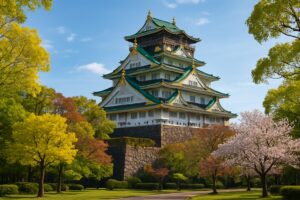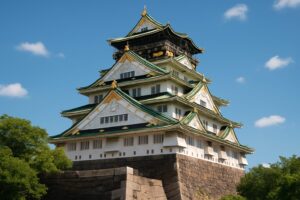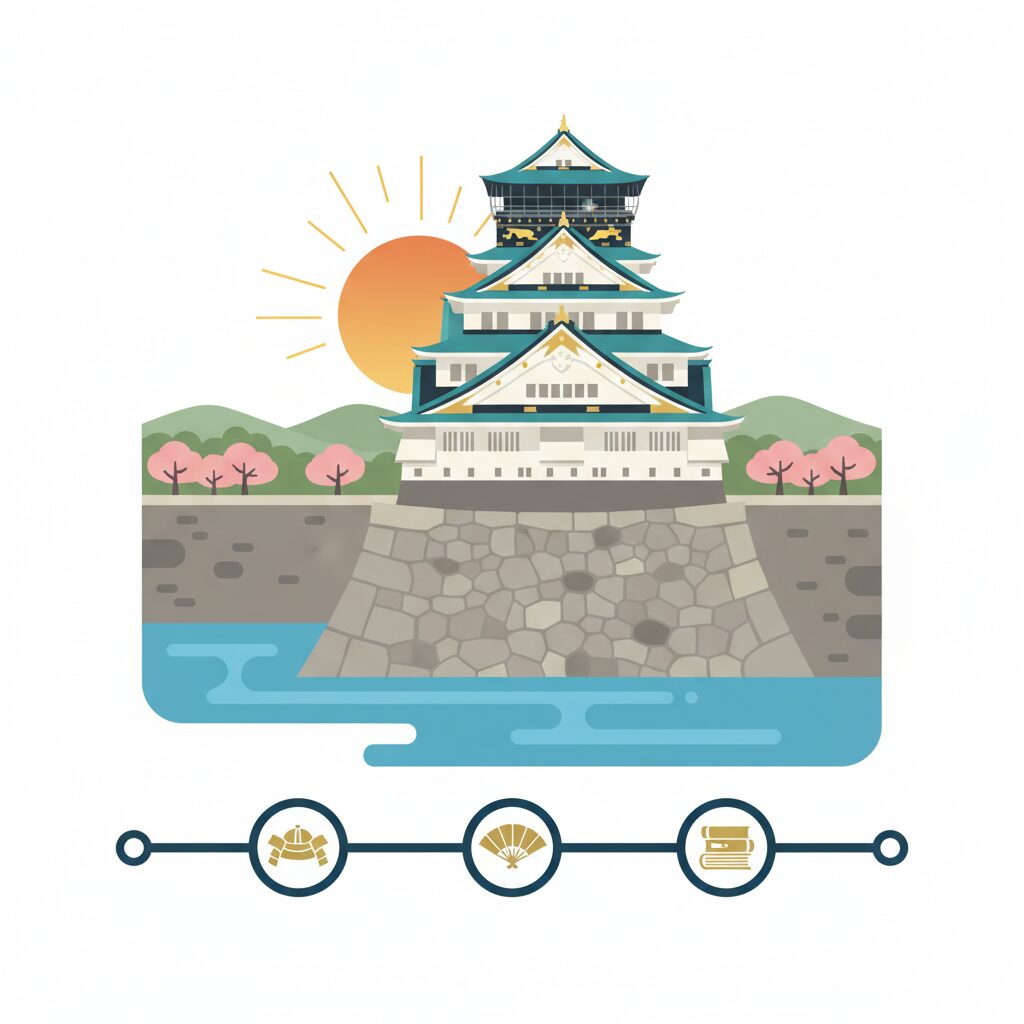
Every city has its heart, a landmark that pulses with the rhythm of daily life, a silhouette against the skyline that means “home.” In Osaka, that heart is the castle. From the windows of the Loop Line train, you see it rising above the concrete and glass, a sweep of green roofs and white walls, crowned with gold. It’s the backdrop for morning jogs, the centerpiece for cherry blossom parties, the first place you take visitors to prove, yes, you live in a city with history. For the newcomer, the tourist, the casual observer, Osaka Castle is an absolute, undeniable spectacle. It’s grand, it’s gorgeous, and it sits in a park so vast it feels like the city’s lungs.
But then you start talking to people. You mention the castle to a history-minded friend from Kyoto, and you see a slight, almost imperceptible tightening around their eyes. You overhear a conversation between architecture students who use the word “ferroconcrete” with a hint of a sneer. You dig a little deeper and discover the truth that hangs over the castle like a ghost: the main tower, the magnificent tenshukaku that dominates the skyline, is a reconstruction. Not just a reconstruction, but a 1931 concrete reproduction with an elevator running up its core. For the purist, the serious historian, the traveler seeking “authenticity,” this can feel like a betrayal. Is this magnificent structure just a historical theme park, a beautiful lie? Is it worth the time of someone who wants to connect with the real, unvarnished past? The question cuts to the very core of how Osaka sees itself, its history, and its place in the world. It’s a city that chose to rebuild its heart not with wood and plaster, but with steel and concrete. And the reason why tells you everything you need to know about the soul of Osaka.
For a deeper dive into the layers of history that surround the castle, consider exploring the hidden timeline of the Karahori district.
The Symbol in the Sky, The Reality on the Ground
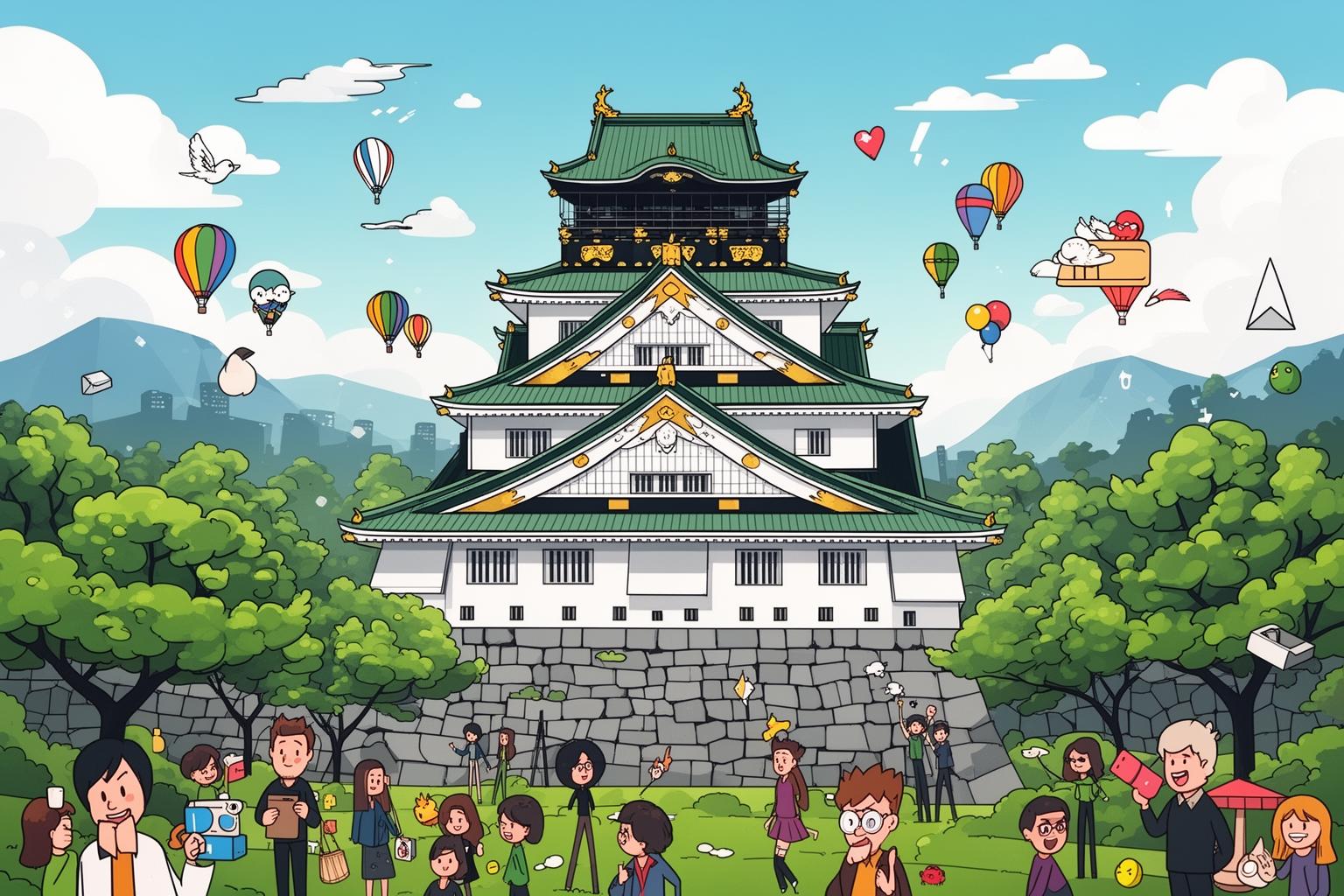
To understand Osaka’s connection to its castle, you need to distinguish the concept from the physical structure. For most residents, the castle isn’t a museum artifact to be debated; it’s a landmark that grounds their sense of place. It serves as the city’s geographical and psychological zero-point. When giving directions, people often say, “It’s on the north side of the castle.” On clear days, office workers in nearby Osaka Business Park glance out their windows at its stoic silhouette, a reminder of something older and more enduring than their quarterly reports. The castle is a constant, a comforting presence in a city that is always moving, changing, and bustling.
This is where history enthusiasts may feel a disconnect. Osaka’s everyday life flows casually around the castle, marked by a familiar, lived-in affection. In spring, the park fills with blue tarps as thousands gather for hanami, their laughter and the scent of grilled meat wafting up to the castle walls. It isn’t a solemn historical ceremony; it’s a celebration. Throughout the year, the outer moat’s perimeter serves as a race track for runners and cyclists focused on personal goals, not the historical significance of the fortifications they circle. The castle grounds host ramen festivals, antique fairs, and loud pop concerts at Osaka-jo Hall. History here isn’t enclosed behind velvet ropes; it’s vibrant, noisy, and woven into the fabric of everyday life.
This practical, purposeful approach is quintessentially Osaka. The city sees a magnificent park and grand castle and asks, “How can we use this? How can we incorporate it into our lives?” Whether the main tower is an authentic 16th-century structure is an irrelevant academic question for most Osakans. Does it look like Osaka Castle? Yes. Does it serve as the city’s proudest symbol? Absolutely. Then it is Osaka Castle. This outlook can be startling to those from cultures, including parts of Japan like Kyoto or Nara, where preservation and historical purity are paramount. In those places, a concrete replica would be unthinkable, nearly vulgar. But Osaka has different priorities, shaped by a history of commerce, disasters, and continuous rebuilding. The city values utility, impact, and spirit over material authenticity. The castle you see today embodies that philosophy: a symbol so powerful it transcends the materials from which it’s made.
For foreigners living here, this is an essential insight into the local mindset. Osaka doesn’t idolize the past. It respects it and draws strength from it but refuses to be confined by it. The city adapts, rebuilds, and innovates to meet present needs. The castle, then, isn’t a relic; it’s a statement of identity. It declares that Osaka honors its heroes, like the great Toyotomi Hideyoshi, but does so on its own terms—with modern materials and a forward-looking spirit. It’s a bold, unapologetic, and deeply pragmatic approach to history that you won’t find in the more reserved atmosphere of its neighboring cities.
The Ghost of a Unifier, The Scars of a Shogun
To truly understand the castle’s essence, you cannot begin in 1931. You must travel back to the late 16th century, to a man who embodies the spirit of Osaka more than anyone else: Toyotomi Hideyoshi. He did not inherit power; born a peasant’s son and sandal-bearer, he rose through sheer intellect, ambition, and strategic brilliance to become the ruler of all Japan. His story is the ultimate underdog tale, one that resonates powerfully in a city long viewing itself as the scrappy, ambitious challenger to Tokyo’s established authority (then Edo).
When Hideyoshi chose to build his castle in Osaka, he sought more than a fortress—he wanted to make a statement. He selected the strategically crucial Uemachi Daichi plateau and aimed to construct the most magnificent and impregnable castle Japan had ever seen. Mobilizing lords from across the country, he commanded them to provide stone and labor. The original Osaka Castle dazzled with black lacquer, gleaming gold leaf, and architectural innovation. It was the epicenter of his power and a symbol of a unified Japan under a new kind of ruler—one who rose not from noble lineage but through merit. This is the legendary castle that still lives at the city’s core.
However, that castle is completely gone. After Hideyoshi’s death, his influence diminished, and the powerful Tokugawa Ieyasu, founder of the long-lasting shogunate, besieged the castle. The final siege in the summer of 1615 was a brutal, fiery event that obliterated the Toyotomi clan and burned their splendid castle to ashes. The Tokugawa victory was total, and they were determined to erase the memory of their great rival. Rather than simply rebuild, they buried Hideyoshi’s original foundation under meters of earth and constructed an even larger fortress atop it. This act was both political and psychological domination. The Tokugawa castle symbolized overwhelming power, a clear statement that Osaka’s mercantile energy and Hideyoshi’s legacy were now firmly under the rule of the new Edo-based government.
This historical trauma forms the foundation of the city’s identity and its enduring rivalry with Tokyo. While Tokyo’s history is that of the victors—the Tokugawa shogunate—Osaka’s is the saga of the proud, defiant defeated. Osakans hold deep pride in Hideyoshi, affectionately called “Taiko-san.” He embodies everything they cherish: ambition, intelligence, flair, and a connection to the common people. In contrast, the Tokugawa represent the stern, bureaucratic, and oppressive eastern power. This is not merely ancient history; it remains a living sentiment. It is evident in the friendly yet fierce rivalry between the Hanshin Tigers and the Tokyo Giants baseball teams, in the proud use of the distinct Osaka dialect, and in the castle itself.
For history enthusiasts, this is the first layer of treasure. The castle is not a single story but two violently stacked upon each other. It is Hideyoshi’s dream’s ghost buried beneath the overwhelming weight of Tokugawa power. The modern museum inside the reconstructed tower excellently narrates this tale, featuring dramatic dioramas of the summer siege and priceless period artifacts. But to truly grasp it, you must walk the grounds and realize that the very land you stand on is a historical battlefield, a grave, and a monument to an unyielding legacy.
The Concrete Phoenix and the People’s Pride
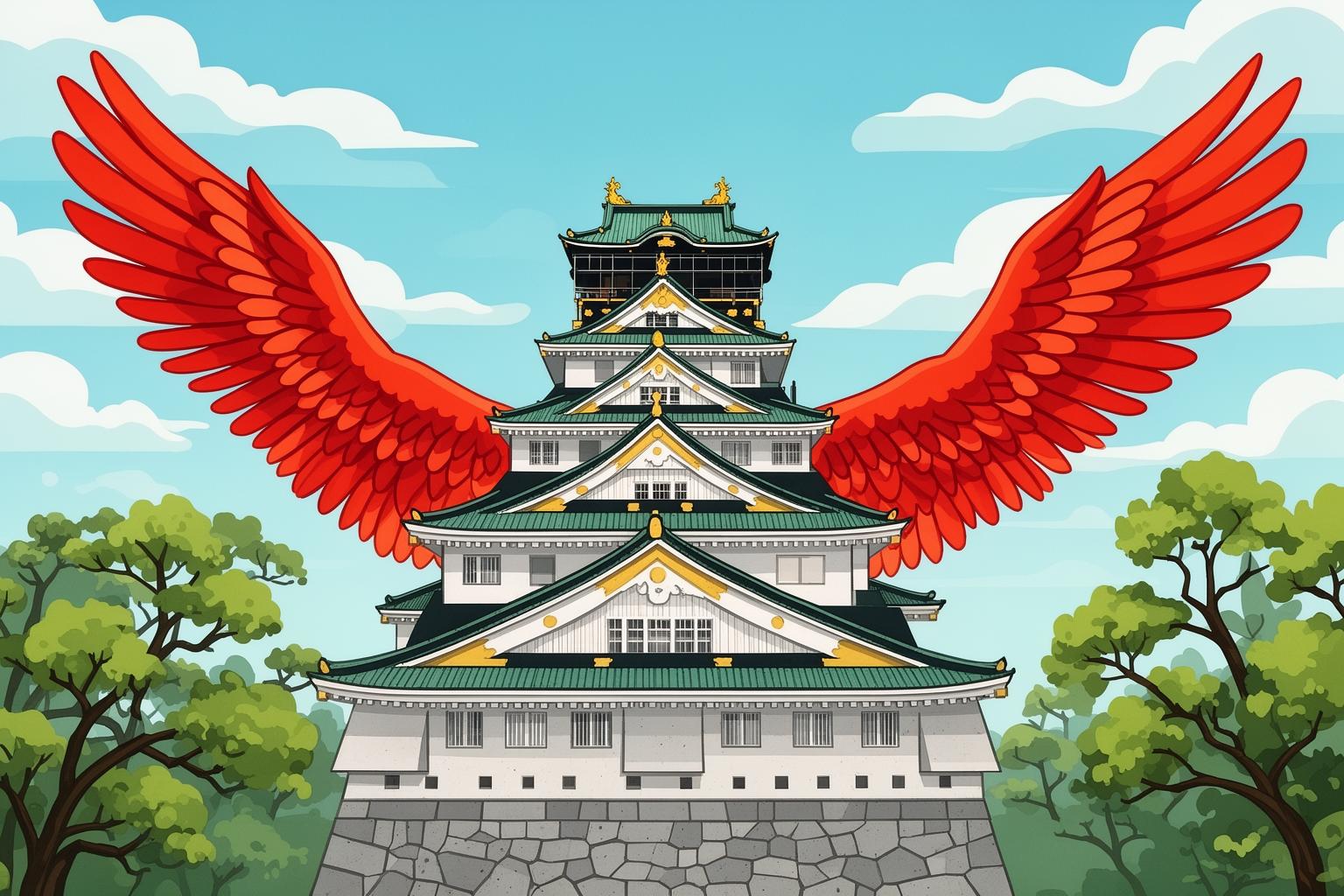
The Tokugawa castle, despite its impressive grandeur, was not eternal. The main tower was struck by lightning in 1665 and burned down, leaving Osaka Castle without its central keep for over 250 years. Though it continued to serve as a military barracks and a symbol of shogunal authority, its core was absent. Around this hollowed fortress, the city of merchants, entertainers, and artisans flourished, its vibrant energy contained but never extinguished.
Jump ahead to the early 20th century: Japan was rapidly modernizing. Osaka, known as the “Manchester of the Orient,” was an industrial hub, a city fueled by smoke and ambition. Civic pride surged, along with a yearning to reconnect with the city’s glorious past, especially the era of its cherished hero, Hideyoshi. In 1928, Osaka’s mayor, Hajime Seki, proposed an ambitious project: to rebuild the castle tower. However, this was not a government initiative from Tokyo. Demonstrating the city’s unique spirit, the restoration was funded entirely through public donations. Citizens of Osaka—from wealthy industrialists to ordinary shopkeepers—contributed generously. They amassed an astonishing 1.5 million yen (a huge sum at the time) within six months. This was their castle, and they were reviving it themselves.
The choice they made is both the source of controversy and insight. They opted to construct a building that resembled Hideyoshi’s original castle externally, based on historical drawings, but placed it on the Tokugawa-era stone foundation. For the structure itself, they selected the most advanced material available: steel-reinforced concrete. This was a bold, forward-looking decision. The 1931 Osaka Castle tower was a marvel of modern engineering—designed to be fireproof, earthquake-resistant, and home to a contemporary museum for the public. They even installed an elevator, symbolizing progress and accessibility.
Consider the implications of this choice. The people of Osaka did not strive to recreate a flawless replica of a feudal-era building. They avoided traditional wood or joinery techniques, instead employing contemporary materials to revive a symbol from the past. Their focus was not on material historical accuracy but on reviving the spirit of the castle. They erected a monument that was strong, enduring, and open to all. It was a blend of reverence for Hideyoshi’s legacy with a confident embrace of modernity. This embodies Osaka’s pragmatism at its finest—a solution-driven mindset. The problem: We want our castle back. The solution: Let’s build the best, most durable, and functional version possible with today’s technology. Debates over authenticity came second to achieving this goal.
This concrete phoenix faced its own test by fire during World War II, when Osaka was relentlessly bombed by Allied forces. The castle area, a vast military arsenal, was a prime target. The city was devastated, reduced to ash and rubble. Miraculously, while surrounding buildings were destroyed, the concrete castle tower endured—scarred but standing. For citizens emerging from bomb shelters to witness their ruined city, the sight of the castle, defiant against the sky, became an immeasurable symbol of hope and resilience. It transformed from a mere historical monument into a testament to the city’s indomitable spirit. Today, when you see the castle, you’re not just seeing a 1931 reconstruction; you’re witnessing a survivor, a symbol of a city that has been destroyed and rebuilt repeatedly, each time emerging stronger and more determined than before.
Beyond the Tower: Where the Real History Breathes
So, after all this, is the castle truly worth visiting for a serious history enthusiast? If your only goal is to see the interior of a meticulously preserved 16th-century Japanese castle keep, then no—you should visit Himeji or Matsumoto instead. However, if you are intrigued by the layered, complex, and often harsh history of a place, then Osaka Castle is one of Japan’s most fascinating sites. You just need to know where to look. And the first place to start is down.
The real historical wonder of Osaka Castle isn’t the concrete tower; it’s the stone walls. The enormous, breathtakingly vast stone ramparts surrounding the inner and outer moats are largely originals from the Tokugawa reconstruction in the 1620s. These walls are more than mere structures; they symbolize raw power and remarkable logistical skill. The stones are massive, some weighing over 100 tons. Quarried from distant provinces and transported under the shogun’s orders, this project involved numerous feudal lords (daimyo), who were obligated to contribute as a means of draining their resources and securing their loyalty. It was as much a political endeavor as a construction one.
Walking alongside these walls is a deeply moving experience. You can appreciate the sheer scale of the task. The stones fit together without mortar, using a technique called burdock piling (goishi-zumi), relying on precise craftsmanship and the stones’ immense weight to keep them stable over centuries. If you look carefully, you might spot carved symbols on some stones—these are the crests (mon) of the various daimyo clans who supplied them. It’s a subtle yet powerful reminder of the feudal hierarchy, a hidden record of the lords compelled to build a monument to their own submission. Finding these crests is a treasure hunt for the historically minded, offering a direct physical link to the samurai clans of the early Edo period.
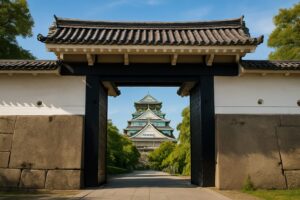
Then there are the gates and turrets. While the main tower is modern, several buildings along the defensive walls are original survivors from the Tokugawa era. The Ote-mon Gate, the main entrance, along with turrets such as the Sengan-yagura and Tamon-yagura, are designated Important Cultural Properties. These wooden structures provide an authentic sense of the castle’s original defensive design. You can see the loopholes for archers and guns, the heavy-beamed ceilings, and the wood’s aged patina. Standing inside one of these turrets, gazing out over the moat, it’s easy to imagine the samurai guards who once kept watch here.
From my perspective, as someone captivated by the grand historical narratives of East Asia, this place resonates deeply. Building atop a rival’s legacy is a classic story of power projection. It’s evident in cities like Beijing, where dynastic shifts often meant demolishing and rebuilding the imperial palace. The Tokugawa did the same in Osaka. Yet what’s remarkable is that they couldn’t entirely erase what came before. Archaeological digs have uncovered Hideyoshi’s original stone walls, buried beneath the current structures. The past is literally the foundation of the present. For history enthusiasts, the fascination of Osaka Castle lies in this stratigraphy—the layers of ambition, destruction, and rebirth beneath your feet. The modern tower is merely the newest chapter, not the entire story.
The Castle as the City’s Garden, the People’s Stage
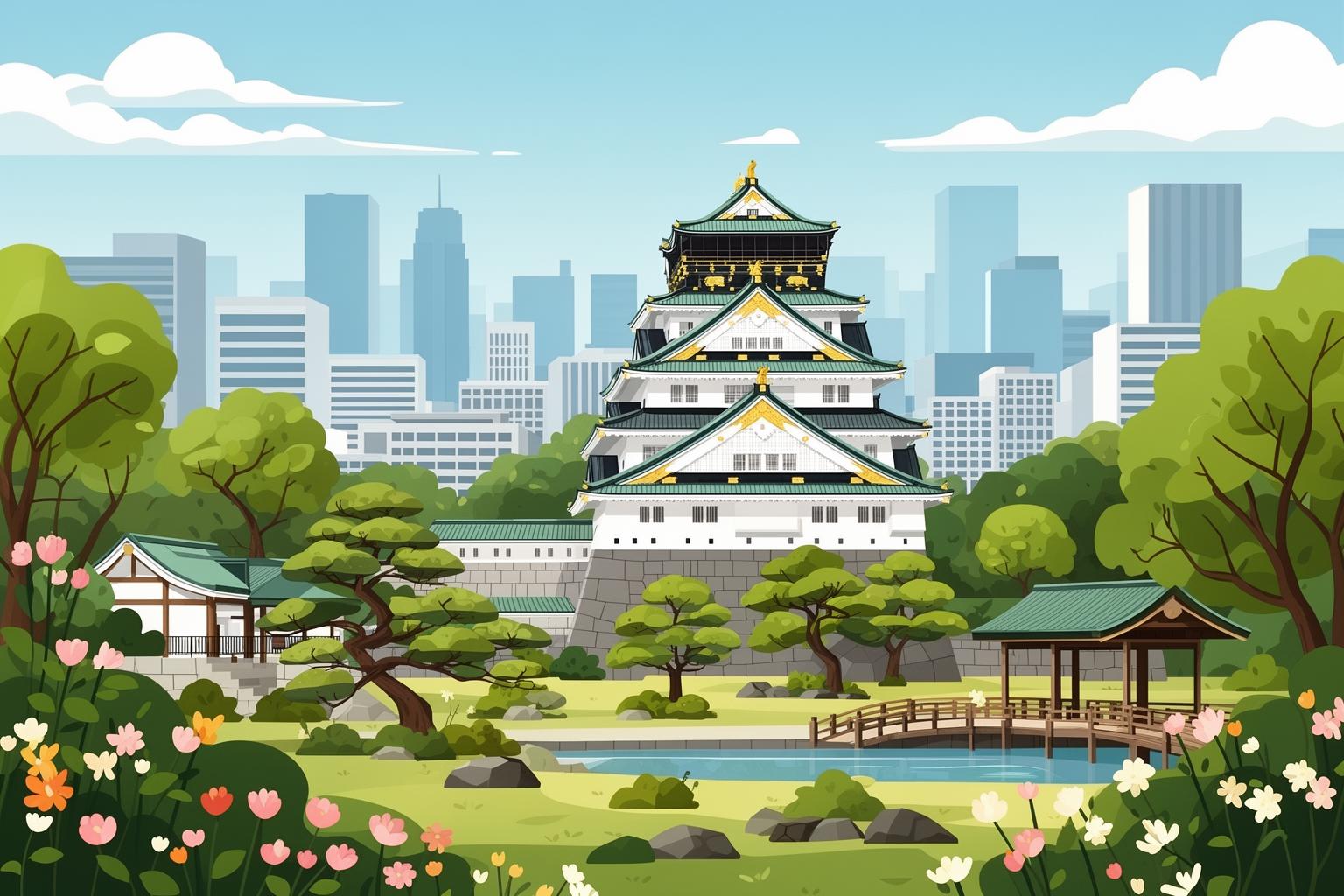
History in Osaka isn’t a static display. It’s a living, breathing element of the urban landscape. This is most evident in how the city utilizes Osaka Castle Park. The park isn’t merely a green space surrounding a monument; it serves as the city’s communal backyard, playground, and cultural stage. This everyday engagement with a historic site is fundamentally different from the more reverential atmosphere typical of Kyoto, where ancient temples often inspire quiet, contemplative respect.
On any given weekday morning, the park is bustling with activity. Elderly residents practice tai chi in tranquil groves. Runners pound the paths, their bright gear contrasting sharply with the somber grey of the stone walls. Office workers cut through the grounds on their way to work, briefcases in hand. It’s a space fully and democratically occupied. This straightforwardness is a hallmark of Osaka culture: a place is only as valuable as what you can do with it. With its expansive lawns, plum and cherry groves, and sports facilities, the castle park is highly functional and, as a result, deeply cherished.
Weekends tell a different story. The park turns into a lively festival. Families spread out picnic blankets. Amateur photographers with massive lenses stake out spots to capture the perfect shot of the castle framed by blossoms. In one corner, a group of aspiring dancers practice their hip-hop moves, the faint beats echoing off the ancient moat. Near another gate, a lone musician plays a saxophone, his melancholic melodies adding an unexpected, beautiful soundtrack to the scene. There’s an infectious sense of freedom and casualness here. Nobody dictates how to properly appreciate the history. The city trusts you to simply live alongside it.
This stands in sharp contrast to the often curated experience of historical sites elsewhere. In Tokyo, the Imperial Palace East Garden is a place of serene, almost solemn beauty, meant for quiet strolling. You wouldn’t imagine having a loud barbecue party there. In Osaka, that kind of lively, communal enjoyment is precisely the point. The annual cherry blossom season at Nishinomaru Garden, located within the castle’s inner citadel, exemplifies this. For a small fee, visitors gain access to a vast lawn dotted with hundreds of cherry trees and a stunning view of the illuminated castle tower at night. It becomes one of the city’s largest celebrations—a joyous, chaotic, and beautiful tribute to spring, history, and community all rolled into one.
This relaxed intimacy with a major historical landmark reveals a fundamental truth about the people of Osaka. They aren’t overly sentimental about the past. They are proud of it, certainly, but they carry their history lightly. It’s a source of identity and a backdrop to daily life, not a sacred text preserved in amber. For a foreigner seeking to understand the city’s rhythm, an afternoon spent simply sitting on a bench in Osaka Castle Park offers more insight than any textbook. You witness the city’s diversity, its energy, and its unpretentious relationship with its grand narrative. The castle isn’t looking down on the people; it feels like it’s watching over them—a familiar guardian of the city’s vibrant, messy, and wonderful everyday life.
The Logic of the Concrete Keep: Osaka’s Unapologetic Pragmatism
Let’s return to the central question that troubles the purists: Why construct it out of concrete? Why install an elevator in a samurai castle? To understand this, one must grasp the merchant spirit of Osaka. For centuries, this city has been Japan’s commercial heart, known as the “nation’s kitchen,” a place built on trade, finance, and efficiency. This legacy has fostered a deep-rooted pragmatism, a mindset that values results, functionality, and a form of rational showmanship.
When faced with a challenge, an Osaka merchant seeks the most effective and efficient solution. In the 1920s, the challenge was how to restore the city’s most iconic symbol in a way that would endure and serve the modern population. A historically accurate wooden reconstruction would have posed fire risks, been costly to maintain, and unsuitable for housing a public museum. Concrete, conversely, was durable, safe, and modern. It was the practical choice for a city proud of leading in commerce and industry. This decision wasn’t a historical compromise; it was an enhancement, an improvement. It conveyed the message, “We honor the past and embrace the future simultaneously.”
This philosophy is evident throughout Osaka. Consider the city’s architectural landmarks, such as the Umeda Sky Building, a daring, futuristic design featuring the “Floating Garden Observatory,” which is pure spectacle. Or take the Dotonbori district, a vibrant clash of neon lights, giant mechanical crabs, and wild energy. It’s not subtle or restrained—it’s designed for maximum impact, to catch your eye and sell you something, whether takoyaki or a memorable experience. Osaka avoids understatement; it prioritizes effectiveness. The castle stands as the historical cornerstone of this approach. It needed to be grand, impressive, and unmistakable, and the concrete structure succeeded spectacularly.
The elevator is perhaps the clearest example. To an outsider, it may seem out of place—a stark intrusion of modernity. But from an Osakan viewpoint, it’s simply practical. A tall public building with a museum inside requires a way for people, especially the elderly or disabled, to reach the upper floors. Installing an elevator is a decision grounded in accessibility and public service, values deeply held in a community-oriented city. Forcing people to climb eight flights of steep, narrow stairs for the sake of “authenticity” would be seen here as inefficient and inconsiderate. Once again, functionality takes precedence over historical mimicry.
This mindset marks one of the major cultural contrasts between Osaka and Tokyo. Tokyo, as the seat of government and national institutions, often prioritizes propriety, tradition, and preserving a particular image. Osaka, by contrast, is a city of hon-ne—of speaking candidly and acting sensibly, even if it’s somewhat rough around the edges. This is why foreigners often find Osaka more straightforward, open, and easier to relate to. It lacks pretense. The concrete castle represents hon-ne at its core. It honestly presents what it is: a modern museum housed in a historical shell, designed for the people’s enjoyment and education. It doesn’t try to fool you into feeling you’ve traveled back in time; rather, it invites you to appreciate the story, making it as accessible as possible.
A Broader View: Reconstructions in the Asian Context
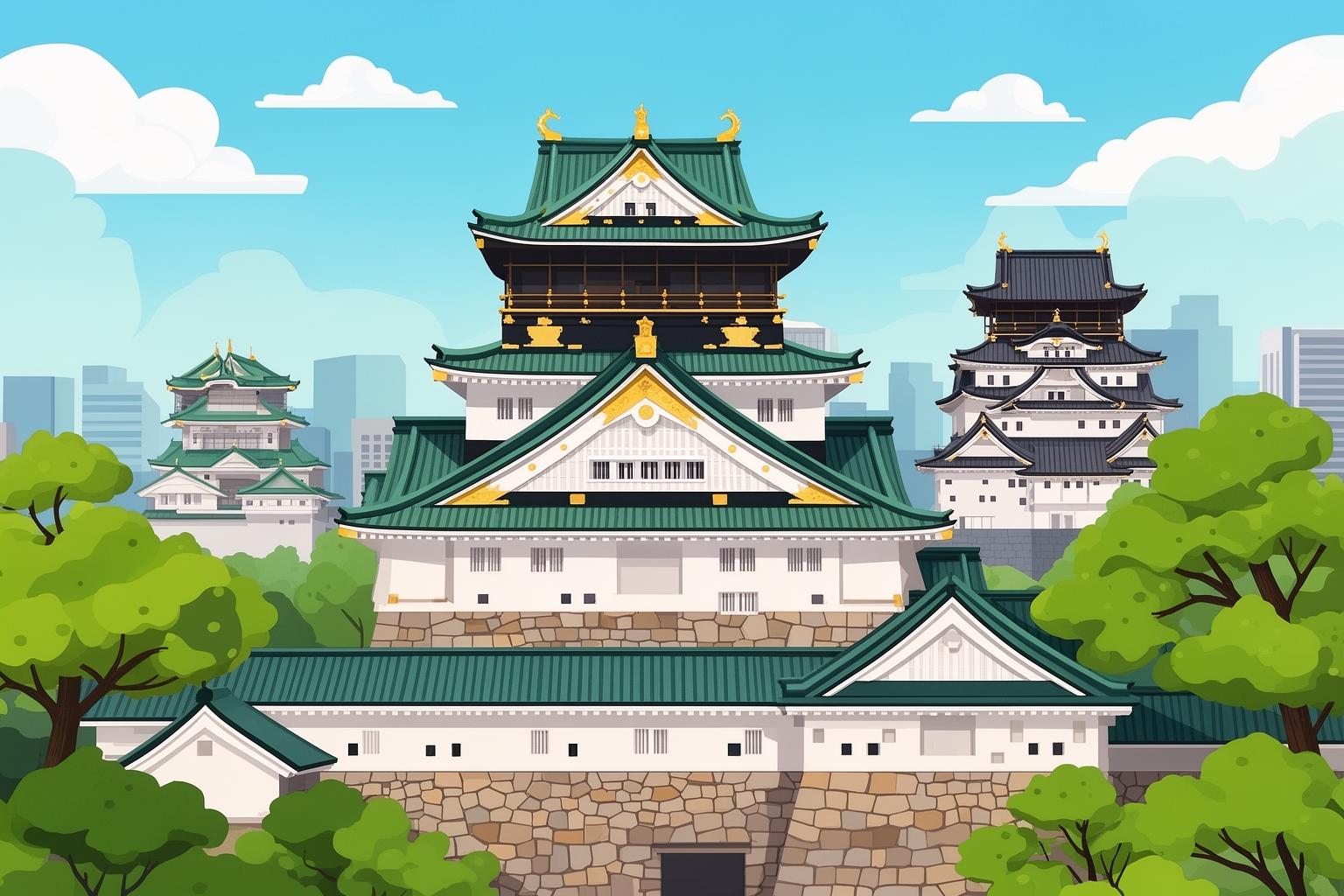
Having explored the cultural landscapes of East Asia, the Western-centric focus on “originality” and “authenticity” in historical sites often seems like a limited viewpoint. Throughout much of Asia, a long and often turbulent history has resulted in famous landmarks being destroyed and reconstructed numerous times over the centuries. The idea that a building’s spirit is tied strictly to its original materials is not always the foremost concern.
Take the renowned Yellow Crane Tower in Wuhan, China, for example. As one of the nation’s most celebrated sites, immortalized in ancient poetry, the tower standing today is a full reconstruction from 1981, made with modern materials and situated a kilometer from its original location. Yet, it is universally recognized as the Yellow Crane Tower. Why? Because it occupies the appropriate spiritual and cultural space. It continues the legacy. Its identity is linked to the idea, the legend, and the broader location—not to any specific wooden beams. This applies similarly to countless temples, pagodas, and palaces across China and Korea, many of which have been lost to fire, war, or neglect and rebuilt, sometimes centuries later.
In this light, Osaka’s approach to its castle is not an oddity but part of a broader cultural tradition. In societies that have endured repeated cycles of destruction and renewal, the focus often rests on the continuity of spirit and function. What matters most is that the landmark exists, continuing to serve as a symbol of the community’s identity and pride. Rebuilding is itself a powerful act of resilience—a refusal to allow disaster to erase the past. Whether constructed from 400-year-old cypress or 90-year-old concrete is a secondary concern.
This viewpoint helps reframe the discussion around Osaka Castle. It’s not about being a “fake.” It’s about being a successor. The current tower is the latest in a series of structures that have stood on that hill, each reflecting the city in its own era. Hideyoshi’s tower symbolized the ambition of a newly unified nation. The Tokugawa’s represented the shogunate’s iron rule. The 1931 tower embodies the civic pride and forward-looking spirit of modern, industrial Osaka. Each is an authentic expression of its time.
For foreigners living in Japan, grasping this is essential to appreciating cultural nuances. Japan is not a monolith. The values of Kyoto differ from those of Osaka, which in turn differ from Tokyo’s. Viewing Osaka Castle through this wider, pan-Asian perspective allows us to move beyond a simple “real” versus “fake” dichotomy and see it for what it is truly: a dynamic, living monument evolving alongside the city it represents. It reflects a philosophy of remembrance focused less on preserving physical artifacts and more on carrying a legacy forward.
So, is Osaka Castle worth visiting for the serious history enthusiast? The answer is a confident yes. But it requires the right expectations. Don’t come expecting a perfectly preserved time capsule—that’s Himeji, and it is magnificent. Instead, come to Osaka to read a story inscribed in earth, stone, and concrete. Come to understand a city with the heart of an underdog, the mind of a merchant, and the soul of a survivor. You will find Hideyoshi’s ambition’s ghost buried beneath the ground, the raw power of the Tokugawa shogunate in the massive stone walls, and the defiant, pragmatic spirit of modern Osaka in the gleaming white tower watching over it all. The castle is not a single, static artifact of history but a living chronicle of the city’s journey—its victories, its hardships, and its relentless determination to rebuild and thrive. To truly understand this castle, in all its complexity and controversy, is to grasp the very essence of Osaka itself.