Walk down any shotengai, any bustling shopping arcade in Osaka, and the air tells you a story. It’s a thick, savory perfume, a mix of grilling batter, sweet-and-salty brown sauce, and the sharp tang of pickled ginger. It’s the smell of takoyaki octopus balls sizzling in their cast-iron molds, of okonomiyaki pancakes being pressed onto a hot teppan grill. This isn’t just the smell of food; it’s the smell of Osaka’s identity. This is the city of ‘kuidaore’—to eat until you drop—and more often than not, what you’re eating is ‘konamon,’ the glorious, comforting world of flour-based foods. It’s the city’s soul, served on a plastic tray with a side of mayonnaise. But what happens when that soul is made of wheat, and your body can’t digest it? Navigating Osaka with a gluten intolerance isn’t just a dietary challenge. It’s a cultural deep-dive, a lesson in communication, and a unique window into the heart of Japan’s most wonderfully stubborn city. It forces you to look past the sizzling grills and find a different rhythm, a different flavor of life in the nation’s kitchen.
Embracing a gluten-free journey in Osaka invites you to explore not only its culinary secrets but also its urban nuances, as seen in unseen trash management practices, which further reveal the city’s dynamic character.
The Flour-Dusted Soul of a City
To truly understand Osaka, you need to understand konamon. The term literally means ‘flour things,’ and it forms the foundation of the local diet. This isn’t the delicate, refined cuisine you might expect from Kyoto’s kaiseki or Tokyo’s high-end sushi. It’s hearty, accessible food born from the city’s past as a busy merchant center. It had to be affordable, filling, and quick to prepare. Wheat flour, cabbage, a bit of meat or seafood, and a generous layer of sauce—this was the energy that drove the city’s commerce.
The Holy Trinity of Batter
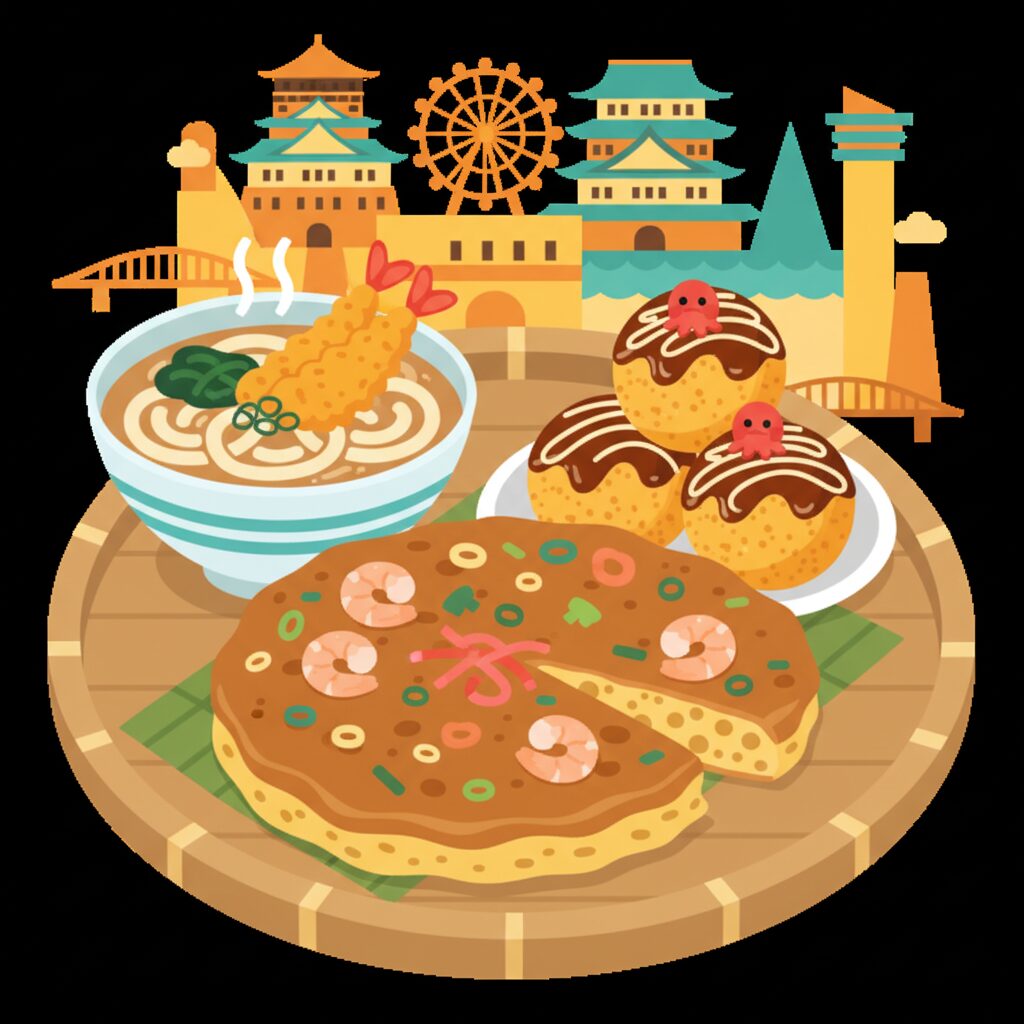
At the heart of konamon are three essential dishes. First, takoyaki: soft, molten balls of batter containing a piece of octopus, cooked in special dimpled pans until crisp on the outside and piping hot inside. They are pierced with wooden skewers, topped with thick, fruity takoyaki sauce, swirls of Kewpie mayo, a sprinkle of green aonori seaweed, and flakes of katsuobushi bonito that dance in the heat. Next is okonomiyaki, often described as a ‘Japanese savory pancake.’ The name means ‘grilled as you like it,’ consisting of a delightful mix of flour, egg, and shredded cabbage combined with your choice of ingredients—pork belly, squid, shrimp, mochi, cheese. It is grilled on a flat teppan, often right before you, offering a shared, hands-on experience. Lastly, there are udon noodles, thick and chewy wheat noodles that serve as the base for many comforting soups, most famously kitsune udon, topped with sweet fried tofu—a dish invented here in Osaka.
More Than Just a Meal
In Tokyo, dining often feels like a performance, focused on perfection and presentation. Meals may be quiet and introspective. In Osaka, food is a conversation. It’s lively, boisterous, and communal. You stand on a street corner with friends, juggling a steaming tray of takoyaki. You gather around a teppan grill with spatulas in hand, laughing as you try to flip your own okonomiyaki. Here, food is more than sustenance; it’s a means of connection. This fundamental difference is crucial. The devotion to konamon reflects the Osaka spirit: practical, unpretentious, and deeply social. It’s not about how the food looks on Instagram; it’s about how it tastes, its affordability, and who you share it with. This is why experiencing the city gluten-free is so challenging. You’re not just missing a food group; you’re missing the primary way people here connect.
“But It’s Just a Little Bit”: The Communication Gap
The primary obstacle for any gluten-free resident in Osaka is the language barrier, but it goes beyond just vocabulary. It stems from a cultural gap in understanding what gluten actually is. The Japanese term for allergy, `arerugii`, is widely recognized. If you mention a soba (buckwheat) or ebi (shrimp) allergy, people immediately understand and react seriously. However, the idea of gluten intolerance or Celiac disease remains much more vague.
The Shoyu Shock
Starting with the explanation that you can’t eat wheat (`komugi`) is essential. The immediate assumption is that you’re avoiding bread and noodles. But the true difficulty is hidden gluten, and the biggest hidden source of gluten in Japan is soy sauce, or `shoyu`. For most Japanese, shoyu is considered a liquid seasoning rather than a wheat product. The conversation often unfolds like this:
“I have a wheat allergy. Does this contain wheat?” “No, no wheat. Just meat and vegetables.” “And what is it seasoned with?” “Shoyu, dashi, mirin…” “Shoyu contains wheat. I can’t eat it.”
This usually results in a look of sincere, deep confusion—an instant cognitive dissonance. How can a dark, salty liquid be equivalent to a loaf of bread? It’s not a matter of unwillingness to assist, but rather a genuine lack of understanding. You are essentially challenging a core element of their cuisine. The concept of tamari (a gluten-free soy sauce alternative) is not commonly known in most restaurants. This conversation tends to repeat endlessly with sauces, marinades, and even barley tea (`mugicha`), which despite its name, is often overlooked as a gluten source.
Cross-Contamination Conundrums
Even if you manage to find a dish that is theoretically gluten-free—like yakitori grilled with salt (`shio`) instead of sauce (`tare`)—you encounter the next hidden barrier: cross-contamination. In an Osaka kitchen, especially a small, busy one, the same grills, utensils, and oil are used for everything. The teppan used for your grilled chicken was just used to cook udon noodles. The tongs that picked up your salt-seasoned skewers just handled sauce-coated pork. Explaining the need for separate cooking surfaces and utensils is a complex request that most kitchens are not equipped to accommodate, nor is it widely understood. The usual reaction is a polite, apologetic smile and a shake of the head. It’s not viewed as a feasible request—it’s seen as impossible. For them, it’s just a small amount of sauce, a barely noticeable trace. But for someone with Celiac disease, that tiny trace is the entire problem.
Socializing on the Sidelines: When Food is Fellowship
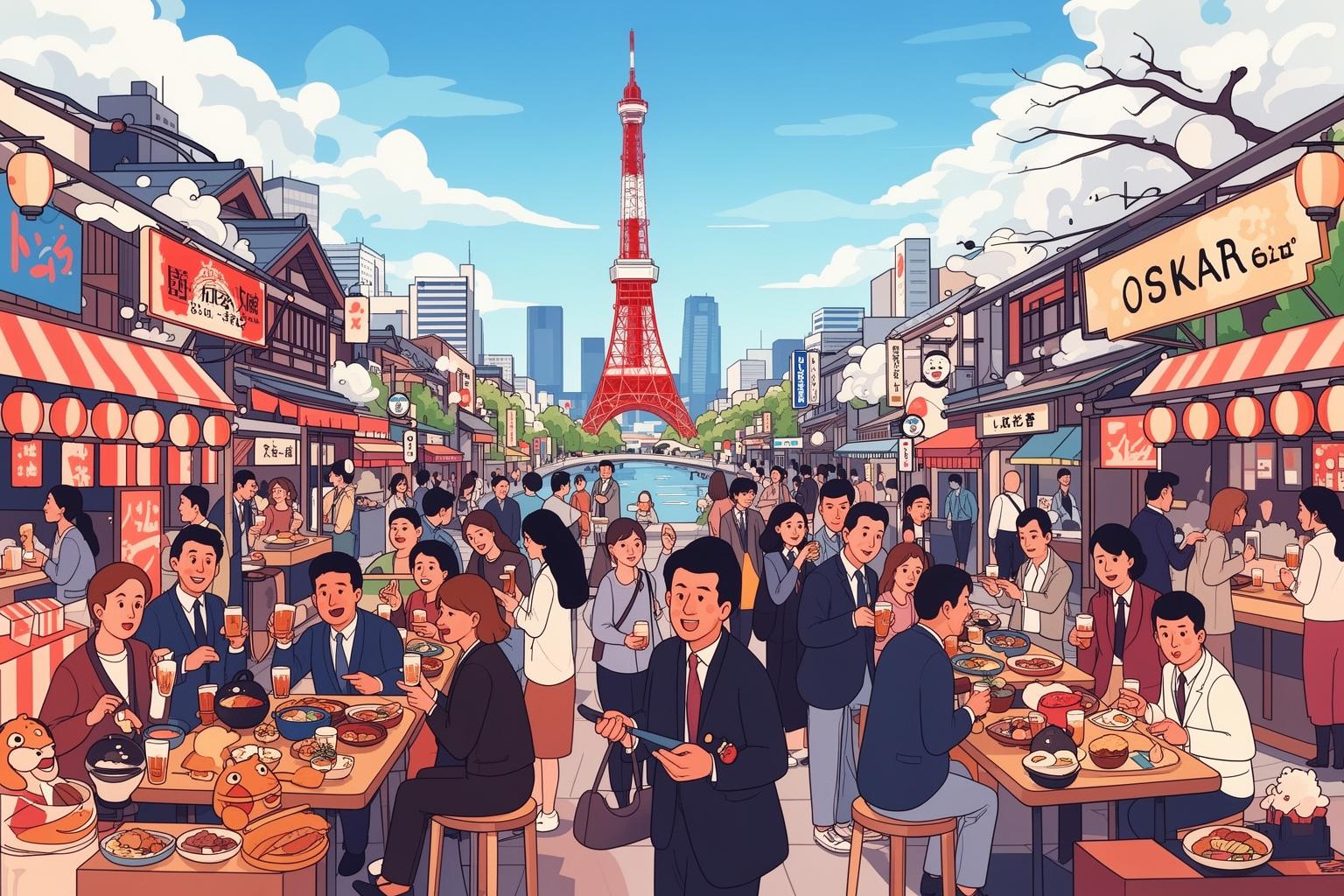
In the West, dietary restrictions are becoming increasingly common. Before a dinner party, a host might inquire about allergies. In Osaka, the social fabric is intricately tied to shared culinary experiences, most of which revolve around gluten-based foods. This leads to a subtle yet persistent form of social exclusion.
The ‘Takopa’ Challenge
One of Osaka’s most iconic social gatherings is the `takopa`, or takoyaki party. Friends assemble in an apartment, plug in a large electric takoyaki maker, and take turns pouring batter, adding octopus and other ingredients, and skillfully flipping the balls with skewers. It’s a lively, enjoyable, and highly collaborative tradition. Being invited to a takopa signals acceptance and inclusion in a friend group. But what happens if you can’t eat the main dish? You might bring your own snacks, have drinks, and engage in conversation, but you remain, by nature, on the sidelines. You watch your friends partake in the central activity, unable to join in. Declining the invitation can seem impolite, yet attending may feel isolating. Your dietary restrictions create an invisible barrier between you and the very bonding experience you were meant to share.
Navigating Nomikai
A similar dynamic occurs during `nomikai`, or drinking parties with colleagues or friends, which are vital to social and professional life. These gatherings often take place in izakayas, Japanese-style pubs. Although izakayas offer a wide variety of dishes, many are fried, marinated, or coated in gluten-heavy sauces. You can stick to sashimi, edamame, and salted yakitori, but you’ll miss out on the shared platters of karaage (fried chicken), agedashi tofu (dredged in starch), and the customary order of yakisoba to close the night. Food is served family-style, with everyone sharing from central plates. As your friends offer a delicious, breaded dish, you must repeatedly and politely decline. Each refusal serves as a subtle reminder of your difference, a small disruption in the flow of communal dining. Osakans are outgoing and generous; they want to feed you and share their favorite foods. Your inability to accept this generosity can be misunderstood, not as a medical necessity, but as a rejection of their culture and friendship.
Forging Your Own Path: The Gluten-Free Counter-Culture
Although Osaka’s mainstream culinary scene is dominated by flour-based foods, living gluten-free here is entirely achievable. It simply demands a complete change in approach. Convenience is not something you can count on. Instead, you must become a culinary detective, a planner, and an active member of a small but growing alternative culture. This process itself uncovers another side of Osaka—one that is modern, flexible, and unexpectedly international.
The Search for Safe Havens
Locating genuinely gluten-free-friendly restaurants in Osaka isn’t as easy as a quick map search. It relies heavily on word of mouth. You learn to trust specific Facebook groups for foreign residents, carefully translated Japanese blogs by fellow allergy sufferers, and personal recommendations. These spots are often hidden away from the main entertainment hubs of Namba or Umeda. They are nestled in residential areas, small cafes run by younger owners who have lived abroad or have a personal connection to dietary health. These places become more than just eateries—they turn into sanctuaries. The owners understand celiac disease, know about cross-contamination, use separate utensils, and offer gluten-free soy sauce as standard. Finding one of these gems feels like discovering an oasis. The community you build around them, with both owners and fellow patrons, becomes your new social circle—a fellowship united by the shared pursuit of safe food.
Mastering the Supermarket
Eating out becomes a treat rather than part of your everyday routine. The essential key to thriving is mastering the Japanese supermarket and your own kitchen. This comes with a steep learning curve. You must recognize the kanji for wheat (小麦), soy sauce (醤油), and barley (麦). Hours are spent roaming grocery aisles, using translation apps to scan ingredient lists on packages of curry roux, salad dressings, and even potato chips. You soon realize many products you might assume are safe, such as processed meats, often contain wheat as a binder. But you also discover the incredible variety of naturally gluten-free ingredients that underpin Japanese cuisine: premium rice, fresh fish, myriad vegetables, tofu, konnyaku, and seaweed. You learn to create your own sauces using tamari, sake, and mirin. Your cooking skills improve significantly out of necessity. Step by step, you rebuild your relationship with Japanese food, recreating the flavors you love in a way that’s safe for you.
What This Teaches You About Osaka

Living with a gluten-free diet in Osaka is a frustrating and challenging experience, yet ultimately an enlightening one. It strips away the city’s loud, fun, foodie-paradise facade and reveals its deeper cultural workings. You come to understand that Osaka’s famous friendliness is sincere, but it functions within a particular cultural framework. People want to help, but their solutions are limited to their own perspective, which is rooted in wheat and soy sauce.
This challenge compels you to adopt some of the very traits that characterize Osakans themselves. You must be pragmatic and resourceful, planning your meals carefully and carrying emergency snacks. You need to be persistent, willing to ask the same questions repeatedly, even when you suspect the likely answer. You learn to build your own network and community, relying on personal connections rather than impersonal systems. You learn to find joy not in obvious mainstream experiences, but in small victories: discovering a supermarket that stocks rice flour, successfully explaining your needs to a chef, or finding a hidden gem of a cafe where you can finally eat without worry.
In a city known for its devotion to konamon, being unable to participate feels like being excluded from the main celebration. Yet it also offers a unique perspective. You are forced to engage with the city more deliberately. You pay closer attention to ingredients, cooking techniques, and the very structure of the food culture. You may not be able to gorge yourself at the takoyaki stands of Dotonbori, but you gain a different kind of nourishment. You develop a deeper, more resilient understanding of what it truly means to live in Osaka, navigating its traditions not as a passive consumer but as an active, creative problem-solver. In many ways, that is a very Osaka way to be.