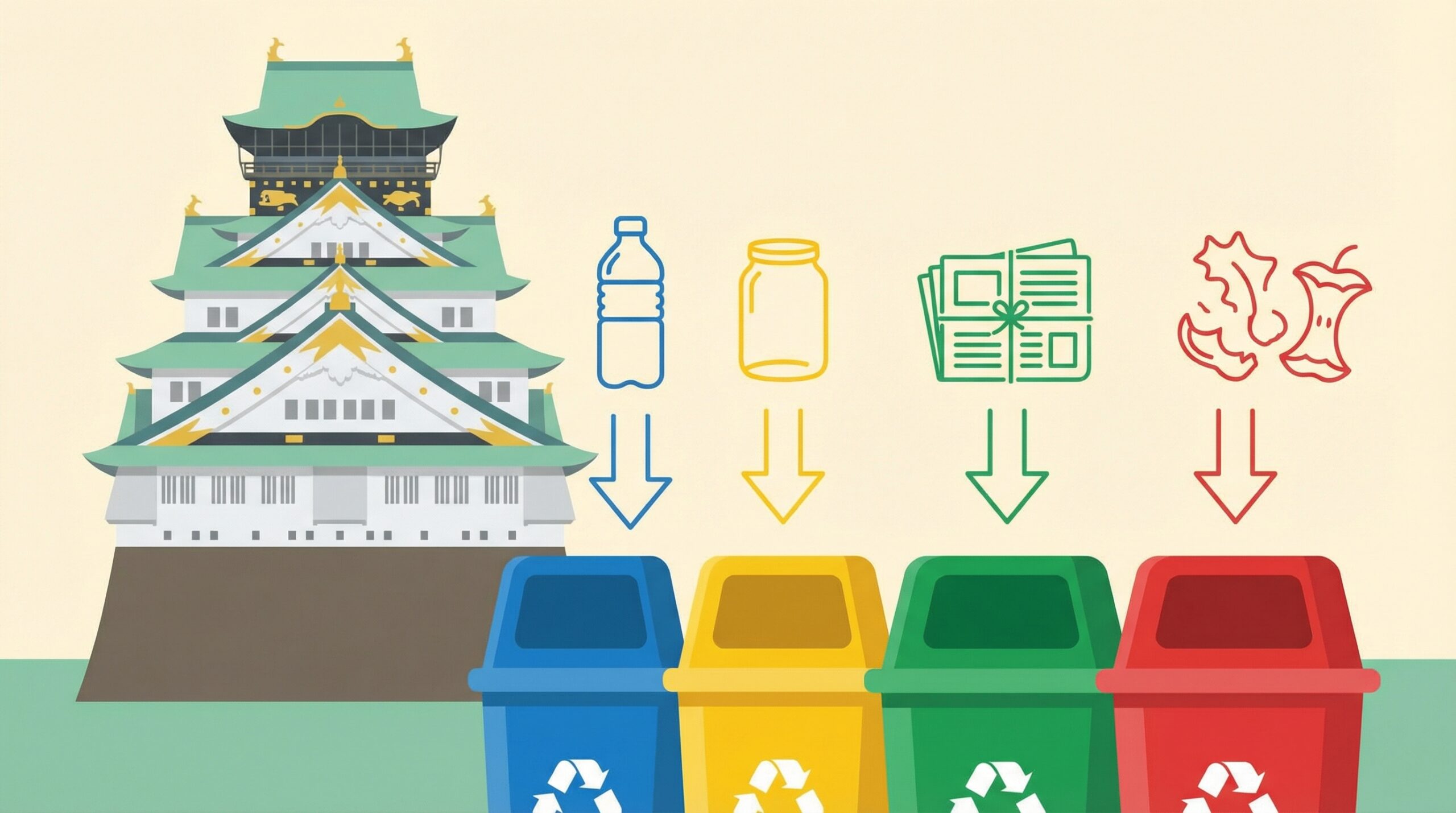
There’s a rhythm to life in Osaka, a pulse that beats through the neon-drenched streets of Dotonbori and the quiet, lantern-lit alleys of Hozenji Yokocho. It’s a city of bold flavors, boisterous laughter, and an undercurrent of meticulous order. And nowhere is this order more apparent, more deeply ingrained in the daily fabric of life, than in the ritual of trash collection. For the newcomer, the world of `gomi`—the Japanese word for trash—can feel like an impossibly complex code. It’s a symphony of colored bags, designated days, and unspoken rules that transforms a simple household chore into a profound cultural lesson. This isn’t just about throwing things away; it’s about participating in a city-wide effort of cleanliness, respect, and communal responsibility. Mastering Osaka’s waste separation system is a rite of passage, a small but significant step that takes you from being a visitor to a resident, from an observer to a participant in the intricate dance of urban Japanese life. It’s about understanding that in a city this vibrant and densely populated, every small act of consideration contributes to the harmony of the whole. This guide is your key to unlocking that code, to navigating the currents of community living, and to finding your own place in the rhythm of Osaka.
Mastering this system is a key part of the city’s unique rhythm, much like understanding the vibrant culture of Osaka’s comedy scene.
The Philosophy Behind the Plastic Bags: Why Osaka Takes Trash So Seriously

Before you even try to separate your first plastic bottle from your potato peels, it helps to understand the ‘why’. Why use transparent bags? Why follow strict schedules? Why separate a shampoo bottle from its cap so carefully? The answers are deeply embedded in the Japanese cultural landscape, a blend of ancient values and modern necessities that transform this seemingly simple task into a cornerstone of civic life. This system is not designed to complicate matters but stems from a profound respect for space, resources, and one another.
A Culture of Cleanliness and Consideration
Stroll through any Osaka neighborhood, from the upscale streets of Shinsaibashi to the nostalgic charm of Shinsekai, and you will notice the near-perfect cleanliness of the streets. This is not due to a battalion of street sweepers working nonstop; it reflects a collective public awareness. The Japanese concept of `wa` (和), or harmony, extends beyond personal relationships to encompass the shared environment. Keeping the community clean is a shared responsibility. Once your trash leaves your apartment, it becomes part of a communal space—the `gomi suteba`, or collection point. Proper sorting, using the correct bags, and placing waste out at the right time demonstrate respect for your neighbors. This practice prevents foul odors, deters pests such as the notoriously clever crows, and makes collection more efficient and safer for the sanitation workers who are vital to the city’s operation. Additionally, the principle of `mottainai` (もったいない), a deep regret over wastefulness, encourages valuing items, using them fully, and recycling whenever possible. This philosophy drives the nation’s vigorous recycling efforts.
The Environmental Imperative in a Resource-Scarce Nation
Beyond cultural values lies a harsh geographical truth. Japan is a mountainous, volcanic archipelago with a large population and severely limited landfill space. Simply burying waste, as done in many other countries, is not sustainable. This challenge compelled Japan to become a global leader in waste management technologies, especially incineration and recycling. Osaka, one of Japan’s largest and most densely populated metropolitan areas, is at the forefront of this effort. The city operates advanced incineration plants that burn waste at extremely high temperatures, reducing harmful emissions and even producing electricity. For this system to function effectively, the waste stream must be as uncontaminated as possible. Plastics, metals, and glass can harm incinerators or release toxic fumes if not properly separated. Food waste, due to its high water content, makes combustion less efficient. Consequently, the detailed sorting that starts in your kitchen is the crucial first step in a massive industrial process that keeps the city sustainable. It creates a direct connection between your everyday choices and the long-term environmental health of your home.
Cracking the Code: The Main Categories of Gomi in Osaka City
Alright, let’s get straight to the core details. Although specific regulations may vary slightly across Osaka’s 24 wards (`ku`), the fundamental categories remain consistent citywide. Your primary and indispensable resource is the gomi collection calendar issued by your local ward office. It’s a colorful, initially confusing document that quickly becomes the definitive guide for your household waste management. Pin it to your fridge and familiarize yourself with its schedule—this is your essential reference. The city mandates that most garbage be disposed of in official, city-approved transparent or semi-transparent bags of 45 liters or less, which can be bought at supermarkets, convenience stores, or drugstores. Using opaque black bags will result in your trash being left with a polite but firm sticker explaining the violation.
Ordinary Garbage (Futsu Gomi – 普通ごみ): The Twice-Weekly Mainstay
This is your core waste category, typically collected twice a week. It includes all items that cannot be recycled or are too dirty to process. Consider it the final destination for various household waste.
This category holds a diverse range of items. Kitchen waste (`namagomi`) is a major part, including vegetable peels, eggshells, leftovers, and tea leaves. A local tip: Japanese households practice `mizukiri`, draining excess water from kitchen scraps. Squeeze out used tea bags and let vegetable scraps drain in a strainer before bagging. This reduces weight and odors, enhancing incineration efficiency. Soiled paper products that aren’t recyclable—like used tissues, paper towels, greasy pizza boxes, and thermal paper receipts—also belong here. Small non-recyclable plastics such as ballpoint pens, plastic toothbrushes, videotapes, and CDs are accepted. Additionally, small leather goods like old wallets and worn shoes, rubber items like boots and hoses, and diapers fit here. The main rule: if it’s non-recyclable, not a container or packaging, it probably goes into the `Futsu Gomi` bag.
Containers and Packaging Plastics (Yoki Hoso Purasuchikku – 容器包装プラスチック): The Cleanliness Challenge
This category, collected weekly, is often the most confusing for newcomers. It’s for plastic items specifically used as containers or packaging. Look for the `プラ` (Pura) mark—a triangular recycling symbol with ‘Pura’ inside—which indicates eligibility.
This group covers many supermarket-bought items: plastic trays for meat or fish, tofu and egg containers, snack and candy wrappers, plastic shopping bags, foam netting for fruit, and plastic bottles for sauces, dressings, and detergents. Caps and labels from PET bottles are included here—more on that later. Styrofoam boxes and packing materials also qualify. The defining feature is that the item wrapped or contained something else.
The Essential Rinse-and-Dry Rule
This is Japan’s non-negotiable rule for plastic recycling: every item placed in this bag must be clean and dry. That soy sauce bottle? Rinse it thoroughly. The styrofoam tray for sashimi? Remove residue by washing. The instant noodle cup? Give it a quick clean. This is important for two reasons: dirty containers cause bad odors and attract pests at collection and recycling sites, and food or oil contamination can ruin entire batches of recycled plastic. You don’t have to use soap until sparkling, but thorough rinsing to remove food matter is required. Let items air dry completely before disposal. Though it may feel tedious at first, this step quickly becomes part of your dishwashing routine—a brief moment of care.
Paper, Cardboard, and Textiles (Koshi/Furugi – 古紙・古着): The Bundled Treasures
Collected weekly, this category requires some preparation. Unlike other categories using bags, paper and cardboard must be sorted and tied in bundles with string to keep similar paper types separate and facilitate collection. Do not place these in plastic bags.
Subcategories include newspapers (`shinbunshi`), which should be stacked and tied in a cross pattern with twine; magazines, books, and miscellaneous papers (`zasshi`) such as flyers, catalogs, and paper shopping bags (handles removed) bundled likewise; and cardboard (`danboru`), which should be flattened and securely tied. Milk or juice cartons (`gyunyu pakku`) are a special case: they must be thoroughly rinsed, flattened, dried, and bundled. Some supermarkets have dedicated boxes for these, which are recycled into products like toilet paper. Lastly, old clothes and textiles (`furugi`) are collected on the same day but must be clean, dry, and placed in clear bags so contents are visible. Usable items only—no torn or heavily stained rags.
The Art of Bundling
Mastering the secure `himō` (string) knot is a valuable skill in Japan. The goal is a tight enough bundle to hold together when lifted but not so tight it damages the paper. Usually, two strings are crossed on the floor (+), the paper stack placed on top, and then ends are tied securely. This analog process is oddly satisfying in today’s digital world. Having plastic twine on hand is essential for any Osaka household.
Cans, Bottles, and PET Bottles (Aki-kan, Aki-bin, Petto Botoru – 空き缶・空き瓶・ペットボトル): The Recycling Trio
Usually collected once a week, often the same day as paper collection, these items typically go directly into designated crates, nets, or bins at collection points rather than in bags you bring, although this can vary by area. As with plastics, all must be rinsed clean.
PET bottles, marked with a recycling symbol featuring the number ‘1’, require special handling: remove the cap; peel off the plastic label (both go into the ‘containers and packaging plastics’ bag); rinse inside the bottle; and crush it flat to save space. This careful separation ensures proper recycling of each part. Aluminum (`arumi`) and steel (`suchiiru`) cans just need rinsing. Glass bottles and jars (`bin`) also require rinsing. While some municipalities require color separation, Osaka City generally collects all colors together. Remove any plastic or metal caps, which are sorted separately.
Small Metal Items and Spray Cans (Shorui Kinzokuseihin, Supure-kan – 小物金属製品・スプレー缶): The Monthly Collections
Collected roughly once a month, these accumulate over time. ‘Small Metal Items’ are metal household goods smaller than 30 cm in their longest dimension, including small frying pans, pots, kettles, metal hangers, cutlery, and utensils. Items longer than 30 cm are oversized garbage.
For spray cans and portable gas canisters, safety is crucial: they must be completely empty, as pressurized contents can cause fires or explosions during collection or processing. Use them until no hissing is heard when pressing the nozzle. Previously, puncturing in a well-ventilated outdoor space was required to confirm emptiness, but many municipalities, including parts of Osaka, have updated these rules due to accidents. Always verify your ward’s latest instructions. These items go in transparent gomi bags but must be kept separate and clearly identifiable.
Beyond the Basics: Navigating Special and Oversized Waste

Life inevitably involves acquiring and disposing of items that don’t fit neatly into the weekly schedule. From a broken toaster to a worn-out sofa, Osaka has a clear, methodical approach for everything. Such cases require more planning than your typical gomi run.
Oversized Garbage (Sodai Gomi – 粗大ごみ): The Reservation System
Any item larger than 30cm in its longest dimension (or 1 meter for stick-shaped objects like curtain rods) is classified as `Sodai Gomi`. You cannot simply leave these items at the collection point. Doing so will cause them to be ignored and may lead to problems with neighbors and building management. Disposing of `Sodai Gomi` involves a multi-step process requiring a reservation and a fee.
- Step 1: Contact the Oversized Garbage Reception Center. This can be done by phone or, more conveniently, through their online portal. You will need to provide your name, address, phone number, and a detailed description of the item(s) to be disposed of. Be specific—‘a wooden chair with four legs’ is better than just ‘chair.’ Approximate dimensions may also be required.
- Step 2: Receive Your Details. The center will inform you of two key items: the fee for your item (ranging from 200 yen for small items to several thousand yen for large furniture) and your scheduled collection date and location.
- Step 3: Purchase the Fee Ticket. You must then visit a designated vendor—typically a major convenience store such as 7-Eleven, FamilyMart, or Lawson, or a local post office—to buy a `Sodai Gomi Shori Tesuryo Ken` (Oversized Garbage Processing Fee Ticket) for the exact amount quoted. These tickets are not sold everywhere, so look for a sticker in the window indicating availability.
- Step 4: Prepare Your Item. Write your name or the reception number (as instructed) on the sticker, peel off its backing, and affix it prominently to your item. The sticker must be clearly visible to the collectors.
- Step 5: Collection Day. On the morning of your scheduled pickup (usually by 9 AM), place the item at the designated location, often the same as your regular gomi station. Collectors will only take items with the correctly-valued sticker that appears on their list.
The Untouchables: Items the City Won’t Accept
Certain items are legally prohibited from being collected by the municipal waste system. These fall under specific recycling laws to ensure their components are safely and properly handled.
The most common are the ‘Big Four’ covered by the Home Appliance Recycling Law (`Kaden Risaikuru Hō`): televisions, air conditioners, refrigerators/freezers, and washing machines/dryers. To dispose of these, you have several options. The simplest is to have the store delivering your new appliance take away the old one for a fee. Alternatively, you can contact the store where you originally purchased the item or find a licensed private collection company. A similar system applies to personal computers, which must be recycled through the manufacturer.
Other items that require special disposal include batteries (many supermarkets and electronics stores provide collection boxes), cooking oil (some locations collect it; if not, it must be solidified using powder sold at supermarkets and then discarded in `Futsu Gomi`), and hazardous materials like paint or chemicals, which must be handled by specialized disposal companies.
The Rhythm of the Week: Mastering Your Local Gomi Calendar
Living in Osaka means adapting to a unique weekly rhythm, one governed not by social events, but by the cheerful jingle of the gomi truck. Embracing this schedule is essential for a peaceful life and a harmonious connection with your community.
Your Most Important Document: The Gomi Collection Calendar
As noted, the official collection calendar from your ward office is indispensable. It will inform you that, for example, Mondays and Thursdays are for `Futsu Gomi`, Wednesdays for `Plastics`, and Fridays for `Paper/Cans/Bottles`. It will also specify the monthly collection date for small metals. Many wards now offer online versions or dedicated smartphone apps that can send push notifications the night before collection days—a priceless aid for the forgetful. When moving into a new apartment, the real estate agent or landlord will almost certainly provide you with one. If not, your first stop should be the local ward office (`kuyakusho`) to obtain a copy. It is your key to civic engagement.
The Unspoken Rules of the Gomi Station
The `gomi suteba` is a shared, almost sacred space. Its cleanliness reflects the entire neighborhood. There are strong social customs surrounding its use that go beyond proper sorting. The most important rule is timing. You must put your trash out on the morning of collection, not the night before. The official deadline is usually around 8 or 9 AM. Putting it out the previous night is seen as poor etiquette; it can attract animals, cause odors, and make the street look messy. In the early morning, you’ll notice a quiet procession of residents stepping out to place their neatly prepared bags at the designated spot. It’s a moment of silent, shared community effort.
Another feature of the gomi station is the large, often yellow, net (`karasu-yoke netto`). This crow-deterrent net must be placed over your bags, making sure the edges are weighed down to prevent clever birds from sneaking in and tearing the bags apart. It’s a simple but crucial step. After the truck finishes its rounds, the net is usually folded neatly to the side by a rotating group of neighborhood volunteers. The aim is to leave the area as clean as you found it, ready for the next collection day.
Practical Tools and Local Wisdom for Gomi Success

Embracing the gomi lifestyle becomes easier with the right setup and a willingness to learn. A bit of preparation at home can turn the daily sorting routine into an almost automatic habit.
Essential Gear for Your Home Sorting Station
Avoid leaving sorting until the last minute. The most effective way to manage the system is to establish a dedicated sorting station in your kitchen or on your balcony. Although Japanese apartments are compact, you can find smart, space-saving multi-bin systems at home goods stores like Muji, Nitori, or Hands. A typical arrangement might include:
- A main bin for `Futsu Gomi`.
- A large bin or bag for `Containers and Packaging Plastics` (this category tends to fill up the quickest).
- A smaller bin or bag for `Cans/Bottles/PET Bottles`.
- A specific corner or a sturdy paper bag for collecting paper and cardboard to bundle.
- A hook for hanging your roll of twine.
With this setup, you can sort as you go, making collection morning as simple as tying up the correct bag.
When in Doubt, Ask! Resources for the Confused Expat
The system can be complicated, and you will make mistakes—it’s all part of the learning process. The important thing is to stay open to corrections and ask for help. Your neighbors can be invaluable resources. An elderly woman who’s been sorting waste in the same spot for fifty years knows the rules thoroughly. A polite question—`”Sumimasen, kore wa dono gomi desu ka?”` (“Excuse me, which trash category is this?”)—can solve your immediate question and serve as a great icebreaker, showing your willingness to fit in. Your building manager or landlord is another excellent source of information. For official guidance, the Osaka City website offers extensive resources, often including multilingual PDF guides and searchable sorting dictionaries by item. Don’t hesitate to be the foreigner who asks questions—it’s much better than being the one who continually gets it wrong.
A Note on Public Trash Cans (or Their Absence)
One of the first things visitors to Japan notice is the surprising lack of public trash cans. This can be confusing until you understand the philosophy behind it: you are responsible for the waste you create. The culture expects you to carry your trash with you until you return home or find a suitable receptacle, which are typically inside convenience stores (for items bought there) or near vending machines (for bottles and cans sold). As a resident, it’s wise to adopt the local habit of always carrying a small plastic bag with you to hold any personal trash generated while out. This simple practice is key to keeping public spaces immaculate.
Ultimately, navigating Osaka’s gomi system is much more than a household chore. It’s a practical lesson in the principles underlying Japanese society: respect for the community, mindful consumption, and a shared commitment to maintaining order and harmony. The initial frustration of decoding the calendar and rinsing yogurt containers will fade, replaced by quiet pride. It’s the satisfaction of tying a perfect knot on a bundle of newspapers, hearing the gomi truck’s morning song and knowing your bags are perfectly sorted, participating in the silent, synchronized ritual that keeps this incredible city clean and beautiful. It’s a small daily affirmation that you are no longer just living in Osaka—you are part of its intricate, fascinating rhythm.