So you’ve spent some time in Tokyo. You’ve mastered the dizzying spaghetti map of the subway, you’ve felt the sheer, overwhelming scale of a city that feels less like a city and more like a collection of them, stitched together by steel rails. You get on a train in Shinjuku, a universe of neon and skyscrapers, and 20 minutes later you get off in Shimokitazawa, a completely different universe of vintage shops and indie theaters. The space between them is a dark tunnel, a brief moment of non-existence. This is the Tokyo experience: a galaxy of self-contained planets, each with its own powerful gravity. You learn to navigate the galaxy, but you rarely feel like you understand the whole universe. Then you come to Osaka. And everything changes. The first thing that hits you isn’t the food, the dialect, or the volume of the conversations. It’s the feeling of comprehension. You can stand in one part of downtown and feel the pull of the other. The city has a logic you can see, a structure you can walk, a narrative that connects its major hubs into a single, cohesive story. This isn’t just a quaint architectural detail; it’s the fundamental operating system of Osaka life. It shapes how people interact, how they socialize, and how they think about their own city. The biggest misconception foreigners have is thinking of Osaka as just a smaller, rowdier version of Tokyo. The truth is, they’re built on entirely different philosophies of urban living. Tokyo is a puzzle of infinite pieces. Osaka is a city with a spine. Understanding that spine is the key to understanding everything else.
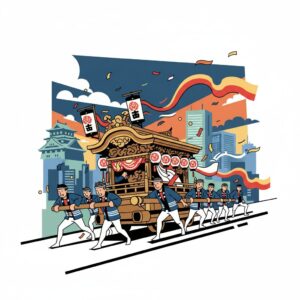
This cohesive urban narrative is perhaps most vividly expressed in the city’s deeply rooted neighborhood festivals, where community bonds are forged in the streets.
The Spine of Osaka: Understanding the Midosuji Axis
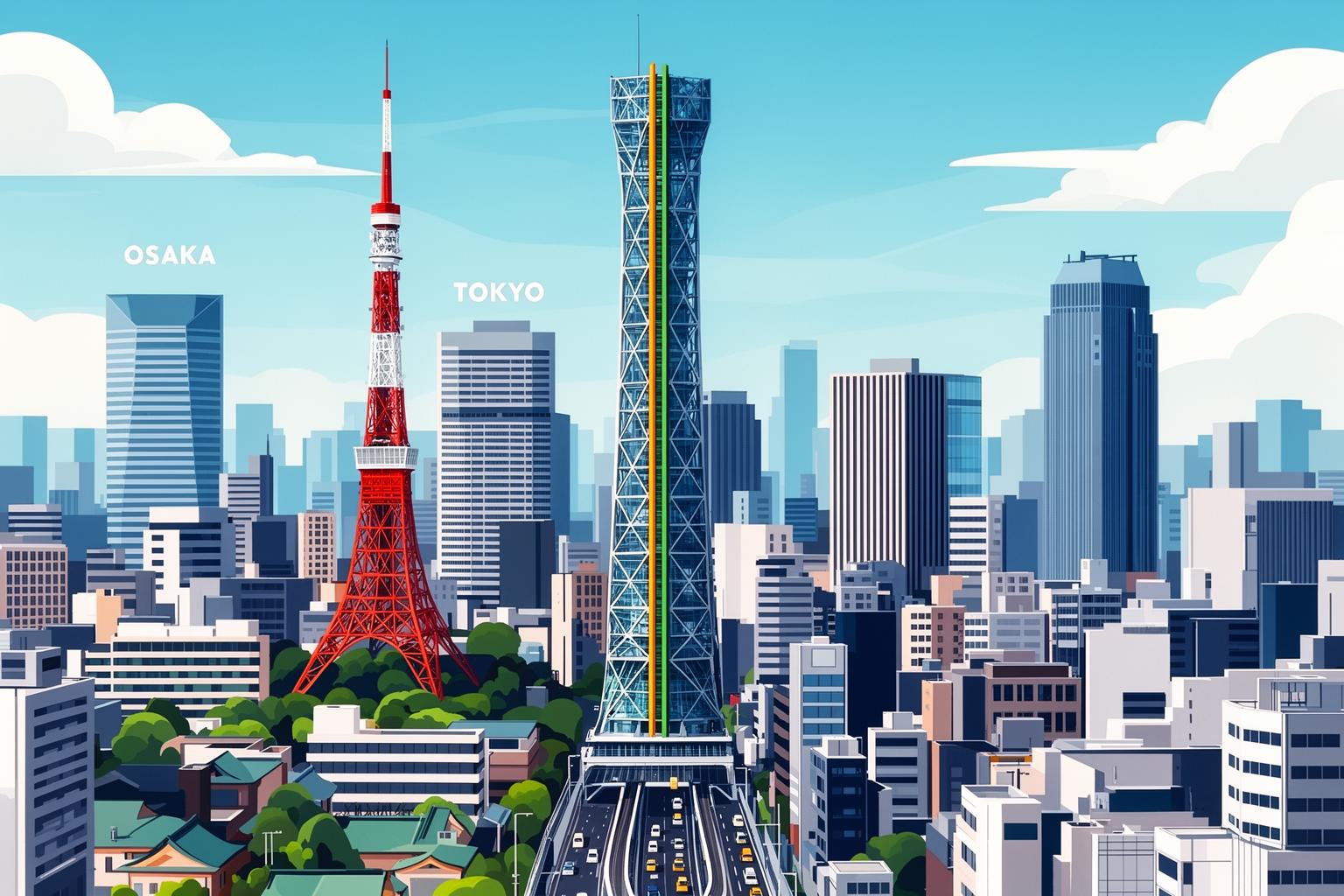
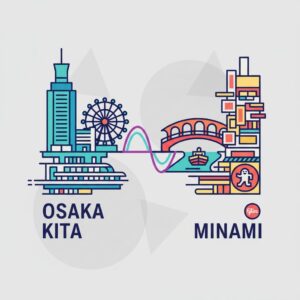
Every city has its main streets, but few possess one that encapsulates its entire identity quite like Midosuji Boulevard. This is more than just a road; it is the central artery linking Osaka’s two cores: Kita (North) and Minami (South). Stretching straight for about four kilometers, this grand, tree-lined avenue acts as the city’s physical and psychological anchor. In Tokyo, mental mapping revolves around train lines—the Yamanote, the Chuo, the Marunouchi—with colored lines and station dots defining your sense of place. In Osaka, however, the primary mental map is a simple, elegant line: Kita at the top, Minami at the bottom, with everything else positioned along this axis. This straightforward fact profoundly shapes daily life, making the city’s core not just walkable, but invitingly walkable. On a pleasant Sunday, people stroll the length of Midosuji, observing the seasonal changes in the ginkgo trees and window shopping at the luxury boutiques lining the street. The journey becomes an experience, a gradual transition through shifting urban characters felt block by block. Compare this to traveling from Shibuya to Shinjuku, where the only practical option is to descend underground, board a metal tube, and reemerge in an entirely different world—losing the space in between. In Osaka, that space is the story. This physical connection nurtures a mental one, as Osakans view their city as a single, integrated whole. They are not just ‘Umeda people’ or ‘Namba people’; they are Osaka people who regard both hubs as different rooms within the same house. This unique, unifying geographic feature creates a shared frame of reference rarely found in Tokyo’s sprawling, multi-centered landscape.
Kita (Umeda): The Polished Face of Commerce
Let’s begin at the northern end of the Midosuji axis: Kita, the area surrounding Osaka-Umeda Station. If Osaka were a person, Kita would represent their professional, well-dressed, public persona. This is the city’s main hub for business, transportation, and upscale shopping. It’s shiny, modern, and perfectly organized. Imagine vast, interconnected underground malls that allow you to navigate the entire district without ever stepping outside, a godsend during humid summers or sudden rain showers. Picture the towering Grand Front Osaka, the iconic Umeda Sky Building, and the revered Hankyu and Hanshin department stores. The atmosphere here is all about purpose and efficiency. People walk briskly, and conversations tend to be quieter. This is where you’d go for a formal business meeting, to purchase a designer handbag, or to catch a Broadway-style show at the Umeda Arts Theater. It’s Osaka’s answer to the polished sophistication of Tokyo’s Ginza or Marunouchi. For locals, Kita serves distinct roles. It’s the gateway to the rest of Japan, with JR Osaka Station providing access to the Shinkansen and intercity trains. It’s the place for serious shopping, thanks to the dense concentration of flagship stores. Often, it’s home to corporate headquarters, the territory of the salaryman. A foreigner who only visits Kita might come away with a limited view of Osaka as merely another large, pristine Japanese city. They might note the orderly lines and sleek architecture and think, “Okay, I get it.” But they’d miss the other half of the city’s soul—the chaotic, vibrant, pulsating heart just a short walk or a single subway stop further down the city’s spine.
The Feel of Kita on a Weekday
To truly grasp Kita, imagine it at 5:30 PM on a Tuesday. Streams of office workers in dark suits pour out of the towers, their faces marked by focused fatigue. They flow into the labyrinthine station, a human river branching into countless tributaries, each heading to different train lines. There is an unspoken consensus on efficiency: people stand on the left side of the escalator and don’t block the ticket gates. The energy is one of forward motion, of moving from Point A to Point B. The department store basements, known as the famous ‘depachika,’ buzz with controlled chaos. Shoppers are on a mission—to pick up a specific bento for dinner, a beautifully packaged cake for a client, or a gift for a family member. Interactions are polite, transactional, and quick. This is the side of Osaka that values precision and quality—the merchant city’s heritage reflected in impeccable customer service and premium products. It offers a sharp contrast to the southern pole, where the day is just beginning with a completely different energy.
Minami (Namba/Shinsaibashi): The City’s Raucous Living Room
Traveling south down Midosuji, you’ll notice the city’s grip loosen with every block. The buildings become older, storefronts smaller and more eclectic, and the street noise louder. You’ve reached Minami, the southern hub centered around Namba, Shinsaibashi, and the electric spectacle of Dotonbori. Whereas Kita is the city’s polished office district, Minami is its chaotic, sprawling, and endlessly entertaining living room. This area is the historical core of Osaka’s entertainment and merchant culture, and it shows. Minami is anything but subtle. It’s a full sensory bombardment. The flashing, oversized neon signs of Dotonbori, led by the iconic Glico Running Man, shimmer off the murky canal waters. The air is thick with the scent of takoyaki batter sizzling on griddles and grilled crab legs. You’ll hear a cacophony of street performers, hawkers shouting restaurant specials, and the rumble of thousands of simultaneous conversations. The atmosphere is raw, unfiltered, and deeply human. This is the home of ‘kuidaore’—to eat until you drop. It’s a place you visit not with a plan but with an appetite for spontaneity. You wander through the covered Shinsaibashi-suji shopping arcade, a river of people flowing past a dizzying range of shops selling everything from inexpensive socks to high fashion. You venture into the narrow alleys of Hozenji Yokocho, a perfectly preserved slice of old Osaka with moss-covered statues and tiny traditional eateries. You explore Amerikamura, the hub of youth culture, filled with vintage clothing stores and street art. For Osakans, Minami is the go-to spot for a night out with friends, a casual date, or simply to feel the city’s heartbeat. It’s less about a fixed purpose and more about the experience. You don’t just visit Minami; you immerse yourself in it.
Minami’s Unspoken Social Code
Life in Minami follows a different set of rules than Kita’s. Formality fades away. Eating while walking is not only accepted but expected—grabbing a hot pork bun or some karaage and enjoying it on the move. Shopkeepers are more likely to strike up friendly, teasing conversations, a tradition rooted in the city’s merchant history where building rapport was essential for sales. There’s a directness here that can surprise you. People aren’t afraid to be loud, laugh heartily, or express themselves. This is the essence of the Osaka mindset: pragmatic, unpretentious, and dedicated to chasing a good time and a great deal. Fun doesn’t have to be costly, and good food doesn’t require an upscale setting. Some of the best meals are eaten standing at a cramped counter in places untouched for forty years. Minami embodies this spirit. It’s a place that values substance over style and welcomes everyone to join the celebration. It is Osaka’s raw, beating heart, and its energy is contagious.
The Psychological Impact of a Two-Pole City
Osaka’s dual-hearted structure profoundly influences its residents’ psychology, creating an urban experience fundamentally different from that of Tokyo. The key lies in the simplicity of the mental map. In Osaka, you are always oriented—you know Kita is north and Minami is south, and that the Midosuji subway line connects them directly. This fosters a sense of mastery and comfort. The city feels comprehensible, its core logic clear. You can hold the entire downtown area in your mind at once. In Tokyo, however, the mental map is a complex web of overlapping systems. Your location is defined not by a straightforward axis but by your proximity to a particular station on a specific line. This creates an incredibly efficient way to move millions of people, yet it can also feel abstract and fragmented. You’re ‘in’ a neighborhood, but connections between neighborhoods are intangible, experienced only as time spent in a subway car. This difference influences social life. In Osaka, making plans is often fluid and geographically simple—“Let’s meet somewhere in the middle, maybe Honmachi?” is an easy suggestion. The central axis offers a shared, linear space for spontaneous meetups. In Tokyo, planning often involves more complex logistics: “Which station is the easiest transfer point for someone on the Keio Line and someone on the Tozai Line?” It’s pragmatic, but can feel more like coordinating troop movements than a casual gathering. This sense of a cohesive city center also nurtures a unique civic identity. A Tokyoite might strongly identify with their local neighborhood—as being a ‘Shimokita’ or ‘Ginza’ person—while an Osakan’s identity is more connected to the city as a whole, defined by the dynamic interplay between the polished ambition of Kita and the boisterous soul of Minami. They see these as two sides of the same coin, both essential to what makes Osaka, Osaka.
How This Plays Out in Daily Life: Commuting, Socializing, and Belonging
This fundamental difference in urban layout is not merely an abstract concept; it is evident in the small, everyday routines of life. Take the daily commute, for instance. Many Osakans travel along the Midosuji line or another route connecting both Kita and Minami. Each day, they encounter the city’s dual character. They might board the train amid the corporate bustle of Umeda and disembark in the more relaxed, residential areas further south, having passed straight through Namba’s entertainment district. This daily journey reveals the city’s narrative arc. In Tokyo, commutes tend to be more compartmentalized. You might go from a residential suburb on the Odakyu Line directly into Shinjuku, with your entire professional life revolving around that single hub. You could live in Tokyo for years without much reason to visit other major centers like Ikebukuro or Ueno, depending on your lifestyle. The city can feel like a collection of disconnected islands. This influences how people explore and “own” their city. Osakans are naturally encouraged to engage with the entire city center. It’s easy to move from one end to the other. An evening might commonly start with dinner with colleagues in Kita, followed by a choice to head to Minami for drinks with friends, since it’s only a few minutes away and offers a distinctly different atmosphere. This kind of casual movement across the city is less typical in Tokyo, where traveling from, say, Shinjuku to Ginza for a second round of drinks feels more like a significant effort. This creates what might be described as a “human-scale” experience. Despite being a major metropolis, Osaka’s core feels manageable—a city you can truly grasp on foot. Tokyo’s logic, by contrast, is often subterranean, shaped by the sleek but impersonal efficiency of its subway system. For foreigners trying to settle in, this difference is crucial. Osaka presents a lower barrier to feeling like a local. Once you understand the Kita-Minami axis, you unlock the city’s primary logic. You can navigate confidently and quickly develop a sense of belonging. The city feels less like an intimidating, endless sprawl and more like a community with a clear, accessible center.
Beyond the Center: Where Real Osakans Live
Naturally, most of Osaka’s residents don’t live in the shiny towers of Umeda or the bustling streets of Namba. Instead, they dwell throughout the vast network of neighborhoods that encircle this central axis. Areas like Tennoji, with its distinctive mix of old and new; Kyobashi, a gritty yet cherished hub for standing bars; or the quieter residential stretches along private rail lines like Hankyu, Hanshin, and Kintetsu. Even in these outer districts, the magnetic pull of the Kita-Minami corridor remains strong. Where people choose to live is often heavily influenced by how easily they can reach one of these two hubs. “I live on the Hankyu line, so getting to Umeda is effortless.” “I picked this apartment because the Sakaisuji line takes me to Namba without transfers.” The entire metropolitan area revolves around these twin centers. This contrasts with Tokyo, where life tends to be more decentralized. You can live and work in West Tokyo and consider Central Tokyo a destination only for special occasions. Your world might revolve around Kichijoji or Tachikawa, functioning almost independently from the Shinjuku/Shibuya core. In Osaka, however, the strong sense of a single, dominant center—though with two poles—still prevails. The Kita-Minami spine is more than downtown’s feature; it’s the organizing principle for the whole region, shaping the lives of millions and ensuring that, wherever you live, you remain connected to the city’s two hearts.
Ultimately, choosing between living in Osaka or Tokyo isn’t just about location. It’s about selecting a different way to relate to the city itself. Tokyo offers a universe of endless exploration, a sprawling and intricate metropolis to discover over a lifetime, neighborhood by neighborhood. It’s a city of specialists, where any niche interest can find a community. Osaka, on the other hand, offers something different: a city that feels complete. Its human-scale design, centered on the clear, straightforward axis between Kita and Minami, creates a rare sense of cohesion and belonging for a city its size. It’s a place you can truly grasp—a city whose story is visible on its surface, along a single, walkable boulevard. It nurtures a culture that is grounded, direct, and connected because its very geography invites you to see it not as a collection of disconnected areas, but as one vibrant, deeply comprehensible home.