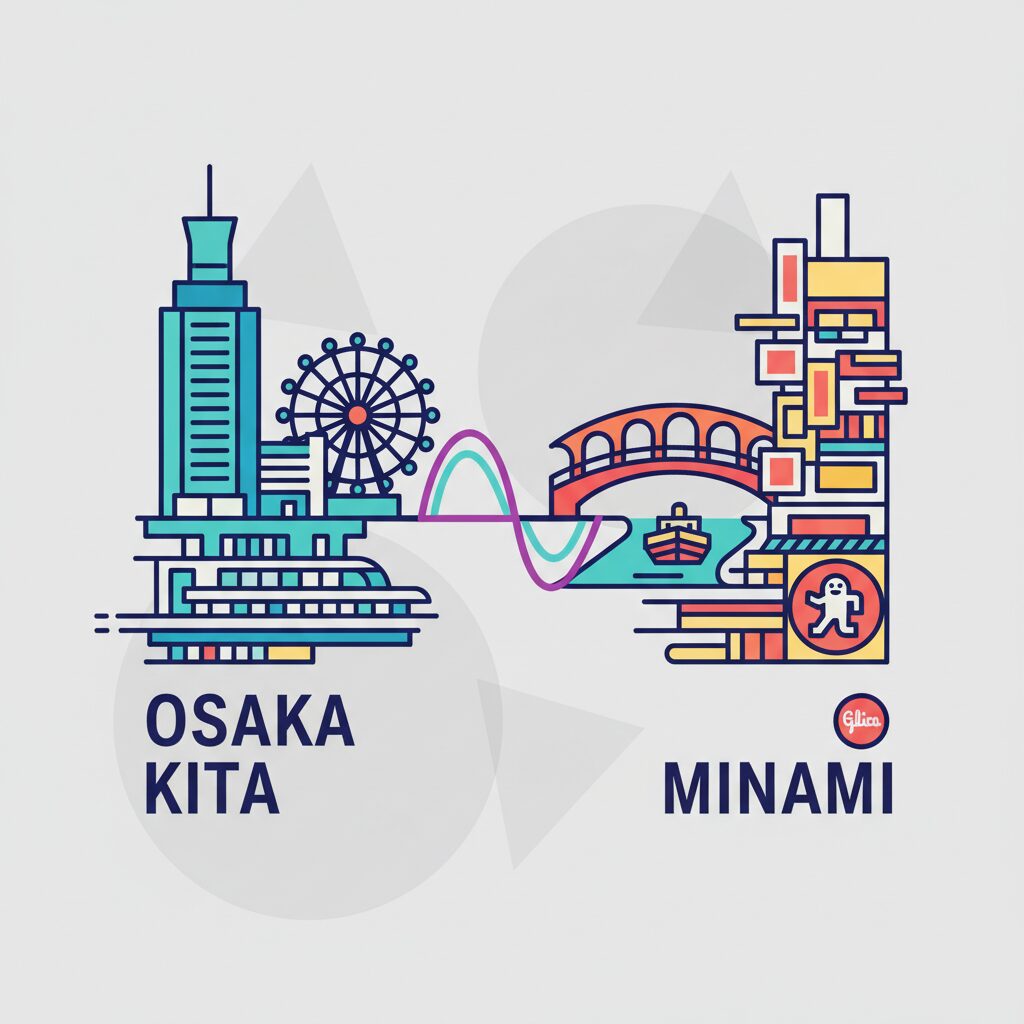
Walk out of the train station in Umeda, and you’re immediately swallowed by a canyon of glass and steel. Rivers of people in crisp suits flow along wide, immaculate sidewalks, disappearing into the bases of skyscrapers that pierce the sky. Department stores, gleaming and serene, stand like temples to modern commerce. This is Kita, the northern heart of Osaka, and it feels like a city humming with quiet, corporate ambition. Now, hop on the Midosuji subway line and ride it south for just ten minutes. Emerge at Namba, and the world explodes. A tidal wave of sound, color, and sizzling food smells hits you head-on. Narrow arcades, or shotengai, branch off in every direction, crammed with tiny bars, raucous restaurants, and shops blasting music. This is Minami, the southern soul, a place that feels like a festival that never ends. It’s loud, it’s chaotic, and it’s unapologetically, intensely alive.
For any foreigner trying to make a life here, the contrast is immediate and profound. It’s more than just a difference in architecture; it’s a palpable shift in energy, in attitude, in the very rhythm of the streets. You start to hear the terms everywhere: “Are you a Kita person?” or “That’s such a Minami thing to do.” This isn’t just a simple geographical distinction like uptown versus downtown. In Osaka, the Kita-Minami divide is a fundamental identity split. It’s a cultural shorthand that explains deep-seated values about work, money, socializing, and what it even means to be an Osakan. Choosing where you live, where you build your career, and where you spend your Friday nights is about more than just picking a spot on a map. It’s about aligning yourself with one of two powerful currents that define this city. This guide isn’t about tourist spots; it’s about decoding these two rival identities to help you find your own place in Osaka’s vibrant, complicated heart.
To truly understand how this identity split influences professional life, consider the unique challenges and opportunities of building a career in Osaka.
The Tale of Two Cities: Deconstructing the Core Identities
To truly understand Osaka, you need to recognize that it is not a single city, but rather two cities coexisting in a delicate, often loud, balance. These dual identities were shaped by history. Kita, centered around Umeda, developed as a hub of transportation and corporate influence—a modern gateway linking Osaka to the rest of Japan. Minami, around Namba and Shinsaibashi, represents the historical heart of the merchant class, where Osaka’s reputation for commerce, cuisine, and entertainment originated. This history is not merely academic; it is ingrained in the mindset of the people living in these areas today.
Kita: The Face of Modern Commerce and Corporate Japan
Think of Kita as Osaka’s business suit. It’s where the city conducts its affairs with the outside world, presenting itself accordingly. It is orderly, efficient, and projects an image of refined success. For many, especially those from Tokyo, Kita feels comfortably familiar—a metropolitan slice of Japan amidst the more untamed Kansai region.
The Vibe: Polished, Professional, and Well-Planned
Kita’s landscape reflects top-down urban planning at its finest. The Umeda district exemplifies transit-oriented development. You find the expansive Osaka Station City complex, a self-contained world, seamlessly connected to Hankyu, Hanshin, and Daimaru department stores. Grand Front Osaka, with its sleek towers and rooftop gardens, stands as a monument to modern corporate architecture. Wide streets, clear signage, and orderly movement of people and vehicles create a clean, curated environment designed for efficient commerce and leisurely consumption. The dominant style is understated luxury and professional refinement, evident in the window displays of global brands, the quiet hotel lobbies, and the meticulously arranged depachika food courts in department store basements.
The People: The Realm of the Salaryman
On weekdays, Kita’s population is largely composed of salarymen and office ladies. This is western Japan’s corporate powerhouse. Major trading firms, pharmaceutical companies, banks, and manufacturers maintain headquarters or branches in the skyscrapers of Umeda and the business hubs of Nakanoshima and Yodoyabashi. People here move with clear intention—walking from the station to offices, grabbing a quick meal at chain restaurants, and then gathering in station-area izakayas for structured after-work drinks with colleagues. The dress code ranges from business formal to business casual, and social currency revolves around the exchange of business cards, or meishi. The atmosphere hums with focused ambition, punctuated by keyboards clicking and quiet negotiations.
The Mindset: “Omote” – The Public Persona
In Japanese culture, omote represents the public face, contrasted with ura, the private side. Kita embodies Osaka’s omote. It is where the city reveals its most organized, professional, and internationally polished self. Interactions tend to be formal, adhering closely to Japanese business etiquette. While Osakans are known for their directness, in Kita this frankness is moderated by an emphasis on politeness, hierarchy, and harmony. As a result, Kita can feel less characteristically “Osakan” and more like a generic Japanese metropolis. It is the side of Osaka that seeks to impress, demonstrating it can match Tokyo in professionalism and decorum.
A Tokyo Transplant’s View
For those relocating from Tokyo, Kita often provides the smoothest transition. The systems are familiar; workplace interactions and unspoken rules follow a rhythm closer to Tokyo’s pace. It serves as a gentler introduction to Kansai, offering high-end amenities, reliable train networks, and professional opportunities characteristic of a major global city. It acts as a buffer before the deeper cultural immersion found in other Osaka neighborhoods.
Minami: The Pulse of Merchant Culture and Chaos
If Kita is Osaka’s business suit, Minami is its worn-in, comfortable, and flamboyant festival jacket. This area is the city’s living room, kitchen, and stage combined. It embodies the vibrant spirit of the Osaka merchant—shrewd, practical, and with a zest for life. Minami is unplanned; it feels as if it erupted naturally.
The Vibe: Energetic, Gritty, and Organic
Minami delivers sensory overload by design. Entering the Shinsaibashi-suji shopping arcade immerses you in a surge of humanity flowing beneath a covered roof for blocks. Around the corner lies Dotonbori, a neon-lit canyon where giant mechanical crabs and dragons compete for attention. Tucked away is Hozenji Yokocho, a mossy, lantern-lit alley that transports you back in time. This area is a maze of intertwined arcades, narrow alleys, and bustling streets. It developed organically over centuries, built by merchants for merchants. There’s a layer of grit absent in Kita—spontaneous, louder, and infinitely more unpredictable—thick with the aromas of takoyaki, grilled meats, and ramen broth.
The People: Entrepreneurs, Entertainers, and More
Minami is home to shonin (merchants) and entertainers. The local heroes are not corporate execs but the takoyaki vendor with the longest line, the charismatic owner of a small standing bar, and the comedian featured on billboards. This is a land of small businesses, independent shops, and a fierce entrepreneurial drive. The population is a vibrant mix: fashion-savvy youth in America-mura, theatergoers at manzai comedy shows in Namba Grand Kagetsu, tourists from around the world, and locals running family enterprises for generations. Dress here is an expression of personal style, from street fashion and vintage finds to extravagant evening wear. The vibe centers on carving out one’s own niche rather than climbing a corporate ladder.
The Mindset: “Hon’ne” – The Genuine Self
In stark contrast to Kita’s omote, Minami embodies hon’ne—true feelings and intentions. Communication here is famously direct, honest, and free from pretense. This is the heartland of the Osaka-ben dialect, spoken with pride and energy. The merchant culture, or akindo seishin, values pragmatism and efficiency. People appreciate a good bargain, hearty laughter, and straightforward conversation. Building genuine human connections—whether fleeting chats over beer and skewers—is considered the best way to conduct business and enjoy life. Haggling is a dialogue, not an insult; teasing is a sign of affection. This openness can be refreshing for foreigners weary of navigating subtle Japanese communication, though it may also be surprising. In Minami, what you see is what you get.
Where Osaka Shows Its True Self
When people describe the stereotypical Osakan—friendly, humorous, a bit loud, and obsessed with food—they are essentially capturing the spirit of Minami. This is the image Osaka projects to Japan and the world. While sometimes exaggerated, this caricature is rooted in a historical reality: a city whose identity was shaped not by samurai or emperors, but by the wit, resilience, and camaraderie of its merchant class. To be in Minami is to be at the energetic, unapologetic core of Osaka’s true essence.
Choosing Your Battlefield: How the Divide Shapes Daily Life
Grasping the philosophical distinctions between Kita and Minami is one thing; observing how these differences tangibly influence your career, apartment choice, and social life is quite another. This isn’t merely an abstract rivalry; it serves as a practical framework that shapes the opportunities and lifestyles accessible to you. Your everyday experience of Osaka will be deeply influenced by the side of this divide you choose to identify with, whether consciously or subconsciously.
Where to Work: Corporate Ladder vs. The Hustle
Your profession and career goals often represent the foremost and most defining factor in aligning you with either Kita or Minami. The city’s economic landscape is distinctly divided, presenting two very different routes to making a living.
Working in Kita: The Stability Route
A career in Kita involves integrating into the well-established corporate system of Japan. Positions here are largely white-collar roles within large, often national or international, corporations. Consider finance at a bank in Yodoyabashi, marketing for a consumer goods giant in Umeda, or sales for a pharmaceutical company. The career path tends to follow a traditional timeline: join a company, climb the ranks, and benefit from a stable salary, health insurance, and pension plans. The workplace atmosphere, while still marked by Osakan pragmatism, generally aligns with national standards. Meetings are formal, hierarchies are observed, and there’s a strong expectation of long hours and commitment to the company. Socializing often extends from work and centers on nomikai, or company drinking parties, which are crucial for team building and informal networking. For those who prioritize security, a clear career progression, and the backing of a large organization, Kita stands as the definitive professional arena.
Working in Minami: The Opportunity Route
Conversely, Minami is the realm of the self-made. Its economy rests on small to medium-sized businesses, particularly within the service, retail, and entertainment industries. It’s the place for chefs, bartenders, boutique fashion buyers, graphic designers, musicians, and entrepreneurs launching ventures like a coffee shop in Horie, a vintage store in America-mura, or a small IT startup. Work here isn’t about climbing a formal career ladder—it’s about hustling. It demands adaptability, robust interpersonal skills, and the drive to carve out your own path. Networking is less about formal business card exchanges and more about building authentic connections with suppliers, customers, and fellow proprietors at local bars. Work and life often blur, with your boss possibly being your drinking companion, and casual chats potentially sparking your next business idea. The upside is freedom and energy; the downside is a lack of stability and constant pressure to generate success independently.
Where to Live: Commuter Convenience vs. Neighborhood Immersion
Few people reside directly in the commercial cores of Umeda or Namba. Instead, they settle in residential areas that feed into these hubs. Choosing a neighborhood—and crucially, a train line—signals your lifestyle priorities.
Living in or near Kita (Umeda, Nakatsu, Fukushima, Tenma): The Allure of Access
Residing in a Kita-oriented neighborhood means prioritizing convenience and connectivity. Areas like Fukushima and Tenma, just a single station from Umeda, are highly sought after. Their main advantage is unmatched access: Umeda is western Japan’s largest transit hub, allowing easy travel to Kyoto, Kobe, the airport, and beyond. Life here often revolves around this connectivity. Apartments may be smaller, but the entire city lies at your doorstep. The lifestyle can feel more anonymous; neighbors are likely busy professionals valuing efficiency over close community ties. Nevertheless, these areas are far from bland. Fukushima has blossomed into a foodie hotspot with a dense concentration of fine restaurants, while Tenma boasts one of Osaka’s longest, most cherished shotengai and a sprawling maze of izakayas offering a taste of Minami’s vitality within Kita.
Living in or near Minami (Namba, Shinsaibashi, Horie, America-mura): The Allure of Immersion
Living near Minami means embedding yourself in the city’s cultural heartbeat. These neighborhoods appeal to those who want to live where they play. The emphasis isn’t on commuting outward to the wider world but rather on the vibrant life pulsating right outside your door. Horie, west of Shinsaibashi, exemplifies this, having transformed from a furniture district into Osaka’s hub for trendy cafes, independent fashion boutiques, and design studios, offering a more relaxed, stylish take on the Minami vibe. America-mura remains youth culture’s epicenter, while south of Namba, areas like Daikokucho provide more affordable housing with immediate access to the 24/7 buzz. Life here involves embracing a certain level of noise and foot traffic in exchange for constant stimulation. Community is found not in quiet parks but in your favorite standing bar, the record shop owner who knows your name, and the ramen joint you frequent at 2 AM. This is a lifestyle of deep immersion.
The Common Misunderstanding: The “In-Between” Areas
While the Kita vs. Minami divide is a powerful perspective, it can sometimes oversimplify. Much of Osaka exists in the spaces between these poles. The Midosuji subway line acts as the city’s main artery, linking Kita and Minami and nurturing neighborhoods with blended identities. Honmachi, situated between Umeda and Namba, is a pure business district by day but hosts a growing residential community and a restaurant scene catering both to corporate clients and locals. Yodoyabashi, though technically part of Kita’s business world, features a scenic riverside promenade and historical gravitas with City Hall and Bank of Japan buildings, lending it a distinctive, almost European ambiance. Ultimately, your choice of train line—whether it’s the corporate-friendly Hankyu line to the north, the historically merchant-class Nankai line to the south, or the central Midosuji line linking them all—is as defining a lifestyle choice as your neighborhood itself.
Where to Socialize: Curated Outings vs. Spontaneous Encounters
How you spend your leisure time in Osaka is perhaps the clearest daily reflection of the Kita-Minami split. These two hubs embody fundamentally different approaches to social life.
A Night Out in Kita: Dinner, Drinks, and the Last Train
Socializing in Kita tends to be a planned event. It often begins with a reservation at a reputable restaurant, possibly on an upper floor of the Grand Front or Hankyu Umeda buildings, where panoramic city views set the scene. The focus is on quality, presentation, and a certain sophistication. After dinner, the group may head to a stylish cocktail bar in the Kitashinchi entertainment district, known for exclusive clubs and refined venues. The evening usually has a clear structure and, for many, a firm cutoff: catching the last train home. Socializing here is curated—an appointment for enjoyment in a comfortable, controlled setting.
A Night Out in Minami: The Endless Izakaya Crawl
In contrast, a night out in Minami thrives on spontaneity. It rarely starts with a reservation but with a suggestion: “Let’s meet in Ura-Namba.” This “back-Namba” area is a dense maze of alleys filled with tiny, often standing-only bars and eateries. You might start with a beer and grilled chicken skewers at one spot, strike up conversations with the chef or neighbors, receive recommendations for the next place just around the corner, and let the night evolve organically. This is the art of the hashigo-zake, or ladder drinking, hopping from place to place. There is no plan; the night is a journey of discovery that might end with karaoke alongside strangers at 4 AM. The emphasis is on energy, interaction, and the thrill of the unexpected.
Beyond the Bars: Hobbies, Shopping, and Culture
This philosophical divide extends across all leisure activities. Shopping in Kita means navigating vast, multi-level department stores with impeccable service and internationally renowned brands. Shopping in Minami means digging through vintage racks in America-mura, finding local designers in Horie, or browsing kitchenware amid the sensory chaos of the Doguyasuji arcade. For culture, a Kita-oriented individual might attend a visiting orchestra’s performance at the Symphony Hall, while a Minami-oriented person is more likely to be found at a lively manzai comedy show—the lifeblood of Osaka’s entertainment—or a punk rock performance in an intimate, sweaty basement club.
Speaking the Language: How Kita and Minami Talk Differently
The essence of a city is often reflected in its language, and in Osaka, the well-known dialect, Osaka-ben, is far from uniform. Its tone, strength, and social role vary significantly as you move between the corporate skyscrapers of the north and the merchant streets of the south. This linguistic variation offers key insights into the distinct communication styles that shape these two identities.
The Dialect Divide: Osaka-ben in the Boardroom vs. the Bar
Nearly everyone raised in Osaka is fluent in standard Japanese, or hyojungo, the language used in national news, formal education, and business communications. Yet, Osaka-ben is the language of emotion and connection. How and when it is used serves as an important social indicator.
In Kita’s professional settings, Osaka-ben is wielded deliberately. During internal meetings with fellow Osakans, speaking the dialect fosters camaraderie and streamlines communication, signaling, “We’re all on the same team.” However, in formal presentations or video conferences with Tokyo headquarters, speakers almost always switch to a more neutral, standard Japanese, often with a subtle Kansai accent. The more vivid or humorous expressions of the dialect are toned down to ensure clarity, maintain professionalism, and avoid seeming provincial or unsophisticated. This is strategic code-switching to suit the context.
In Minami, Osaka-ben is the default mode of communication. It is spoken boldly and proudly in shops, bars, and on the streets. This dialect is the language of trade, humor, and community identity. The rapid pace, emphatic endings, and playful teasing all contribute to the local social fabric. Attempting a casual interaction in perfect, textbook hyojungo might create distance, with shopkeepers potentially perceiving you as a tourist or too formal. Even an imperfect attempt at Osaka-ben is usually met with warmth, demonstrating a willingness to engage with the local culture on its own terms.
Communication Styles: Reading the Air vs. Saying It Loud
This linguistic split reflects a deeper contrast in communication philosophies and challenges the common foreign stereotype that Japanese culture is uniformly indirect.
Kita, as a corporate center, aligns more closely with the national norm of kuuki wo yomu, or “reading the air.” This renowned Japanese social skill involves understanding unspoken meaning, appreciating context, and emphasizing group harmony. While Osakans in Kita tend to be more direct than their Tokyo counterparts, there is still a business expectation to pick up subtle signals and avoid confrontation. You may never hear a direct “no,” but you are expected to realize when a proposal is being politely set aside.
Minami’s merchant culture, conversely, often embraces a philosophy of “saying it loud.” The marketplace values efficiency and clarity above all else—time is money, and ambiguity wastes both. This leads to a communication style that can be surprisingly forthright for those used to more delicate exchanges. A restaurant owner might simply say “Nai!” (“Don’t have it!”) to indicate a dish is sold out, rather than offer a detailed apology. Likewise, a clothing store clerk in America-mura is more likely to give blunt but honest feedback: “That one doesn’t really work on you, try this instead,” believing honesty offers better service than insincere praise. This directness rarely aims to offend; it reflects authenticity and a desire for efficient, genuine interaction.
Bridging the Divide: You Don’t Have to Choose a Side
While the Kita versus Minami framework is a vital tool for understanding Osaka, it’s important to see it as a spectrum rather than a strict division. The modern city is dynamic, and most Osakans, especially younger generations, have learned to effortlessly navigate both realms. The true Osakan experience isn’t about choosing a side and remaining loyal; it’s about mastering code-switching and appreciating the distinctive strengths of each facet of the city’s identity.
The Modern Osakan: Embracing a Hybrid Lifestyle
Consider the everyday life of a typical young professional in Osaka. She might work as a software engineer in a sleek Umeda office tower, using polished, professional Japanese with her colleagues from Monday to Friday. Her workplace persona embodies Kita. Yet, on Friday evenings, she meets friends not in a refined Umeda lounge but in a bustling, standing-only seafood bar in Ura-Namba. Her dialect thickens, and her laughter grows louder. On Saturdays, she might spend the afternoon hunting for vintage records and rare manga in the eccentric subculture shops of Den Den Town, an area infused with a distinct Minami vibe. She lives a hybrid life, seamlessly switching her personality, language, and leisure pursuits to suit her surroundings. This ability to be both a “Kita person” at work and a “Minami person” during downtime defines the contemporary Osakan, who values both structure and spontaneity, professional refinement and raw authenticity.
Discovering Your “Third Place”
The most intriguing parts of Osaka are often those that resist simple classification—neighborhoods blending Kita and Minami influences to form something unique. For foreigners trying to find their place, exploring these “third places” can unlock a deeper connection with the city.
Tennoji/Abeno: For years, Tennoji was firmly seen as part of Minami—somewhat old and gritty, known for Tennoji Park, the zoo, and the retro-futuristic Shinsekai district. Then came the Abeno Harukas skyscraper, Japan’s tallest building, a shining tower of commerce and luxury with a Kita-style vibe rising amidst old Osaka. Today, the area is a fascinating blend. You can enjoy an upscale lunch with panoramic views at the top of Harukas, then ten minutes later savor 100-yen kushikatsu skewers in a Shinsekai dive bar. It’s a neighborhood in flux, symbolizing the city’s ongoing interplay between history and progress.
Kyobashi: Situated east of the main north-south axis, Kyobashi serves as a major commuter hub that feels like its own world. It is filled with salarymen from nearby Osaka Business Park, giving it a Kita-like atmosphere. However, its drinking culture is purely Minami: a dense, smoky maze of some of the city’s cheapest and liveliest standing bars surround the station. It’s where corporate workers shed their ties and dive into the rowdy, egalitarian spirit of Minami nightlife.
The Bay Area (Bentencho, Osakako): Outside the traditional Kita-Minami axis, the Bay Area possesses its own distinct character. Defined by the port, family-friendly sites like the Osaka Aquarium Kaiyukan, and large residential complexes, it offers a more open, relaxed atmosphere compared to the cramped city center. It serves as a reminder that Osaka is a port city, historically connected to the sea and international trade—a fact often overshadowed by the dense urban canyons of Umeda and Namba.
So, Where Do You Belong? A Practical Guide for the Newcomer
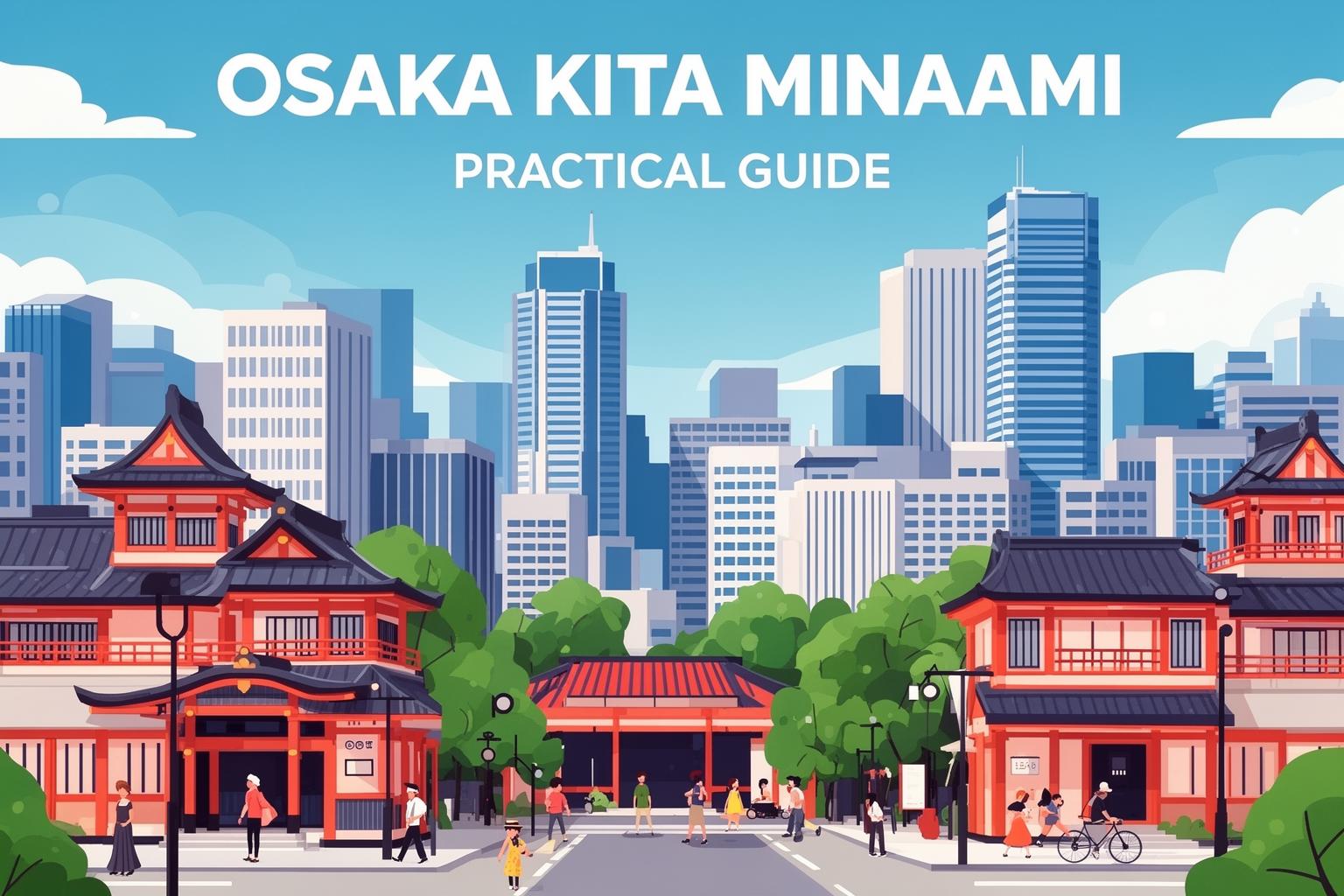
After unpacking the city’s dual identity, the final question remains: where is the right place for you? The answer depends on what you’re looking for in your life in Osaka. This isn’t a definitive test, but rather a guide to help you match your personal priorities with the city’s cultural landscape.
If You’re a “Kita” Person at Heart…
You likely thrive on structure, value career advancement in an established field, and enjoy the finer things in life. Convenience is paramount; you want easy access to transportation, high-quality amenities, and a clean, orderly environment. You feel comfortable in a more formal social setting that reflects international standards of business and leisure. You prefer planning your weekends—a reservation at a new restaurant, tickets to a concert—rather than leaving them to chance. Your social interactions are warm but maintain a degree of professional distance.
Neighborhood Suggestions: Consider apartments along the Hankyu railway lines running north from Umeda, in pleasant residential suburbs such as Toyonaka or Ikeda, which offer a great balance of quiet living with quick access to the city center. Closer in, areas like Fukushima and Nakazakicho provide a more urban lifestyle. Fukushima is a diner’s paradise, while Nakazakicho, with its preserved old houses converted into cafes and boutiques, offers a bohemian, artistic vibe right on Kita’s doorstep.
If You’re a “Minami” Person at Heart…
You are driven by a creative, entrepreneurial, or independent spirit. You seek energy, spontaneity, and the sense of being fully immersed in the heart of things. You don’t just tolerate chaos; you find it stimulating. You value direct, honest communication and building community through shared experiences, whether over street food or in a packed live music venue. Your ideal weekend is unplanned, an adventure waiting to unfold around any corner. You want your social life to be an organic extension of your neighborhood, not a scheduled event.
Neighborhood Suggestions: Explore neighborhoods along the Nankai line heading south from Namba. Areas like Horie and America-mura are perfect if you want to live in the cultural heart of the city. For a unique vibe, consider Taisho ward, known for its large Okinawan community and laid-back atmosphere. Further south, the city of Sakai, easily accessible from Namba, offers a more historical and slightly quieter version of the Minami merchant spirit.
The Final Word: Osaka is Not a Monolith
Kita and Minami are best understood not as rigid geographic boundaries, but as two magnetic poles that create the dynamic tension making Osaka so captivating. The true magic of living here lies not in choosing one over the other, but in appreciating the rhythm of the entire city. It’s the ability to hold a serious business meeting in a Umeda skyscraper in the morning and share laughs with strangers over cheap drinks in a Namba alley at night. It’s knowing when to use polite, standard Japanese and when to embrace the warmth of the local dialect.
Don’t let stereotypes define your experience. Use this framework as a starting point. Explore the polished halls of Kita and get wonderfully lost in the chaotic lanes of Minami. Find the third places that defy easy description. The goal isn’t to become a “Kita person” or a “Minami person.” The goal is to become an “Osaka person,” someone who understands the city’s dual soul and builds a life drawing strength, energy, and joy from both. That, in the end, is the true Osakan way.