So you’ve decided on Osaka. You dodged the crushing, polite formality of Tokyo and swerved past the elegant, reserved beauty of Kyoto. You chose the city with grit in its teeth and a laugh in its belly. Smart move. But now comes the real decision, the one that will define your entire life here, from your morning commute to your midnight ramen. It’s a choice every Osakan understands in their bones, a fundamental dividing line that’s about more than just a subway stop. It’s the choice between Kita and Minami. North and South. The two thumping, wildly different hearts of this metropolis.
Kita, which means north, is anchored by the sprawling, futuristic labyrinth of Umeda. This is Osaka in a crisp business suit. It’s a world of gleaming skyscrapers, sophisticated department stores, and efficient, interconnected train lines that whisk you off to Kobe and Kyoto. It’s the city’s professional face, a hub of commerce and high-end consumption that feels polished, international, and ambitious. Then there’s Minami, the south, with its chaotic, neon-drenched nucleus in Namba. This is Osaka in a loud, leopard-print jacket. It’s a sensory overload of sizzling street food, booming pachinko parlors, raucous comedy clubs, and tiny, shoulder-to-shoulder bars. It’s the city’s historic, hedonistic soul, a place that is unapologetically, stubbornly, and gloriously itself.
Asking which one is “better” is like asking if you prefer jazz or punk rock. It’s the wrong question. The real question is: which rhythm matches your own? This isn’t a guide to the tourist spots you’ll visit once. This is a deep dive into the daily grind, the neighborhood vibes, and the unwritten social codes that come with choosing your side. We’re talking about the texture of your life—where you’ll buy your groceries, how you’ll make your friends, and what version of Osaka you’ll wake up to every single day. Before we dissect these two beasts, let’s get the lay of the land.
To truly understand the daily social fabric of your chosen neighborhood, you’ll need to master local customs like the social ritual of giving ‘Ame-chan’.
The Tale of Two Stations: Defining the Vibe from the Ground Up
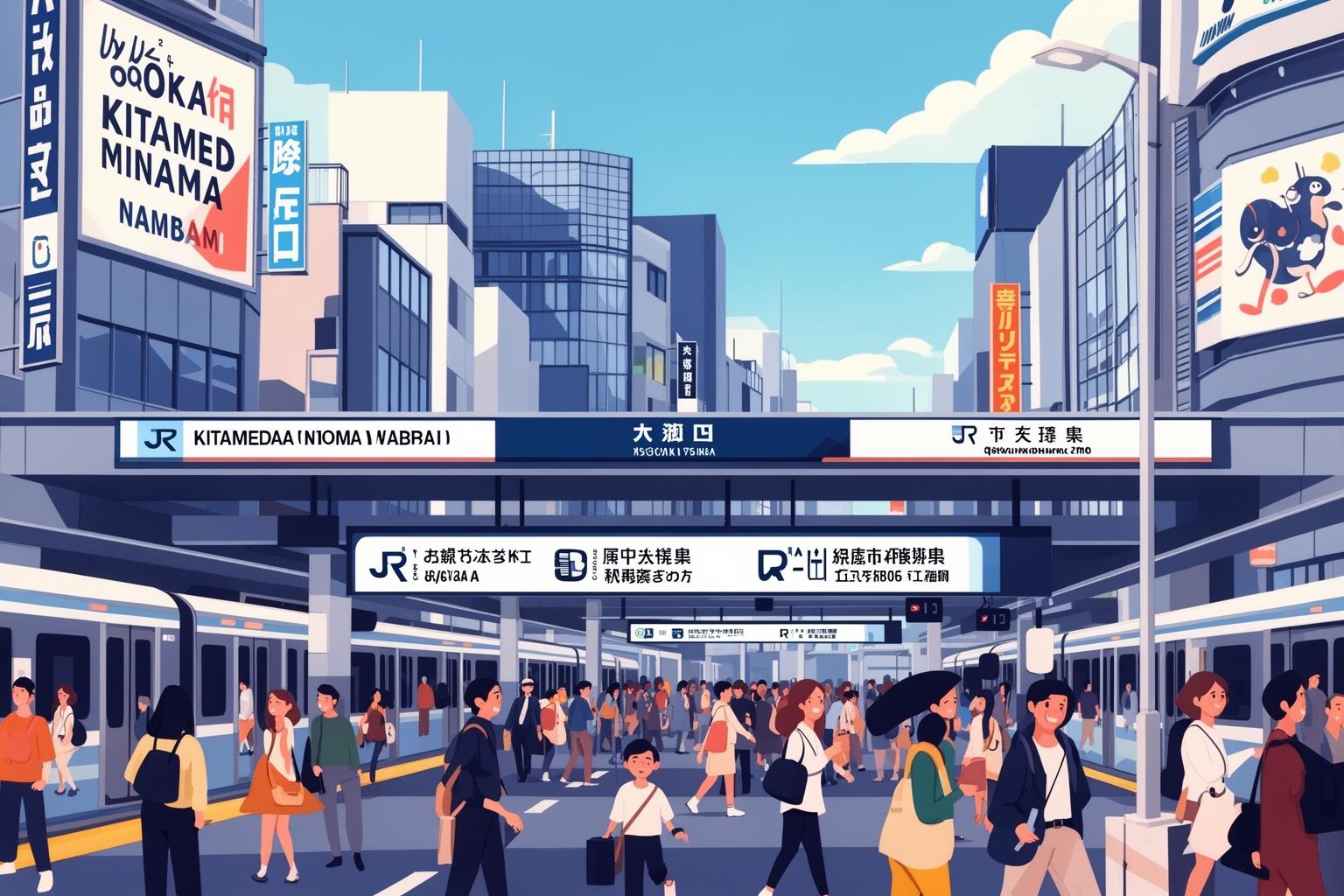
Nowhere is the fundamental contrast between Kita and Minami more evident than in their respective train stations. These places are more than just transit points; they are ecosystems, the first and last impressions you receive of each area, setting the tone for everything around them.
Kita’s Grand Central: The Umeda Maze
To understand Kita, you must first navigate Umeda Station. Or more precisely, the Umeda Dungeon. It’s not a single station but a vast, underground megastructure combining JR Osaka Station with Umeda stations of the Hankyu, Hanshin, and Midosuji lines. It represents a feat of urban engineering and a trial of human endurance. The first thing you notice is the cleanliness—floors gleam, signage is clear and logical, though overwhelmingly plentiful. The air is climate-controlled, faintly scented with designer perfumes from the nearby department stores.
The atmosphere is one of purpose and momentum. People flow swiftly in predictable patterns. Salarymen in dark suits power-walk toward the JR lines, their faces set with commuter resolve. Elegant women carrying bags from Hankyu Department Store maneuver through the crowds with practiced confidence. There is a marked absence of lingering. Everyone has a destination, timetable, and intent. The soundscape is a muted hum: the rhythmic click of heels on polished floors, gentle melodic chimes announcing train arrivals, and soft conversational murmurs. It’s the sound of a city in motion, a massive, finely tuned machine.
For residents, this maze becomes part of their skill set. They memorize secret pathways from the Midosuji line to the Hankyu entrance, the fastest route to the Yodobashi Camera giant, and the quietest restrooms. Umeda isn’t a place to linger in; it’s a place to pass through. It serves as a gateway—to the office, a high-end dinner, or another city altogether. It feels efficient, impressive, and just slightly sterile. It’s Osaka’s strong, professional handshake—firm and confident.
Minami’s Chaotic Crossroads: The Namba Human Swarm
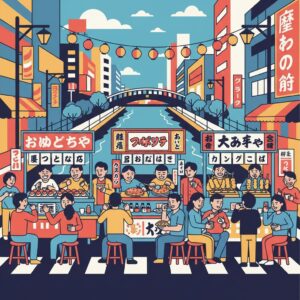
Exiting Namba Station is like being launched into a carnival. There is no single, cohesive “Namba Station.” Instead, it’s a messy cluster of Nankai Namba, JR Namba, Midosuji Line’s Namba, and the Kintetsu/Hanshin Osaka-Namba stations, loosely linked by sprawling, low-ceilinged underground malls that feel a world apart from Umeda’s polished concourses. The air below ground smells of takoyaki grease and stale cigarette smoke. Floors are worn, lighting harsh, and the energy chaotic and vibrant.
Then you step outside into the human scramble. The crowds don’t flow; they surge and swirl. There is no uniformity. You see teenagers in bold street fashions, wide-eyed tourists gazing up at the Glico Running Man, lively groups of friends kicking off a night out, and shopkeepers shouting “Irasshaimase!” with genuine enthusiasm. The soundscape is a sensory overload: J-pop blasts from countless speakers, pachinko parlors’ mechanical roar spills onto the streets, food stalls sizzle and pop constantly, and over it all, the roar of people—laughing, shouting, living loudly.
As a resident, you don’t master Namba; you learn to move with its currents. You accept being jostled, sensory overload, and that a quick trip to the station may turn into an unexpected adventure. Namba isn’t a gateway to somewhere else; it’s a destination. It’s a place to be—to eat, drink, be entertained, and get lost. It’s Osaka’s messy, welcoming bear hug, carrying faint scents of beer and fried noodles. It’s unpolished but undeniably, vividly alive.
Daily Bread and Circuses: The Rhythm of Everyday Life
Where you live influences the small rituals that shape your daily life—the morning coffee, the grocery run, the leisurely weekend afternoon. In Kita and Minami, these everyday routines are painted with distinctly different tones.
Living in the Shadow of Skyscrapers: The Kita Residential Experience
Opting to live near Kita means choosing convenience and refinement. The residential neighborhoods around Umeda provide a cleaner, more orderly, and often quieter environment—a peaceful refuge just minutes from the bustling commercial center.
Neighborhoods to Know: Nakazakicho, Fukushima, Tenma
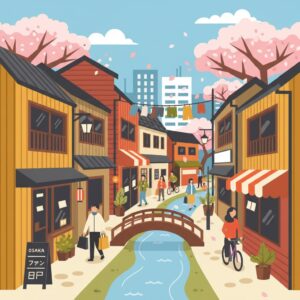
Although Umeda itself is predominantly commercial, it’s the surrounding neighborhoods where people create their home life. Just a ten-minute walk east of Umeda stands Nakazakicho, Kita’s hidden bohemian gem. This area is a maze of narrow, winding alleys filled with beautifully preserved pre-war wooden homes converted into quirky independent cafes, vintage clothing stores, art galleries, and small, intimate restaurants. Living here feels like stepping back in time. It provides a serene, village-like vibe—a place to escape Umeda’s corporate gloss and savor a handcrafted coffee in a quiet, leafy courtyard. Nakazakicho offers a perfect counterpoint to Kita’s modernity, giving character and community while keeping the city’s hub close at hand.
Heading west from Umeda brings you to Fukushima, a neighborhood that has surged in popularity, especially among young professionals and food enthusiasts. Fukushima caters to a more mature palate. Its streets boast sleek, contemporary izakayas, chic Italian eateries, and elegant wine bars. Here, the focus is on savoring good food and conversation, rather than loud partying. It’s a favored spot for “gokon” (group dates) and after-work dinners. Residential buildings are mostly modern, high-rise apartments with great views and amenities. Living in Fukushima means your social life centers on a refined, culinary-driven scene—Kita’s stylish dining room.
A bit further north lies Tenma, a lively blend that captures some of Minami’s spirited energy but with a distinctly local, residential feel. Its standout feature is the Tenjinbashisuji Shotengai, Japan’s longest covered shopping arcade, extending over 2.6 kilometers. This authentic working-class market is far from touristy—you’ll find everything from inexpensive clothing stores and traditional butcher shops to bustling sushi counters and standing bars filled with locals. The area around Tenma Station is a maze of affordable and cheerful izakayas, making it a key nightlife spot. Tenma is grittier than Fukushima but more grounded and less tourist-heavy than Namba, offering a vibrant, genuine slice of Osaka life.
The Kita Grocery Run and Weekend Routine
Weekly grocery shopping in Kita tends to be a polished experience. You might frequent stores like Hankyu Oasis, a high-end supermarket chain, or the renowned Ikari Supermarket, celebrated for its wide range of imported goods, gourmet cheeses, and fine wines. The aisles are spacious, the lighting gentle, and the produce neatly arranged. In the basement food halls (depachika) of the Hankyu and Hanshin department stores, you’ll find exquisite ready-made meals, artisanal breads, and desserts crafted like miniature sculptures. The experience combines quality, variety, and convenience, though usually at a premium price.
A typical weekend in Kita often follows a structured, consumer-focused rhythm. It might begin with brunch at a trendy cafe inside Grand Front Osaka, one of the vast, modern shopping complexes connected to the station. The afternoon could involve shopping—exploring the latest fashions at LUCUA or wandering through the countless floors of Umeda’s department stores. Evenings might include catching a musical at the Umeda Arts Theater or sipping a cocktail at a sky bar with sweeping city views. Leisure time in Kita revolves around curation and consumption—selecting the best, newest, and most sophisticated options. Social currency here centers on being knowledgeable, polished, and presentable.
Life Amidst the Lanterns: The Minami Residential Vibe
Living near Minami means embracing the chaos. It entails accepting a life that is louder, messier, and infinitely more spontaneous. Residential options tend to be smaller, older, and tucked into side streets beneath the neon glow.
Neighborhoods to Know: Shinsaibashi, Horie, Nipponbashi
Living in Shinsaibashi, particularly on the west side near America-mura (“Amemura”), is not for those who prize their sleep. Amemura is the heart of Osaka’s youth and street fashion scene. Its streets are a constant parade of unique styles and packed with vintage shops, record stores, and live music venues. To live here means having the city’s most vibrant cultural scene at your doorstep. It’s noisy, crowded, and electric—you trade tranquility for unrivaled access to Minami’s nightlife and creative pulse.
Just west of the bustle is Horie, Minami’s answer to Kita’s refinement, but on its own terms. Horie is effortlessly cool. Orange Street, the main thoroughfare, is famed for its independent furniture stores, high-end streetwear boutiques, and stylish cafes. The vibe is more laid-back and artistic than the frenetic pace of Namba. Nearby Horie Park and the riverside provide green spaces for relaxation. Horie attracts creative professionals and fashion-savvy individuals seeking Minami’s energy with a more curated, indie feel. It’s where you enjoy artisanal coffee by day and discover hidden cocktail bars by night.
East of Namba is Nipponbashi, known as Den Den Town. This is Osaka’s equivalent to Akihabara—the hub for anime, manga, video games, and electronics. Streets are lined with multi-story shops devoted to character figurines, retro gaming consoles, and maid cafes. To outsiders, it may seem strange, but residents find it welcoming and passionate. Living here means having manga bookstores nearby and neighbors who might be competitive gamers or cosplayers. It’s a niche neighborhood, a paradise for those immersed in the subculture—a community built around shared interests offering a strong sense of belonging for those marching to their own beat.
The Minami Grocery Run and Weekend Routine
Grocery shopping in Minami is an adventure. You might shop at a local, no-frills supermarket with narrow, crowded aisles or navigate the bustling Kuromon Ichiba Market. Although now a tourist attraction, Kuromon still hosts vendors frequented by locals for generations. The iconic Minami grocery shopping experience, however, is Super Tamade. This Osaka institution bombards your senses with garish neon signs, a raucous theme song, and unbelievably low prices. Shopping at Tamade is more than an errand—it’s a treasure hunt for legendary “1 yen sale” deals. It embodies the Minami spirit of resourcefulness and bargain-hunting.
Weekends in Minami rarely follow a plan—they unfold organically. You might start with a late-morning stroll along Doguyasuji, the kitchenware street, to see what’s new, then be tempted by the aroma of grilled scallops from a stall near Kuromon. This could lead to an impromptu matinee comedy show at the Namba Grand Kagetsu, the centerpiece of Japanese stand-up. The afternoon fades into evening with visits to tiny, smoky izakayas in Ura Namba’s maze of back alleys filled with standing bars. You strike up friendships, share a plate of doteyaki, and end the night at karaoke until dawn, capping it off with a bowl of life-saving ramen on the way home. Leisure in Minami is about participation and spontaneity; social currency is measured by how much fun you have, the stories you gather, and how open you are to whatever comes next.
The Osaka Mindset: How Kita and Minami Shape Identity
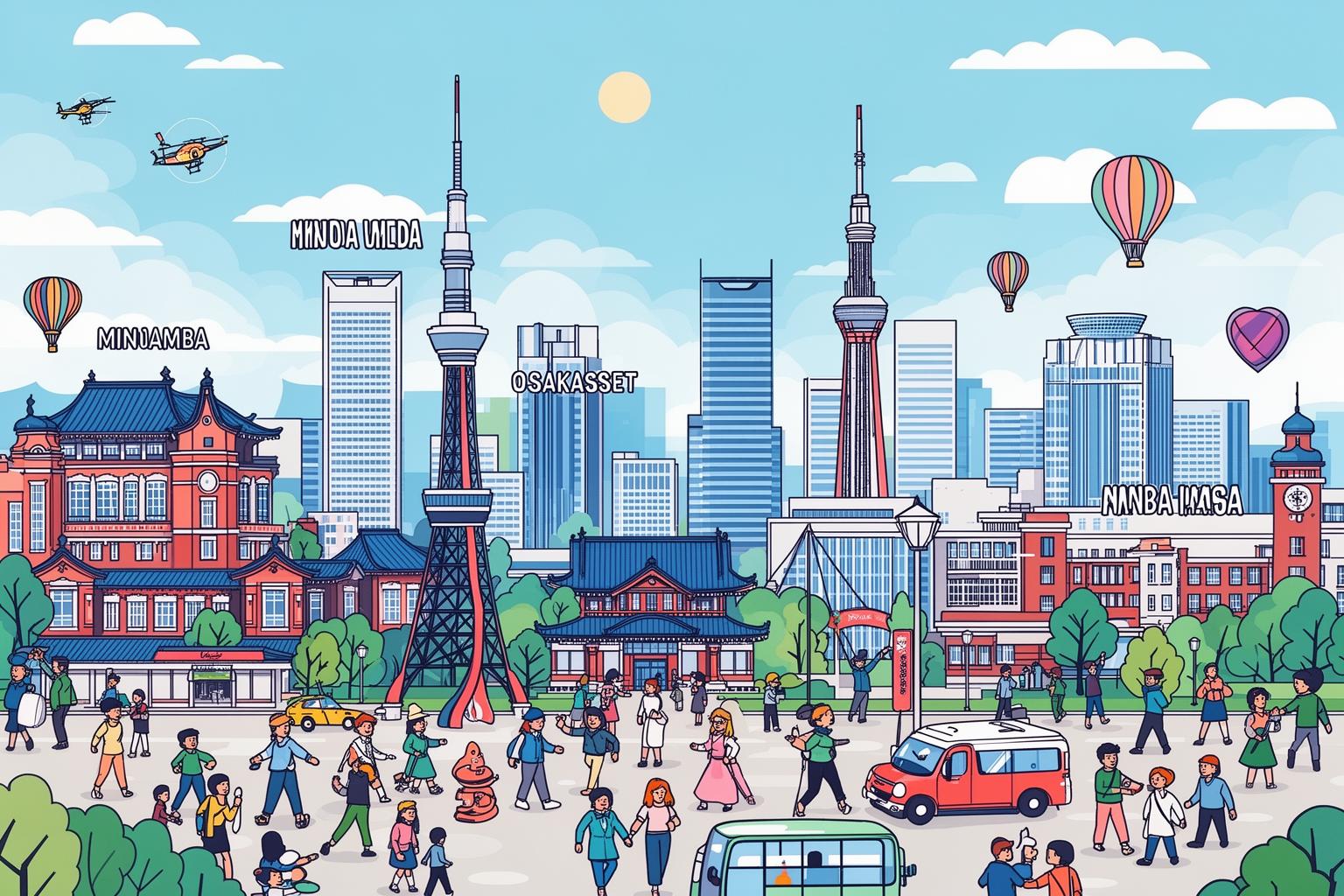
Your choice of neighborhood doesn’t just influence your commute; it also shapes your identity as an Osakan. The city’s two poles cultivate distinct mindsets, communication styles, and worldviews.
The Kita Persona: Polished, Professional, and Pan-Kansai
Aligning with Kita means embracing a more modern, outward-looking vision of Osaka. The mindset here tends to be more cosmopolitan. Those who work and socialize in Umeda are linked to the broader Japanese and international business communities. They may identify less as simply “Osakan” and more as residents of the greater Kansai region.
The language reflects this nuance. Although Osaka-ben remains the native dialect, in Umeda’s corporate towers and upscale shops, it is often softened with more standard Japanese (hyojungo). The fast-paced, assertive speech typically associated with Osaka merchants is toned down. While still more direct than Tokyo’s style, communication here carries a layer of professional finesse. The main focus is not just on humor, but on being sharp, competent, and globally attuned.
A key part of the Kita identity is its role as Kansai’s gateway. Umeda Station acts as a super-connector. A 30-minute Special Rapid train will take you to central Kyoto or Kobe’s port. Life in Kita is therefore often viewed on a regional scale. People commute from affluent suburbs between Osaka and Kobe, meet clients from Kyoto for lunch in Grand Front, and see these three cities as one large, connected playground. This outlook contrasts sharply with Minami’s intense, Osaka-centered focus.
Among locals, there’s a quiet, ongoing debate about the “Tokyo-ization” of Umeda. With its sleek glass towers, global brand stores, and efficient transit, some believe it’s losing its distinctive Osaka character and becoming a generic global city. For newcomers or those in international business, this is reassuring—it feels familiar, navigable, and part of a globalized world. For Osaka purists, however, it’s a slight betrayal of the city’s rough-and-tumble spirit.
The Minami Identity: Raw, Resourceful, and Pure Osaka
Choosing Minami is like diving headfirst into what is colloquially called “kote-kote” Osaka—the thick, rich, powerful, and sometimes overwhelming essence of the city’s traditional culture. The Minami identity is fiercely local and proudly so. It embraces the city’s history as a merchant town, entertainment hub, and a place where people work hard and play even harder.
Here, the language is Osaka-ben in its purest, most undiluted form. It’s rapid, loud, expressive, and infused with humor. Classic Osaka traits—directness, wit, and a touch of theatricality—are fully on display in Namba’s shops, bars, and streets. The mindset is rooted in the spirit of “akinai” (business), but not the corporate style found in Kita. Instead, it reflects the small shop owner, street vendor, and independent entrepreneur. It values resourcefulness, a good bargain, human connection, and the ability to make customers laugh. Appearance takes a backseat to substance and personality.
Minami feels distinctly more insularly Osakan. Its rail lines, such as the Nankai line, connect to Osaka Prefecture’s deep south and Wakayama. Its cultural touchstones are local—the Hanshin Tigers baseball team, Yoshimoto comedy, the Bunraku puppet theater. Its worldview is less preoccupied with Tokyo or Kyoto and more invested in the dramas and comedies of its own neighborhoods. Shinsekai—with its Tsutenkaku Tower and old-school kushikatsu joints—is Minami’s spiritual sibling. It represents a part of Osaka that steadfastly refuses to change for anyone, and the Minami identity celebrates that stubborn authenticity.
Foreigners often misinterpret this raw energy as rudeness. The straightforwardness and lack of formal politeness can be startling. Yet it’s rarely meant to offend. It’s a culture that values efficiency and honesty over polite ambiguity. A Minami shopkeeper won’t spend five minutes bowing and using honorifics; they’ll tell you what’s good, crack a joke, and send you on your way. It’s a different kind of warmth—less gentle, but arguably more sincere.
Navigating the Social Scene: Making Friends and Finding Your Tribe
The city’s north-south divide directly influences how social circles form. Your approach to building a community will vary greatly depending on which side of the city you call home.
Kita’s Networked Nights
In Kita, the social scene often centers around pre-planned activities and established networks. After-work drinks are common, with colleagues gathering at the stylish izakayas in Fukushima or the maze of bars beneath the train tracks in Tenma. Conversations naturally tend to focus on work, industry news, and career paths.
Making friends here can feel more structured. You might connect with people through your job, at formal networking events held in Umeda’s hotel ballrooms, or by joining specific hobby groups, such as upscale fitness clubs or language exchanges designed for professionals. Social circles may feel somewhat siloed and take longer to break into. Interactions tend to be polite and pleasant, but the instant familiarity often found in Minami is less frequent.
The foreigner community in Kita often reflects this professional atmosphere. You’ll find more people working in corporate roles at international companies, university professors, and those in finance or IT sectors. Expat social events tend to be more organized, taking place at established international bars or restaurants. It can be a comfortable environment for those seeking a professional tribe and a career-focused network.
Minami’s Spontaneous Sessions
In Minami, your social life happens to you—it’s built on chance encounters. The core social units are small, independent spots: ten-seat standing bars, local okonomiyaki joints, and neighborhood coffee shops. The culture of being a “joren-san” (a regular) is especially strong.
This is how friendships form. You find a bar you like in Ura Namba or a café in Horie. You go once, then twice. By the third visit, the owner knows your drink, and by the fifth, you’re part of the conversation with other regulars. Friendships grow in these shared “third places.” Conversation barriers are minimal. It’s perfectly normal for strangers to strike up a chat at the bar counter. Social status and profession matter far less than your ability to hold a conversation and share a laugh. It’s a deeply democratic and accessible social environment.
The foreigner community in Minami is often more eclectic. You’ll find students, artists, musicians, freelance creatives, and service industry workers. It attracts those seeking deep immersion and willing to embrace the delightful chaos of local life. Your friends might be the Japanese bartender, the Australian student, the French chef, and the longtime local retiree who’s been drinking at the same spot for forty years. It’s a community built not on shared résumés, but on shared experiences.
The Final Verdict: Choosing Your Osaka
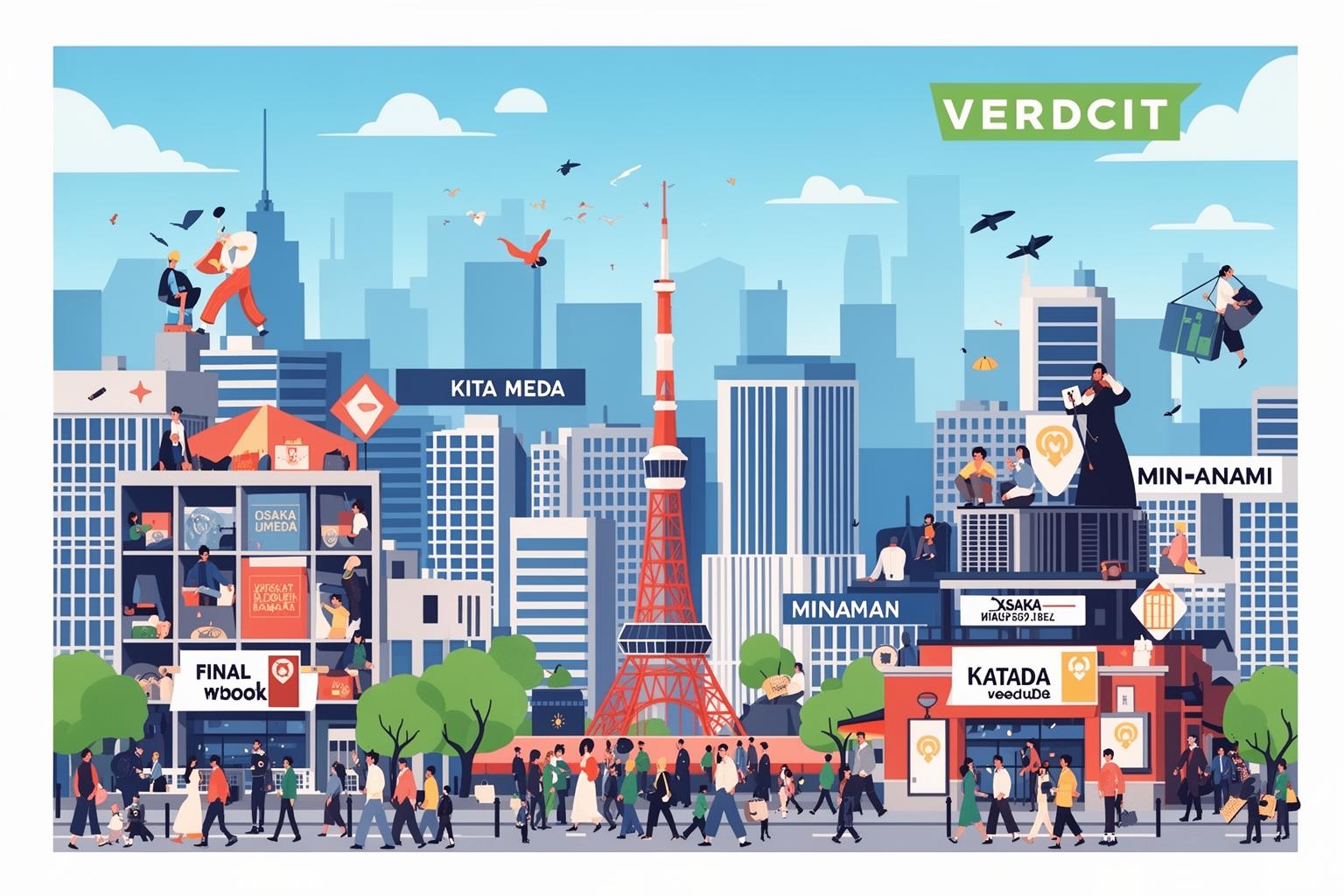
Ultimately, the decision between Kita and Minami isn’t about which one is objectively better. It’s a deeply personal choice based on the kind of life you want to create in this remarkable city. There isn’t a right or wrong answer, only the one that fits you best.
So, who should opt for Kita? Choose Kita if you are a professional who thrives in an environment of order, convenience, and contemporary urban living. If the thought of residing in a clean, modern apartment with easy train access across the Kansai region appeals to you, then Kita is your ideal spot. If you appreciate a curated social scene, upscale shopping, and sophisticated dining options, you’ll feel right at home. Kita is perfect if you want the power and amenities of a global city combined with a warm, Osakan charm.
And who should lean toward Minami? Choose Minami if you are an adventurous soul, drawn to energy, spontaneity, and what feels like “authentic” culture. If you’re willing to trade a bit of polish and predictability for a lifestyle full of unexpected experiences and sensory richness, Minami will reward you greatly. If you believe the best nights are unplanned, if you enjoy street food and dive bars, and if you want to be immersed in a culture that is loud, proud, and unapologetically itself, then the south is where you belong. Minami is for those who want to live in a city unlike any other on Earth.
In the end, the true beauty of Osaka is that you don’t have to choose between these worlds. The Midosuji subway line, the city’s main artery, connects Umeda to Namba in just eight minutes. You can work in Kita’s polished towers and lose yourself in Minami’s chaotic, lantern-lit streets all in one evening. Living here means learning to navigate both worlds, appreciating their unique rhythms, and through that, understanding the rich, complex, and utterly captivating character of Osaka itself. Your preferences may even change over time. You might arrive craving the raw energy of Minami and later yearn for the calm convenience of Kita, or vice versa. And that journey of discovery is the most rewarding part of making a life here.