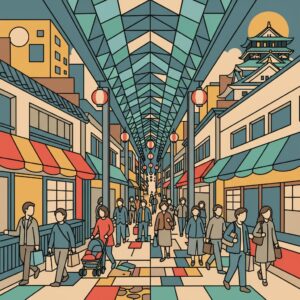
Welcome to Osaka, the city that beats with a heart all its own, a rhythm of sizzling takoyaki, booming merchant greetings, and the warm, unpretentious laughter of its people. Deciding to plant your roots here, even for a while, is to choose a life less ordinary, a daily dance with a culture that’s as deeply historic as it is brilliantly modern. But before you can lose yourself in the neon glow of Dotonbori or find your favorite quiet shrine, you face a foundational choice, a decision that will shape your entire experience of this magnificent metropolis: where will you call home? This isn’t just about four walls and a roof; it’s about the very rhythm of your life in Japan’s kitchen. The great debate for any long-term sojourner is the ultimate comparison: the communal, vibrant energy of a share house versus the quiet, personal sanctuary of a private apartment. This choice is a crossroads. One path leads to instant community, a kaleidoscope of new faces and shared experiences, a shortcut to feeling connected in a foreign land. The other path offers a deeper, more personal immersion, a blank canvas on which to paint your own life, to build your own world from the ground up, one neighborhood discovery at a time. Each holds its own magic, its own challenges, and its own unique promise for your Osaka story. Let’s peel back the layers of this crucial decision, exploring the financial realities, the social dynamics, and the cultural nuances that define these two very different ways of living, helping you find the beat that perfectly matches your own.
For those leaning towards the private apartment route, a great first step is to explore your options for renting an apartment in Osaka through UR Housing.
The Share House Symphony: A World of Instant Connection

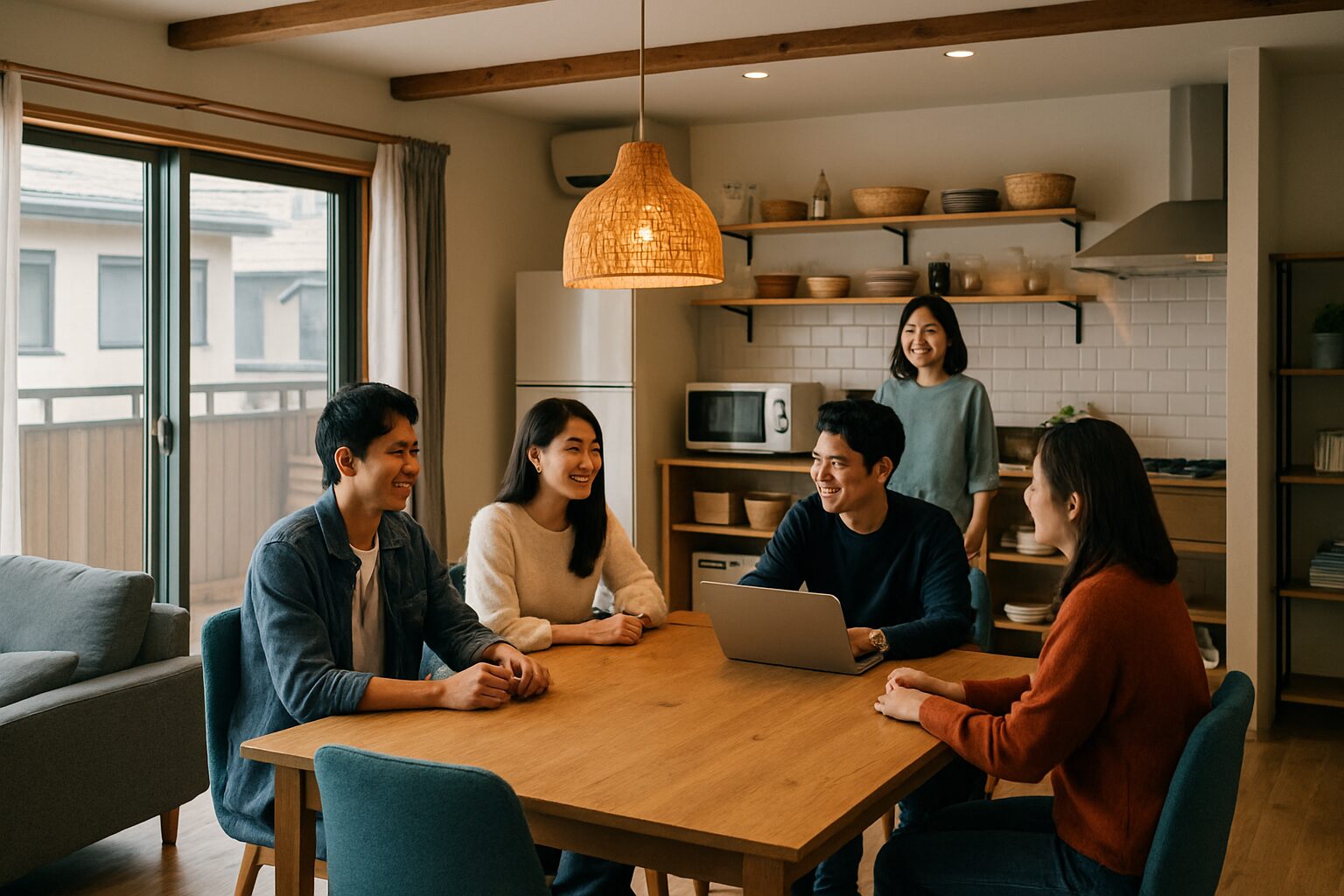
A share house in Osaka is more than just a rental room; it’s a living ecosystem fueled by the diverse energies of its residents. Stepping inside for the first time is an experience in itself—the air filled with the tempting aromas of various cuisines blending together, the soundscape a mix of different languages, a shared playlist, and the gentle hum of a movie night in the living room. This is the essence of a share house: a ready-made social life and a remedy for the loneliness that often accompanies adjusting to a new country alone. It’s a place where your first friends in the city might be the people you share a bathroom with, where language practice happens naturally over breakfast, and spontaneous outings to explore local festivals or hunt down the best ramen are common. It’s an immersion into a microcosm of the world, conveniently located in Kansai’s heart.
The Social Fabric: Weaving Your Osaka Story Together
The greatest and most undeniable appeal of share house life is the community. For many, this is the key factor that turns a daunting move abroad into an exciting adventure. Imagine arriving in Osaka, a city of millions where you know no one, and within hours, you’re sharing stories with a student from Brazil, a graphic designer from Korea, and a local Japanese university student eager to practice English. This isn’t unusual—it’s everyday life. Shared kitchens become culinary classrooms where one night you learn to make authentic dashi, and the next, genuine pasta carbonara. Living rooms turn into cultural exchange hubs, debate arenas for the best Ghibli film, and planning centers for weekend trips to Kyoto, Nara, or Kobe. These bonds, forged in shared living spaces, often become the foundation of your time in Japan. Your housemates become your first guides, translators for confusing mail, partners in crime for discovering the city’s hidden gems, and support when culture shock hits hardest. The transient nature of some residents—often on working holidays or short study programs—means the social dynamic is always changing, with a continuous flow of new personalities and perspectives. While this entails frequent farewells, it also guarantees a steady stream of hellos, keeping the atmosphere lively and fresh.
The Financial Rhythm: An Accessible Beat for Your Budget
Beyond its social benefits, the financial practicality of share houses is a huge attraction, especially in a country where renting typically involves high upfront costs. The usual Japanese rental process is an intimidating financial mountain, with non-refundable fees reaching four to six times the monthly rent. Share houses flatten this mountain into a manageable hill. The concept of “key money” (reikin), a non-refundable gift to the landlord, is almost entirely absent. The substantial security deposit (shikikin) is often replaced by a smaller, more reasonable deposit, usually partially refundable. There are no exorbitant agency fees or mandatory lock changes. Instead, the usual cost involves just the first month’s rent plus a modest deposit. This lowers the entry barrier significantly, freeing up your yen for exploring, dining, and truly living in Osaka. Additionally, utilities—electricity, gas, water, and high-speed internet—are generally bundled into a single flat monthly fee, eliminating the headache of setting up individual accounts, which can be a bureaucratic maze for non-Japanese speakers, and making monthly expenses predictable and budgeting simple. Most share houses also come fully furnished: your room includes a bed, desk, and storage, while common areas feature sofas, a TV, and a full array of kitchen appliances, from rice cookers to microwaves. You can literally arrive with just a suitcase and be settled within an hour, a convenience that’s hard to overstate.
The Flip Side of the Record: Navigating the Challenges of Communal Living
Naturally, this idealized vision of harmonious living isn’t without challenges. The very element that makes share houses appealing—the people—can also be the biggest difficulty. After all, you’re sharing personal space with a revolving group of individuals from varied backgrounds, with differing habits, cleanliness standards, and sleep routines. The shared kitchen can turn into a battlefield over a perpetually full sink or mysteriously vanishing leftovers. Morning queues for the single shower can test anyone’s patience. Noise is a constant factor, whether from an impromptu Tuesday night party or a housemate practicing guitar at dawn. Privacy is scarce; your room is often your only sanctuary, sometimes separated from neighbors by just a thin wall. For introverts, those needing quiet to work or study, or anyone very particular about their living environment, a share house can quickly become a source of stress instead of joy. Resolving conflicts requires diplomacy and compromise, skills not everyone has. The dream of a happy, global family sometimes unravels into passive-aggressive notes and unspoken tensions. It’s a social lottery—while the jackpot is a family of lifelong friends, the booby prize is a living situation that constantly tests your patience.
The Private Apartment: Crafting Your Own Sanctuary in the City
Choosing a private apartment in Osaka is a statement of intention. It signals that you’re not merely passing through, but actively crafting a life. It’s the pursuit of a deeper, more independent existence within this vast urban environment. The experience starts not with a friendly housemate handing over the Wi-Fi password, but with the sound of your own footsteps echoing in an empty room. It’s the scent of fresh tatami mats or new flooring, a blank slate waiting for your personal imprint. This journey is one of solitude, autonomy, and profound personal freedom. It’s the quiet morning coffee in your own kitchen, the freedom to leave your belongings wherever you wish, the silence that welcomes you after a hectic day at work. An apartment is your sanctuary, your private kingdom where you reign alone. It offers a unique kind of immersion, compelling you to interact with your immediate surroundings—the local bakery, the neighborhood vegetable stand, the community association—on your own terms. It’s a slower, more intentional way of laying down roots, transforming from simply a resident to a true member of the Osaka community.
The Fortress of Solitude: The Unmatched Luxury of Privacy
Privacy is the ultimate luxury, and in a private apartment, it is complete. There’s no one to answer to, no social duties after a long day, no obligation to engage in small talk when all you desire is peace and quiet. You can lounge in your pajamas all day, play your music as loud as you and your neighbors can tolerate, and arrange your space exactly how you want without needing anyone’s approval. This degree of control and personal freedom is deeply rejuvenating. For professionals logging long hours, creatives seeking a quiet workspace, or couples building a shared life, the calm and quiet of a private apartment are essential. It enables you to fully unwind and process your experiences in Japan at your own pace. Your home becomes a true refuge from the sensory overload of the city, a place where you can genuinely recharge. This solitude also cultivates a special kind of self-reliance. You take charge of everything, from replacing a lightbulb to mastering the city’s complicated waste sorting rules. Though challenging, this responsibility fosters a strong sense of competence and independence, making you feel less like a guest and more like a confident resident in your adopted city.
The Financial Labyrinth: Breaking Down the Initial Investment
Here lies the biggest obstacle, the daunting barrier that drives many toward the simplicity of share houses: the upfront cost of renting a private apartment in Japan. It is a tradition-filled system that can be confusing and costly for newcomers. Let’s dissect this financial maze. First, there’s the regular monthly rent (yachin). Then comes the security deposit (shikikin), usually one to two months’ rent, which is theoretically refundable but often subject to deductions for cleaning and repairs upon move-out. Next is the notorious “key money” (reikin), a one-to-two-month non-refundable fee that serves as a gift to the landlord for the privilege of renting their property. On top of that, you pay a real estate agency fee (chuukai tesuuryou), typically one month’s rent plus tax. It doesn’t end there. You almost certainly must use a guarantor company (hoshougaisha), which acts as your co-signer for a fee often ranging from 50% to 100% of one month’s rent. Finally, expect smaller charges like lock replacement fees (kagi koukan dai) and mandatory fire insurance (kasai hoken). When totaled, the initial move-in cost for an apartment can easily reach five to six times the monthly rent. For an apartment renting at ¥70,000 per month, you might need an upfront payment of ¥350,000 to ¥420,000 (approximately $2,200 to $2,700 USD) before buying any furniture. This is a substantial sum requiring significant savings and careful financial planning.
The Blank Canvas: The Joy and Challenge of Starting from Scratch
Most Japanese apartments come entirely unfurnished. And by unfurnished, we mean completely bare. You may find yourself entering a space without a refrigerator, washing machine, curtains, and sometimes not even a light fixture in the main room. This situation presents both a creative opportunity and a logistical hurdle. You have the freedom to design your home from scratch, to create a living space that perfectly reflects your personal style. You can scour recycle shops in Den Den Town for unique items, embrace the minimalist look of Muji, or choose affordable, practical basics from Nitori. This nesting process can be very fulfilling. However, it is also a significant expense and a fair amount of work. You’ll need to manage deliveries, assemble furniture, and determine which appliances fit your compact kitchen. Afterward, you must navigate setting up utilities. Electricity, gas, and water each require separate contracts with different companies, often conducted entirely in Japanese. Then there’s internet installation, which can involve long waiting periods. Every step is a lesson in Japanese bureaucracy and a test of your language skills or ability to find assistance. While the end result is a home truly your own, the journey is far more complex than simply moving into a ready-made share house.
The Head-to-Head Comparison: Finding Your Osaka Beat
Let’s compare these two distinct lifestyles side by side, focusing on the key aspects that will shape your daily life in Osaka. The choice depends on what matters most to you: immediate community or complete privacy, financial ease or long-term investment, ready-made convenience or the freedom to design your own space.
Cost: The Sprint vs. The Marathon
This is likely the clearest contrast. A share house is a financial sprint; the entry cost is low and you can settle in almost immediately. The upfront expense is minimal, usually just a deposit and the first month’s rent. Monthly costs are predictable, with one payment covering rent and all utilities. It’s an affordable and flexible option, ideal for those with a tighter budget or an uncertain length of stay.
An apartment is a financial marathon. The initial outlay is substantial—a major barrier that demands months of savings. Once you move in, you have more bills to manage: separate payments for gas, electricity, water, internet, and building fees. While monthly rent might be similar to a private room in a quality share house, the overall living expenses, especially during the first year, are significantly higher. This option suits individuals with financial stability and a long-term commitment to living in Osaka.
Community: Built-In vs. Self-Made
A share house provides a built-in community. It offers an instant social network—a diverse group of people ready to connect. This can be a huge advantage, speeding up your social integration and offering constant companionship. You give up some personal space but gain social richness. The house’s rhythm becomes part of your daily life, for better or worse.
An apartment requires you to create your community from the ground up. This can be intimidating, particularly for shy individuals or newcomers to the country. It involves effort: joining clubs, attending language exchanges, making friends at work, and becoming a regular at local spots. However, the community you build in this way is entirely your choice. It might take longer to develop but tends to be deeper and more aligned with your personal interests and character. You engage with your neighborhood, turning unfamiliar streets into a landscape of familiar faces.
Convenience and Flexibility: The Great Divide
When it comes to convenience, the share house is the undisputed leader. It embodies a “plug-and-play” lifestyle. Rooms come furnished, utilities are included, and short-term leases make moving in and out hassle-free. This flexibility is perfect for students, working holiday visa holders, or anyone not ready to commit to a long-term lease. If your plans change, you can usually leave with just one month’s notice.
An apartment represents a major commitment. The typical lease lasts two years, and breaking it early can result in hefty penalties. The entire process—from finding an agent and setting up utilities to furnishing your space—is a significant undertaking that requires time, effort, and language skills. While living in an apartment offers the freedom to live exactly as you want once settled, the challenges of getting there and the lack of flexibility are important factors to consider.
Making the Right Choice for Your Osaka Journey
So, how do you choose? The best decision depends entirely on who you are, what phase of life you’re in, and what you want to gain from your time in Osaka. There is no universally better option—only the one that suits you best.
The Ideal Share House Resident
A share house is perfect for you if you’re a social butterfly who enjoys meeting new people. You’re coming to Osaka alone and want to build a social circle quickly. You might be a student, on a working holiday, or in the first year of a new job, with budget as a key concern. You prioritize convenience and flexibility over personal space and privacy. The thought of dealing with Japanese bureaucracy to secure an apartment is daunting, and you’d rather spend your energy exploring the city. You view your home as a springboard for adventure, not necessarily a quiet refuge.
The Perfect Apartment Dweller
You’re ready for your own apartment if you have a stable job and have saved for the substantial upfront costs. You plan to stay in Osaka long-term—two years or more—and want to create a proper home. Privacy, quiet, and control over your environment are your top priorities. You might be moving as a couple or working from home and need a dedicated, calm space. You are independent and self-reliant, and either have adequate Japanese language skills or the patience and resources to handle the rental process. You’re excited about exploring your own neighborhood and building a community naturally over time.
The Savvy Hybrid Strategy: The Best of Both Worlds
For many, the smartest choice isn’t one or the other but a combination. Consider a hybrid approach: begin your Osaka experience in a share house for the first three to six months. This helps you settle gently into life in Japan. You’ll have an immediate address, a support network, and an easy living arrangement while you get your bearings. Use this time to explore various Osaka neighborhoods and decide where you’d like to settle long-term. Practice your Japanese, save money, and learn the city’s ins and outs from your housemates. Once you feel confident and settled, you can start searching for a private apartment. This approach reduces the risks and stresses of both options—you avoid the initial isolation of an apartment and the potential long-term drawbacks of share house life—giving you the best of both worlds and making your transition to Osaka as smooth and enjoyable as possible.
Whichever path you choose, remember that your home is the foundation of your adventure. It’s where you’ll return after wandering the covered shopping arcades of Shinsaibashi, where you’ll share stories of seeing Osaka Castle beautifully lit at night, and where your new life in Japan will truly begin to unfold. Whether surrounded by the lively energy of shared living or the calm solitude of your own place, Osaka awaits your discovery. Pick the foundation that feels right for you—one that will empower you to embrace the vibrant, delicious, and endlessly fascinating rhythm of this remarkable city.