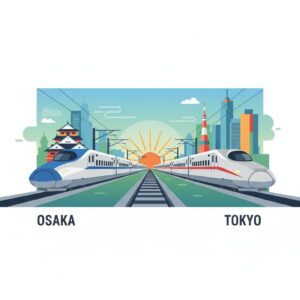
Walk through Osaka for more than ten minutes, and you’ll feel it. It’s not just the sizzling scent of takoyaki or the electric blaze of neon signs. It’s a certain energy in the air, a different rhythm to the footsteps on the pavement. People walk faster here. They talk louder. They laugh from the belly. If you’ve come from Tokyo, the contrast is like stepping from a silent, perfectly manicured garden into a bustling, chaotic, and incredibly alive marketplace. You might hear a shopkeeper yelling a discount, an old woman on the subway striking up a conversation with a total stranger, or a salaryman cracking a joke with the ramen chef. It’s a city that trades in human interaction, and for many newcomers, this direct, unfiltered energy is both thrilling and deeply confusing. Why is Osaka so… different?
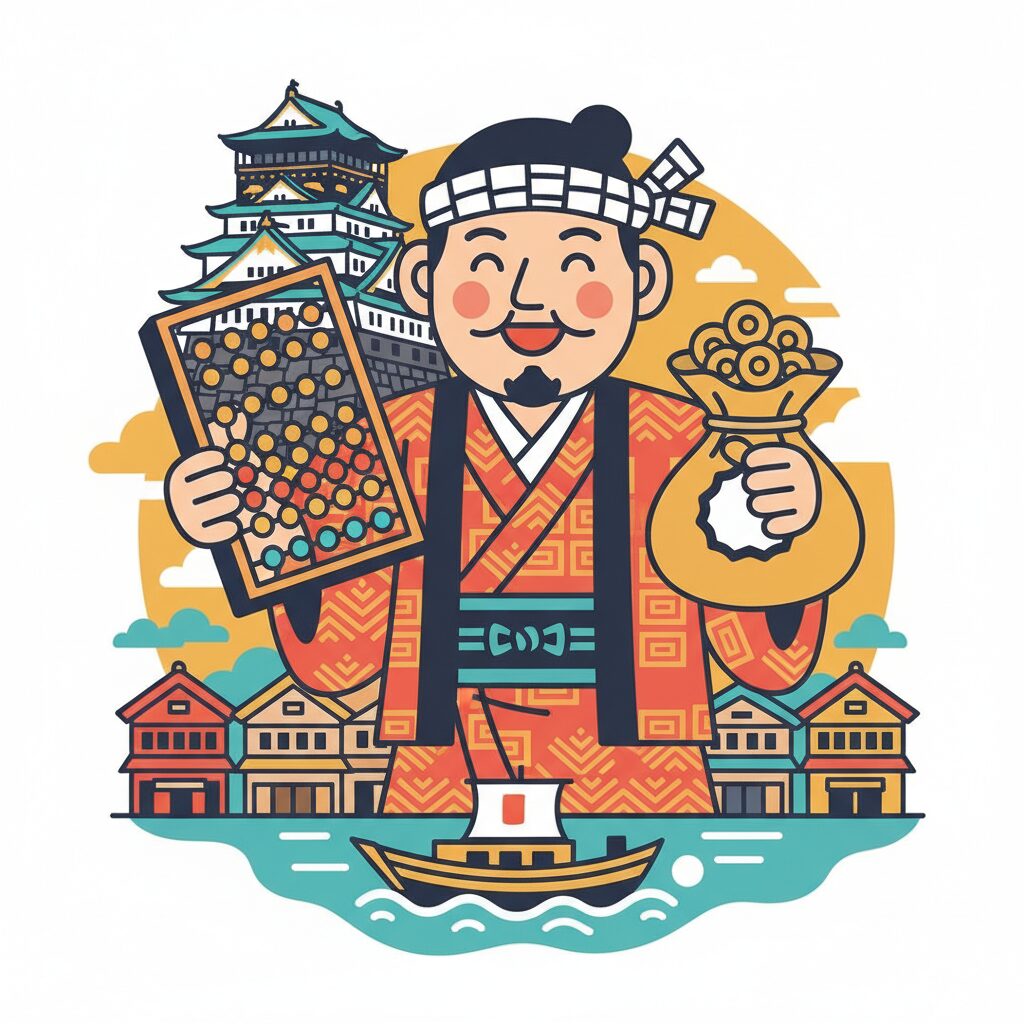
The answer isn’t simple, but the closest you’ll get is a single word: Akindo (商人). It means ‘merchant,’ but in Osaka, it’s so much more than a job title. It’s the city’s soul, its operating system, the cultural DNA baked into its foundations for centuries. Osaka wasn’t built by samurai or emperors; it was built by rice brokers, textile traders, and medicine wholesalers. It was the ‘kitchen of the nation,’ a place where your wit, your hustle, and your ability to strike a fair deal determined your fate, not your family name. This merchant spirit, this Akindo Damashii (商人魂), still dictates the rules of daily life, shaping everything from how you buy your groceries to how you make friends and navigate your career. It’s the key to understanding why Osakans seem so pragmatic, so funny, and sometimes, so brutally direct. This isn’t a guide to tourist spots. This is a look under the hood at the engine that drives this city, a deep dive into the bright and dark sides of the merchant mentality that you’ll have to navigate every single day you live here.
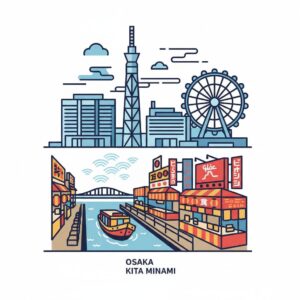
This pragmatic, deal-oriented mindset even influences major life decisions, such as choosing your neighborhood in Osaka based on the ‘Kita’ vs. ‘Minami’ divide.
The Soul of the Deal: What is ‘Akindo Damashii’?
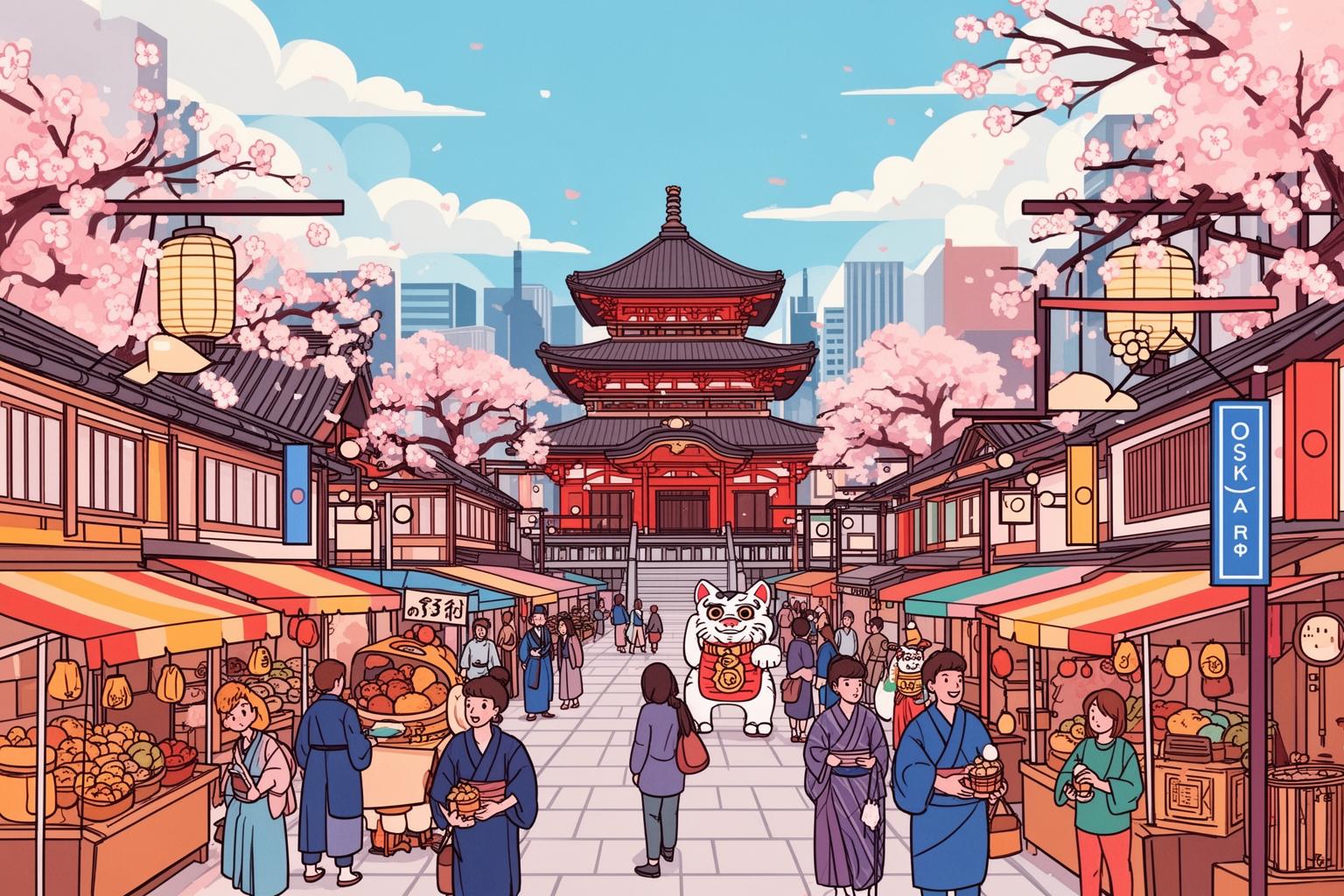
To truly understand Osaka, you need to recognize that its history follows a different path than the rest of Japan. While Tokyo (formerly Edo) was the shogun’s seat, a city defined by strict social hierarchies and samurai bureaucracy, Osaka thrived as the nation’s dynamic economic hub. Here, money spoke louder than status. A clever merchant could enjoy a better life than a low-ranking samurai. This fostered a culture that values practicality over prestige, results over formality, and a good sense of humor over stoic dignity. This is Akindo Damashii—the merchant’s spirit.
More Than Just Money
Step into any local business district, and you’ll hear the city’s unofficial greeting: “Mokkari makka?” (儲かりまっか?) which literally means, “Are you making a profit?” The usual response is a wry smile and a wave: “Bochi bochi denna” (ぼちぼちでんな), or “So-so, getting by.” A foreigner might find this direct inquiry about someone’s finances quite rude. But that’s a misunderstanding. It’s not an interrogation; it’s a ritual. It’s Osaka’s version of “How are you?” A greeting that acknowledges the shared struggle and hustle of life, instantly creating common ground: we’re all here, working hard, trying to get a good deal on life. It reflects a philosophy that cuts through the formal pleasantries you find elsewhere in Japan. In Tokyo, conversations are often layered with polite, indirect language (tatemae). In Osaka, the merchant spirit prefers to get straight to the point (honne). After all, time is money.
This attitude values a different set of virtues. Instead of blind loyalty to a superior, Osakans respect cleverness. Rather than strict adherence to protocol, they admire flexibility. The aim is always to find a win-win outcome. A good merchant knows that a successful deal isn’t about cheating the customer; it’s about providing such good value that they become a loyal patron. It’s about building lasting relationships because a long-term customer is worth far more than a one-time profit.
The Shotengai as a Living Classroom
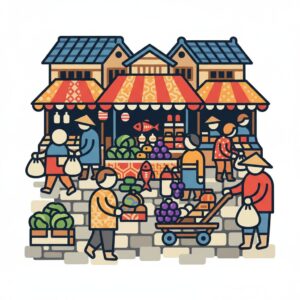
To witness the merchant’s soul firsthand, skip the skyscrapers and head to a shotengai, one of Osaka’s covered shopping arcades. These are the lifeblood of the city, bustling centers of local life where the akindo philosophy is practiced every moment. Take a stroll through Tenjinbashisuji Shotengai, Japan’s longest shopping street. It’s a sensory experience like no other. You’ll see a fishmonger with a booming voice holding up a shiny tuna collar, joking with customers. You’ll smell the sweet, savory aroma of grilled unagi from a shop that’s been there for eighty years. You’ll hear the clatter of pachinko balls and the cheerful, rhythmic call of “Irasshaimase!”
Observe these interactions carefully. The elderly woman selling pickles will let you sample three varieties before you buy. The fruit vendor, after you’ve paid for your apples, will toss an extra mikan orange into your bag with a grin and a “Kore, omake!”—”This one’s a freebie!” This isn’t just random generosity. It’s a strategic, time-honored business method. That free mikan is an investment. It creates a small debt of goodwill. It makes you feel appreciated, as if you’ve gotten a special deal. And because of that feeling, you’re almost certain to return to his stall next week rather than shop at a sterile, impersonal supermarket. The butcher who remembers you prefer fatty pork for your curry, the baker who sets aside your favorite bread—they’re not just being friendly. They are embodying Osaka’s core business principle: human connection is the greatest currency.
The Bright Side: How the Merchant Mentality Makes Life Better
The constant buzz of commerce and negotiation might seem tiring, but in everyday life, the akindo mindset offers remarkable advantages. It cultivates a culture of practicality, straightforwardness, and an unwavering quest for value that can make living here more affordable, efficient, and genuinely connected.
Pragmatism Over Polish
In Osaka, the idea of kosupa (コスパ), abbreviated from “cost performance,” is almost like a creed. People here aren’t necessarily cheap, but they excel at evaluating value. An Osakan will eagerly share stories of a tiny, unassuming restaurant serving a Michelin-quality lunch for 800 yen. They’ll proudly talk about finding a high-quality leather bag at a fraction of the department store price in a hidden back-alley shop. This isn’t about frugality; it’s about being savvy. It’s about not being duped by fancy packaging, brand names, or prestigious locations.
This attitude directly influences daily life. Supermarkets like the legendary Super Tamade, known for its chaotic neon lights and unbelievably low prices, are an Osaka staple. People plan their day around supermarket “time sales” to snag the best deals on eggs or meat. In Tokyo, presentation, atmosphere, and brand prestige often carry a premium. People may pay more for coffee simply because it’s served in a minimalist café in a trendy neighborhood. In Osaka, what matters is the substance. Does it taste good? Is the price fair? That’s all there is to it. This pragmatic outlook means that with smarts, you can enjoy a high-quality life in Osaka on a much more reasonable budget than in Tokyo. The city rewards those who look beyond appearances and seek true value.
Direct Communication and Human Connection
A common complaint among foreigners living in Japan is the challenge of breaking through the barrier of politeness to form authentic connections. The culture of indirectness, avoiding confrontation, and maintaining harmony can feel isolating. Osaka offers a refreshing contrast. The merchant ethos emphasizes clarity and efficiency, which extends to communication. People tend to say exactly what they mean.
If your backpack is open on the train, a Tokyo resident might politely look away, not wanting to impose or embarrass you. An Osaka obachan (middle-aged woman), however, will tap you on the shoulder without hesitation and say, “Hey, your bag’s open! You’ll lose your wallet!” It can feel surprisingly blunt at first, but it comes from genuine concern, not rudeness. She noticed a problem and gave a direct, practical solution. This frankness can be a relief—you spend less time guessing what others think. If someone has an issue, they’ll probably tell you. If they like you, you’ll know it too.
This openness in communication fosters quicker friendships. There are fewer layers of formality to navigate. People are faster to invite you for a drink, share a meal, and ask personal questions. They’re trying to get to know you, to understand who you really are. While this might feel intrusive to some, it’s part of forming real, meaningful relationships. The aim is to get to the core, whether in business or friendship.
The Art of the ‘Nego’ (Negotiation)
Negotiation, or nego, is deeply embedded in Osaka’s daily life. While you can’t haggle at a 7-Eleven or large department store, the spirit of bargaining thrives in many other settings. At flea markets, with independent shopkeepers, or even when renting an apartment, there’s often an unspoken invitation to discuss price. It’s not taken as an offense; it’s part of the tradition. The key is to approach it with playfulness and respect, not hostility. It’s a conversational dance—you’re not trying to trick the seller; both sides aim to reach a fair number. A good negotiation ends with both parties smiling, feeling satisfied with the result. Mastering this subtle skill shows you truly grasp the Osaka way of life.
The Dark Side: When ‘Akindo’ Culture Becomes a Challenge
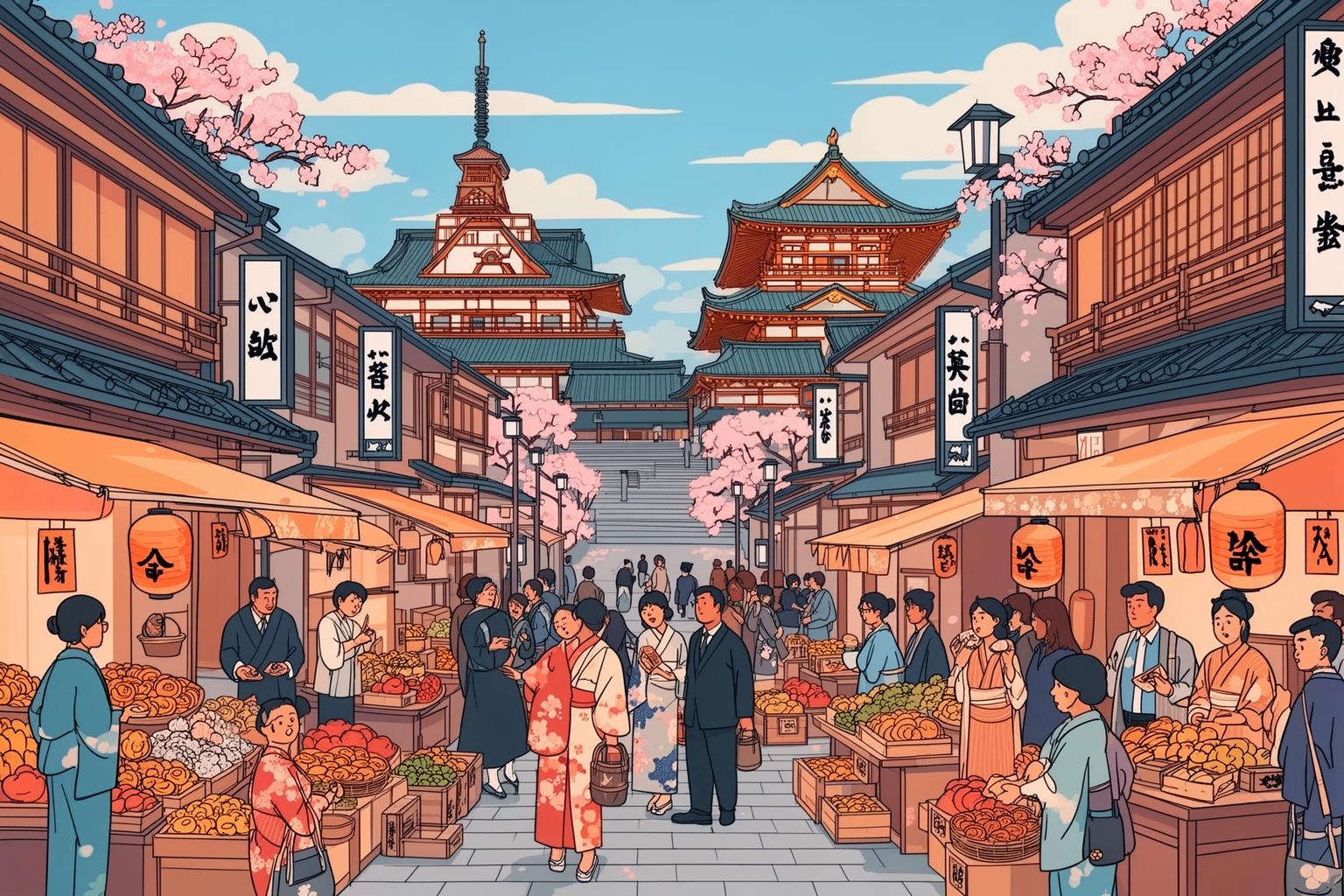
Certainly, a culture grounded in deals, efficiency, and results has its drawbacks. The very qualities that make Osaka feel lively and refreshingly straightforward can also appear abrasive, cold, and relentlessly demanding. For every positive aspect of the akindo mentality, there is a darker side that newcomers may find challenging to navigate.
The Transactional Nature of Everything
When every interaction is seen through the perspective of value and exchange, relationships can begin to feel transactional. The spirit of give-and-take, which works well in business, can sometimes spill over into personal life in an uneasy way. Favors are often mentally accounted for. If someone helps you move, there may be an unspoken (or even explicit) expectation that you will return the favor soon. This isn’t necessarily ill-intentioned, but rather a deeply rooted cultural habit of keeping things balanced.
For those from cultures where favors are given more freely and without expectation of direct reciprocation, this can seem calculating. It might feel as if people are only friendly because they want something from you, or that every act of kindness has invisible strings attached. For instance, a colleague who is very helpful might later request a significant favor, implying you now owe them. This underlying question of “What’s in it for me?” can make it hard to trust people’s motives at first. It’s not that Osakans lack selfless generosity, but the default mode operates on fair exchange.
Impatience and the Cult of Efficiency
Osaka moves at a fast pace. The city’s unofficial motto might as well be “Pali-pali!” (早く早く!), meaning “Hurry up! Hurry up!” This is most clearly seen on escalators: in Osaka, you stand on the right and walk on the left, leaving a clear lane for those rushing by. In Tokyo and much of the rest of Japan, you stand on the left. This isn’t just a minor custom; it perfectly symbolizes the city’s mentality. There is little patience for inefficiency or wasted time.
In everyday life, this can appear as overt impatience. People may sigh audibly if the person ahead at the checkout is slow with change. Drivers tend to be more aggressive. In business meetings, there’s little tolerance for vague or rambling talk; the expectation is to get straight to the point. For foreigners used to a more relaxed pace or indirect communication, this constant pressure to be quick and decisive can be highly stressful. It can feel like the whole city is impatiently waiting for you to move aside. This relentless focus on efficiency can make the city come across as harsh and unforgiving if you aren’t prepared for it.
The Skeptic’s Gaze: Trust is Earned, Not Given
A lifetime spent hunting for the best deal and avoiding scams fosters a healthy skepticism. Osakans are skilled at detecting a bad deal, and they often apply that same scrutiny to new people. When you first arrive, it may feel like you are being closely evaluated. People are trying to figure out your intentions. Are you sincere? Are you capable? Can you be trusted? This isn’t personal hostility; it’s a cultural protective mechanism. In a city of traders, everyone is either a potential partner or a possible rival.
Trust isn’t freely given; it must be earned. You earn it by proving your value—being dependable, showing you have a sense of humor, and demonstrating an understanding of fair exchange. This initial scrutiny can feel unwelcoming. It might seem like people are distant or judgmental. But once you pass this silent test and show that you’re neither foolish nor a freeloader, the barriers come down entirely. An Osakan who trusts you will become one of your most loyal and supportive friends or colleagues. Yet, reaching that point requires passing a test you may not even realize you’re undergoing.
Navigating Daily Life: A Foreigner’s Survival Guide to the ‘Akindo’ Mindset
Grasping the akindo spirit is one thing; embodying it in your daily life is quite another. However, you don’t need to be an expert negotiator to thrive here. By adopting a few essential strategies, you can not only get by but also come to appreciate the distinctive rhythm of life in Osaka.
Reading Between the Lines of “Mokkari Makka?”
When a local shop owner greets you with “Mokkari makka?”, don’t worry. There’s no need to start detailing your financial situation. Simply smile, give a small wave, and reply, “Bochi bochi denna.” Using this expression is like a secret handshake—it signals that you’re not just a passing tourist but someone who’s making an effort to understand the local dialect and culture. It’s a small gesture that immediately builds rapport and shows respect for the local way of life. It acknowledges the shared reality that life is a hustle, and you’re in it together.
Embrace ‘Kosupa’ and Discover True Value
Rather than feeling overwhelmed by the local focus on value, embrace it. Turn it into a game. Don’t just settle for the easiest restaurant; ask a local coworker for their top recommendation for the best and most affordable udon nearby. Venture into side streets and back alleys. The finest things in Osaka are rarely the priciest or the most prominently advertised. Locals love to be in the know and are usually happy to share their secrets for the best deals. Asking for tips on where to find the best kosupa is not just practical—it’s also an excellent way to start conversations and build connections. Sharing a great find of your own means you’re actively participating in the city’s culture of information exchange and earning social capital.
Develop Thick Skin and a Sense of Humor
This may be the most vital survival skill of all. The straightforwardness, teasing, and occasional blunt remarks are rarely meant to hurt. In Osaka, humor is a key form of communication. Teasing is often a sign of affection and acceptance. If a coworker jokes about your awkward Japanese or unusual eating habits, it’s usually their way of saying, “I’m comfortable enough with you to joke around.” The worst response is to take offense or become defensive. The best is to laugh at yourself and, if you’re up for it, respond with a gentle joke of your own.
This is the misunderstanding that trips up many foreigners. They mistake Osaka’s informal manner for rudeness. In truth, that blunt humor is quite the opposite of the cold, polite distance you might expect elsewhere. It’s an invitation to drop pretenses and connect on a more human level. If you can learn to appreciate the city’s fondness for a good laugh—even at your expense—you’ll find Osaka to be one of the warmest and most welcoming places in Japan.
Conclusion: Osaka, the City That Keeps Score
Living in Osaka is a continuous lesson in the art of the deal. The city’s akindo spirit is a double-edged sword. It has shaped a culture that is remarkably practical, refreshingly straightforward, and bursting with a raw, vibrant humanity. It’s a place where you can dine like royalty on a pauper’s budget, forge quick friendships through shared humor, and where efficiency and common sense hold sway. Yet, that same spirit can also make the city feel transactional, impatient, and wary. It’s a place that keeps score, constantly measuring the give and take in every exchange.
Osaka is not a city for the faint-hearted or those who cling to stiff formality. It demands involvement. It rewards those who are quick-witted, sharp-minded, and generous with their laughter. It’s a city that pushes you to be smarter, tougher, and more open all at once. To truly succeed here, you can’t simply be a passive resident; you must become an active participant in the city’s vibrant, chaotic marketplace of goods, ideas, and relationships. You need to learn the rhythm of the deal, the value of a freebie, and the deep connection formed through shared laughter. It’s a lively, unending negotiation, but if you master the rules, living in Osaka will be the best deal you ever make.